
Boboli Gardens in Florence – history, description, photo, opening hours, map
The Boboli Gardens are considered one of the most popular places in Florence. Founded in the 16th century by the Medici dynasty, they combined the art of the Italian Renaissance and the unique nature of Tuscany. Numerous reservoirs with islands, fountains with water lilies, ancient buildings and grottoes make the landscape gardening area a wonderful place for walking. The Boboli Gardens in Florence is a brilliant example of an Italian-style park, and a huge collection of Roman and Florentine sculptures from the 16th and 17th centuries make it an open-air museum.
History of creation
The history of the Boboli Gardens begins in 1550, when the powerful Duke Cosimo I de' Medici purchased an unfinished palace and the surrounding area from the Florentine merchant Luca Pitti. Simultaneously with the expansion of their possessions, the Medici landscaped the hilly area around the new residence, turning it into a palace and park ensemble. Created on this land by the court architect and gardener Niccolo Tribolo, the park became the “green architecture” of Florence. During the years of their prosperity, the Medici organized lavish celebrations in the Boboli Gardens and enjoyed its magnificent landscapes.
The palace and the park were the residence of the Grand Dukes until the death of their last representative in 1743, and then became owned by the Austrian family of Loren. After the proclamation of the United Kingdom of Italy and the transfer of the capital to Florence (1865-1871), King Victor Emmanuel II and the House of Savoy became the official owners of the gardens. Now the park belongs to the state and can be proud of its immaculate lawns, clean ponds and trimmed shrubs.
Location and features of the park
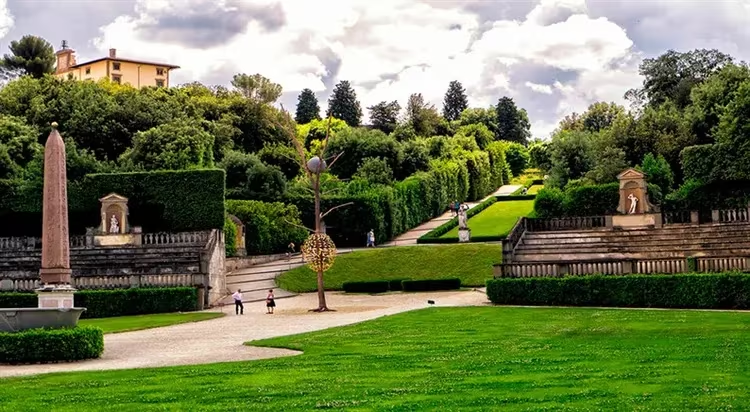
The Florentine Boboli Garden is located on the hill of the same name behind the Pitti Palace and covers an area of 4.5 hectares. The well-groomed territory is divided by gravel paths into numerous areas for visiting. Green lawns and ponds are surrounded by natural stone borders, decorated with unique statues and fountains. From the highest point of the park hill, a wonderful panoramic view of the entire city opens up.
Gardens today
Today, the Boboli Gardens are a favorite vacation spot for citizens and attract thousands of tourists every year. The journey through the garden starts from the building of the stone amphitheater, its semicircular platform is decorated with an obelisk – an Egyptian artifact brought from Luxor to Rome, and subsequently delivered to the residence of the Medici dukes. On the lawn in front of the amphitheater, receptions were held for important people and the world‘s first opera performances were staged.
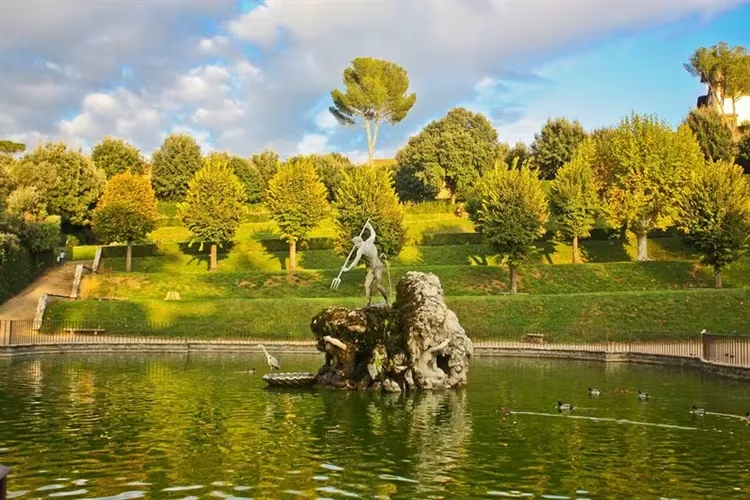
The main park alley, made up of relic cypresses, leads visitors to the Neptune Fountain, which is located in the center of an artificial pond and recreates the wet surface of a rock with a sea king on top. In the sculptural composition, Neptune holds a trident with the tip down, so the townspeople called this figure a fountain with a fork. In a shady corner of the garden, a marble figure of a fat dwarf riding a huge turtle is visible – this is the image of the court jester Pietro Barbi, who once lived at the Medici court. A man-made pond with an isolated island in the middle was built in the far area of the park.
The paths of the island are decorated with boxwood plantings, potted plants, the Ocean Fountain and the statue of Poseidon, the work of the architect Giambologna. On one of the terraces of the garden there is a coffee house built in the 18th century, where you can still order a cup of fragrant drink. The park features two unusual stone hemispheres – these are old refrigerators for storing meat products. On the upper level of the park area there is a fragrant Knight's Garden with a rose garden and peony bushes. The garden conservatory houses one of the world's largest collections of citrus plants, while smaller buildings display unique 16th-19th-century porcelain and a collection of over 600 antique costumes.
grottoes
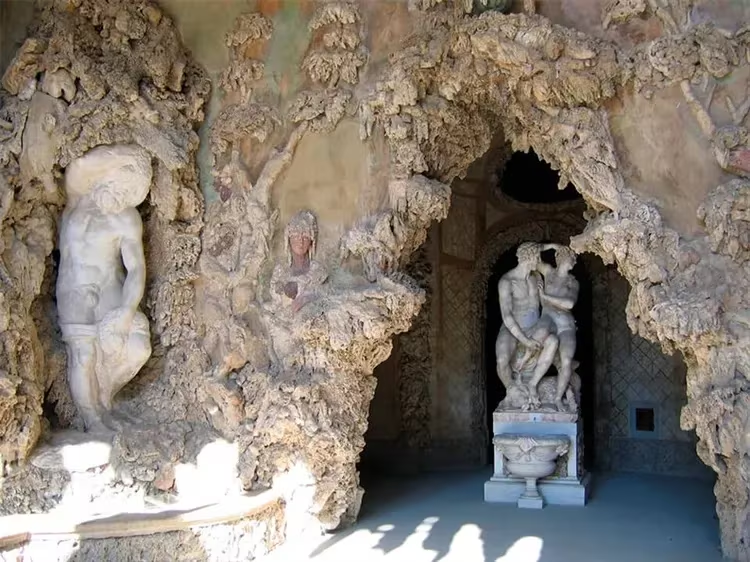
Special attention should be paid to the park grottoes, which served as cool and secluded places for the Medici family and their guests. The famous Buontalenti grotto is the pearl of the Mannerist style of the late 16th century. Its construction was begun by the architect Giorgio Vasari and completed by the court architect Bernardo Buontalenti. Made in the form of a stalactite cave, decorated with frescoes, natural stones, shells and pebbles, the grotto impresses with its magnificence.
To preserve the unique structure of the monument, access to the grotto is only allowed if accompanied by authorized park staff. The next grotto of Madame is made of artificial stone with a spongy structure. On the marble floor of the building there are sculptures of animals and an oval pool with cherubs. Grotto of Adam and Eve – a stone recess, decorated with a composition with frescoes and sculptures of Adam and Eve.
Opening hours and ticket prices
The Boboli Gardens welcomes visitors every day except Mondays and public holidays January 1 New Year‘s Day, May 1 Labor Day and December 25
Catholic Christmas.
Park opening hours:
Ticket prices are:
Benefits for the purchase of tickets by age or other indicators apply only to citizens of the European Union. You can get into the gardens through the ticket offices of the Belvedere fortress, the Pitti Palace, from the streets of Via Romana and Porta Romana. Ticket offices close one hour before the end of the park area. Purchased tickets include a visit to the Boboli Garden, a visit to the porcelain exhibition and the costume museum.
Where are they located and how to get there
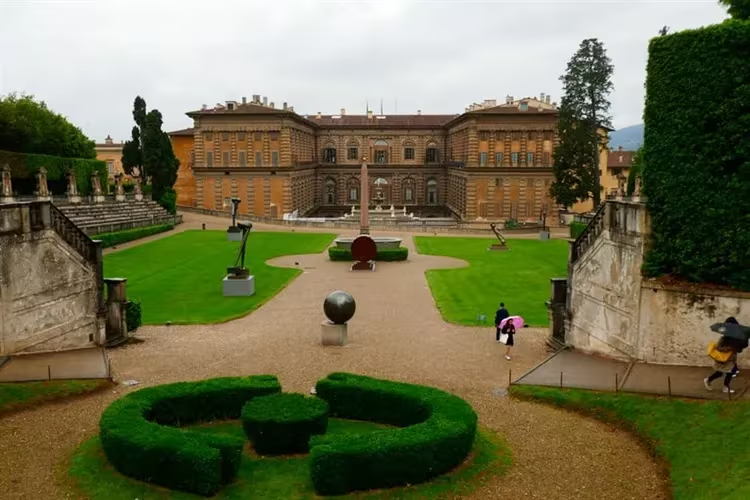
The Boboli Gardens are located in Florence and are located at: Piazza Pitti 1, 50125 Firenze FI, Italia.
You can get to the gardens by public transport by the following buses: