
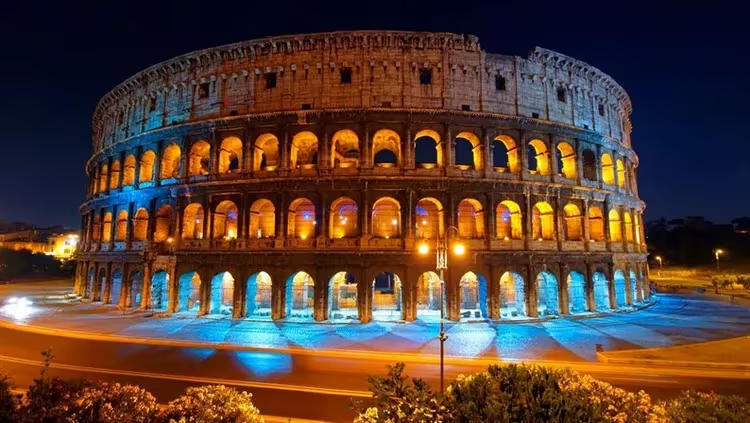
Colosseum in Rome – history, photo, description, prices 2021, map
One of the main symbols of the capital of Italy is the Colosseum. The masterpiece of architectural construction embodies the power of the imperial power, as well as the brilliant idea of the Roman engineers of ancient times. The amphitheater is a unique building on the planet that has seen many events and tragic battles. The arena is reminiscent of the times when the Romans were hungry for spectacle.
Construction history
In the 1st century AD, a majestic and grandiose monument of the ancient world was erected. The prehistory of the construction of the Colosseum was the difficult political situation in the Roman Empire.
In 68 AD, Nero was the emperor of ancient Rome. As a brutal dictator, he imposed exorbitant taxes on his subjects. The funds were invested in the construction of a luxurious residence in the very center of the capital, which extremely embittered the impoverished population. The Senate declared Nero an enemy of the people, after which he committed suicide. The empire's provinces are blazing with civil uprisings. Rome suffers from internal confrontation. To resolve conflicts in the state, the military take power into their own hands, proclaiming the ruler of Rome, the commander Flavius Vespasian.
Being a man devoid of political ambitions, Vespasian skillfully restores order in the empire. On his initiative, a series of economic reforms are being carried out to alleviate the situation of people. The main political program of Flavius is to provide the people with spectacles and entertainment. He conceives the construction of a large-scale amphitheater, where fierce gladiator battles and animal baiting will take place. The arena should unite people in the contemplation of bloody performances. Drawings were developed for a unique structure capable of accommodating 50,000 people.
The necessary financial resources and manpower for the construction of the amphitheater were obtained from Jerusalem as a result of Vespasian's successful military campaign in the Judean province. For the foundation of the Colosseum, it took about 2.5 hectares of land. The construction was supposed to be carried out on the site of the residence of Nero in the center of Rome. The palace of the former emperor was destroyed, and the nearby lake was drained. The Colosseum was erected within 10 years. The grand opening of the amphitheater took place in 80. In honor of the holiday, a hundred-day games were announced, during which the audience saw gladiatorial battles with wild animals brought from all over the gigantic empire.
Over the centuries, the Colosseum was struck by lightning, suffered from earthquakes and fell into complete disrepair after the collapse of the Roman Empire. In the Middle Ages, the luxurious lining of the arena was torn off and used for new palaces and temples of Rome. In the 19th century, Pope Benedict XIV stopped the destruction of the Colosseum. The arena was declared a holy place, since the walls of the amphitheater were stained with the blood of thousands of Christian martyrs who died for the amusement of the Romans.
Architecture
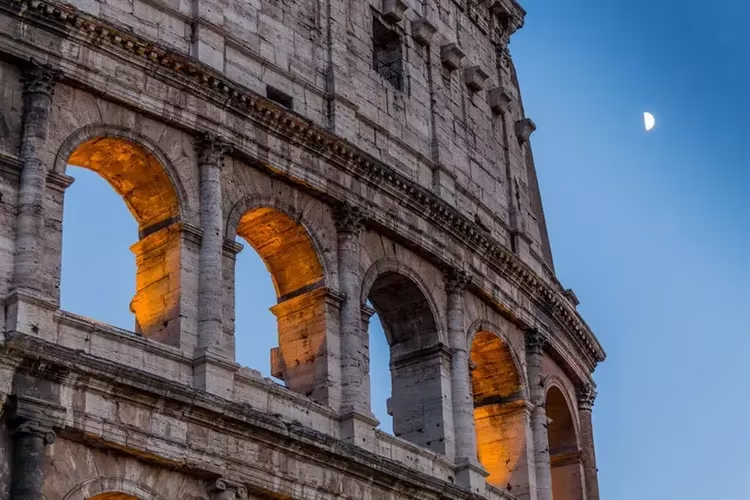
Roman engineers were skilled architects, which is confirmed by the walls of the Colosseum. It was supposed to build a bulky building with four tiers 52 meters high. In order for the building not to collapse under its weight, the builders needed innovative solutions. The Colosseum was erected in the form of a giant ellipse. It is 188 meters long and 156 meters wide. The outer ring of the arena is flanked by various Doric, Ionic and Corinthian columns. Distinctive features are their thickness, as well as the intricate decoration of the capitals.
The amphitheater consists of a whole complex of seven-meter arched arcades, which form a large ring around the circumference of the building. They were the most important element of the design. The arched design was quite simple and effective, with each semi-circle of stone blocks resting on two brick pillars. Numerous arches ensured the stability of the structure. The empty space between the pillars lightened the weight of the arena and gave it airiness. In total, there were 240 arched compositions lined with travertine.
The builders skillfully combined various types of stone and cement with volcanic soil. Thus, the Romans invented concrete. The inner elliptical walls, which served as sectors of the Colosseum, were overlaid with a concrete-brick mixture. The outer walls, lined with marble, gave the building a pomposity. The facade of the upper tier of the amphitheater is not framed by arches. It is lined with solid brick, decorated with pilasters with small openings for windows. The floor was built later than the first three. There were holes on its wall where special masts were installed. They served as supports for wooden rods, to which the silk roof was attached. The awning protected the spectators from the heat and heavy rains.
Internal organization
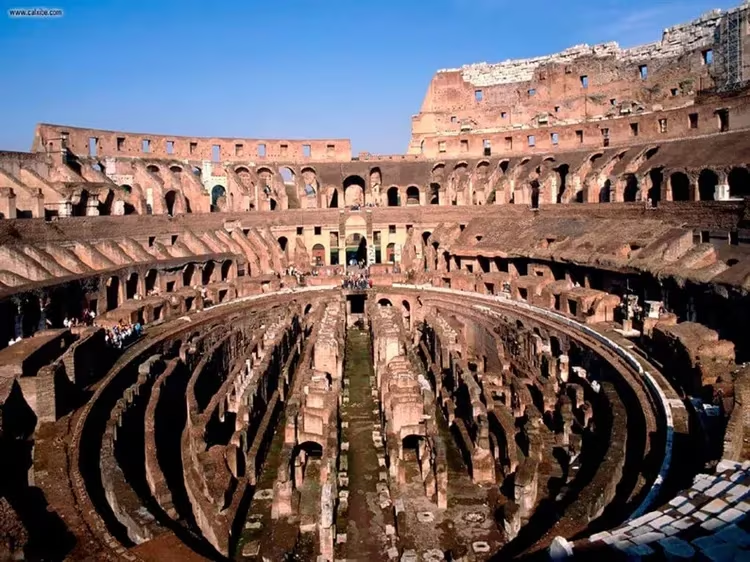
The gladiatorial arena, 80 × 40 meters in size, was considered a true masterpiece of the structure. It was a wooden flooring covered with sand. The floor could go up and down. The lower part of the amphitheater goes 9 meters underground. There were technical equipment (manual lift), plumbing, as well as cages with slaves and wild animals. Spectator seats in the Colosseum spoke about the social position of the Romans in society. The amphitheater clearly demonstrated the hierarchy of citizens. Ordinary people (plebeians) sat on the upper tiers. Sectors located closer to the arena were intended for senators, entrepreneurs and aristocrats. The seats of the stands were carved from marble.
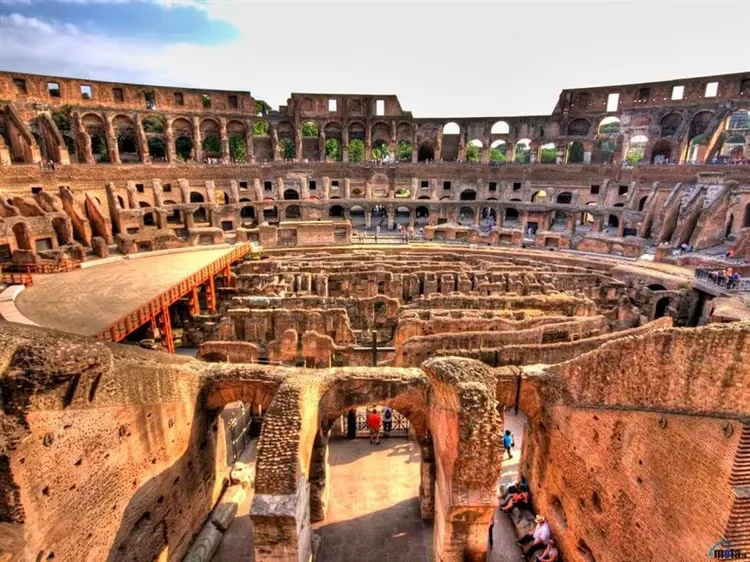
One of the most amazing features of the Colosseum is its complex internal organization. The amphitheater is divided by annular and transverse aisles. Every Roman had a ticket in his hand. Numbered arched entrances (there were 80 in total) led visitors to certain sectors and tiers. The large gate was intended for the passage of noble persons to the Colosseum. Ordinary citizens had to enter the arena bowl through small passages that led to narrow corridors, and then climb up the numerous steep steps.
Colosseum today
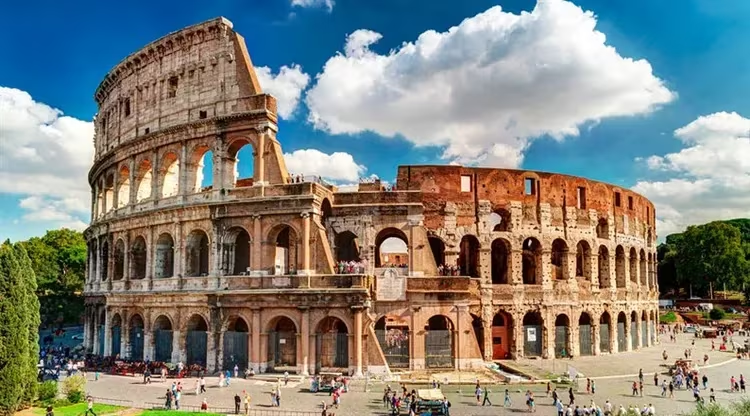
Today, the Colosseum is the most visited tourist attraction. The facade and tiers of the amphitheater are significantly dilapidated. Several sectors remained in good condition, capable of accommodating 1,500 people. Famous musicians sometimes perform within the walls of the Colosseum. In particular, Paul McCartney, Elton John and Billy Joel pleased their fans. In order to get to the Colosseum, tourists need to stand in a long queue. There are turnstiles and metal detectors at the entrance to the arena. Tourists can climb to the upper tier along the same steps and corridors that the ancient Romans passed through. The only innovation is the installed modern elevator.
Opening hours and ticket prices
The opening hours of the amphitheater depend on the season. The majestic gates of the Colosseum open from 9:00 to 18:00 (April – September) and until 16:00 (October – March). The ticket price is 12 euros.
Where is and how to get to the Colosseum
The Colosseum is located in the historic district of Rome on Piazza del Colosseum. Nearby is the Arch of Constantine and the Roman Forum. You can get to the arena by metro (Colosseo station), as well as by buses and trams.