
🇵🇹 Guimarães and Braga: pearls of northern Portugal
This time I propose to go to the north of Portugal. 50 km from Porto there are two ancient and very beautiful cities – Guimarães and Braga. The former is considered the birthplace of Portugal, and the latter the religious capital of the country. Both are located in the Minho region, a picturesque hilly valley whose landscapes are an added delight for the eyes.
Guimarães
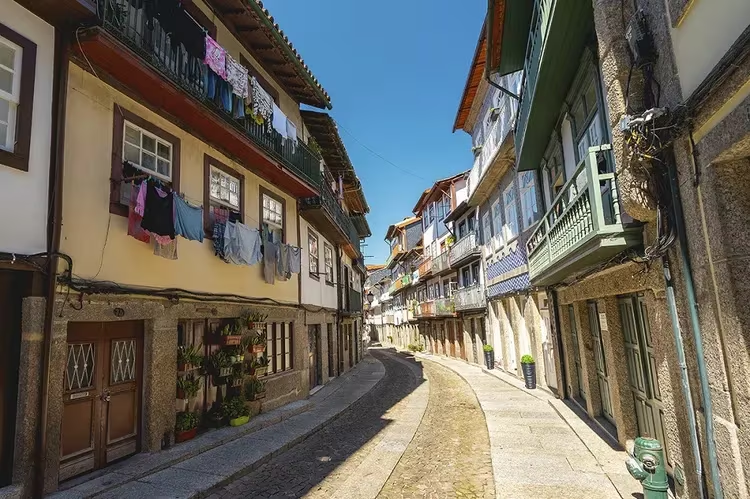
Guimarães is called the cradle of Portugal for several reasons.
- The first Portuguese king, Afonso I, was born here.
- A battle took place near the city in which the Portuguese defeated the Kingdom of Leon, thanks to which they declared the independence of Portugal.
- Guimarães became the first capital of the kingdom. True, this status did not last long – soon the capital was moved to Coimbra.
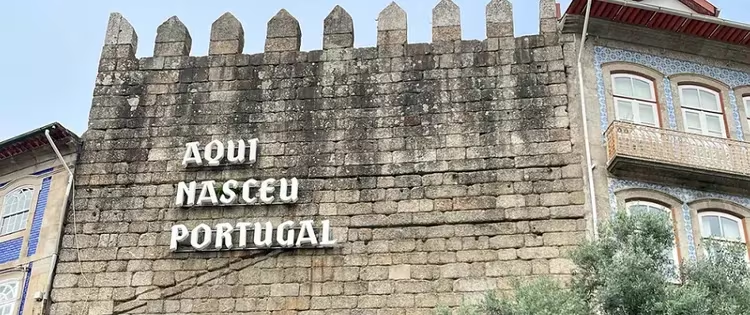
In connection with all this, a commemorative inscription ” Portugal was born here ” appeared in the city center.
Guimarães is one of the most beautiful Portuguese cities, it is their personification! The first Portuguese capital consists of ancient cobbled streets with houses from the 15th to 19th centuries. Stone buildings from the early Middle Ages are also well preserved here.
Now more than 50 thousand people live in Guimarães. The infrastructure in the city is excellent – you can easily find where to stay, eat and shop.
What to see in Guimarães?
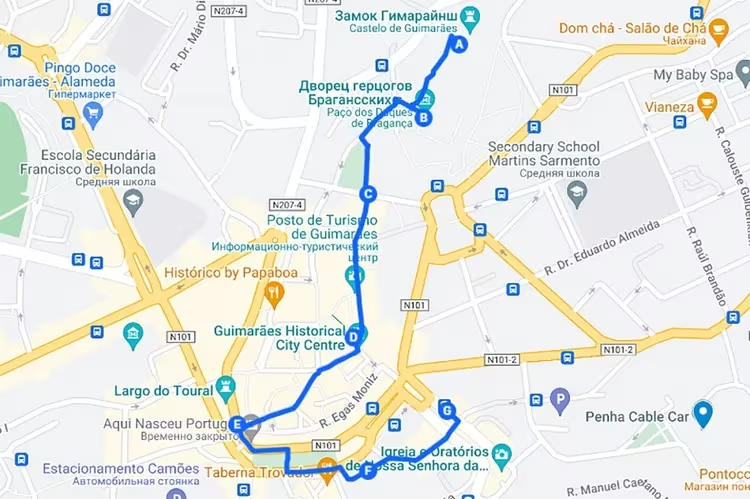
A. Guimarães Castle (Castelo de Guimarães)
This castle was built in the 10th century. It is believed that it was here that the first king of Portugal was born in the 12th century. When Afonso I ascended the throne, he made his native castle his residence.
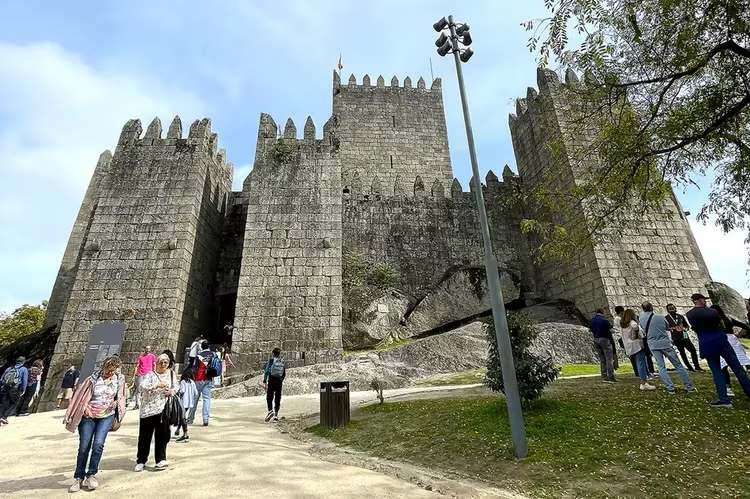
Until recently, tourists could look beyond the walls of the fortress and climb its towers to admire the view of Guimarães and Mount Pena. Now they write that entry is prohibited, but maybe it will become available again soon.
B. Palace of the Dukes of Bragança (Paço dos Duques de Bragança em Guimarães)
This palace is located on a hill next to the castle. It looks impressive: huge with jagged towers and many chimneys. This mansion was built in the 15th century for an important Portuguese couple – the family of the Dukes of Braganza.
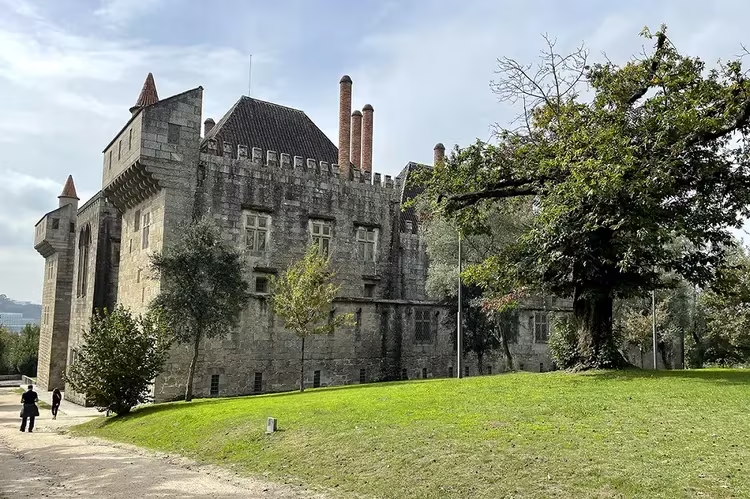
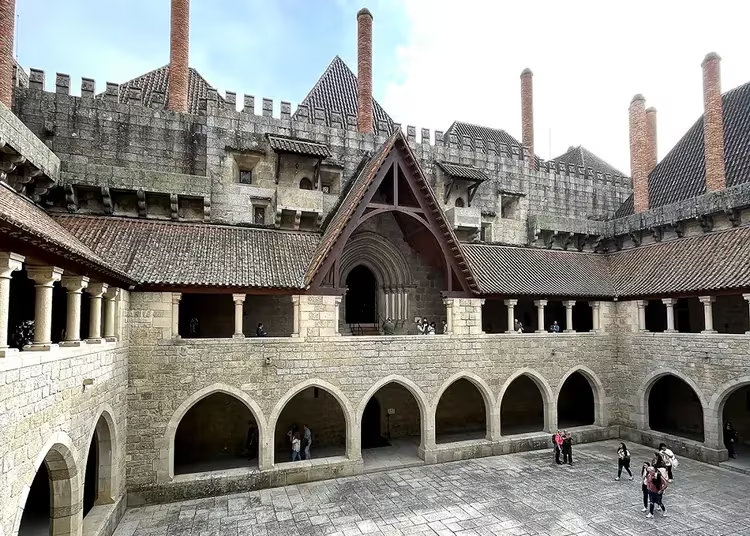
In the 20th century, the castle was restored. The Portuguese dictator Salazar made it his residence. The second floor of the palace is still used by the president for important political events. And the first one serves as a museum. It houses a collection of tapestries, ceramics and medieval weapons. Several noble chambers and a chapel are also available to tourists. Entrance to the palace costs 5 euros.
C. Santa Maria Street (Rua da Santa Maria)
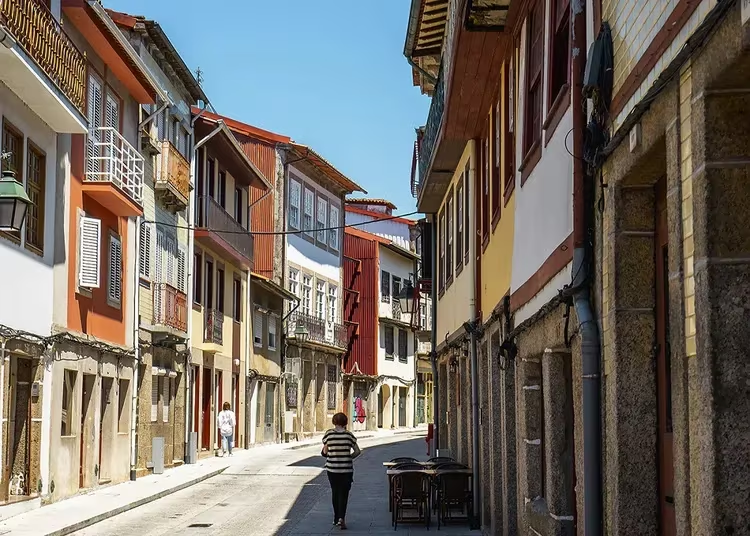
After going down the hill, go through Carmo Square (Jardim do Carmo). You can look into the temples located near him. And then take a walk along one of the oldest streets in the city – Rua da Santa Maria. This road once connected the castle at the top of Guimarães and the monastery at the bottom. Now it leads to the very heart of the city – to Largo da Oliveira Square. Along St. Mary's Street, many buildings from the 12th and 13th centuries have been preserved.
D. Largo da Oliveira Square
“Oliveira” translates to “olive tree.” The square was named after this plant for a reason. Here you will see an olive tree, which is associated with an urban legend. A tree planted next to the temple supplied the church lamps with oil. One day, local clergy noticed that the olive trunk was completely withered and decided to put a cross on it – and the tree bloomed again!
This cross is believed to be in the chapel of the Church of Nossa Senhora da Oliveira (Igreja de Nossa Senhora da Oliveira). The temple itself was founded in the 12th century. Some of its premises were converted into a religious museum. In front of the church is a monument commemorating the Battle of Salado (Padrão do Salado). This Gothic structure was erected in the 14th century.
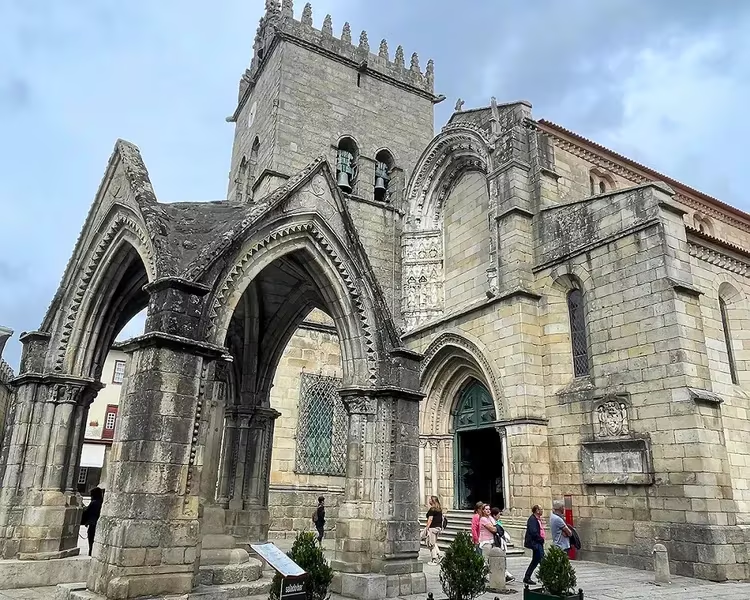
Largo da Oliveira Square is a favorite meeting place for city residents. It is strewn with cafe tables.
E. Largo do Toural Square
Once in another city square, you will notice a significant difference in the architecture of the buildings. Tall houses, decorated with carved windows, grew around the perimeter of Largo do Toural at the end of the 18th century. Before this, the parade ground was located outside the city – at its entrance gates – and fairs were held on it.
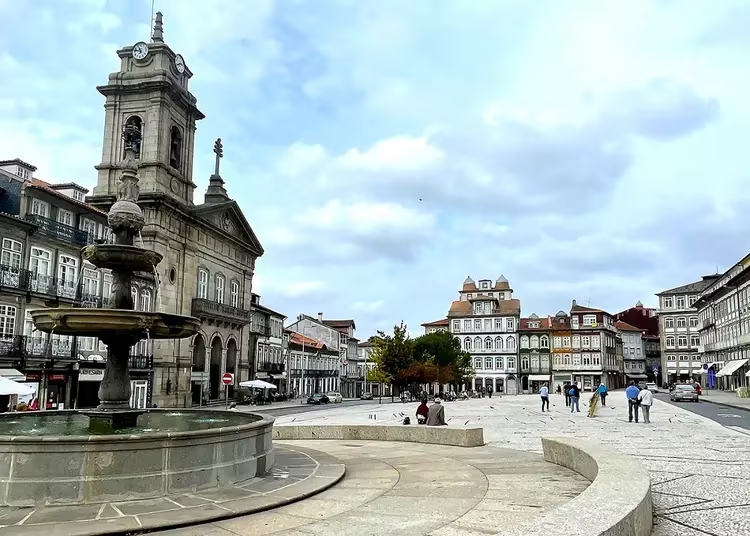
It is here, on the corner of Jardim Público Park, that “Aqui nasceu Portugal” (“Portugal was born here”) is written in bold letters on a medieval tower.
F. Church of São Francisco (Igreja de São Francisco)
This temple was built in the 13th century. It combines architecture of different styles: from Gothic to Baroque, as it has undergone many reconstructions since its appearance. Blue and white tiles covered the façade and interior walls of the church only in the 18th century.
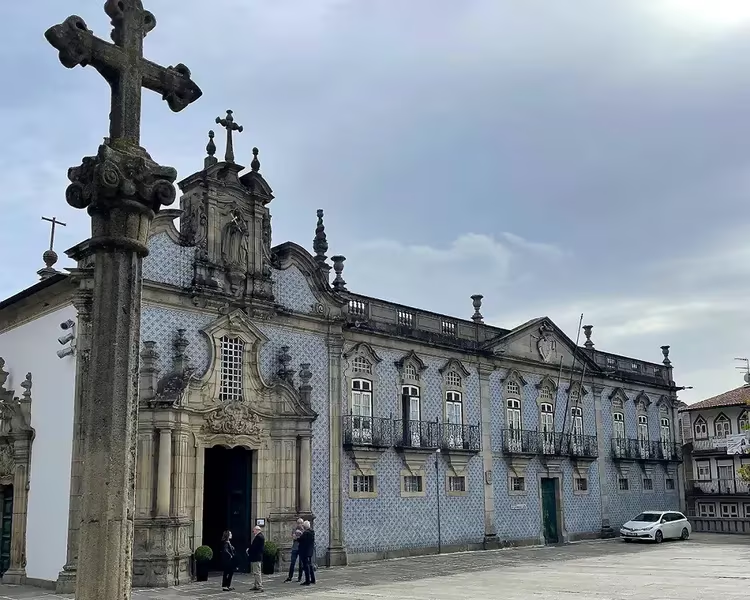
G. Largo República do Brasil Square
This is another iconic square of Guimarães. The flower beds at the Church of Nossa Senhora da Consolação (Igreja de Nossa Senhora da Consolação), behind which Mount Penha rises, look impressive. When it comes to Guimarães, in my city this is the first picture that pops up.
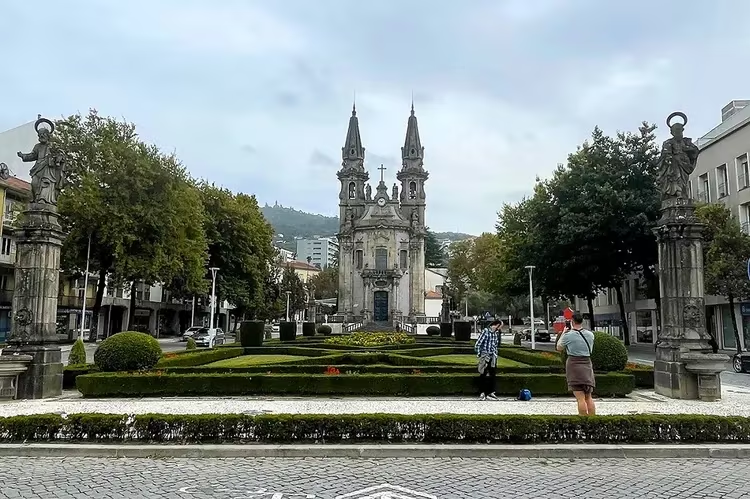
Mount Penha (Serra da Penha)
I suggest finishing your acquaintance with the city with a climb to Penya. I marked on the map the starting point of the cable car that will take you to the mountain.
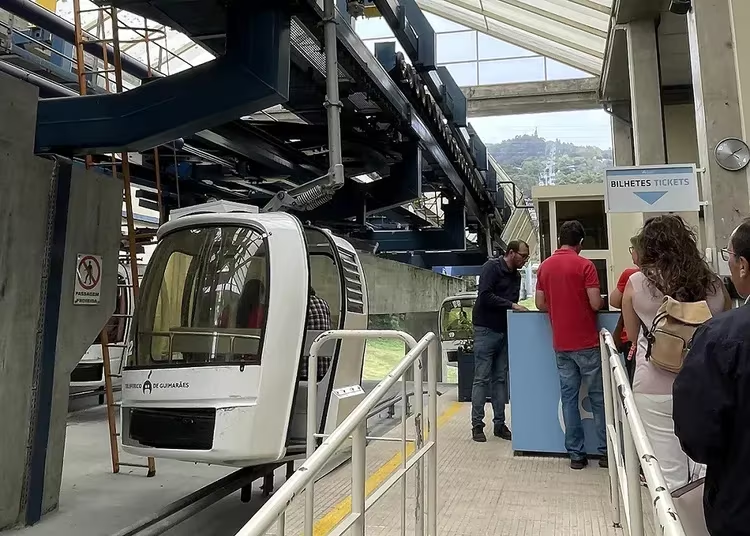
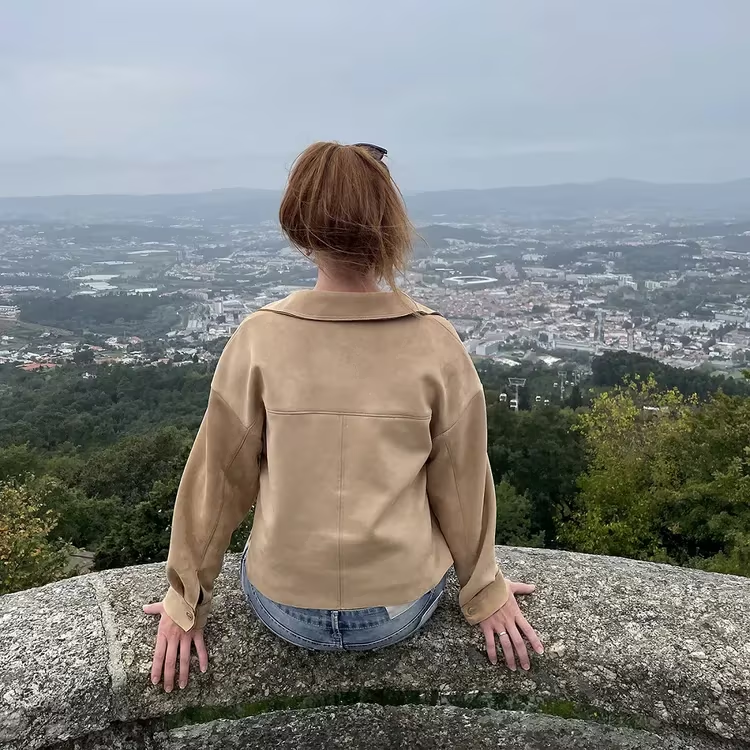
There is an observation deck that offers beautiful views of Guimarães and its surrounding landscapes.
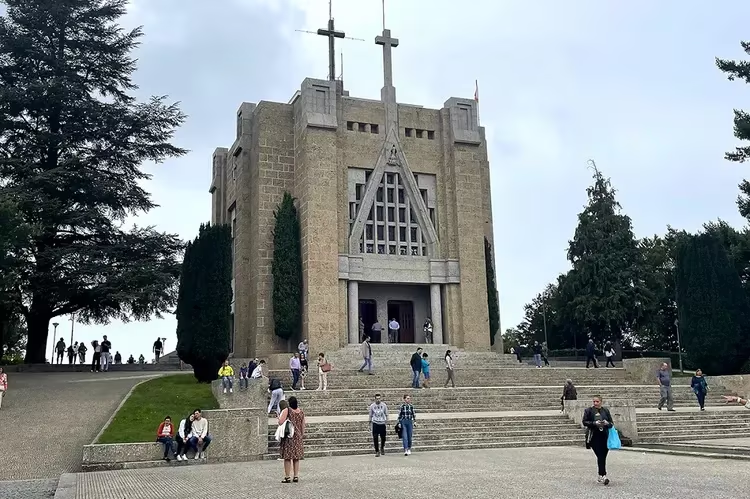
Mount Pena is a natural park with groomed trails, a picnic area, an equestrian center, mini golf and restaurants. At the top stands the modern church of Santuario da Penha (Santuario da Penha).
Braga
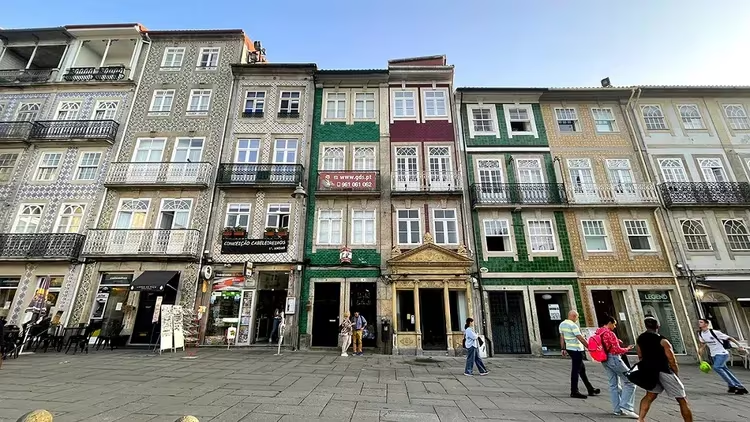
Although Braga's architecture is similar to other northern cities, it has a special atmosphere – tranquility and charm. Maybe because Braga is considered the religious capital of the country?
3 facts about Braga:
- It is the third largest city in Portugal. About 200 thousand people live here.
- Braga is called the “city of archbishops”. The first bishopric was founded here at the beginning of the 5th century, and from the 16th century the residence of the archbishop was located in the city.
- The history of Braga begins before our era, when a Celtic tribe, the Bracars, lived on these lands. In 14, the Romans came here and founded the city of Bracara Augusta, which became the capital of the province of Galicia and an important junction – five famous Roman roads converged there.
What to see in Braga?
Before moving on to the walking route through the historical heart of the city, I recommend driving up to two locations outside of Braga. These attractions are located on the hills, which offer excellent views of the city and its surroundings.
Sanctuary of Bom Jesus do Monte
The temple with a 116-meter staircase is the hallmark of Braga. On the Baroque staircases you will be greeted by fountains with sculptures. Try to recognize in them the five human feelings and three Christian virtues.
And at the top of the stairs you will see a luxurious 18th century church, next to which there is a cozy park. There are two hotels and several restaurants on its territory.
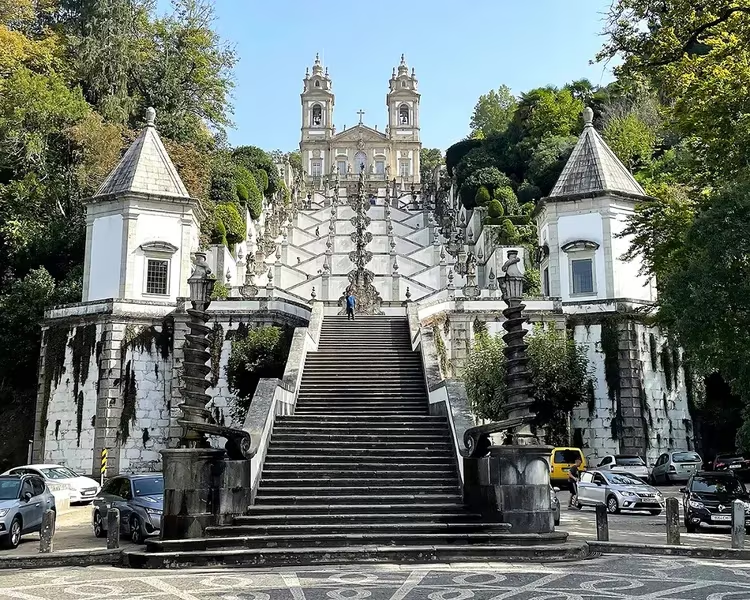
At the end of the 19th century, the first funicular in Portugal began to lift visitors up this hill.
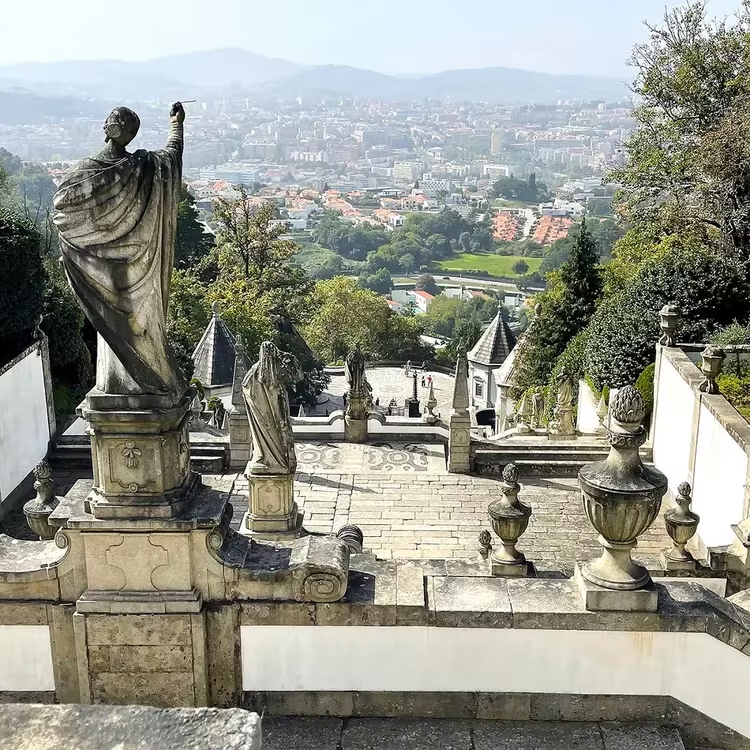
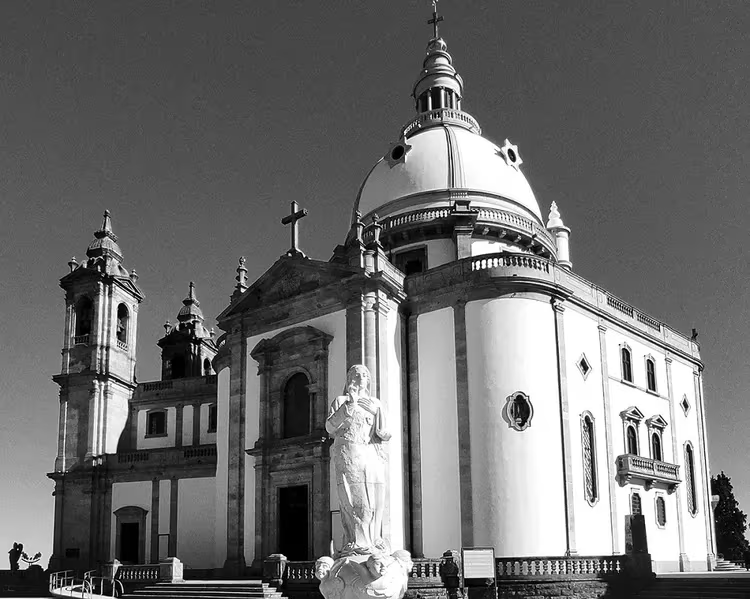
Nossa Senhora do Sameiro Sanctuary
The Church of the Immaculate Conception is located even higher above the city – that’s why the view is more dizzying! The church dedicated to the Virgin Mary does not have such magnificent decoration as the sanctuary of Bom Jesus do Monte. But there is an altar made of white granite and a silver tomb.
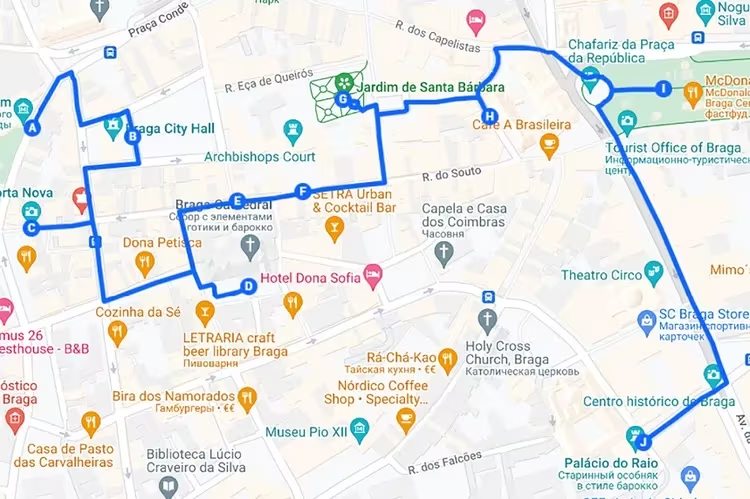
Old city
Now you can look at the historical center of Braga. It is almost entirely pedestrian, dotted with temples and luxurious mansions.
A. Garden and house of Biscaínhos (Jardim da Casa dos Biscaínhos)
The palace of the 17th and 18th centuries is made in the Baroque style. They named it in honor of the craftsmen from Vizcaya who worked on it. For 2 euros you can get inside to look at the exquisite interiors of the mansion and get acquainted with the life of the nobility.
There is a luxurious garden adjacent to the castle. The plants in it are planted in several tiers. The park is full of sculptures and fountains – there is a lot to admire. Admission, by the way, is free.
- The beautiful beaches of Alentejo and its sunny capital, Évora
- Personal experience: the best places in Portugal
- What to see on the road from Lisbon to Porto?
- What is worth seeing in the vicinity of Lisbon?
B. Braga City Hall (Paços do Concelho de Braga)
The headquarters of Portuguese cities are usually located in beautiful historical buildings. Most often it is the town hall, like in Braga.
There is a Pelican fountain on the municipal square. This bird is a Christian symbol of sacrifice and giving. If the bird has not found fish to feed its chicks, it pecks at its own breast, giving the flesh and blood to its children.
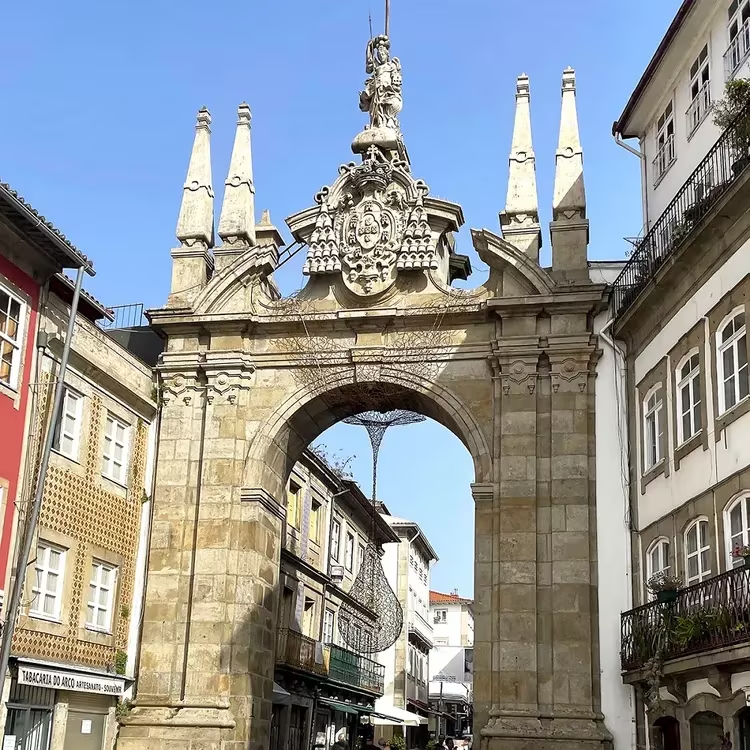
C. Arch of the New Gate (Arco da Porta Nova)
“The city of open doors” – that’s what they said about Braga. The gate, built into the wall surrounding the medieval settlement, was never locked. This arch, preserved from the 18th century, was the western entrance to Braga. It connected the city with the adjacent village. Now behind the “New Gate” there is a pedestrian street full of restaurants, cafes, shops and souvenir shops.
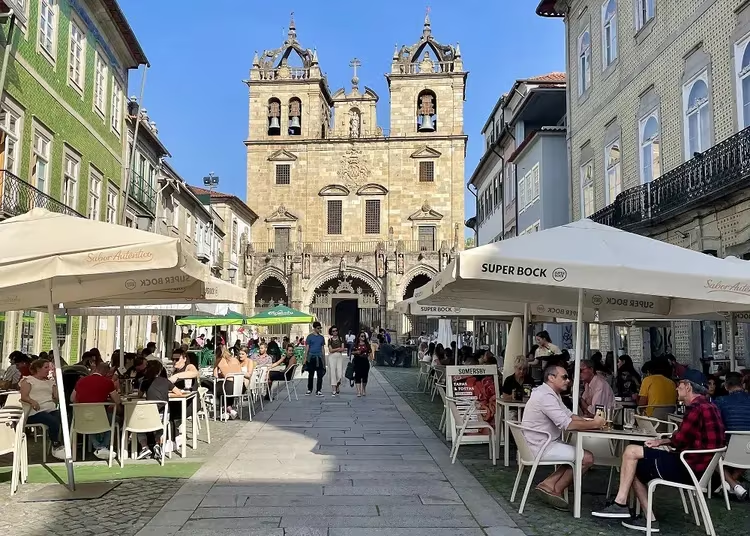
D. Braga Cathedral (Sé de Braga)
The construction of this temple began in the 11th century and they worked on it for quite a long time. Therefore, in different corners of the cathedral you will find different styles of architecture: there is Gothic, Romanesque , Baroque, and Portuguese Manueline. Entrance to the temple is paid – 2 euros. If you want to get into the treasury museum, then the ticket will cost 3 euros.
E. Church of the Misericordia (Igreja da Misericórdia)
Walking around the side of the cathedral, the Temple of Mercy will appear in front of you. This sanctuary is considered the most important architectural monument of the Renaissance in Braga. In addition to the beautiful facade, visitors are impressed by the carved Baroque altar inside the church.
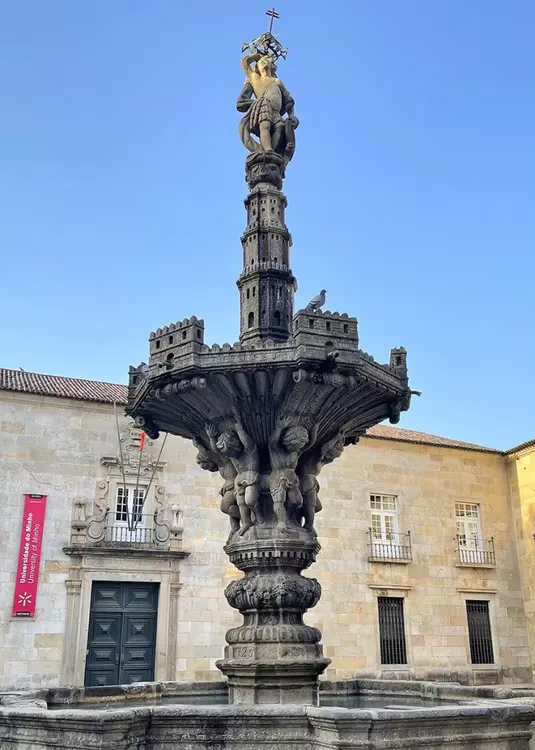
F. Fountain of Castles (Chafariz do Castelo)
A small square with a fountain is located near the Archbishop's Palace (Paço Arquiepiscopiscopal de Braga). In one part of which there is now an ancient library with 10 thousand manuscripts and 300 thousand books. And in the other, right next to the fountain, is the rector’s office of the University of Minho.
The fountain itself was built in the 18th century. Its six jets emerge from elements shaped like locks. The structure is crowned with the figure of a woman, which is a symbol of the city of Braga.
G. Santa Barbara Gardens
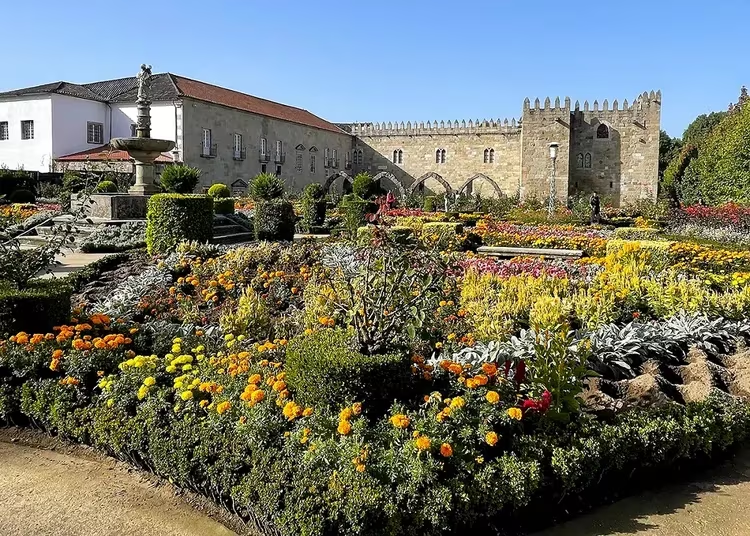
On the other side of the Archbishop's Palace, a garden was laid out in the mid-20th century. It is considered the most beautiful in Braga. The park was built in the Renaissance style. The flower beds are planted in the correct geometric shape. In the center there is a fountain and a statue of St. Barbara, after whom the place is named. It is believed that Barbara protects people from fire, storm and sudden death.
H. Menagem Tower (Torre de Menagem)
In the 11th century there was a castle with a defensive wall here. To this day, only this watchtower remains from the fortress. Torre de Menagem is 30 meters high. There is an observation deck at the top.
I. Republic Square (Praca da Republica)
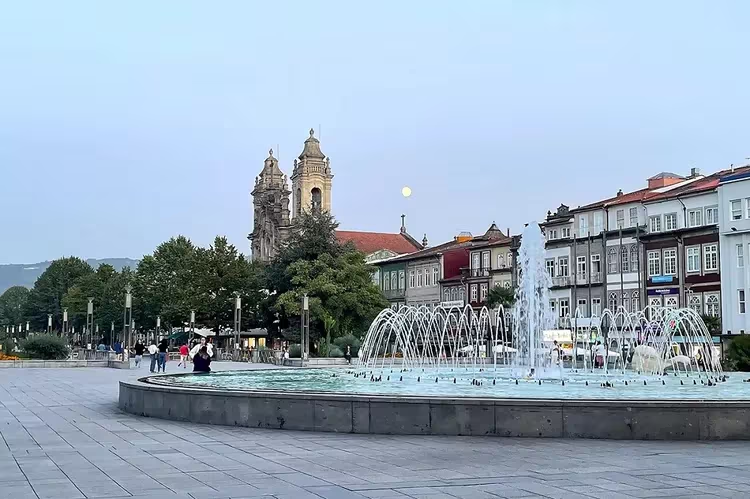
At the end of the 16th century, trade took place in this square. At 18, an arcade was built here – a building decorated with columns and tiles. And next to it they built the Church of Our Lady of Lapa (Igreja da Lapa). Now in the ancient buildings on both sides of the temple there are two iconic cafes, which are over a hundred years old: Vianna and Astória.
J. Palácio do Raio
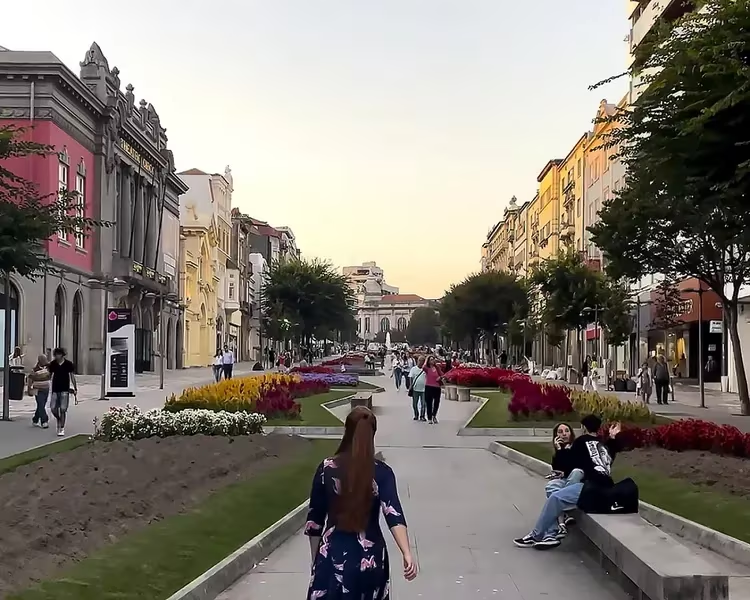
The road to this mansion passes through Liberty Boulevard (Av. da Liberdade), in the houses of which there are shops of popular brands.
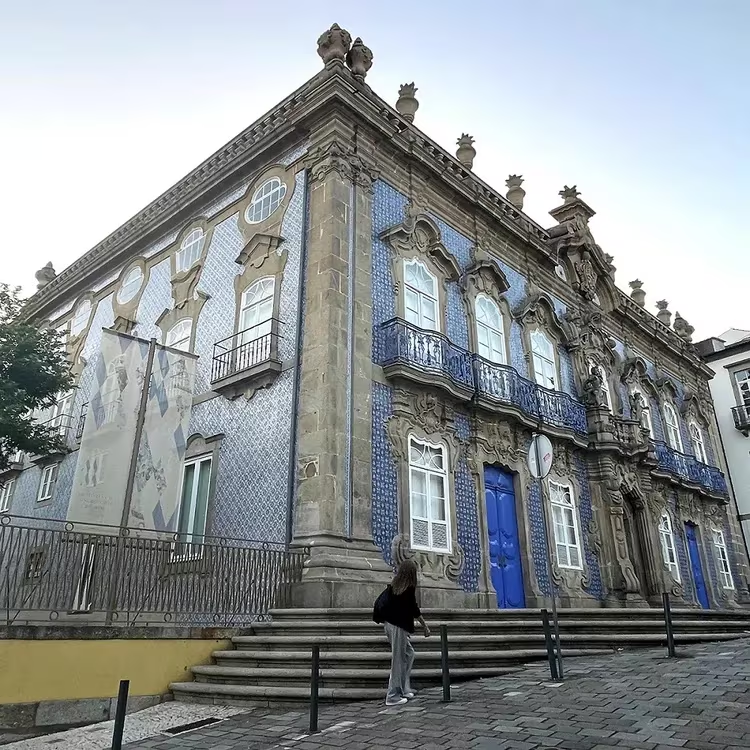
The palace itself is gorgeous – its façade is decorated with bright blue azulejo tiles. This mansion was built in the 18th century. The exterior is in the late Baroque style, and the interior is in the Rococo style.
The house belonged to local businessman Miguel José Rayu. Later, the building passed to the Order of Mercy, and St. Mark's Hospital was located within its walls. Now this mansion houses a museum.
Municipal Market (Praça – City Market)
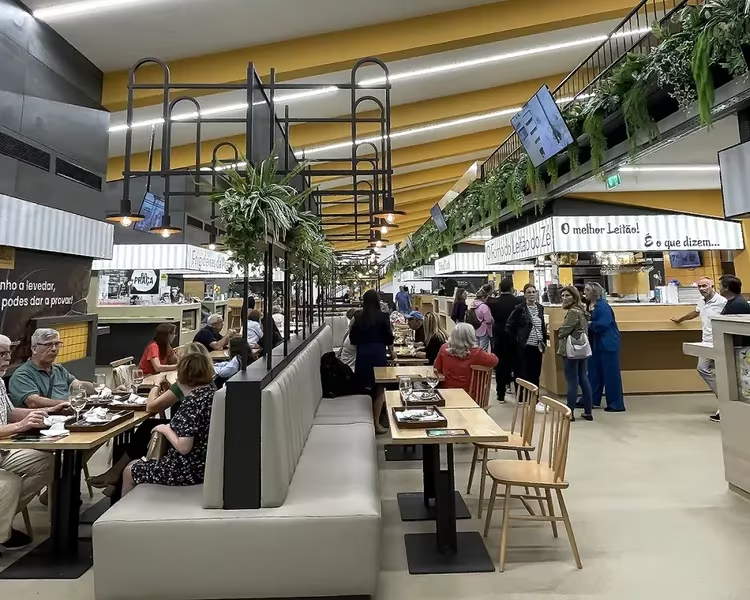
If you're in Braga overnight, check out the city market the next morning – I left a mark on the map. I don’t particularly like markets, but this one has an interesting vibe: modern architecture and trading traditions are harmoniously mixed here.
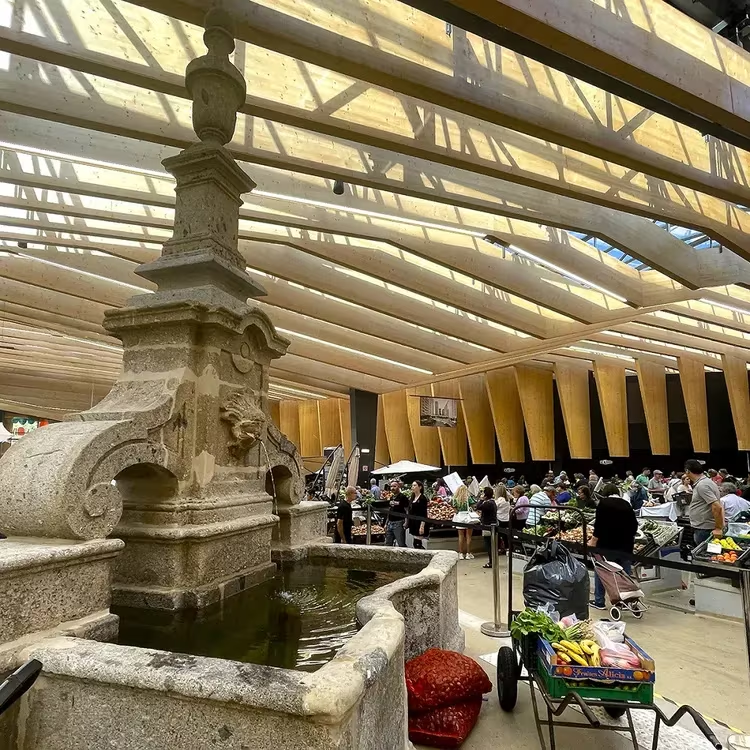
You can come here in the evening. The market itself will be closed, but local restaurants will continue to operate.
What else is worth seeing in the region?
In the province of Minho there are wineries that produce Vinho Verde – “green” wine. You might be interested to know how this slightly sparkling Portuguese drink is made.