

🏰 Warsaw in 24 hours: express guide to the capital of Poland
Warsaw is an important air hub. Low-cost airlines fly from here to different destinations, so I have had the opportunity to visit the Polish capital more than once. It's worth noting that there is a lot to see here. So be sure to get out into the city, even if you only have a few hours to spare.
Warsaw: where did the name of the city come from?
I've heard three versions. The first one is the most beautiful.
1 There is a legend about a fisherman named Vars and a mermaid named Sava. The siren, whose singing caused fishermen's nets to constantly get tangled, was ordered to be tracked and caught by a rich merchant. He decided that if he showed a beautiful half-woman at the market, he would attract more buyers to his shops. The fisherman heard the cry of the captured mermaid, called his friends for help – and they freed the mystical girl. The guy either married her or released her back into the river, for which the mermaid promised to protect the city and its inhabitants. Now Sirenka, as the locals call her, is considered a symbol of Warsaw and is even depicted on the city’s coat of arms.
2 According to another version, the name of the Polish capital comes from the Hungarian word “varos”, which means “fortified city”.
3 Another option: the name Warsaw was formed from the name Wartislav, common in the Middle Ages.
A few historical facts
- The city was first mentioned in chronicles in the 14th century, but settlements on these lands have been known since the 9th century.
- Warsaw became the capital at the end of the 16th century, when, due to a fire in the Krakow residence, the king decided to move here. But the status of the main city was officially confirmed only by the Constitution of 1791.
- Warsaw was repeatedly destroyed. The most powerful happened during World War II. Only 15% of the Old Town remains. The Warsaw residents wanted to restore the center as it was before – based on surviving photographs, drawings and drawings. The townspeople worked on this for about 30 years.
What to see in Warsaw?
Warsaw is quite large – about 2 million people live here. The Vistula River divides the city almost in half. The old part of the settlement is located on the left bank, although the Prague district, on the right, is worth your attention. The city has about 30 palaces, a large number of parks, many museums and galleries – you won’t get bored here.
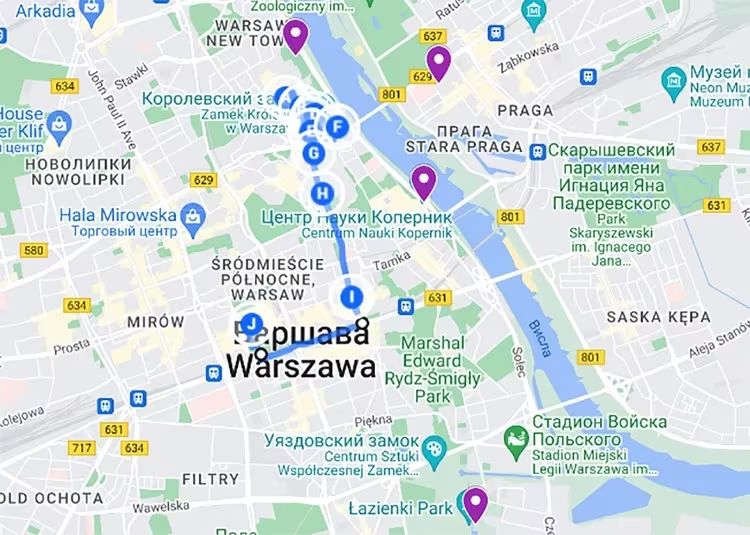
In my five-kilometer route, I tried to collect the most important attractions of the city. I also noted several interesting locations in case I have more time to get to know the capital of Poland.
A. Warsaw Barbican (Barbakan Warszawski)
This outpost separates the New and Old Towns. A powerful wall used to surround the entire historical center of Warsaw. Now you can only see the Barbican. The four-tower defensive structure was 14 meters wide and 15 meters high. True, it turned out to be of little use: artillery was rapidly improving – and this fortress was too tough for it. In the 17th century, the loophole was partially dismantled to make a wider gate for the transport of goods from traders.
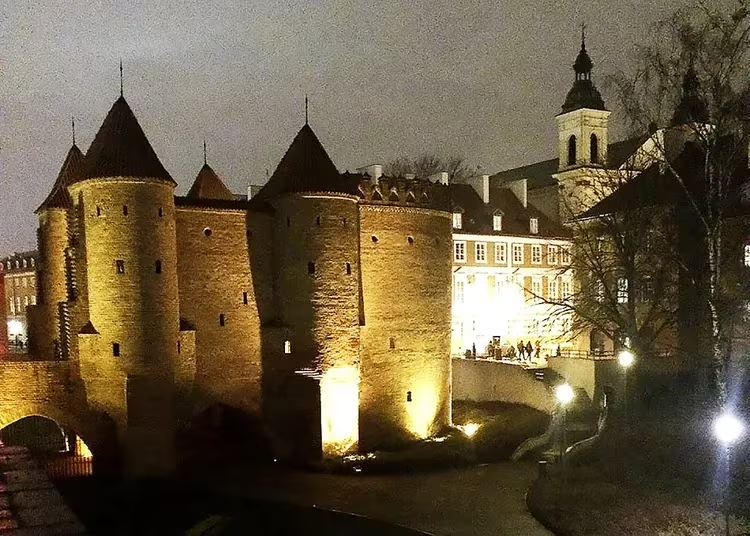
Another settlement began to be built behind the fortress wall in the 15th century. It had its own Town Hall, market square and its own churches. The New and Old Towns were united only in the 18th century.
B. Old Town Market Square (Rynek Starego Miasta)
This square was founded at the end of the 13th century. Fairs and other social events were held here. In the 15th century, the Town Hall was built on the main parade ground. Then at 17 there was a big fire here – the buildings had to be rebuilt. And at 20 they were destroyed by war. Local residents literally raised the square and surrounding streets from the ruins. Now life is in full swing here: restaurants and shops open, street musicians perform and artists sell their works.
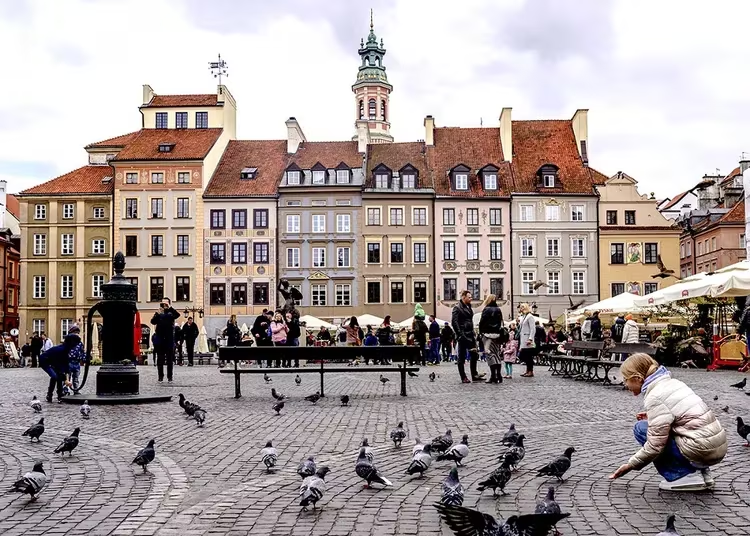
By the way, the statue of the Mermaid, the legend of which was described a little higher, stands in the center of the Market Square. Make a love-related wish for her – and it will definitely come true.
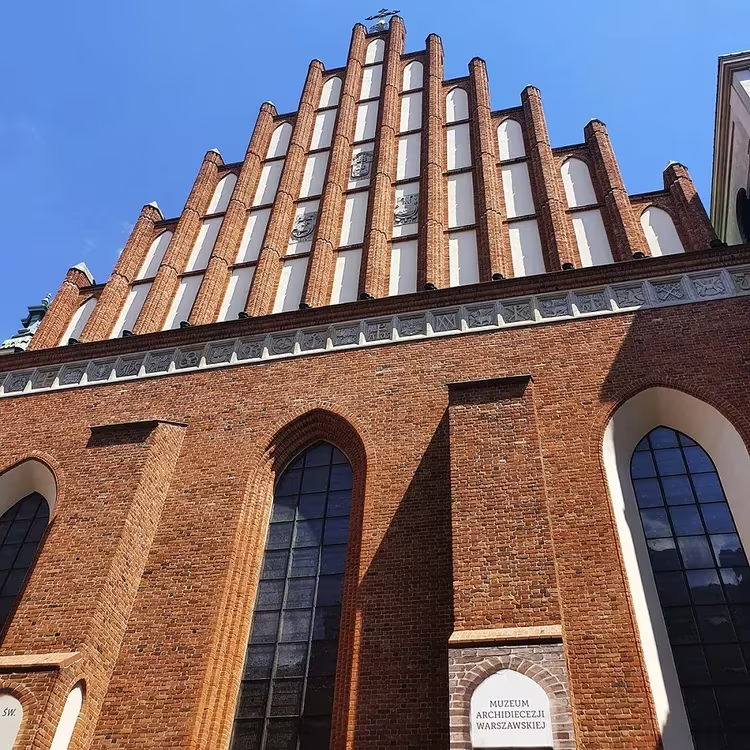
C. St. John's Cathedral (Archikatedra Sw. Jana)
This is the main Catholic church in Warsaw. It was built at the end of the 14th century, but was completely destroyed during the Second World War. While the exterior of the brick Gothic building was restored to its original condition, the interior was not.
The crypt of the temple contains the graves of several famous Poles, including the last Polish king and the first president of Poland.
D. Wish-making bell at Plac Kanonia
Hidden behind the cathedral is a small triangular square. The houses standing along its perimeter belonged to priests – canons. That's why the square is called Canonia. Before this patch was given over for housing, there was a cemetery here.
Interestingly, the square has a covered corridor that led from the castle to the cathedral. So the nobility could enter the temple unnoticed. The passage was built in the 16th century due to the fact that an attempt was made on the king’s life in the local alley.
Pay attention to the “thin house”. The width of its facade is the size of a window – the owner did this in order to reduce property taxes.
In the center of Canonia Square you will see a bell from the 17th century. It was made for a church in the Polish city of Yaroslav, but was never delivered there. Due to a mistake by the foundry worker, a crack formed in the bell and it became “mute.” He was unable to call parishioners to services, but, they say, he learned to make wishes come true. Wish for anything, walk around the bell three times – and wait for a miracle.
E. Castle Square (Plac Zamkowy) of the Old Town
The castle that stands on it became the birthplace of the city. At the beginning of the 17th century, King Sigismund III, having moved the capital to Warsaw, rebuilt the palace for himself. On the square there is a column with a bronze statue of this ruler.
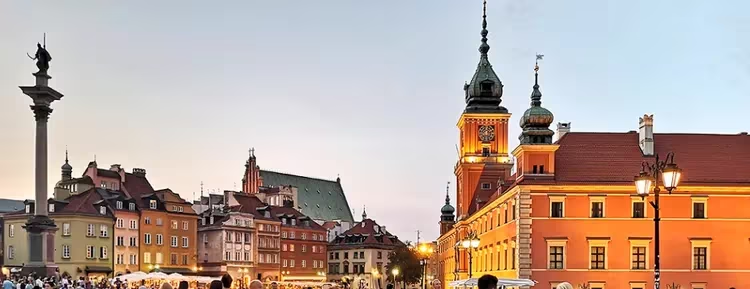
Now within the walls of the royal castle there is a museum with an archive, as well as an exhibition of paintings and decorative arts.
F. Castle Gardens (Ogrody Zamkowe)
Look at the royal residence from the Castle Gardens – the palace looks different from there.
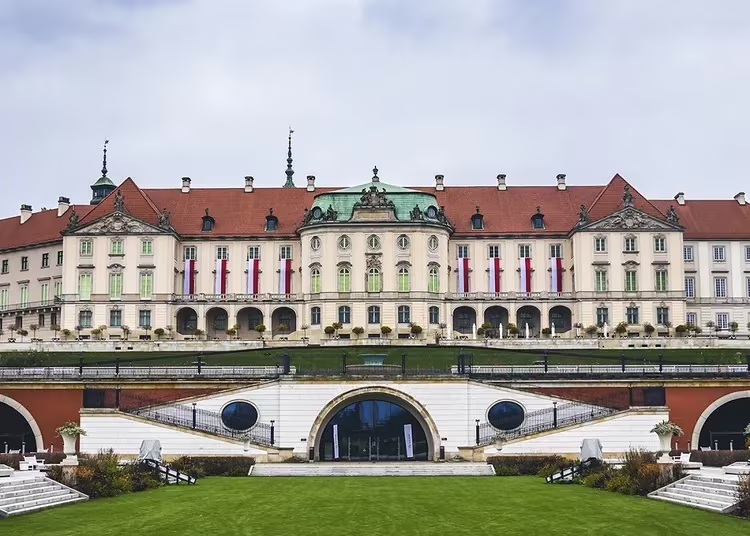
The park on the banks of the Vistula appeared in the Middle Ages. The landscape design has been changed many times since then. The current three-level garden with cute paths and white benches, fountains and statues, hedges and lots of flowers was built in 1991.
G. Church of St. Anne (Kościół Św. Anny)
The history of the temple dates back to the 15th century. Princess Anna of Mazowiecka built a monastery for Franciscan monks on this site. In the 16th century it burned down. Then another Anna, already Radziwill, erected a new temple on the foundation of the monastery. It was rebuilt several times, so it did not reach us in its original form – the current appearance dates back to the 18th century.
There is an observation deck on the bell tower of St. Anne's Church. Just 150 steps up the spiral staircase and you will have the best view of Castle Square.
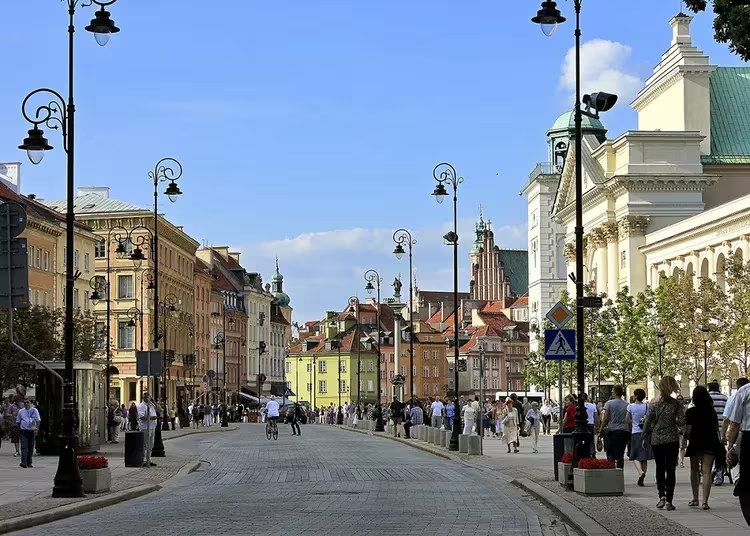
H. Krakowskie Przedmieście Street
The so-called Royal Route begins from Castle Square. It passes through Krakowskie Przedmieście and Nowy Świat streets, Ujazdowska Alley, Belvederska and Sobieski streets and ends at Wilanów Park. Kings traveled along this route to their summer residences.
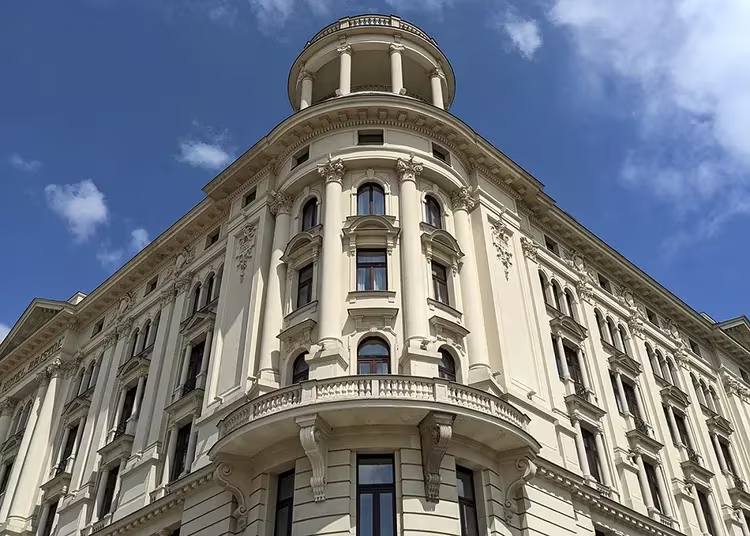
There are many beautiful mansions on Krakowskie Przedmieście Street. Among them are those that currently house the buildings of the University of Warsaw, the Polish Academy of Sciences, and the Ministry of Culture and Art. Here you will see the current Presidential Palace – it will be at point H on the map.
I. Nowy Świat Street
At the monument to Nicolaus Copernicus, Krakowskie Przedmieście turns into another street – Nowy Świat. This is the city's commercial artery with neoclassical architecture. There are many restaurants and cafes, souvenir shops and fashion boutiques in the local buildings.
Pay attention to the marble benches – they have a button that, when pressed, plays Chopin's melodies. The composer, by the way, was born near Warsaw. There is a museum in the capital where music notes and photographs of the creator are stored.
- Non-tourist Warsaw: what to see if it’s not your first time in the city?
- Majestic Krakow: one day itinerary with map
- The best restaurants and cafes for families with children around the world
- 5 best places to while away an evening in Riga
J. Palace of Culture and Science (Palac Kultury i Nauki)
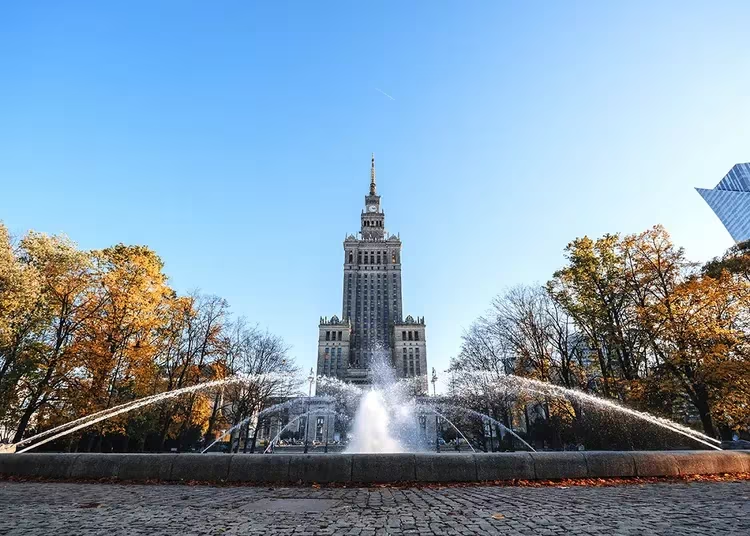
When you reach the Charles de Gaulle roundabout, turn right and go to the most famous landmark of Warsaw – the Palace of Culture and Science. The Stalinist-style building was built in 1955. It became a gift to the Polish people from the Soviet government.
The palace is still the tallest building in the city – 231 meters. Inside there are a theater and cinema, museums and exhibitions, offices of private companies and government agencies, shops and cafes. The main tourist information center is also located here. Buy a ticket to go up to the 30th floor – from there the whole of Warsaw is at your fingertips.
Five additional places to visit
Multimedia Fountain Park
It is located next to the historical heart of Warsaw on the Vistula embankment. The water ensemble was opened in 2011. It consists of 367 springs, the jets of which can rise to a height of 25 meters. The musical fountain is illuminated in different colors. Laser animation is shown on the water haze – a cartoon about Siren. The light and music show can be seen after dark on weekends from May to September.
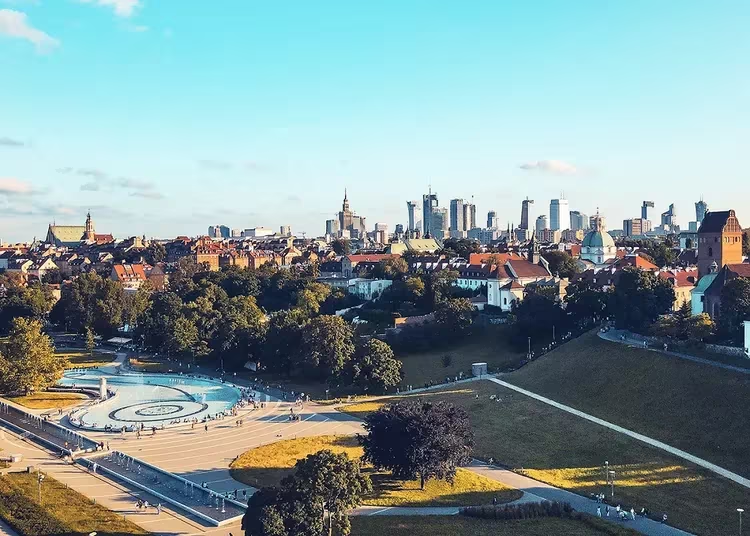
District Prague
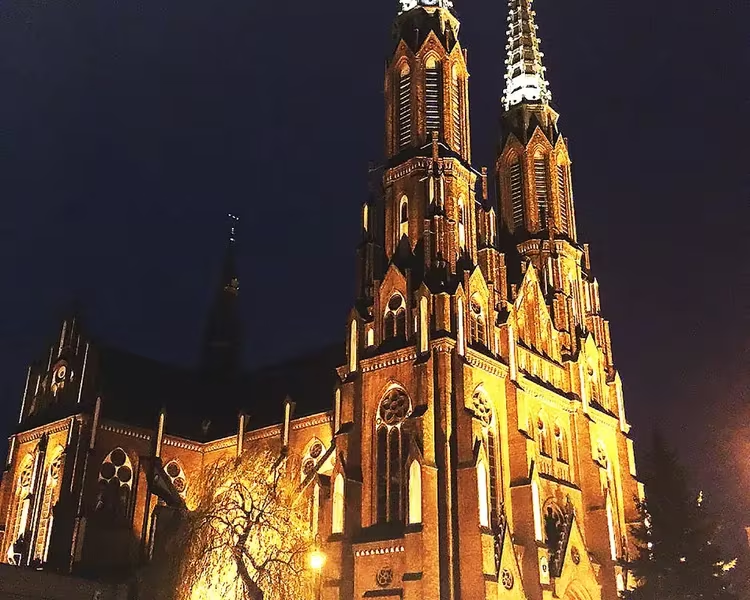
The neo-Gothic Basilica of Saints Michael and Floriana (Bazylika Świętych Michała i Floriana) is very beautiful. But I designated it, rather, as a starting point for a walk through another historical district of Warsaw – Prague.
The name of the place has nothing to do with the capital of the Czech Republic; it comes from the word “pražit” – “to burn out”. In the 15th century, the forest was burned down here and a village was built. In the 17th century, this part of the right bank of the Vistula became a suburb of Warsaw, and at the end of the 18th century it became part of the city.
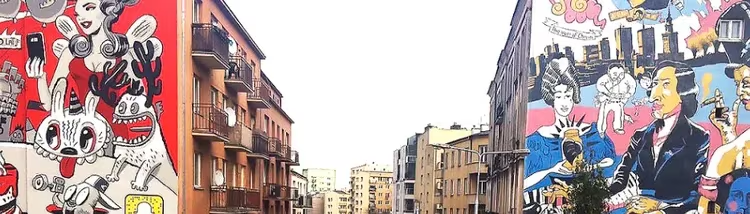
Now this is an area of contrasts: luxurious houses stand next to dilapidated ones, ancient churches stand next to buildings made of glass and concrete. There are a lot of beautiful graffiti and hipster cafes here.
Copernicus Science Center
This is the main science museum in Poland. It opened in 2010. It has six zones that are dedicated to different scientific fields. 450 interactive exhibits allow visitors to conduct experiments. I love places like this – my inner child comes out in them.

The museum was named after a Polish astronomer who lived in the 15th and 16th centuries. Nicolaus Copernicus proposed a heliocentric (solar) model of the Universe. Before this, it was believed that the Earth, and not the Sun, was at the center of the universe.
Lazienki Park
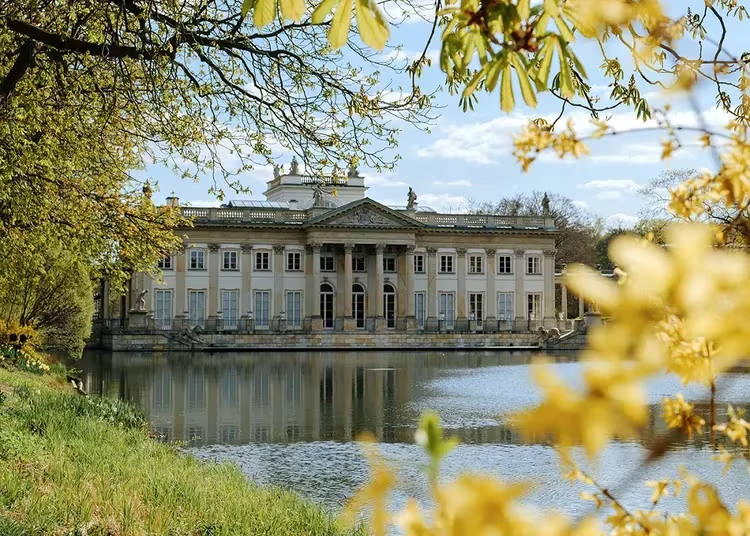
Let's return to the Royal Road. Lazienki Park, home to the summer residence of Stanisław August Poniatowski, the last Polish monarch, is located just 4 km from the main Royal Castle – previously thought to be far from the capital.
The majestic 18th century palace in the style of early classicism was built on an artificial island in the middle of the lake. The park with an area of 75 hectares with cozy paths and canals, greenhouses and exhibition pavilions, an amphitheater and a planetarium is a favorite walking place for many city residents.
Wilanow Palace (Palac w Wilanowie)
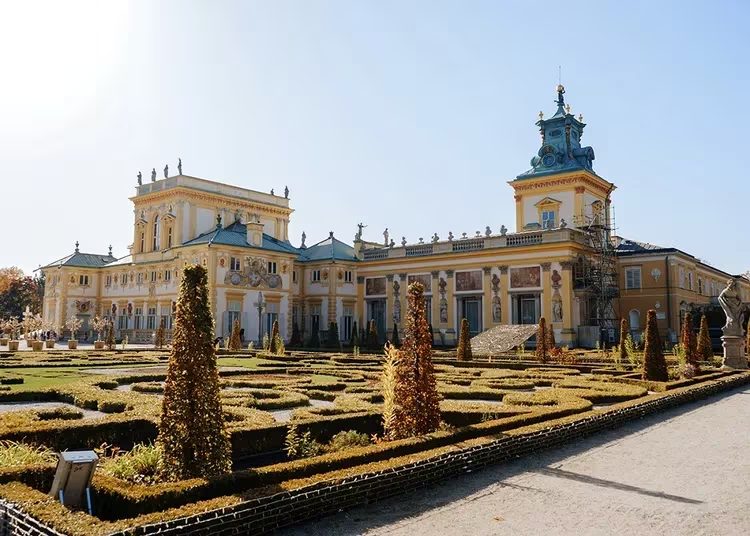
The 17th century summer residence of King John Sobieski is located a little further from the historical heart of Warsaw – 11.5 km along the Royal Route. “Willa Nova” turned into “Wilanów”. The mansion, surrounded by a magnificent garden, was designed after Versailles. Now the luxurious baroque building houses an art museum.
These are the places that I would recommend visiting Warsaw. If you have favorite spots that are not included in the route, share – your recommendations will be useful to travelers. Warsaw is waiting for you!