
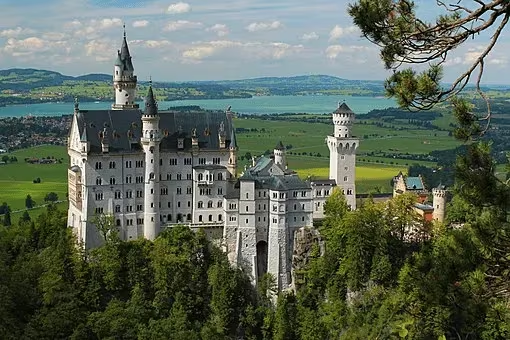
Neuschwanstein Castle in Germany: photo, description, how to get there, Neuschwanstein Castle inside
The fabulous images created by Walt Disney not only delight and educate our children, but also take adults to a wonderful time of fantasy and incredible possibilities. The image of the pointed turrets of the castle begins the countdown before the start of a journey to a world where evil will always be defeated by good, where princesses and fearless knights live, where love and friendship conquer all earthly vices.
The castle, built in Disneyland Paris for Sleeping Beauty, became the prototype for the initial logo of the Disney company. And now it is no longer a secret that the magical “home” for Beauty in the amusement park was a huge model of Neuschwanstein – a Bavarian castle hidden in the Alps. Another interesting castle in Germany that deserves attention is Burg Eltz Castle.
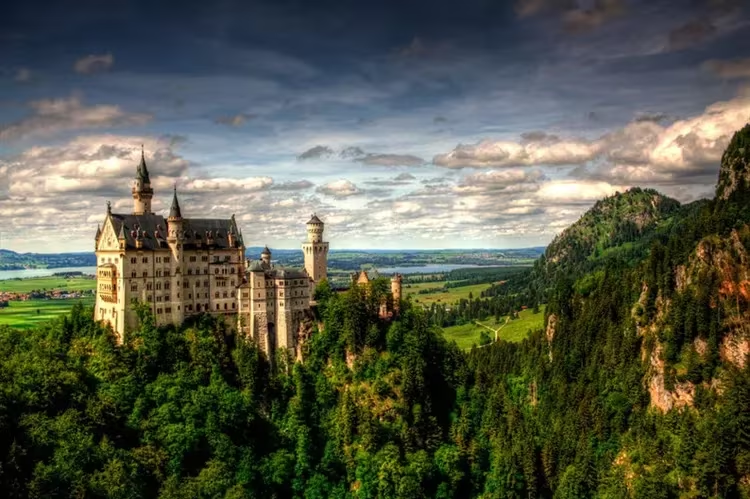
Ludwig II
The Bavarians themselves affectionately call the Bavarian monarch Ludwig II, who ascended the throne in 1864, the “fairytale king,” and he is still recognized as the most mysterious historical figure in these lands. His whole life and even mysterious death was accompanied by legends and conjectures. And the main reason for this was the deep loneliness of the king, which year by year he enjoyed with greater force.
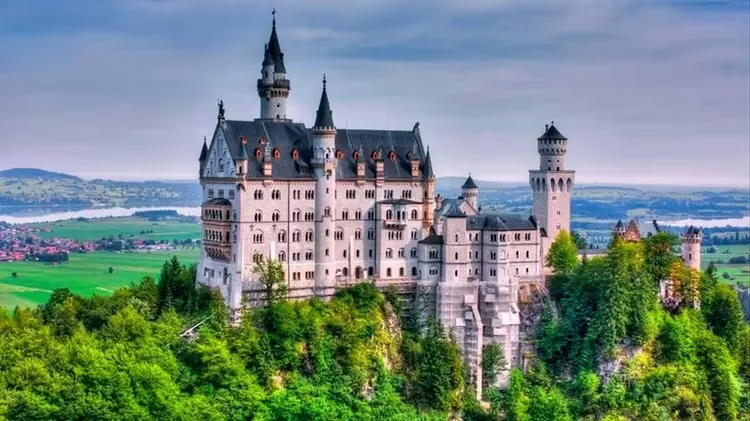
Before starting a conversation about any of the castles built by Ludwig II, each guide will certainly refer to the life story of the Bavarian king: to his childhood and adolescence, the reign, and, of course, the overthrow and mysterious death.
The family estate of the Wittelsbach family, a feudal dynasty of medieval knights, was located on the shores of the most beautiful lake Schwansee (“swan lake”) near the town of Füssen. This is the southeastern Bavarian land, bordering Austria, along which the historical road of the Roman conquerors “romantische strasse” (romantic road) passed. The great migration of the time of Claudius Augustus left many towns and castles along this route, reminiscent of the exploits and merits of medieval knights.
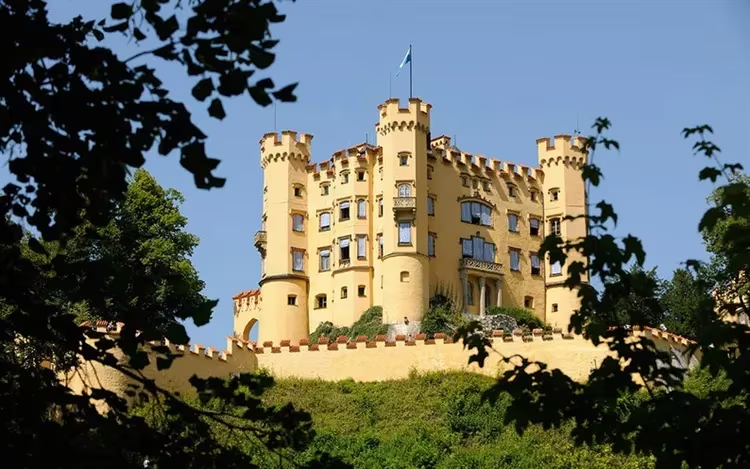
Hohenschwangau Castle, which existed until the 12th century, was raised from ruins by Ludwig's father Maximilian II. Here, in the summer residence of the Wittelsbachs, the childhood and adolescence of a young offspring of a feudal family passed. The entire interior of the castle, including wall tapestries, was saturated with romantic stories of medieval legends about Lohengrin – the swan knight, Tannhäuser, Parsifal and Richard the Lionheart. The boy, representing himself as a participant in fairy tales, and most of all inspired by the image of Lohengrin, grew up dreamy, impressionable, trying to retire from the realities of reality.
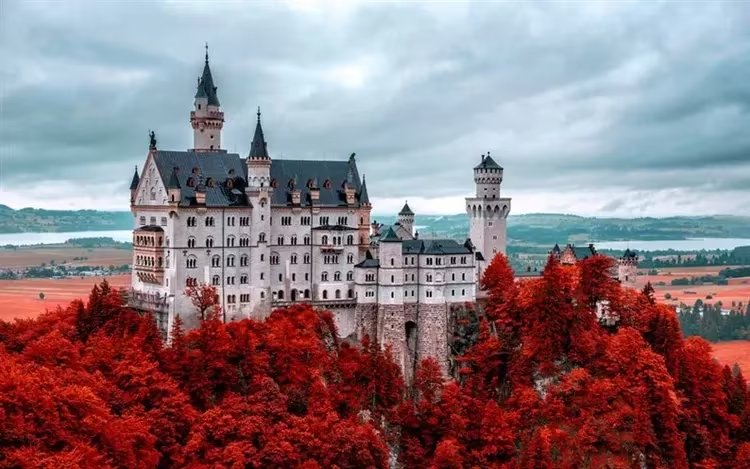
A connoisseur of nature, music and poetry, he also had a great architectural talent. This passion for construction was impressively realized during his rule of the country. And the goal of his whole life was the embodiment of his fantasies into real architectural designs. And there were many ideas. Ludwig II wanted to build several castles, which were supposed to be the epitome of the sophistication of the era of chivalry and romanticism. But he managed to bring to life only three – Linderhof, Herrenchiemsee and Neuschwanstein. The construction of the latter was completed after the death of the monarch. But this did not stop Neuschwanstein from becoming the most popular castle to visit in all of Bavaria.
How to get there
Acquaintance with the castle begins from afar, even at the entrance to the village of Hohenschwangau, where all cars and tourist buses park. Already from here a “postcard” view of the fabulous structure, fortified on the top of the mountain, opens up. In contrast to European castles, which were built as defensive structures to demonstrate strength and power, Neuschwanstein looks like a puppet palace for a fairy-tale character, demonstrating a clear distance from real life.
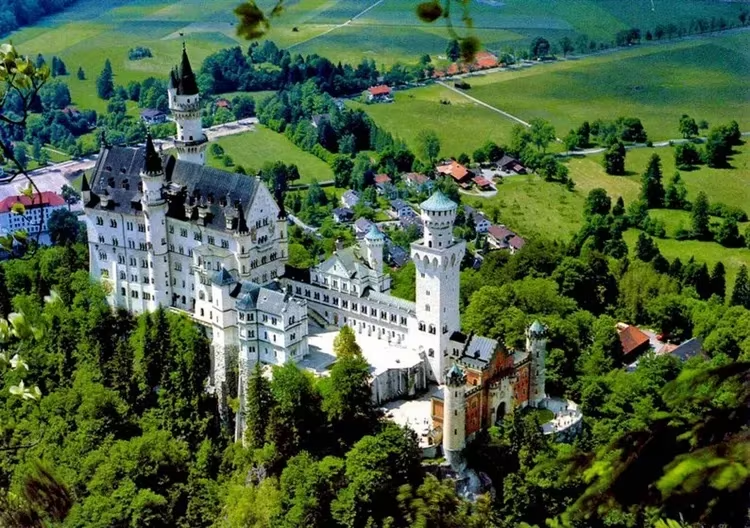
But the reality is thousands of tourists seeking to get inside the castle, and the terminal at the foot of the mountain, which allows you to purchase a “pass” to this fairy tale. A ticket is a visitor's registration and reservation of a place in an excursion group, indicating the start time. You can climb to the castle on foot (about an hour), by a special bus, or by a stylized old horse-drawn cart with a colorful Bavarian coachman. Many choose the latter option, thereby getting the opportunity to admire the unforgettable landscapes and feel the atmosphere of fabulousness in advance.
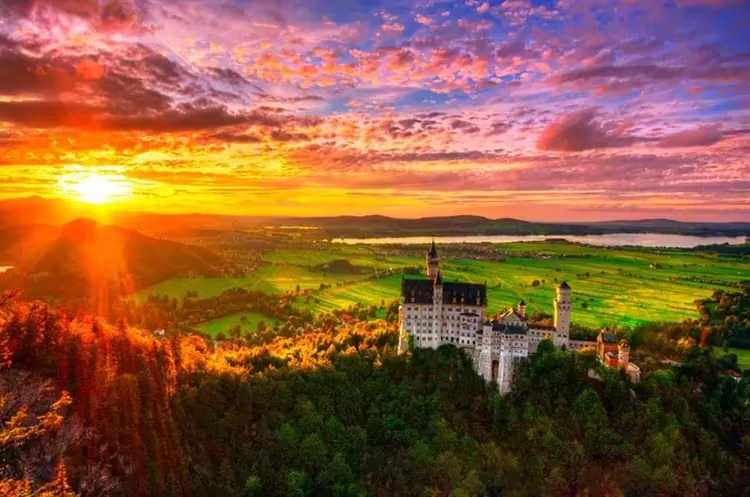
The observation platform at the foot of the castle allows you to see all the details of the surrounding landscape. And he's impressive! On one side, the Alpine peaks are reflected in the crystal waters of the Alpsee. To the right is a lush green valley with a white church of the village of Schwangau, and on the left side, behind the chess profile of the Hohenschwangau castle, you can see the small lake Schwansee.
Despite its unimpressive size, it was it that inspired the landscape for Tchaikovsky's creation of his elegant Swan Lake. Of course, the composer's creative flight was born not only by the bewitching Bavarian landscapes. The birth of images and magical music directly related to Wagner's opera and the legend of the swan knight Lohengrin.
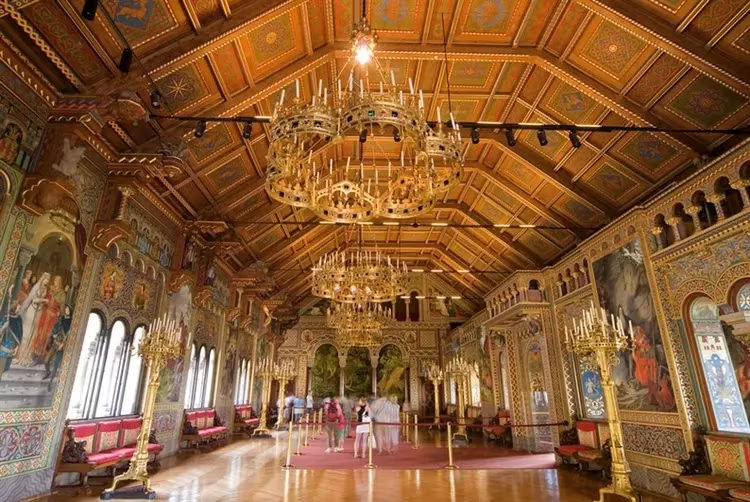
When talking about Neuschwanstein, one cannot fail to mention the special attitude of King Ludwig II towards the German composer. At the age of sixteen, the king was fascinated by Wagner's music at the premiere of the opera Lohengrin. All his inspired fantasies were embodied on that stage, and a few years later the king met the great composer. Throughout his life, the “fairytale king” was a patron and patron of the musician. He dreamed that Wagner would write his future creations in Neuschwanstein's Swan Castle.
We also recommend:
Building
The construction of Neuschwanstein (“New Swan Rock”) was determined on the site where two Schwangau fortresses, already destroyed by time, had previously been located. The artificial undermining of the rock made it possible to create a platform for future construction. A road and a pipeline were laid to the top of the mountain, after which, immediately, in 1869, construction began, the pace of which surprised the entire district.
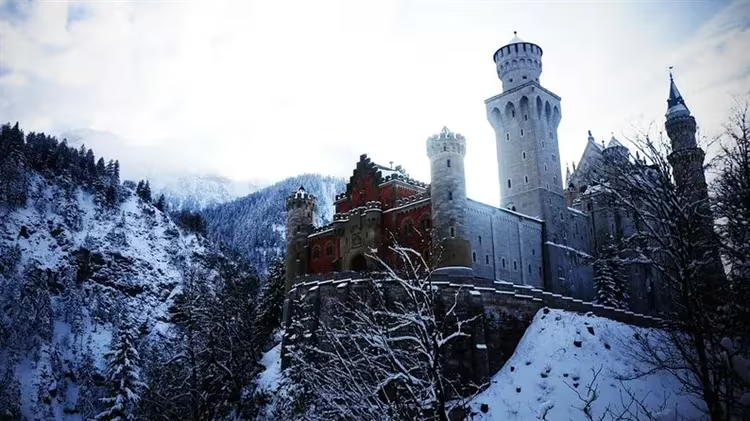
I must say that being an ardent supporter of all the innovations of the technical progress of that time, Ludwig II sought to apply them in the implementation of his projects. To facilitate the transportation of goods and building materials at the construction site, a steam crane and locomobiles were used. The novelties of technological progress were also used inside the architectural masterpiece: plumbing, central heating and a telephone system.
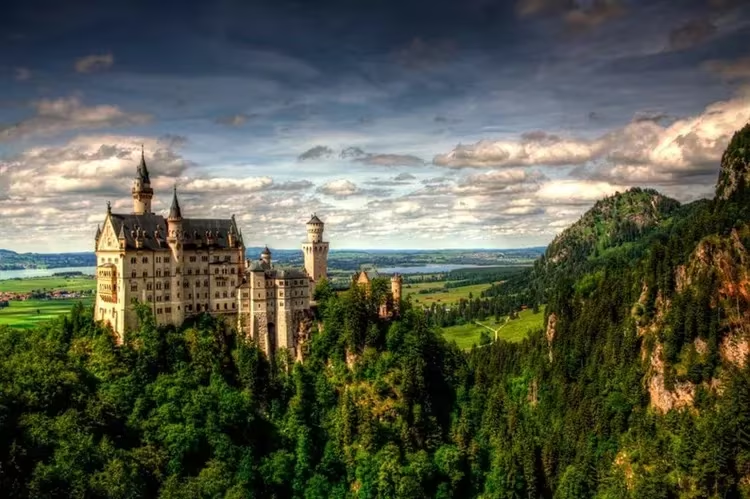
The creators of the project, architect Eduard Riedel and set designer Christian Jank, presented more than 60 sketches to the king. And since the idea itself was entirely devoted to Wagner, the inspiration of the creators was based on the impressions of the Wartburg castle, located in the Thuringian Forest, where the legendary “Competition of Singers” was held in the 11th century. According to the project, which, unfortunately, was not given a chance to be fully realized, a palace, women's quarters, a donjon, a knight's house and an entrance gate were planned in the castle ensemble.
Architecture
The entrance gate, crowned with the Bavarian coat of arms, greets visitors to the castle with bright colors of red brick and yellow sandstone. From the territory of the courtyard, framed by two terraces, a journey through the interiors of the castle begins. Guides with great love, even with some subservience, talk about every corner of the buildings, where it is only possible to lead visitors.
Almost everything surprises: the ideas of the project, the location, the purpose of certain rooms and interior items. The compositions of the facades thought out to the smallest detail, the interior decoration of the rooms and the “surprises” of the interiors create the impression that a theatrical action can unfold here at any moment. In Neuschwanschein, obviously, the basic rule of plot intrigue is observed: with each step, interest increases.
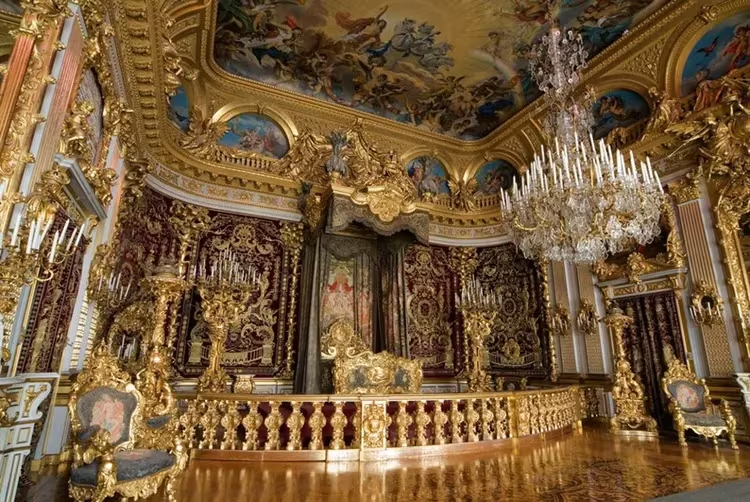
There are many architectural and interior “surprises” that strike the imagination of visitors. By 1886, only 15 of the 80 rooms of the castle planned by the king were completed. Most of them are very intimate. The chambers are designed for only one person – Ludwig himself. Carpet paintings covering the walls of each of the rooms reveal various plots of medieval legends and, of course, Wagner's operas.
Hall of Choirs
Returning to the favorite of Ludwig II Wanger, it must be said that the main hall, which was intended for a grandiose musical prospect with theatrical performances and competitions of singers, became the Hall of Singers. The massive trapezoidal oak ceiling that covers the hall makes a strong impression not only with its shape and decor, but also serves as an excellent resonator for sound, creating wonderful acoustics. A conditional small stage, as it were, is always ready to unfold the action and fill the hall with music connoisseurs. But, sadly, Wagner, to whom the creation of this Hall was dedicated, has never been here.
The journey through the castle passes sequentially through all the living quarters of the palace, in which the Bavarian monarch managed to live for just over five months. And here, surprises await visitors who are amazed by the decoration.
Library
Moving through the salon – a library, the design of which is entirely dedicated to Parsifal and Lohengrin, the guide stops his attention on a small, carved door. The surprise that opens behind the oak gates delights and amazes everyone. Here is the grotto. A skillfully created cave with a swimming pool and lighting is a place of unity between the king and nature. According to the project, the grotto is a through room. From it, the monarch could get into his office, where the surroundings again corresponded to the general style of the castle.
Throne room
The pinnacle of emotional impressions from the castle is the Throne Room, which occupies three floors of the western wing of the palace. Here, neo-Byzantine style is maintained in every detail: the perimeter of the room is framed by columns, the basilica is topped by a 15-meter dome with images of canonized monarchs. The walls, painted in a romantic style, show various battle scenes of the Crusades, and there is not a single drop of blood on their depiction. The ensemble is completed by a majestic gilded chandelier with 96 candles, cast in bronze in the shape of a Byzantine crown, a symbol of absolute sovereign power.
And one more, now sad “surprise”. A 9-step staircase in the Throne Room leads to a marble podium, the place where the throne should rise. But they did not have time to make it during the life of the monarch, so this place remained empty. It is here that a complete understanding of the unfinished image of the ruler of Bavaria comes, who did not have time to realize all his fantastic plans.
I also recommend reading Count Dracula's Castle. Fantastic Reality, Frankenstein Castle.