
Petřín Hill in Prague – history, photo, description, attractions, how to get there, map
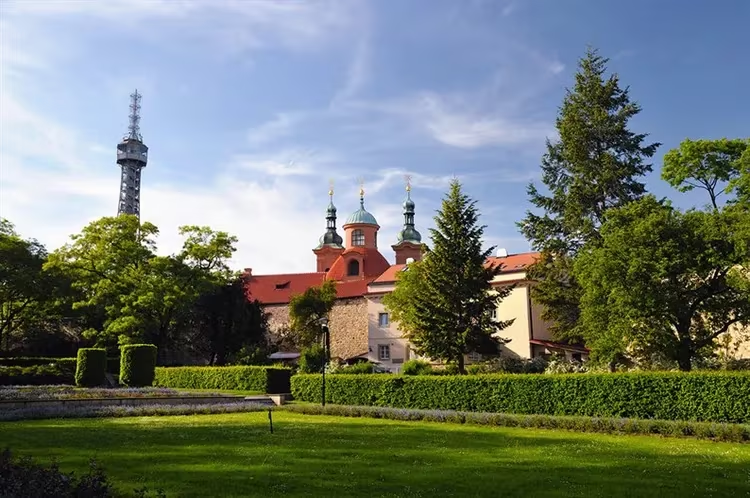
Petrin hill majestically stretches on the left bank of the Vltava. Far from the noisy center of the capital, it awaits inquisitive travelers, offering a host of amazing places, from an astronomical observatory to the Way of the Cross. It will take a lot of time to get around all the interesting objects, but believe me, it's worth it!
Story
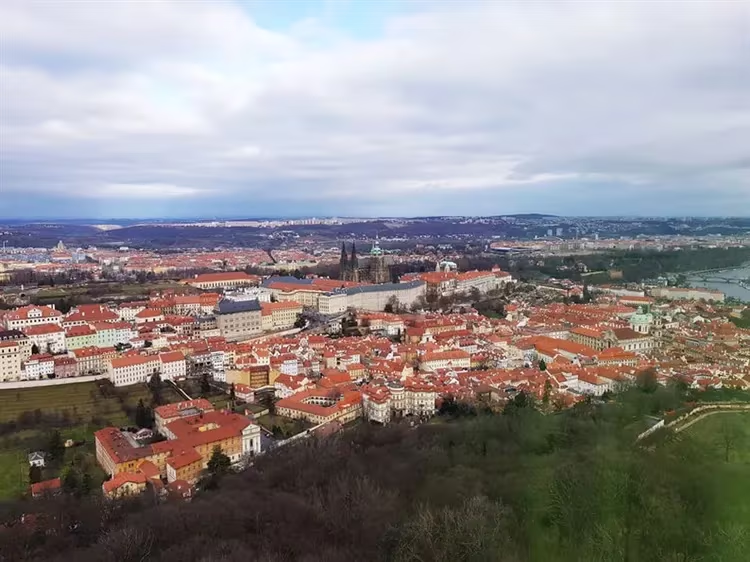
The sonorous and familiar name of Petřín Hill was not immediately received. At different times it was called “Hora” (mountain), “Kopec” (hill) and the hill of St. Lawrence in accordance with the church standing on top. The word “Petrshin” itself comes from the Latin “petrae”, i.e. stone or mountain The stone called “opuka” was mined here for a long time, which was later used in the construction of most of the houses in Prague.Before it began to be mined, the hill was completely covered with trees.
It is reliably known that it was on this hill that the local pagans worshiped the gods, in particular, Perun. It also served as a place of execution for some time. When representatives of the Přemyslid dynasty destroyed the Slavnikovets family in Libice nad Cidlinou in 995, they hung some of them on the gallows, right on the Petřín Hill. Executions here stopped only when Charles IV erected the Hungry Wall. Its construction saved many ordinary people from starvation – each worker was given daily rations, which is why she got her sonorous name. In the same period, vineyards were spread on Petřín.
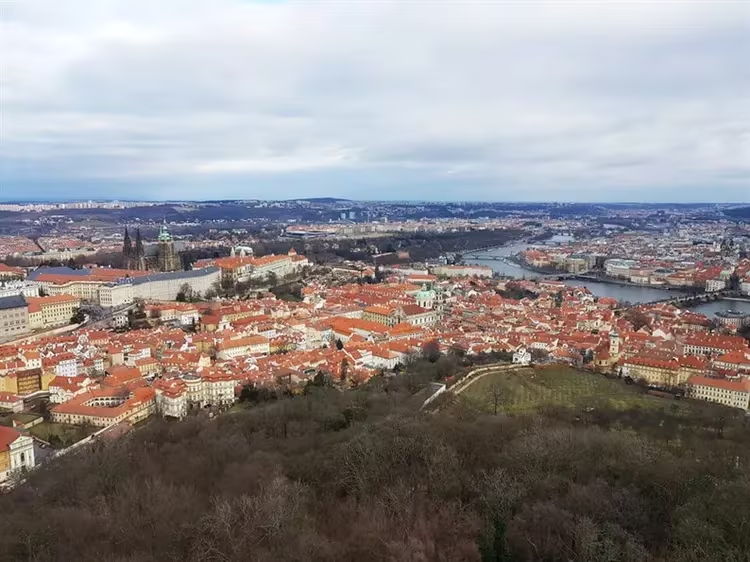
The Renaissance brought the hill popularity among the nobility. By decree of Emperor Rudolph II, its territory was ennobled by planting ornamental trees and shrubs. However, peace and tranquility did not always reign in Petrin: several times during its long history it served as a refuge for troops. For example, in 1611, the battalions of Leopold I settled here. Of course, such occupations had a detrimental effect on the state of the hill.
In addition, instead of parks and paths, military fortifications and camps had to be built.
Magnificent parks with statues of Czech masters installed in them were spread later. Today, Petřín Hill is one of the main sights of Prague. Curiously, there is a legend among the people according to which the Czech princess Libuše predicted the birth of Prague from the top of Petřín Hill.
sights
Petřín Hill is a unique place where opposing trends intertwine in an amazing way, in particular, science and religion. On the one hand, the Church of St. Lawrence, the Chapel of the Holy Sepulcher, the Procession and the Golgotha Chapel open before travelers. On the other hand, the progressive Stefanik Observatory, the mirror labyrinth, the famous student dormitory and a bizarre funicular.
And all this is framed by wonderful gardens that lead tourists from one attraction to another, accompanied by the rustle of foliage and the intoxicating scent of flowers. But there is also the Strahov Stadium – a refuge for athletes and artists, and the Petrin Tower, which inexorably reminds avid travelers of Paris. Indeed, an amazing place!
Funicular
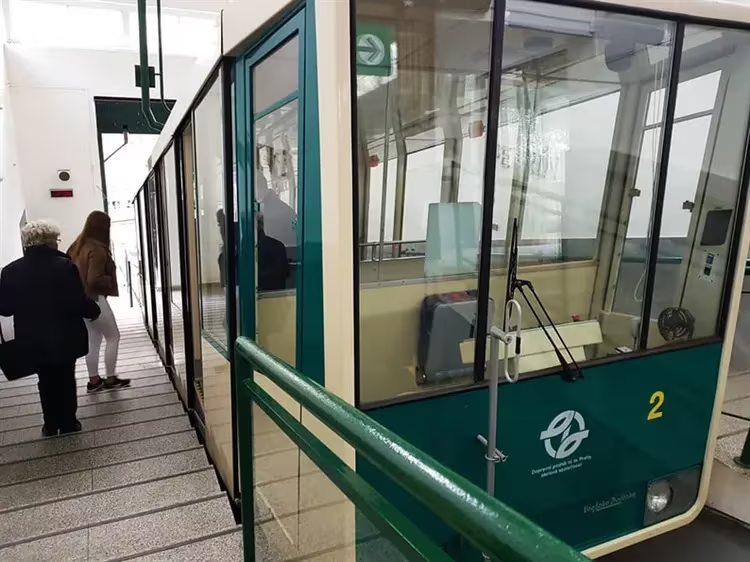
The funicular is a very convenient and quick way to get to Petrina Hill. Its construction began in 1890. The first test run took place on July 13, 1891, and within a few days the flights became daily. One trip took about six minutes, and until the First World War the funicular operated non-stop. After that, he worked until 1921, but the expenses were too high, and the trips were suspended.
In 1931, the funicular became the property of Prague Electric Enterprises.
The new owner brought electricity to the funicular, which was completely reconstructed and started working in June 1932. Flights were again suspended during the Second World War, after which the funicular was repaired again. Another misfortune befell transport in 1965 – a landslide occurred on Petřín, partially damaging the mechanism. And since landslides occurred repeatedly, for safety reasons, the funicular was closed.
In 1981, it was decided to repair the funicular, one work started only two years later. Completely new transport booths were made and the grand opening took place on June 15, 1985. Since then, the funicular has been operating regularly. He moves up and down the mountain, passing more than five hundred meters. The funicular is owned by the Prague Public Transport Company, ie. officially part of the city‘s public transport system.
Stadium
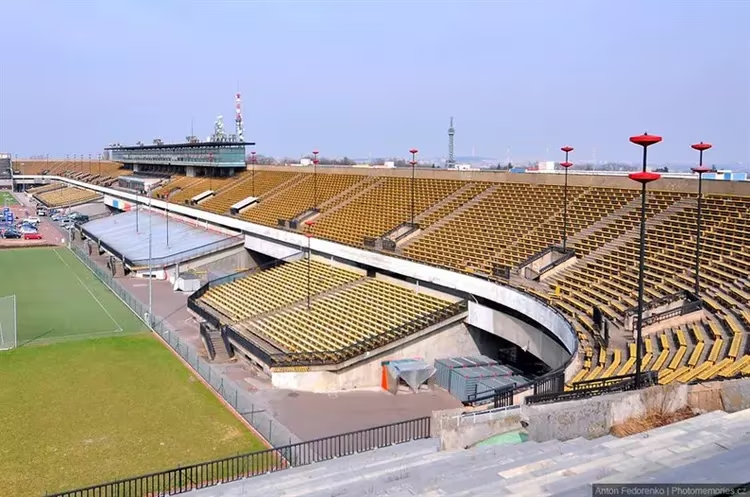
The Strahov Stadium is one of the largest in the world. The very word “stadium” is of Greek origin and means a certain sports field. Such a place was built in Strahov in 1926 under the direction of the architect Alois Driak. The structure was wooden and survived in its original form for about six years until it was largely reconstructed. Reconstruction work went on from 1948 to 1975. During this period, the stadium hosted sports and athletics events – mass sports events in various sports. The first Olympics, which started on June 23, 1955, marked the 10th anniversary of the liberation of Czechoslovakia by the Red Army.
Spartakiads were regularly held in 1960, 1965, 1975, 1980, 1985. In 1960, during the grandiose propaganda of the communist regime, seven hundred and fifty thousand gymnasts and more than two million spectators took part in it. Everyone could participate in the competition, from young to old, women and men, and, of course, soldiers. The greatest event of the early nineties for the Strahov Stadium was the largest rock concert held on 18 August. Then the world-famous group “The Rolling Stones” performed in front of an audience of one hundred and fifty thousand people.
After the fall of the communist regime, the state of the stadium fell into disrepair, as it was hardly used. At the beginning of the twenty-first century, it was renovated at the request of the leadership of the Sparta Prague football club. Large-scale concerts began to be organized again. To date, such stars as Guns N' Roses, Bon Jovi, Aerosmith, Pink Floyd, U2, AC/DC have performed at the Strahov Stadium.
Strahov Dormitory and Silicon Hill Club
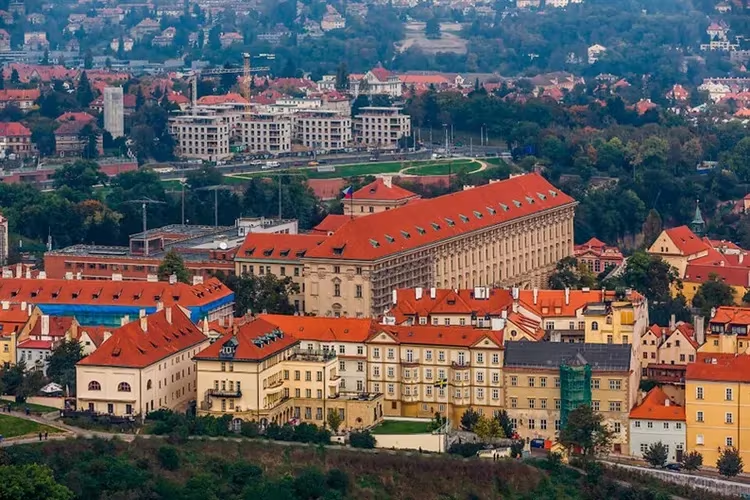
The Strahov hostel was built between 1964 and 1965. Excluding the first block (non-residential), the entire current complex was installed during that year. The Strahov hostel performed various functions. During the Spartakiad, its premises were used as locker rooms for gymnasts. In addition, the hostel has repeatedly served as a refuge in critical situations, such as floods, landslides and other natural disasters. Strahov consists of twelve blocks, which can accommodate about four and a half thousand students. Students of the Czech Technical University are accommodated in rooms that can accommodate from 2 to 10 people.
The infrastructure of the complex also includes public premises: a canteen, clubs, a shop, a playground, a copy center and a parking lot. It is by no means easy for students to get into the hostel. The leadership of the Czech Technical University has defined clear standards for those who apply for housing. The main condition is the remoteness of the main place of residence from Prague, and the second – academic grades. Only the best students from the far reaches of the Czech Republic can get into the Strahov hostel.
The hostel also houses the largest student club called “Silicon Hill”. Their activities are entirely tied to the support of the local network. On a global scale, this is the largest network organized by students. Joining the club is a purely voluntary matter, and the main source of funding for club projects is membership fees, the second is voluntary donations. Part of the financial resources goes to support the system, part is released for outstanding student ideas. In order to count on funding, it is necessary to prepare a complete and intriguing presentation.
flower garden
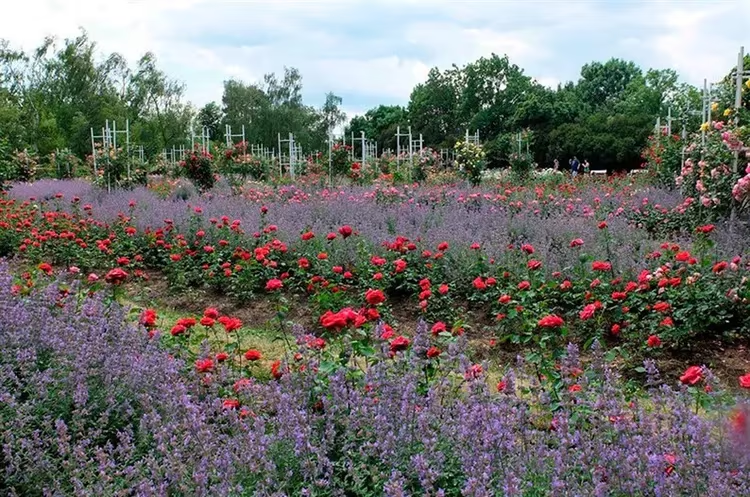
One of the most beautiful gardens in the Czech capital is located on the very top of the hill. On one side, the garden is surrounded by the Hungry Wall, built in the fourteenth century. The first plants were planted in 1932. You can enter the garden through the gate, which the locals called “secret”. The style of the Garden of Flowers is reminiscent of classic British parks, and its area is less than a hectare.
Plants in the garden are mainly planted perennials with different flowering periods. This fact cannot but rejoice, as tourists can admire the local beauties at any time of the year. The Garden of Flowers is far from being the most prominent place on Petřín Hill, but it exudes some kind of calmness and kindness, and on a cozy bench it is a great rest from many hours of walking.
rose garden
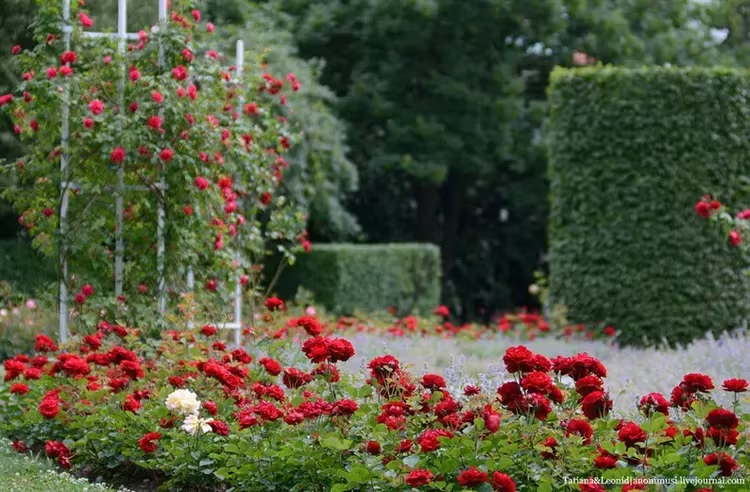
The rose garden covers an area of six hectares. It is located on Petřín Hill between the Stefanik Observatory and the upper funicular station. The garden extends 320-328 meters above sea level. Inside it is an abundance of flower beds planted with roses, the number of varieties of which reaches twelve thousand. There are also many cozy benches where you can relax after a tiring walk, enjoying the smell of marvelous roses.
Initially, this part of Petřín Hill was covered with forests. Later it was planted with grapes and fruit trees. Until 1932, the region was occupied by troops. When the units were redeployed, a rose garden was founded between 1932-1934. The garden was designed by Josef Kumpan. More than eight thousand rose bushes of various varieties and blooms were delivered to the rose garden. Walking through the garden, you can go straight to the observation deck.
Stefanik Observatory
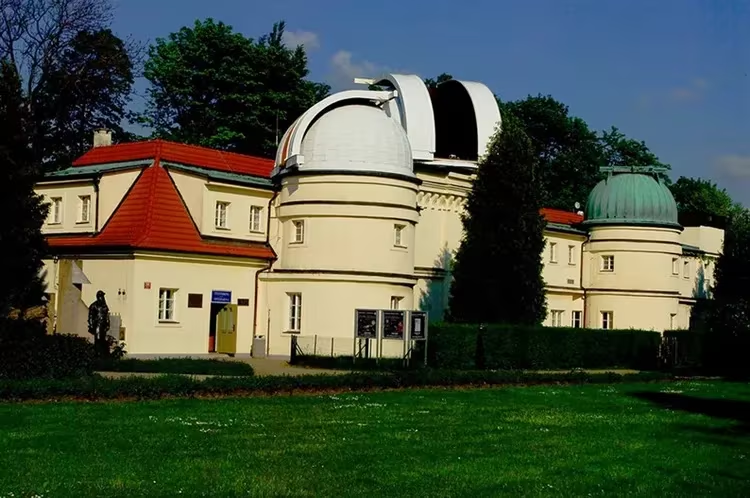
The observatory was built in 1928 and operated by the Czech Astronomical Company. It became public the following year. The observatory got its name in honor of an outstanding military man, general of the French army, pilot and one of the founders of the Czechoslovak state, as well as astronomer Milan Rastislav Stefanik. There is a statue of him next to the sundial.
The observatory houses many telescopes for astronomical observations and research. Chief among the devices is the refractor telescope, or astrograph produced by the Zeiss factories. It is fixed under the very dome. Between 1905 and 1907, it was donated to the observatory by the widow of the Viennese selenographer Madame König. The 1967 Maskutov-Cassegrain telescope can be found on the west side, and the modern MEADE LX200 on the east side. The eastern part is used only for professional research and scientific activities.
Surprisingly, the comet finder, installed there in 1921, still works great to this day. Those who dare to visit the observatory will be lucky enough to see the equipment and museum exposition on an astronomical theme. In addition, lecturers often give lectures on astronomy and astronautics here.
Petrin Tower
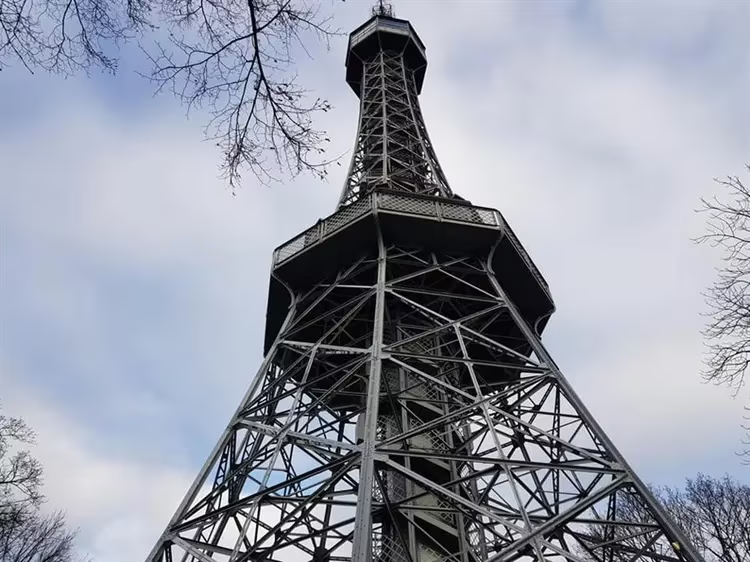
In 1889 the Czech Tourist Club organized a trip to Paris. The participants of the trip were fascinated by the Eiffel Tower and decided to build a similar one in Prague. Construction work on Petřín Hill began in March 1891. The metal structure was made in four weeks according to the project of the leading engineer of one of the departments of the local machine-building plant Frantisek Plaszil and engineer Julius Suchek. It took several more months to build the stairs, after which the highest floor of the tower was installed.
Four months later, on July 2, 1891, everything was completed. The grand opening took place on August 20. Petrin, decorated in national colors, was full of people. The total weight of the observation tower is seventy-four tons, and the height is sixty meters. There is a restaurant on the first floor. Visitors can use the cabin, located at a height of fifty meters, to enjoy the amazing view of Prague. You can get there using a spiral staircase. On the “minus first” floor you can see the exposition of the Czech Tourist Club.
Mirror Maze
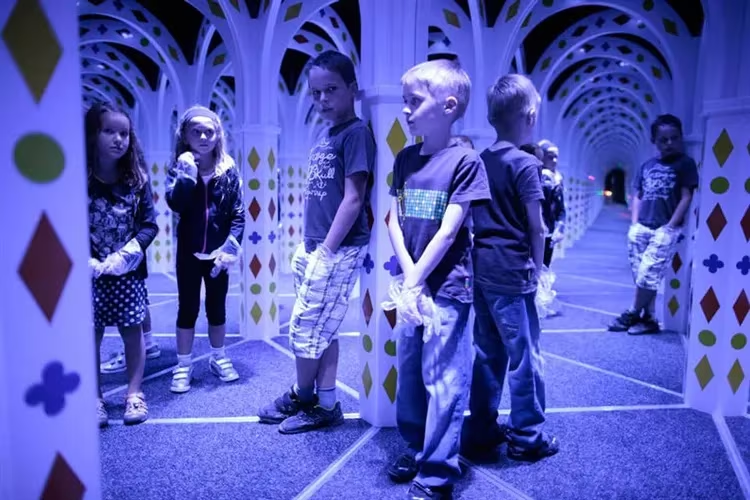
A popular destination for travelers of all ages. From the outside, the building looks like a medieval castle. It was built in 1891 by the Prague master Matej Bilek. Two years later, a reconstruction was carried out, during which two rooms were given over to a mirror labyrinth (a total of thirty-one mirrors were installed). An unforgettable journey will begin in a room depicting the battle of the Czechs against the Swedes on the Charles Bridge in 1648, and then on the way there will be a hall of laughter filled with crooked mirrors.
Prague is full of creepy and unusual legends, and one of them is connected with the mirror labyrinth. Say, once several students from a hostel nearby went into a labyrinth, but never returned, remaining in the looking glass.
Church of St. Lawrence
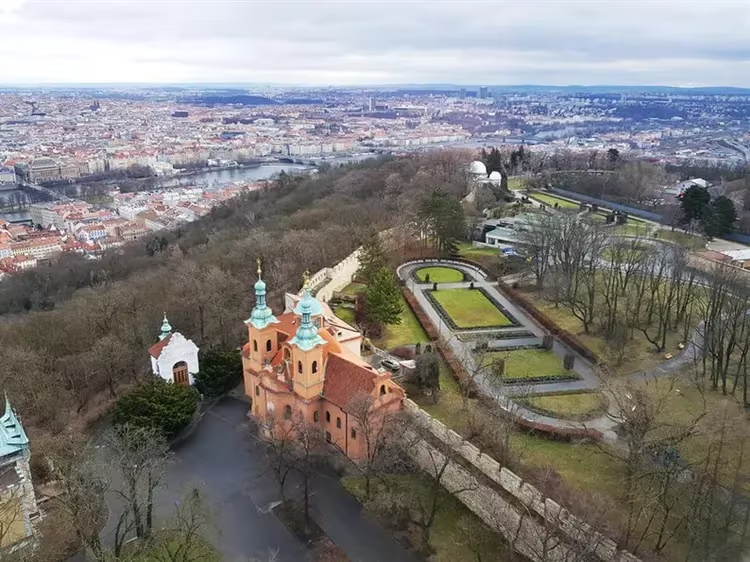
The church was originally built of wood, but a little later its walls were built with blocks from the local material “opuka”. Almost five hundred years later, baroque features were brought to the appearance of the church, thanks to the project of Kilian Ignas Dientzenhofer. However, the church was closed, and it resumed its work only in 1840. In 1994 the church became the property of the Catholic Church. The current interior is the merit of Jiří Pelkl. Inside the church there are paintings by Jan Klaudis Monn and Vaclov Markovsky, as well as a statue of St. Lawrence, made by Lederer in 1756.
The foundation of the church is associated with one of the oldest Prague legends. Boleslav II the Pious once saw a ghost that got angry because of an intrusion into the forests dedicated to the god Perun. The ghost lit the sacred flame of the pagan god, saying: “And again the people will return to the old gods, and the fire of sacred sacrifices will burn here.”
The Praguers were afraid of the wrath of the pagan gods, lit fires on Petrin, trying to calm Perun. The Monk Adalbert advised Prince Boleslav to build a church on the hill and dedicate it to Saint Lawrence, who died a martyr in the fire. Boleslav followed wise advice and built a church, and to make sure that Perun would not get angry, Petrin was renamed the hill of St. Lawrence.
Chapel of the Holy Sepulcher
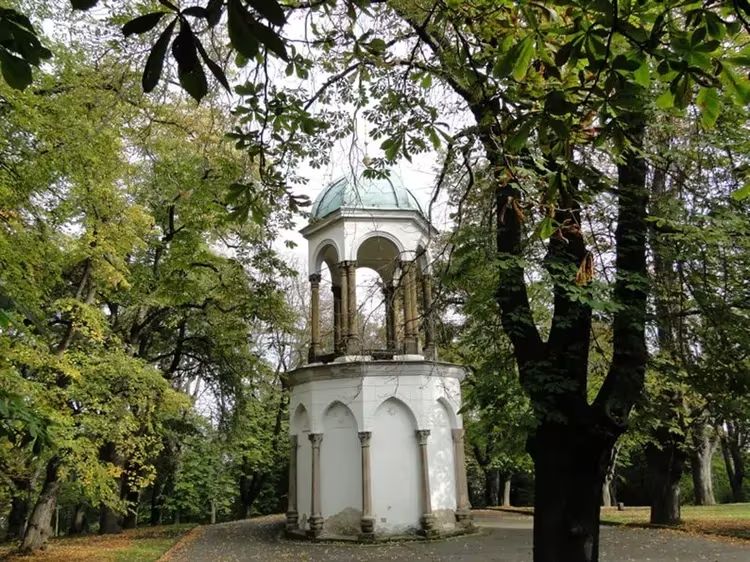
There are several sacral monuments on Petřín Hill. One of them, of course, is the Chapel of the Holy Sepulcher. Built in 1737 in the likeness of a chapel in Jerusalem. The most amazing thing about the project is the window, which is positioned so that the sun's rays fall exactly on the sacrificial stone located in the center of the chapel. The front part of the chapel faces west and is decorated with the image of the Resurrection of Christ, painted by J. Reidlen in 1936.
Vtrbovsky garden
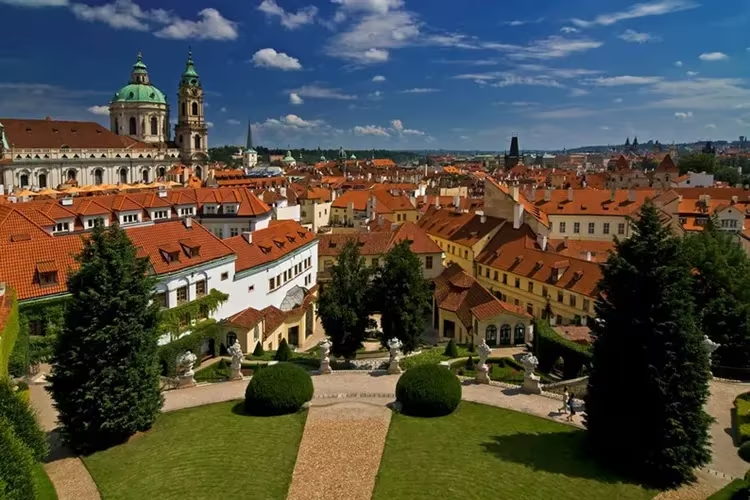
The exterior of the garden is the work of František Maximilian Kanka, who worked for Count Jan Josef Vtrba from 1715 to 1720. Frantisek not only rebuilt the palace of the nobleman, but also created a unique baroque garden around the building, which is decorated with beautiful sculptures by Matthias Bernard Braun. Inside the pavilion, guests are delighted with the frescoes of Vaclav Vavrynets. The garden is located at an altitude of 212 meters above sea level and covers 0.31 hectares. It consists of three levels of terraces, each with exceptional views. The terraces are interconnected by wide staircases.
Surprisingly, the garden was able to survive to the present in the form as close as possible to the original idea. The craftsmen did their best during the long reconstruction from 1990 to 1998. Currently, the Vtrbovsky Garden is a popular place for various public events. Conferences, seminaries and even weddings are often held here.
Where is it located and how to get there
Address: Petrin, 169 00 Prague 6, Czech Republic
No wonder we wrote so much about the funicular – this is the surest and fastest way to get to your destination. But to get to it, it would be best to use the tram number 6, 9 stop – Újezd, or 12, 20 – stop Hellichova (or Újezd). In summer, the funicular operates from 9 am to 11:20 pm, in winter – until 11:30 pm. Travel time will be about four minutes, you can also get to the station earlier and take a walk.