
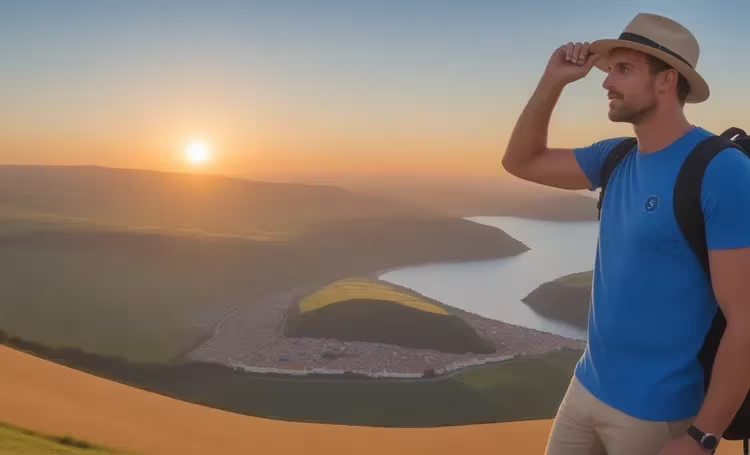
🏞️ Sao Pedro do Sul: Portugal’s hidden gem
Mountains attract me, although before I loved the sea more. Apparently, because the Atlantic is cold and windy, and in the mountains it is comfortable and calm.
This time I want to introduce you to a new ridge in central Portugal. The route passes through two mountains – Serra da Freita and Serra da Arada. Both are located in the São Pedro do Sul region. The trip will be quite intense. Along the way you will find three waterfalls, a town with hot springs, slate villages and picturesque viewpoints.
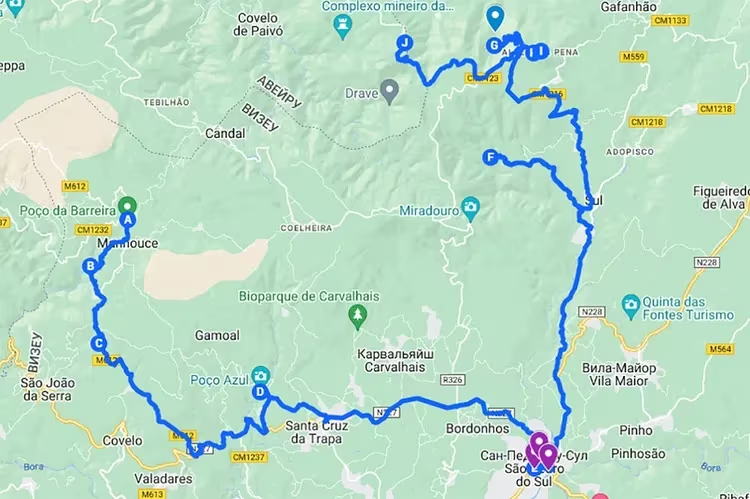
From Porto to the first point on the route it’s about 80 km (less than an hour and a half) along a road with stunning scenery. It’s not so close from Lisbon – more than 300 km.
A. Poço da Barreira Waterfall
Once you park your car in the parking lot near the bridge, go down the path along the stream. To get a better look at the waterfall, you should cross the river on the rocks and climb a little higher up the slope – it sounds scary, but in fact, it’s not so scary.
There is no convenient access to the water. To swim, you will need more dexterity and courage. The bravest ones jump into a natural well from the top level or slide down a small stream on their butts.
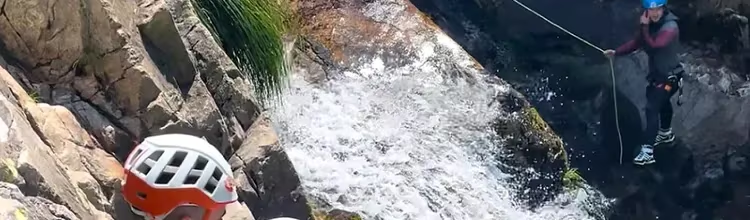
On this visit there were a lot of people at the waterfall – the guys were doing canyoning. I’ll leave here the website of the company that organizes such things.
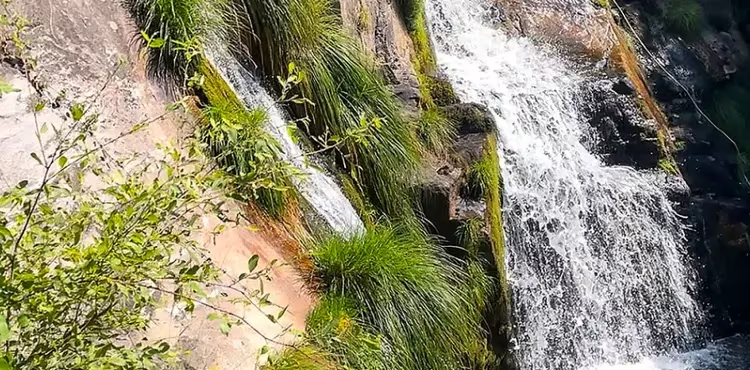
B. Poço Negro Falls
This is my favorite waterfall on Serre da Freita. But getting to it is more difficult than the previous one. At some point, the asphalt road will end and a rather steep descent will begin along a dirt road with potholes. If your car can get to the parking lot at the gate, great, shorten the walking distance. But we didn’t take the risk and left the car higher.
From the cliff at the gate you can see the waterfall and the surrounding forest – the photo, unfortunately, does not convey all the beauty of nature.
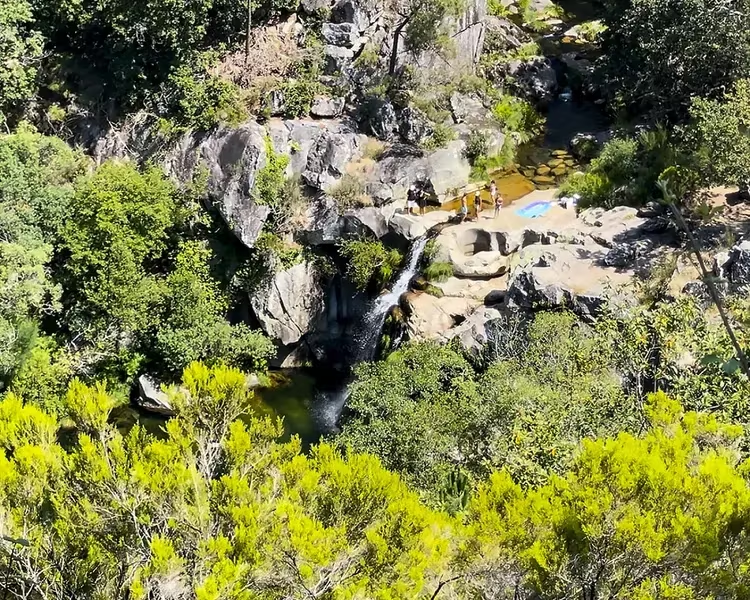
To get to the waterfall itself, you need to go to the picnic area and find a descent to the left of it – there is complete off-road there, but this paradise is worth such an adventure!
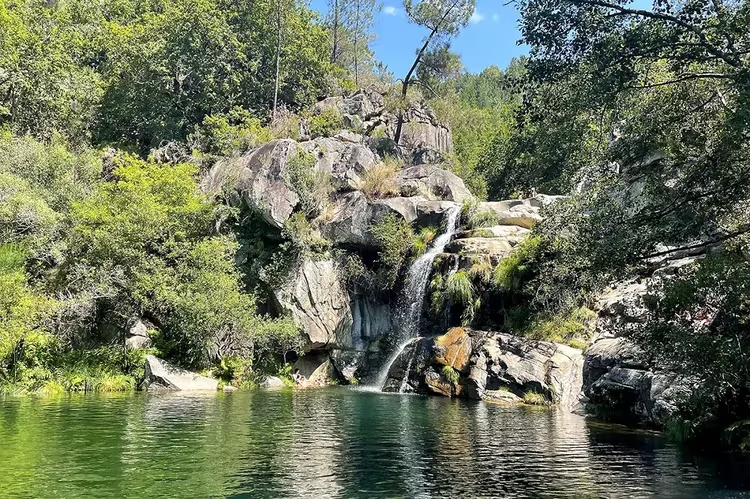
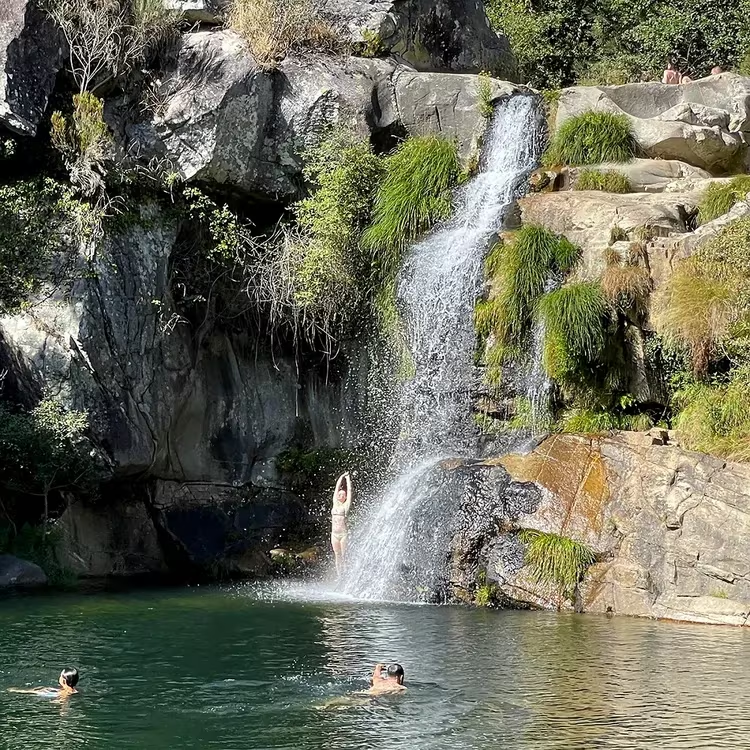
“Posu Negru” is translated as “black pit”. This place is called so because of its depth. The color of the reservoir is mesmerizing – bright emerald. The stones surrounding the natural well make it quite comfortable to enter the water. But be prepared: it is very cold there, one might even say icy. This didn't stop me. I dived into the pool, jumped into it from rocks, and even stood under the shower from the waterfall.
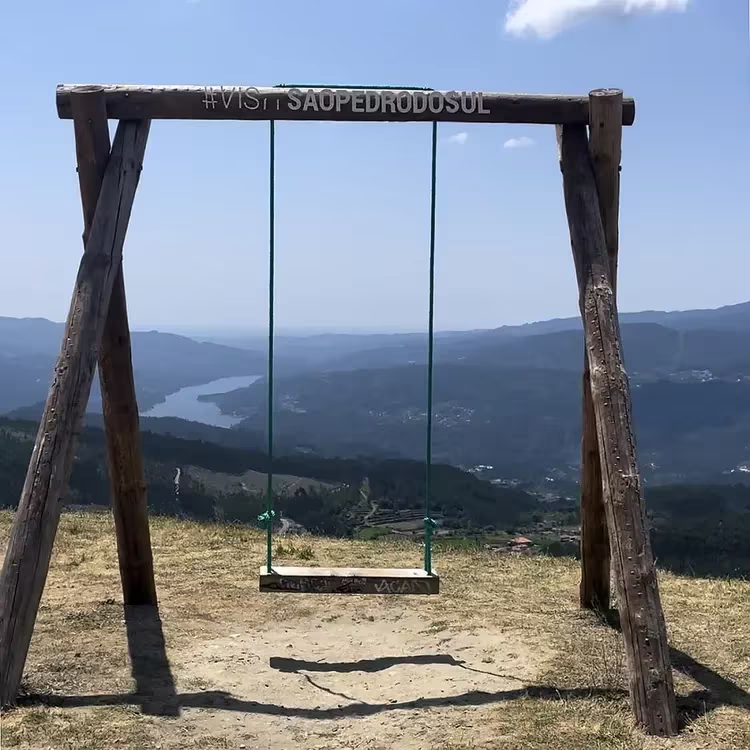
C. Swing of São Pedro do Sul
Swings in Portugal are installed on many viewpoints. It’s great to swing on them, looking at the panorama. This location offers views of the São Pedro do Sul region and the Vouga River. And what photos and videos you get from such locations – they will definitely get a ton of likes!
D. Poço Azul Waterfall
Although “azul” means “blue,” the water in this place is the same green as in previous posu. But the waterfall itself looks different: it is a series of low cascades with small bowls in which you can swim. The pits are filled with a mountain stream, which means the water will be as cold as in previous sources.
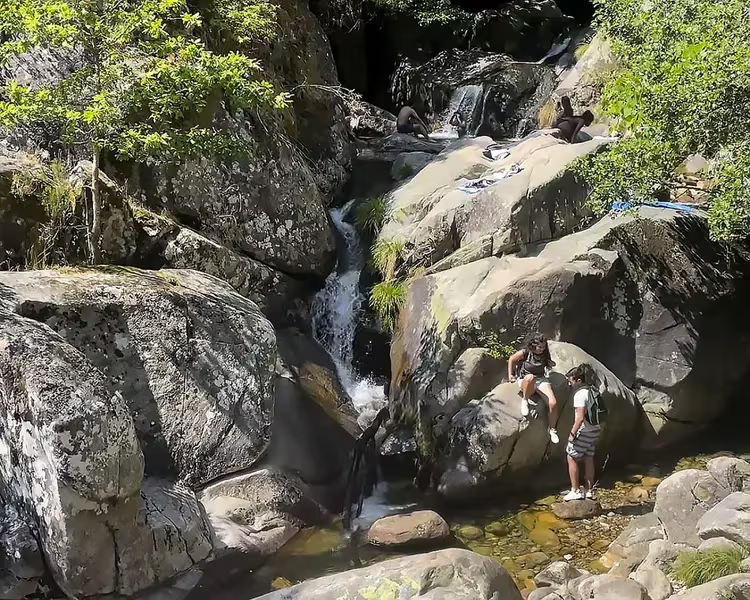
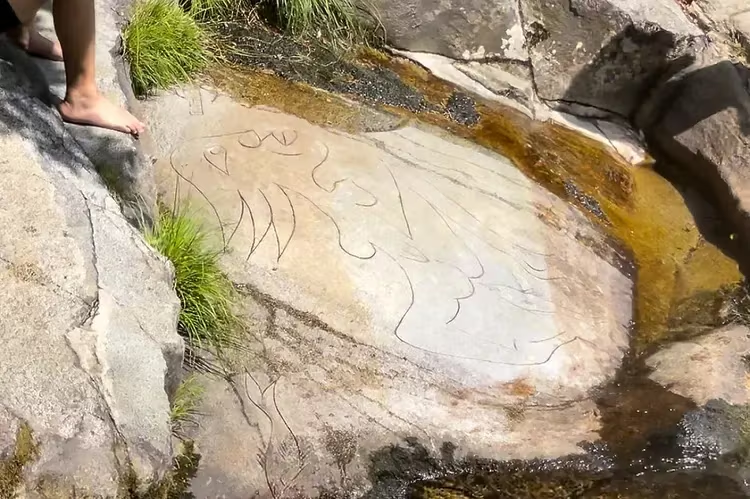
Pay attention to the boulders near the waterfall – they depict different designs: large eyes and female silhouettes. These granite engravings appeared in the early 21st century thanks to local sculptor Custodio Almeida.
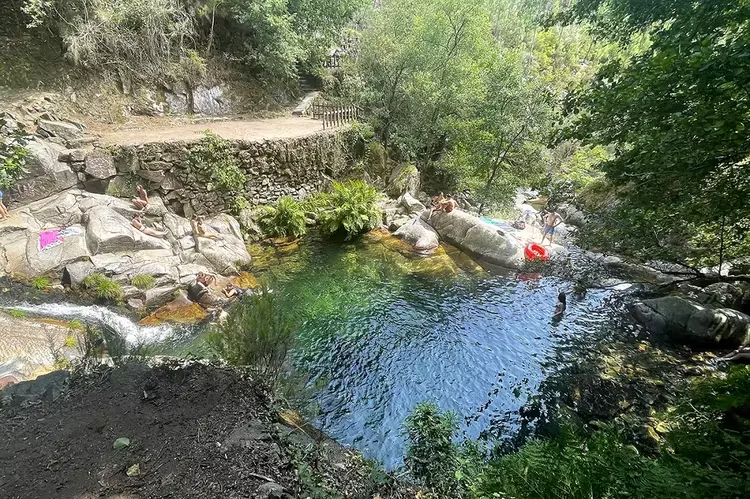
Posu Azul is a popular destination. In the heat, there is no place for an apple to fall on the rocks and in natural pools, especially after lunch. The road to the cascade is improved: about 500 meters along the path, and then down the stone steps.
E. City of São Pedro do Sul
This cute town with a population of 3.5 thousand people is famous for its thermal springs (Termas de São Pedro do Sul). Water baths appeared here under the Romans – more than 2 thousand years ago.
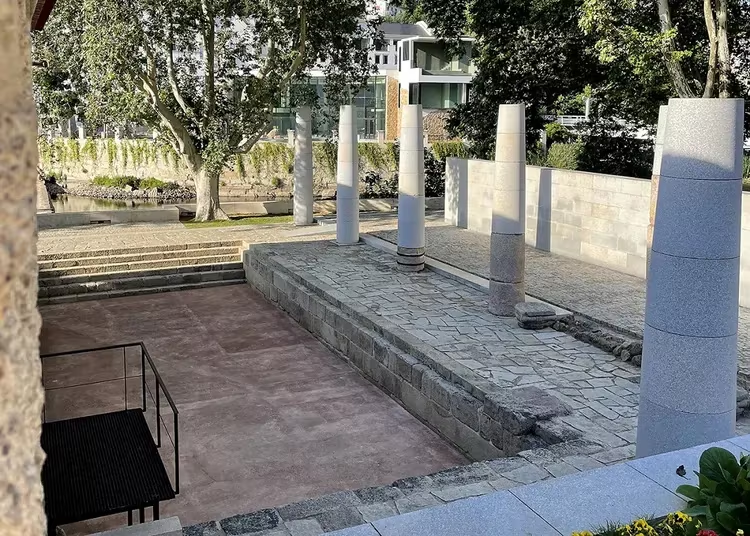
Healing springs were also popular later, including among the Portuguese nobility. And even now the baths of Sao Pedro do Sul are considered cool – the largest in Portugal and one of the best in Europe.
Sulfurous, low-mineralized water, temperature 67ºC, comes naturally from the ground. To make it comfortable for a person to take therapeutic baths, water is passed through a heat exchange system and cooled to 37ºC. Hot springs help with respiratory problems and rheumatology.
- Ecotourism: what is it and where to look
- Hiking in Portugal: routes and infrastructure
- Saxon Switzerland: miracle on the Elbe
- 10 amazing facts about New Zealand
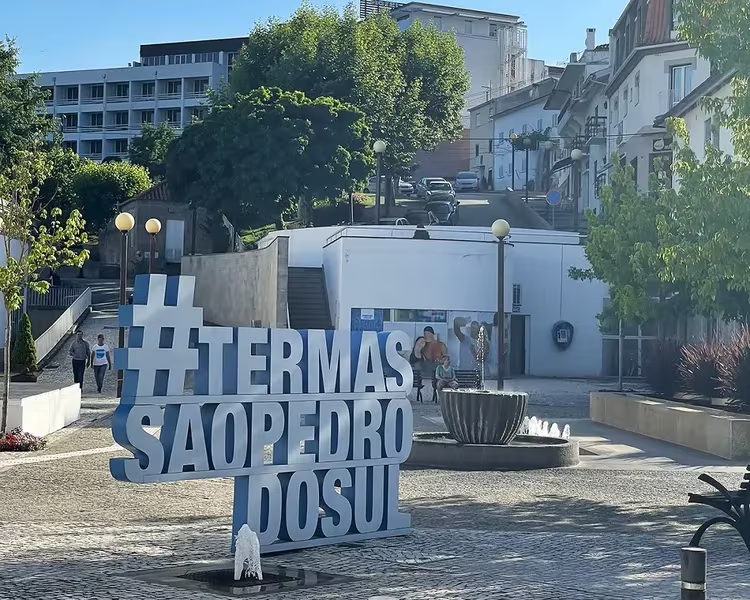
The territory of the thermal town leaves a pleasant impression. There is a cool embankment along which there are many old and modern hotels, as well as cafes and souvenir shops.
From the thermal area you can walk or bike along the Ecopista do Vouga trail to Parque Urbano das Nogueiras. As you approach the park, you will see an ancient arched bridge surrounded by beautiful scenery.
And the park in the tiny town is decent: well-equipped sports and playgrounds, a river beach with an old mill and many picnic areas – all in the shade of huge hazel trees.
Be sure to also visit the historical heart of São Pedro do Sul. On Camões Square (Largo de Camões) the city hall rises, and nearby there are mansions decorated with multi-colored tiles. Go to the pastelaria with the yellow umbrellas and try some local delicacies.
And then go down to the Church of St. Anthony (Igreja de Santo António), strewn with blue and white tiles, and the Church of St. Peter (Igreja de São Pedro), after which the city is named. Don't miss the Azulejos panels (Painéis de Azulejos) that frame the square of these cathedrals.
I left marks on the map so you can find everything.
F. Fujaco Village (Fujaco)
When I first came to this place, I wanted to photograph every fold on the mountain and every slate house. I am sure that already at the entrance to Fujak you will take your breath away from the beauty of the local landscapes.
The village is home to less than 20 people and almost as many cats. There is no mobile phone reception here, but there are two hotels and a restaurant, a church and a swimming pool with the purest river water. This is an ideal location to breathe out and reboot.
G. Village of Pena ( Aldeia da Pena )
Another shale village. There are only two families living in this one, who run two local restaurants. By the number of cars in the parking lot, you can estimate their occupancy level. The food and atmosphere are just right.
After your meal, take a stroll to the unusual geogarden: the vertical layers of quartzite standing there resemble giant books. The place is called Livraria da Pena – there is a mark on the map.
H. Chapel of St. Macarius (Capela de São Macário)
The 18th century chapel stands on a mountainside. It is believed that next to it there was a cave in which Macarius lived, who eventually became the saint and patron of this mountain range.
A sanctuary in honor of this saint also stands on the top of the hill of San Macario (Santuário de São Macário). To protect the temple from the winds, it was surrounded by a stone wall.
I. Swing of San Macario (Baloiço do São Macário)
Next to the church there is a viewpoint with a swing.
J. Route Gates of Hell (Estrada do Portal do Inferno)
Do you have any energy left for adventure? Take a ride along the road called “the gates of hell.” Previously, when there were no guardrails near the cliffs, the route seemed scary and dangerous. Now you feel quite safe and can calmly enjoy the mountain scenery and winding serpentine roads.
This road leads to the city of Arouca. Next to it is a geopark with the longest suspended pedestrian bridge in Portugal and the Paiva hiking trail (Passadiços do Paiva). I talked about this place in another article. If it is possible to extend your trip, be sure to include these locations in your itinerary.
Where to stay?
There are many hotels in Sao Pedro do Sul, including ones with SPA. You can stay in one of them and try the thermal baths at the same time. But the experience of spending the night in a remote mountain village will leave a cool impression – Fujakovo houses can be found on booking.
If you decide to take the 9 km Paiva walking route, you can film something in Arouca – it's a small town with cute streets and cafes.
From Arouca to Porto it is only 60 km and an hour's drive. Lisbon, again, is more than 300 km away.