
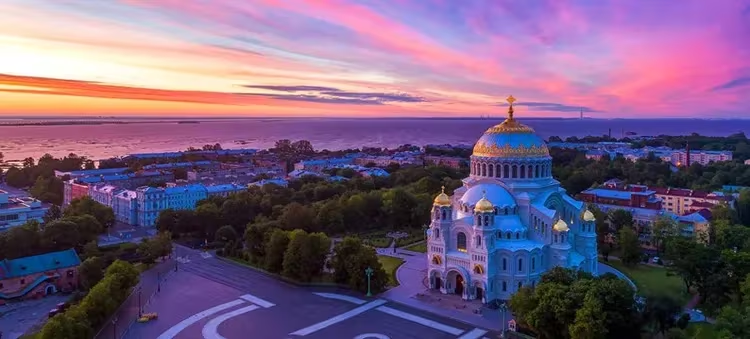
Sights of Kronstadt – 25 most interesting places
The sights of Kronstadt deserve to be seen. This city has military traditions that are sacredly observed today. Until recently, it was impossible to get into Kronstadt without a special pass, the city lived a special life, closed from strangers. And now anyone can see historical monuments. And you can get here not only by sea, but also by the ring road, which is more convenient.
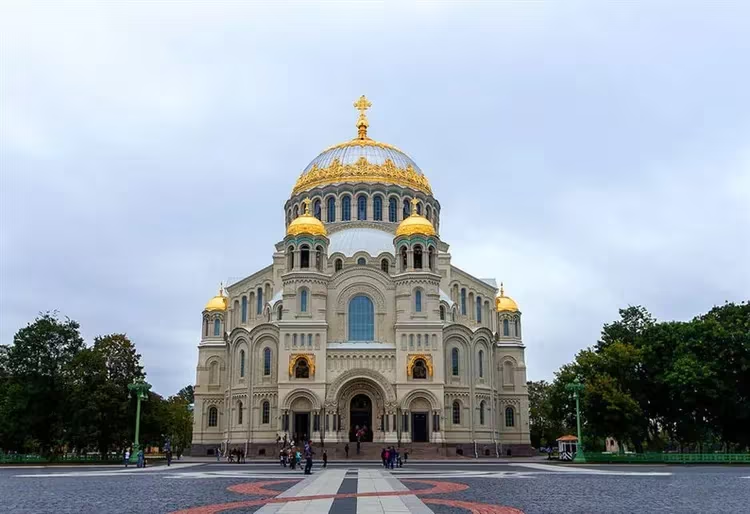
This temple was the main cathedral of the sailors of the Russian Empire. It was consecrated in 1913 in the presence of the family of Emperor Nicholas II.
And the history of this temple is full of tragic turns:
Part of the relics during the looting of the cathedral was saved by sailors and parishioners. Now these objects (after the restoration) have been returned to the temple again.
Cast iron pavement
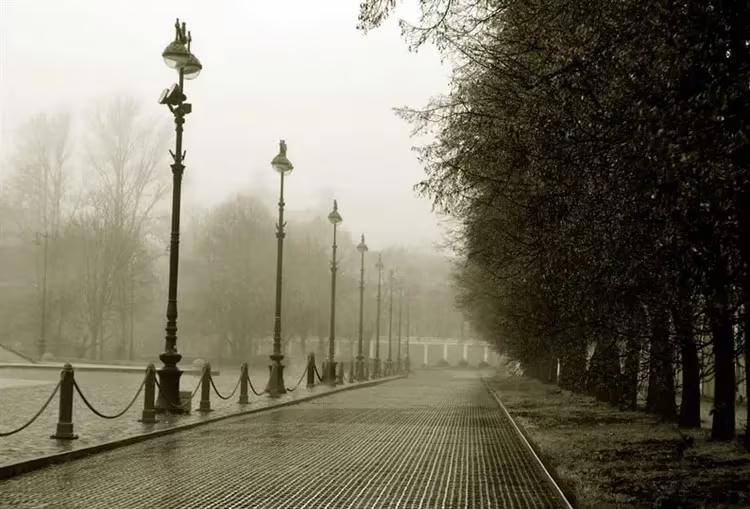
Such coverage in Russia is found only in Kronstadt. And it owes its appearance to the manager of the Steamship Plant. After the construction of the enterprise was completed, the manager was seconded to America to study the shipping business.
And it was there that he drew attention to the fact that part of the pavement in New York was made of cast-iron checkers. Moreover, the coating was highly durable. The engineer studied the technology patented by Knapp and decided upon arrival to pave part of the factory yard.
The curator of the enterprise, Grand Duke Konstantin Nikolayevich, liked the idea. And after the test period (the cold winter of 1860-1861 with sudden long thaws), they began to actively pave the streets of the city. Moreover, checkers were cast at the Steamship Plant by local foundry workers.
The process was quite expensive, but the pavement had a long service life, and the maintenance of the pavement was reduced to only adding rubble to replace the one that sucked in the swampy soil. The streets had such a pavement until September 1941.
The Defense Committee ordered the Leningrad factories to cast 1,000,000 cases of mines, and Kronstadt was obliged to manufacture 70,000 units. But with the supply of raw materials, interruptions have already begun. Therefore, it was decided to dismantle the cast-iron pavements.
The task was completed on time, and the remaining checkers were dismantled for the manufacture of defense products in subsequent years. And now cast-iron lace can be seen in two places: on Oktyabrskaya Street near the Penkovy Bridge and on Anchor Square near the Admiralty.
blue bridge
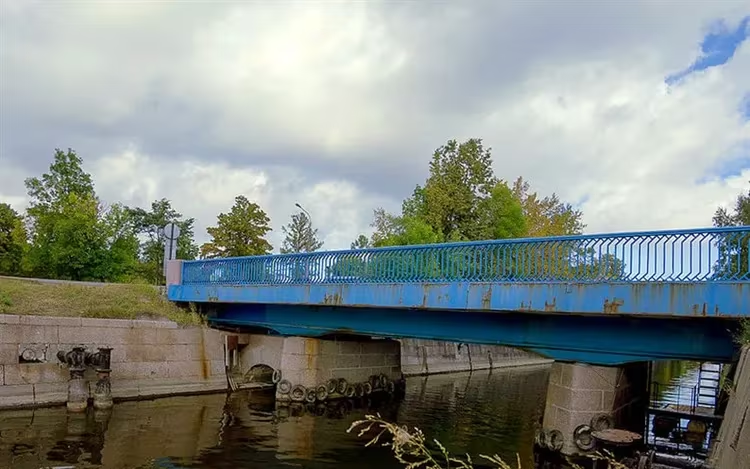
In 1794, when the building was finally completed, the railing delighted passers-by with a rich green color. The bridge was built by the merchant Bekrenev. The building had a wooden deck. Breeding was carried out using a chain mechanism.
Then the bridge was called New or Customs. And in 1874, military engineer Petrovsky proposed to reconstruct the building. He replaced the swing mechanism with a turntable, added footpaths on both sides of the roadway.
These were revolutionary solutions in bridge building. The next reconstruction was carried out in the 60s of the twentieth century. The flooring was made of reinforced concrete, the adjustable mechanism was removed, and the railing was painted blue.
Today, the bridge connects the two banks of the Obvodny Canal, cars and pedestrians pass through it. But connecting the banks is not the only task of the structure. On the Blue Bridge there is a footstand, by the level of which all the depths and heights of Russia are measured.
Footstock installed in 1840. And in the turret there is a tide gauge that records changes in sea level. Data collection with the help of a tide gauge began in 1898.
The floods of St. Petersburg are a tragic page in the history of the city. And on the Blue Bridge there is a bronze plate on which two numbers are engraved: 3, 67 (m) and 1824 (year). The water has risen to this level.
Makarovsky bridge
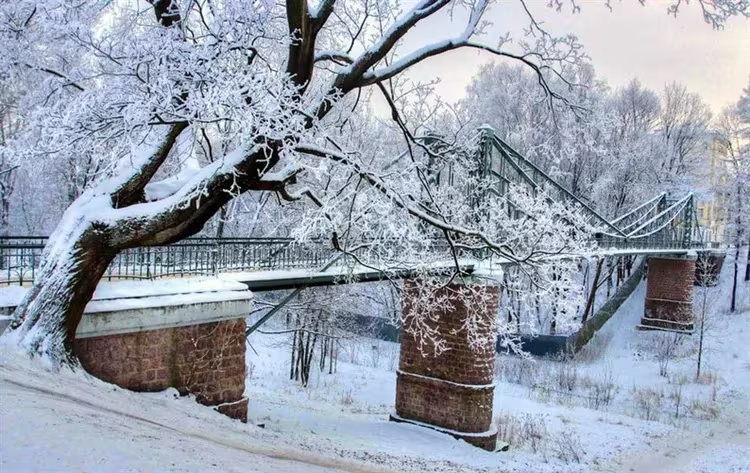
During the Soviet era, the building was called Red, but among the people the bridge retained its original name. It was built specifically for the time of the consecration of St. Nicholas Cathedral in Kronstadt, so that the emperor, arriving at the ceremony, would not bypass the ravine blocking him.
The bridge was assembled in 1913 at a local shipyard in just 3 months. Its design looked so light and airy that Nikolai refused to step on it.
Then one of the officers was the first to cross the ravine (and received an order from the hands of the emperor for resourcefulness and courage). And during the tragic events of 1917, the bridge literally turned red. The rebellious sailors threw from it into the ravine the bodies of the executed officers who refused to recognize the Provisional Government. And from the bridge, those who wish could watch the terrible procedure.
Monument to the blockade stickleback
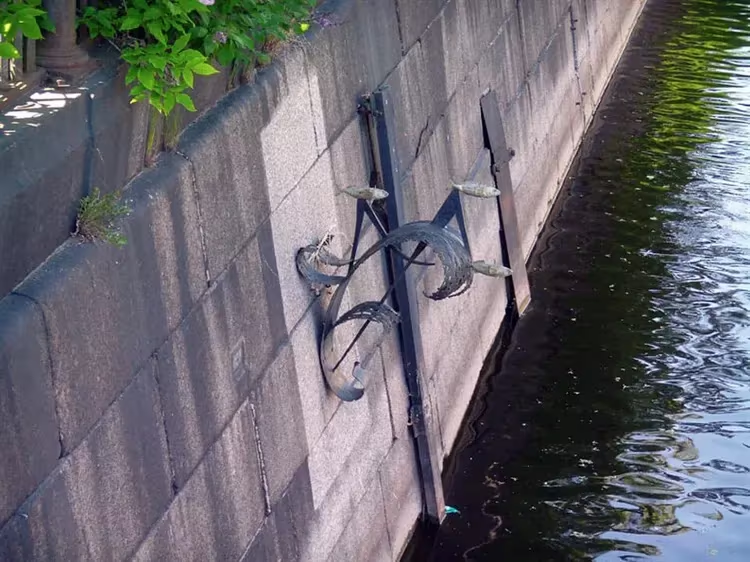
Even cats were reluctant to eat this inconspicuous fish in peacetime. And who will catch a tiny fish weighing 2-3 g and with spines on the dorsal fin? There is enough tasty fish in the Neva and the Gulf of Finland! But it was this little thing that saved many Leningraders during the blockade winter, when all commercial fish became little available to the city residents.
And the inconspicuous baby continued to frolic in shallow water. It turned out that the stickleback is rich in carotene, fatty acids and protein. She was caught with the help of cloth (shirts, T-shirts, tied with knots), because she slipped out of the net, even with a small mesh. From the catch, the women prepared cutlets, which were fried in stickleback fat (and the fish supplied the hungry Leningraders with this component).
By the way, it was not necessary to clean it, just remove the bubble. Red cutlets not only satiated, but also supplied the weakened organisms of the blockade with the necessary elements. The monument to the fish was installed on the wall of the Obvodny Canal in 2005. It depicts three sticklebacks, which were raised by a wave. Residents of St. Petersburg bring fresh flowers to the monument on the day the blockade is lifted.
Monument to Admiral Makarov
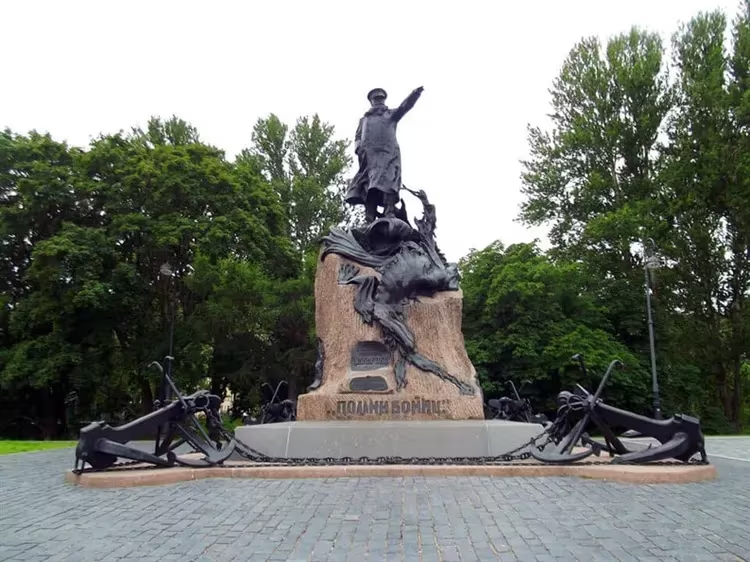
Stepan Makarov is a wonderful naval commander, explorer of the Russian North, oceanographer, inventor, shipbuilder. He died in 1904, at the same time it was decided to erect a monument in Kronstadt. But the opening took place only in 1913 (almost simultaneously with the Naval Cathedral). The author of the project is Leonid Sherwood.
As a pedestal, the architect used a stone that was intended for a monument to Emperor Paul. This block was transported from the Finnish province and sank near the city. When lifting the stone burst, and Sherwood immediately took advantage of this feature.
The author depicted the admiral standing on top of a marble pedestal, and a dragon is approaching him from below. The reptile tries to drag Makarov to the bottom. The words “Remember the war” are engraved on the monument. This is the motto of the admiral.
In addition, the architect depicted the most important moments from the life of Makarov:
The widow of the admiral was present at the opening of the monument. Today, graduates come to him – naval officers.
Petrovsky park
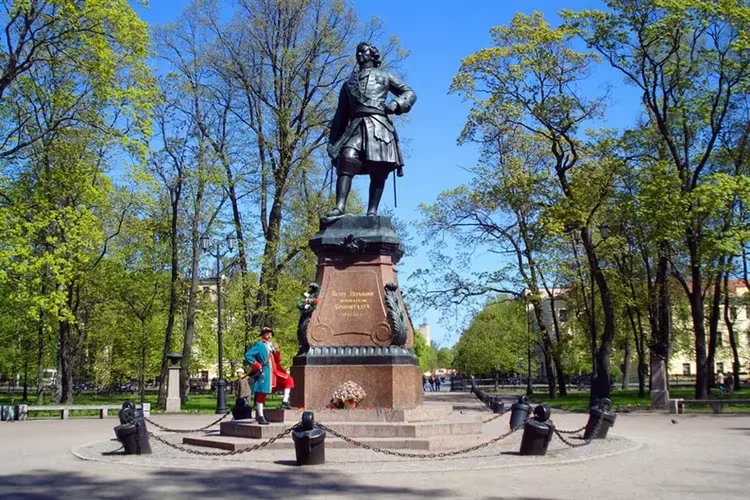
Until 1839, there was a swamp on the site of Petrovsky Park. The earth was poured into it, which was taken out during the construction of the dock. At the end of the work, the ground was leveled and compacted. And later on this place, on the orders of Bellingshausen, a garden was arranged.
In 1841, a monument to Peter I was erected on the central alley, and the final planning of the territory was completed in 1846. It is noteworthy that this is how tourists see the park today, the changes made later are minor. Initially, a favorite place for recreation and walks was equally accessible to everyone.
But in the 19th century, the park was divided into 2 zones: the right side was visited by poor citizens, the left – by the rich. And at the entrance there were watchmen who did not let the poor into the recreation area of rich citizens. There are no amusement rides, cafes and restaurants in the park.
But here you can see the anchors of the ships that landed in Peterhof during the Great Patriotic War, an old cannon. And centuries-old trees form shady alleys, protected from the sharp Baltic wind.
Summer garden
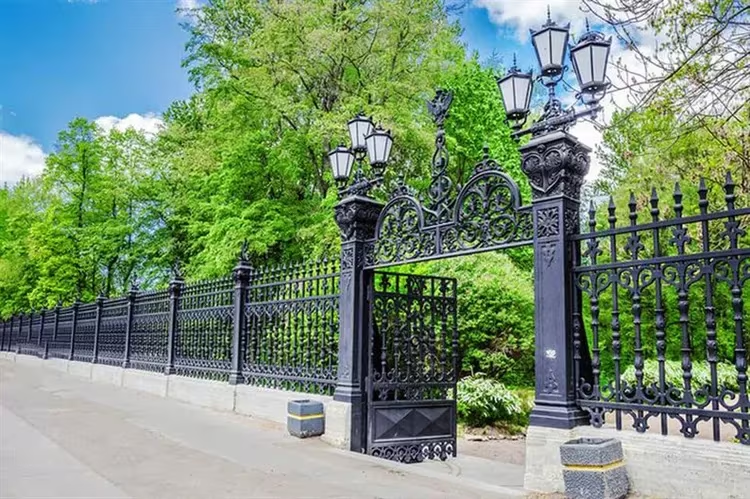
This park is the oldest in Kronstadt. And its central alley is also the main street of the city. The St. Petersburg Summer Garden is planned in exactly the same way. Once in the park there was Peter's house, but it has not been preserved. And the garden was a favorite place for rest and walks of the townspeople. But a severe flood in 1824 severely destroyed the alley monuments.
In 1828, a decision was made on a large-scale reconstruction. She was entrusted to the architect Charlemagne. Before the October Revolution, the Summer Garden was constantly updated. So, the famous openwork lattices, cast at the local Steamship Factory, were installed in 1873. The alleys were cleared and landscaped.
The park is open today. But it's definitely worth a look:
All these monuments are located near the main avenue of the park.
Fort “Grand Duke Konstantin”
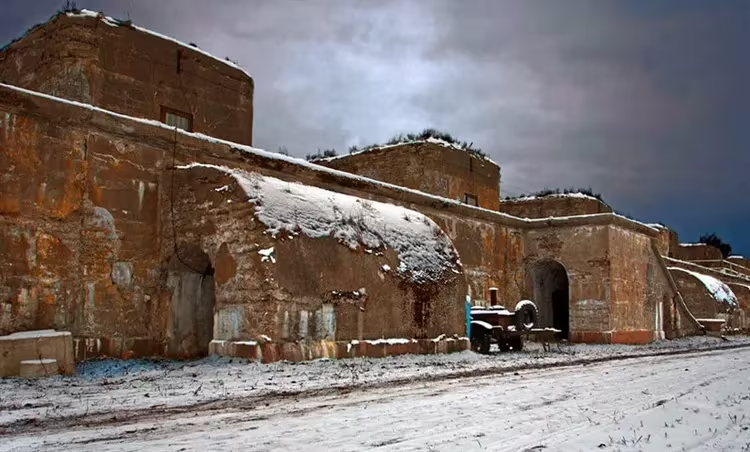
Fort “Grand Duke Konstantin” is included in the list of cultural heritage of UNESCO. Today, the fortress has lost its strategic importance, but it attracts tourists with its preserved fortifications. The location of the fort ideally blocks the fairway. And when a conflict with England became likely in 1808, a battery of 45 guns was installed here. But the flood of 1824 washed away the cannons, so the construction of stone structures began.
The name of the fortress was given in 1834: Emperor Nicholas I ordered that the fort be named after his son Konstantin. By the mid-50s of the 10th century, the structure became absolutely impregnable: its guns had optical sights, and the reload speed was minimal.
The pillboxes were planned in such a way that firing could be carried out even if the enemy penetrated inside the fort. During the First World War, the October Revolution and the Civil War, the fortress practically did not participate in battles.
But during the Patriotic War, the garrison held the defense against the Nazis, using pillboxes, arranged more than 100 years ago! In the 1960s, the fort was disarmed and plundered. Buildings began to collapse. But at the beginning of the 21st century, it was handed over to a private company, which restored the surviving premises. Now there are guided tours, there is a yacht club. The owners are doing everything to preserve this marvel of military engineering for posterity.
Italian palace
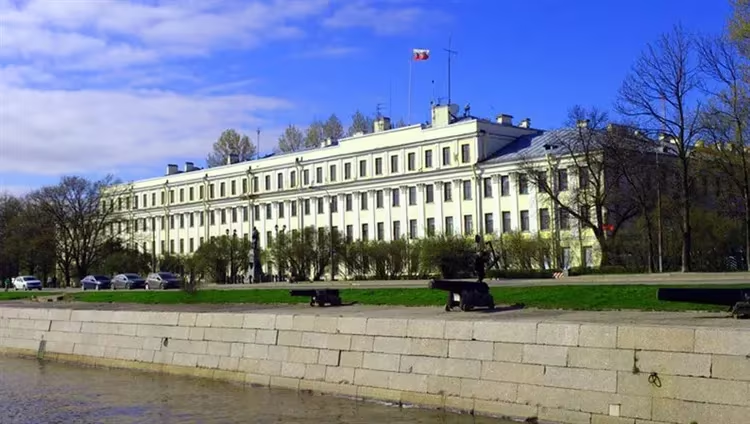
The author of the project is the German architect Johann Braunstein, and the Italian palace was named because it was built by masters from Italy. The customer of the construction is Alexander Danilovich Menshikov. He had several such (Italian) palaces. The first building was erected in 1724.
The magnificent building not only organically fit into the ensemble of the city, which was the gate of the new capital, but also favorably emphasized the beauty of St. Petersburg. It was the largest of the buildings of that time.
But after a few years, the building began to change owners:
After all the alterations, the historical appearance of the Italian palace was lost.
Gostiny Dvor
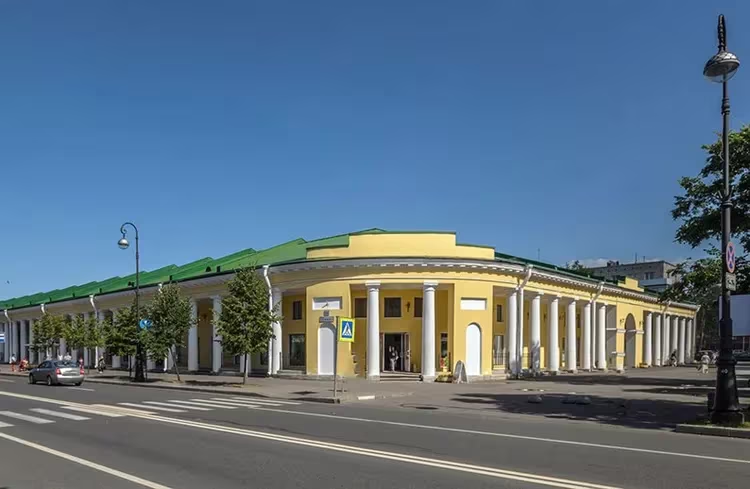
Already during the planning of Kronstadt, extensive shopping malls were provided. And this is not surprising: many people came through the sea gates of St. Petersburg, among them merchants who wanted to trade with Russia. The first shops were built of wood, only some pavilions had stone walls. In 1827, at the direction of Nicholas I, the reconstruction of the territory began.
This market completely repeated the appearance of Gostiny Dvor in St. Petersburg. The building was repeatedly restored in Soviet times. And at the beginning of the 21st century, it was on the verge of destruction: in some places the roof collapsed, there were no windows and a roof. Only in 2007 was it possible to return the building to its historical appearance. Now it is a modern shopping center.
Cathedral of the Vladimir Icon of the Mother of God
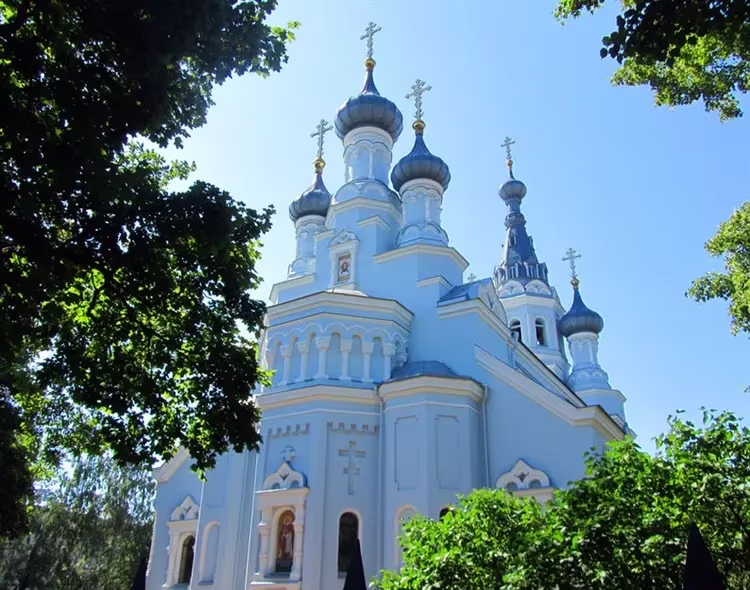
On the site of the modern cathedral in 1730, a garrison wooden church was built. It was rebuilt several times, collecting funds by subscription. During a fire in 1874, it burned down. It was decided to build a stone temple on this site.
Work began in 1876 under the guidance of the architects Grimm and Grefan. Construction was carried out with funds allocated from the state treasury. The new temple was supposed to become more spacious, so the land adjacent to the church was bought. In 1902, the garrison church received the status of a cathedral.
In 1931 (the period of theomachism), the temple was closed and looted. During the Patriotic War, the building was damaged, and in the 50s they wanted to destroy it.
But due to dense buildings, this was not possible: cracks appeared in neighboring houses from directed explosions. In 1990, the cathedral was returned to the Russian Orthodox Church: restoration began. The surviving shrines were returned, the wall and ceiling painting was restored. 3,000 parishioners can pray in the cathedral at the same time.
Maritime Museum
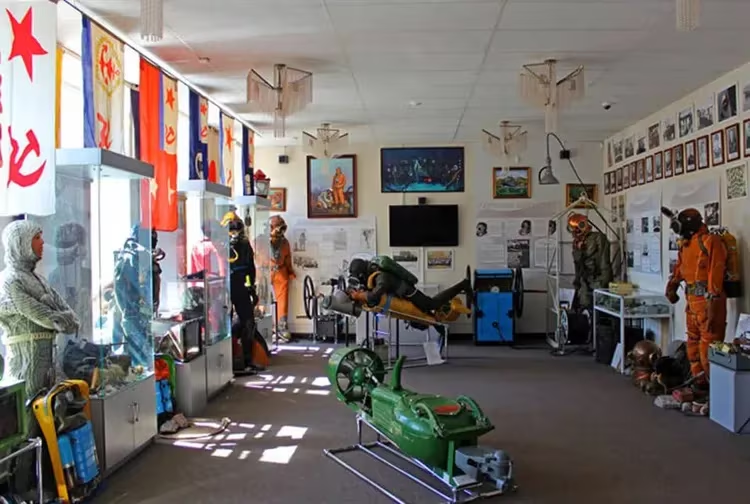
This is a completely new exposition: it has been operating since 2012. The opening took place on a holiday, Diver's Day, May 4th. The center was organized by investors who are not indifferent to the history of Russia.
Exhibition goals:
The organizers use interactive technologies, so you won't get bored in the halls. Visiting is possible with a guided tour or individually.
Museum of the History of Kronstadt
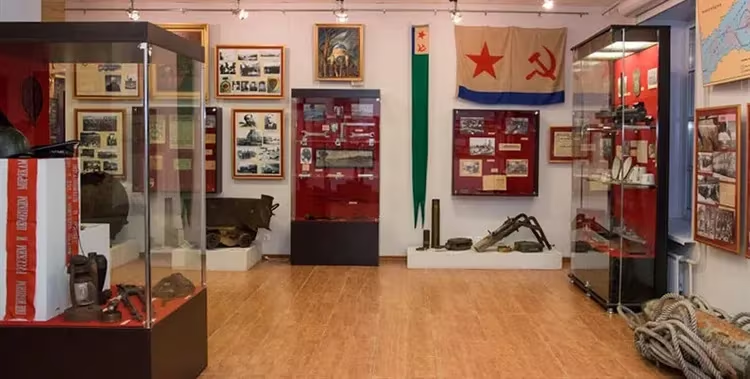
The exposition is located in 2 separate buildings: the museum (Anchor Square) and the water tower (Leningradskaya Street). There is no larger exhibition in the city.
Permanent exhibitions introduce guests to:
In a separate room, objects raised from ships sunk in the Gulf of Finland are exhibited. The administration of the center also arranges thematic exhibitions on topics close to the life of a modern city.
petrovsky dock
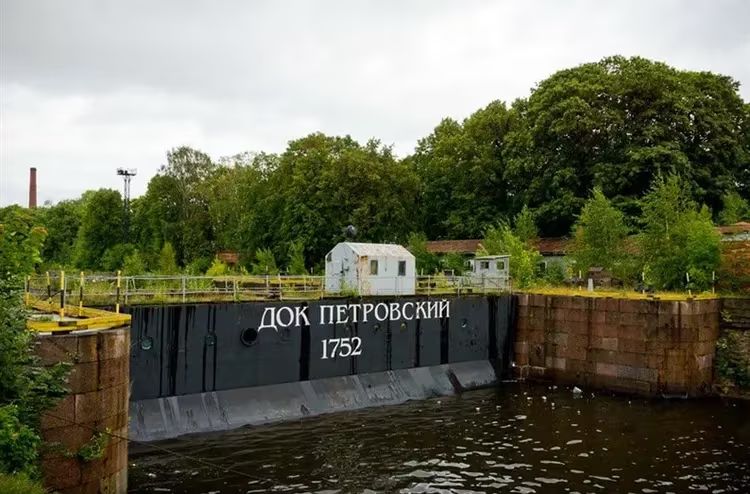
The idea of creating a dock belonged to Emperor Peter the Great. He wished that the ships of the Russian fleet were repaired in Kronstadt. In this case, the repair should be carried out as soon as possible. Peter even proposed his own dock project: water was drained into the lower basin in just a day, while foreign docks were drained in a month. It was an innovative engineering solution. Work began in 1719, but after the death of the emperor, they slowed down.
It was possible only to dig a channel and strengthen the walls. The canal was opened already under Elizabeth Petrovna in 1752. In 1974, a steam engine was installed in the dock, with the help of which water was pumped out in 9 days. At the same time, repairs were carried out on 5 ships.
There was no such large-scale construction in Europe at that time. Now the territory of the dock is closed to visitors. Guests are shown only the canal gate. But the city authorities plan to reconstruct the building and arrange an open-air exposition here.
Fort Kronshlot
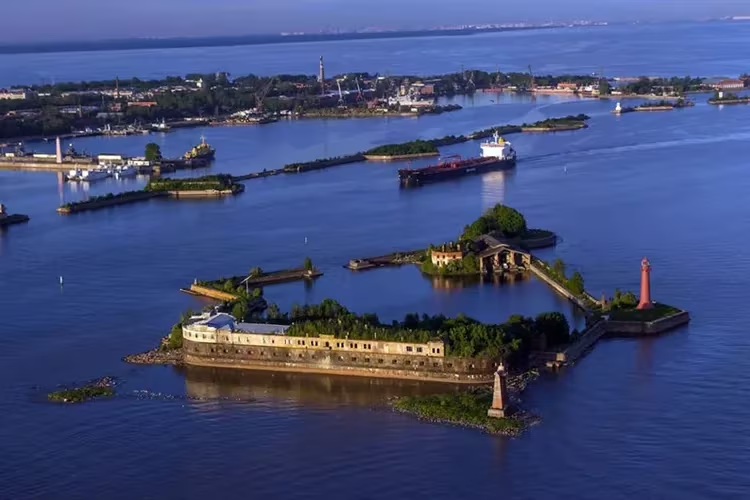
To defeat the Swedish army, which had a large number, it was necessary to create a powerful defensive fortification on the island of Kotlin. But it is impossible to carry out all the work in a year, so Pyotr Alekseevich decided to block the deeper southern fairway.
Enemy ships were not supposed to break through to St. Petersburg. And on the southern coast of the island in the winter of 1703, the construction of Fort Kronshlot began. The technology was simple and at the same time time-consuming. A hole was made in the ice, where pre-made robes (knocked together huge boxes with stones and coarse sand) fell.
A fortress was then built on these piles. The project was designed by the king himself. And Domenico Trezzini created a tower of three tiers, made of wood. She was called Kronshlot: Crown Castle. The fort was well fortified and armed. By order of the king, the most modern powerful cannons were placed there.
And the emperor's expectations were fully justified: in the summer of 1705, the Swedish squadron was unable to break through to the new capital, fort Kronshlot blocked the enemy's path. At the end of the 19th century, it ceased to be a strategically important object: ammunition was stored here.
But during the Great Patriotic War, guns were again placed in Kronshlot: the fort again defended the city. And in peacetime, ships were demagnetized here. Today it is included in the program of sightseeing tours. But there is no inspection with disembarkation. You can visit the fort on your own.
Museum-Apartment of the Holy Righteous Father John of Kronstadt
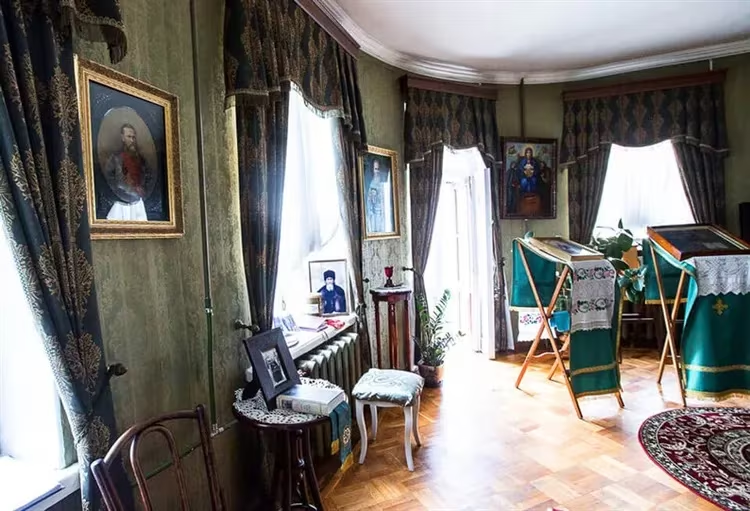
John of Kronstadt is known not only as a priest and author of spiritual books, but also as a public figure. He was a supporter of the monarchy, believed that the power of the kings was given from God, and it was blasphemous to encroach on it.
Such beliefs led to the fact that in Soviet Russia the memory of John was diligently erased. Back in 1918, 9 years after the death of the monk, Patriarch Tikhon gave his blessing to open a house church in the former apartment of Father John. This saved it from looting in 1917: the church was closed only in 1930.
In 1931, the premises turned into a communal apartment for 5 families. Only in 1995, caring citizens began to resettle the communal apartment in order to return the premises of the Church again. New apartments were bought with the money of private investors.
Rostropovich took an active part in this. In 1999, an unusual museum was opened in the former apartment of John of Kronstadt. There is an exposition here (in one room: a study, a bedroom and a cell) and Orthodox services are being held at the same time.
Kronstadt fortress
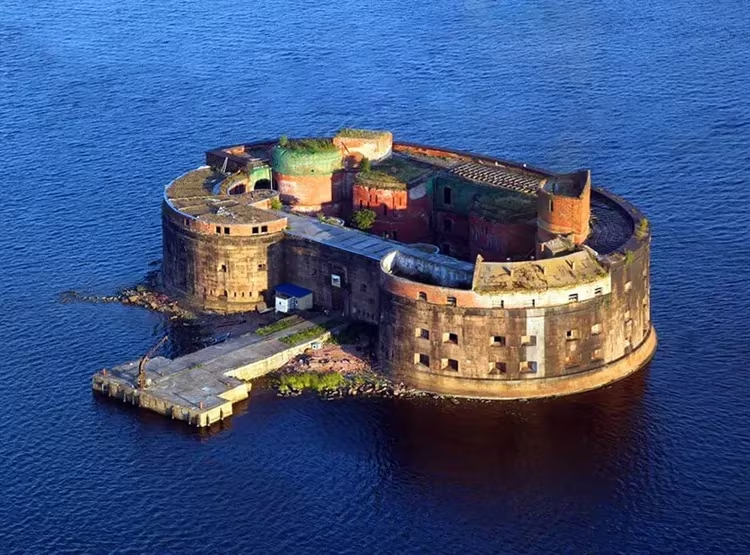
According to Peter's plan, the way for the enemies to the new capital was to be reliably blocked. And in 1723, after the construction of Kronshlot and the Merchant Harbor, the fortress of Kronstadt was laid. It became an absolutely impregnable structure and at the same time an ideal dock where ships could be repaired. The fortress was almost completely destroyed by the flood of 1824. But during the restoration, the new plan almost completely repeated the old one.
In 1921, an uprising took place in Kronstadt. The Bolsheviks stormed the fortifications on the ice of the Gulf of Finland. The first assault was repulsed, and then most of the rebels went to Finland. The impregnable fortress was taken. Today, the surviving structures are protected by the state. There are guided tours around the territory, but you can explore the fortress on your own.
Kronstadt Admiralty
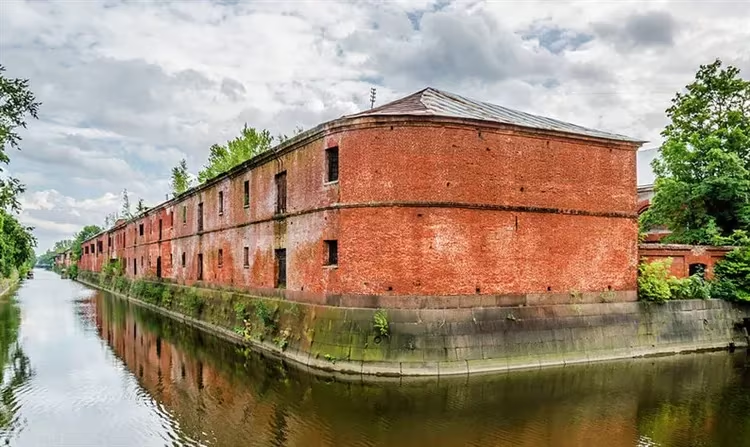
The idea to transfer the admiralty belonged to Catherine the Great. The reason was quite prosaic: the St. Petersburg Admiralty, which was located next to the Winter Palace, caught fire. In order to avoid the danger of transferring fire to the royal residence in the future, the empress ordered the department to be removed further away: to Kronstadt.
The work was planned to be large-scale. In addition to digging the Obvodny Canal, it was required to build:
After the completion of the work, the admiralty with the services assigned to it occupied 25% of the city. Today, the buildings are protected by the state, and the main building has been transferred to the Navy. It can only be viewed from the outside.
Lighthouse Service Museum
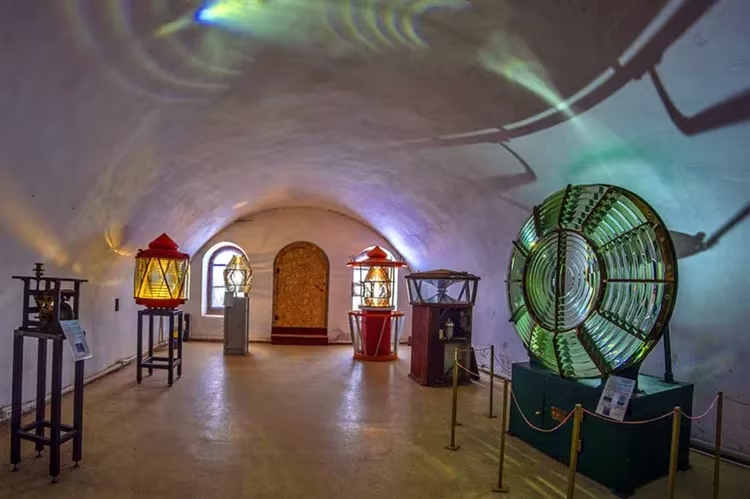
This is a new exposition: it opened in 2017. The exhibition is located on the territory of the Fort Grand Duke Konstantin complex.
Guests will be introduced to:
The pride of the exhibition are the lanterns marking the Road of Life on the ice of Lake Ladoga. In addition to viewing the permanent exhibition, the administration offers themed trips to the Seskar, Tolbukhin, and Povorotny lighthouses.
wooden lighthouse
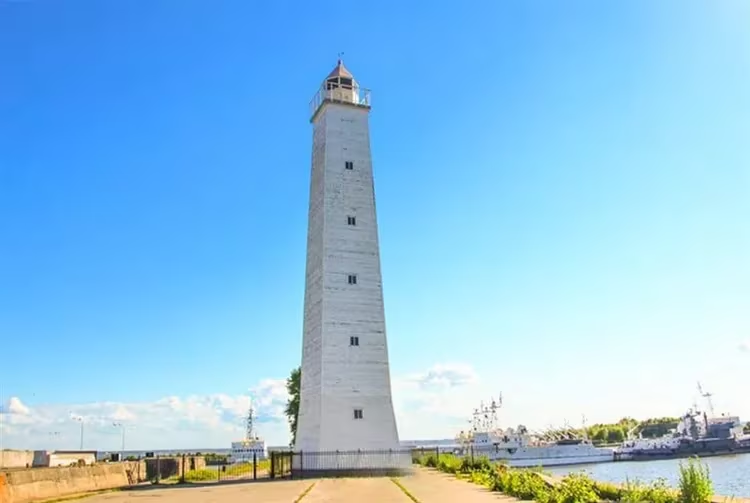
The architects Braunstein and Minotti dreamed of building a lighthouse with three tiers. Through the wide arch in the lower part, ships were supposed to pass on their way to the dry dock for repairs. But as a result, a lighthouse was built in the form of a stele, crowning a long pier between Merchant and Srednyaya harbors.
However, the object has been performing its duties since 1722 until now (although it is officially on reserve). The lighthouse sends light to a distance of 30 km. And among tourists, this is a favorite place for photo shoots: next to the historical monument is the picturesque Petrovsky Canal.
It is strange, but the unique object does not have a specific name: it is called the Lighthouse on the Petrovsky pier, Stvornoy, Kronstadt. Today it is impossible to go inside the building (the object is working), but it is quite possible to inspect it from the outside and take photographs.
Tolbukhin Lighthouse
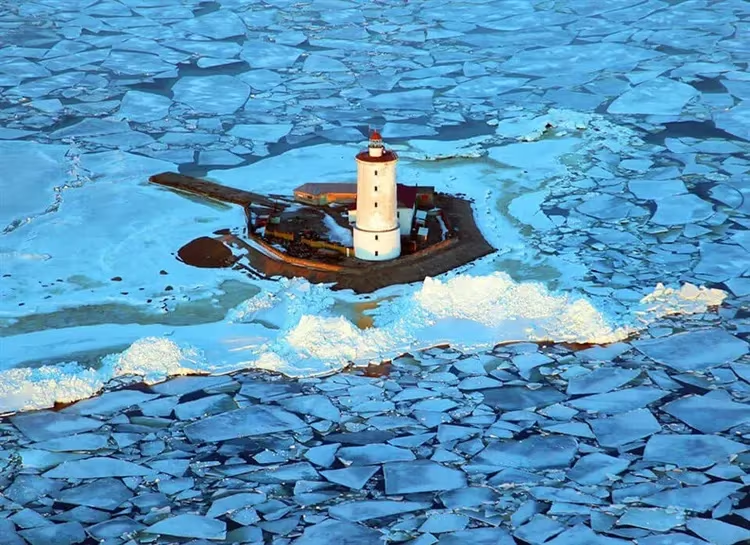
Emperor Peter Alekseevich ordered the construction of a lighthouse at the extreme point of the Kotlin Spit. Moreover, he independently drew a sketch and indicated that it was necessary to build it without fail from stone, and further decisions were to be made by the architect. But it was not possible to fully fulfill the royal will: there were not enough qualified masons.
Then Peter allowed to build a lighthouse out of wood. The sailors were dissatisfied with the new structure: candles were used in the lanterns, their fire was dim and could not be seen from afar.
Therefore, already in 1723, candles were replaced with hemp oil, and later (on the model of European lanterns) with firewood and coal. After the construction, the lighthouse was called Kotlinsky. But in 1736 it was renamed Tolbukhin after the first commandant of Kronstadt, who defeated the Swedish landing in 1705. And yet the idea to build a stone structure did not leave the military builders. In 1737, a second wooden lighthouse was erected, but with the expectation that later a stone one would be built in its place.
But this was done only in 1810. On the other hand, the building met all modern standards, and even the conditions for employees at the lighthouse were excellent: the house was connected to the tower by a covered gallery. And the equipment was the most modern: the future Decembrist Bestuzhev, working on Tolbukhin, installed colored flashing lights, significantly increasing their visibility for ships.
Today you can explore Tolbukhin with a thematic or sightseeing tour.
wish tree
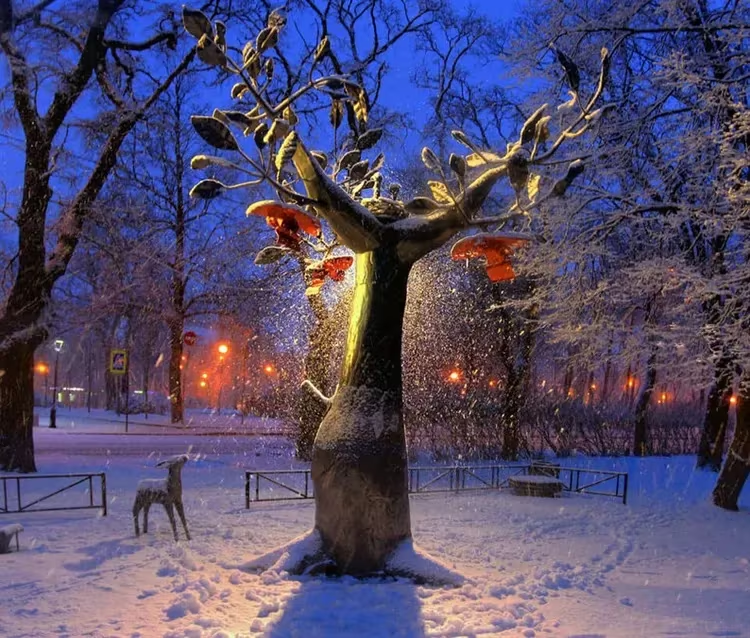
This witty monument was presented to the townspeople for the anniversary of the city. It is located next to Andreevsky Garden. The tree that grants wishes is cast iron. It has a long nose and a huge ear that hears spoken wishes.
In the upper part of the crown there is a nest: the tree must also perform important duties, give shelter to birds. And wise owls circle around the trunk, each of which drags one of the desires in its claws: love, health, success. A small deer is watching the whole mess.
In order for the wish to come true, you need to take a five-ruble coin, wrap it with a piece of paper with a written desire, and throw it into the nest (you must get into it). Then you should jump on the deer and grab it by the nose. Andreevsky Garden employees claim that wishes come true: otherwise, why do they have to clear the nest of coins so often?!
Zakaznik Western Kotlin
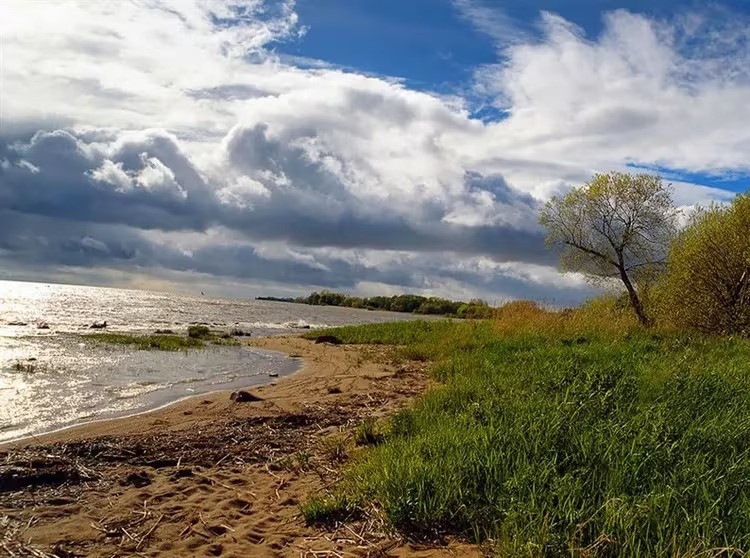
The reserve is located on the westernmost cape of Kotlin Island. This cape cuts deep into the Gulf of Finland. From 1942 to the end of the 20th century, the entire island was considered a closed object, so there was minimal interference with the environment.
In 2012, a reserve was formed on the cape. It consists of natural attractions and cultural heritage sites. Rare species of birds (epiphytes) live on the territory of the park, there are plants listed in the Red Book of Russia (aspen-epiphytes).
Of the cultural heritage sites, the park includes the Rif, Obruchev, and Shanets forts located on its territory. They are protected by the state, the ditches, which previously served as protection from the enemy, have now become artificial ponds. A distinctive feature of the territory is that the coastal area is constantly changing. The reason for this is the activity of the sea and the low-lying landscape.
In general, here artificial heights are much larger than artificial ones. The beaches are deserted and very picturesque. Where the waves wash over the shore, they are sandy, and where they wash away, they are finely pebbly.
It is impossible to get lost on the territory: the ecological path is accompanied by information boards and signs. The duration of the route is 1.5 km.
Getting to the reserve is convenient. For tourists arriving by private car, parking is available. A comfortable bus runs from the city.
singing fountain
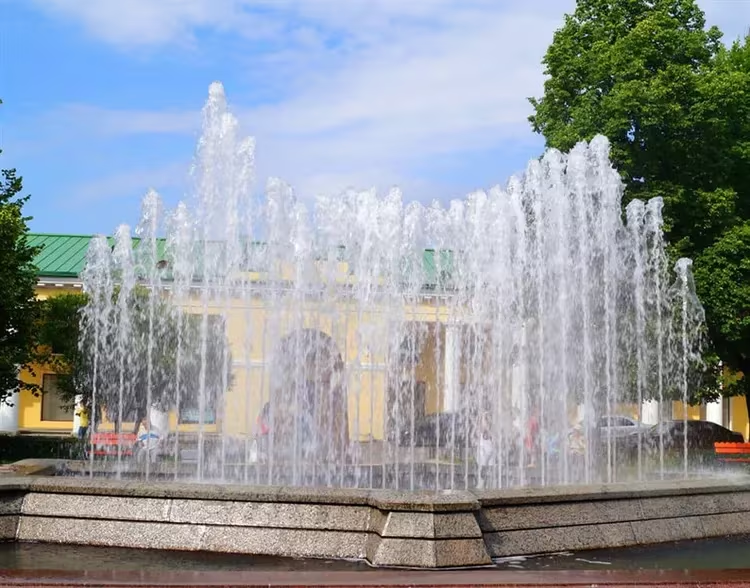
Fountains are not uncommon in Venice of the North. But singing among them are rare. Near the Gostiny Dvor in 2004 (on the occasion of the 300th anniversary of the city) such a fountain was installed. This is a rather large-scale hydraulic structure: the bath area is more than 200 square meters.
And the bowl into which water is collected follows the contours of Kronshlot. The computer controls the entire complex (hydraulic system and lighting system). It also transmits sound.
In daylight, this is an unremarkable fountain. And as dusk falls, the show begins. The jets illuminated by colored lamps change their usual movement, dance to the music. At the fountain in the evening it is always crowded: this is one of the favorite places for the townspeople to relax.