
Temple complex Angkor Wat (Siem Reap, Cambodia) – photo, description, history, map
Are you very hard to surprise? You have visited all corners of the planet and think that you have seen everything? Then I propose to dispel your skepticism with the next tour, which includes a visit to one of the most striking monuments of the ancient Khmer religion. Today we are going to distant Southeast Asia, in the jungles of which no less secrets and artifacts are hidden than in South America with its famous Mayan and Inca settlements. The ultimate goal of our tourist trip is the majestic temple of Angkor Wat, whose history goes back about 900 years.
Temple in the middle of the jungle: a historical excursion
According to official sources, the construction of the temple began in the 12th century. It is believed that Angkor Wat was part of the once huge Khmer Empire, around which even today there is a lot of controversy.
Angkor is the name of the city, which was considered the center of the empire. Its size is amazing. Initially, it was believed that the city occupied an area of 200 square kilometers, and now this figure has grown tenfold. Scientists say that at the very dawn of the empire, at least 500 thousand Khmers lived here. The temple complex itself was dedicated to the god Vishnu and was considered the most prominent representative of the Hindu religion. It is the architecture of the buildings that reminds of the religion that has been preached in this area for many centuries.
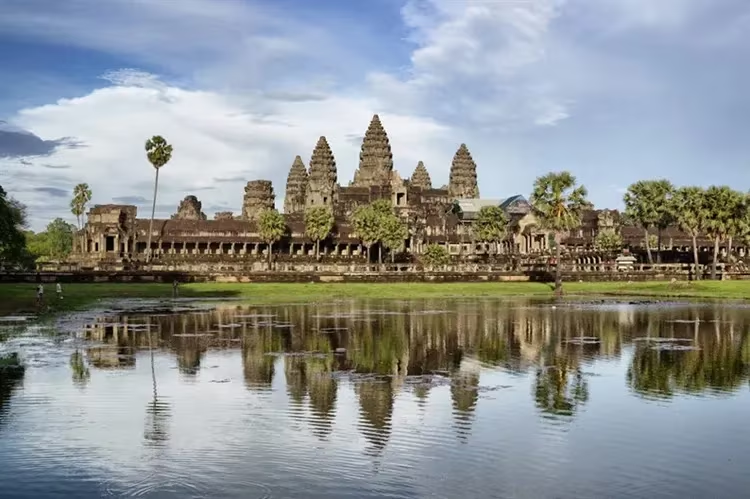
The construction was completed during the reign of King Suryavarman II. It was during this period that Ankor experienced the peak of its formation, was a metropolis and had a population of several hundred inhabitants. In total, huge areas with villages and other settlements, in which at least 80 thousand peasants lived, were assigned to the temple. A little later, Ankor Wat became not only the center for the worship of Vishnu, but also the Buddha.
Already in those distant years, the temple struck the imagination with its majesty. Huge ditches (about 200 m) filled with water were dug around its entire perimeter. The height of the main tower of the temple is a record 42 meters for that time, and the highest point is 65 meters above the ground.
All the most interesting information and an overview of the most stunning sights of Cambodia in our guide.
Location of the religious center
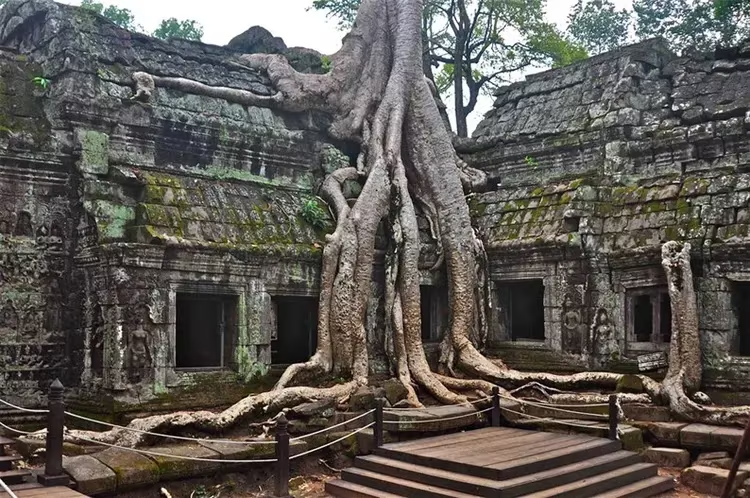
A unique building of its kind, which amazes with its ingenious architecture, size and rich decoration, is located just 5 km north of the city of Siem Reap. It is interesting that almost no one remembered such a structure for several centuries in a row, starting from the 15th century. This led to the fact that the temple fell into some decline. The jungle reliably hid the grandiose structure from prying eyes, and the huge roots of tropical trees caused irreparable damage to the religious complex, which for many years successfully combined the center of two religions – Hinduism and Buddhism.
It is worth paying tribute to the local activists and authorities, who realized it in time and began to ennoble the territory of the majestic temple. And today we all have a unique opportunity to enjoy the monumental building to the fullest, take rare pictures and mark with a red pencil one more place on the map, which is worth visiting more than once.
A program of large-scale restoration of the huge complex has been launched, the search for funds for which the world organization UNESCO is engaged in. The scale of the temple and the volume of necessary work require serious investments in the restoration of the temple. Since 1992, the temple complex has been included in the list of cultural heritage and is under protection. Despite this, the years cause irreparable damage to the structure, which was based on brittle sandstone. Therefore, if you want to see the grandiose building of the 12th century with your own eyes, you should not put off the issue of ordering a ticket on the back burner. Hurry up to see the temple with your own eyes and touch the ancient history with your hands!
There is a version that the famous writer Rudyard Kipling came up with the idea of writing the work “The Jungle Book” precisely after visiting this grandiose complex of buildings. Who knows, maybe a muse or inspiration will visit you to create some kind of masterpiece…
What is unique?
As mentioned earlier, the temple has an impressive size and rich architecture, even individual elements of which cannot be called excess. In addition, the uniqueness of the building is due to the rare combination of two religions at once, which coexisted peacefully within the walls of the temple. You won't find this anywhere else.
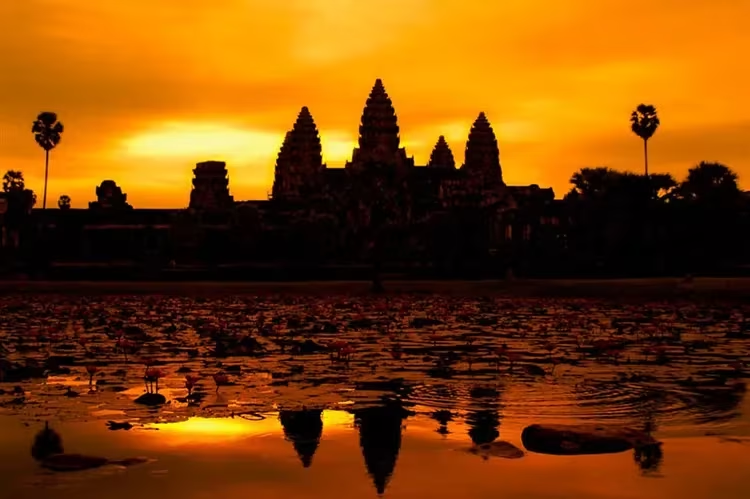
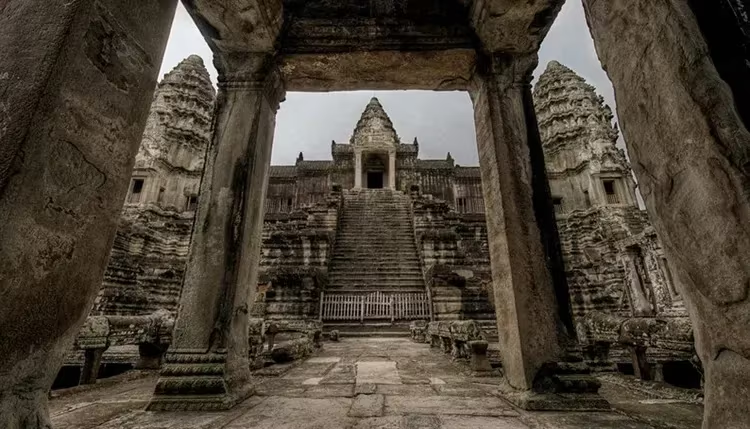
But there is one more feature. Despite its size and importance for the Khmer Empire, the temple was not open to everyone. Only the elite – representatives of the nobility and kings – could get outside its walls to perform prayers. Here they found the last refuge of the souls of the deceased rulers, and their bodies forever occupied the designated places in the tomb. This is due to one feature of the local religion of that time. The Khmers believed that the gods lived in the temple, so only selected representatives of the spiritual and secular nobility could communicate with them and see them. Here, every detail has its own meaning and plays a certain role. Three huge towers are shaped like lotus buds, and their design is complemented by special sculptures and a unique bas-relief.
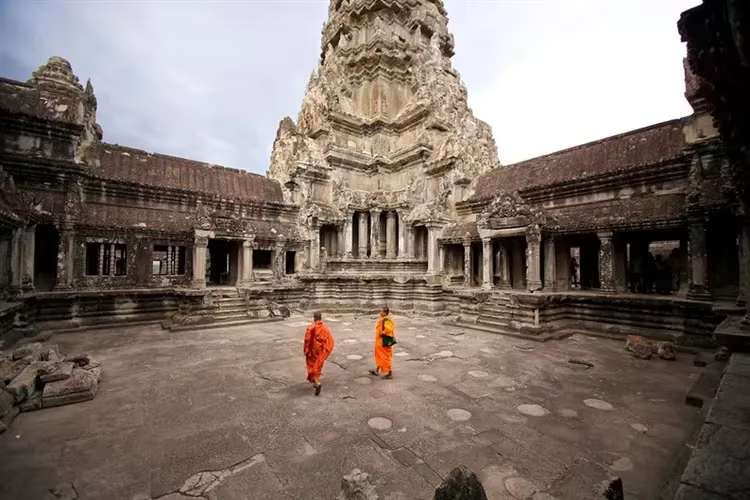
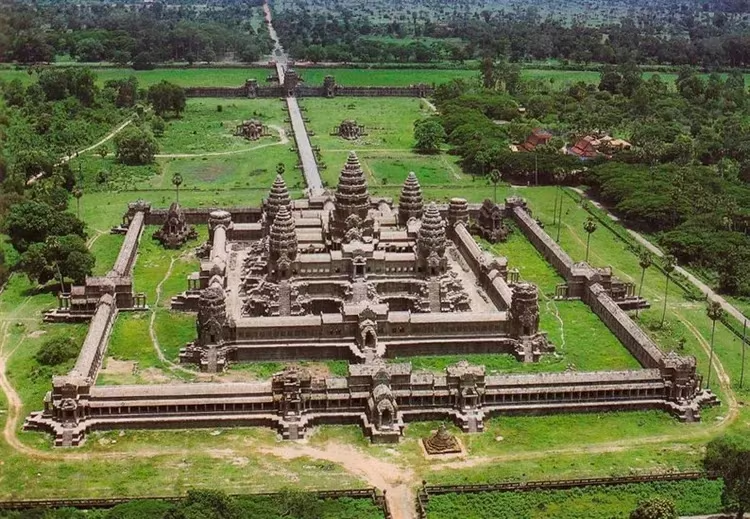
The total area of the temple complex, which has the shape of a rectangle, is nearly 200 hectares! And without exception, all buildings were erected in an original way – from top to bottom. Archaeologists and scientists have not seen such technology anywhere on the planet.
It is believed that the appearance and structure of the complex was ultimately to match the legendary sacred Mount Mere. The buildings seem to repeat all its outlines: the towers are its peak, the outer walls are rocky ledges, and the moat at the foot is the ocean that surrounds the Universe.
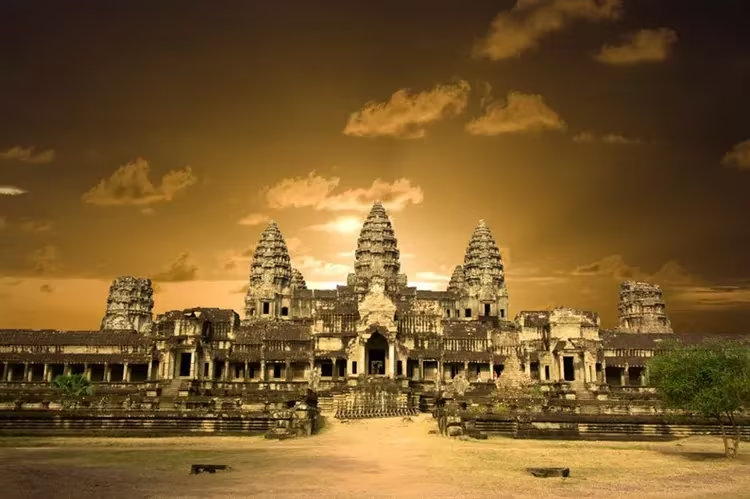
The Khmers spared neither effort nor jewels to create a unique temple complex. Initially, Angkor Wat was the most impressive Khmer religious center in terms of its rich content. But as a result of the civil war, the invasion of atheists, which are better known as the Khmer Rouge, and the soldiers of Pol Pot in the 1970s, most of the decorations and artifacts were looted, and irreparable damage was caused to the complex itself. It was possible to protect the temple from the invasion of vandals only in 1992, when UNESCO controlled it.
Tour of the ancient temple
Today, tourist tours of the temple complex are available to almost everyone. The main requirement is to follow the simple rules of staying in the temple and respect this cultural and architectural monument.
Angkor Wat will give one of the most vivid impressions to anyone who finds himself in Cambodia. Exotic adventures, history saturated with oriental culture and amazing religion – this is only a small part of what you will get to know outside its walls.
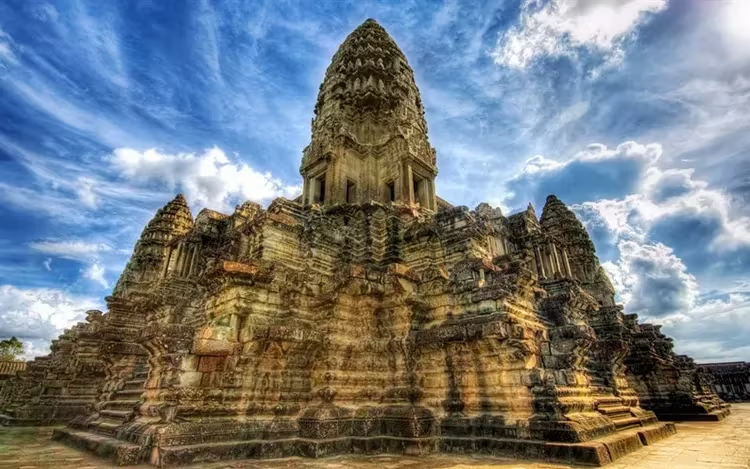
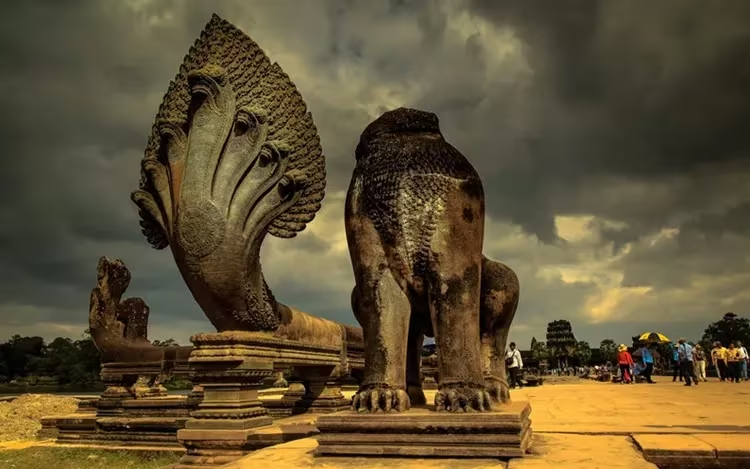
You also need to know that the complex of buildings includes several dozen temples and individual buildings, and the entire irrigation system, which is 900 years old, still works properly and performs its functions today. Particularly noteworthy are the temple mountain, which has the name Bayon, the images of the main god Buddha, carved from stone, the Elephant Terrace and the statue of the Leper King. Of course, it is impossible to describe in words the grandiose creation of human hands. Each building is made in a special style and has its own characteristics. Let's take a closer look at some of the sights.
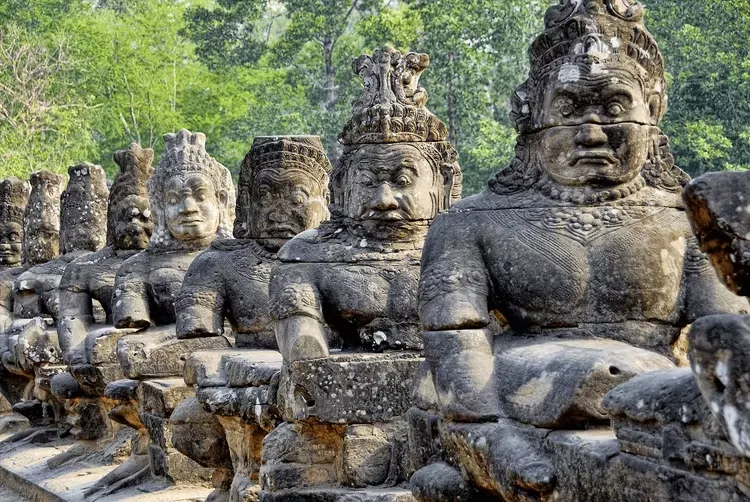
One of the earliest buildings of Angkora is Phnom Bakheng. It is believed that it was built in the ninth century and eventually received the appearance of a structure with five tiers and several towers. The central area of the complex is called Angkor Thom, which literally means “big city”. Along the entire perimeter, it is surrounded by a water channel and walls (100 m and 8 m, respectively). The citadel includes five gates that are surrounded by high towers, the walls of which are decorated with images of deities.
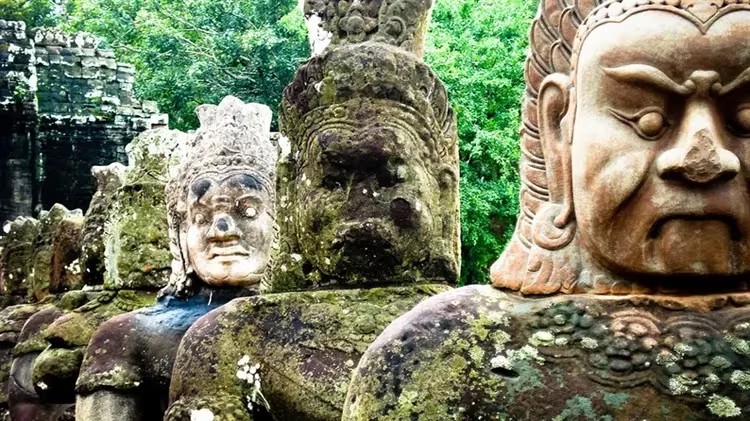
Behind the walls of the citadel is the Bayon pyramid, which has already been mentioned above. It is surrounded by 54 towers. There are also such attractions as the Bafuon temple (more precisely, its ruins that have survived to this day), the palace, the sanctuaries of Baphuop and Pimeanakas (which is better known as the “Palace of Heaven”), the Elephant Terrace (from which the rulers watched the progress of all ceremonies). Here you can also enjoy the original features of the Gates of Victory and stone bridges, which are decorated with the faces of the gods.
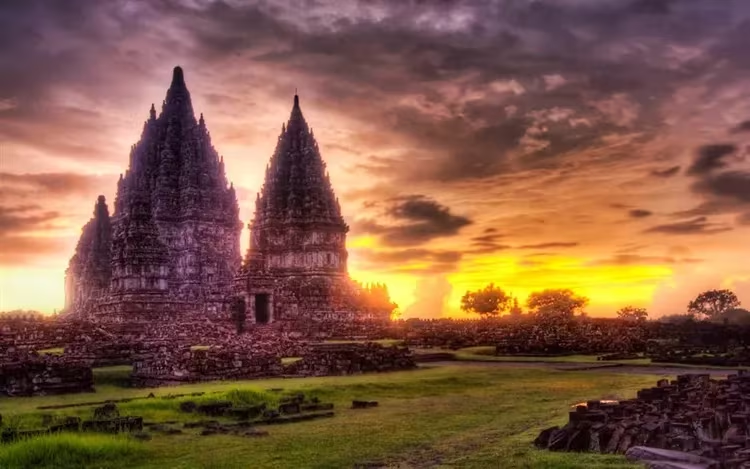
If the buildings mentioned above, for the most part, were subjected to partial or complete restoration, then some churches retained their original appearance. For example, Ta-Prom.
How to get there and where to stay
You can get to the temple complex from Phnom Penh (240 km) or from Siem Reap (6 km). It is Siem Reap that is most popular among tourists, as the tourism business has been actively developing here recently. For the convenience of visiting Angkor Wat, which hundreds of thousands of tourists go to see every year, an international airport has been built here, and a lot of modern hotels will provide convenience for visitors without any problems. Getting to the temple complex from here is quite easy. This is what has made it so popular among tourists.
Recommendations
If you are going on a tourist visit to Cambodia for the first time, it is better to use the services of a guide. Even today, the territory of the country is littered with mines and other life-threatening and health-threatening reminders of the Khmer Rouge invasion. Therefore, it is easiest to get safely to the temple and get the impressions that you came here for as part of a tourist group led by an experienced guide.
But if you have been here before, you can refuse the services of a guide. This will give you a significant advantage over other tourists who wander absentmindedly along the walls of buildings, following on the heels of the guide, who follows the familiar central route. In this case, it will not be possible to appreciate all the grandeur of architecture and look into the far corners of Angok Wat.
But the most interesting begins only when you turn off the central route and lay your own in the middle of towers and temples, statues of Buddha and sculptures of other gods. Such a walk will bring many amazing discoveries and memorable photographs. For a real pleasure, do not forget to think over the form of clothing in advance and carefully choose shoes for walking.
The most beautiful temple complex at dawn and sunset. An early morning visit will save you from the crowds of tourist groups, of which there are a huge number. The temple loves silence. And it is during these morning hours that he is ready to reveal his secrets to true connoisseurs and connoisseurs of the Eastern religion. We wish you a successful journey to the origins of Hinduism and Buddhism and vivid impressions!