
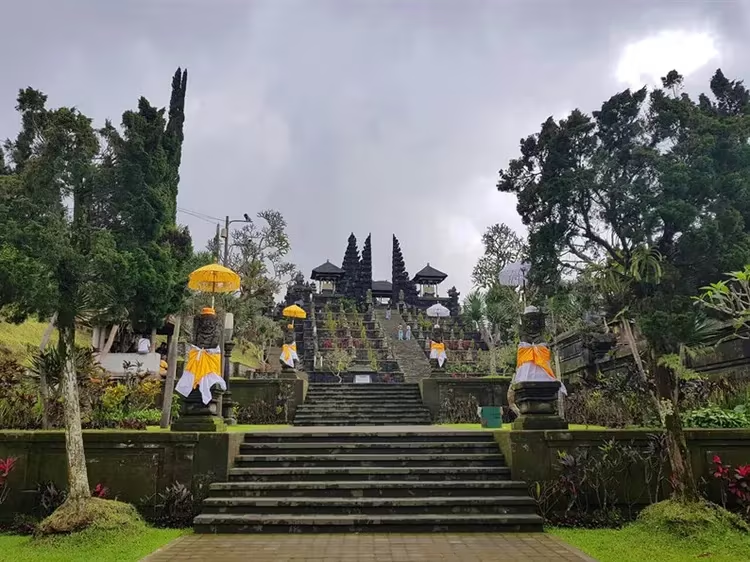
Temple Pura Besakih in Bali – history, photo, description, opening hours, map
Despite an eventful past, the ancient Temple of Pura Besakih in Bali was included in the excursion programs of the island‘s agencies several years ago. The main stream of tourists bypasses this place. The reason is the remoteness from the main sea resorts of the island. And absolutely in vain! The construction is covered with ancient legends: visitors dive several centuries deep. Here you can not only see the ancient architecture, but also get acquainted with the traditions of Hinduism. Tourists who come to the temple on holidays will see the festive ceremony. Walking around the complex on ordinary days, when there are no believers, is just nice: stone buildings are covered with emerald mosses. This gives the ensemble an unusual look.
mother of temples
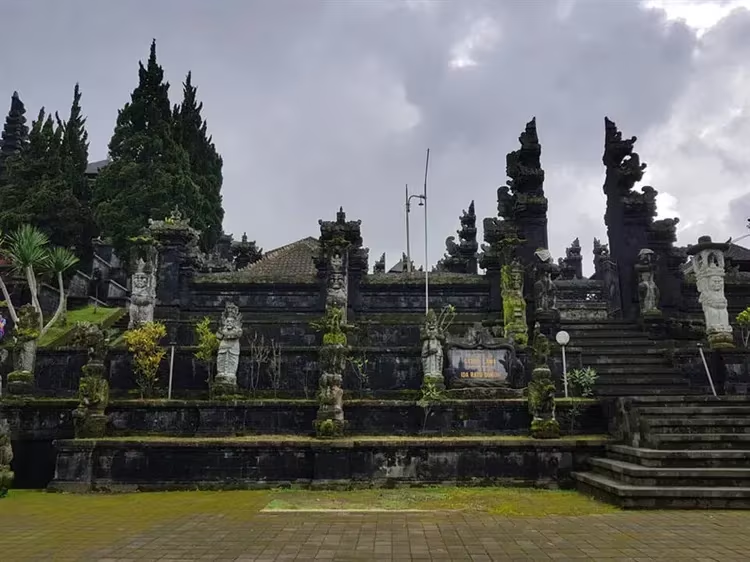
Locals call Pura Besakih the mother of all temples. And there are reasonable explanations for this:
Hindus pray at the Mother of Temples to all the supreme gods.
Construction history
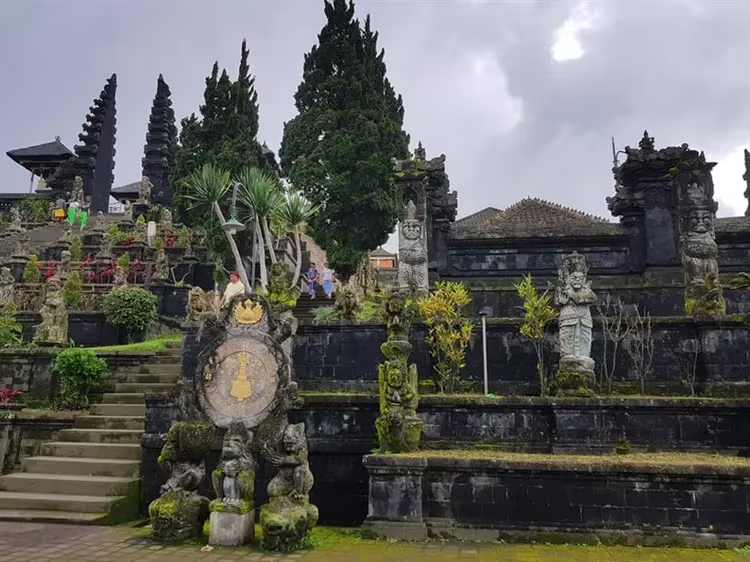
On the site of the present complex there are buildings, whose age is more than 2 thousand years. These are fragments of stairs and the remains of altars. But in those days, the inhabitants of the island were pagans, and sacrificed to pagan gods. And for the first time in historical documents, Pura Besakih is mentioned in the 11th century, but as an already functioning temple. Oral traditions speak of a wandering monk who founded Pura Besakih on the site of a pagan temple in the 8th century.
And according to other sources, again oral, in the 10th century, Raja Kesari ordered the construction of the complex. But there is no written confirmation of this hypothesis. Researchers suggest that the ruler only completed the existing structures. Until the 15th century, there is no written evidence that cult rites were held in the temple. And in the 15th century, when the ruler moved his residence to the center of Bali, the complex began to be mentioned in documents as a place where services are held. From that moment on, any supreme raja allocated funds for the improvement of Pura Besakih.
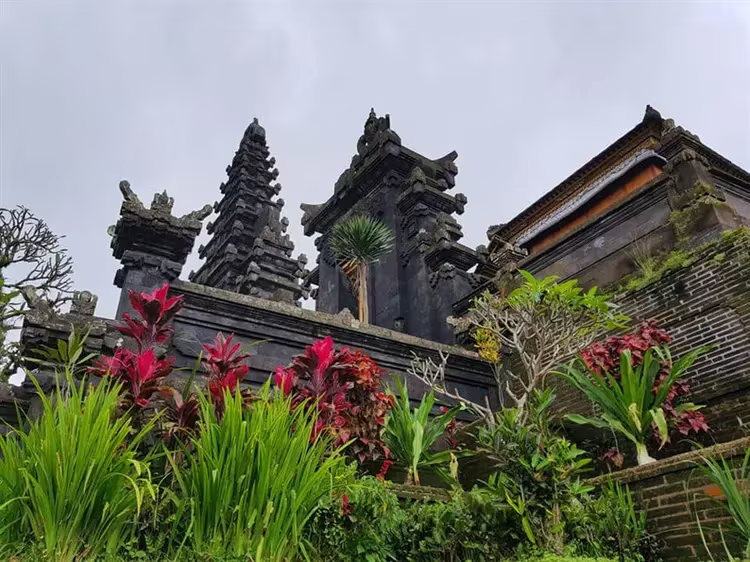
The inhabitants of Bali believe that the gods living in the temple protect them from troubles: it is enough just to hide behind the walls of the structure. Indirectly, this confirms the volcanic eruption in 1963: the lava was divided into 2 parts and bypassed the complex. The people who took refuge in the temple were saved. But the previous disaster, which occurred in 1917, caused significant damage to the buildings.
Architecture
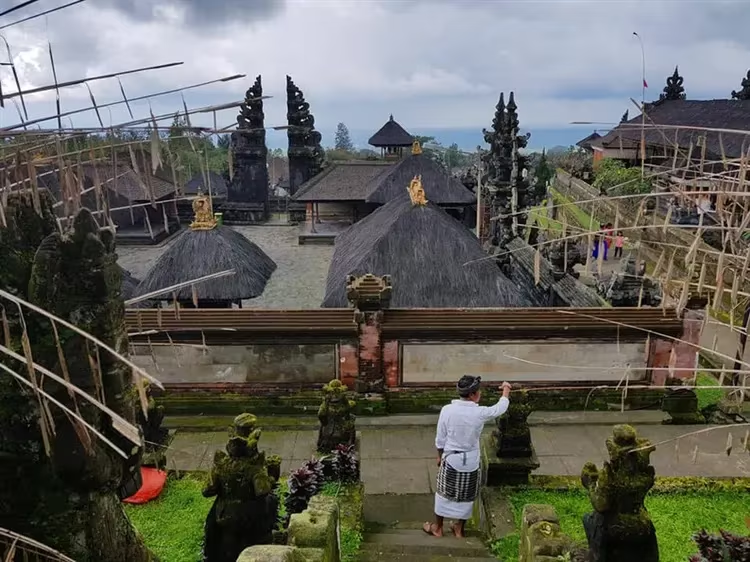
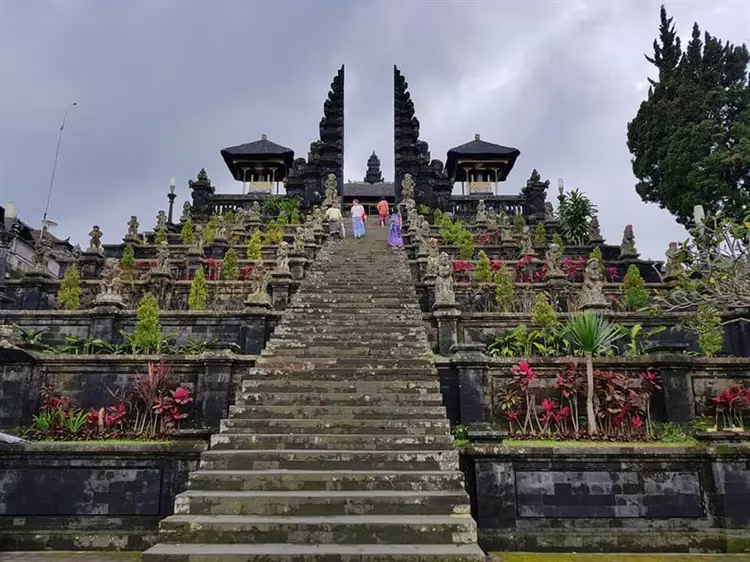
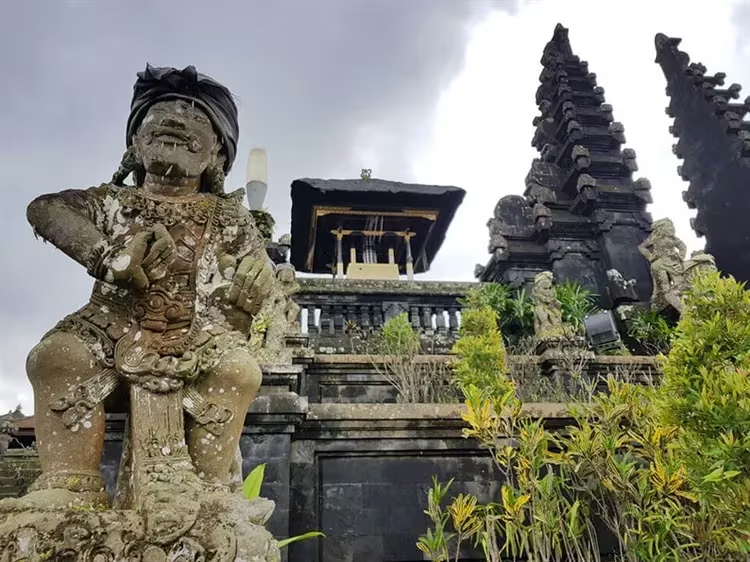
Tourists call Besakih the “black temple”: all the buildings are made of dark stone, the roofs of the buildings are also black. Religious premises do not have walls: the roof rests on columns, also dark. Such openness shows that the boundary between the world of the living and the spirits is transparent and conditional. The black color is diluted with gilding, which decorates the altars, columns and carved details of the gate, and bright sarongs – statues are dressed in them, protecting the complex from enemies.
A distinctive feature of the complex is the meru towers. They look like pagodas with several tiers: the higher the structures, the more significant the god to whom they are dedicated. When decorating the interiors, the traditional colors of Bali are used: black (Vishnu prefers it), yellow (gold) corresponds to Ida Sanhyang Vidi Vasa, red (Brahma loves this shade) and white (Shiva endows it). They favorably dilute the impression of dark tones.
The central temple (Agung Panataran) is divided into several zones:
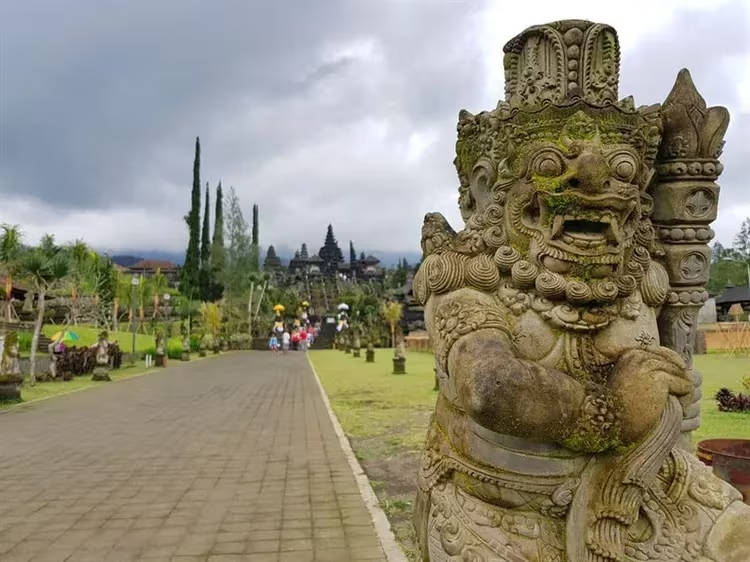
- To get to the first tier, you need to overcome a staircase of 52 steps. From evil spirits, the temple is protected by statues of monsters sitting on the sides. On the site in front of the entrance there are gates divided in half: a symbol of the world, consisting of gods and people.
- To get to the next area, you must enter the gate. Immediately on the site stands the throne of the supreme god – Shiva. A little lower are places for Vishnu and Brahma. In addition, there are buildings on the site: for offerings to the gods, for prayers, for priests to rest.
- The third tier is for the gods. To get here, you need to climb several flights of stairs. The measure zone begins. In one of the towers there is an archive and, according to legend, treasures.
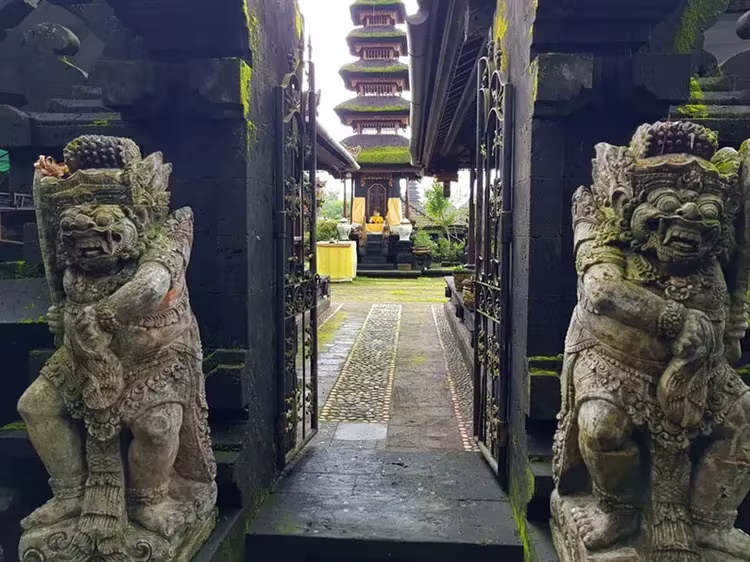
At the very top there are buildings closed to tourists: the Shiva temple and the temple of the holy ancestors of Raja Klungklung.
What to see
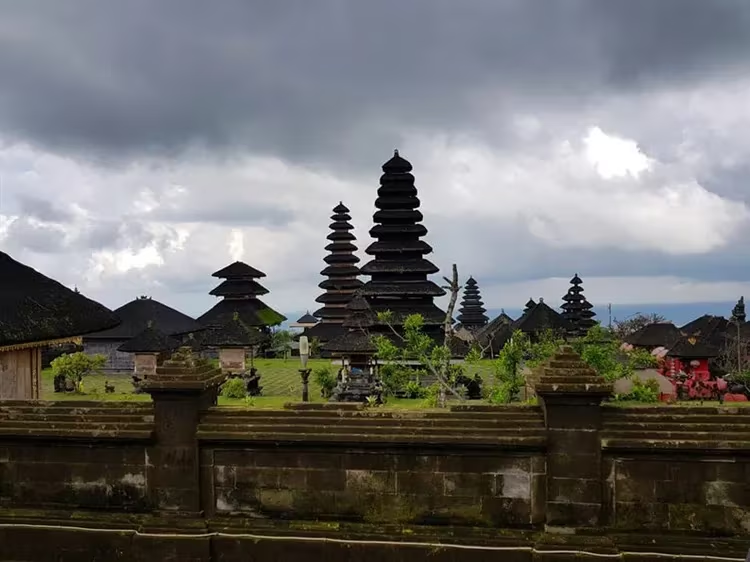
To see all the buildings of the complex, one day is not enough. In addition, walking around the territory in the heat or in the dark is unpleasant. Therefore, if time is limited, you should focus on:
- The central temple is Agung Panataran. It is easy to get here through the main entrance. The temple has a stepped structure: each next tier is higher than the previous one.
- Dangin Kretege: It is built to the east of Agung Panataran. This is the home of Brahma.
- Batu Madege. To see the sight, it is recommended to proceed west from Agung Panataran. Vishnu lives here.
- Pande Vesey. To get acquainted with the temple of the Heavenly Smith, you will have to overcome the entire central staircase.
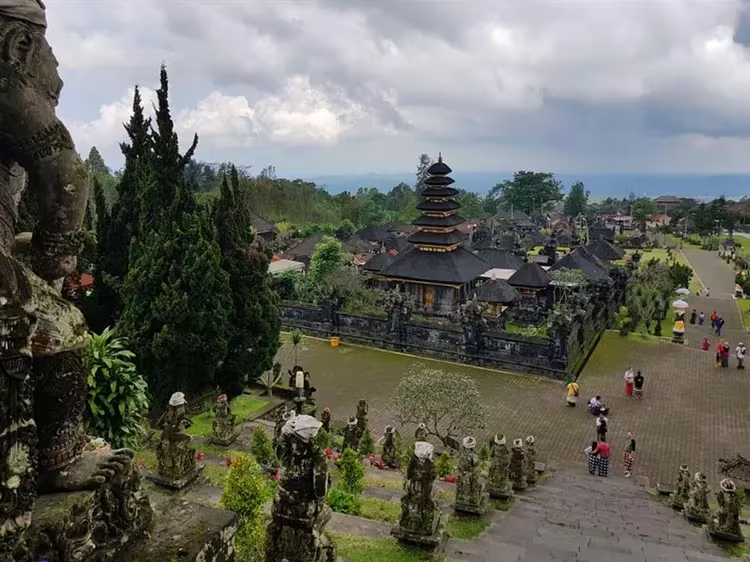
But it's also interesting to just look at the complex: in sunny weather, a stunning view of the temples and surroundings opens from the last platform.
Tips for tourists before visiting
In order to enjoy the inspection and avoid trouble, you should follow simple rules:
- Entering the complex without a sarong is not accepted. It is offered to buy at the entrance or rent (average price – 20 thousand rupees). You can replace the bedspread with any long and wide scarf.
- It is hot to walk around the territory of the complex during the day: it is recommended to arrive early in the morning or at sunset.
- Tourists who are late should be aware that they will not be able to find accommodation in the vicinity, the locals refuse to let them into the house, and there are no hotels nearby.
- To avoid the intrusive attention of homegrown guides, it is recommended to enter through one of the side entrances.
- To visit, you should buy a ticket at the box office: otherwise you will have to fight off local crooks offering the same at exorbitant prices.
- It is recommended to take into account that the territory after the holidays is not cleaned for a long time: you will have to observe mountains of garbage.
- Some tourists recommend meeting the sunrise at the top of the Agung Panataran Temple. To do this, you should arrive in Besakih in advance.
- When entering the territory before 8 am and after 5 pm, tickets should not be purchased: the box office is closed.
- At the entrance to the complex there are stalls with souvenirs, tents with fruits and drinks. And you can eat on the lawns.
- In the dark, not the entire territory is illuminated: the complex should be inspected with caution.
- Besakih is a functioning Hindu temple. People belonging to other faiths should refrain from visiting levels above the first. It is also forbidden to enter temples.
It is better to walk around the complex, observe wonderful vegetation and meditate on ordinary days. But in order to see the colorful ceremonies, you should come to Besakih during Hindu holidays. The Galungan holiday, which symbolizes the victory of good over evil, will leave an unforgettable impression.
Opening hours and ticket prices
For tourists, the complex is open from 8 am to 5 pm. But in order to pray, you can enter the territory around the clock. A ticket for an adult visitor will cost 15,000 rupees.
Where is it located and how to get there
Fans of exotic travel can be reached by regular bus from Denpasar to the village of Besakih. But when planning a trip, you should take into account: the bus station is located 8 km from the city, and you have to walk to it. The comfort of regular buses also leaves much to be desired. Some tourists try to hitchhike to Besakih. But they note that it is quite difficult to catch something moving in the right direction. It is reasonable to rent a car or a bike and get to the village of Besakih using a navigator. The journey from Denpasar will take 1.5 hours, from Lovina – 2.5 hours. There is paid parking in front of the complex.