
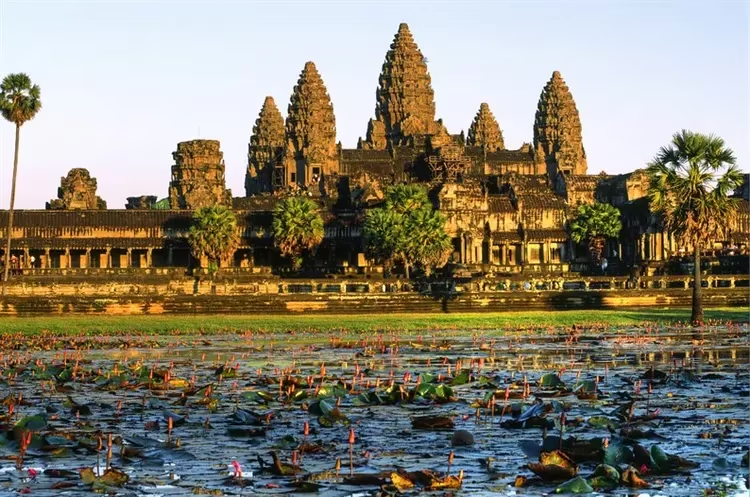
Temples of Angkor in Cambodia – a guide and an independent tour to the temples, photo, description
Tourists who are familiar with the Angkor temple complex know firsthand that several dozen buildings are located on a vast territory, each of which is unique and has a high cultural and historical significance. Of course, it is very difficult to look at all the diversity of the religious heritage of this region as part of a day trip. Therefore, we bring to your attention an excursion program, which contains the best monuments of architecture and history of Angkor.
Before proceeding to the route, it is worth saying a few words about the history of this place. Angkor is a surviving area of the Khmer Empire that existed from the 9th to the 15th century. Some of the surviving temples are included in the list of world heritage sites and have long been taken under the protection of UNESCO.
If earlier Angkor was a real city, today its numerous buildings are completely destroyed, and only temples remain surviving. This is due to the fact that ordinary Khmer dwellings and other not so important objects were built of wood, which is not very durable and easily succumbed to the destructive effects of the forces of nature. But for the construction of temples, stronger materials were used, which were based on sandstone.
Agkor-Wat
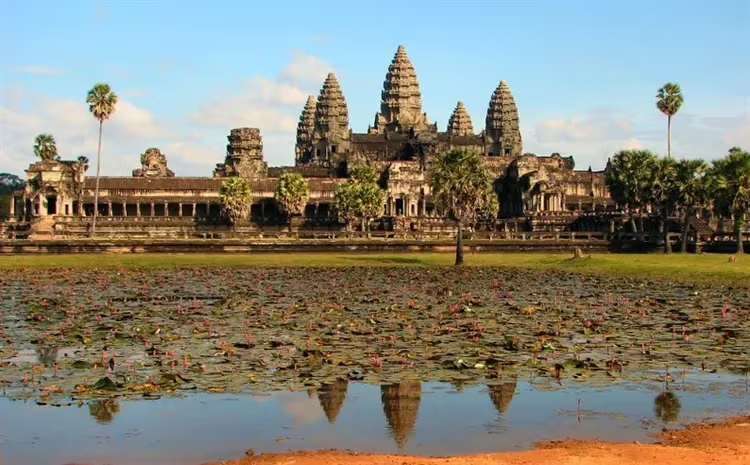
Undoubtedly, the majestic temple of Angkor Wat, which was dedicated to the main deity of that time – Vishnu, requires special attention as part of any excursion. The world community has long recognized this monument as one of the most majestic and significant in the history of all mankind.
Read more about Angkor Wat Temple, Cambodia on our website.
The main structure dates from the 12th century, when the empire was in the hands of King Suryavarman II. Agkor Wat is located in the very center of the once existing capital of the ancient state and the easiest way to get to it is from the modern settlement of Siem Reap, which is only 5.5 km away.
Phnom Bakeng
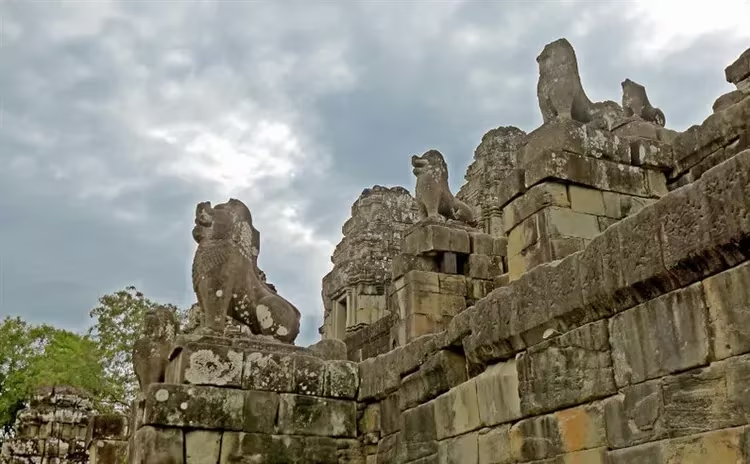
This temple belongs to the group of the most ancient religious buildings in the region. According to official sources, the construction took 21 years, and it appeared long before the Angkor complex mentioned above. It was this complex that was considered the main one in the capital of the imperial state for a long time.
Even today, one glance at the monumental building is breathtaking, and a completely logical question arises in the head about how the ancient inhabitants, in the absence of construction equipment, modern tools, and only thanks to their fortitude, could build something like that? After all, it was necessary to clear the site, deliver heavy blocks of stone to the building site, carve out steps in the rock! But the most incomprehensible thing is that the Khmers managed to change the course of the river, diverting the water flow by 3 km at once!
Phnom Bakheng originally had 108 towers, of which only a few have survived. And the building was surrounded by massive walls, which had a length of 4 km. Thanks to simple calculations, you can find out that the total area of u200bu200bthe religious complex was 16 square meters. km!
Angkor Tom
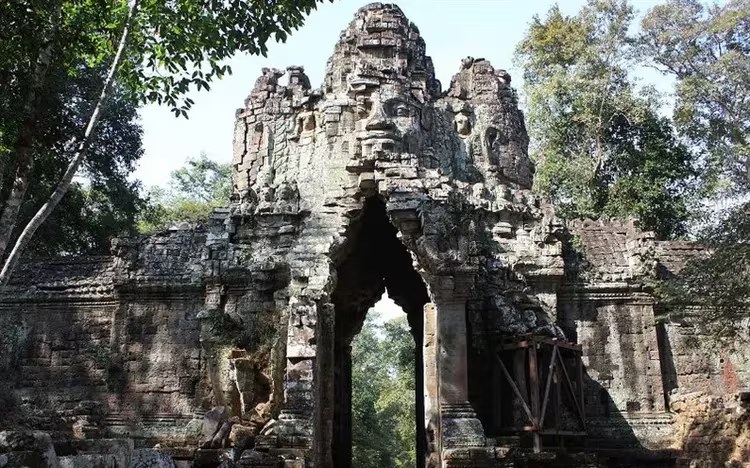
The southern gate of another amazing structure – Angkor Thom – is connected by an unusual bridge, which was built to overcome a huge moat that arose on the way of people following the temple. The uniqueness of the bridge lies in the fact that it has a total length of over 100 meters!
The bridge is decorated with chiseled figures of devas and asuras (108 figurines in total), which are pulled in different directions by Naga – a snake with seven heads. Such an unusual composition forms a decorative railing and symbolizes the eternal confrontation between good and evil. Local authorities, with the support of the world community, spend a lot of money to preserve unique architectural monuments. Therefore, do not be surprised that some of the statues on the bridge look like new – this is the result of the painstaking work of the restorers.
By the way, the number “108” present everywhere, according to the ancients, is the universal constant of the Universe. The figure is found in almost all buildings that are part of the complex.
Angkor Thom itself is a temple city, which in the 12th-13th centuries was considered the main city of the empire. That's why he has such an impregnable disposition. There were five gates in the city, each of which had its strictly defined purpose. Tourists today are escorted through the South Passage, which is the best preserved. By the way, the gates themselves can also safely claim the title of a unique attraction.
Bayonne
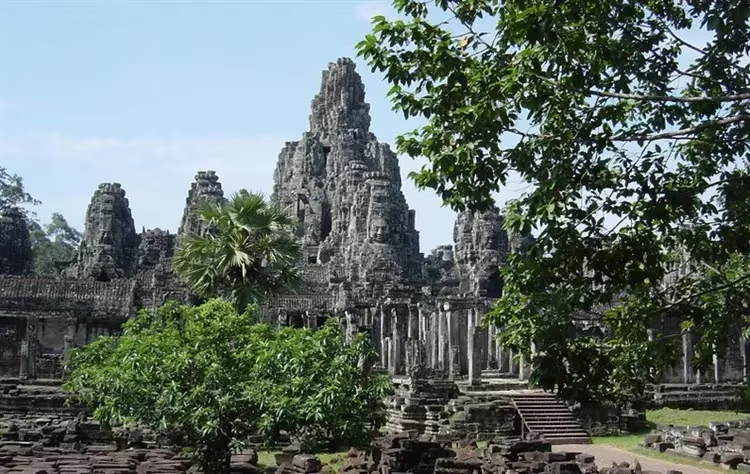
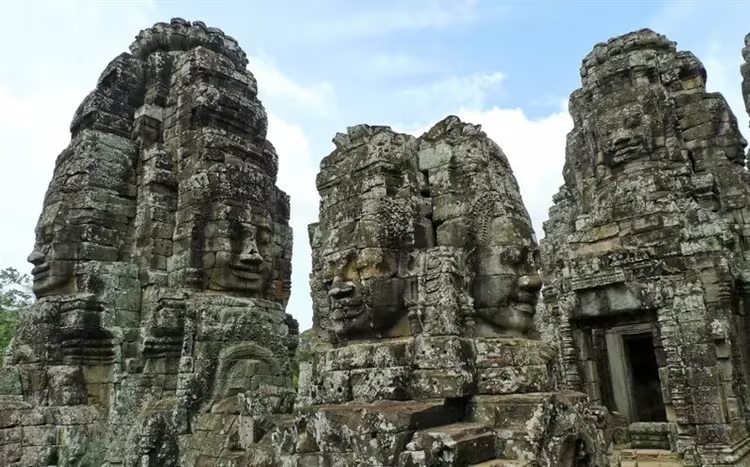
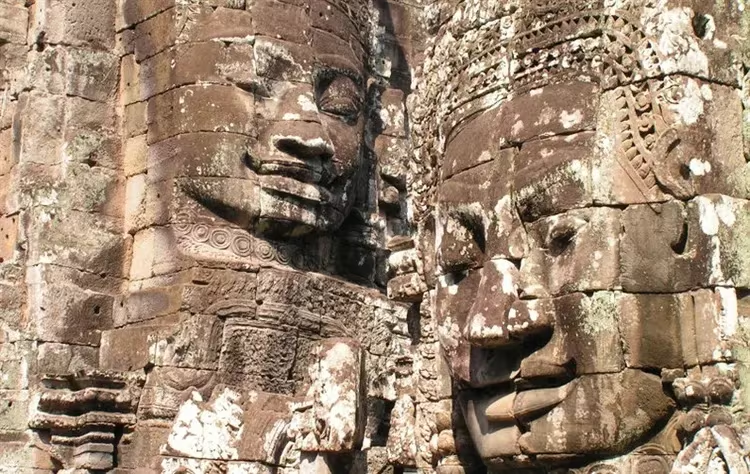
You should definitely include in your excursion program a visit to the amazing Bayon Temple, which has three levels at once and is surrounded by impressive walls. The walls are everywhere decorated with all sorts of images that tell about the features of everyday life and life of ordinary Khmers. One wall is entirely devoted to scenes of the victories of the then ruler Jayavarman VII, including a fresco depicting one of the most successful military operations in the battle of Tonle Sap.
The first researchers of the Bayon appeared here in the 20s of the last century, as a result of which the complex was recognized as a Buddhist sanctuary.
Unusual verandas
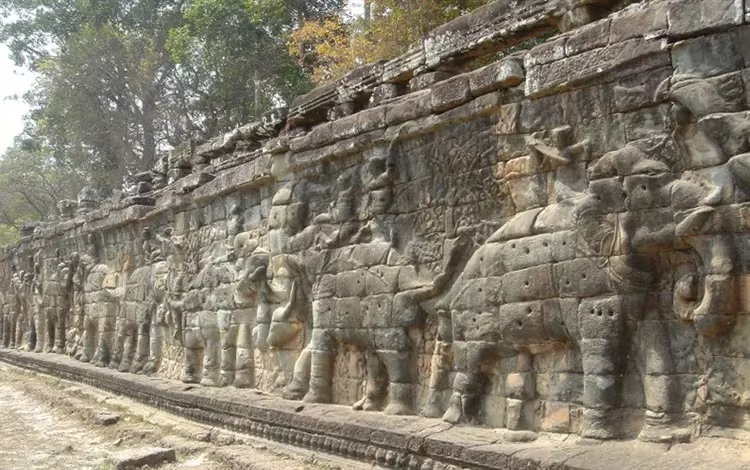
The temple complex includes several unusual sites at once, the most famous of which are called the Elephant and Leper King. The first is located in Angkor Thom in the very center of Kings Square. The total size reaches three hundred meters and is the result of numerous reconstructions. Along the perimeter there is a huge number of statues of elephants, which in those days enjoyed special honor among the ancient inhabitants, as well as nagas. You can also recognize images of hamsas, that is, waterfowl that served Brahma himself.
The second veranda is located nearby. The main decorations of the terrace are also statues of nagas, deities and unusual inhabitants of the deep sea. Well, here is also the statue of the Leper King, to whom the site of the same name is dedicated. There are two versions of the origin of such an unusual name for terraces. According to the first theory, the figure of the king belongs to the ruler Jayavarman VII, who allegedly suffered from leprosy (it is with this theory that the construction of a huge number of hospitals during the years of his reign is associated). And another version makes us turn to the legend of the deity Yama. The platform itself played an important role in funeral rituals.
Other structures
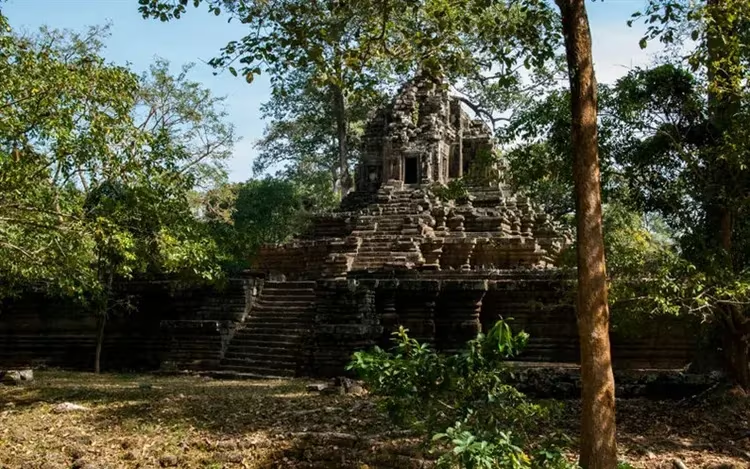
In addition to the already mentioned objects of ancient architecture, the complex includes a lot of other buildings, acquaintance with which promises a lot of vivid impressions. For example, Preah Pitu, which in itself claims to be a temple complex. Under this name, five monumental buildings are united at once, which even belong to different religious movements – Buddhism and Hinduism. Unfortunately, the main part of the attraction is destroyed, and therefore is not popular among tourists.
Of particular interest is the Mangalartha complex, which was created in honor of the teacher of the ruler Jayavarman VII. It looks like a cross and is considered the last of the local buildings, for the construction of which sandstone was used. In the center of the temple there were statues of the deity of the same name and his parent, from which only pedestals remain today.
The Bat Chum temple is unique in that, although it belongs to Buddhist sanctuaries, it was still built at a time when the territory was influenced by Judaism. And on the gates you can even see prescriptive signs (like modern ones “do not put cars at the gates”). The entrance was guarded by stone lions, but today only one statue of the stone “King of Beasts” remains.
Recommended for viewing Sights of Cambodia.