

🚶♂️ Top 5 historical routes as good as the Camino de Santiago
One of the most famous historical routes is the Camino de Santiago. Many people have heard and read about this route. But besides this, there are other legendary trails that are worth paying attention to. Hundreds, thousands and even millions of years ago, pilgrims, armies, preachers, thieves and adventurers passed along the roads of these routes. We've put together a list of places that are definitely worth visiting.
Naukluft Trail
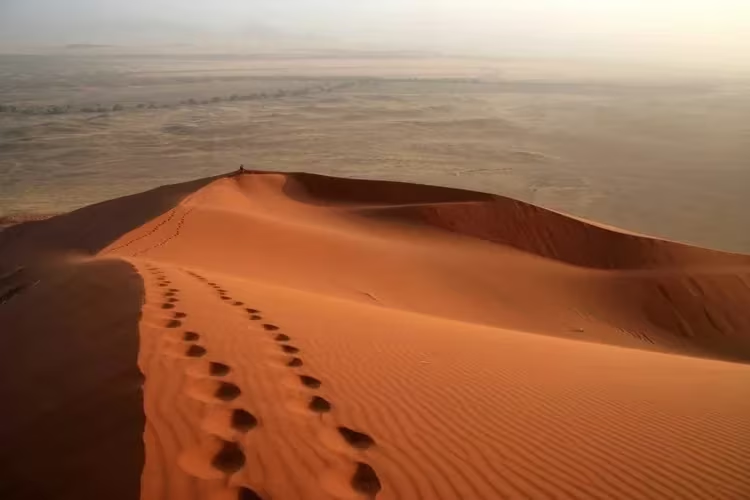
The Naukluft trail in Namibia National Park opens the list. The Namib is considered the oldest desert in the world. Its age is at least 45, and according to some sources 80, million years. The trail itself runs through the Naukluft Mountains, which demarcate the eastern edge of the Namiba. Moreover, the age of the mountains themselves is approximately two billion years. Despite the extremely harsh conditions, hardy wildlife can be found here, from quiver trees to weaver birds and oryxes. It will take more than a week to complete the trail.
Laugavegur
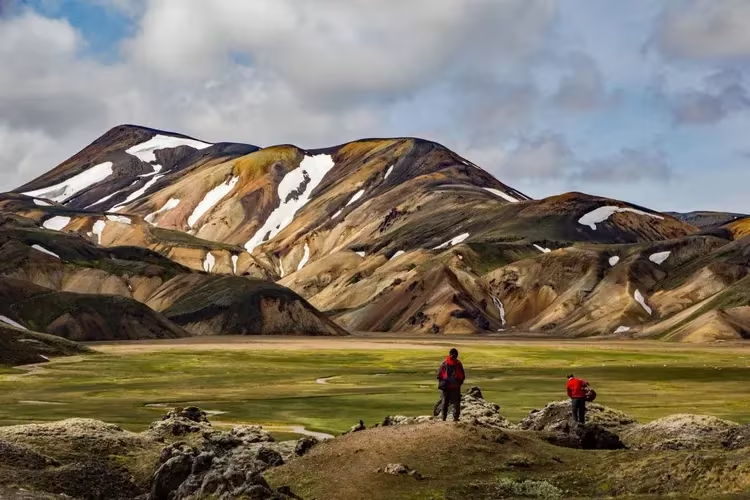
Iceland is an incredible country. There are active volcanoes and lush, vibrant landscapes here. Iceland's Laugavegur route demonstrates all this. It runs from Landmanalaugar base camp to the glacial valley of Thorsmörk, passing thermal springs, streams, lava fields and rheolithic rainbow mountains. It will take four days to walk 55 kilometers of such beauty. During the season, which is the end of June – beginning of September, there is transport from Reykjavik to the start and finish points.
Kalalau Trail
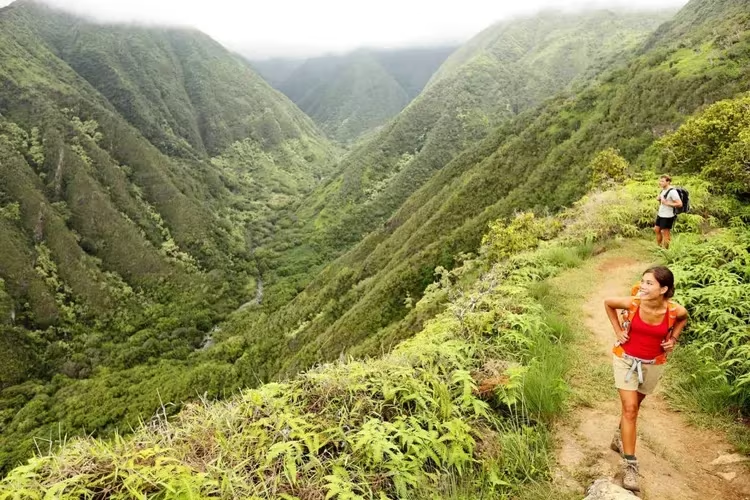
Hawaii is located on a tectonic plate that moves due to volcanic activity. New islands appear due to eruptions. Kauai is the oldest of them (more than 5 million years old), so time and the ebb and flow of the tides have been able to create unique landscapes. Using a trail first created by 13th-century Polynesian settlers, you can walk along the island's coastline. There will be the Pacific Ocean on one side and impenetrable rock on the other. You can follow in the footsteps of the local inhabitants of the last millennium AD in a day or two. The route stretches for 18 km.
Great Stones Way
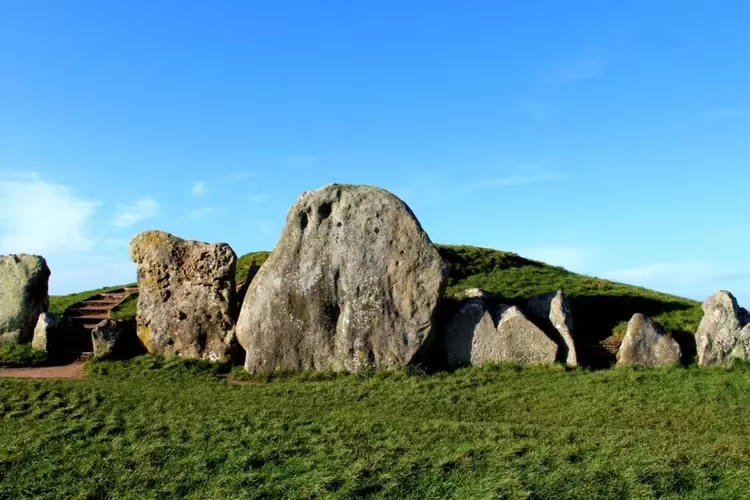
This pilgrimage route links the North Wessex Downs with Salisbury Plain, bridging the modern and prehistoric past. The route includes not only Stonehenge, but also landscapes, burial mounds, Roman roads, Norman churches – a living lesson in British history. In 4-5 days it is possible to walk the route that appeared here before our era. For those who prefer comfort, the distance with detours will be approximately 85 km. But if you decide to move directly, the distance will be reduced to 58 km.
The great Wall of China
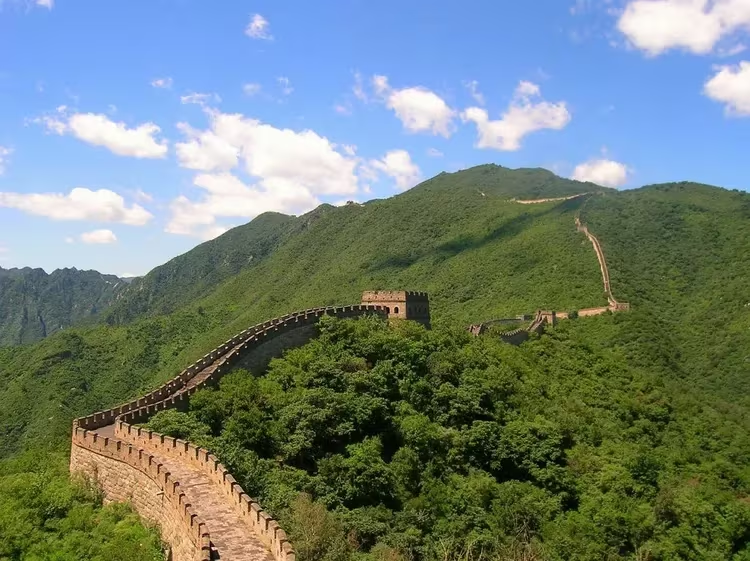
The Great Wall of China is not one complete wall, as many people think. In fact, there are many defensive areas. They were built over 2000 years by different dynasties. The purpose of this building was protection from the “barbarians” in the north. In addition, scientists believe that only a third of the wall remains. It is impossible to walk all sections of the wall using a single route. But you can get to them from different locations. There are eight distances in total, the completion of which will take from several hours to a couple of days.
El Mirador
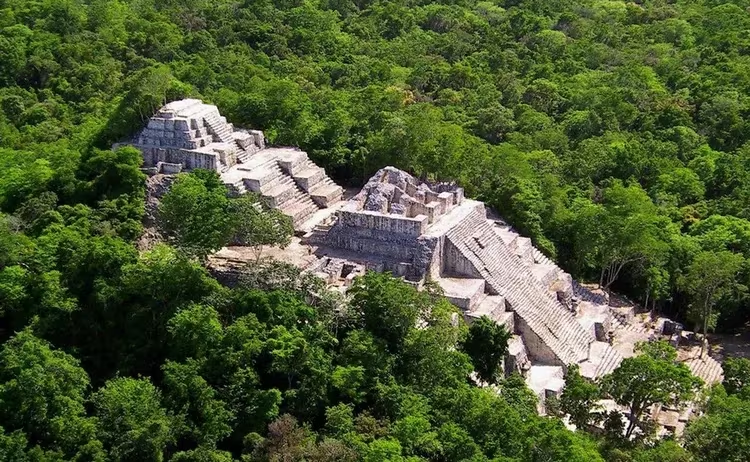
During its golden period, the Mayan city of El Mirador was twice the size of the more famous Tikala. Here was also the 72-meter La Danta, the tallest Mayan pyramid. However, for some reason, the inhabitants of El Mirador abandoned it around 150 AD. And later the city was swallowed up by the jungle. But in 1930, scientists rediscovered it to the world.
El Mirador can still be reached partially and exclusively on foot from the village of Carmelita. However, it's worth exploring not only this site, but also other Mayan ruins along the way, from El Tintal to the Nakbe Temples. This route will take about five days. We recommend taking a local guide.
Appian Way
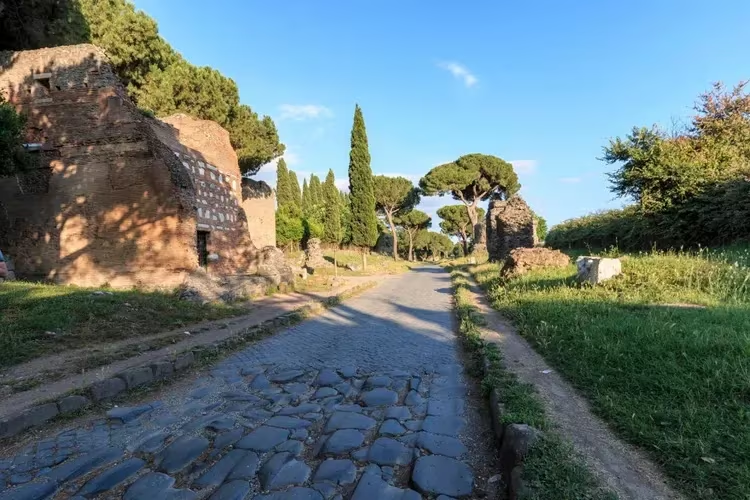
The Romans were so good at building roads that many still have not mastered such technologies in the CIS. Via Appia has been around for 2000 years. Initially, the Appian Way connected Rome and the port of Brindisi. The route passes through the ancient park of Appia.
Along the road there are various attractions, including the church of Domine Quo Vadis, whose official name is Santa Maria in Palmis. The original title means “Lord, where are you going?” The church was built on the spot where the Apostle Peter saw the resurrected Jesus Christ and asked him this question. It only takes about five hours to walk along the Roman road, and you will still need to apply for a visa before you go. Use visa support for this.
Jesus Trail
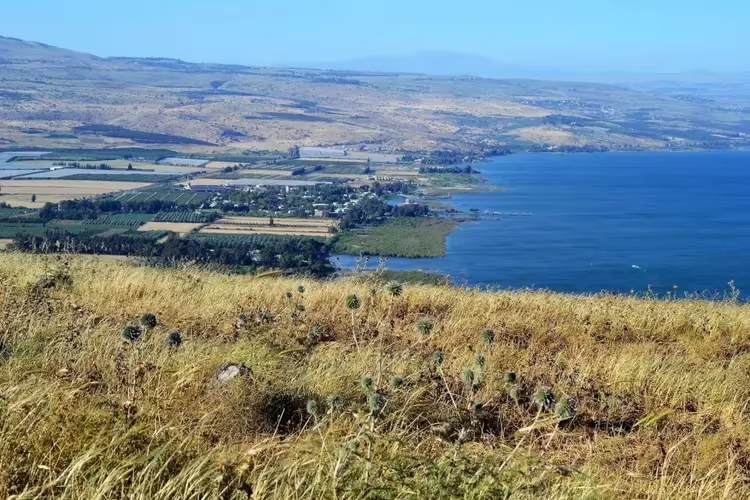
This trek through the Holy Land begins at Nazareth, where Jesus was resurrected, and ends at the ruins of Capernaum, where Jesus lived during his many years of ministry. Between them are biblical landscapes. For example, Zippori, where Mary was born; the village of Kfar Kana, where Jesus turned water into wine; the Arbel valley and the shores of the Sea of Galilee, where Jesus divided the loaves and fish to feed 5 thousand people.
Inca Trail
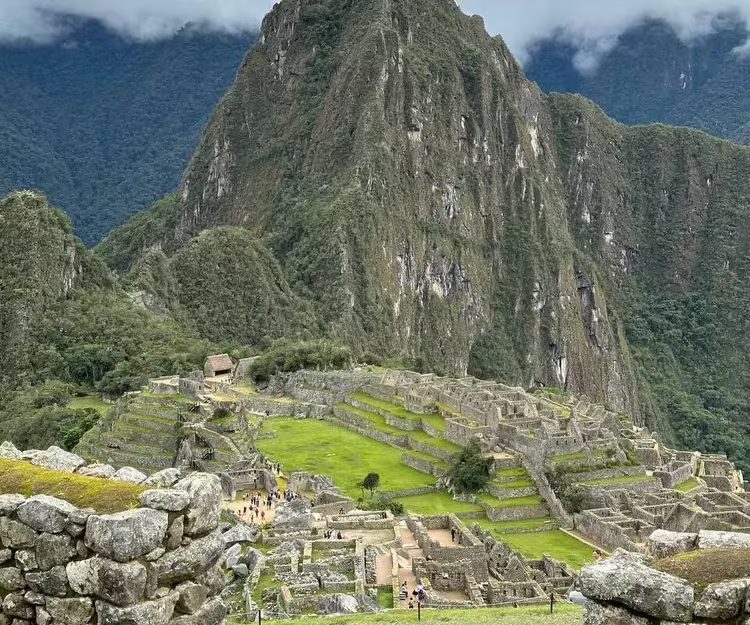
The South American civilization arose around 1200 AD, conquered much of the continent, but was then virtually wiped out by the Spanish by the mid-16th century. However, the Incas left quite a legacy. For example, their route through the Andes to the “lost” city of Machu Picchu, which is included in the list of new Wonders of the World. The four-day Inca Trail, which begins near Cusco, is littered with Inca artifacts, from ceremonial baths to fragments of pavement underfoot. By the way, there are ready-made tours there.
Ciudad Perdida
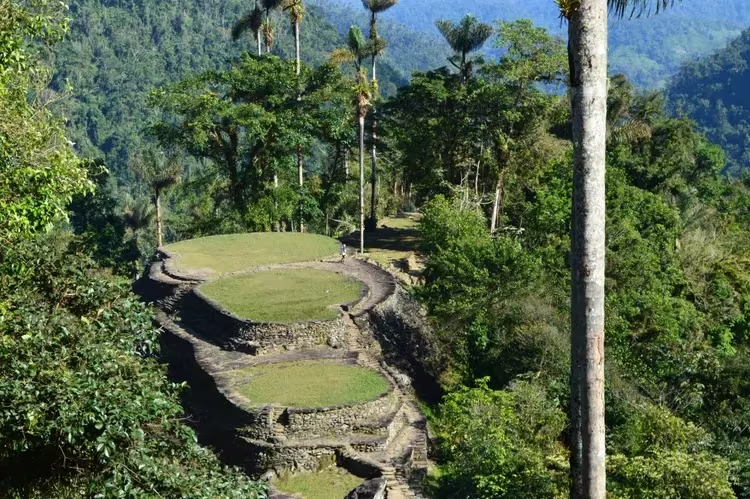
Just as the Incas hid Machu Picchu among the Andes, the people of Tayrona hid their own Ciudad Perdida (“Lost City”) deep in the jungles of Colombia's Caribbean coast some 600 years ago. You'll have to brave the jungle to reach the ruined city of Teyuna, which lies in the shadow of the snow-capped Sierra Nevada. Climbing 1200 steps will take you to a stone terrace.
Shikoku Pilgrimage
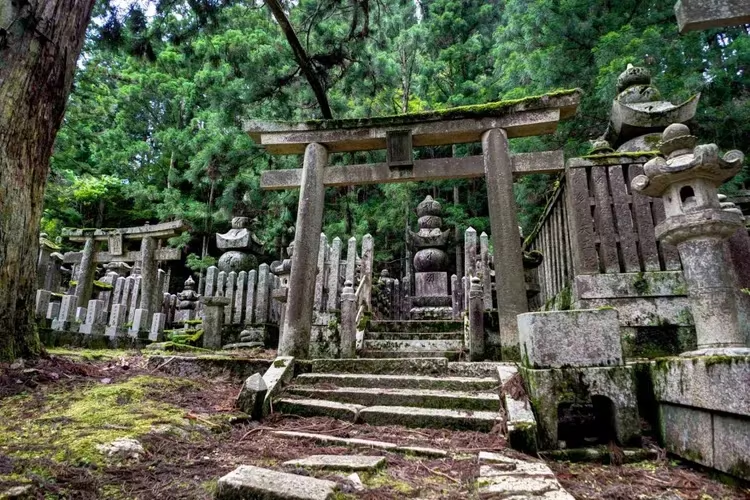
The priest Kobo Daishi wandered throughout Shikoku before receiving enlightenment and founding the Shingon school of Buddhism. It is the fourth largest island in Japan. The scenery here varies greatly, from the rugged mountains and shores of the Seto Sea to stretches of asphalt across the city. There are 88 temples along the way where henro (pilgrims) make offerings and chant mantras. Pilgrims can begin their journey wherever they wish. There is no beginning or end to this route, there is only a path.
Road of the Franks
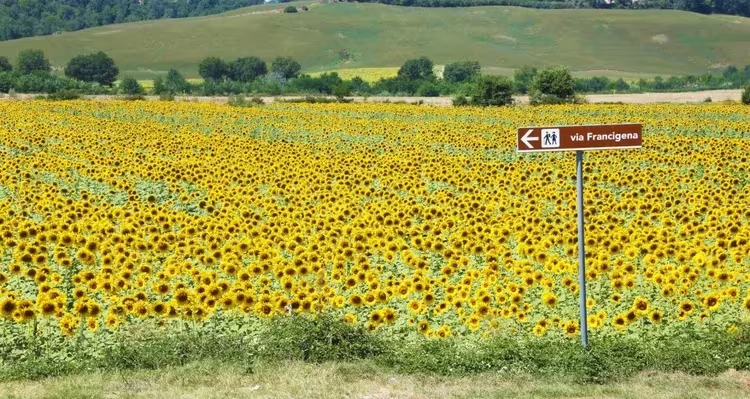
Pilgrimage was fashionable in medieval Europe. The Camino de Santiago is the most famous, but there were many others. For example, a pilgrimage from Canterbury, the religious center of England, to Rome, the heart of the Christian church. In 990 AD, Archbishop Sigeric made this journey and recorded his route along the Frankish road. The route crosses Kent, enters France, passes through Lyon and Reims, enters Switzerland, crosses the Alps and heads down Italy, through the Apennines and the Tuscan hills. Ends at St. Peter's in Rome.
Headhunter trail
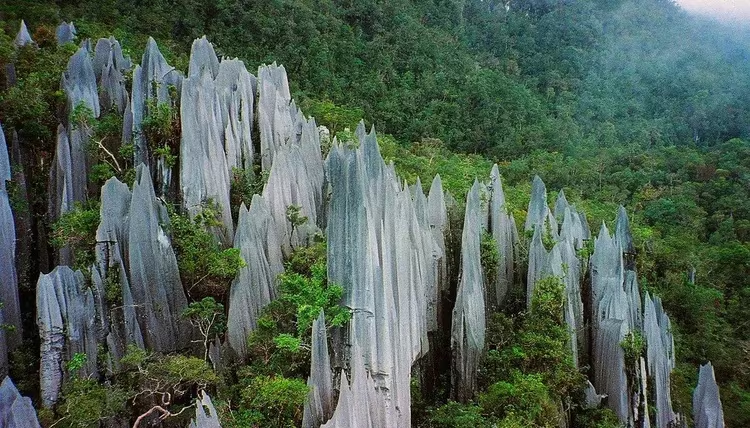
Malaysia's Headhunter Trail connects the cave-ravaged Gunung Mulu National Park to the river port of Limbang. Along this route, Kayan tribes once raided their neighbors, whose heads they brought as souvenirs. Headhunting was common in Borneo in the 1800s. However, in 1841, Governor James Brooke banned it. Today the route is completely safe.
Golden fever
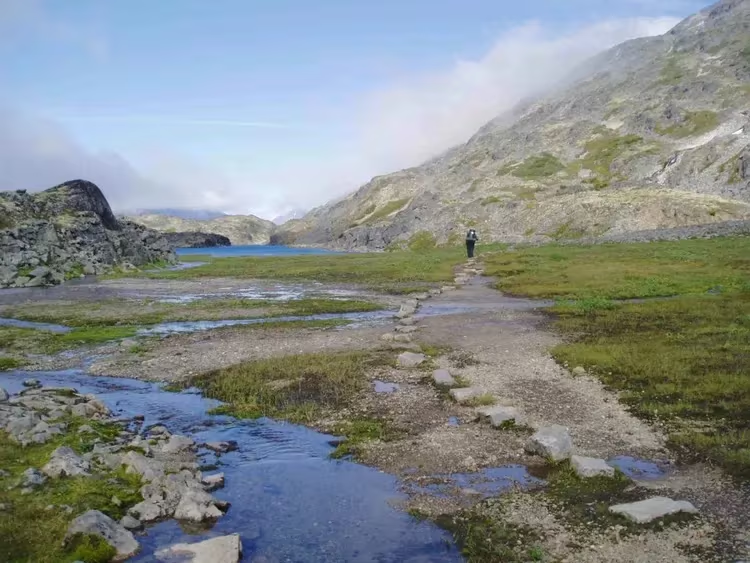
When three prospectors found gold along a section of the Klondike River in 1896, they sparked one of the world's greatest travel waves. Thousands of people made the arduous trek on foot to the Yukon gold fields. Some have walked the route dozens of times; others simply gave up, leaving their belongings on the side of the trail. Some of the abandoned items can still be seen today.
Berlin Wall

Berliner Mauerweg is one of the most chilling trails. The route follows the old trail of the Berlin Wall, which surrounded West Germany, separating the city's inhabitants and, in fact, the entire continent for almost 30 years. Today a small section of the actual wall remains. However, plaques and relics along the way are reminders of this not-too-distant past. Business trips can allow you to combine such a walk with work.
Sydney Great Coastal Walk
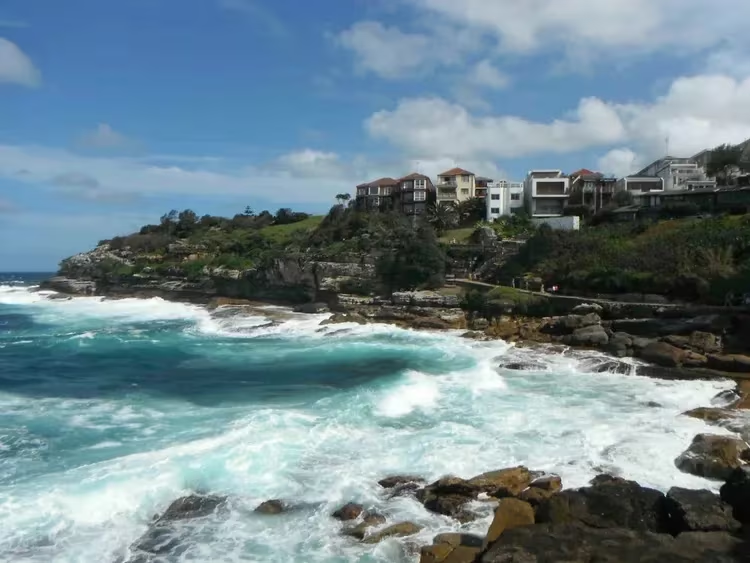
The Botany Bay region of Australia has changed a bit since 1770, when Captain James Cook anchored here. Today it is the most populous part of Australia. The Sydney Great Coastal Walk combines dazzling beaches, the buzz of big cities, colonial sites and Aboriginal heritage. Toward the park are beaches, on one of which a statue commemorates Cook's first landing.