
Cesky Krumlov and castle Hluboka nad Vltavou
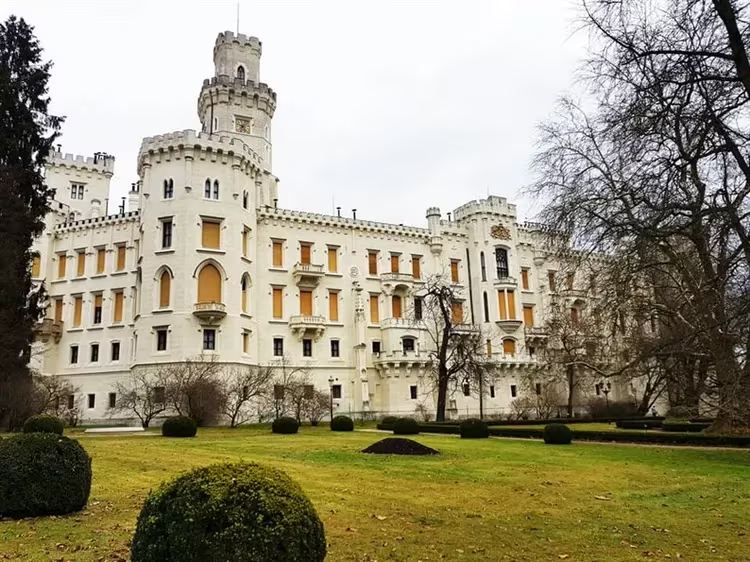
Among the picturesque nature of the South Bohemian region, on a high hill, there is a small settlement of Gluboka nad Vltavou, which arose as a medieval defensive fortress. The main attraction of the city is a snow-white neo-Gothic castle. This is one of the most famous, beautiful and visited Czech palaces. For history lovers and incorrigible romantics, a visit to the castle will leave an unforgettable impression in their memory.
Construction history
The forerunner of the fairy tale castle Gluboka nad Vltavou was a Gothic fortress built in the 13th century on the initiative of King Otakar II of the Czech Republic. The building was of strategic military importance. It was intended to carry out guard and defensive tasks of the southern borders of the medieval state. In the period from the 13th to the 17th century, the castle was replaced by a considerable number of owners, who, for various reasons, parted with their possession. The fortress was sold, donated for military successes, confiscated for debts. Each new owner made changes to the appearance of the building. The building was rebuilt and changed its architectural style: first Gothic, then Renaissance, then Baroque.
In 1661, the Gluboko estate was bought by Jan Schwarzenberg, a nobleman from Bavaria. The founder of a wealthy family, who took Austrian citizenship, was a large landowner in Bohemia. The middle of the 19th century was marked by the final reconstruction of the castle in the romantic neo-Gothic style. The Schwarzenbergs owned the building continuously until the end of World War II. Since 1947, Gluboka nad Vltavou has been a nationalized landmark open to the public.
Description of the castle
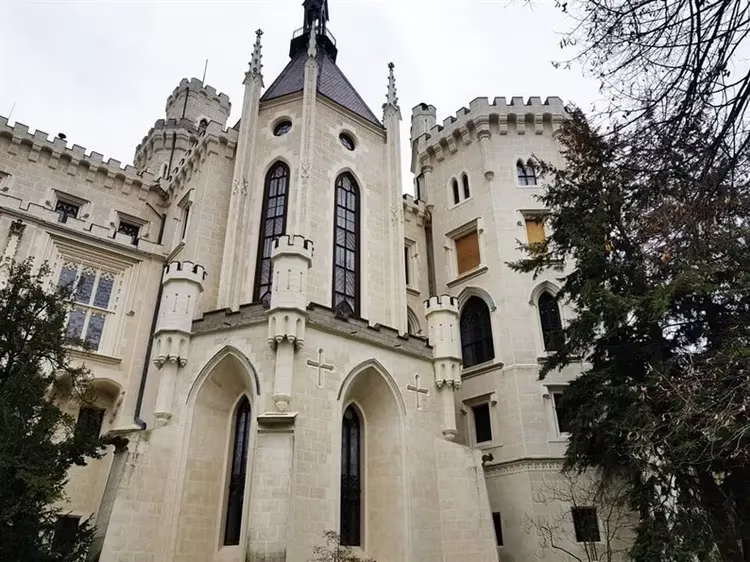
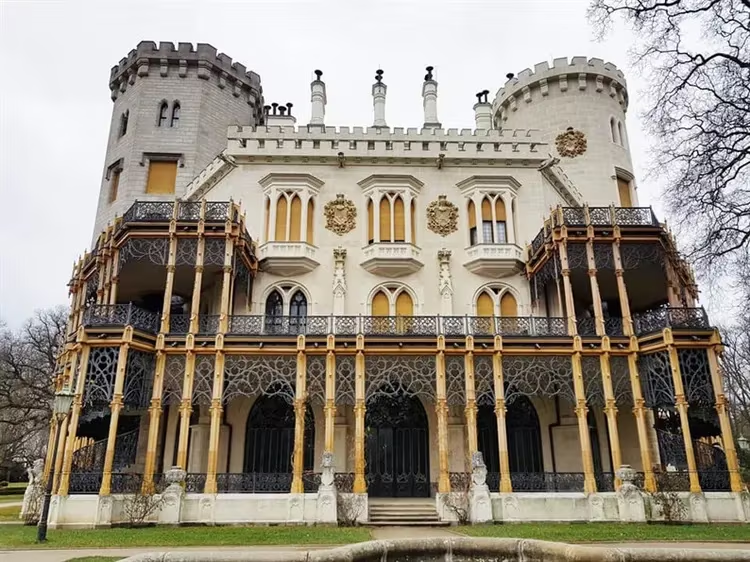
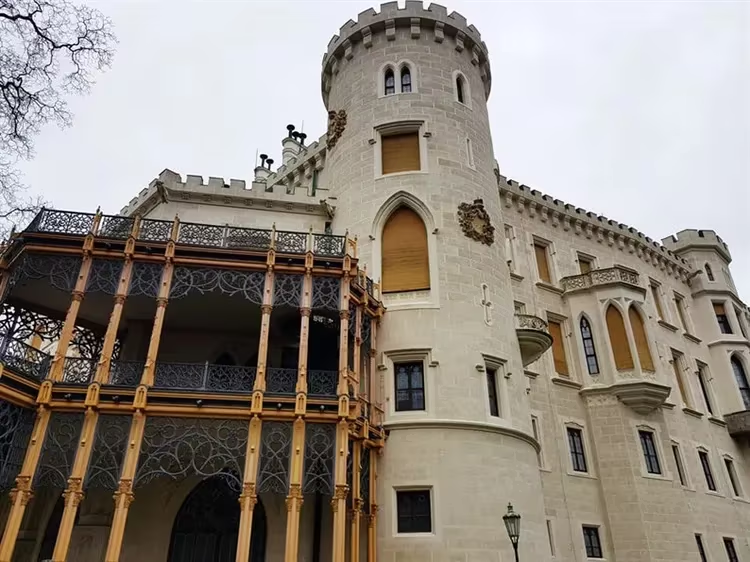
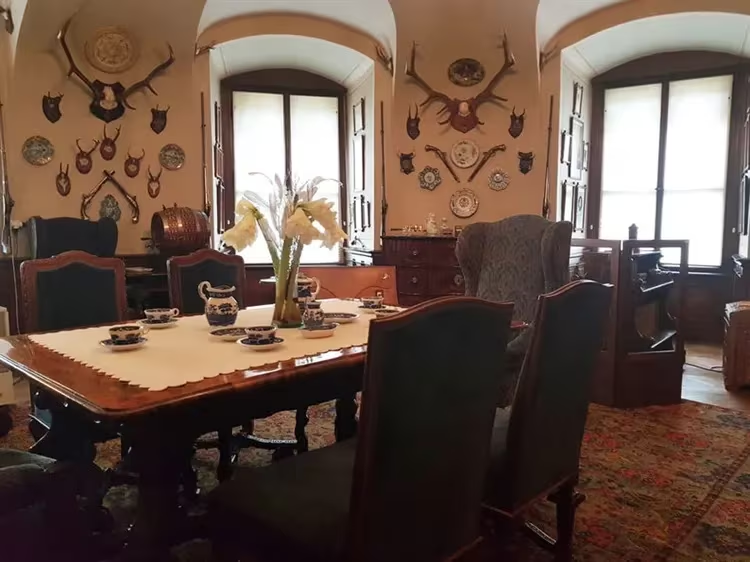
The palace complex in the form of a pentagon stretches for a hundred meters along a cape located above the Vltava River. The three-story snow-white facade of the castle is decorated with openwork balconies with stucco, bay windows, stone lace, thin gilded columns, an arched gallery, lancet windows and buttresses. The building, crowned with 11 crenellated towers of various heights, consists of 140 rooms, two courtyards, a glazed conservatory and a stable. Hunting trophies are hung on the walls of the courtyard – deer heads with antlers. Many windows are specially closed with light-tight shutters in order to protect the exhibits of the castle halls from exposure to sunlight.
What can be seen
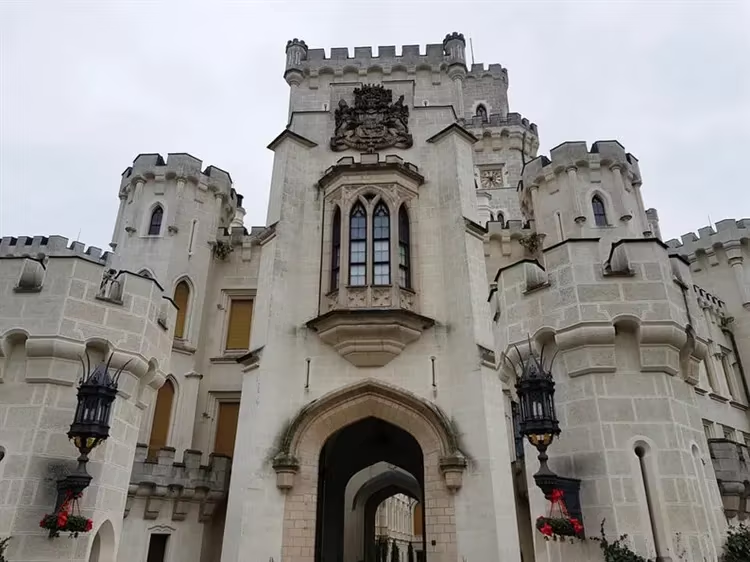
The delightful architecture of the Gluboko nad Vltavou Palace is complemented by luxurious interior decoration. The walls, ceilings, doors and windows of the castle's majestic halls are paneled with exquisite ornate lace carvings. Venetian glass chandeliers illuminate the rooms with elegant period furniture. In the vast apartments of the palace, decorated with pilasters and arches, you can see collections of unique tapestries, elegant wooden, porcelain and silver figurines, as well as dishes, knightly armor, weapons, hunting trophies, painted Chinese vases and paintings by European masters of the 16th-18th centuries. In order to save heating, in winter, most of the palace's premises are closed to the public.
The biggest hall of the castle is the library. More than 12,000 copies of books from different eras are collected on the shelves of tall cabinets. Geographical globes, a baroque fireplace, and a large wooden table of the 16th century are installed around the perimeter of the room. The sleeping quarters of the castle are especially impressive. The carved ceiling is filled with floral motifs. The walls are framed with leather wallpaper. The room has a large wooden canopy bed on dark spiral columns.
Opening hours and ticket prices
The palace complex Gluboko nad Vltavou is open to the public daily from 9:00 to 17:00 (during the summer season) and from 10:00 to 16:00 (during the winter season). The cost of an entrance ticket to the castle is 40-250 CZK, depending on the number of apartments visited.
Where is it located and how to get there
Located 140 kilometers from Prague. You can get to the fortress by rail. From the main station of the capital of the Czech Republic, a train runs to the city of České Budejovice, from where a bus leaves every 20 minutes to the town of Gluboko nad Vltavou. There is also a direct flight from the Prague bus station Florenc. You should familiarize yourself with the timetable for intercity transport in advance.
Things to do in Cesky Krumlov
One of the most picturesque cities in Europe, included in the UNESCO World Heritage List, is located in the bend of the Vltava River. This is Cesky Krumlov – the pearl of southern Bohemia. The city, founded in the XIII century, gives the impression of a fabulous Middle Ages. On the narrow streets, paved with paving stones, multi-colored buildings of bizarre shapes are compactly located.
Church of St. Vitus in Cesky Krumlov
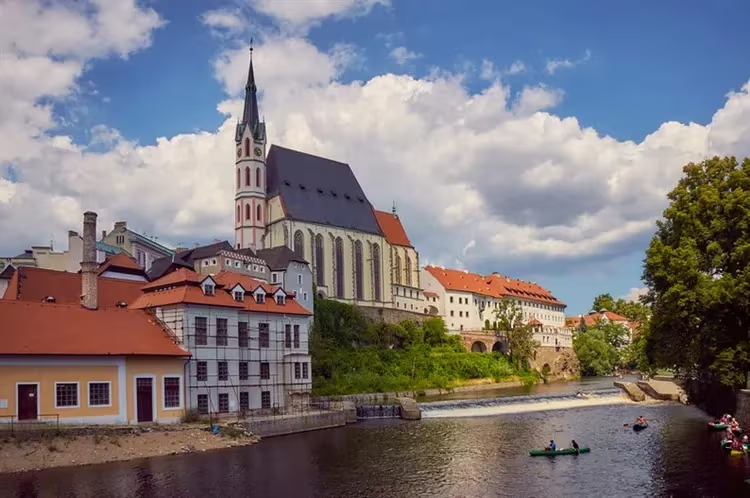
One of the significant symbols of Český Krumlov is the Gothic Roman Catholic Church of St. Vitus, founded in the 14th century by Prince Peter von Rosenberg. During the years of its existence, the church was repeatedly reconstructed and expanded, and acquired its modern look in the middle of the 19th century. The majestic basilica is an elongated rectangular building with three naves of equal height. Two-storey chapels are built on both sides of the church. The facade of the temple with narrow windows, decorated with ornate lattices, is crowned with a high gable roof and an octagonal tower with a spire.
The interior of the basilica can be appreciated by standing in one place. The hall of the basilica is decorated with frescoes and statues of saints. There are benches for parishioners in the room. The cruciform vaulted ceiling of the main hall of the church is supported by tall, slender columns. The main baroque altar, created in 1683, is represented by picturesque panels located one above the other and carved wood elements. The paintings, framed by arched gilded frames and columns, depict the coronation of Our Lady and St. Vitus. Artistic compositions are complemented by sculptures by Czech patrons. The chapels contain the tombs of two noble families of South Bohemia (Rosenbergs and Schwarzenbergs), as well as an old 15th-century organ lined with marble.
Place de la Concorde
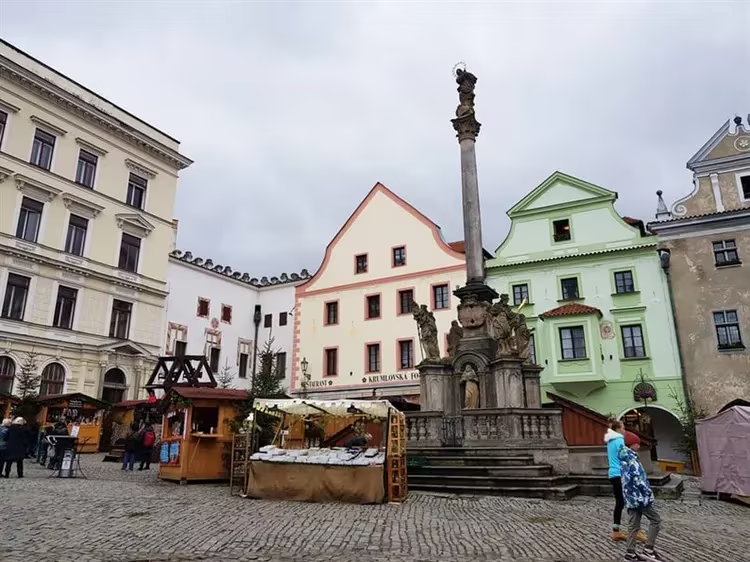
All the streets of Cesky Krumlov lead to the central square of Concorde. Its appearance is formed by amazing houses built on medieval foundations, colorful facades and pediments of which reflect various architectural styles. Covered arched galleries are attached to the first floors of buildings, decorated with decorated plaster, which have long served as trade shops for artisans. The main building of the square is the town hall, erected in the 17th century after the merger of two Gothic buildings. On the wide facade of the local administration, you can see the coats of arms of the nobles who owned the city. The roof of the town hall is crowned with decorative vases. A small bell is hung under the eaves, the ringing of which gathered members of the magistrate for a meeting.
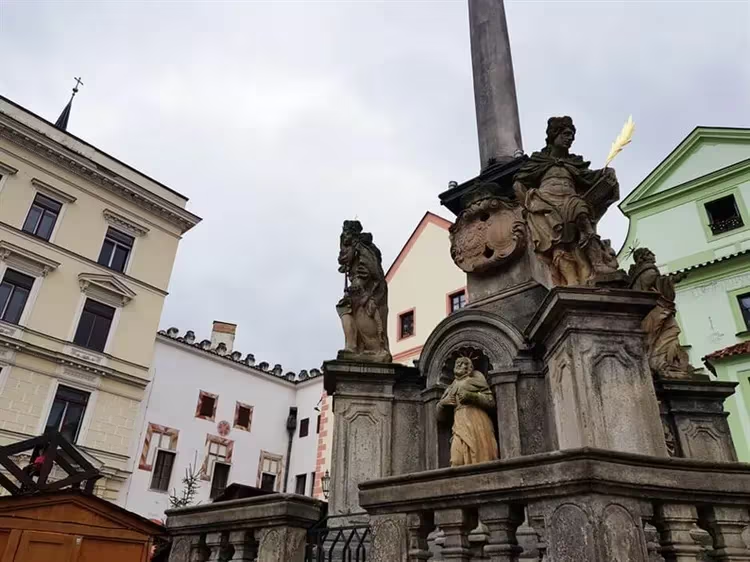
In the center of the square rises the Plague Pillar topped with a statue of the Blessed Virgin Mary. The construction was erected in memory of the victims of a terrible disease that swept Bohemia in 1680. The monument also expresses gratitude to the heavenly forces for the saving liberation of the city from the epidemic. The column is framed by a six-sided stone fountain, decorated with eight sculptures of the patron saints of the Czech Republic.
Latran
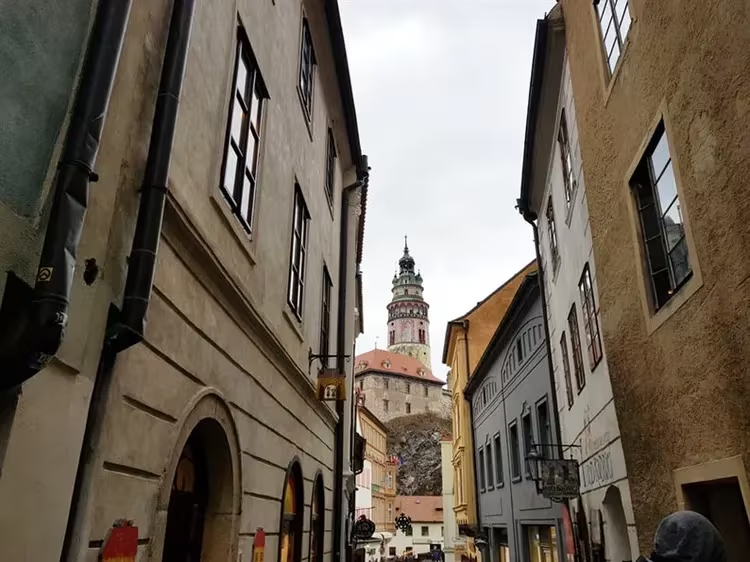
Latran is the name of the historical timeless quarter of Český Krumlov. The unique street, formed in the XIV-XVI centuries, begins near the wooden Lazebnice bridge and ends at the Budějovice Gate. The original appearance of the quarter has been preserved to this day. In the Middle Ages, the area was inhabited by artisans and merchants serving the princely fortress. On Latran Street there are picturesque old houses, the walls of which are decorated with frescoes, decorative ornaments and various paintings imitating stonework, windows and cornices. The whimsical facades of buildings topped with ornate pediments seem like scenery for a fairy tale movie. Restaurants, shops, breweries, museums and hotels are located on the first floors of the houses.
Minorite monastery in Český Krumlov
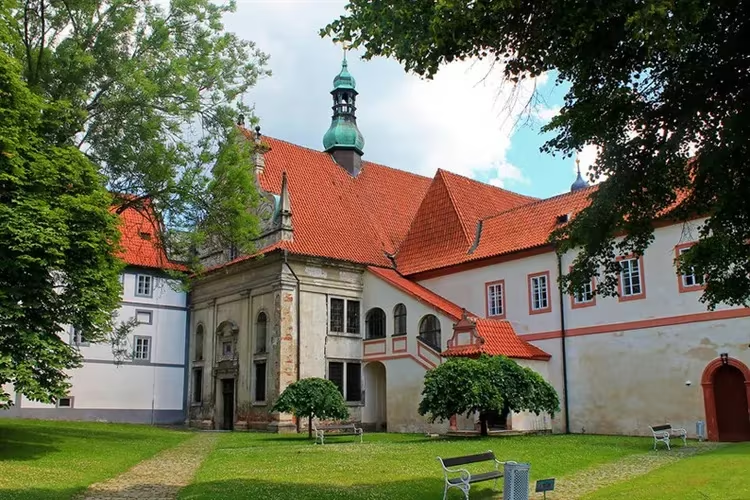
The monastery of the Minorites was founded by the princely family of Rosenbargs in 1350. The order required its adherents to fulfill strict vows, including self-torture and self-restraint. The monastery consists of a complex of buildings forming courtyards. On the territory there are the Baroque Church of the Body of Christ and the Mother of God, small chapels, houses and educational buildings for nuns, a tower with a bell tower. The interior of the local temple is a true masterpiece of religious art. The altars are decorated with sculptures of saints, gilded bas-reliefs and magnificent wood carvings.
Cesky Krumlov Castle
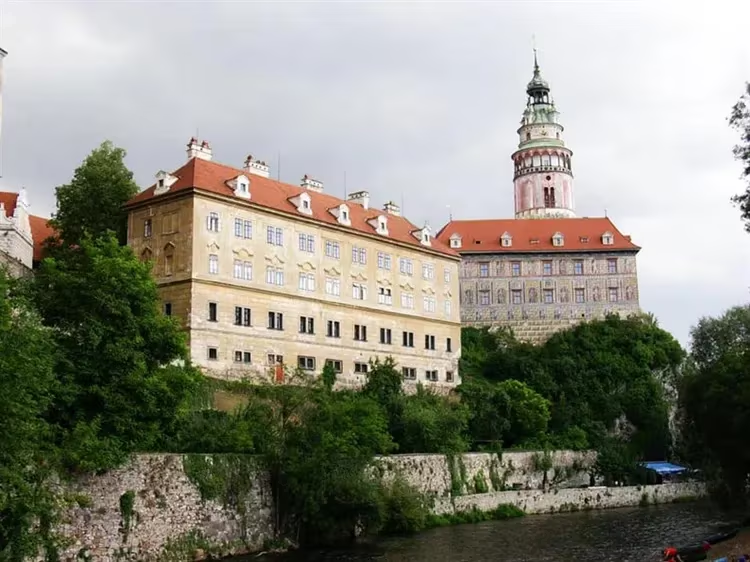
The main attraction of Český Krumlov is the majestic castle, the first stone of which was laid in 1250. Over the next centuries, the building was overgrown with new buildings, and it acquired its final appearance in the middle of the 19th century. The monumental fortress was erected on a winding cliff that hangs over the city. The stone facade of the building, growing directly from the rock, is decorated with balconies, bay windows and windows of various shapes.
The castle consists of a complex of forty palace buildings, forming five courtyards. The architectural ensemble stretched for one kilometer. All the numerous rooms are interconnected by covered passages. The adjacent territory of the castle can be reached through the arched bridge. In the courtyards you can see stone fountains, sculptures, various ancient buildings, chapels, a horse arena, a unique pavilion with a revolving auditorium, a picturesque park alley, as well as a baroque castle theater.
The interiors of the castle are filled with an ancient atmosphere. Visitors to the fortress have the opportunity to see the princely apartments: offices, bedrooms, wardrobes, living rooms and dining rooms. The decoration of the premises belongs to the Renaissance, Baroque and Classicism eras. Luxurious halls, decorated with tapestries, picturesque frescoes, stucco molding with gold painting, will bring real aesthetic pleasure.
Excursion: Cesky Krumlov and castle Hluboka nad Vltavou
The picturesque South Bohemia is famous for its rich history, traditions and ancient sights. Small fairy-tale towns with castles will leave unforgettable individual impressions in your memory. It is recommended to purchase a single tour to see Český Krumlov and Hluboka nad Vltavou Castle in one day. The cost of the tour is 32 euros. The tour runs daily from 8:00 am except Monday. Departure is from Wenceslas Square.