
Not a single tourist passes by the ornate Gothic building, which is located on the main street of Venice, the Grand Canal. This miracle of architecture is called the Ca'd'Oro Palace or the Palazzo Santa Sofia. Hundreds of people come here to admire the exquisite lace decoration of the palace and its interior decoration. And this is no coincidence, thanks to the design of gold leaf, the building got its second name: the Golden House. The unusual painting of the facade with deep shades of blue and rich red makes it fabulous and absolutely unforgettable.
History of Ca' d'Oro
According to historical information, the first owner of the Golden House was the patrician Marino Contarini, and it was built in the 15th century by the father and son of Giovanni and Bartolomeo, surnamed Bon. The ornate palace was erected on the site of a recently demolished building that belonged to the patrician's wife. The not completely destroyed facade of the old house served as the basis for the new palace.
In those days, the Golden House was considered the most luxurious and elegant building in Venice, and stories about its splendor quickly spread far beyond the Italian city. And this was not at all surprising: the owner of the new building belonged to the ruling stratum of the population and did everything possible to make his palace the best not only in Venice, but throughout Italy. In the design of the building and interiors, he imitated the emperor of Rome, Nero, who once built the world-famous Golden Palace in the capital of Italy.
It should be noted that during its long history the building has changed a large number of owners. Each owner of the Golden House tried to bring his own flavor to the appearance of the palace. In the middle of the 19th century, the house was donated to the famous Italian representative of the ballet dynasty, Maria Taglioni. A generous gift was made by the Russian prince Trubetskoy. At that time, the house was in disrepair and required urgent repairs and investment. The prince asked the architect Giovanni Batista Medun to reconstruct the palace, who made many changes to the original appearance of the building. Contemporaries considered the restoration of the house tasteless, as a result of which many of the unique features of the Venetian building were irretrievably lost.
Tourists are often told the legend that an unscrupulous architect took advantage of the fact that the customer did not control the progress of work. He removed the gilding that had been applied to the facade of the structure and sold it on the market. His cunning was discovered and the architect was severely punished. Historical confirmation of this story has not been found, and it is quite possible that this is one of the tales that guides tell their listeners.
The new owner, Giorgio Franchetti, tried to restore the magnificent appearance, which was conceived by the creators of the palace. He purchased this amazing house at the end of the 19th century. For several years of laborious and painstaking work, Giorgio found old drawings according to which the palace was built, and pictures of the building of past years. He restored the building according to them.
Architecture of the Golden House of Venice
The Golden House stands out from other buildings on the Grand Canal with its asymmetry. This building resembles both a church built in the Middle Ages and a Muslim mosque. The left side of the facade is decorated with lace trim, which creates a feeling of airiness and gives the palace a romantic touch. The right side is a monolithic structure, characterized by rigor and simplicity. Like all houses built in the city of all lovers, the Golden House has two equal entrances: you can enter the building both from water and from land.
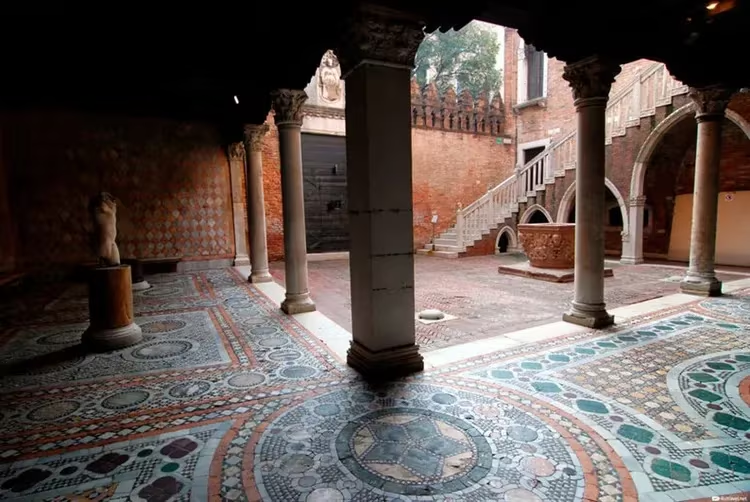
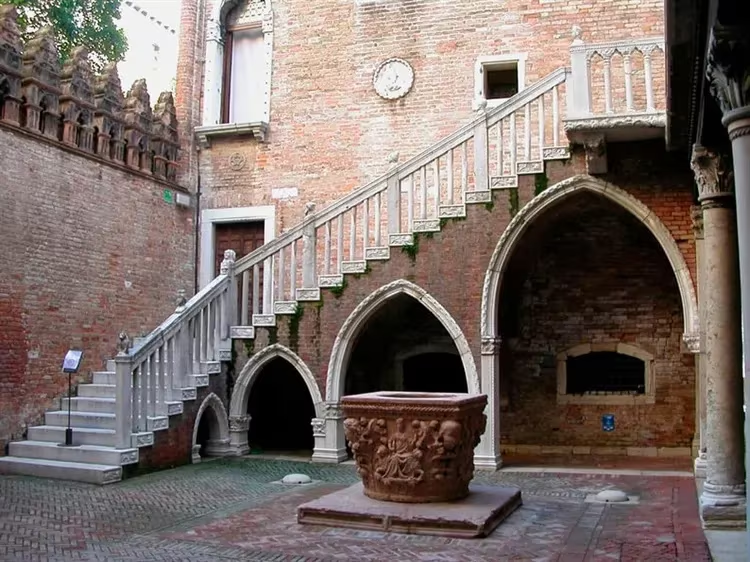
The architecture of Venetian buildings has always been distinguished by sophistication and special luxury. Like many buildings that were built at that time, the Ca' d'Oro palace is made in the Gothic style. This is evidenced by the elongated vaults of the building, framed by the finest patterns of expensive marble, and lancet arches, which are the hallmark of the Golden House. In the courtyard there is a small well, which immediately catches the eye of visitors. It is made of red marble brought from Verona. Statues are placed around the well, each of which makes one think about the eternal problems that concern humanity: about perseverance, mercy and supreme justice.
The interior of the Ca' d'Oro
On the first floor of the Golden House there are: a small chapel, a cozy gallery, the premises of which are decorated with ancient bas-reliefs and statues of bygone eras of antiquity and renaissance. The most famous works exhibited in the gallery are: “The Young Couple”, the marble sculpture “Madonna and Child” and the works of the school of Tullio Lombardo. Exquisite halls adjoin the gallery from different sides, and from its windows a magnificent view of the main street of fabulous Venice opens.
You can climb the massive stairs to the second floor of the palace. The best traditions of Venetian art are embodied in the elegant interiors of the Golden House, which amaze everyone who crosses the threshold of this amazing place with its luxury and beauty. Climbing up to the second floor, tourists can see authentic frescoes by Titian, a work by Van Dyck called “Portrait of a Nobleman” and hand-made Flemish tapestries full of original charm.
What to see in Ca' d'Oro
The Golden House has not lost its fame to this day. Every day it is visited by hundreds of tourists who are able to appreciate the beauty and admire the work of Venetian architects. The owner of the house, Giorgio Franchetti, who made a significant contribution to the restoration of the palace, left behind a chic collection of old paintings, exquisite ceramics and authentic sculptures that have preserved the memory of the time of their creation. After his death, all the assets of art collected in the Golden House became the property of the city.
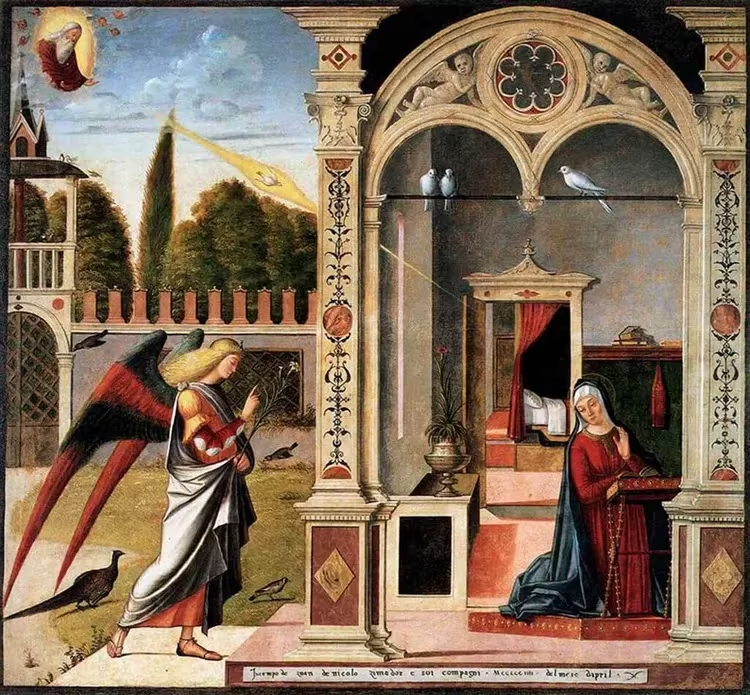
In the 30s of the XX century, the Franchetti collector's gallery was opened in the Ca' d'Oro palace, which is very popular among tourists coming to Italy. The Golden House contains amazing paintings that have been collected around the world, with different views of the city, breathing love and romance. Here you can admire the works of medieval artists such as: Paris Bordone, Tintoretto, Van Dyck, Francesco Guardi.
Opening hours and how to get to the palace
Everyone can visit this palace and enjoy not only its fabulous view, but also the amazing interior decoration that leaves no one indifferent. Tourists can get into the interior of the Golden House as part of a tourist group and individually on a daily basis. When planning their day, they should remember that on Mondays the palace is open from 8.15 to 14.00, on other days you can visit it from 8.15 to 19.15.
The cost of visiting the Golden House is 6 €, on the days of temporary exhibitions, the price of visiting can be changed at the discretion of the organizers. Getting to the Golden House is not difficult at all: minibus number 1 runs from the Venice railway station to it, the stop is called: “Ca' d'Oro Palace”.