
Faberge Museum in St. Petersburg – history, photo, description, opening hours, prices 2021, map
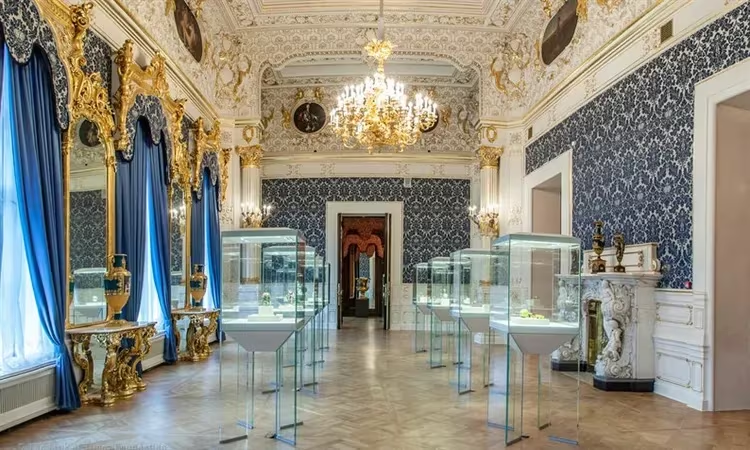
The architectural decoration of the center of St. Petersburg is the Shuvalov Palace on the banks of the Fontanka. The building became famous for its historical past and the unique collection that is stored in its premises. Since 2013, a collection of original products of the Faberge jewelry house has been presented to the public in the halls of the palace. The core of the exposition is made up of Easter souvenir eggs commissioned by the reigning monarchs. The Faberge Museum in St. Petersburg operates under the patronage of the cultural and historical fund “Link of Times”. The activities of the institution are described in detail on the official website of the museum.
The history of the Shuvalov Palace and the creation of the museum
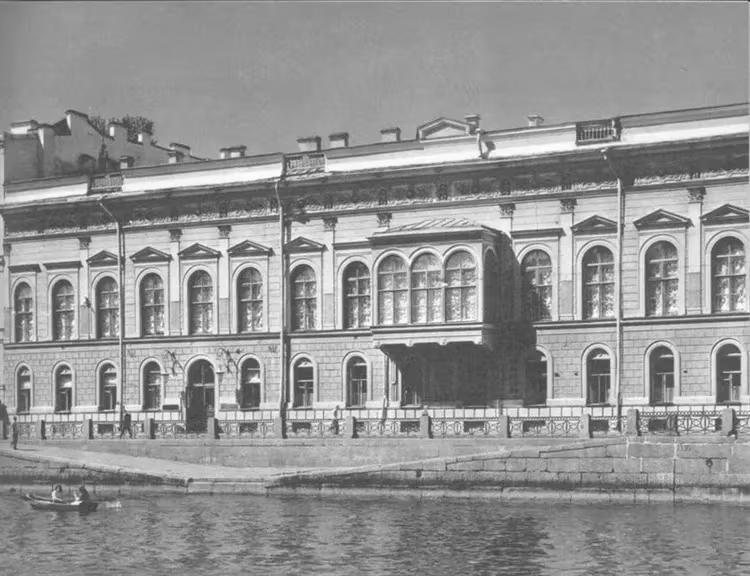
The exact date of construction of a luxurious building on the Fontanka embankment has not been established. Presumably the palace belongs to the 2nd half of the 18th century. In appearance, it resembles the style inherent in the architect D. Quarenghi. The image of the house can be seen on the popular engraving “The Fontanka Embankment near the Anichkov Bridge” by B. Patersen. Initially, the building was owned by Count Vorontsov. At the end of the 18th century it was bought by M.A. Naryshkina. She decided to use the premises to house her personal art collection. The Naryshkina Museum had a collection of paintings, sculptures, weapons, watches, numismatics, and more. The hostess often arranged receptions attended by famous writers (Pushkin, Krylov, Karamzin) and painters (Bryullov).
A visit to the ball by the heir to the crown turned the Naryshkin estate into the center of the social life of the Russian capital. After the marriage of S.L. Naryshkina, the palace, as her dowry, passed into the possession of the Shuvalovs. In 1844-1859. the building was rebuilt. The authors of the project were architects B.Simon and N.Efimov. The hull acquired Neo-Renaissance features. Shuvalov Palace served as the St. Petersburg residence of the count family until the beginning of the 1st World War. In 1914, E.V. Shuvalova handed over the house for the needs of a military hospital. An infirmary for wounded officers was placed in the rooms. In 1918 the palace became the property of the Soviet state. However, most of the valuables were hidden in safe hiding places.
They were discovered and opened in 1919. The found treasures were transferred to the established Museum of Noble Life. It existed from 1919 to 1925. Later, the Shuvalov collection was transferred to the funds of the State Hermitage and the Russian Museum. At the end of the 20s. the House of Printing functioned in the building, in the 30s. – house of technology and design institute. During the war, the palace was repeatedly bombed and heavily damaged. It took several restorations (50-60 years) to return the halls to their former appearance. Since 1963, the House of Friendship of Peoples has been located in the Shuvalov Palace. At the beginning of the 21st century the palace was leased to V. Vekselberg's “Link of Times” fund.
By decision of the patron, the building was converted into a museum. Reconstruction was carried out for 7 years. The opening took place in 2013. The main asset of the exposition was the collection of Faberge Easter eggs (14 copies), as well as other products of the famous jeweler. The foundation plans to create a network of similar museums in different parts of the Russian Federation. The Faberge Museum in St. Petersburg was the first project to be implemented.
exposition
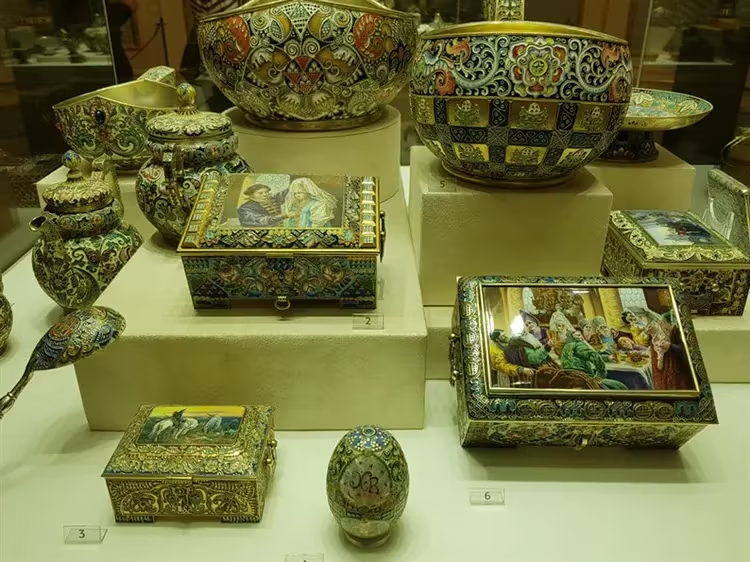
More than 4 thousand artifacts are stored in the museum funds. Most of the relics belonged to the Romanov imperial family. In the halls of the Shuvalov Palace, items of royal life are presented to the public, as well as a priceless collection of Easter eggs created in the Faberge jewelry house. The interior is perfectly complemented by paintings by famous Russian artists – K. Makovsky, G. Semiradsky, I. Aivazovsky, K. Bryullov, A. Kharlamov, K. Korovin and others.
Advance
Inspection of the museum begins with the entrance hall. In it, visitors can see accessories and haberdashery items used by aristocrats in the late 19th and early 20th centuries. Genuine interest is caused by jewelry with the mark of Faberge. Colored enamel gives the products a spectacular appearance. This is a small part of the heritage that has survived to our time.
White and Blue living room
Two large rooms are united by a common theme. They contain porcelain items made by Russian masters of the 19th century: P. Ovchinnikov, I. Khlebnikov, A. Kuzmichev, F. Ruckert. Artels, under their leadership, produced enamels of the highest quality. For their impeccable work, the artisans were honored to become suppliers of the imperial court. The products of enamellers were also appreciated by jewelers. Antip Kuzmichev signed a contract with Tiffany. And his colleague, Fedor Ruckert, was a co-author of many accessories produced under the Faberge sign.
Showroom
During the time of the Shuvalovs, the room was called the Big Study and was used to store the personal collections of the owner of the house. Nowadays, the hall has been converted for exhibition purposes. Its exposition has 2 directions: painting by Russian artists of the 19th century. and carvings made of stone.
gothic hall
The count's office of P. Shuvalov has been transformed into a museum hall, where cult objects are offered to the attention of tourists. In particular, the walls of the room are occupied by ancient icons of the 16th-20th centuries. Many of them are set in settings made of precious metals, decorated with gems. The most ancient item in the collection is the Royal Doors dating back to 1600.
golden living room
The room was intended for solemn meals. Its walls are covered with golden damask, which gives the atmosphere a festive look. The room contains gifts that were presented to members of the imperial family. Quite often, the Romanovs gave each other caskets or snuff boxes with portraits, as well as jewelry. Among the products exhibited in the hall are stone figures, miniature furniture and utensils, stationery. In the 19th century insignificant things were called “fantasy”. They performed a purely aesthetic function.
red living room
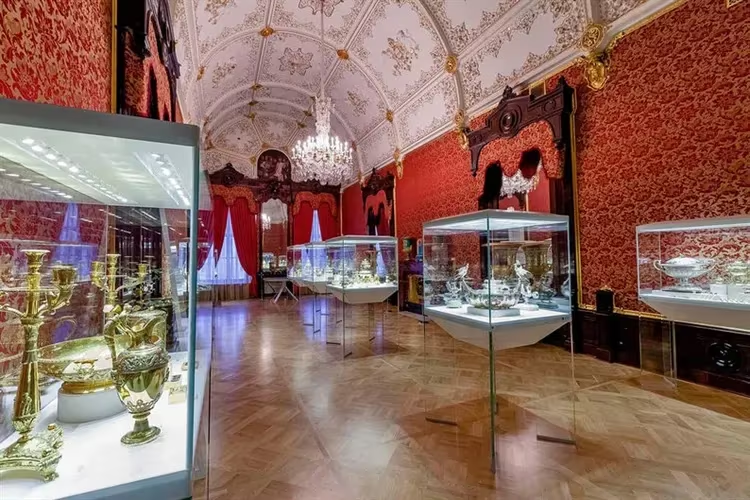
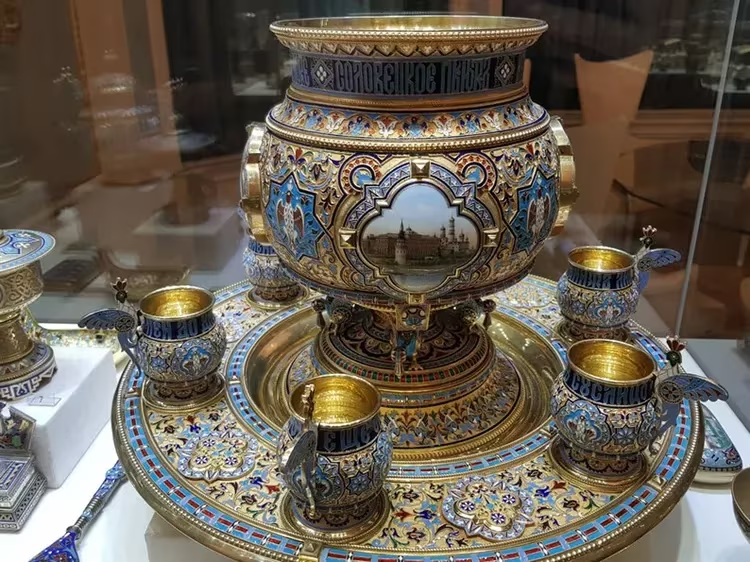
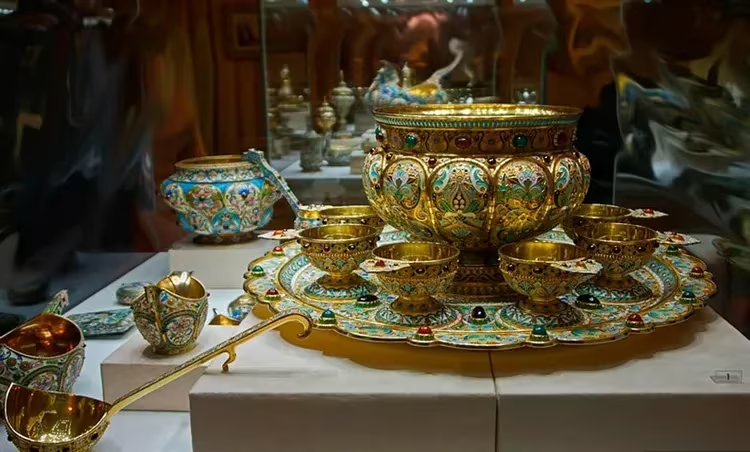
I often call the room Naryshkinskaya. She owes her nickname to the family coat of arms on the ceiling. The living room contains silverware of the 18th-20th centuries. They were made in the famous jewelry workshops of the Russian Empire: Faberge, the Grachev brothers, Sazikov, Tigelstein, Nichols and Plinke. Each factory specialized in a certain style. So, Faberge produced silver items in the Art Nouveau style, while the Sazikovs made items in Slavic traditions. A real masterpiece is a nautical-style tea set presented as a wedding gift to Grand Duke Konstantin Nikolayevich. The sketch for it was drawn by F. Solntsev, and the casting of objects was done at the factory of I. Sazikov. The collection of artistic silver in the Shuvalov Palace is truly unique.
Knight's Hall
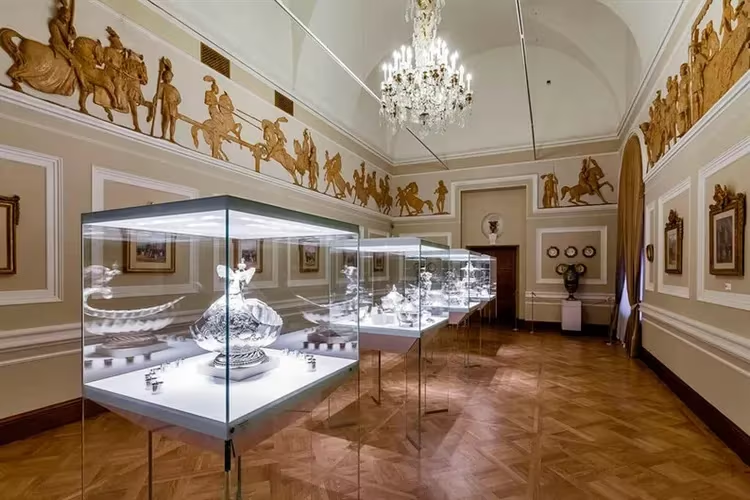
The hall is filled with exhibits related to the military theme. It presents boards that were installed during the laying of military ships. In the showcases, visitors can see silver sets for wine. They were presented as a gift to commanders on solemn occasions. The walls of the room are decorated with canvases in the battle genre, painted by K. Piratsky and P. Balashov. A characteristic feature of the hall is the frieze, which depicts a tournament of knights. Hence the name – Knight's Hall.
blue living room
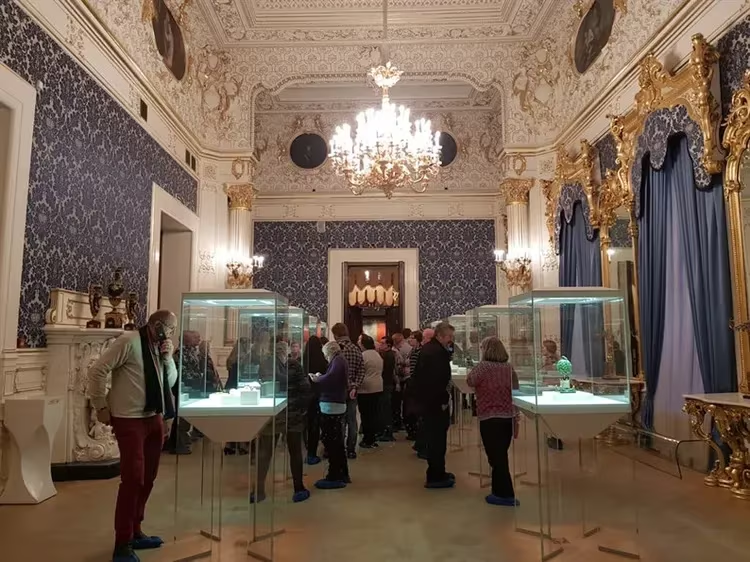
The main room in the house is called the Blue Living Room because of the silk upholstery of the walls. It contains the pride of the Faberge Museum – Easter eggs with surprises. They were created as gifts to the spouses of the emperors Alexander III and Nicholas II. Visitors have the opportunity to see 14 legendary products. Among them are the first (“Hen”) and the last (“Order of St. George”) egg from the Easter cycle. Each has a unique design and has its own secret. The production of memorable souvenirs for members of the imperial family brought unprecedented fame to the Faberge jewelry house. The masters spent up to one year to create an egg-casket with a surprise.
Masterpieces of the collection
The Faberge workshops have been making Easter gifts for the Romanov dynasty for over 30 years. During this time, 50 original eggs were created, decorated with precious metals, gems, enamel, ivory and other valuable materials. The exposition of the Shuvalov Palace presents 14 items from the famous series. For more than 50 years, the jewels of the Romanov dynasty were in the collection of the Forbes family. They were bought by the Russian philanthropist V. Vekselberg at an auction in 2004.
Easter egg “Hen”
During a visit in 1897 to an industrial and art exhibition held in the Danish capital, Emperor Alexander III was delighted with an unusual precious egg. The elegant little thing was carved from ivory. Inside was a gold ring. The rare artifact belonged to Duchess Wilhelmina. The Russian emperor wanted a similar souvenir to be made for his wife Maria Feodorovna. The order was entrusted to the well-known Russian jeweler Peter Carl Faberge. His works attracted the attention of the imperial couple when viewing the exhibition in Moscow.
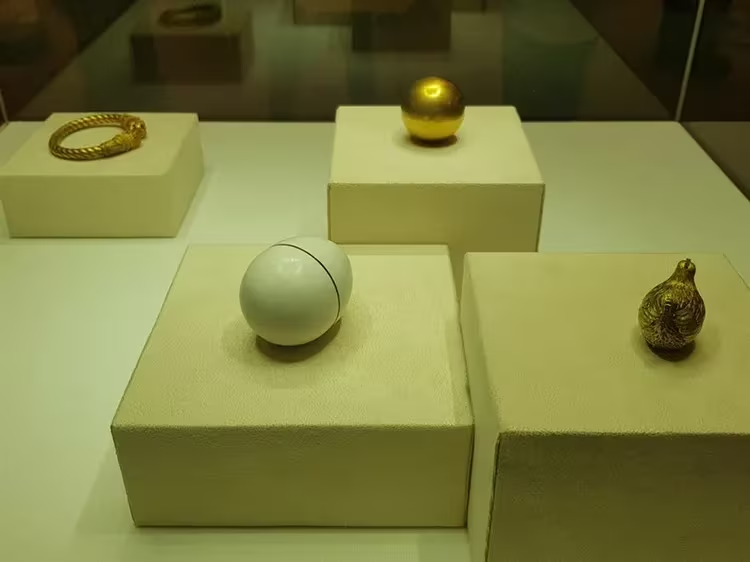
Alexander III decided to present an egg with a surprise as a gift for Easter. The tradition of giving gifts to loved ones on the feast of the Resurrection of Christ has long been revered among Orthodox believers. The royal family also adhered to it. The emperor instructed his brother to personally supervise the preparations for the celebration, incl. watch the work of making a surprise. The jeweler E. Collin from the Faberge workshops was engaged in translating the project into reality. The master did not exactly copy the European prototype. Externally, the product did not differ in rich finishes, but looked quite simple. The “shell” was made of white enamel. The “yolk” is made of gold. Inside is a multi-colored figurine of a chicken. She played the role of a box with a secret. When pressing on the head and goiter, the bird opened.
In a secret compartment was a pendant in the form of a crown made of ruby. It was accompanied by a gold chain. The last two treasures have been lost, but the egg has been preserved and is on display to the public. An elegant product is small in size. Its width is only 3.5 cm, and its height is 6.4 cm. Maria Fedorovna liked the idea with the Easter egg “Hen”. For the impeccable execution of the instructions, Faberge was awarded the title of court jeweler. The emperor decided to make it a custom to give original precious souvenirs for Easter. New orders followed the first egg. The Faberge workshop became famous all over the world for its Easter egg boxes. 50 original copies were made.
Easter egg-box “Renaissance”
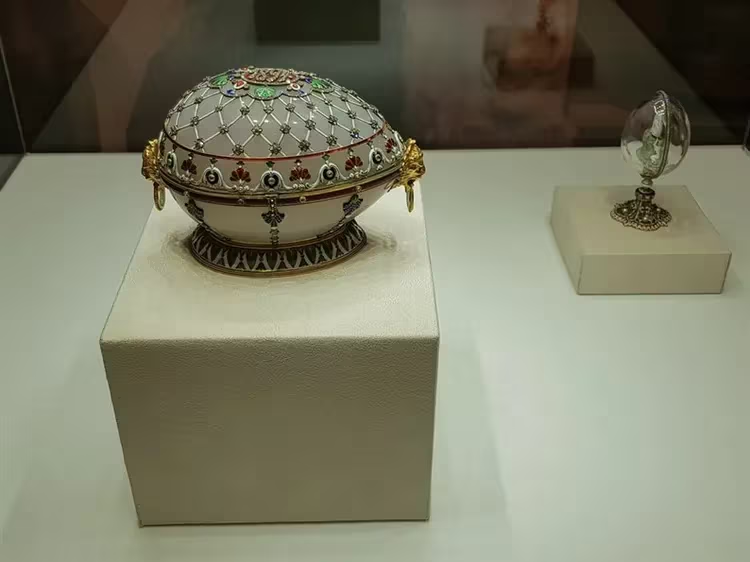
In October 1894, Emperor Alexander III died, so the Renaissance egg, presented by him as a gift to his wife, is considered the last gift. When creating a precious trinket, Faberge was guided by the general trend characteristic of the art of the late 19th century. At this time, many masters drew inspiration from the work of past eras. The prototype for the royal gift was a box made by order of the Saxon dukes. Its author was a jeweler from Holland Le Roy.
The production of the royal order was entrusted to Mikhail Perkhin. He somewhat modified the appearance of the product and gave it the shape of an ellipse. “Eggshell” was carved from agate. The outer shell is decorated with semi-precious stones – diamonds and rubies. The date of manufacture is marked on the top. Handles decorated with lion heads are attached to both sides of the chest. The height of the product is just over 13 cm.
The inside of the egg is hollow. There is no information about its contents. Historians express two versions. According to one, a pearl pendant was kept inside. More plausible is the assumption that the casket contained the “Resurrection of Christ” egg. Its dimensions correspond to the internal cavity of the “Renaissance”. In addition, the decor of the egg is in many ways similar to the decoration of the box. The mystery of the last Easter gift of Alexander III still remains unsolved.
Easter egg “Rosebud”
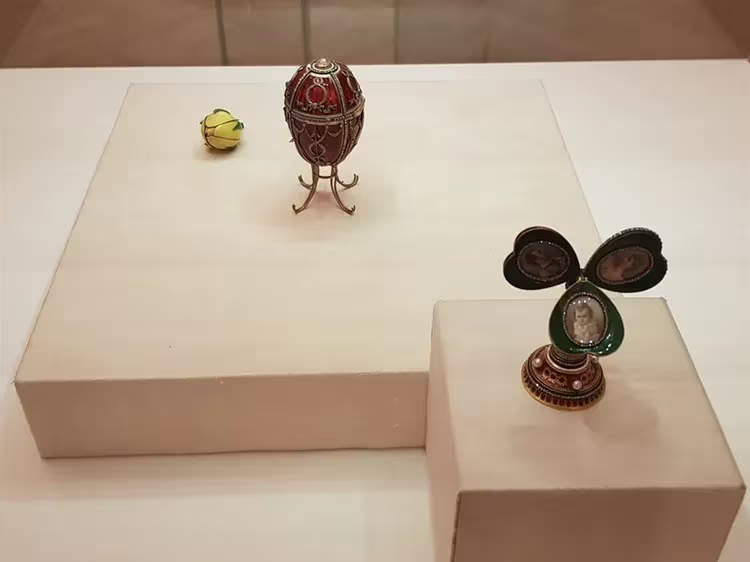
After the accession to the throne of Nicholas II, the new monarch continued the tradition of his father. At his command, the Faberge workshops began to create two luxurious eggs at the same time for Easter, distinguished by their original design. One was intended as a gift to the mother of the king, and the other – to his wife. As the first Easter souvenir, Alexandra Fedorovna received an egg called “Rosebud”. It was made in a romantic style and symbolized the tender feelings that Nicholas II had for his wife. The jeweler was inspired to create a new masterpiece by the gallant atmosphere that reigned at the court of the French King Louis XVI. The outer shell of the egg is covered with strawberry-pink enamel.
The surface is decorated with small decorative elements: arrows, wreaths, garlands. They are made of gold and diamonds. At the top of the ellipse is a portrait of the emperor, covered with a transparent diamond plate. The miniature is painted with watercolors on ivory. Another diamond closes the date of manufacture of the egg. The inner cavity serves as a storage for an elegant tea rose bud. The intricate little thing has a little secret: when you press a button on the stem, the flower petals open. The tea rose was a favorite plant of the Hessian princess, who became the wife of the Russian emperor.
The main surprise was in the center of the bud. It contained a smaller copy of the imperial crown. It was paired with a ruby pendant. Unfortunately, both rare pieces were lost. The authorship of the product belongs to M. Perkhin. The egg is distinguished by very modest parameters. Its height is 6.8 cm.
Easter egg “Coronation”
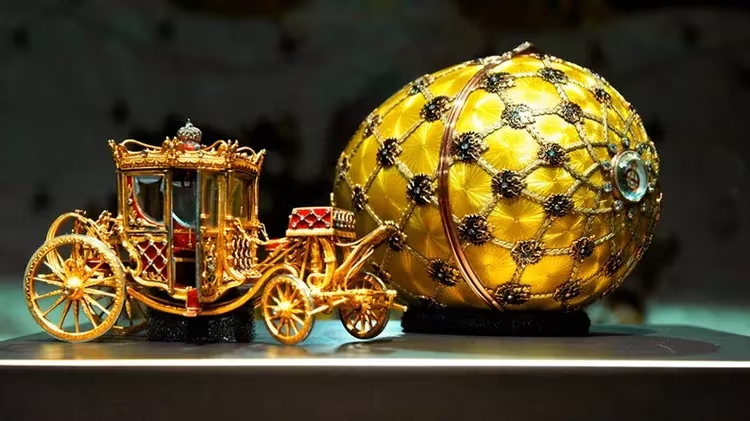
In May 1896, the coronation of Emperor Nicholas II took place. This event was the impetus for the creation of a magnificent Easter egg, bearing the same name “Coronation”. During the celebrations, the carriage of Catherine the Great was used to enter Moscow for the royal couple. It was made at the end of the 18th century. the famous court carriage maker I. Bukendal. Faberge chose the carriage as the basis for creating a souvenir. A miniature copy of the imperial carriage was made by G. Stein. The mechanism was fully consistent with the original and could move. The doors of the carriage opened, and the steps – fell down. The kit also included a jadeite stand, on which the model of the crew was attached. To make a masterpiece, the master took 1.3 years to work 16 hours a day.
The windows of the carriage are made of rock crystal, on which curtains are engraved. Instead of velvet, the seats and bodywork are covered in scarlet enamel. Wheel rims are enclosed in platinum hoops. The back of the carriage is decorated with cast gold garlands. The model is crowned with a diamond crown. The resemblance to the original is enhanced by the presence of golden imperial eagles adorning the sides of the body. The unique product served as a kind of gift box – egg-shaped pendants. It was attached to a special hook hidden inside the mechanism.
The jewel was not preserved, and there are conflicting reports about it. Some sources claim that the material for making the pendant was yellow diamond. Other eyewitnesses noted that the testicle was emerald and pear-shaped. “Coronation egg” consists of 2 halves. Its outer surface visually resembles an imperial mantle. The yellow enamel is covered with a gilded mesh. On it are fixed 2-headed eagles – a symbol of the imperial house of the Romanovs. Traditionally, the top of the ellipse is marked with diamond lenses. Under one is the monogram of Alexandra Feodorovna. The initials are lined with the smallest diamonds and rubies.
Another lens covers the date of issue of the Easter gift – 1897. The parameters of the precious trinket: width – 9.4 cm, height – 12.7 cm. The co-authors of the project were Henrik Wigström, Mikhail Perkhin and Georg Stein. The total cost of the “Coronation Egg” was 3.5 thousand rubles. At the moment, the jewelry masterpiece is estimated by specialists at 24 million dollars.
Easter egg “Laurel tree”
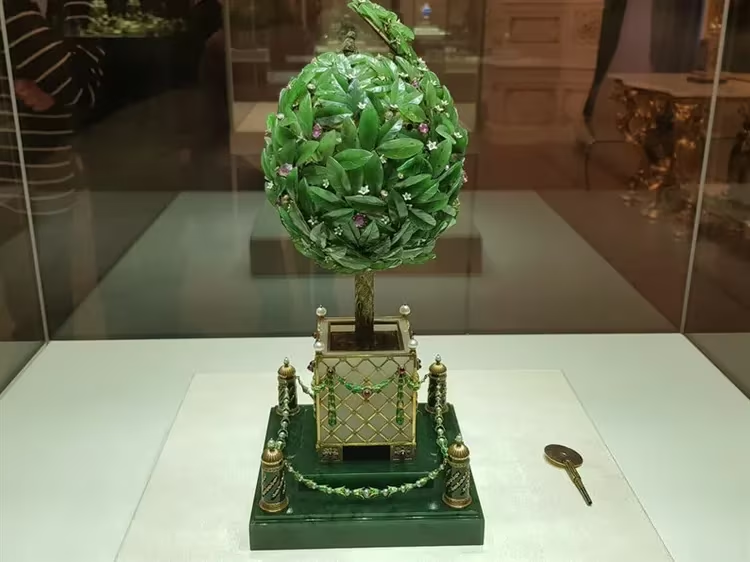
Among the jewelry masterpieces of Faberge, made by order of the royal family, a souvenir tree stands out sharply. Only by the oval shape of its crown can one guess that this item belongs to a series of Easter eggs. The miniature was intended as a gift for Empress Maria Feodorovna. Nicholas II ordered it to congratulate his mother on the 30th anniversary of the coronation. It was not by chance that the gift looked like an evergreen tree. The laurel, as conceived by the master, symbolized long life, honor and glory. Each leaf was carved separately from jade. Instead of fruits, faceted crystals of pink diamonds, citrines, and amethysts were used. Flowers are made of white enamel.
The trunk is fixed in a pot carved from onyx and decorated with a gilded net with garlands. The surprise was inside the laurel crown. After pressing a special lever, the cache opened, and a miniature bird appeared. She circled on a branch, flapping wings with real feathers and opening her beak. After the completion of the vocal performance, the feathered soloist again disappeared among the leaves. The “Laurel Tree” was presented to the Empress Dowager in 1911. In some sources, the product is called the “Orange Tree”. This is one of the largest Easter souvenirs made in the Faberge house. The height of the trunk with a crown of St. 27 cm.
Table clock with globe
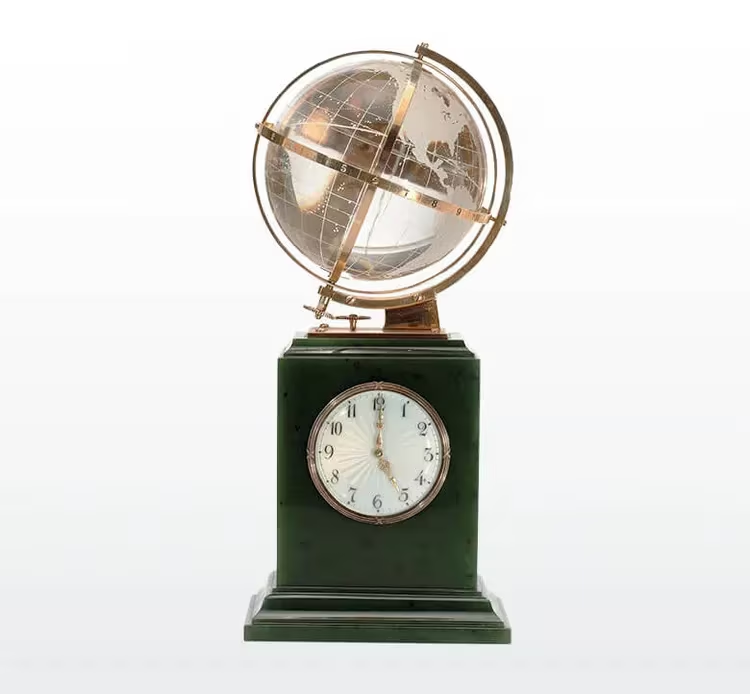
The table clock is made in a strict classical style. They were for the office. The exterior design reflected an interest in the natural sciences and geographical discoveries. Similar trends were characteristic of the 19th – early 20th centuries. The body is carved from jade. The upper part of the chronometer is crowned with a crystal globe connected by a common mechanism to the dial. The hands indicate hours and minutes, while a scale along the equatorial axis displays local time in different regions of the world. The engraving on the surface of the globe indicates the main sea routes. The original chronometer was made according to the sketch of G. Wigstrom in 1908-1911.
Opening hours and ticket prices
Shuvalov Palace is open to the public every day except Friday. Working hours 10-20.45. Visitors can view the exposition on their own using an audio guide. Organized excursions are held from 10 am to 6 pm. The duration of the tour is 60 minutes.
The ticket price depends on the category of visitors:
Where is it located and how to get there
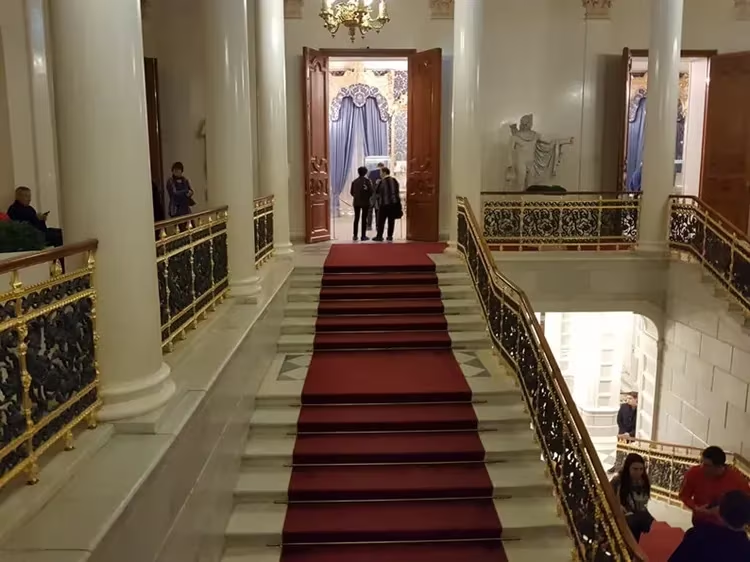
Museum address: Fontanka embankment, 21.
The easiest way to get to the museum is by metro. In the immediate vicinity of the Shuvalov Palace there are stations: