
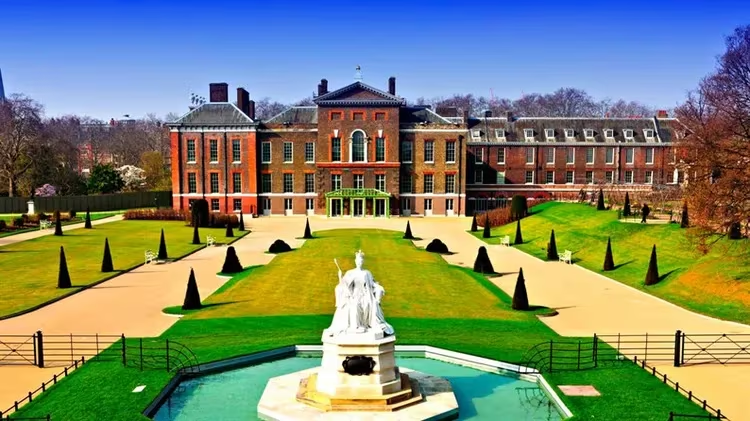
Kensington Palace in London – history, photo, description, opening hours, prices 2021, map
Kensington Palace served as the official royal residence for a short time during the reign of George II (18th century). Its history is less known than other apartments of the British monarchs – Tower Fortress, Buckingham Palace, Windsor Castle.
Construction history
The territory in the western part of London was part of the possession of the Earl of Nottingham, who built for his own needs in 1605 a small country palace, in the form of a 3-story building. William III liked the location of the palace, away from the noisy center of the capital. In addition, the king suffered from asthma, and fresh air was good for his health. As a result of the deal, Kensington Palace passed to the royal family.
By order of Wilhelm, the well-known architect Christopher Wren, the creator of St. Paul's Cathedral, took up the arrangement of the residence for the needs of the royal court. The architect decided not to rebuild the building, but to expand it with galleries, outbuildings, and stairs. Under his leadership, the following were created: the King's apartments, the main staircase, the clock tower, the chapel. One of the first high-ranking guests who visited Kensington was the Russian Tsar Peter I. A portrait by Gottfried Kneller, which adorns the gallery, remains in his memory.
However, the king and queen failed to fully enjoy the delights of life in the new residence. They died shortly after the move. The palace also proved to be an unfortunate place for Queen Anne. All 17 offspring of the royal family died within its walls. Since then, Kensington has earned a reputation as a cursed place.
Anna's reign was marked by the appearance of a park and greenhouses. Their breakdown was carried out by the famous follower of the Baroque style, the architect John Vanbrugh. Significant improvements to the palace grounds were made by order of George I. The work was supervised by William Benson. In accordance with his project, the building was repaired, a secret chamber and a royal living room were built.
The new monarch, George I, made Kensington Palace his main headquarters. He was the only ruler of England who lived in Kensington for a long time. On May 24, 1819, the daughter of the Duke of Kent, Alexandrina Victoria, was born here, who entered the history of Great Britain under the name of Queen Victoria. The monument in the garden and the exposition “Unknown Victoria”, located in the exhibition part of the castle, remind of a significant event in the history of the palace.
After her coronation, Victoria left the palace. He began to decay and fall into disrepair. To rectify the situation, the queen ordered the apartments to be opened for public inspection. Thus, from the end of the 19th century. Kensington Palace partially functions as a museum.
Half of the territory remains residential. Here in the 80s and 90s. gg. Crown Prince Charles lived in the 20th century with his wife Princess Diana and children. After the tragic death of Lady Di, her apartments have undergone changes. It was decided to completely re-equip them in order to exclude theft of items for sale at auctions.
Currently, the complex of buildings of Kensington Palace is conditionally divided into 2 parts:
- Exhibition, where guided tours and permanent exhibitions operate.
- Residential, where the younger representatives of the royal family live.
Small, unassuming Kensington Palace serves as permanent residence for:
Separate rooms are occupied by Prince Harry.
reception hall
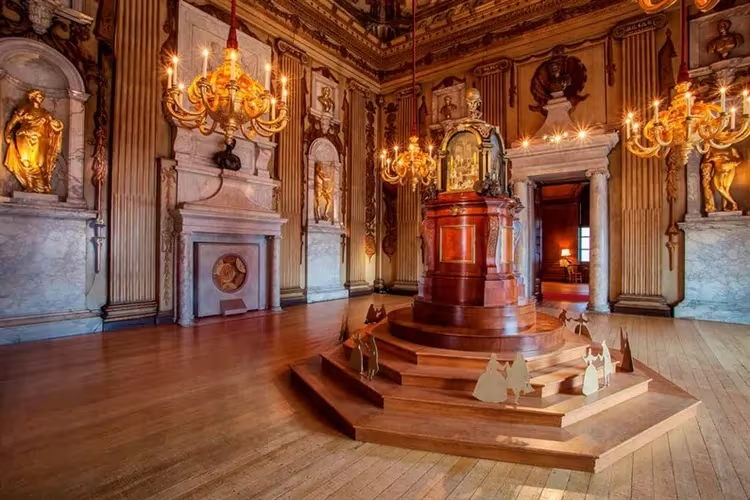
Under King George II, the main building of the palace was the reception hall. Solemn meetings of the monarch with subjects, as well as audiences with representatives of foreign powers were held in it.
In 1734, the Indian chief Yamacraw was introduced to the British royal court in this room. He came from the English colony of Georgia in the New World.
In the reception hall, in a conspicuous place is the chair of the son of George II – Frederick, covered with gilding.
Queen's Apartments
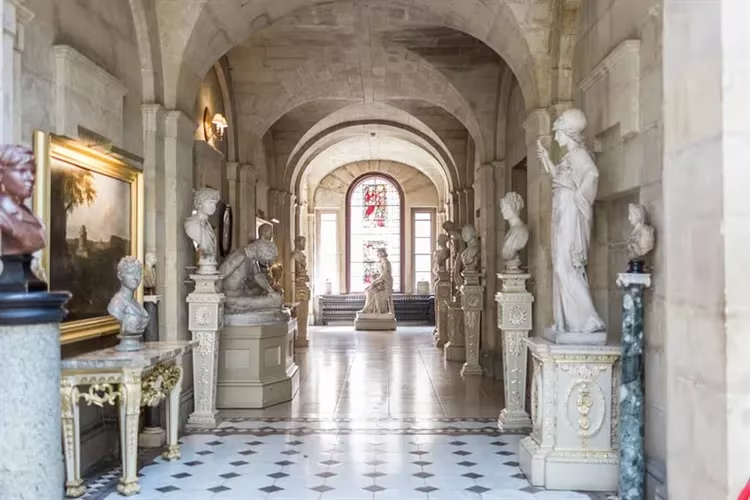
Royal apartments consist of a suite of halls, passages, galleries. The rooms are richly decorated with works of art. Some of them have preserved historical artifacts that belonged to British monarchs in the 18th and 19th centuries:
The Queen's Apartment also includes a boudoir, living room, stairs to the garden.
Wardrobe of kings
The royal wardrobe was equipped at the end of the 17th century. by order of Queen Anne. The room, designed to store outfits and accessories, was not supposed to catch the eye of visitors. Therefore, the entrance to it was disguised among the paintings placed on the walls of the hall.
Living room
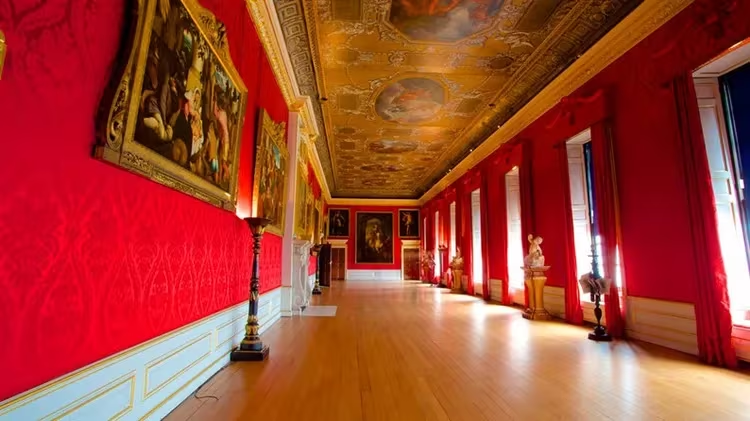
Among other rooms that belonged to King George II, the living room stands out. She served as a magnet that attracted courtiers and nobles who sought to be honored with a personal meeting with the monarch.
There is no furniture in the room, since the king was supposed to be greeted standing up. Paintings serve as the main decoration of the hall. The most famous canvas is “Venus and Cupid” by the Italian painter Giorgio Vasari.
Royal stairs
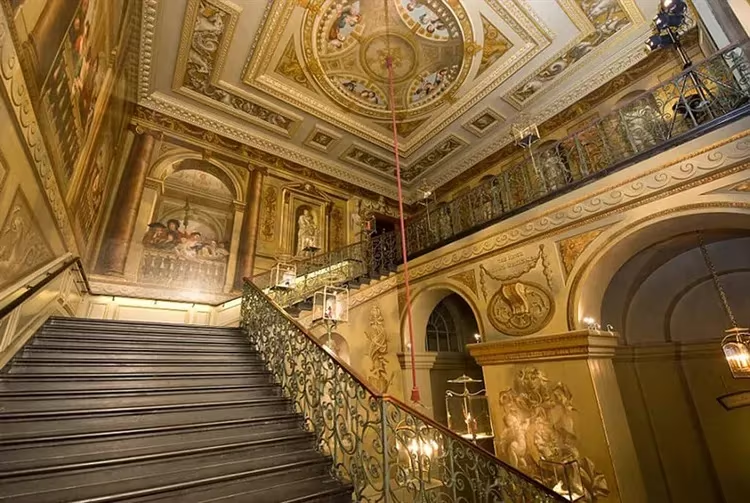
The route to the Reception Hall runs along the marble Royal Staircase. This is one of the most remarkable places in Kensington Palace. Initially, the walls along the steps were covered with wooden panels, made in 1724 according to the sketches of Christopher Wren.
In the 18th century they were replaced by paintings by William Kent. The artist depicted palace life on canvases and captured many real characters. The idea to decorate the passage with paintings, Kent borrowed from the Italians. Sculptures are also depicted on the wall – copies of real sculptures from ancient times. So, on the top of the landing, a statue of Diana is reproduced. Her original is on display at Holkham Hall in Norfolk.
Gardens
Initially, a dense forest grew on the site of the current Kensington Gardens. Its proximity to the capital and the abundance of wild animals attracted the attention of kings. The territory received the status of royal hunting grounds. It was surrounded by a fence and forbidden passage for the general public.
After the purchase of Kensington Palace by William III at the end of the 17th century, it was decided to lay out a garden under him. Christopher Wren was in charge of planning the park landscape. In the Annen era, the gardens were expanded to include sections of Hyde Park. It was also decided to build a greenhouse for exotic plants.
The next stage in the development of gardens was the Georgian period. Caroline, the wife of George II, paid much attention to the improvement of the park area. According to her orders, a cascade of artificial reservoirs appeared in the gardens: Long Lake, Serpentine Lake, Round Pond. To relax among the greenery, 2 wooden gazebos were built. One of them, called the “Temple of the Queen” has survived to this day.
In 1860, the English layout of the gardens was supplemented with a new interesting corner, called the Italian Gardens. It includes bowls of 4 pools surrounded by numerous sculptures. Queen Victoria contributed to the design of Kensington Gardens. After the death of her husband, she ordered to perpetuate the memory of him with a giant memorial (54 m high). It took 10 years to build the building. The opening of the monument took place in 1872.
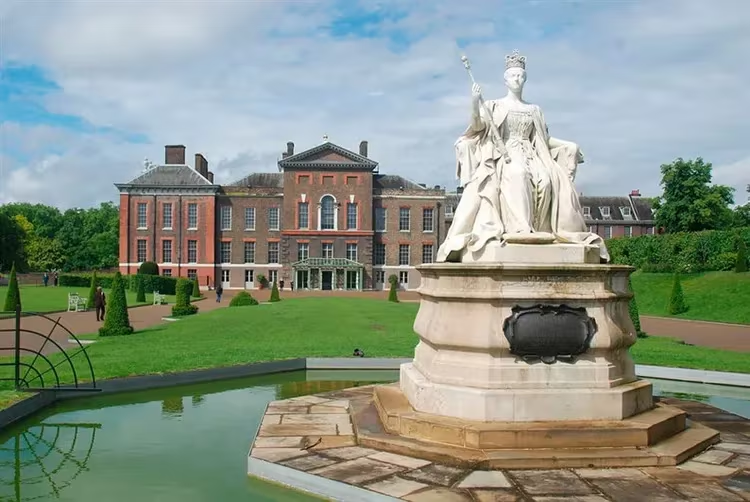
Significant sites within Kensington Gardens include:
In 1909, at the request of Edward VII, a corner of the park was turned into a Secret Garden, which resembled the Dutch gardens of the 17th century. For walks of the general public, the park opened its gates in 1728. The entrance to the territory is free and is open throughout the year.
Coca-Cola London Eye ticket £24.30
Tower of London and Royal Treasures
ticket £26.80 Tower Bridge ticket £9.80
Westminster Abbey entrance ticket and audio guide £20
Madame Tussauds ticket – £29
St. Paul's Cathedral: Fast Track Ticket – £16
The Shard Skyscraper – Entrance Ticket & Champagne – £24.95
Moving Prince William and Kate Middleton
Kensington Palace caused a new surge of interest among the public after Prince William and his wife and children decided to settle in it. The couple chose Princess Margaret's former rooms, which had been closed since her death in 2002. To restore the chambers had to spend St. £1 million. The expenses were paid from the state budget, since the palace is included in the register of historical monuments.
The Dukes of Cambridge, with the permission of Elizabeth II, picked up furniture and interior items from the royal collection. The move took place in 2013.
The couple and their children have at their disposal:
Kensington Palace is open to the public all year round (except 12/24 – 12/26), however opening hours vary by season.
| Period, dates | Winter (1.11-28.02) | Summer (1.03- 3110) |
| Working hours | Monday – Sunday: 10.00 – 16.00 | Monday-Sunday: 10.00-18.00 |
| Last entrance | 15.00 | 17.00 |
Tickets are required to view the apartments and the surrounding area. They are of 3 types:
At the request of the visitor, an additional surcharge of 10% may be included in the ticket price. It is a voluntary donation for the needs of the museum.
| ticket type | No donations | With a donation |
| Children's | Is free | Is free |
| Adult | £15.5 | £17.10 |
| Preferential | £12.30 | £13.60 |
The HRP card also entitles you to a pass to the palace. It is paid once and provides unlimited access to 6 royal palaces in London. Membership prices from 01 March 2018: Individual (1 adult) – £52.00, Shared (2 adults) – £80.00, Family (1 adult and up to 6 children) – £74.00, Family group (2 adults and up to 6 children) – £ 105.00.
There is no audio guide around the palace, so visitors conduct the inspection on their own, guided by a guidebook or together with a pre-ordered guide. The story is in English.
Where is it located and how to get there
Kensington Palace coordinates: London W8 4PX UK.
You can travel by metro or bus.
Metro stations:
- Queensway – Central Line (10-15 minute walk)
- High Street Kensington – Circular and District Lines (10-15 minute walk)
- Notting Hill Gate – Central, Circle and District Lines (20-25 minute walk)
Bus routes:
In summer, a bicycle is a convenient way to get around.