
Las Ramblas in Barcelona – photo, description, attractions, how to get there, map
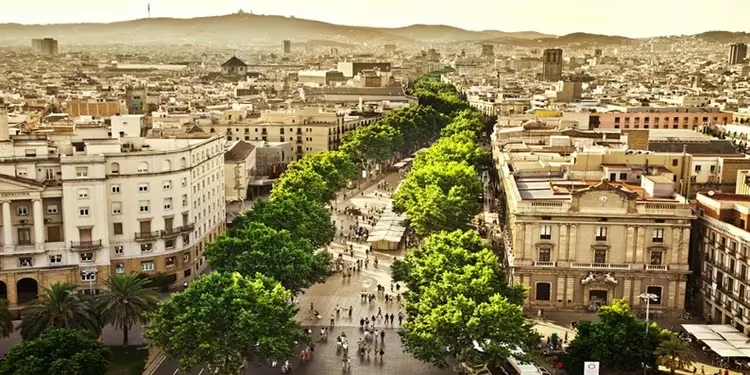
The capital of Catalonia, located on the Mediterranean coast, geographically belongs to Spain, but openly demonstrates its individuality and independence from Madrid. Barcelona is an open-air museum, a monument of human enterprise and a fantasy world in which original streets and squares are saturated with architectural ensembles of different eras and styles. The main pedestrian artery of the city is La Rambla. Framed by a narrow strip of roadway, it stretches from the Old Port to Plaça Catalunya. The most famous street in Barcelona is filled with an atmosphere of carefree fun and joy.
Story
In the 8th century, instead of today's boulevard, beloved by tourists and locals, there was the bed of the Kagalel River. Water flowing down from the mountain cut through the city and flowed into the Mediterranean Sea. In the summer the river dried up, forming a ditch, and in the spring it was again filled with floods. The Catalans called this place “rambla”, which means dry land. In the XIV century, a powerful wall was erected along the left bank of the Kagalel, which served to protect residential areas from robber raids.
The river was enclosed in an underground pipe, and the ditch was filled up. Since then, the active urbanization of Barcelona has begun. The only street leading to the sea coast was called La Rambla. Monasteries, churches, corps of novices of various religious orders appeared on it, and a lively trade was also conducted here.
In the XVIII century, with the loss of the defensive function, the fortress wall was demolished. According to the decree of the ruling nobility of Barcelona, all monasteries were closed on La Rambla. The lands seized from the sanctuaries were sold to new owners, who built luxurious mansions and hotels. Military engineer Pedro Sermenho created a project for the improvement of the territory, taking the urban Baroque style as a basis. Lined with plane trees, La Rambla has become a popular place for walks and social gatherings.
The length of the main street of Barcelona
The total length of La Rambla is over 1.5 kilometers. For several centuries, Catalans and visitors to Barcelona have been gathering on this busy avenue. Conventionally, the wide street is divided into five sections. Closer to the port, various entertainment venues are concentrated, then there is a zone of shops, restaurants, a flower market and a bird market. Tourists on the boulevard have the opportunity to get acquainted with local traditions and customs along the entire length of La Rambla.
What to see
La Rambla brings you to the very essence of the Catalan way of life. Day and night, the boulevard is filled with crowds of people who are entertained by dancers, musicians, magicians, artists, mimes and actors depicting living sculptures. Buildings with beautiful facades rise along the alley, framed by shady trees. There are also tables of street cafes, flower and souvenir stalls and a food market.
Rambla Canaletes
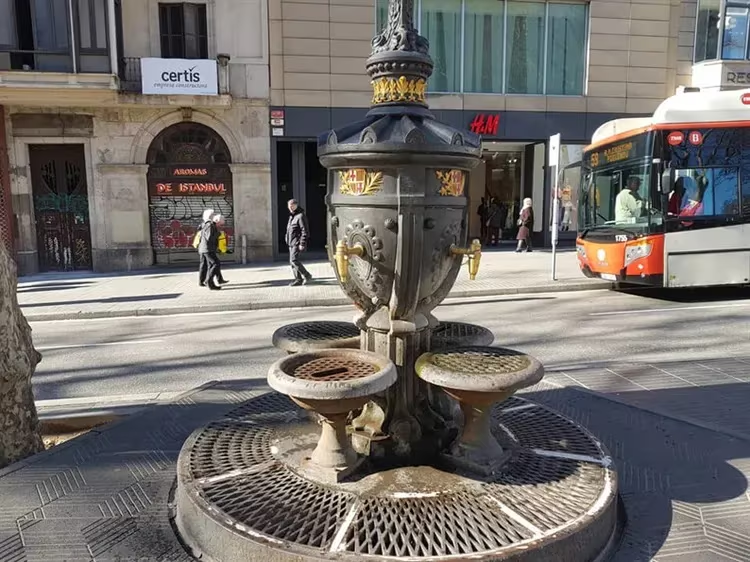
From Plaza Catalunya begins the first section of the famous boulevard – La Rambla de Canaletes. There is a cast-iron well on it, installed in the second half of the 19th century. Drinking fountains are located in the lamppost housing. They are a small vessel with taps. The source is credited with magical properties.
If a person, wanting to quench his thirst, drinks water from it, then he will certainly visit the capital of Catalonia again. This is the traditional meeting place for the happy fans of the Barcelona football club, who passionately celebrate the victories of their favorite team.
Rambla Doctrine
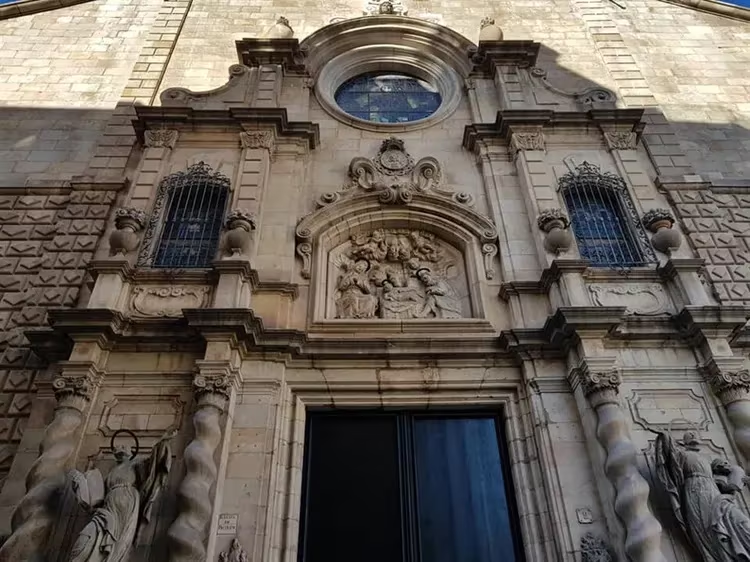
The second section of La Rambla de Estudis is named after the first university in Barcelona, established in the 16th century. The building of the educational institution was dismantled in the middle of the XIX century. Walking along this section of the boulevard, you can see the baroque church of Our Lady of Bethlehem, which suffered significant damage during the Civil War of 1936. The side façade of the basilica overlooking La Rambla is tiled and reinforced with buttresses. The hall of the one-nave temple with a rectangular apse and ten chapels is decorated with an arched gallery, columns and sculptures of saints.
Ancient beautiful buildings rise on La Rambla de Estudis, the facades of which are decorated with bas-reliefs, pilasters, sculptures and balustrades. One of these architectural buildings houses the popular Poliorama Theatre. You can always watch a flamenco show here. A clock showing the official Catalan time is built into the facade of the building.
Rambla Flowers
A beautiful part of Barcelona's main street is La Rambla de Flores (La Rambla of the Flowers). Countless flowers emit fragrance, sparkle in the sun and await their customers. Since the 19th century, Barcelona residents have been coming here for bright bouquets and seeds. Not far from the stalls with fragrant plants is one of the most luxurious palaces of La Rambla, which is the pearl of Barcelona's baroque architecture – the Palace of the Viceroy. The mansion was erected in 1775 for the governor of Peru, Marquis Manuel de Amat, who, after returning to Barcelona, did not live long in his house. His wife remained the sole owner of the pompous apartments.
The majestic facade of the palace is decorated with pilasters, stuccoed window casings and graceful balconies with wrought iron bars, framed by sculptures. Ornate decorative brackets support a large balustrade with twelve vases. Nowadays, exhibitions of contemporary art are held in the palace.
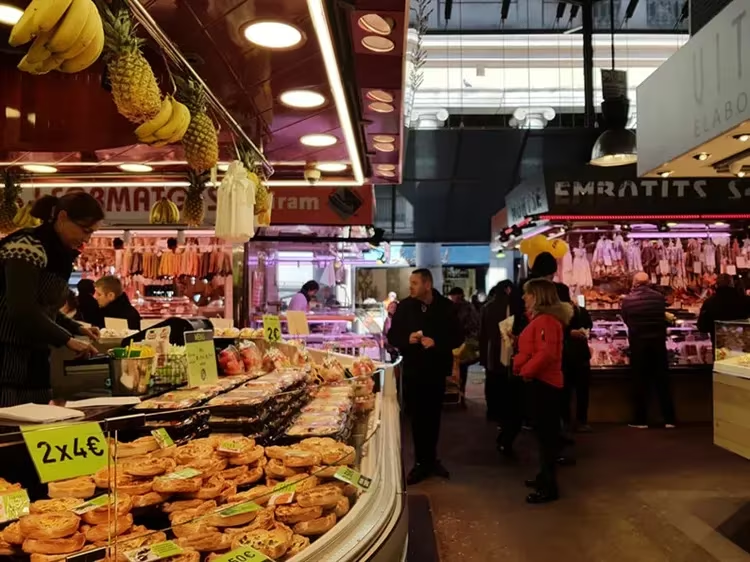
The main attraction of the Rambla of Flowers is the popular Boquería market, founded in 1840. The bazaar offers a wide range of products representing the exquisite delicacies of Catalonia – vegetables, fruits, fish and meat. The malls with 8,000 stalls are located under a metal roof, which gives the market an original look.
Rambla Kapucinov
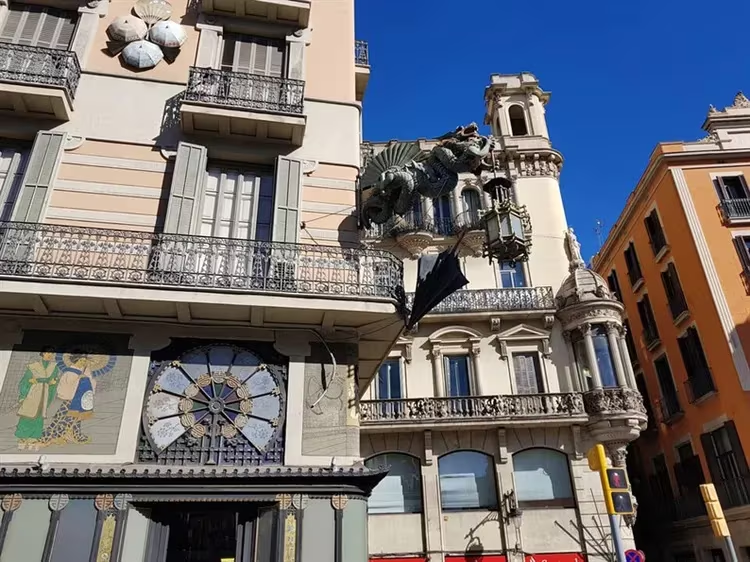
The central part of the famous street of Barcelona is the Rambla of the Capuchins, the beginning of which is marked by a tiled mosaic that adorns the pavement. The name of this segment of the boulevard is associated with the ancient monastery of the Capuchin brotherhood. Noteworthy is the expressive building of Bruno Cuadros, which previously housed an umbrella shop. Exotic decorative elements are visible on its facade – a Chinese dragon, cast-iron umbrellas, fans, enameled windows with Japanese engravings.
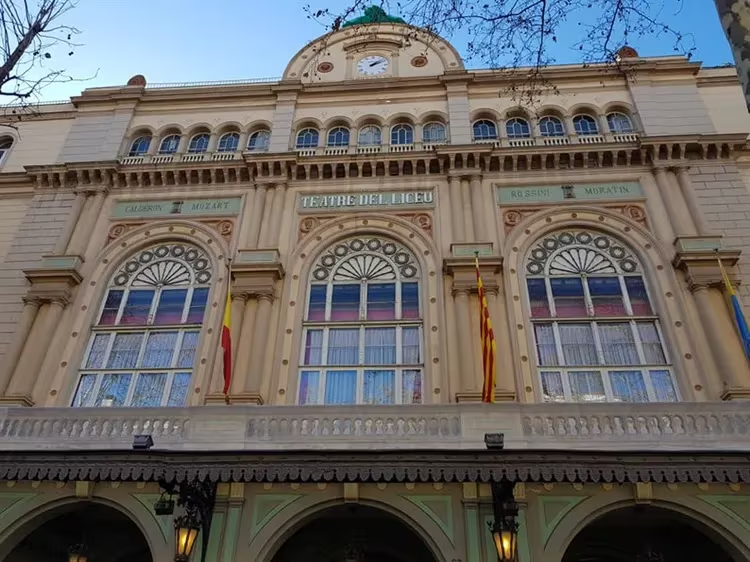
On the Rambla of the Capuchins, one of the best opera houses in Europe, the Liceu, is located, which characterizes the cultural and social life of Barcelona. The theater building, built in 1847, was subjected to severe fires several times, which completely destroyed the luxurious interiors of the halls. The financial support of Catalan entrepreneurs helped to quickly restore the Liceu. Today's interior decoration delights with its pomp: crystal chandeliers, marble stairs, velvet armchairs, stucco ceiling.
The list of attractions of the Rambla of the Capuchins is significantly supplemented by the old theater of Barcelona – the Principal, founded in the 16th century and still retaining its original appearance. The first secular musical performances were given here.
Rambla Saint Monica
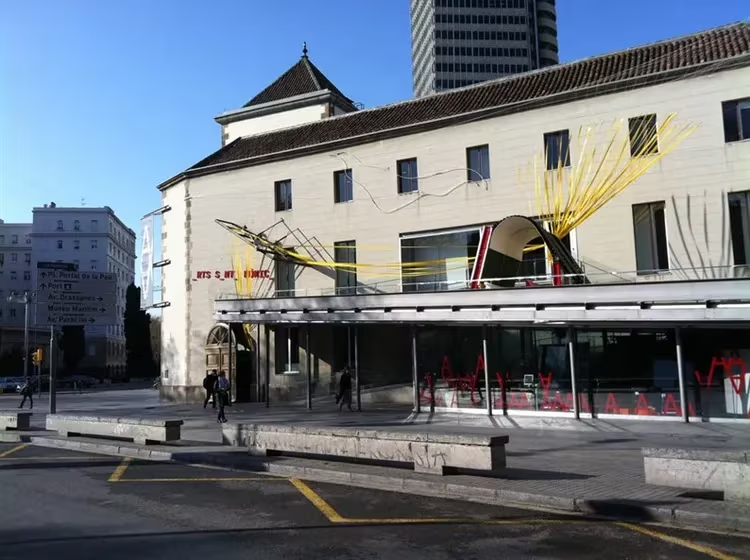
The southern section of the walking boulevard is the Rambla of Saint Monica, which got its name from the monastery of the same name, which is now transformed into an art center. Behind the modest facade of the building is a spacious covered gallery. The white walls and high ceilings of the former monasteries offer endless possibilities for displaying large canvases by contemporary Catalan artists. There is also a library and an educational center.
On the other side of the Ramble of St. Monica, in a small alley there is a wax museum, which presents more than 300 historical characters, as well as various creations of human fantasies (a spaceship, a cave with primitive people, a pirate schooner and much more). The street leads to the pier, overlooking the sea. In the center of the square rises one of the symbols of Barcelona – a monument to Christopher Columbus, crowning a sixty-meter column. The monumental statue was erected in 1888. Inside the building there is an elevator that takes tourists to the observation deck.
Pickpockets are the scourge of the Rambla
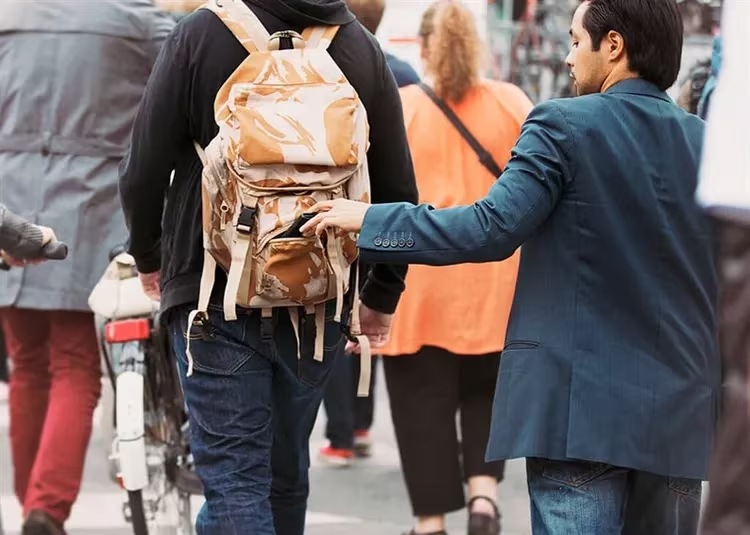
La Rambla boulevard creates the feeling of a year-round holiday. Around 10 million people pass through Barcelona's main pedestrian street every year. Not surprisingly, this is an ideal place for pickpockets who operate professionally and in an organized manner, even in front of patrol policemen. In order not to lose your wallet and other valuables, tourists should be extremely careful. Fraudsters are quite inventive, work in groups and outwardly do not give rise to suspicion.
Where is the boulevard located and how to get to it
La Rambla originates from Plaza Catalunya, which is the intersection of many modes of transport. This is the very center of the city. You can get to the main boulevard of Barcelona by buses No. 9, No. 14, No. 16, No. 17, No. 42, No. 55, No. 59. There are three metro stations along the street – Catalunya, Liceu and Drassanes.