
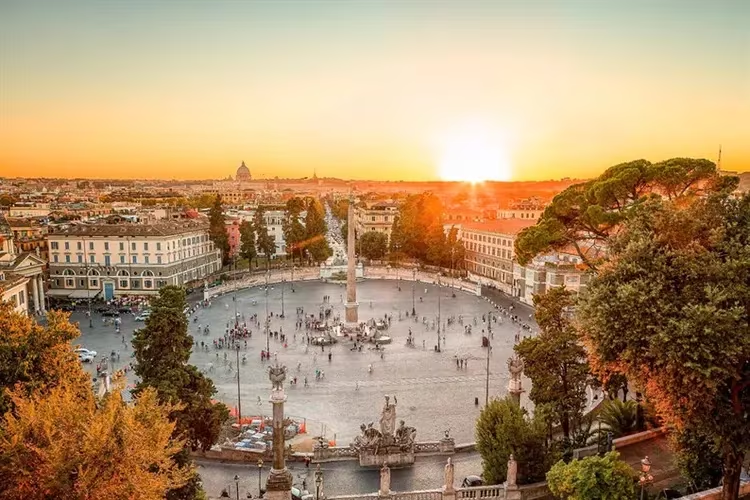
Piazza del Popolo in Rome – history, photo, description, how to get there, map
At any time of the year, the inhabitants of Rome, tourists from all over the world seek to see the most beautiful square in Rome, the famous Piazza del Popolo. Admire the architectural structures that surround the square, admire the amazing gardens of the Pincho Hill, hanging over it. Listen to the sounds of cascades of water coming from an ancient aqueduct. It seems that even now you can hear the steps of the soldiers of the Roman legions, leaving for another victory along the ancient Flaminius road. Countless times this square was depicted on their canvases by famous artists of different times. A huge obelisk, two symmetrical churches have long become symbols of the square, keeping the eternal secrets of the history of Rome.
Story
It is generally accepted that the design of the square took place in the 16th century. Rome began to grow rapidly. There were problems on the restoration of streets, water supply of the city. Pope Sixtus V issued a decree on the implementation of a new approach to urban planning. It was based on the creation of a unique road network connecting the hilly terrain of Rome with the main directions of trade routes. The original design of Domenico Fontana, called the radial trident, was used by different countries (France, England, Italy). The thinking of several generations of architects was based on this idea. The three-beam layout was widely used in the architecture of European cities, for example, in St. Petersburg, Versailles.
From the square where the inhabitants of the city gathered for trade, terrible executions were carried out, three roads of the city begin: Babuino, Corso, Ripetta. It is easy to walk along Babuino Street to the famous Spanish Steps, Piazza di Spagna. Ripetta Street runs in the direction of the ancient port of Ripetta, passes by the Mausoleum of Augustus. The Corso connects Rome with the Flaminia road.
At the junction of the streets there are two churches created by C. Rainaldi, considered the pearl of the Baroque style. The name Piazza del Popolo is associated with the translation of the Latin word Populo, or people. Perhaps another version of his poplar is also correct. Previously, there was a green grove of poplars, among which was the tomb of Emperor Nero.
Description
At the beginning of the 90th century, the square acquired the appearance that has been preserved today. It still houses the ancient church of Sant Maria del Popolo, twin churches, statues, fountains and an ancient obelisk. According to the proposals of Giuseppe Valadier, the main elements of the square were created around 1812. At the same time, a garden was laid on the territory of the hill, statues and fountains appeared. At the base of the famous Egyptian obelisk, a fountain with round bowls, lions, began to work. The square was surrounded by a balustrade, decorated with a sculptural group in the form of allegories of the seasons.
The rectangular square, lined with numerous shopping arcades, turned into a beautiful ellipsis, surrounded by a fortress wall (built by Emperor Aurelian in 273) of ancient Rome. The area, accommodating up to 65,000 walkers, has become a zone of pedestrians, closed to the passage of any vehicle. You can admire it from the panoramic platform built on Pincho Hill. The famous staircase leads to it, which has become an important element of the square. The architectural organization of Piazza del Popolo, the skillful use of relief, original paved roads, fountains, sculptures created a single urban ensemble of complex composition, revealing the history and beauty of the city.
sights
Previously, only the gates in the fortress wall, called Flaminium, could be seen here. The ancient Basilica of Santa Maria del Popolo and the fountain, from which the inhabitants took water for domestic needs, watered the horses. Centuries have enriched the square with masterpieces of architecture, innovations necessary for the development of life. Its construction was carried out for the people's money, which was reflected in the name of the square. Now the famous Roman square amazes passers-by with the beauty of the following attractions:
Gate del Popolo
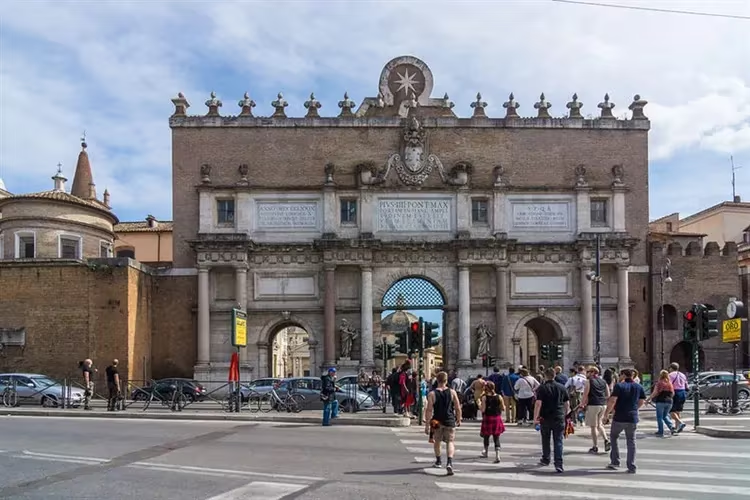
At the gate there is an ancient pilgrimage route, called the Ravenskaya, and later the Flaminieva road. In antiquity, this was an important route for Rome north through Rimini to the Adriatic. The construction of the road began as early as the time of Gaius Flaminius in 220 BC. Namely, a large number of travelers came to Rome along it. The appearance of the gate has changed. The last reconstruction was carried out by Bernini on the occasion of the arrival of the Swedish queen in 1655.
Basilica of Santa Maria del Popolo
The appearance of the basilica is associated with legends about the life of Emperor Nero. The mausoleum of Domizzi Enobarbi used to stand here. It contained the tomb with the body of the sinister emperor. By order of the pope. Paschal II, the remains of Nero were removed from the tomb, thrown into the Tiber River, and the mausoleum was destroyed. By this they tried to destroy the ghost, to remove the negative legends about this place. A small chapel was built on the site of the mausoleum in 1099. The basilica acquired its present form in the 15th century. The church houses two works by Caravaggio. This is the Crucifixion of St. Peter, the Transfiguration of Paul.
twin churches
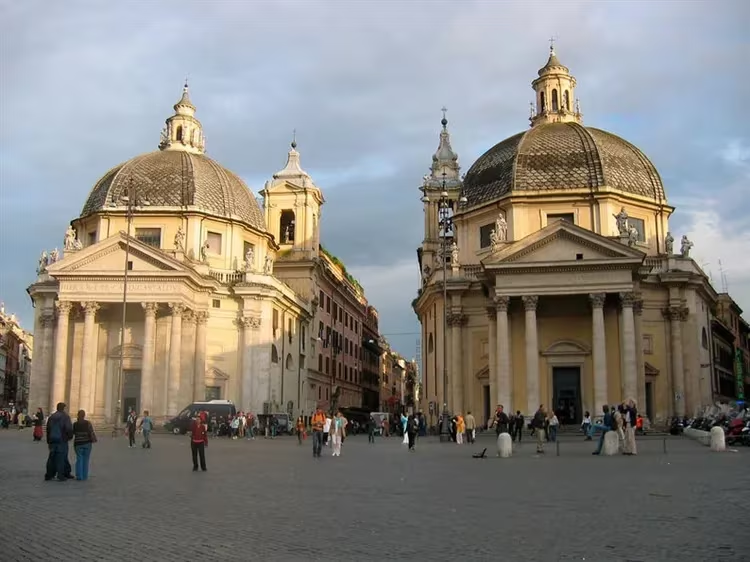
Just a close look at the churches of Santa Maria Miracoli, Santa Maria Montesanto. will indicate their differences, although they were conceived with the same architecture. Corsa begins between the buildings. Churches were built under the leadership of Carlo Rainaldi. In order for both buildings to fit into the available space, the dome of one of the churches had to be given an oval shape by changing the number of its faces.
Obelisk Flaminius
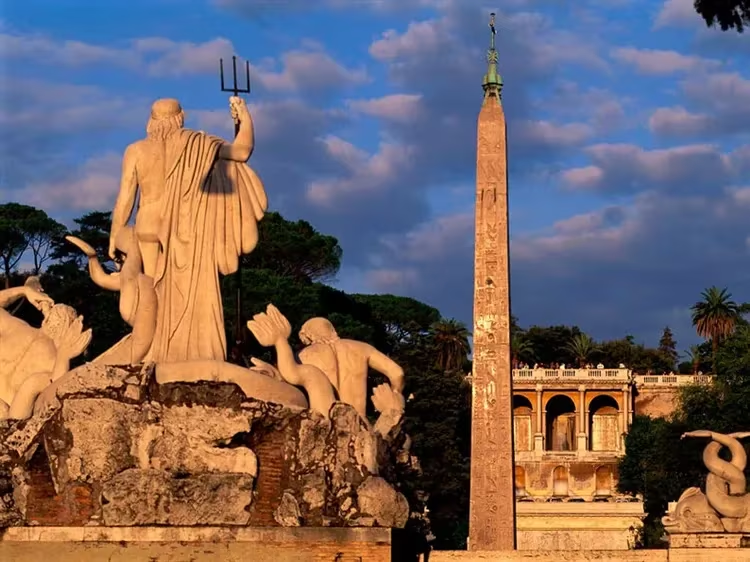
The center of the square is decorated with an ancient Egyptian obelisk, a high landmark of Rome. He appeared here as a trophy brought from Egypt in 10 BC. He towered in Heliopolis near the temple of the god Ra. After moving to Rome, the 24 meter building stood in the Circus Maximus. Gradually, the stele collapsed, collapsed. At the direction of the Pope, the famous architect Domenico Fontana collected the debris and restored the obelisk in the square.
The age of the stone giant is almost 3.5 thousand years. It has an ancient inscription praising Pharaoh Ramses. In 1824, a fountain of four lions was built around the obelisk. Marble lions are exact copies of ancient figures. To the obelisk, fountains, original steps were built, which are often used for a short rest.
Fountain della Dea di Roma
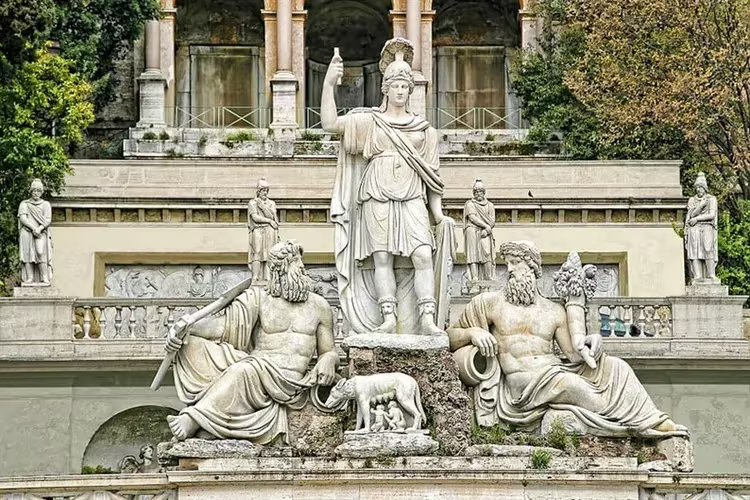
The Roman goddess in a warrior's helmet is in the central part of the sculptural group. At her feet are visible figures of men, symbolizing the rivers Tiber, Agnene, as well as she-wolves (the nurses of babies Romulus, Remus). The fountain is located at the base of the hill. Symmetrical to this fountain is an architectural ensemble depicting Neptune surrounded by tritons. The owners of the square are tourists, residents of the country. For them, there are a large number of cozy cafes and restaurants. On holidays, a huge stage for concerts is set up in the central part of the square. Turning onto Corso Street, you find yourself in a heavenly place for shopaholics. On the site, 1.5 km long, there are boutiques of various companies filled with goods.
Where is it located and how to get there
Piazza del Popolo is located in the historic center of the city. Next to it is the station of the red line of the metro “A”. You can walk to the train station in 10 minutes. There is a taxi, a shuttle bus. All the ancient roads of Rome will lead to its beautiful square.