
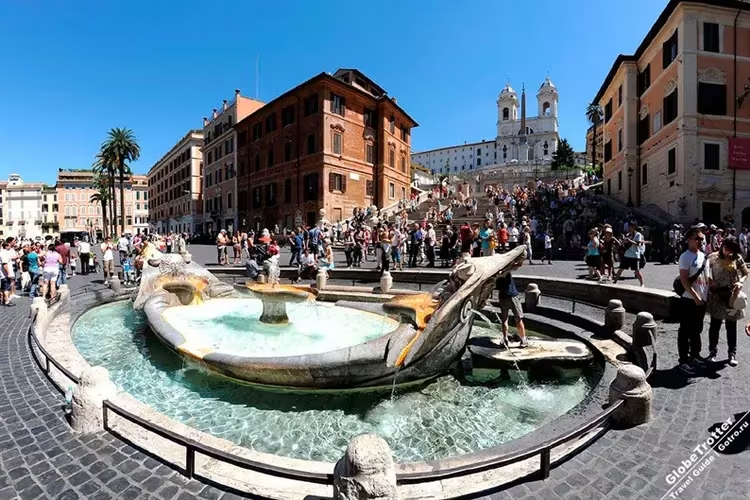
Plaza de España in Rome – photo, history, how to get there, map
The city of Rome embodies the architectural and spiritual values of mankind. The streets of the capital of Italy are full of ancient ruins, Christian basilicas, beautiful palaces and baroque squares. Piazza di Spagna is one of the most popular places in Rome.
Story
The fall of the mighty Roman Empire led to the formation of fragmented powers on the Apennine Peninsula. In Rome, the Papal State was born, which later became the stronghold of the Catholic world. In the military and political aspect, the country led by the Pope was a rather weak neoplasm. It was considered the subject of influence of the French and Spanish monarchs. The Papal States managed to skillfully maneuver between these two powers, providing them with quarters for their residences at the Holy See. From time immemorial, the popes of Rome have gained political dividends from this.
In the 17th century, the residence of the Spanish kingdom appeared on one of the streets of Rome. Since then, the area began to be called Spanish. Formally, the quarter was a French estate, because opposite the Spanish embassy, the church of Trinita dei Monti towered on a hill.
It was founded by Louis XII at the beginning of the 16th century. Thus, two objects of irreconcilable rivals are located on the square at once. The historic area around the Spanish Square has become a guest quarter for visiting foreigners in Rome. The wide street has long served as a parking lot for travelers' carriages. Leaving their carriages, the guests went to explore the city. Over time, luxurious hotels, palaces were built on the square, as well as expensive restaurants and shops.
The spirit of mystical history hovers over the Plaza de España. According to legend, among the carefree and cheerful revelers, the ghost of the wife of the famous healer and adventurer Count Cagliostro, Lorenza Feliciani, appears. At one time, she accused her husband of witchcraft, after which he was imprisoned for life in a casemate as a heretic. In prison, Cagliostro cursed his beloved.
sights
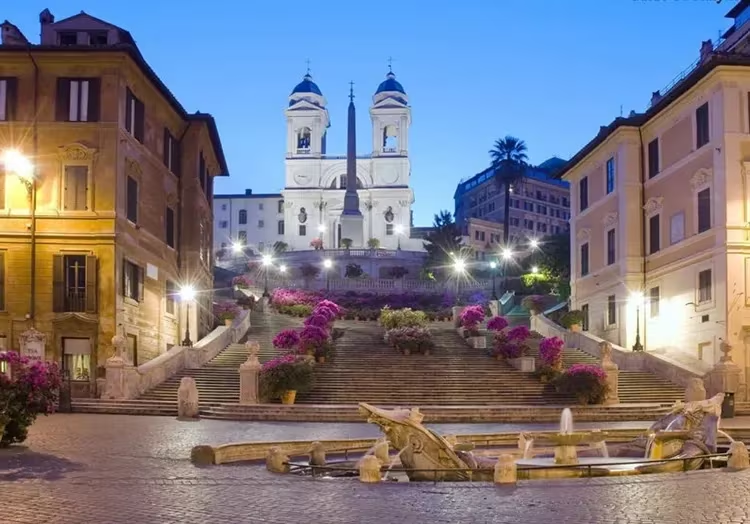
Plaza de España is full of romance and amazes with luxury. In spring, the street is decorated with blooming azaleas. In winter, traditional Christmas festivities take place here. Interesting sights are located along the perimeter of the square. The pearl of the Spanish area is a wide staircase with concave steps made of travertine. Political as well as military confrontation between France and Spain for a long time prevented its construction. At the beginning of the 17th century, largely due to the intervention of Pope Clement XI, the monumental building adorned the Plaza de España. The staircase in a peculiar way solved the issue of reconciliation between the two kingdoms, connecting the territories of the Spanish embassy and the French church.
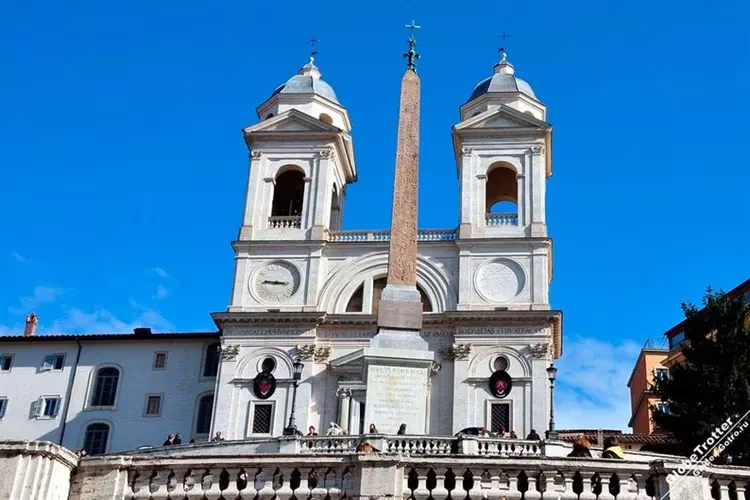
Steps of an elegant staircase lead to the temple of Trinita dei Monti, which was built in 1585 under the supervision of the King of France. Louis XI wanted to celebrate the success of his army in Naples in this way. The Gothic facade of the church consists of two bell towers topped with octagonal domes. Between the towers there is a balcony with a balustrade. A wide entrance, framed by pilasters and antique bas-reliefs, leads to the luxurious church premises. Six chapels, located among the arched arcades, are decorated with frescoes by famous Italian artists. Here you can see a unique sculptural composition called “Descent from the Cross”.
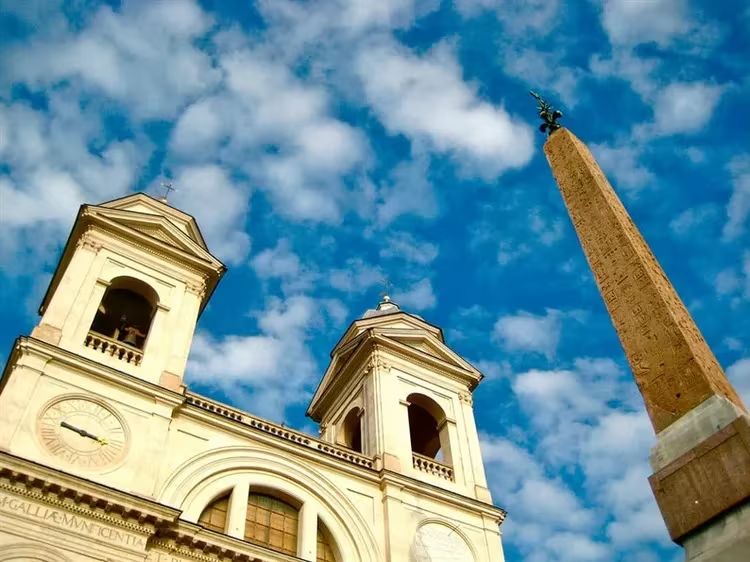
The Obelisk of Sallust rises in front of the temple. This thirty-meter granite monolith is a copy of ancient Egyptian obelisks, found during excavations in the garden of the ancient historian of Rome, Sallust. In the center of the Plaza de España is the Barcaccia Fountain. The marble sculpture is made in the form of a sunken boat. In 1629, the architect Pietro Bernini immortalized the image of the ship in honor of the memory of the flood. Then the Tiber River overflowed its unfortified banks and flooded the streets of Rome. The fountain is decorated with beautiful relief compositions. The pool is filled with drinking water.
In the southern part of the square rises a magnificent palace, considered a prominent representative of the Italian baroque – “Palazzo di Propaganda Fide”. The facade is decorated with concave and even cornices. Window openings are framed by columns and an arched composition with a relief ornament. In the Middle Ages, the palace was the focal point for missionaries who were supposed to promote Christianity around the world.
In front of the Palazzo di Propaganda Fide, there is an eleven-meter column symbolizing the Immaculate Conception of the Virgin Mary. The marble monument was erected in the Plaza de España in 1854 under the protectorate of the Catholic Church. At the top of the tower is a bronze statue of the Madonna on a small ball. Under her feet you can see a defeated snake, personifying sin. The woman's right hand holds a natural wreath of white lilies, which is erected annually with a crane on the day of the Immaculate Conception of the Virgin Mary (December 8). The pedestal of the column is framed with statues of Old Testament prophets.
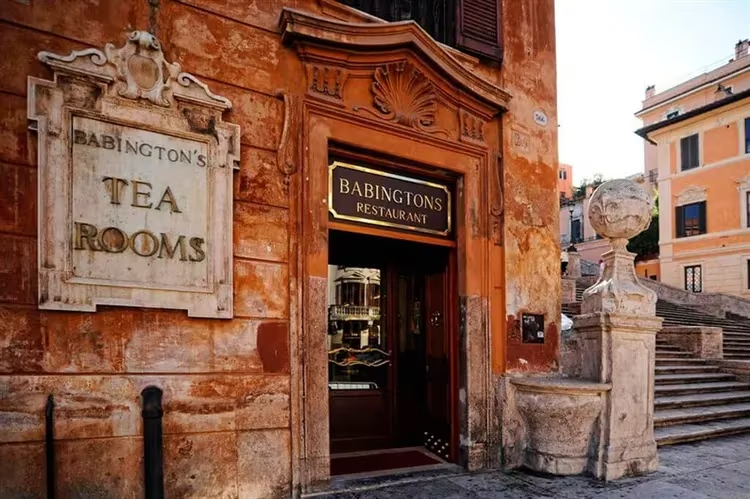
Next to the stairs is a real English tea room. It opened in the Plaza de España in 1896 and since then has not changed its ceremonial ritual of tea drinking. In the traditional English interior of the institution, you can always enjoy exquisite and fragrant tea. On the adjacent street to the Spanish district is the legendary Café Greco, founded in 1760. Famous personalities liked to visit the coffee house: Gogol, Chaliapin, Nietzsche, Goethe, Wagner and others. A street leads to Plaza España, where there are many boutiques from famous brands – Gucci, Bulgari and Valentino. Tourists from all over the world come here to shop for luxury clothing.
Where is it located and how to get there
The square is located in the Campo Marzio area. You can get there by metro to the Spagna station (red line). Bus number 119 runs through the city to Plaza España. This is quite a beautiful part of Rome, so walking is recommended.