
Sights of Girona – 19 most interesting places
Girona, striking with the architecture of the Romanesque and Gothic periods, is romantic and majestic. Nowadays, the standard of living here is one of the highest in Spain. It is better for tourists to allocate at least a few days for acquaintance. A leisurely walk along the pavements, looking at the frescoes on colorful houses of an unusual shape will bring great pleasure. A visit to a cozy cafe on a quiet street will help you feel the atmosphere. And after that, the historical heritage of the city will open to travelers in all its charm. So, let's find out about the most interesting sights of Girona.
fortress wall
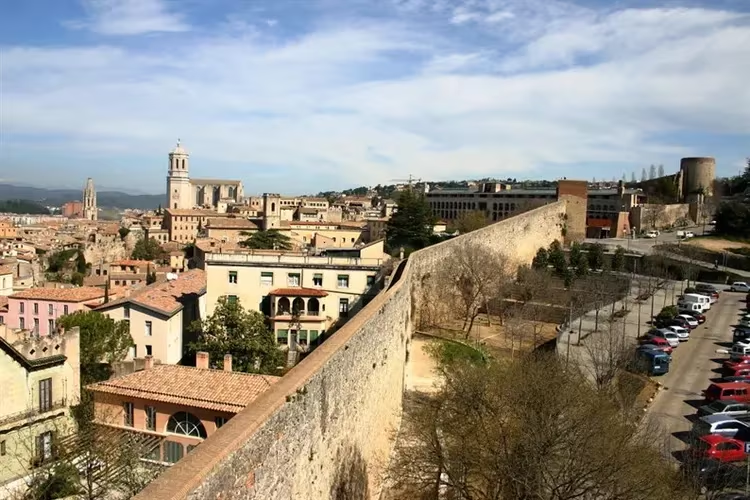
Most of the sights are located in the old town. The powerful fortress wall surrounding it is an architectural monument in itself. These fortifications were built over ten centuries ago and have withstood many battles. Immersed in the greenery of gardens, from its top you can clearly see the labyrinth of the most beautiful passages between buildings, along which the heroes of a large number of legends that were born here walked. Looking closely at the buildings, you can find decorations that are inconspicuous at first glance. Heraldic emblems with images of bats, mythical bird women and men with lion faces, sculptures of couples in love.
Each such decoration has a history of creation associated with some interesting event. This is especially noticeable in the Jewish quarter. Here, each stone seems to whisper about amazing cases from life. The originality of this place is captivating, given that since the ninth century it has been preserved almost in its original form.
Rambla de la Libertat
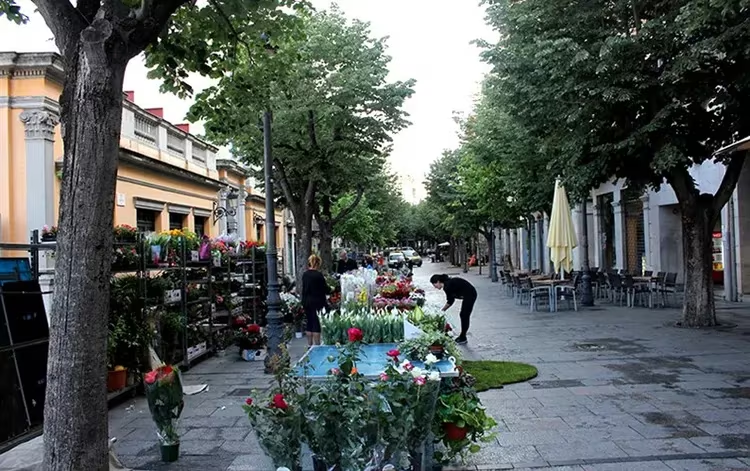
The heart of the city is the Rambla de la Libertat. For more than two hundred years, merchants from all around have flocked here. Artisans and farmers sell handmade goods. In this market, you can buy any thing you need in the household, or a souvenir as a keepsake. Restaurants, eateries, located on this street are characterized by comfort and characteristic flavor, inherent only in Girona. Street musicians and dancers cheer up and entertain residents and guests of the city. At dusk, sometimes it is not clear where a sad song comes from. In a strange language, frightening and bewitching, then loud, then completely quiet…. It is sung by the ghost of Torrana, an unfortunate woman with a tragic fate.
Cathedral
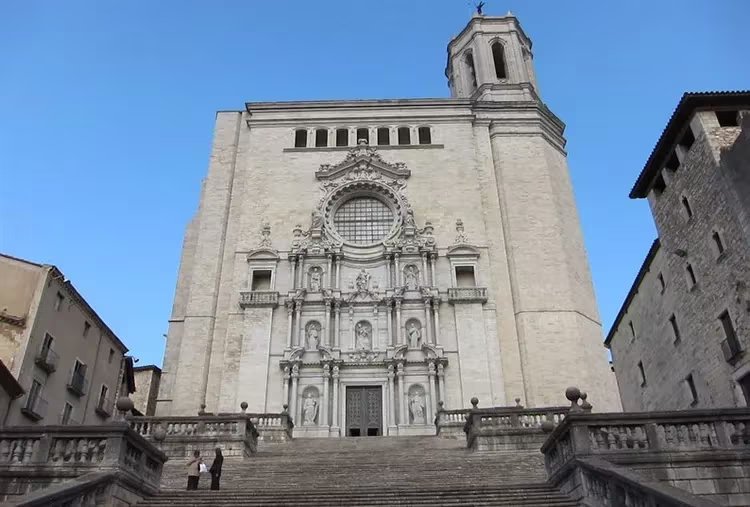
The cathedral deserves special honor. Inside, it evokes a feeling of reverence, peace and delight, a spacious room with diagonal arches, monumental columns, filled with light, enchants with the sounds of the organ and the splendor of decoration. The temple began to be erected in 1312, built in 1416, and additions and changes were made over the centuries, famous masters participated in the work on it. Each of them left their contribution to the great creation.
In the 17th century, a “stairway of repentance” appeared on the western side. It has ninety steps, and, according to legend, before entering the church, you need to pray for your sins, one on each step. From the outside, the cathedral is no less magnificent than from the inside. Even the smallest details in the design testify to the skill of its creators. One of its unforgettable features will attract lovers of mysticism. A wonderful drain in the form of a man sticks out right from the wall. They say that it was the heavenly forces that turned into him one person who lived nearby, who loved to swear and throw stones at the building. Now only rainwater can pour out of her mouth.
In summer, the cathedral can be visited from 10:00 to 19:30, and in other seasons from 10:00 to 17:30. The ticket price is 5-7 euros, and on religious holidays and Sundays you can get on the tour for free.
Arab baths
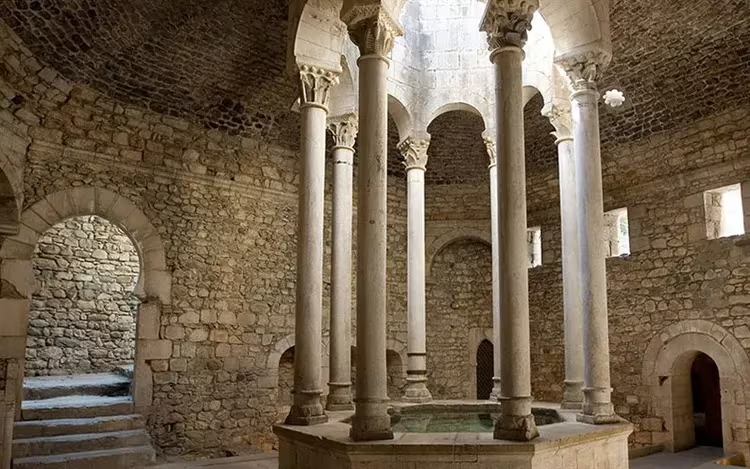
The Arabic baths, made in the Romanesque style, got their name from the decorative finishes made in the Arabic style. The building was constantly destroyed during the siege of Girona by French soldiers, therefore, starting from the 13th century, various architects were taken over the restoration work. The last one who had a hand in the restoration of the baths in 1929 was the Catalan master Rafael Maso. The huge complex consists of 5 rooms with hot, cold baths, a steam room, a dressing room and a room for warming up the body with dry air.
The octagonal pool with bulky columns and stone benches fully adopted the eastern influence of architecture when the Pyrenees were captured by the Arab tribes. Despite the functioning steam rooms, the baths are presented as museum premises and are not used for their intended purpose. If the tour group collects more than 30 people, then a tour of the Arab baths will cost 1 euro, for the rest – 2 euros. On weekends and holidays, the attraction can be viewed from 10:00 to 14:00, and on weekdays from 10:00 to 19:00.
Benedictine Monastery of Saint Peter Galligans
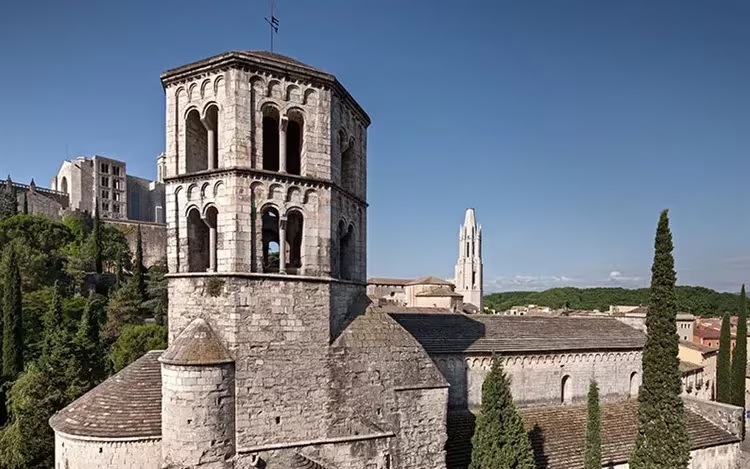
It is considered a striking example of the Romanesque style of Catalonia 12th century, despite the fact that the facade of the building has been greatly “updated”. Since 1857 it has been state-owned, and now there is the Archaeological Museum. The octagonal dome of the Church of San Nicolau from the 12th century also keeps many secrets associated with ancient burials. For connoisseurs of fine arts, it will be interesting to visit the city Museum of Art. The exposition, created in the period from the 10th to the 20th century, is stored in the epic Bishop's Palace, not far from the Cathedral. The Salvador Dali Museum, which he himself designed, is dedicated to his life and work. The most outrageous works of the eminent surrealist artist are collected in it.
Sculpture “Girona Lioness”
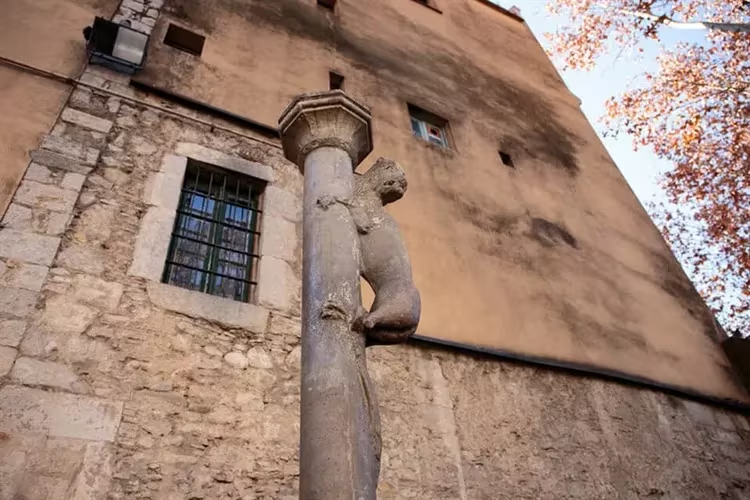
The sculpture “The Lioness of Girona” is a statue of a lion climbing a column at the north gate of Girona. Initially, the legend told about a she-wolf, which one of the villagers taught to give signals to the guards at the walls of the fortresses about approaching trading carts and other unexpected “guests”. After her death, the grateful people decided to erect a monument to her, but the image of a simple wolf to pass on legends to subsequent generations seemed to people not very heroic and it was decided to replace it with a more frightening one – a lioness.
Since there were no such predators in these areas and, accordingly, no one saw a representative of the cat family, the sculpture of the animal turned out to be very peculiar. One curious tradition is also connected with this attraction, which has been going on since the 13th century, when merchants, who did not have time to get into the city before the gates closed, climbed a pillar and stroked the animal on the buttocks. Such a gesture made it clear to the guards that the latecomers belonged to their people. Today, a ladder is attached for this purpose, and judging by the wear on the body of the lioness, tourists repeat this custom regularly.
Jewish Quarter El Call
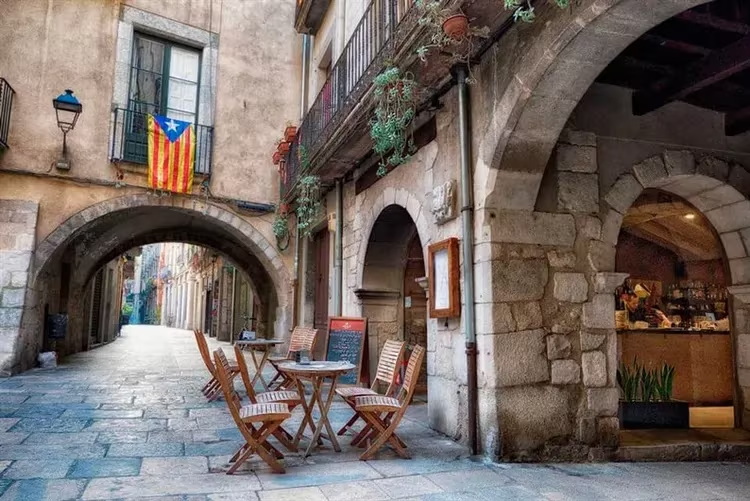
The Jewish Quarter of El Kall is suitable for fans of medieval architecture, which has remained intact since the 15th century. The opportunity to admire the untouched decoration of the squares and lanes tourists “owe” to King Ferdinand and Queen Isabella, who evicted the wealthy Jewish settlements from here for refusing to accept Catholicism. The once flourishing area was now populated by Spanish Christians who had no money to develop it. The Museum of Jewish History of Catalonia on Carrer de la Forca Street, which consists of 11 rooms, will tell about the life and oppression of the Jewish society.
The ticket price is 2.4 euros depending on the age category of visitors, and the opening hours are from 10:00 to 19:00 on weekdays, and on Sunday from 10:00 to 14:30 (Monday is a day off). Ancient staircases, narrow corridors of streets, Arab baths of the 12th century, exhibition halls and cafes are worth spending a day or more on them, so you should not forget about comfortable shoes for a tour of El Call.
Bishop's Palace
The Bishop's Palace once belonged to a local count, after which it was bought out by priests and, starting from the 13th century, has been constantly modified, incorporating features of the Romanesque style, then the Gothic, and in some places the Renaissance. Until the 20th century, the building was completed with towers in which prisoners were imprisoned, and this is confirmed by the inscriptions made by prisoners on the walls of the Prison Hall, chapels and exhibition halls, under which the bishops specially allocated an area for storing the rarest works of art – paintings by famous artists, jewelry and church utensils.
On Monday, the museum has a day off, but on other days from 10:00 to 18:00 (on Sundays from 10:00 to 14:00) the palace opens its doors to tourists. The ticket price for students, pensioners and tourist groups from 20 people is 3.5 euros, for the rest – 4.5 euros.
Monastery of St. Dominic
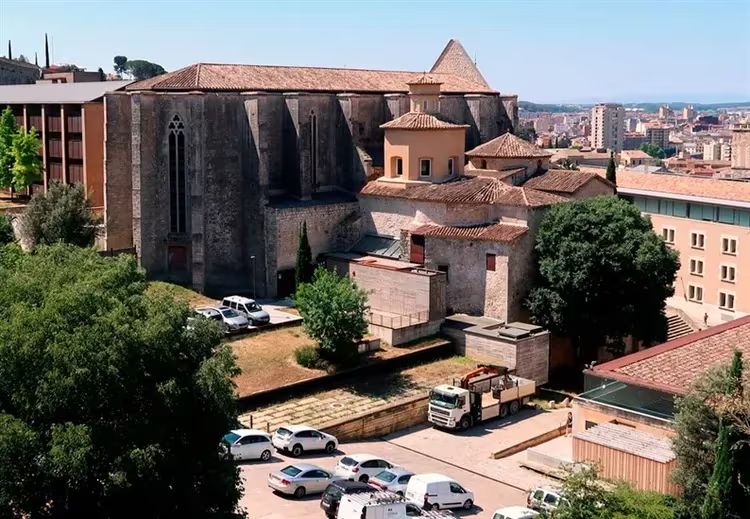
The monastery of St. Dominic is a vivid example of the Catalan Gothic style, built in the 13th century by a monk of the Dominican Order. In addition to the fact that this style of architecture in itself is not distinguished by the rich decoration of forms, this Catholic brotherhood did not have enough money to decorate the monastery. Despite this, the building looks very unusual due to its austerity, expressed in a small number of windows and the simplicity of its construction against the backdrop of colorful Spanish buildings with decorative elements from different eras. Now there is a university of arts here and access to prying eyes is closed, however, no one will forbid admiring from the outside.
Old hospital of St. Katerina
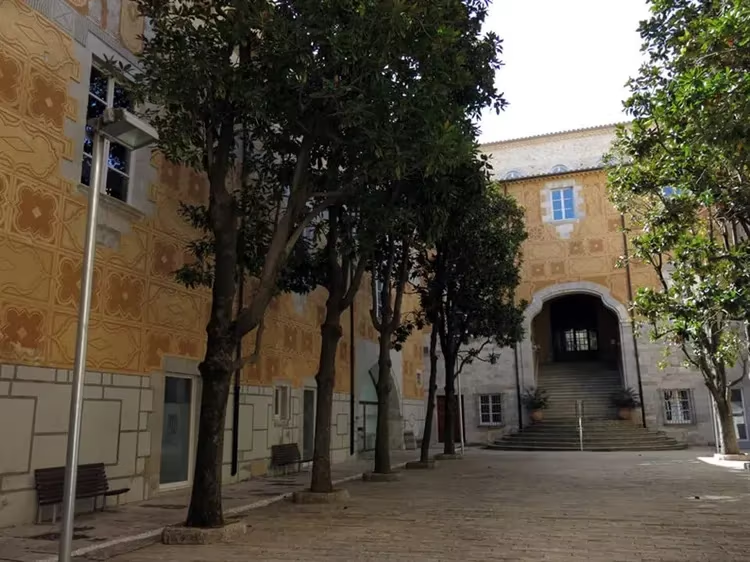
Old hospital of St. Katerina since the 13th century served as a leper colony for the poor, after which it was moved to the city center. Girona needed new territories to strengthen the boundaries of the city and from the 17th century the hospital became one of the best hospitals in all of Spain under the auspices of the church and continued to exist until the 19th century, when the monks, having no more funds to maintain it, handed over the building to the government.
Now the authorities of Catalonia sit in the hospital, but some sights are available for tourists – this is the Patio of Magnolia, a courtyard with exits to it from the hospital wards, and the pharmacy of St. Catherine, which has survived to this day unchanged. You can visit the hospital on weekends from 10:00 to 14:00 and on national holidays, the ticket price will cost 3.5 euros.
Church of St. Felix
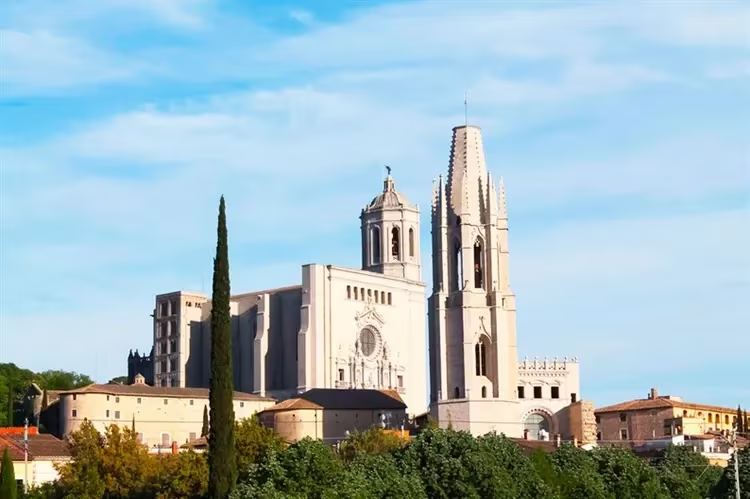
The church of St. Felix is a symbol of Girona, namely its spire, destroyed by lightning in the 16th century, which the authorities deliberately did not restore, taking it for a sign of God. One of the oldest buildings in this city dates back to the 4th century, the construction of which was dedicated to two saints who died at the hands of Roman pagans. One of the martyrs was called Felix, and his power survived and is still kept in the temple. The church also contains ancient Roman sarcophagi dating back to the 3rd century, for example, San Narsis.
The inhabitants of Girona believe that with his help they managed to repel the siege of the city in 1285 – insects got out of the grave of the saint and drove away the French army. Many visitors are attracted here by the sculpture of the Reclining Christ for worship, made in 1350. Every century, the basilica underwent changes until the 17th century, combining elements of the Baroque and Gothic styles, which you can enjoy every day from 10:00 to 17:30 at prices ranging from 5 (pensioners and students) to 7 euros.
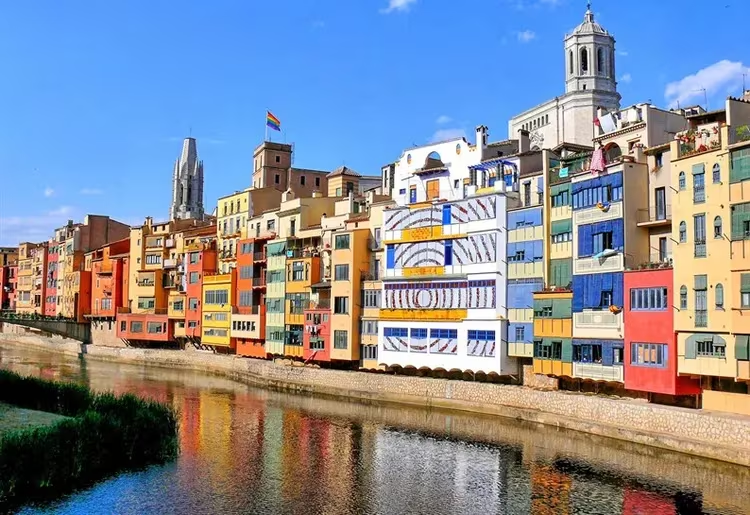
Houses along the Onyar River
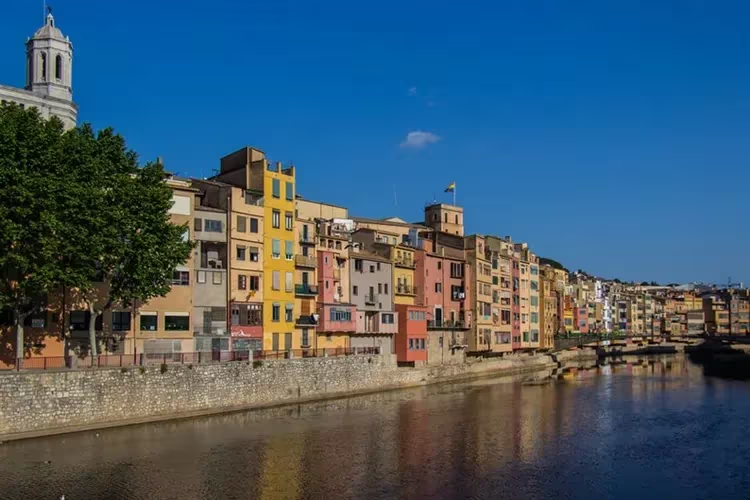
Houses along the Onyar River offer not only a picturesque view of the river, but are an ancient landmark in themselves. “Suspended houses” began to be rebuilt in the 17th century from the ruins of the walls that once served as the defense of the city from the onset of the French troops, and now they divide Girona into the “old” and “new” city. The multi-colored facades of buildings are reflected in the river and create such a beautiful landscape that masters have depicted it more than once in paintings, and tourists almost never stop in these places in search of a good shot. You won't be able to walk along the embankment, because it simply doesn’t exist – three-story buildings literally hang over the river, but it’s easy to walk along the multiple bridges thrown from one part of the city to another.
Cinema Museum
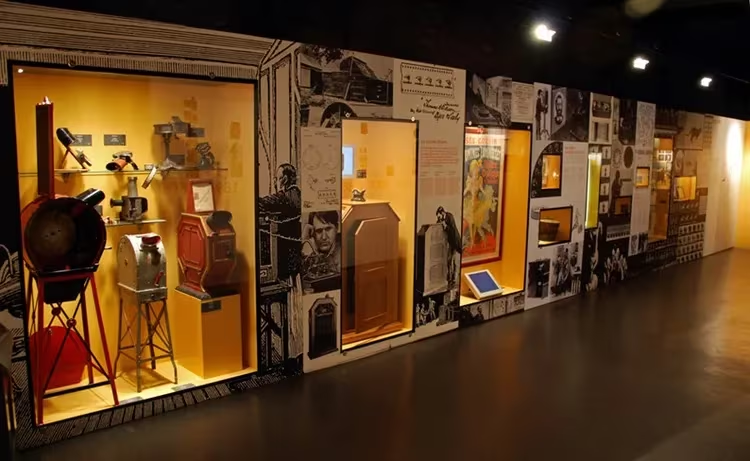
The Museum of Cinema opened in 1998 in Girona, attracting crowds of cinematographers who want to trace the history of its development over the past few centuries. Most of the valuable exhibits are the collections of Thomas Mallol, which he collected for about 30 years, ranging from prints and the first cartoons, ending with old projectors and modern film lenses. To arrange the entire heritage of cinema for 400 years, and this is about 30 thousand copies, the museum needed 4 floors, divided into thematic zones.
Children will be especially curious to learn from the educational program offered here how the cartoons were created. You can immerse yourself in the world of cinema every day from 10:00 to 18:00, except Sundays and public holidays, when the museum is open from 10:00 to 14:00. Tickets can be purchased at a price of 3 to 6 euros – it depends on special offers and the age of visitors.
Palace of Agullana
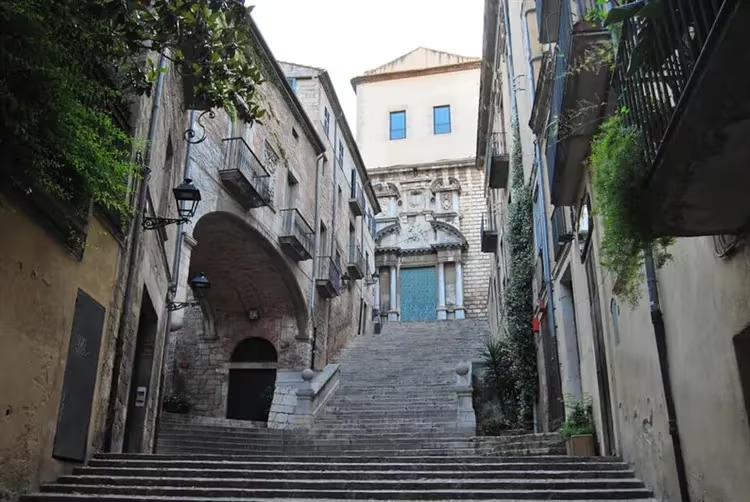
The palace of Agullana is shrouded in mystical legends about vampire owners who lived in the castle from the 14th to the 17th century. The building hides many secret rooms, which is another evidence of the dark past of the inhabitants of this building. The baroque style of architecture gives the palace an even more intimidating look, and for thrill-seekers, this attraction should be one of the first items on the list to visit, and if you go up the stairs past the arched span, you can find yourself at the walls of the Catholic monastery – San Marti Sacosta. Near this medieval complex, one can often meet artists with easels depicting the “symbol” of the city on paper. The nice bonuses of these places include their free inspection.
Tower of Gironella
The Gironella Tower is the only evidence of the pogroms in 1809, which Bonaparte arranged for Spain and other European states during the “Napoleonic Wars”. But this defensive structure appeared back in the period of the Roman Empire, when its purpose was to protect the trade route from Seville to Rome. On the spiral staircase, which has survived to this day, everyone can climb and enjoy the breathtaking panorama of the city.
Constitution Square
Constitution Square is a 4-minute walk from the Onyar River in the new part of the city. The place is notable for its impressive size and sculptures by contemporary artists, especially the bronze statue of a girl born on the day the Spanish Constitution was adopted.
Gustave Eiffel Bridge
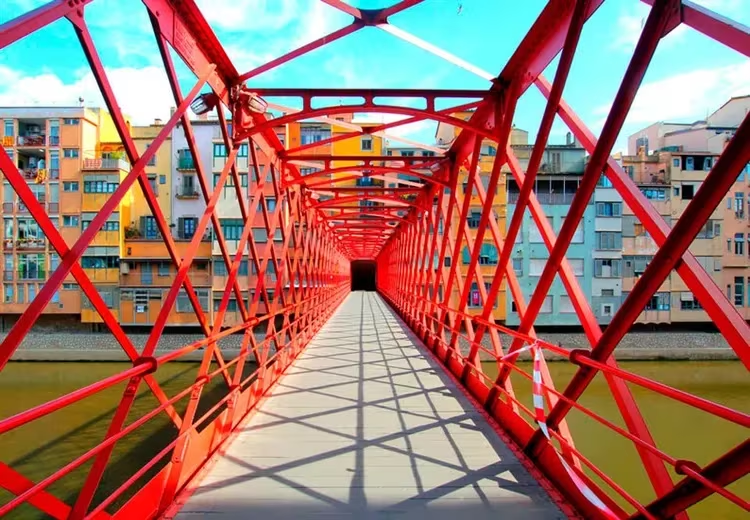
Several bridges across the Onyar River connect the new buildings with the old quarters. One of them, “Red Iron” (1877) deserves special attention. The Gustave Eiffel Bridge is interesting for its design of intertwined red metal rods, which connect rather than 2 banks of the river, but 2 houses on both sides. This design belongs to the hand of the famous French engineer Gustave Eiffel, who became famous after the construction of the notorious tower in Paris. For 1876, this creation was considered a real miracle. Ancient houses on the coast look magical, especially at sunset, when under the ever-changing rays of the hiding sun they play with shades of colors.
Parc de la Devesa
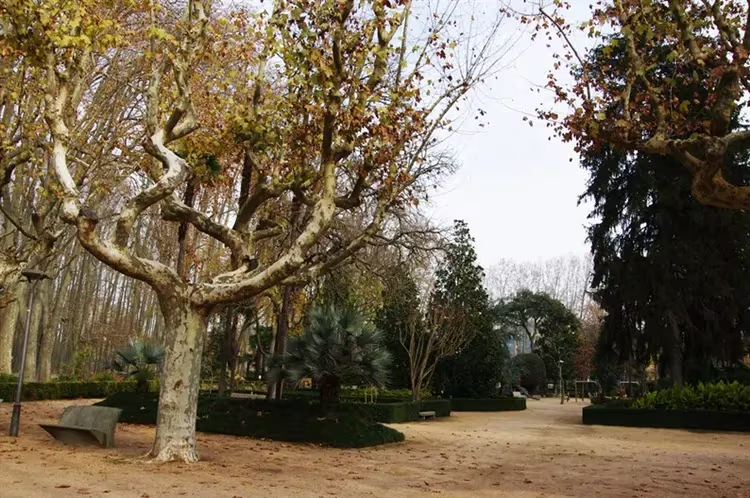
Parque de la Devesa with an area of 40 hectares is filled with decorative fifty-meter plane trees, palm trees and flowers, with which the territory is so densely populated that in hot weather you can really hide from the sun. A moat filled with water was dug around the perimeter of the park, so you can only enter through the gate. The green complex de la Devesa includes a banana grove and a botanical garden, and a lot of attractions and playgrounds have been built for children.
Museum of Art
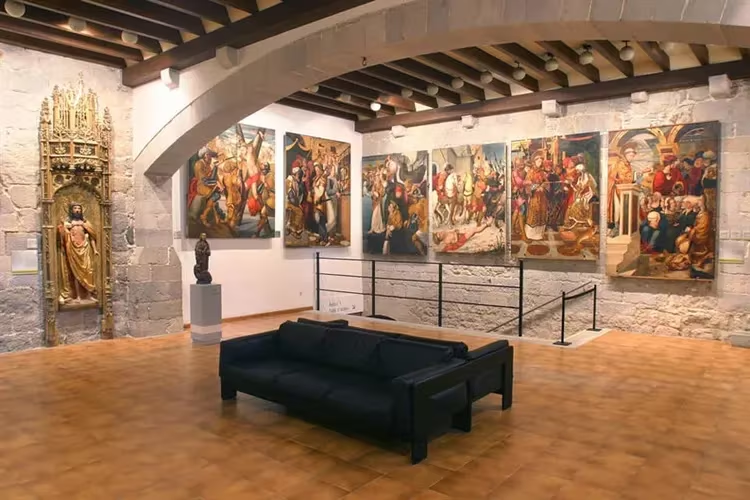
The Museum of Art was formed from the merger of two museums dedicated to the cultural heritage of Girona from the 16th to the end of the 20th century. According to official papers, the museum began its work in 1976, but the first mention of it is associated with Count Borrell in the 10th century, who owned this building. More than 8 thousand church-historical exhibits are presented to the attention of tourists, which are distributed in 18 halls in chronological order.
These are paintings by medieval artists of Spain, and a typewriter of the 17th century, stained-glass tables, jewelry, faience, ceramic and glassware, sculptures, and even embroideries of the 15th century have been preserved. The entrance to the museum will cost 3-4 euros, and it is open every day from 10:00 to 18:00, and on weekends from 10:00 to 14:00.