
Tirta Empul Temple in Bali – history, photo, description, how to get there, map
Tirta Empul Temple in Bali is an unusual place loved by tourists from other countries. Actually, this is a whole complex where you can spend the whole day, study the customs of the Hindus, have a great rest, and not get bored. Hinduism pays great attention to water. For believers, the ocean, lake or river is a source of life and well-being. All temples are located near water surfaces. It is here that visitors recover, calm down and tune in to prayer. This place is covered with legend. In ancient times, a king lived on earth, who was so confident in his own power that he began to dare the gods. He stated that the celestials are worthless creatures, and he, Maya Dinava, independently protects his subjects, gives them food and protects them from troubles. And honors should be given to him, not to the gods.
Construction history
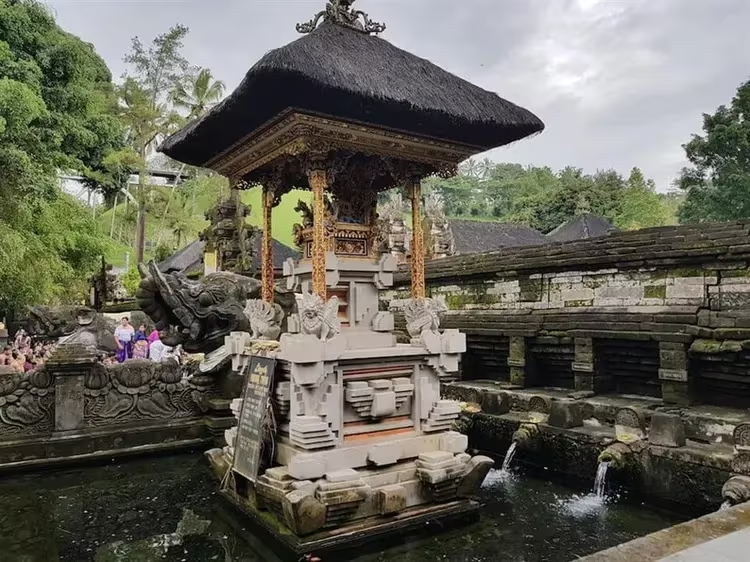
Tirta Empul is one of the most famous temples in Bali. The structure was built in 962 AD on the site of a spring. The first historical information about the emergence of the cult of holy water in these places is mentioned in ancient mythological traditions. At one time, the ruler of Bali was Maya Danava. The king forbade his subjects to worship deities and believe in higher powerful forces. The dictator and heretic felt unpunished, mocked and disrespected the gods. According to legend, the warrior God Indra could not come to terms with this. He sent his divine warriors to dethrone the tyrant. Against all odds, the king destroyed all the soldiers who descended from heaven.
Indra became very angry – it is not worthwhile for a person to interfere in the divine plans. God struck his staff on the ground. Water gushed out of the well. Indra sprinkled the fallen warriors with this water, and they came to life. Having drunk the water from the holy spring, the Warrior God felt spiritual relief. The militant desire to destroy the king has passed. Indra chose the path of reconciliation. Thus, the temple of Tirta Empul was erected on the site of the spring. The further fate of King Maya Danava is unknown. Perhaps he was banished, or the healing water changed his essence.
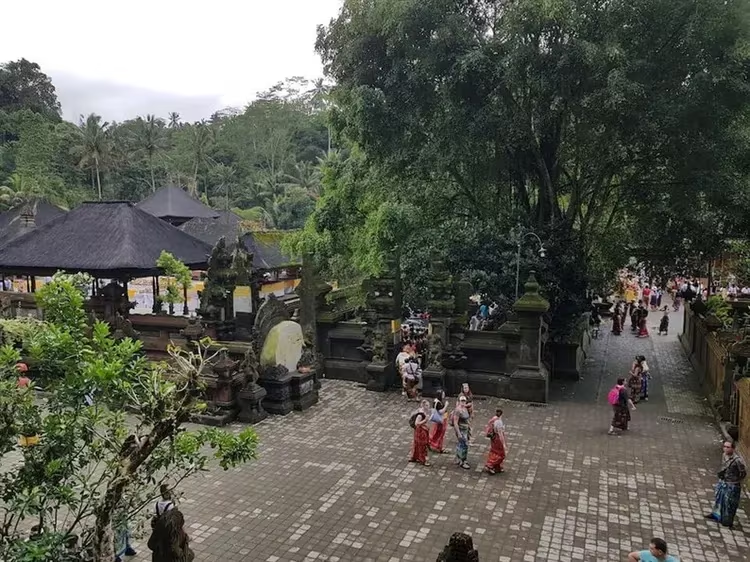
The temple is surrounded by picturesque nature, where dense evergreen trees and shrubs grow. The architecture of the main building of the temple impresses with its sophistication and grace. The sanctuary is built of wood and stone elements, decorated with gilding and covered with fine carvings. Near the temple of Tirta Empul there is a wooded hill, from where the interior decorations of the sanctuaries are perfectly visible. During the European colonization of the island of Bali, the Dutch built a beautiful estate for officials here. It later became the residence of the first president of independent Indonesia.
Architecture
This wonderful complex consists of 3 parts that communicate with each other. Each part has a special purpose and is separated from neighboring gates:
- All tourists begin their tour from Jaba Pur, or the central courtyard. On the territory there are shops with souvenirs, food. Here you can have a cheap meal and buy sarongs, as well as baskets with sacrificial fruits and sweets, which you will need to visit the temple and healing springs.
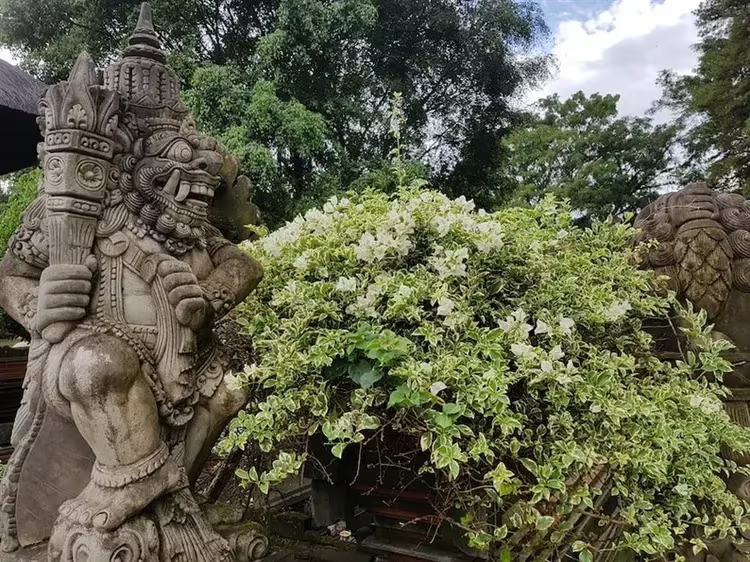
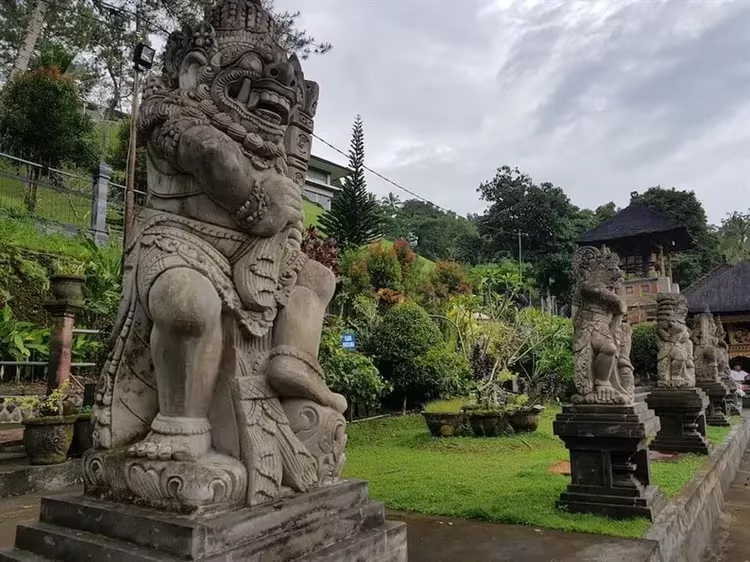
- After walking around the makeshift bazaar, tourists pass through the gate to Jabu Tengu, or the central courtyard. Here is the Temple of Tirta Empul. The abundance of gilding, carved details made of stone and minerals is impressive. Everywhere there are statues of gods (Hinduism professes polytheism), terrible demons who are defeated by the gods. Lots of pictures of animals. Separate pavilions were erected in honor of the 20 main gods. If desired, in the temple you can pray or make a wish, bringing a basket bought in advance as a gift to the gods. The territory is planted with trees, it is always cool here.
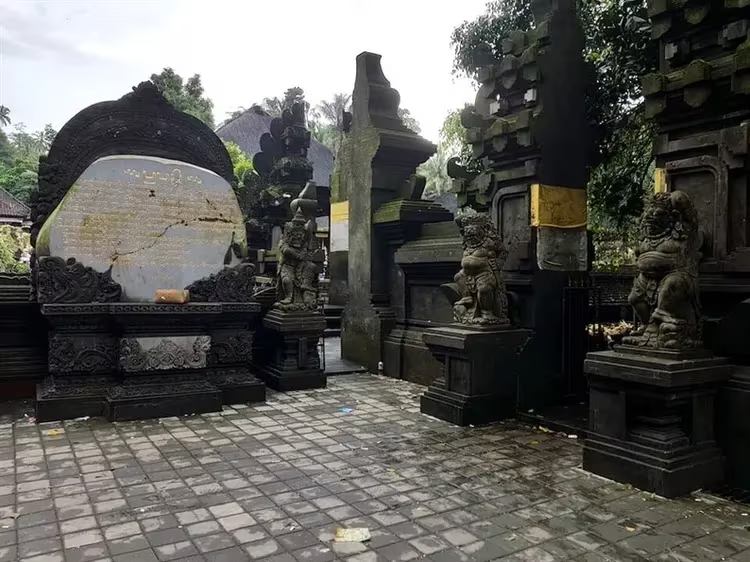
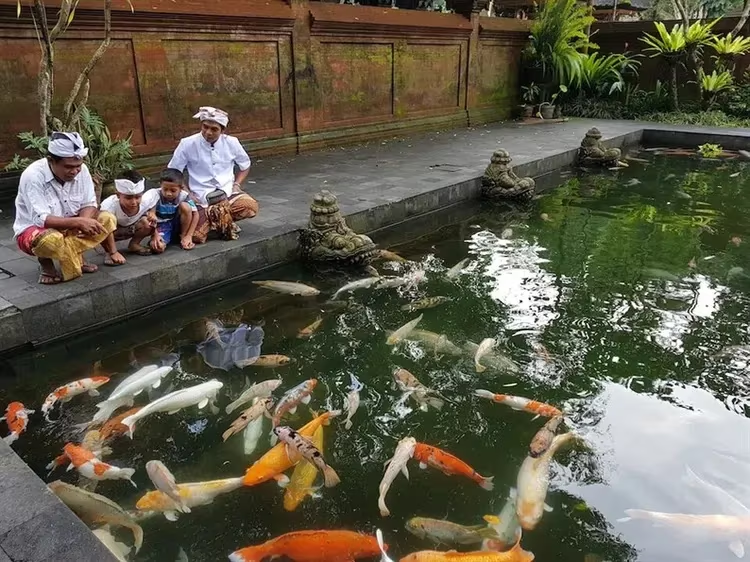
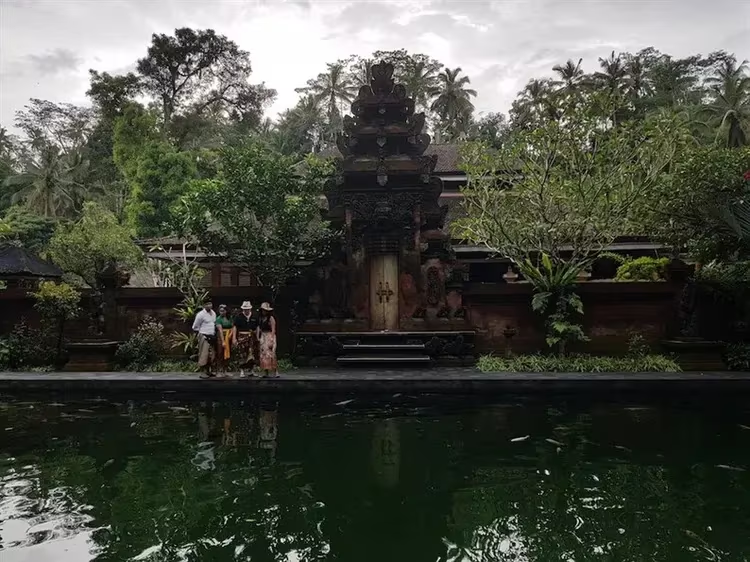
- And finally, the part where the healing springs are located is Jeroan, or the backyard. Only two pools are available for the daily bathing of tourists. And the third one is used by believers for rituals on holidays: it is closed for ordinary visitors. The first reservoir from the entrance gives perfectly clean drinking water – amrita. It has a sandy bottom, beating springs raise grains of sand, and it seems that a human heart is beating below. The second one is carved in stone, and water enters it through 12 fountains. 10 cleanse the body and soothe the soul of the living, the last 2 are used to wash the dead before cremation. They are painted in a special color, no one from the locals approaches them. The last pool is inhabited by koe and water plants. Fish can be fed and photographed.
On the territory of the temple complex, you can spend the whole day, moving from one courtyard to another, studying the traditions of Hinduism.
What to see
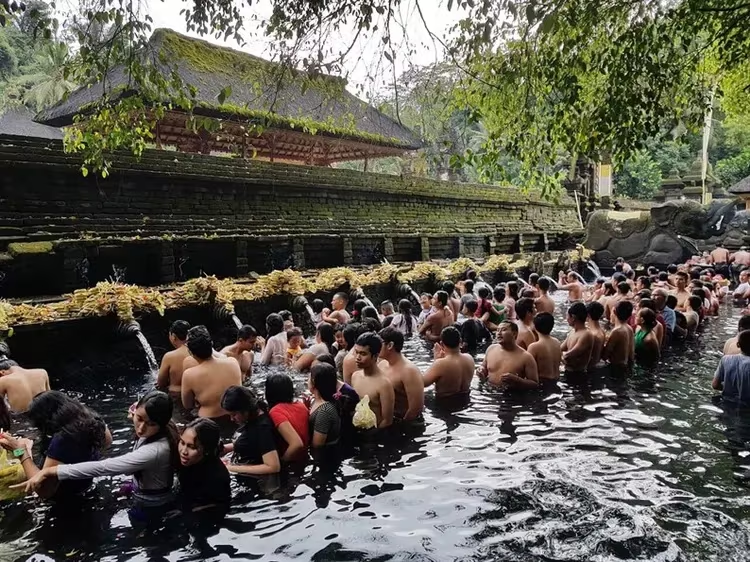
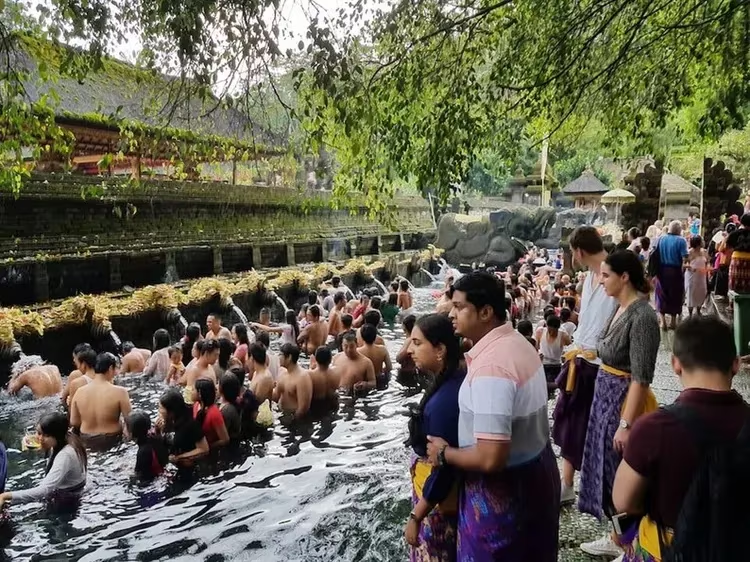
The main attraction of Tirta Empul are the fonts located in the courtyard of the temple. These are three stone pools filled with spring water. One pool with taps is filled with an uninterrupted flow of water from a holy spring. Thousands of Balinese come here for rituals, prayers and bathing. There are 13 cranes in total, which have their own names.
There is a belief that each fountain has its own healing properties. These are jets of water from various diseases, the evil eye, getting rid of demons, to improve health, give birth to children, increase prosperity, purchase an antidote, and so on. Large statues of Garuda Demons are installed around the font. These are winged mythological creatures with a human body and a bird's head. They seem to be watching the bathing and prayers of believers.
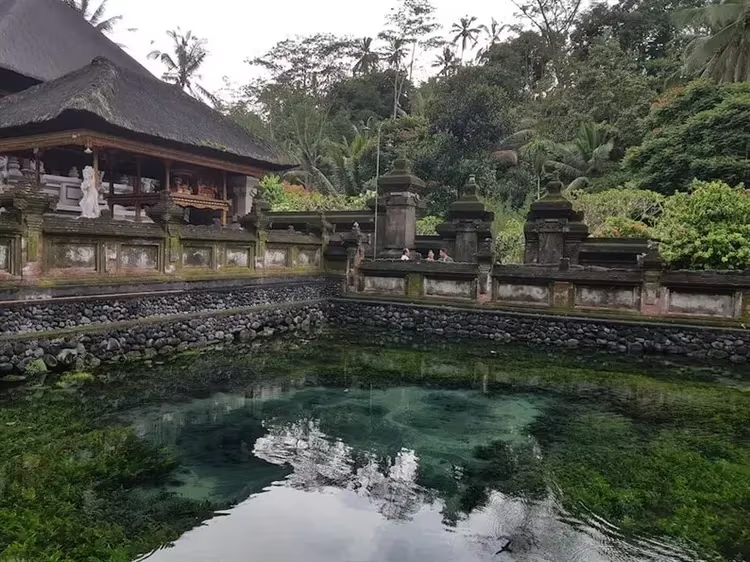
The second font is considered the spring itself. The surface of the spring water is covered with colorful lotus leaves and water lilies. Clean and clear water gushes from the ground. This extraordinary sight is compared to a pulsating heart. The third pool is a large pond. Huge multi-colored carps swim in it. Swimming in the pond is prohibited, but you can feed the fish.
In addition to the main building of the temple, small stone pavilions are installed throughout the area, designed to worship and pray to various deities. The buildings are decorated with exotic mythological sculptures. In total there are about 20 shrines. Everywhere there are unique sculptures of animals, birds and people. Beautiful tropical flowers are planted along the paths leading to the pavilions.
The legend of the temple and the spring
For many centuries on the island of Bali, sacred traditions and rituals of worshiping divine powers have been passed down from generation to generation. All this for the sake of achieving harmony of soul, body and spirit. For the people of Bali, this is more than legends, traditions and religious rites, they are considered the meaning of life. Only people wearing a sarong can enter the territory of the Tirta Empul temple. Sarong is the clothing of local residents in the form of a fabric that completely covers the lower part of the body. According to traditions, each parishioner should have two robes: one for swimming in the pool, the other for prayers.
Before taking a bath in the holy spring, it is necessary to offer baskets with gifts to the gods and each fountain. It can be rice, sweets and fruits. Believers light incense sticks, close their eyes and take three deep breaths. At this time, they set themselves up for the ceremony, forgetting about their problems. And then they go into the water. Men are allowed to descend into the font with a naked torso. A woman must be in clothes that cover her shoulders, and must also tie her long hair with an elastic band.
Being in the pool, next to the tap of the holy spring, believers should wash their faces three times, take water in their mouths three times. Then you need to put a basket with gifts on the tap and pray. Only after that it is allowed to substitute the head three times under the stream of water. This is how the ritual of purification is performed before each fountain. This does not apply to only one faucet, from which water flows for the washing of dead people.
It is worth noting that such a strict set of rules of conduct applies only to pilgrims. In the bulk, the Balinese perform the ritual of purification in an arbitrary order, but in compliance with the basic canons. Tourists are allowed to undergo this ceremony, according to their beliefs and understandings. The main thing is not to offend the feelings of local believers with your actions.
The most basic rule for travelers is not to walk around the temple grounds in wet clothes. Diving into the pool is possible only after visiting all the sanctuaries. On Saturdays and Sundays it is quite crowded. You can stand in line for a long time to bathe in the spring. For true believers, the waiting time in the font is not burdensome.
Tips for tourists before visiting
The temple is active, so services are held there, and local residents come here to pray on their own and bring gifts to the gods. Tourists should follow simple rules so as not to offend the feelings of believers:
- It is allowed to move around the territory of the complex only in a sarong.
- Bathing in the pool should be done last: it is forbidden to enter the temple in wet clothes. But if there is a spare, then you can go into the booth next to the fountain and change into dry clothes.
- Men are allowed to enter the water bare-chested, while women, in addition to the sarong, are required to wear a T-shirt to cover their shoulders.
- Ladies must tie their hair with an elastic band, loose hair is not allowed. Gum, like a sarong, can be purchased at Jaba Pur, that is, the central courtyard.
- Extra things are recommended to be left in the luggage room in Jaba Pur.
- Ablutions should be performed only after offering sacrificial gifts, which can be purchased at Jab Pur.
- You should refrain from visiting the fountains that are used for washing the dead before cremation.
- It is forbidden to swim in the pool: it is used only for ritual actions.
- Ladies are not allowed to enter the territory on critical days.
- Praying believers should be treated with respect: it is forbidden to disturb them during rituals.
Opening hours and prices
On ordinary days, tourists can visit the temple complex for free. You don't have to pay to move from one yard to another. But on weekends and holidays, you need to purchase an entrance ticket for $ 1.25, half should be paid for a child. For this amount, you can walk from 7 am to 6 pm.
Where is it located and how to get there
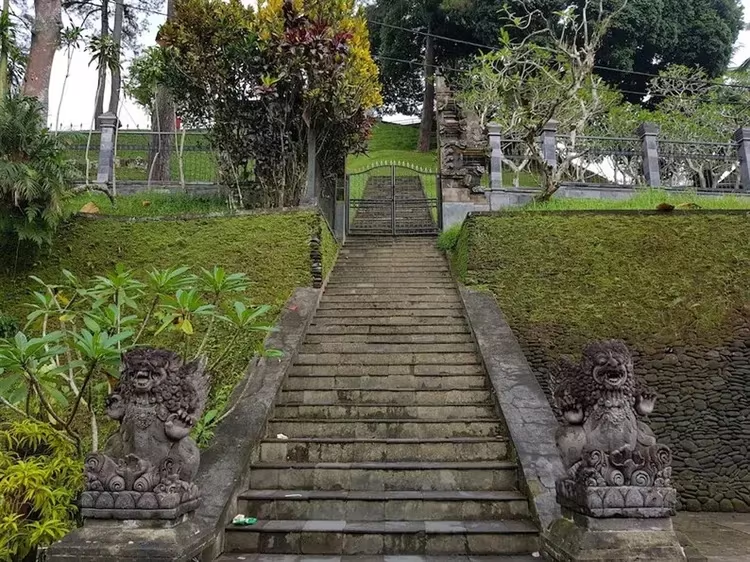
Tirta Empul Temple is located in the central part of Bali, 15 km from the city of Ubud. The travel time from the airport to the temple is two hours. This is one of the popular places visited by tourists from different countries. From the village of Tampaksiring, the holy spring can be reached on foot along winding paths, having previously studied the map of the area. It is advisable to use a tourist tour, where the guide will be able to accurately explain the rules for conducting the rituals of washing and cleansing in holy water.
For travelers, there is a great opportunity to explore the ancient culture of the Balinese. To pacify the soul and body, this trip will be very useful for people permanently residing in megacities.