
Villa Medici in Rome – history, photos, descriptions, prices 2021, map
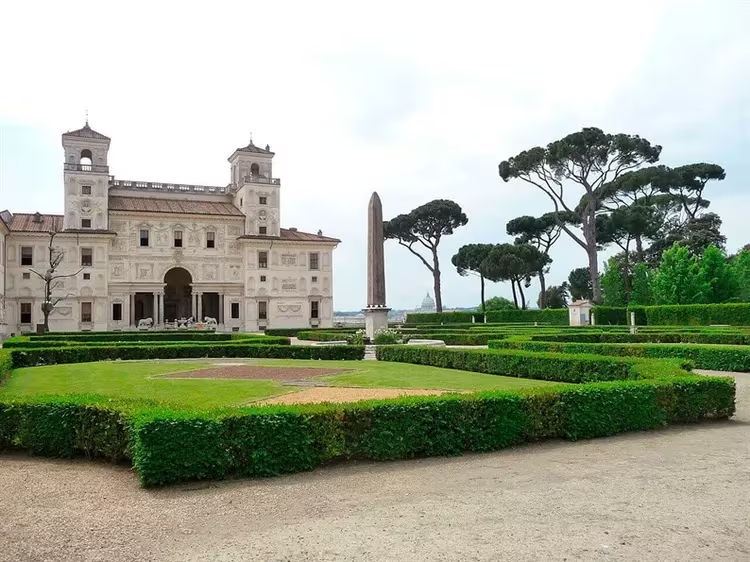
The Medici Villa in Rome was named after one of the most famous and noble families in Italy, which for several centuries owned this territory – a palace and a garden.
Story
In the 1st century BC, on the hill of Pincho, the ancient Roman consul and commander Lucius Lucullus laid out a magnificent garden, the first in ancient Rome. Thousands of plants were planted, many were brought from distant countries, including cultivated cherries, which had not been known in Europe before. Smooth alleys were laid in the garden, fountains and comfortable gazebos for relaxation were built. Sculptures of gods, vases and other items of small architecture were installed everywhere. Consul Decimus Asiaticus became the next owner of the garden and mansion. Messalina, the wife of the reigning emperor Claudius at that time, decided to get them into her property by all means.
This woman, known in history for her cruelty and deceit, slandered Asian, because of her intrigues, he committed suicide. The imperial family became the owner of the entire territory, but this did not bring happiness to Messalina, she was soon executed by soldiers on the orders of Claudius for treason and treason. The palace and the garden had different owners in the following centuries: Emperor Trajan, Atsili.
In the 4th – beginning of the 5th century, it was acquired by Emperor Honorius, who built a new magnificent palace. The Roman Empire was in decline, as was the palace, which fell into disrepair without proper care. Rare exotic plants disappeared, and vineyards were planted in the place of a luxurious garden in the Middle Ages. This continued until the XYI century, when the dilapidated palace was not acquired by Giovanni Ricci.
He planned to completely rebuild it. An architect from Florence, Nanni di Baccio Bige, was invited to work. Using some of the old buildings, he erected a new Mannerist (early Baroque) mansion. After the death of Cardinal Ricci, the first representative of the Medici family, Fernando, became the owner of the residence in 1576. He hired the Florentine architect Bartolomeo Ammannati to renovate the building designed by Ricci.
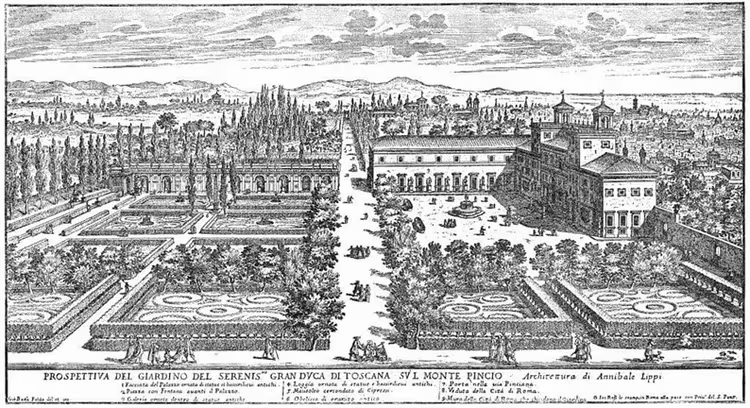
The palace was rebuilt, increasing its area due to the gallery and one wing. The garden was also restored – new plants were planted, paths were cleared, pools, gazebos and fountains were built. Part of Ferdinando de' Medici's unique collection, including ancient Roman vases and statues, have been set among evergreen shrubs. In the late 80s of the XYI century, the Medici had to leave for the capital of the Duchy of Tuscany, Florence, to rule Tuscany instead of his deceased brother.
In 1737, the ancient family was interrupted, representatives of the Lorraine dynasty began to own the villa. In 1789, the Palace was plundered by order of Leopold II, almost all objects of cultural value were transported to Florence (there are copies of them in the garden). At the beginning of the 19th century, Napoleon Bonaparte ordered the establishment of the French Academy of Arts in the palace. To do this, they made a redevelopment inside the building – expanded the windows to let in more light, equipped additional rooms for the classes of artists and sculptors.
Interesting fact! Galileo Galilei lived in this residence for five months under the supervision of the Inquisition after the completion of the trial.
Description
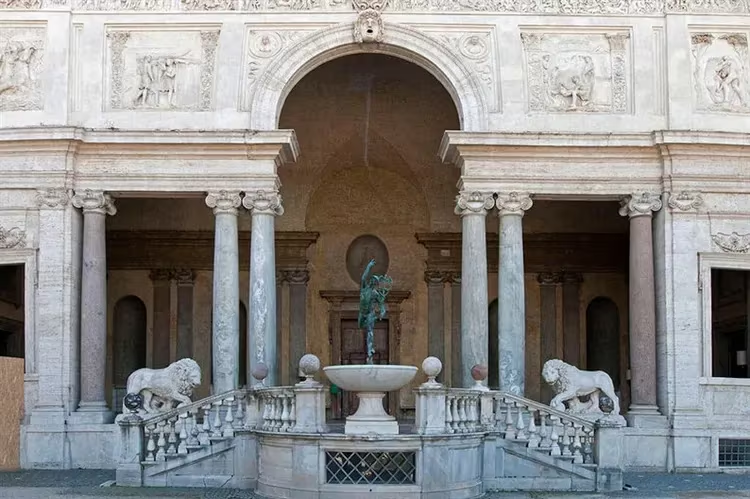
The first owner of the palace from the Medici family was a great connoisseur and lover of art, a passionate collector. He originally planned to set up an open-air museum here and house his famous collection of ancient art. Therefore, the palace, built in the Renaissance style, was given a romantic look – statues of ancient heroes were installed in the niches of the building, the walls were decorated with a number of bas-reliefs depicting scenes from mythology and the life of legionnaires.
In front of the main entrance, you can see a fountain with a figure of the god, the patron of trade, Mercury – the son of Jupiter; turrets with open terraces were built on the opposite wings of the building. The staircase leading to the loggia is guarded by figures of lions made of light marble, they hold balls in their paws (a hint of the Medici coat of arms).
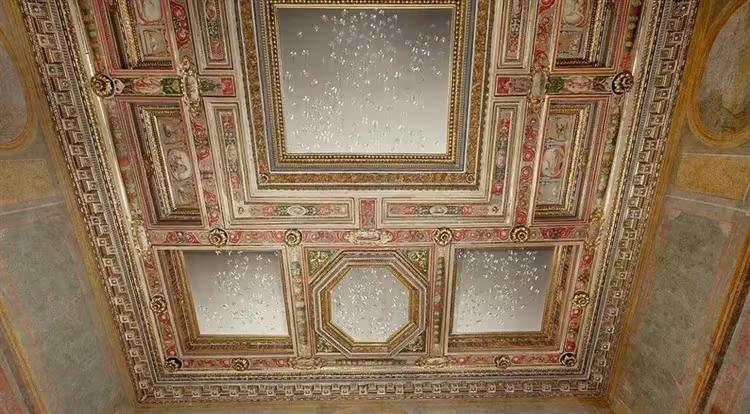
After passing through the entrance arch, you find yourself in the lobby, the walls of which are covered with allegorical frescoes – illustrations of Aesop's works and pictures of nature. Most of them were painted by the painter Jakob Zucchi. Recently, during the restoration, the ceiling was cleaned from a layer of old plaster and the finest painting appeared – a pergola (canopy) twined with greenery. Within the walls of the Palace is a valuable collection of fine art.
Antique furniture, tapestries, engravings, sculptures, musical instruments, and documents have been preserved. Some of the exhibits belonged to Ferdinand de Medici. The gardens, spread over 7 hectares, have retained the appearance of the 17th century. They were conceived as botanical gardens, which had appeared by that time in European countries. To do this, by order of the owner, rare species of trees were planted; by the 19th century, many pine trees were planted here.
Pools and fountains were built, for their work Camillo Agrippo, a skilled engineer, equipped with a complex hydraulic system. In total, there are 170 statues here. Among them, the figures of the goddess Niobe and Roma are the most revered among the people. The dilapidated Temple of Fortune, which stood in the south of the garden, was filled up and a platform was equipped for viewing the magnificent surroundings. In recent decades, the Medici villa has been restored, architects carefully restore the building itself, as well as lawns and flower beds in the garden, according to old drawings.
Secret
One of the secrets that has not yet been revealed to the general public is the secrets of the basements of the Palace. At the height of World War II, the Bank of Italy rented part of the basement to preserve its archives. When equipping the storage place, one small room (2 m x 3 m and 2.5 m high) in the depths of the dungeon was walled up and not opened to this day. What is there? There are disputes between archaeologists and employees of the Academy. Academics say that this is just a wall supporting the foundation, and it cannot be destroyed, because the vault will not withstand.
For this reason, archaeologists are not allowed to explore the secret room and what it hides – treasures, important documents or books confiscated during the war from Jewish citizens. Indeed, the unique Library of the Synagogue, consisting of 7000 volumes, has never been found. Maybe the values of the Nazis are there, because the Bank of Rome worked closely with them during the war. Many people ask the question – why has no one claimed the contents of the room so far?
Where is it located and how to get there
The palace is located in Rome, on the Pincio hill near Piazza di Spagna – Viale Trinita dei Monti, 1.
You can get to the villa by public transport:
To see the sights with a guided tour, tickets must be purchased in advance.
For 4 months you can book apartments for the night.
Opening hours: from Tuesday to Sunday – from 09:30 to 17:30;
Days off – on Mondays, May 1 and December 25.
Ticket price:
The beautiful greenery of the garden, the exquisite architecture and art of the Villa Medici in Rome will bring real pleasure and will be remembered for many years.