
What to see in Brussels in 1 day on your own – route, photo, description, map
Brussels is no less famous for its beauty than other European cities, but its charm is somewhat different – less militant, more businesslike. The merchant past of the city speaks. However, this did not prevent him from becoming one of the most colorful reserves of Gothic architecture in Europe. So, what to see in Brussels in 1 day on your own? We tried to answer this question by compiling the most optimal route for exploring the city.
How to get from the airport to the center
To get from Charleroi Airport to the center, you can use one of three options: take a bus, get to the city by train with a transfer, or simply order a taxi.
- The Brussels City Shuttle runs from the airport to the city. The first bus leaves at 7:55. Flights continue until midnight. If you want to save money, book a ticket online – then it will cost you 14 euros. If you buy directly on the spot – 17 euros. The journey takes an average of 55 minutes. Please note that the ticket will be valid until 4 am the next day. That is, you need to order it for a date, and not for a specific time of departure of the bus.
- Unfortunately, you won't be able to do without a transfer if you definitely want to travel by train. First you will need to take a bus to Charleroi Sud station (line A). The trip will take approximately 17 minutes. The ticket can be purchased online or from a vending machine at the airport exit number 2. The ticket will cost you around 15.5 euros, but it covers both bus and train travel. The journey will take an hour and a half. Buses start running at half past 6 am. Please note that neither trains nor public transport run at night, so if you have a night flight, you will have to spend the night at the airport or take a taxi.
- Without a doubt, a taxi is the most comfortable option. They are served 24/7 on a first come, first served basis, so waiting times can be up to 15 minutes. True, the price immediately takes off – one trip can cost 93 euros in an economy class car and 123 euros in a minibus. You can book a taxi in advance, and then you will be met right at the exit from the arrivals area. The driver will have a sign with your name on it, so the risk of getting lost is minimal.
Royal Palace
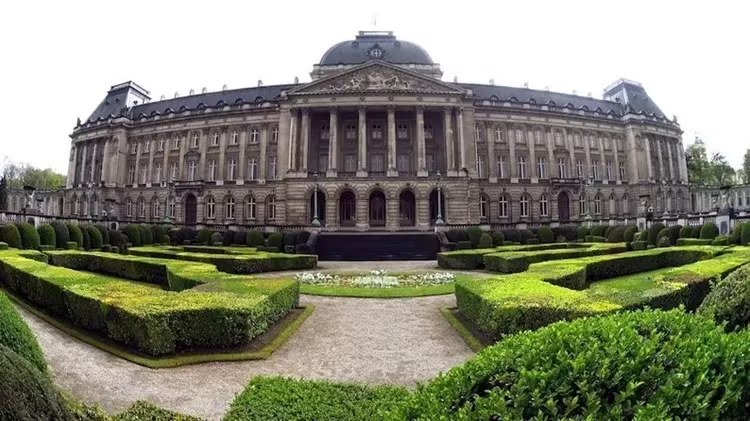
Among the shady alleys of the Brussels Park, the Royal Palace is hidden, which today is used mainly for official receptions. Geographically, this location was extremely successful, and therefore, back in the twelfth century, Cowdenberg Castle was erected on the same site. It stood for more than five centuries, only to be destroyed by fire. Soon the building began to be restored, but it was only a pale shadow of the Royal Palace that we know today.
Real gloss and grandeur became its attributes during the reign of Leopold II, who considered himself worthy of living in greater luxury, and not only significantly expanded the area of u200bu200bthe building, but also made it a real personification of the power of royal power. Today, any tourist can see the Throne Room, the Mirror Room, the ceiling of which is studded not with stars, but with scarabs, and eleven golden pots, representing the provinces of Belgium, for free.
Cathedral of St. Michael and Gudula
The cathedral stands on the Trorenberg hill, which makes its already considerable height even more significant. Initially – from the eleventh century – there was a small Romanesque church of St. Michael, which was gradually rebuilt, but in accordance with the canons of the Gothic. Today, in the appearance of the cathedral, these two styles harmoniously overlap. Centuries passed, and gradually the city grew. Now the Cathedral of St. Michael and Gudula stands on the border between Old and New Brussels.
Massive stone steps lead to the main gate of the temple, and holy images huddle under the vaulted ceilings. Of particular delight are the colorful stained-glass windows depicting scenes from the life of the Virgin Mary, created in the Renaissance, as well as the main pulpit of the cathedral, designed in the Baroque style. It is decorated quite symbolically – at the foot are scenes of the expulsion of Adam and Eve from the Garden of Eden, and above – the Mother of God with the Child and the Serpent, pierced by a spear. Organ music evenings are often held in the cathedral.
Monument to Charles Buls
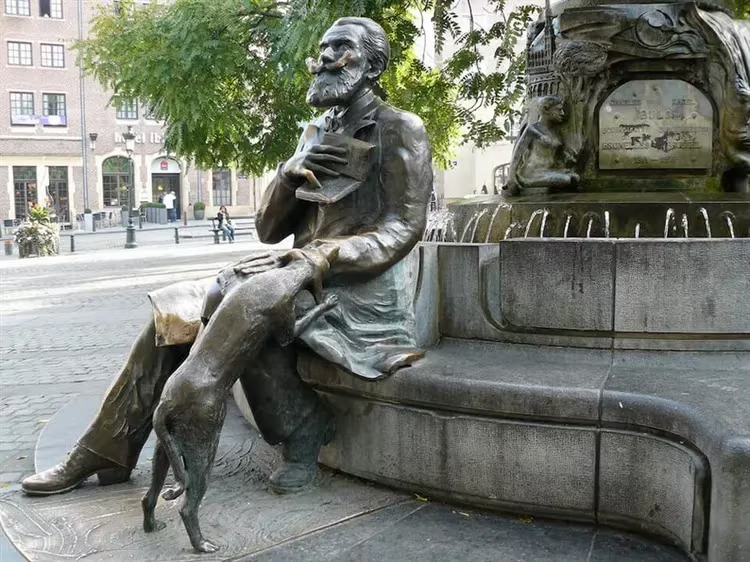
The Belgians are known for carrying the love of their national heroes through the ages. Moreover, the status of “heroes” is awarded not only to generals or notorious daredevils, but also to those people who allowed the country to step forward. Such was the burgomaster Charles Buls, who remained in the history of Belgium as a great statesman who contributed to the development of the urban economy and to the improvement of the country as a whole. Most brightly, his glory burned at the turn of the nineteenth and twentieth centuries.
Today, the already middle-aged Charles Buls is still sitting relaxed on the edge of the fountain, tired from his walk. A dog fawns over the great figure, whom he affectionately pats on the head. Charles presses his hat to his chest, greeting each guest from the future.
Royal Galleries of Saint Hubert
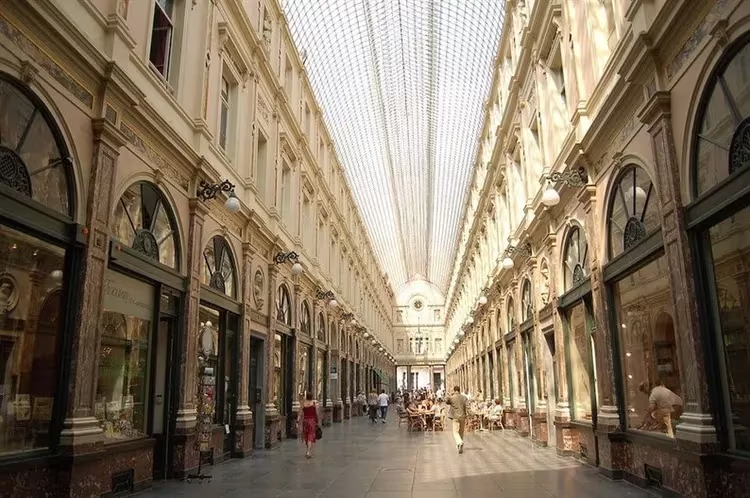
The galleries of St. Hubert strike the perfect balance between commercialism and high style. They are located along a long corridor covered with a glass roof that lets in a lot of light. Their discovery took place in the middle of the nineteenth century. According to the plan, the passage consisted of three parts: the galleries of the King, Queen and Prince, respectively.
The building met all the standards of the then popular Neo-Renaissance. Of course, only the most high-profile stores, which are no less proud of their history than the galleries themselves, could be located here. Here you can find antique jewelry, handmade cutlery, elegant hats and gloves, as well as chocolates of the most famous brands. Galleries of St. Hubert, despite their commercial orientation, regularly became a place where the Belgian intelligentsia spent time.
Alexandre Dumas, Victor Hugo and other masters of the word were frequent guests of this place. And today a number of the oldest bookstores, a cinema, a theater, a photo gallery, as well as a Museum of Letters and Manuscripts are open here. Here you can see the records of many famous people of his time from Brigitte Bardot to Albert Einstein.
Arts Mountain
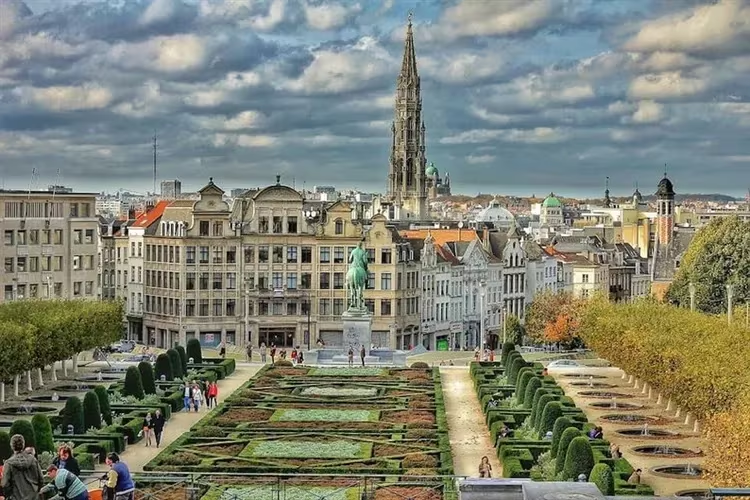
Mount Arts is one of the best viewing platforms in the city. It is located in the historical part and owes its creation to King Leopold II, who at the end of the nineteenth century decided to slightly “correct” the appearance of the city. The most densely populated area at that time, Saint-Rocher, seemed superfluous to him. The decision was simple – all the buildings were purchased by the crown and demolished. Unfortunately, that's where the funds ran out. For some time the hill shone with a bald crown.
Actively looking for funds began another ten years later – the World Exhibition was approaching, which meant a frantic influx of guests from abroad. A temporary garden appeared on the hill, a monumental staircase and even fountains – water cascaded “washed” the hill. As it usually happens, with the end of the exhibition, the “temporality” of the park was forgotten, and for several decades the townspeople were able to enjoy the already beloved silence of a green patch on the map of a rapidly developing city.
Fortunately, the last transformation was the most successful. The appearance of the Mountain of Arts has not actually changed since the thirties of the last century. The ensemble was completed when the buildings of Congress and the Royal Library appeared on both sides of the grown square.
Gorelief Lord Evarardu
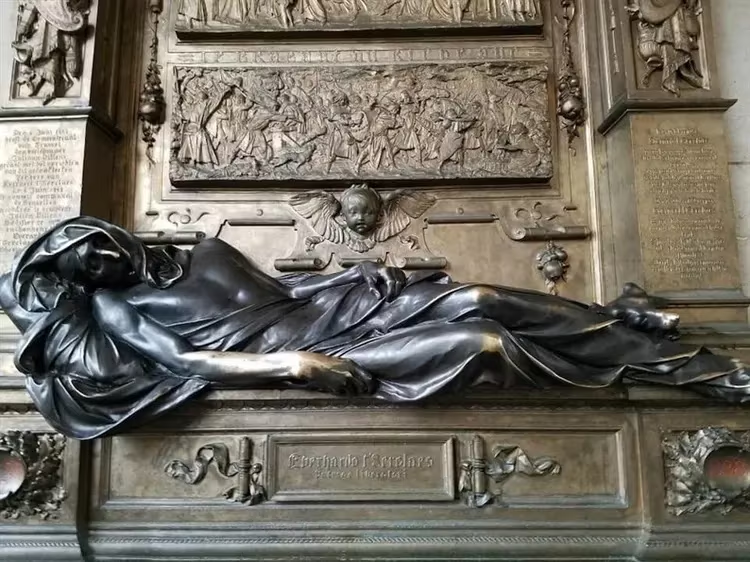
The House of the Star, with its pompous colonnade, fits perfectly into the overall look of the Grand Place area. He is known not only for his appearance, but also for the urban legend that tells of Lord Everard, who was once the owner of the house. He went down in history as one of the most ardent patriots. Despite the fact that the years of his life fell on the fourteenth century, and five centuries later he was not forgotten.
At the end of the nineteenth century, Brussels masters created a high relief depicting this hero in colors. It is believed that he found his death just on the Grand Place. Legend has it that if you touch his hand, your wish will come true. Like it or not – it's hard to say, but the years go by, and the palms of Lord Evarard become more and more worn.
Manneken Pis
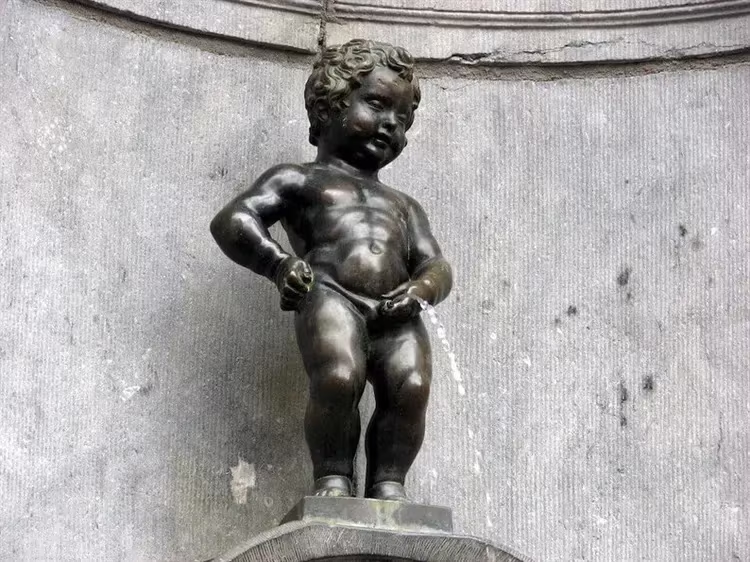
Most likely, this outrageous monument was erected in the fourteenth century. It was stolen more than once, and, unfortunately, the sculpture that we see today is also not original. Why was it necessary to create such a strange statue and install it at a very busy intersection of Shen and Etuve streets? There are several options. The most famous is sustained in the heroic style. Allegedly, once enemy troops surrounded the city, which was not ready for a long siege.
They were about to light the fuse and blow up the city gates, but some boy urinated right off the city wall, which put out the fuse. An equally popular version claims that once – back in the twelfth century – a two-year-old baby was supposed to become king, with which numerous opposition did not agree. Supporters of the true king hung the cradle with the monarch on a tree from which he “irrigated” his enemies while the decisive battle lasted.
The third legend is more or less true. Allegedly, the son of one of the richest people in Brussels once disappeared. When the heir was found, he was just relieved. Happy with this outcome, the father ordered the casting of a statue of his son to perpetuate the moment of unity. Whichever version you follow, it's definitely worth seeing the main symbol!
Grand Plas
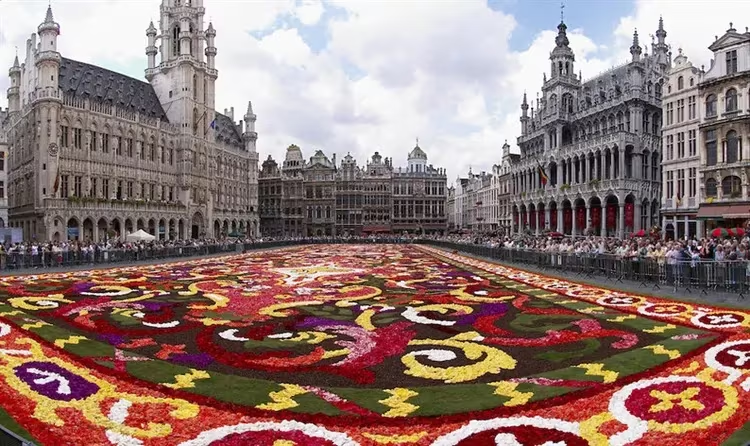
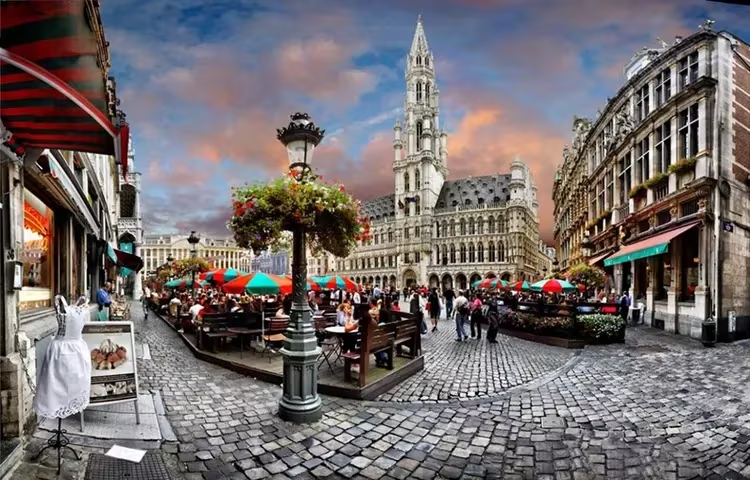
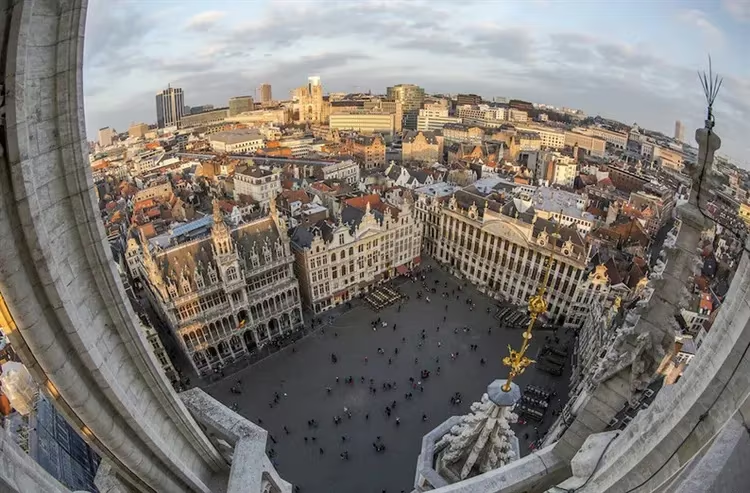
The Grand Place is rightfully considered one of the most majestic in the city, however, it is not without grace. The modern masterpiece of Gothic art appeared in hoary antiquity. To build the first square (back in the twelfth century), the marshes had to be drained. The work paid off – in the future, it was here that all the most significant events in the life of the city took place.
A number of unexpected transformations took place with the square. For example, by the thirteenth century, the Bread yard was erected here, which after several decades turned into the King's House – the most precious treasure of the square. The heyday of the Grand Place came at a time when the guilds were wealthy – the luxurious baroque houses were soon supplemented by gothic monuments, which are still considered part of the world heritage today.
City Hall
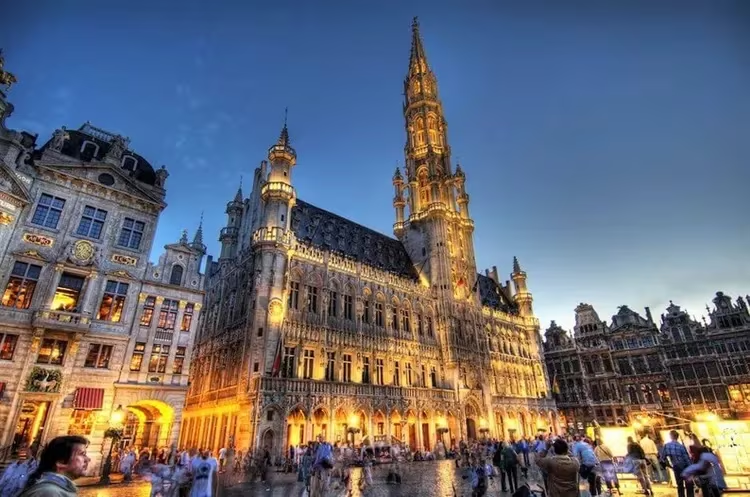
This beautiful monument in the late Gothic style is one of the main symbols of the capital and the main dominant of the Grand Place. Construction began in the early years of the fifteenth century. It was a series of architectural oversights that added up to a wonderful result. Initially, only the bell tower with the left wing was rebuilt, then it was considered that symmetry should remain symmetry – it was necessary to complete the right wing, which – oh horror! – turned out to be shorter than the left.
To smooth out the skewed perspective that appeared, they decided to replace the tower, which soon became one of the tallest buildings in Brussels. It is crowned with the figure of the Archangel Michael, who is the patron saint of the city. He subdued the demon lying at his feet. Unfortunately, the facade of the modern Town Hall was not fully preserved – French soldiers largely destroyed it. The last restoration took place in the middle of the twentieth century, when most of the statues appeared on the facade. Tourists can see the monument not only from the outside, but also from the inside.
King's house
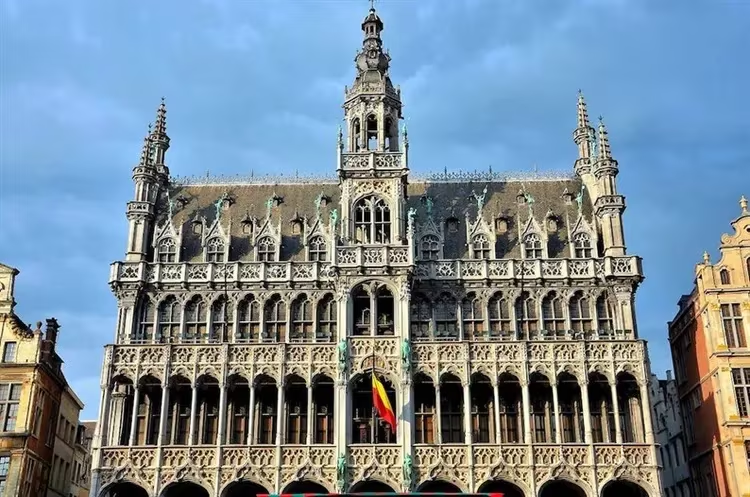
It is difficult to offhand name a different building, which just as often changed its appearance. And the King's House had a lot of opportunities, because it appeared on the Grand Place back in the thirteenth century as a warehouse for bread. Soon, not bakery products, but criminals began to languish here – the future King's House became a prison. The shadow did not cover the building for long, and soon it became the residence of the dukes, changing its appearance to a more befitting one.
It would seem that from the duke to the king is quite a long way, but it can be shortened if the king is not real. We are talking about the times of the Napoleonic conquests, when a French governor settled in Brussels, who, in fact, replaced the king. Each new owner changed the building according to their needs, but the counters were reset in the nineteenth century, when old drawings were raised, according to which the building was reconstructed.
Today it is an example of Gothic art of the fifteenth century. Inside, there are expositions of the city museum, where, among the masterpieces of painting, all 650 costumes are kept, which at different times were donated to the statues of Manneken Pis.
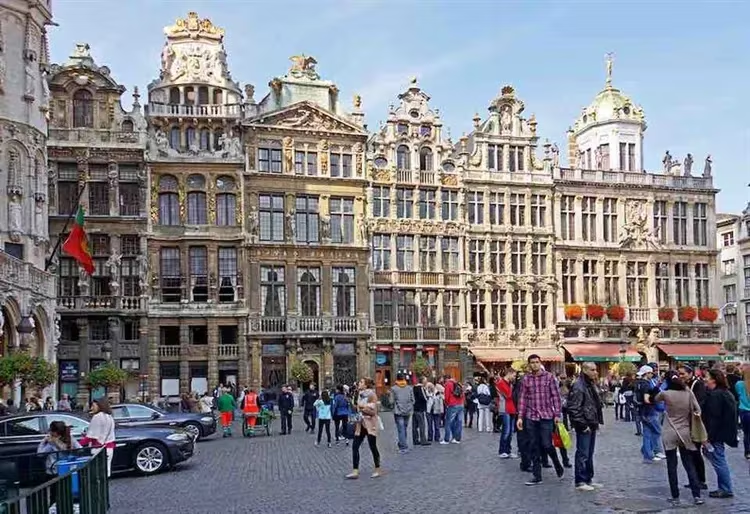
Guilds were of great importance for the development of the city, because for a long time they owned truly significant funds. And most of them preferred to be located right on the Grand Place. So, in the building of the Bakers' Guild, which is called the “King of Spain“, there is a cafe of the same name on the ground floor, where beer fans are usually advised to go. The guild of archers is located in the She-Wolf.
The building is quite easy to distinguish – the dragon Python is depicted on the facade, which Apollo shot with a bow. The haberdashers' guild building, the “Fox”, is distinguished by the presence of atlantes that support the vaults of the first floor, as well as the presence of a gilded fox that sits at the entrance. Perhaps the only building whose design does not raise any questions is the Horn. The last floor is made in the form of a stern, which unobtrusively hints that it belongs to the guild of boatmen.
Museum of cocoa and chocolate
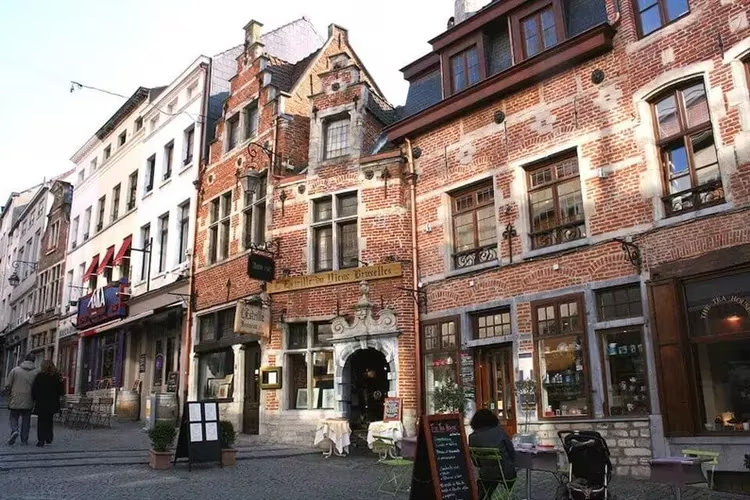
Belgium is one of the main chocolate producers in the world, however, chocolate appeared here only in the middle of the eighteenth century and was initially used exclusively for medicinal purposes. It is the Belgians who are left with the creation of the first sweets with filling, without which it is difficult to imagine the world of sweets today! The Chocolate Museum is by no means huge – it is a cozy two-story house that hides in one of the alleys that branch off from the Grand Place.
If you are afraid of getting lost or do not trust the cards, trust your nose – the aroma of melted chocolate is difficult to confuse with anything else! By purchasing a ticket to the museum, you can not only get acquainted with the history of the chocolate extravaganza, but also observe the process of making Belgian chocolate shells, well known all over the world. Of course, not without a tasting!
Stock Exchange
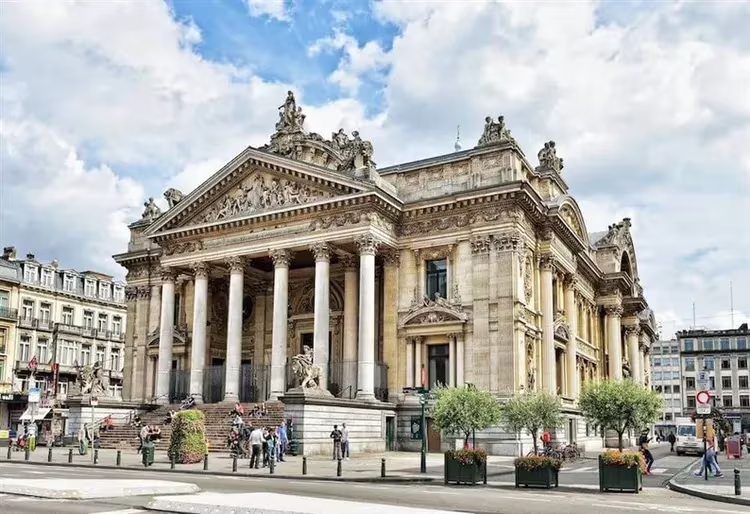
The modern building of the Stock Exchange is one of the most characteristic buildings of the period of the Second Empire. Initially, there was a monastery on this site, and then trading rows. The construction of the stock exchange began by order of Napoleon Bonaparte, but the first building was not as pompous as its modern counterpart. Fortunately, the exchange worked more than successfully, and therefore its second project appeared, but in the neo-Renaissance style.
Then powerful columns in the elaborate Corinthian style, graceful capitals, as well as metaphorical images of Belgium, decorating the triangular pediment, grew up. Pay special attention to the sculptural compositions that are on the roof. They belong to the authorship of Auguste Rodin, one of the greatest sculptors of his time.
Church of St. Nicholas
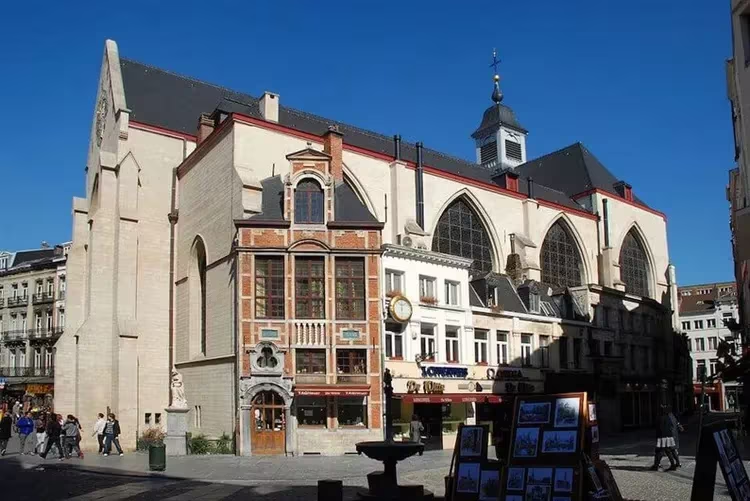
This is one of the earliest churches. Its construction dates back to the twelfth century. Its old name also refers to the Bourse of Brussels, as the church is not far from it. The church of St. Nicholas was built at the expense of fishermen who traded in the neighboring port. The craftsmen did not have to rebuild everything from scratch – they simply began to build walls on the old foundations of the Romanesque church.
Almost the entire modern building is a “patches”, which appeared at different times. So, the first tower with a huge bell appeared almost immediately, but the chapel of the Mother of God only a few centuries later. After a terrible storm of the fourteenth century, the choirs remained here. Small reconstructions took place during the battles between Protestants and Catholics, which partially destroyed the church, and after World War II, when it was bombed.
Pissing Girl and Delirium Bar
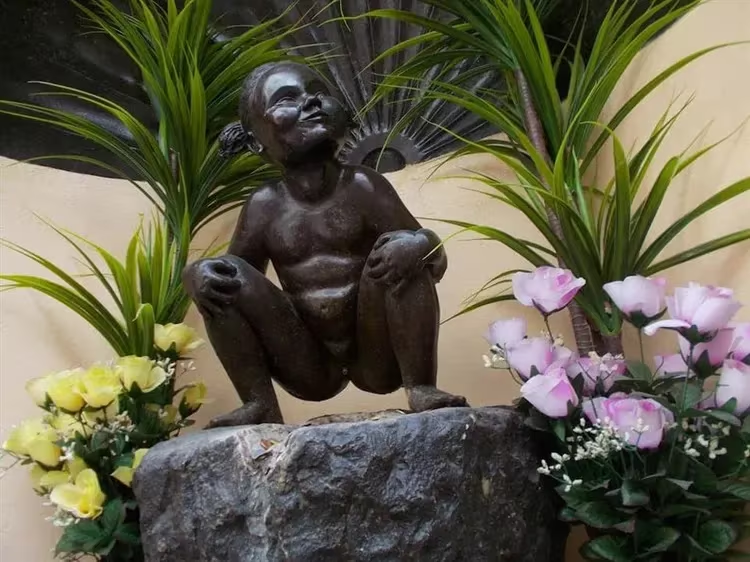
This bar is widely known among the most ardent fans of the amber drink. And the beer of the same name is worthy of its reputation – Delirium Tremens has more than once officially become the best beer in history. European bar culture has found its brightest manifestation here. The menu features more than two thousand brands of beer, which automatically allowed Delirium to be included in the Guinness Book of Records.
So far, no one has tried to take this status away from the bar. Here you can taste both classic beer brands and beer with the taste of banana, chocolate and other sweets. The atmosphere of this basement is also colorful – there are beer caps and mugs on the ceiling, and old English and French posters are fixed on the walls. The bar is across the street from the Manneken Pis statue, a parody of the Manneken Pis statue that is known all over the world.
Belgian Comic Center
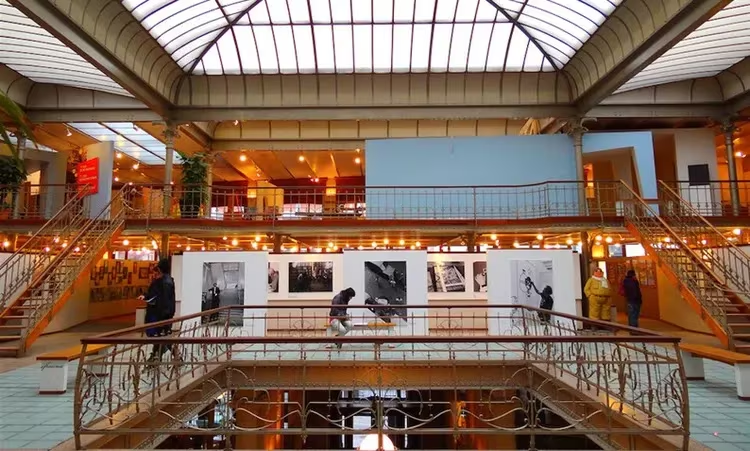
The Museum of Comics is housed in an Art Nouveau building designed according to the drawings of Victor Horta, the brightest representative of his genre. As you might guess, the expositions illuminate the world of comics and animation. Here are the works of all the outstanding masters of the art of creating comics, from the author of Tantin, popular in Belgium, Enge, to Peyo himself.
Each master was fully respected by allocating separate rooms for exhibitions. The material is presented in a fascinating way, and therefore the exhibition will be interesting for adults from a cultural point of view, and for children it will be a vivid immersion in the world of colors and action. There was a place in the museum for an animation hall, however, purely Belgian.
The museum has a reading room with a more than impressive collection of comics, as well as a training center. The creators of the museum did not forget about Horta either – they set aside a separate room for him, so if you wish, you can also get to know this brilliant architect better. The museum regularly hosts temporary exhibitions dedicated to contemporary art.
Park complex Laeken
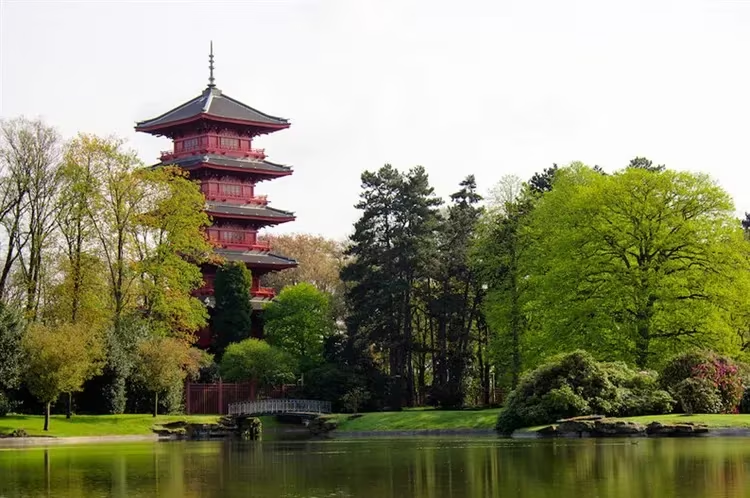
Laeken – the most beautiful area, appeared at a time when the city from a purely merchant city became a political and cultural center. It was in the appearance of this quarter that the whole expression of that era was best reflected. Today it is not only a historical center, but also an architectural and cultural one. Particular attention is traditionally given to the park complex of the same name, on the territory of which the Royal Palace of Laeken (closed today to the public) could be located without embarrassing each other; the Museum of the Far East, the complex of which includes a Japanese-style tower, as well as a Chinese pavilion, which immediately set a completely different atmosphere; as well as flower greenhouses – a real fleeting art that is reborn again and again. Unfortunately, the latter are open to the public only once a year.
Notre Dame de Laeken
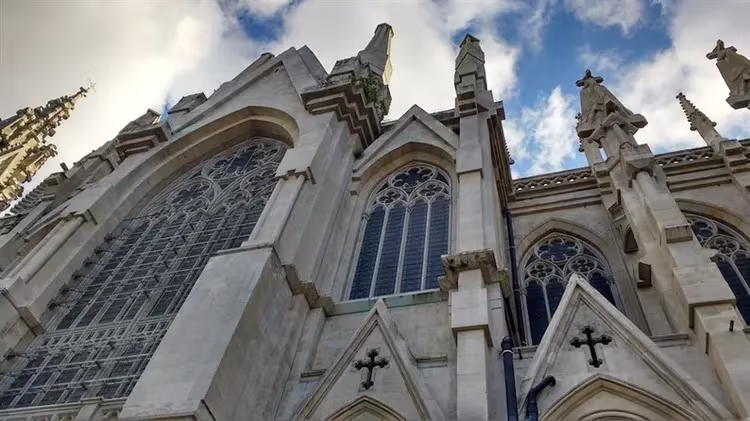
The Church of Notre Dame de Laeken is known not only as a purely religious building, but also as the tomb of all Belgian monarchs. The first chapel was built in the thirteenth century, but by the nineteenth century it was completely dilapidated, and it was no longer possible to continue services in it. The construction of the new temple was entrusted to Joseph Poulart, then a very young architect, who, however, showed some promise.
He approached the creation of a Gothic temple with an abundance of turrets and spiers with all originality. The old chapel was not completely destroyed – the asp remained from it, which was later turned into a chapel. There is one more reminder of those dark years – the statue of the Virgin Mary, which is already more than seven centuries old. This truly unique example of medieval art is one of the treasures of the church.
Today, the ashes of twenty representatives of the royal dynasty are in the tomb. There is also a cemetery around the temple. It is somewhat reminiscent of the French Pere Lachaise – all the same magnificent crypts and tombstones of the most famous families and individuals.
Atomium
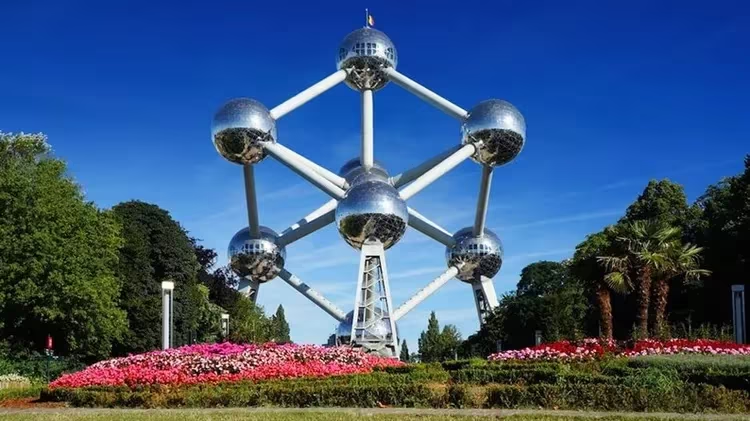
At first glance, it may seem that the metal model of the iron molecule is nothing more than another monument, an echo of the technical and scientific revolution of the twentieth century, however, upon closer examination, it turns out that the monument is not just huge, it is colossal. So, each sphere is eighteen meters in diameter, which made it possible to locate inside the exhibition and even a mini-hotel, where it is quite possible to stay for the night.
As a rule, all the exhibitions that open here, one way or another, cover issues of science. For example, one of the permanent exhibitions tells about the history of atomic energy and its application. The Atomium is not only a symbol and a monument, but also an observation deck. The panorama of the city with its temples, palaces and narrow old streets stretches right under your feet.
Mini Europe
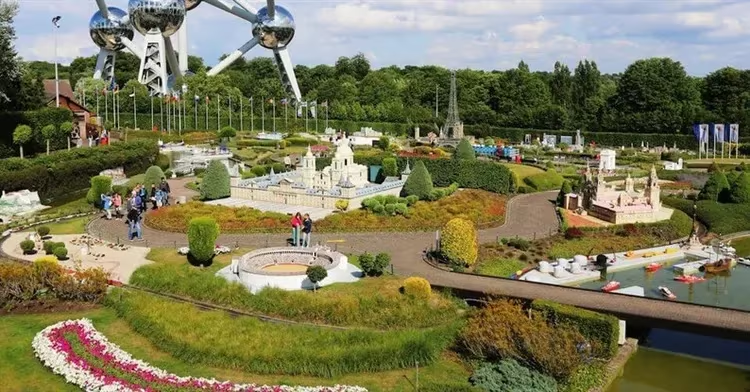
The idea of creating a museum of miniature models of world-famous architectural monuments is by no means new, but this did not stop the Belgians from opening their own version of Mini-Europe. There is a certain irony in its placement – a tiny model of a whole piece of the planet is hiding in the shadow of a huge iron molecule – the Atomium. Big Ben, the Palace of Westminster, the Acropolis of Athens and other historical sites alternate with installations on the brightest pages from the life of Europe.
The eruption of Vesuvius, the bullfight in Seville, as well as the significant day of the fall of the Berlin Wall were reflected here. In total, more than three hundred models are collected here, and their number continues to grow.