
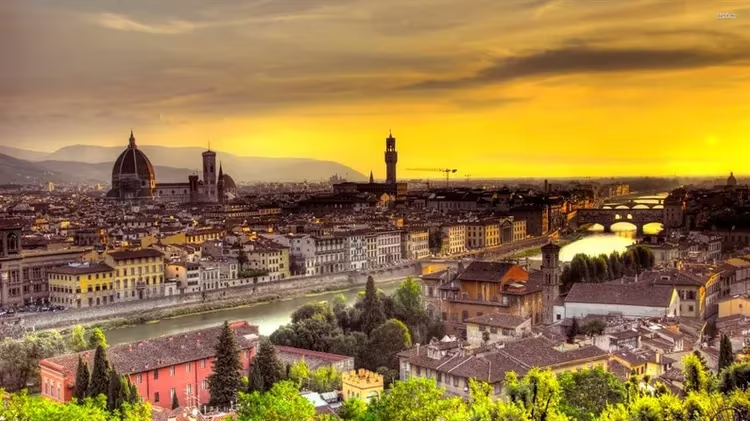
What to see in Florence in 1 day on your own – route, photo, description, map
Florence first attracts with its beauty and comfort, then it penetrates deep into the soul, and then it flies in memories and dreams, magically appearing before your eyes. The facades of buildings, the smells and sounds of cobbled streets, the friendly faces of the indigenous people and the surprised eyes of tourists – everything penetrates our consciousness and leaves an “aftertaste”. Travelers and guests of Florence have time to make sure of his colorful, eventful life.
Story
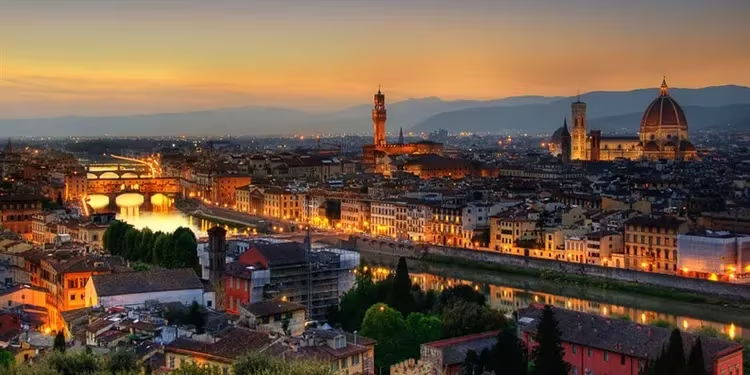
Florence (“blooming”) got its name in ancient times, the foundation of a settlement for Roman legionnaires-veterans. Nestled among the secluded, fertile plains, the city experienced the brunt of historical events and political unrest that ever touched Italian soil. By giving humanity Leonardo da Vinci and Michelangelo, Galileo and Dante, Florence has earned a special status in the history of world civilization. The Italian literary language originates in the Florentine dialect, the golden florin became the standard for minting European coins, the discovery of the law of perspective is associated with the names of Florentine artists, and the Renaissance owes its origin to the thinkers of Florence.
City-museum, city of sights. There are really a lot of them here. Every step is another masterpiece. The ancient domes of cathedrals, the majestic facades of buildings, the amazingly beautiful sculptures will not fully reveal their depth to a casual glance, they require slowness and will not tolerate fuss. It is simply necessary to walk along the cozy streets of Florence: to walk in the same places several times, to devote enough time to the city, as far as it is permissible.
When compiling a walking route through the Florentine streets, it is difficult to immediately set aside certain time for viewing historical masterpieces. Somewhere, having merged with a crowd of onlookers-tourists, you can manage to proceed at a leisurely pace, without stopping. But at most of the monuments, you want to linger, peer into the details, enjoy the chime of bells and plunge into the unique atmosphere of antiquity. Despite the fact that Florence is very convenient for a short trip, you want to either return here repeatedly or stay for a few days. A win-win option for getting to know the city will be a walk through the old streets, looped in the central, historical part of the city. It is quite possible to do it in one day. But in this case, it will be necessary to exclude inspection of the interiors and museum expositions. If we distribute this route over two or three days,
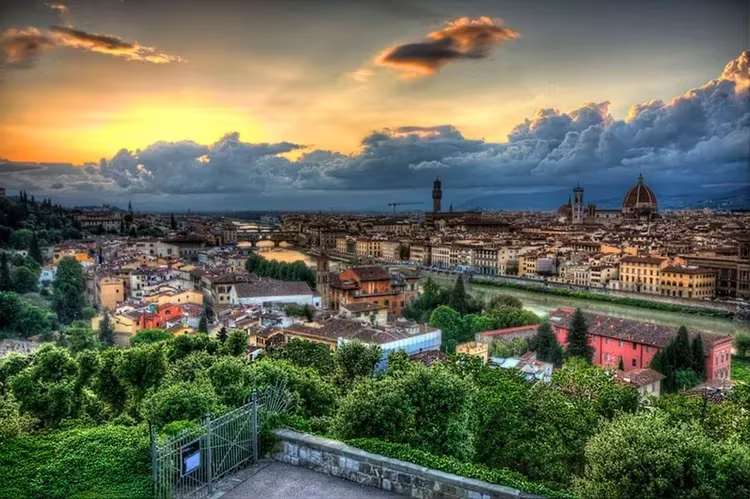
Florence receives guests in all seasons and there is practically no non-tourist season here. The first sensations are mixed: medieval streets with crowded facades of buildings, but each private house is loudly called a “palazzo”; an unrealistic blue sky on a sunny day, but a motionless ashen dusk in bad weather; endless crowds of tourists and, it seems, no less number of sellers of paintings and souvenirs. But, most importantly, the number of cultural values exceeds all expectations. It is better to start a walk through the old quarters of the city from the administrative center of Florence. For anyone who has ever dreamed of visiting here, the Piazza della Signoria began with postcard views.
Florence: Timed Entrance Ticket for Michelangelo's David
Florence: Entrance Ticket to Uffizi
Gallery Uffizi Gallery: Priority Entrance
Florence Cathedral: Ticket with Dome
Entry Florence: Entrance Ticket and Audio Guide to Palazzo Vecchio
Florence: Hop-on Hop-off Tour. Ticket for 24, 48 or 72 hours
Leonardo da Vinci Museum: Entrance ticket
Florence: Guided tour of the Duomo with climb to the top of the dome
Entrance ticket to the Basilica of San Lorenzo
Hot air balloon flight over Tuscany: Florence
Palazzo Vecchio
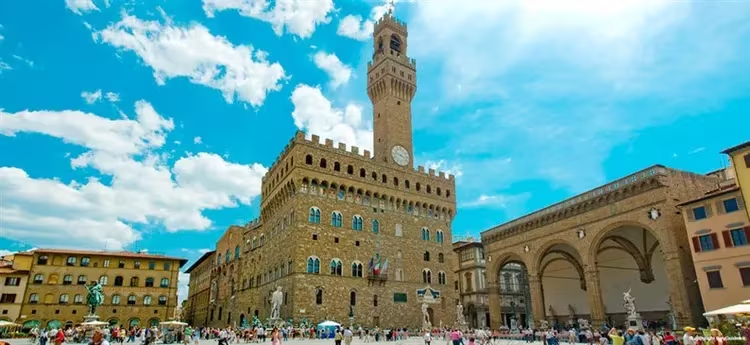
The government of the Florentine Republic in 1294 announced the start of the construction of the Palace of the Signoria, now called the Palazzo Vecchio, on the site where the theater existed in ancient times. The main task for the fortress being built was to protect the residence of the priors. Subsequently, over the course of 300 years, many changes and additions were made to the original project. Today, the Palazzo Vecchio appears before your eyes as a powerful square-shaped building with battlements, a 94-meter clock tower towering over the perimeter of the fortress, and the world-famous sculpture of David by Michelangelo (there is a copy of the statue at the entrance).
Having been inside the palace itself, a certain complete picture emerges in the mind: the courtyard, the meeting room and the five hundred salon, painted ceilings, marble sculptures and paintings by Italian masters. Throughout the existence of the palace, it was the main administrative building of the city. Therefore, in addition to tourists, the local population likes to visit here on excursions and hold city events. Before visiting the Palazzo Vecchio, you need to ask if all the halls are open to tourists. It happens that some are already rented for events and visitors are not allowed there.
Gallery Loggia Lanzi
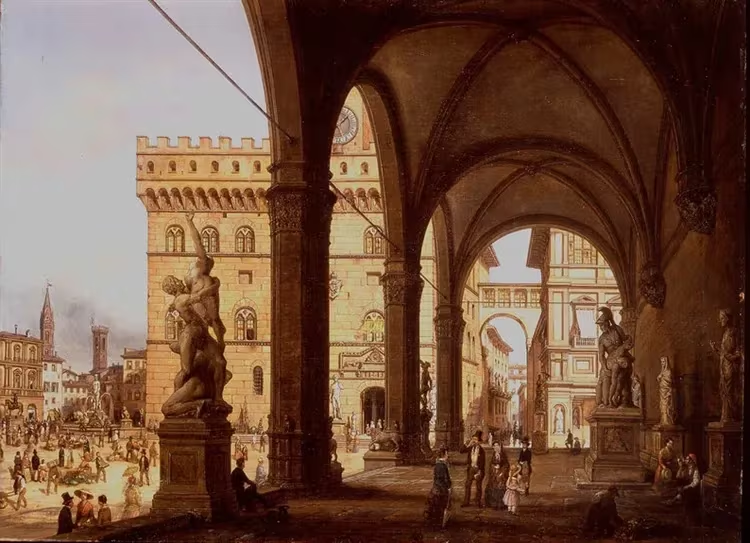
Loggia Lanzi is 100 meters from Palazzo Vecchio. The gallery, built in the 14th century, hosted public meetings of the government of the republic. Today, first of all, it will attract attention by the number of young artists sitting on the steps. A dozen sculptures are exhibited here, allowing young talents from different countries to gain experience in classical drawing. All are extraordinarily beautiful. But special attention is drawn to the original sculpture “Perseus with the Head of Medusa” by Cellini and a copy of “The Rape of the Sabine Women” by Giambologna.
Uffizi Gallery
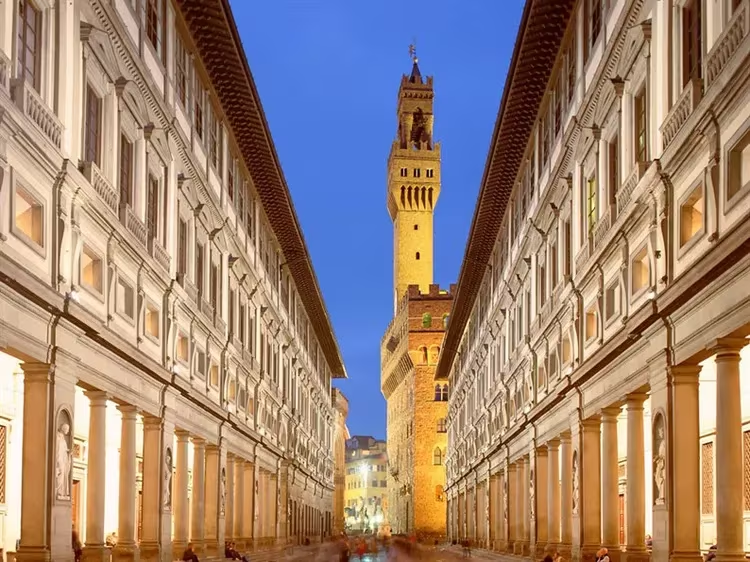
The building of the Uffizi Gallery was intended for the administrative and clerical work of the city administration, and the Italians, always famous for their special love for art, gradually filled it with paintings and sculptures by contemporary masters. At first, these were gifts from the personal collections of the nobles, then they were joined by patrons and the artists themselves. By the 18th century, there were so many works decorating the gallery that the city administration decided to turn this building into a public city museum. Today it is a world-famous exhibition area, where 6,000 sq. meters there are collections of paintings from different schools of Italian painting, antique sculptures and a collection of a unique collection of tapestries.
Bargello Palace
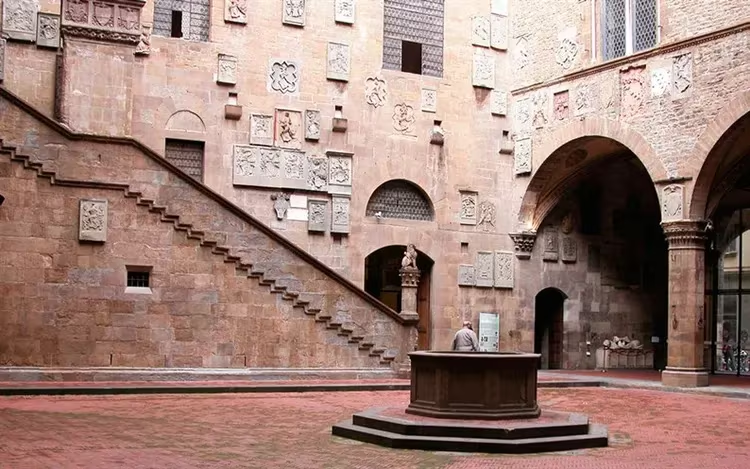
Leaving Piazza della Signoria along Via del Proconsolo, the walk will pass the Bargello Palace. This building of the 13th century has changed many owners during its existence. It was both a barracks, and the residence of a judge, and even a prison. Today it is the National Museum, whose art collection of sculptures is considered to be the best in Italy. The galleries and churches of Florence are literally overflowing with works of art. The history of the Renaissance comes to life in the local streets. Moving through the city center through narrow, dark streets, you feel as if you are in the Middle Ages.
Via Dante Alighieri
Stop on the small street Via Dante Alighieri leading to Dante's house. It was here, walking along the pavement slabs as a nine-year-old boy, that Dante met the eight-year-old beauty Beatrice, the secret love of his life and the poet's muse. Approaching the Duomo Square, any traveler begins to feel some inner trepidation. The desire to get closer to one of the majestic Cathedrals of Europe is very great.
Cathedral of Santa Maria del Fiore
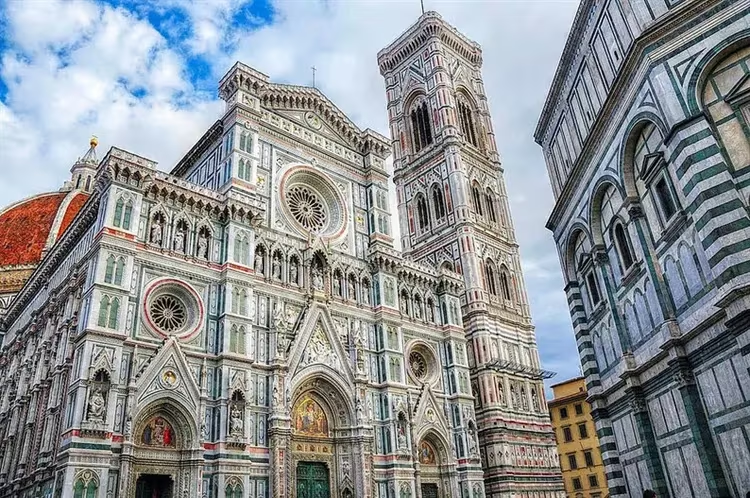
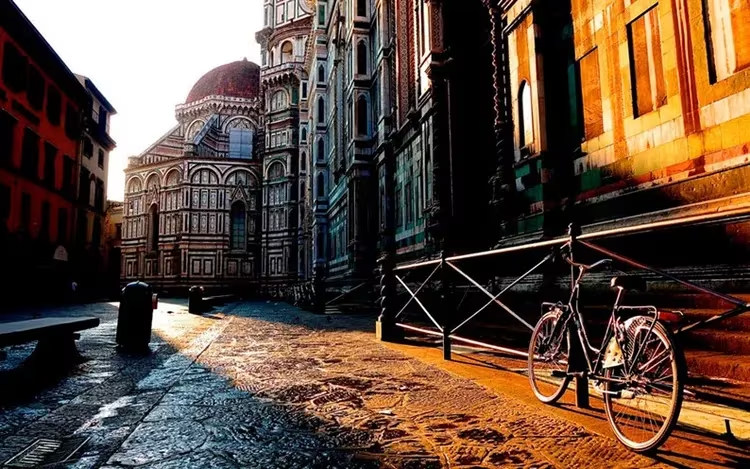
Via del Proconsolo will lead to the Cattedrale di Santa Maria del Fiore from the side of the altar, and in order to see the facade of the temple and the entire cathedral ensemble, you need to go around it. The beauty revealed to the eye is indescribable. The name of the cathedral is “speaking” and in translation it sounds “Magnificent Mary in Flowers”. Wall cladding of pearl white, soft pink and matte green marble on the outside makes the cathedral look like an inlaid box in which, it seems, jewels should be stored. But the interior decoration can somewhat disappoint with its asceticism and simplicity.
The scale of the Cathedral is grandiose not only in size, but also in the significance of the historical events that took place within its walls. The Florentine rulers adopted laws here, Savonarola read his sermons, the execution of Giuliano from the Medici family took place, and the famous author of the dome of the cathedral Brunelleschi and the creator of Campanilla Giotto found peace. The cathedral ensemble also includes the Baptistery of San Giovanni and Giotto's Campanile (bell tower). The oldest in Florence, octagonal in shape, baptismal, in the 15th century, was decorated with a unique gate by Ghiberti. On ten gilded reliefs of the gate, he depicted scenes from the Old Testament. After an enthusiastic phrase by Michelangelo, they began to be called the “Gates of Paradise.”
Via dei Calzaiuoli
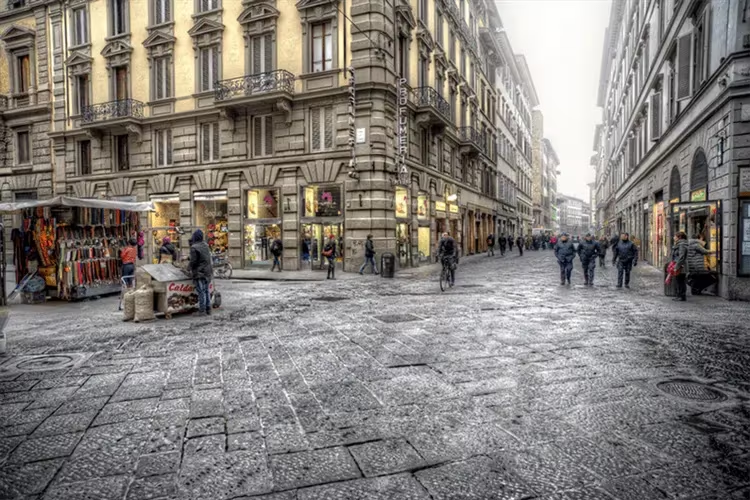
From the Duomo, you can head towards the city center along the main street of all times, Via dei Calzaiuoli (street of hosiers and shoemakers). Pilgrims traveled along it through the city to Rome. They were robbed all over the district, and smart Florentines solved the problem of enrichment differently. They began to sell shoes and sandals to unfortunate travelers who had knocked their legs down on this street. Florence's heyday came in the 16th century, when numerous frescoes on the street facades turned it into a bright flower. From these bright petals today only withered shadows remain. But they can still be observed everywhere, on almost every facade of a medieval house.
Palazzo Medici Riccardi
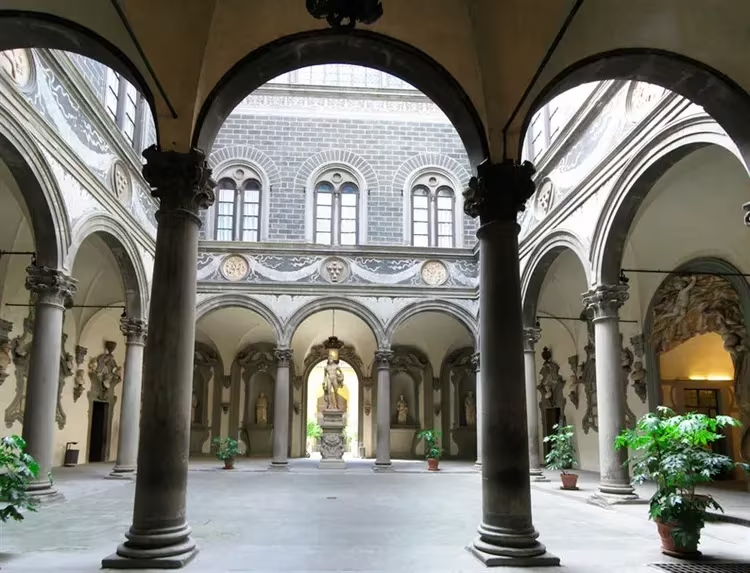
To get to the Palazzo Medici Riccardi, you need to go from Duomo Square in the opposite direction from the center. The residence of the most noble Italian family is the first secular building in Florence. But she looks rather ascetic and modest. In those days, the Medici bank “office”, and utility rooms with stables, and the owners' apartments were located here. It will be interesting to inquire about the interiors of the Palace: on some days, the Chapel of the Magi with unique frescoes is open to visitors.
Church of San Lorenzo
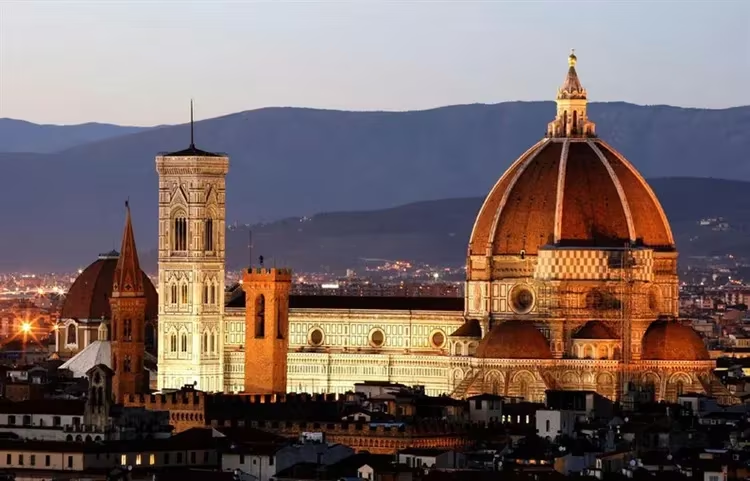
At 200 meters from the Palazzo Medici, you can admire the Church of San Lorenzo. Located here and crowned with glory, the Medici Chapel was created by Michelangelo in 1520 and was intended to accommodate new burials of an ancient family. The sacristy of the old Medici church by that time could not accommodate new tombs.
Santa Maria Novella
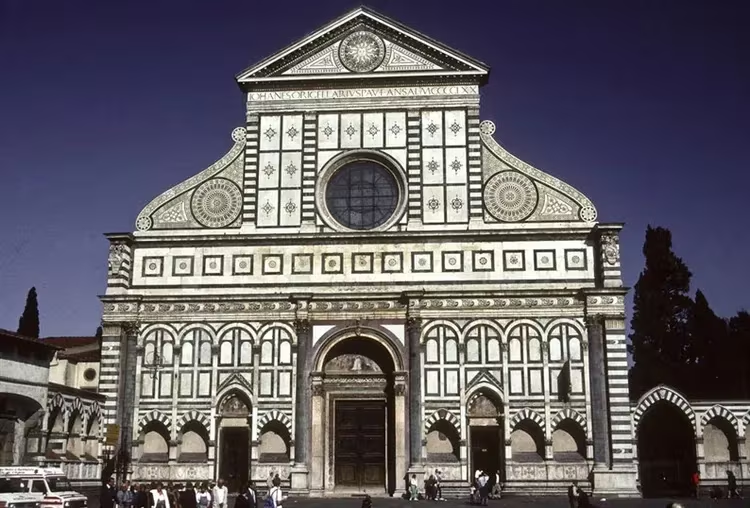
Continuing the route along Via del Giglio, after 5 minutes you can already be at the next architectural masterpiece of Santa Maria Novella (di Santa Maria Novella). It was this church that Giovanni Boccaccio chose for the plot scenes in The Decameron. Its lengthy construction, begun in 1246 by the Dominican monks, was completed only in the 14th century. Here you can admire not only the front part of the temple, known from Florentine postcards, but also go to the monastery green courtyard and the Spanish Chapel.
Palazzo Strozzi
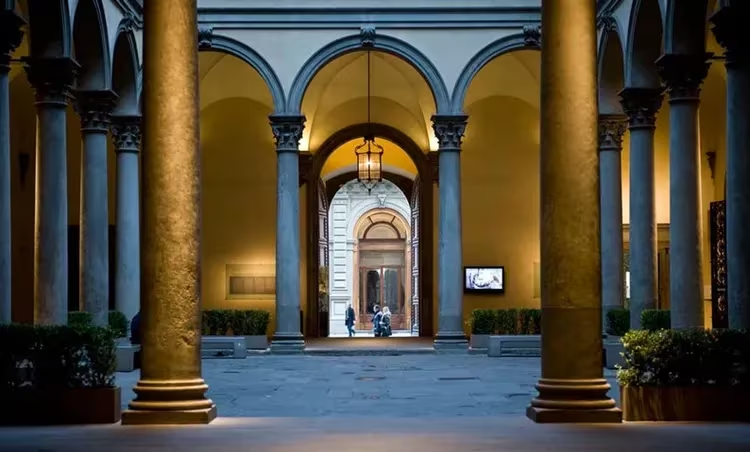
Now, after sightseeing the right-bank districts of the old city, you can stroll along the famous Florentine bridges. To do this, you need to go down Via del Sole and Via de Tornabuoni. By the way, at the intersection of these streets you can stop and admire the Palazzo Strozzi (Palazzo Strozzi). This is the palace of another noble family in Florence, the Strozzi clan. In appearance, the building is very similar to the Palazzo Medici, and this is understandable. After all, Strotius always competed with the Medici. The feeling that the simple facade of the first floor, the high windows of the second and the luxurious courtyard inside the palazzo is not the first time you see it. If you have time, it is interesting to go into the interior of the building. The entourage of the Middle Ages is preserved here authentic to that era: rings for which horses were tied, holders for fuming torches, etc.
Holy Trinity Bridge
On the left bank of the river you can cross the famous bridge of the Holy Trinity. The graceful design of this bridge was invented by Bartolomeo Ammannati, and it was built in the 16th century. Until now, the bridge has suffered many collapses. But even with this construction, the architect was more concerned not with practical reliability, but with the aesthetic impeccability of the building.
Brancacci Chapel and other places of interest
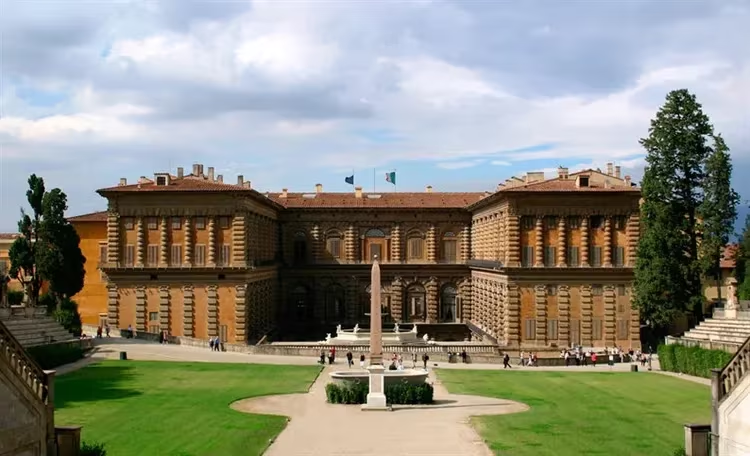
In the city blocks of the left bank of the river, tourists eagerly visit the Brancacci Chapel with its famous frescoes, the Basilica of the Holy Spirit with the church refectory that holds the Last Supper by Ghirlandaio and the museum complex of the Palazzo Pitti.
Bridge Ponte Vecchio
Finishing a walking tour of Florence and returning to the administrative center, you need to go from the Otrarno district, famous for small workshops selling their products, to the right bank. This time we will cross over the Ponte Vecchio, a bridge that has become popular for photographs in tourist brochures. This bridge has always been socially significant for the Florentines. It was regularly washed away by floods and regularly rebuilt. In the 15th century, meat and fish shops were moved here, and trading was allowed only on the old bridge. Waste, which was dumped directly into the river, spread the stench for several blocks. Over time, there were more merchants, and the bridge grew in breadth. Until now, the outbuildings in which the shopkeepers lived have been preserved on it.
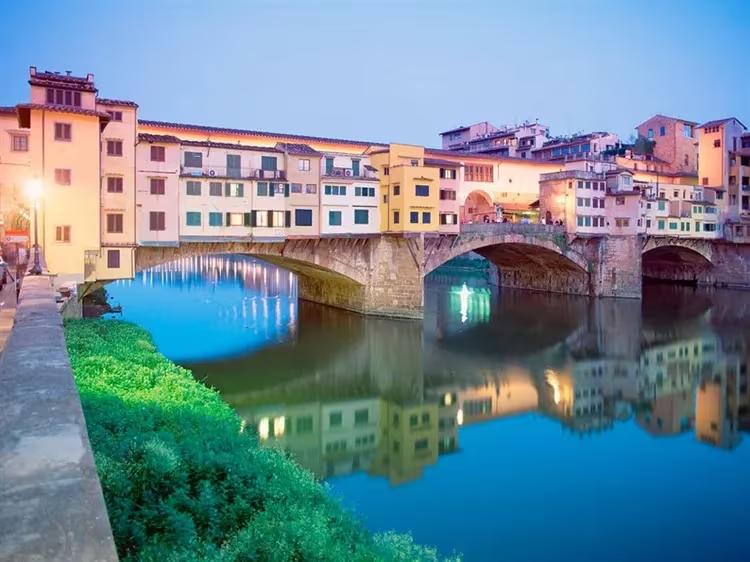
The nobles of the Medici family, who at that time lived in the Pitti Palace on the left bank, could not walk in the Signoria through such a “pigsty”. And therefore, a covered corridor (Gallery Vasari) was built for them over the bridge. Merchants with foul-smelling goods were driven away and replaced with jewelers. Many shops on the bridge sell luxurious jewelry and trinkets, and in the evening, after the end of the trade, they close like slamming precious boxes. From now on, the luxury of exquisite jewelry is hidden behind ancient wooden doors.
Coming off the bridge, literally after a five-minute walk, it is easy to be at the starting point of our journey. Impressions are in disarray, and memory can only reproduce sensations so far: the sounds of the crowd, the voices of sellers, the melody of bells, the creak of benches in the church, the tantalizing smells of cheese from restaurants and pastries from pizzerias, not candles are burning next to masterpieces, but electric bulbs, shop windows, full of bright colors and the dim light of the streets, the dome of the Duomo of red brick color and the pearl cassock of a young priest. All these are the sounds, smells and colors of Florence.
In Florence we recommend the following hotels: