
What to see in Rome in 4 days on your own – route, photo, description, map
The history of the Eternal City goes back centuries and is striking in its versatility. Hundreds of architectural monuments, parks, and residential buildings themselves allow the tourist to take an excursion into the times of the great Roman Empire, and the Renaissance and Classicism, and get to know the modern bustling metropolis: from its origins to the present day. Each time, leaving Rome, there is a feeling of “not enough…”: overlooked, overlooked, heard. It seems that no matter how much you come here, there will always be unseen sights, unexplored streets and unheard legends of the old city. When planning a trip, you need to correctly understand the scale of this city-museum. Considering a few days of stay, you can think over and build routes that allow you to get a comprehensive experience. We will tell you what you can see on your own in Rome in four days.
First day
It is worth spending your first day in Rome exploring the historic part of the city. The main attractions that have survived from the period of Antiquity are located quite compactly. And perfect for walking. It is better to start the program from the Colosseum, moving from which you can sequentially see other buildings.
Coliseum
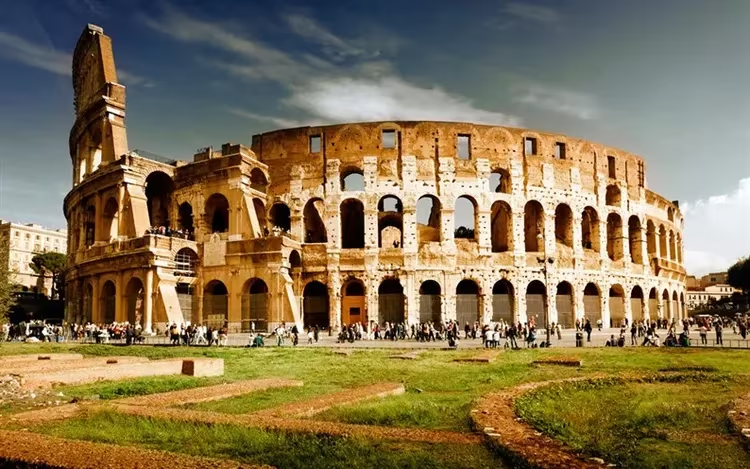
Looking at the tourist map of the central, historical part of Rome, one instantly gets a feeling of its huge size and complexity. But this is far from true. The main sights of the ancient city are located compactly, and acquaintance with the old city fits perfectly into the hiking routes. The start for our route of the first day, of course, will be the symbol of Ancient Rome – the Colosseum.
The easiest way to get to the Colosseum is by metro “B” (blue line), the station is called COLLOSSEO. By the way, about the subway. The schemes of the Roman metro are very simple, the names of the stops are clear, but the stations themselves are unremarkable. Subway tickets are purchased from vending machines, and the cost of one trip is 1.5 €.
You will see the majestic antique building immediately when you come to the surface of the station. Here it is simply impossible to be deceived by expectations: the Colosseum is beautiful and unusual. To get inside, you need to purchase a ticket. Arriving here in the morning, you will be just lucky, as the queue of those wishing to touch the great will consist of only a couple of hundred people. For comparison, during the day you can spend three or four hours in line.
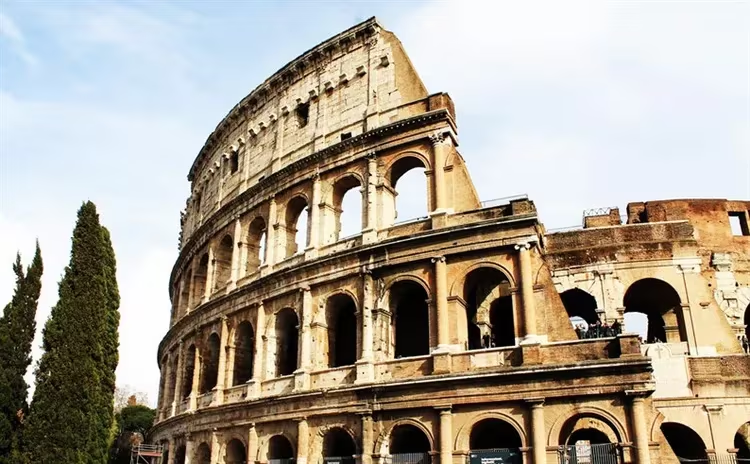
For convenience, tourists are offered to purchase a single ticket (12 €). It includes a visit not only to the Colosseum, but also to two more architectural complexes: the Roman Forum and the Palatino. By the way, such a ticket is sold in addition to the entrance near the Colosseum, but also at the box office from the side of Via di San Gregorio, near Palatino Hill (there is always less line here). Visiting the main ancient complexes is possible daily from 9 am until dark.
The Colosseum impresses not only with its scale, but also with the thoughtfulness of the layout. An uncountable number of exits allowed at one time 50 thousand spectators to leave the Colosseum in 5-10 minutes. The Roman Forum will meet you with a cemetery of destroyed columns and ruins of temples. Only the imagination will help here, which will take you to the ancient world with the Arch of Titus, the Basilica of Maxentius, the Senate meeting room, the Temple of Vesta, and the Sacred Via Sacra.
Basilica of Saint Clement
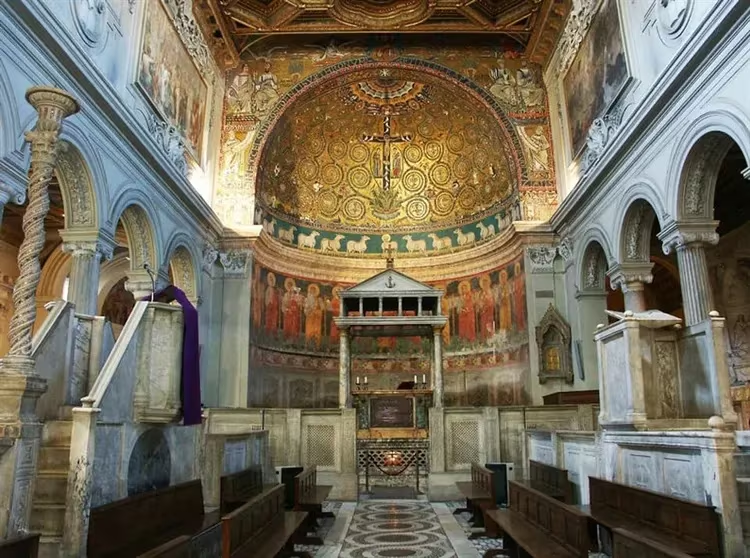
To the east of the Colosseum is an ancient architectural complex that has all the features of an early Christian church. The first basilica was buried in a conflagration. The Norman raid on Rome in the twelfth century was dyed red. Surprisingly, even the fire could not destroy some of the frescoes left from the first church. Even today they have not lost their liveliness of colors – a broken stained-glass window of details from the life of St. Clement.
True, the style of decoration of the frescoes is unusual – it resembles the comics that are popular today, only the phrases uttered by the characters are far from the canons of high language – vulgarism and vernacular. Entrance to the basilica is free, but only to the upper level. A ticket to the lower levels will cost 5 €, but not for descending the stairs, but for diving under the vaults of the third century – the ancient temple of Mithra with a marble altar.
Basilica of San Pietro in Viconi
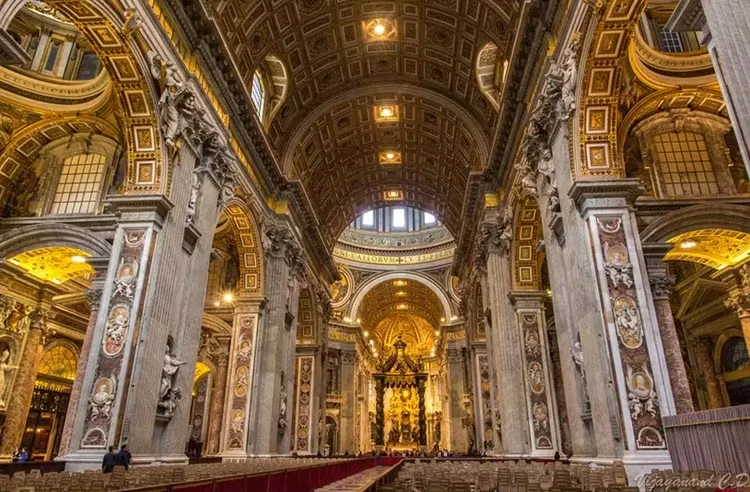
The church appeared in Rome in the fifth century. It was here that a unique artifact was kept for a long time – the chains with which St. Peter was bound. They were brought from Jerusalem at one time. True, today it is known mainly due to the fact that Julius II was buried in the local crypt. From that moment on, the architectural vector of the basilica has changed dramatically: an arched gallery, a marble floor, a wooden ceiling – this has become an excellent backdrop for the creations of Michelangelo Buanarroti, who not only painted the church, but also created a stunning sculptural composition “Moses”.
Like many tourist sites in Rome, the basilica is located near the Colosseum. You can get here using the metro – Colosseo and Cavour stations on line B. Or by bus to the Colosseo or Cavour- Annibaldi stops.
Colosseum, Roman Forum, Palatine Hill with one ticket – 20 €
Entry time to St. Peter's Basilica with audio guide – 19.50 €
Fast entry to the Vatican Museums and Sistine Chapel – 28 €
Skip the line: Museums, Sistine Chapel, St. Peter's Basilica – 53.90 €
Hop-on hop-off bus tour – € 20
Bus ticket: 24, 48 or 72 hours – from € 23
St. Peter's Cathedral with climb to the dome and visit to the crypt – € 49
Triumphal Arch of Titus
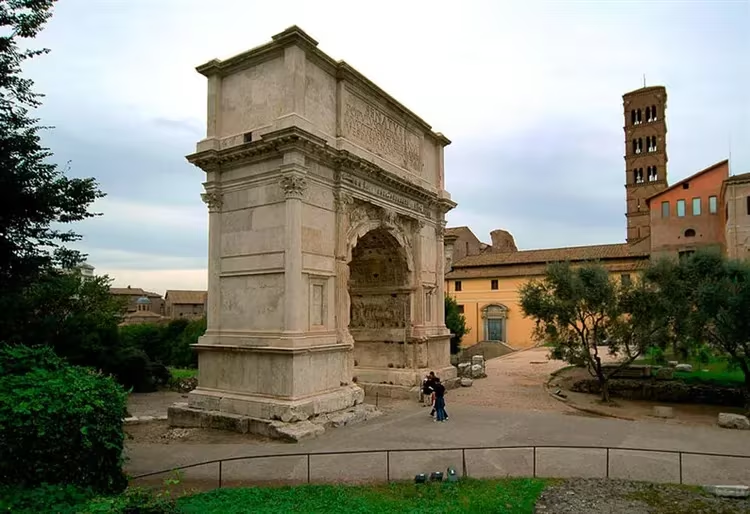
The very phrase “Arc de Triomphe” involuntarily evokes associations with a similar monument in Paris, but if you want to see a really great building, you should definitely go to Rome. The triumphal arch of Titus is one of the two arches of the Forum Square that have survived to this day – a cemetery of ancient columns. Both arches were built in the first century AD. The Parisian arch and many similar monuments are imitations on the theme of an ancient original.
Its architectural appearance is quite modest – it is decorated with three statues and reliefs in the passage of the arch, but real solemnity and nobility are easily read in this modesty. The height of the arch is relatively small – just over fifteen meters, but this monumental monument made of Pentel marble, brought from Attica itself, makes you freeze with delight.
Theater of Marcellus
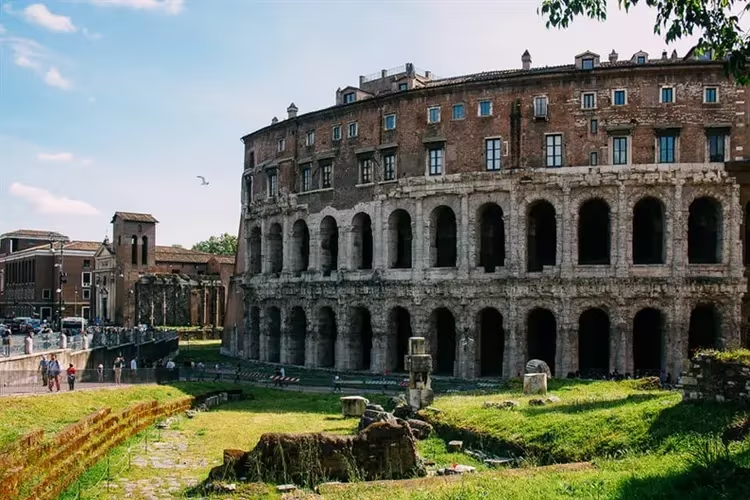
In one tourist vector are attractions such as the Mouth of Truth, the Capitol, the Jewish Quarter and the Theater of Marcellus, which can be reached on foot from the Circo Massimo station. This is perhaps one of the most significant buildings in Italy. It adorns the right bank of the Tiber. The Theater of Marcellus is the direct predecessor of the notorious Colosseum. Its construction was carried out on an unprecedented scale, which is not surprising, because the project itself was developed by Julius Caesar, and Octavian Augustus took up the implementation.
Today, the theater of Marcellus is a somewhat grotesque structure: the arches of the first tier are well preserved – festivals are held here today, the second tier is more destroyed, and instead of the third tier you will find buildings of the twelfth century and more modern residential buildings.
Roman forum
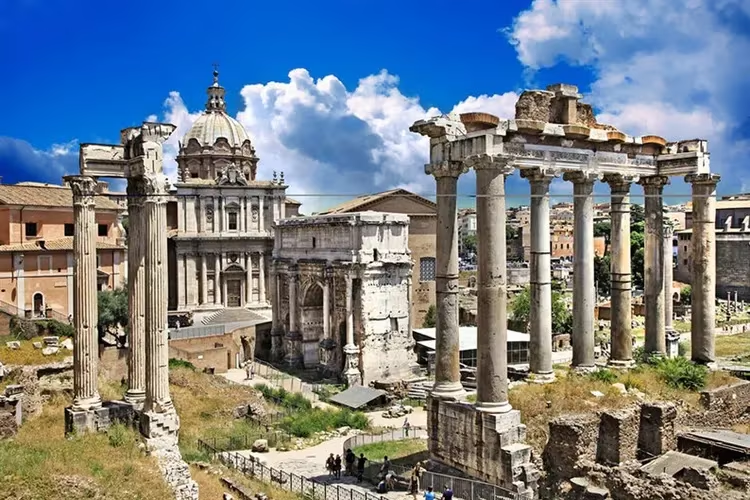
The Roman Forum is the stronghold of the historical part of the city. The former market, on the territory of which the public, commercial and political life of Rome was once concentrated, is today a kind of square around which pagan temples were once located. Thanks to the excavations of the last three centuries, the Roman Forum has managed to acquire its current cultural status.
Now it is he who is centripetal, around which the Capitol, the Sacred Road, the Temple of Saturn and other monuments are located. You can get here through Foley Imperiali Street, from the side of the Capitol, or past the Temple of Concord and the Mamertine Prison. The entrance ticket to the territory will cost 12 €. Additionally, you can purchase an audio guide for 4€.
Golden House of Nero
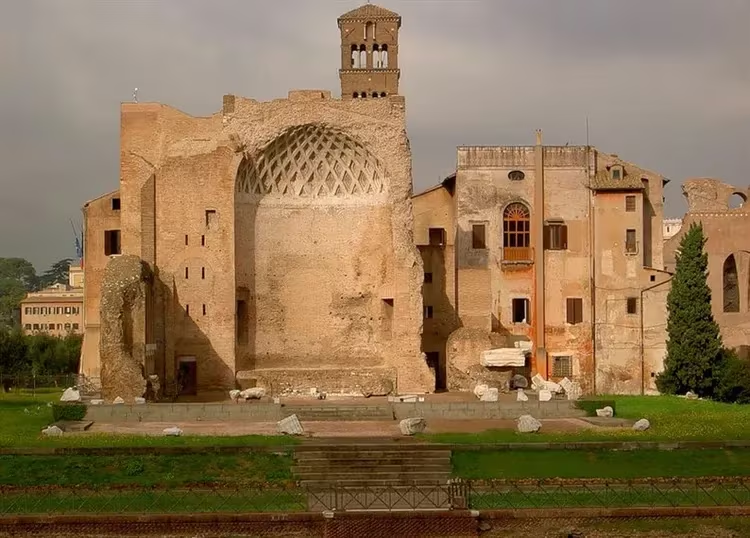
Among the European sites that claimed the status of a royal residence, the Golden House of Nero was considered the largest. Its construction is directly related to the events of 64, when most of Rome was destroyed in a fire. Today, scientists are still arguing about the size of the territory that adjoined this residence. For a better understanding, suffice it to say that its size is equivalent to the territory of the Champs-Elysées, the Louvre and the Tuileries combined.
The center of this “little world” was, in fact, the palace, which got its name due to the presence of a gilded dome that crowned the building. The palace was built on a grand scale – in the entrance hall alone, a modest 36-meter statue of Nero was quite organically located. It should be borne in mind that only the ruins of the Golden House itself, decorated with frescoes, remained from the former scope. Many underground rooms survived. A visit to this place will cost 16€.
capitol square
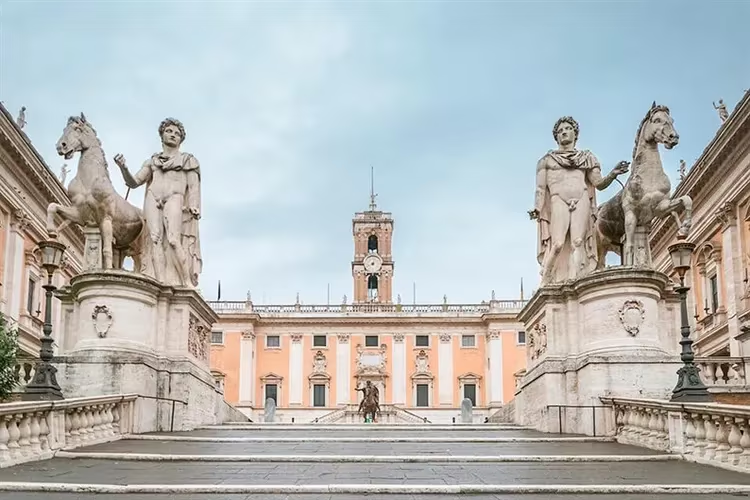
The history of this place is directly connected with the name of Michelangelo, who at one time actively created projects for the reconstruction of the city, some of which he managed to implement. The most significant of his creations are on the Capitoline Hill. The Capitoline Square, which, thanks to the efforts of this brilliant master, acquired a trapezoidal shape, is one of them. This beautiful symmetrical ensemble is richly decorated with bas-reliefs, inscriptions and sculptural groups.
It is worth bearing in mind that the Capitoline was really significant even before it became the focus of Michelangelo's work. From ancient times, the voices of imperial heralds sounded here, people's meetings and ceremonies were held. According to legend, it was here that Emperor Augustus heard the prophecy about the birth of Christ. The triumph of antiquity – these are the words that come to mind when you see Capitoline Square.
Trajan's Forum
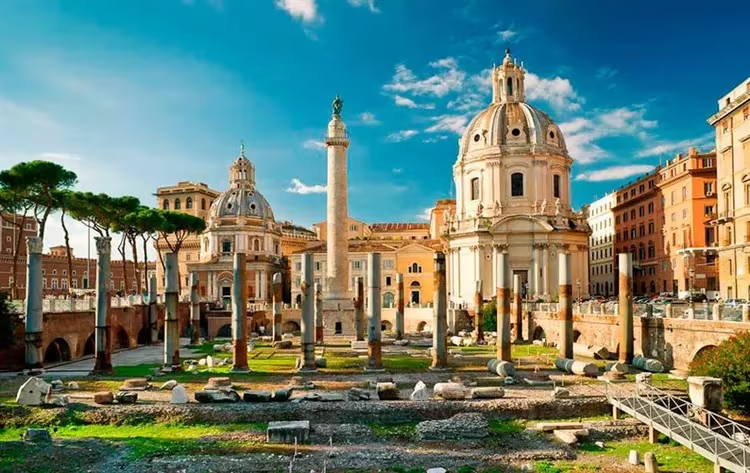
The construction of the forum is associated with the name of Emperor Trajan, who decided to build it after a stunning victory over the Daikir kingdom. Some see this gesture as an attempt to eclipse the glory of the campaign of Alexander the Great, but whatever the reasons, Trajan's forum became the largest building of such a plan of all that existed at that time. Art historians still speak admiringly of the structure of the forum: the graceful curve of the triumphal arch turns into a colonnade with plenty of seating. The building is roofed.
Among the most striking elements of the forum are the Ulpia Basilica and Trajan's Marble Column, completely entwined with bas-reliefs that have historical authenticity. The great emperor himself is buried under this column. It is impossible to miss the forum of Trajan – it is located in the area of the Palazzo Valentini and Piazza Venezia. It is best to go here at dawn – there is less chance of being buried under an avalanche of enthusiastic tourists.
Trajan's Market
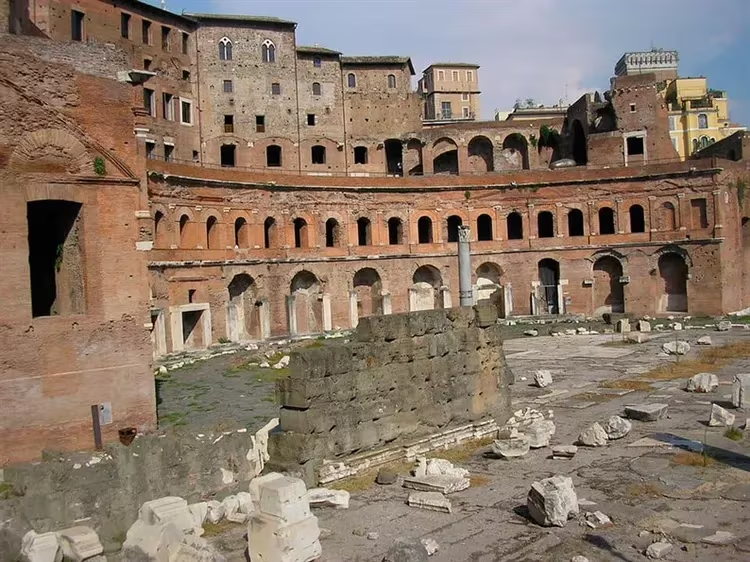
This market is also a component of the forum. In fact, it is something like a shopping center in an antique format. To raise the authority of the empire and demonstrate its wealth, Trajan ordered the opening of 150 shops and workshops, which were supposed to go towards the square, not the city. This design is called “windows”.
In addition to retail outlets, taverns and taverns were located here. Gradually, the size of the market increased, and soon it grew to five floors. Today, on the site of the former market, there is a large museum dedicated to the Roman Forums. Its visit will cost 14 €, but you should understand that with this ticket you can also visit a number of other museums and exhibitions.
Second day
Plan the second day of your visit to Rome as a walking day, saturating you with new impressions of antiquity and restoring after an active previous route.
Piazza del Popolo
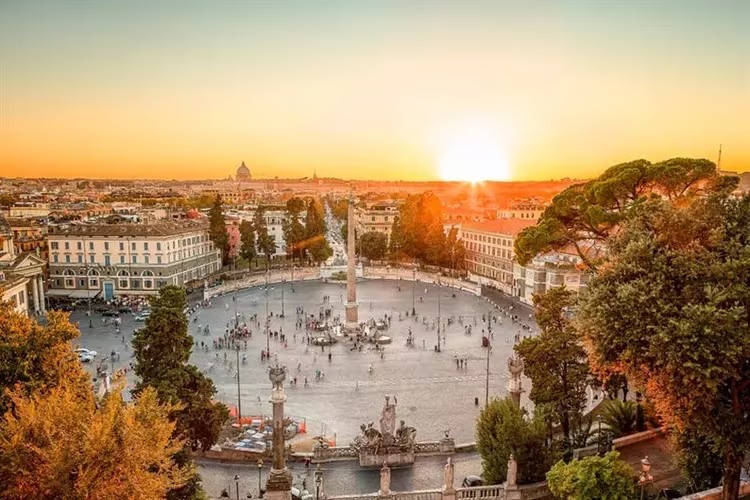
It is not surprising that this building was once called the “People's Square”. It is still one of the most popular venues in Rome today. Piazza del Popolo is easily recognizable due to the presence of identical churches at first glance and the obelisk of Flaminia. In the evenings, many representatives of modern art trends and young people who want to spend time colorfully gather here. But this impression of an eternal holiday is fleeting for this place. Once upon a time, the city guillotine was installed here.
Another unpleasant fact is connected with the history of the square. The infamous emperor Nero was buried in Piazza del Popolo, but the dislike of the people towards him was not canceled with his death. There were rumors that the evil spirit of the tyrant did not rest. The decomposing body was thrown into the river. And at the burial site they built one of the twin churches, which in fact are not. One of them forms an oval, and the second circle in the perimeter.
Via del Corso
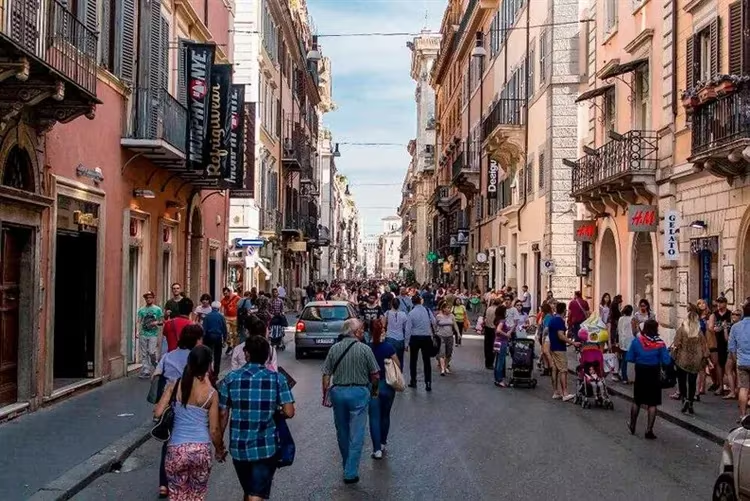
After walking along Piazza del Popolo, do not rush to leave. It is better to continue walking and find yourself on one of the most unusual streets in Rome – Via del Corso, which connects Piazza del Popolo with Piazza Venezia. What is unique about this street? Everything is quite simple: it is one of the oldest in the Eternal City, but it is also the most favored by modern shopaholics.
The historic buildings house numerous boutiques and cafes that offer quality products at liberal prices for Rome. Paradoxically, the concentrated spirit of antiquity is in perfect harmony with the lively side of the modern metropolis.
spanish stairs
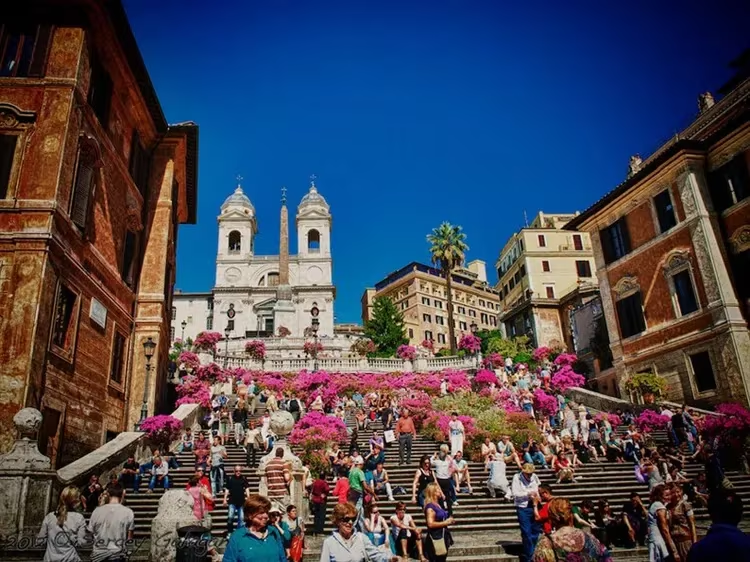
In fact, the Spanish Steps could very well be French. It is difficult to say whether in this case we would have seen the solemn baroque in the travertine of 138 steps, or whether this monument would have looked completely different. One thing is for sure – the victory of the Spanish diaspora made it possible to give birth to one of the most beautiful monuments of this type in Europe. The Spanish Steps are especially beautiful in the spring, when the azalea is filled with a delicate color.
It is noteworthy that the staircase has a different width along its entire length. To climb it, you need to get off at the Spagna metro station, from which you can easily reach Piazza di Spagni, the square where the base of the stairs is located. At the very top is the Church of the Holy Trinity, where you can also look, if only for the sake of the elegance of the figure of Christ, created by Daniele da Volterra.
Trevi Fountain
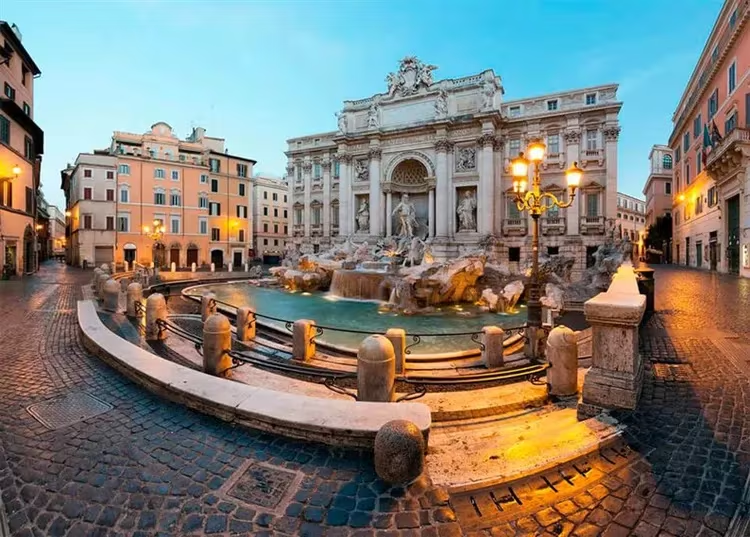
What to do to be sure to return to Rome again? It's simple: take a coin, stand with your back to the Trevi Fountain and throw it into the water. Did you hear the splash? Great, your chance to return to the Eternal City has skyrocketed. A fountain adorns the space in front of the Palazzo Poli. This pompous building was created according to the sketches of Bernini himself, who became famous as a theatrical sculptor. Today, the Trevi Fountain is considered a classic place of pilgrimage for tourists.
Everyone wants to see with their own eyes a large-scale composition, in the center of which is the lord of the seas Netun, holding the reins of a chariot-shell, to which sea horses are harnessed. A pleasant bonus to the fountain is the extremely seductive pool in the Roman heat, where you can swim for only 200 € – this is the amount you will have to pay a fine if the desire to cool off overpowers.
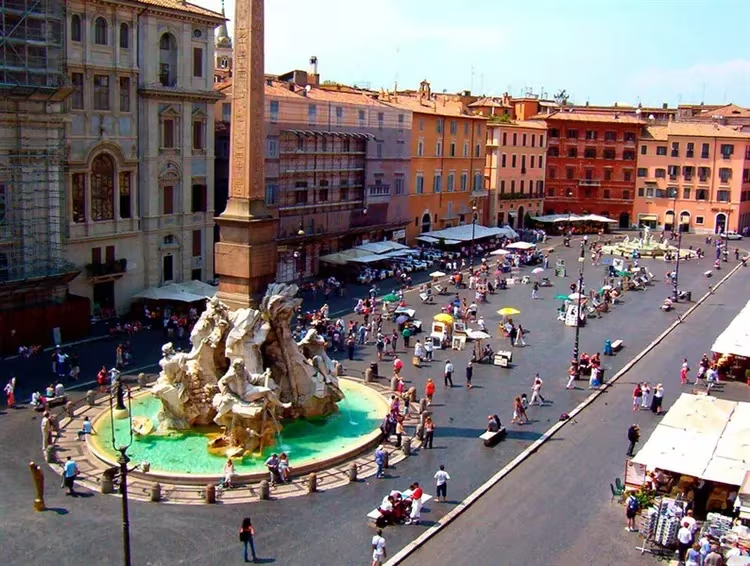
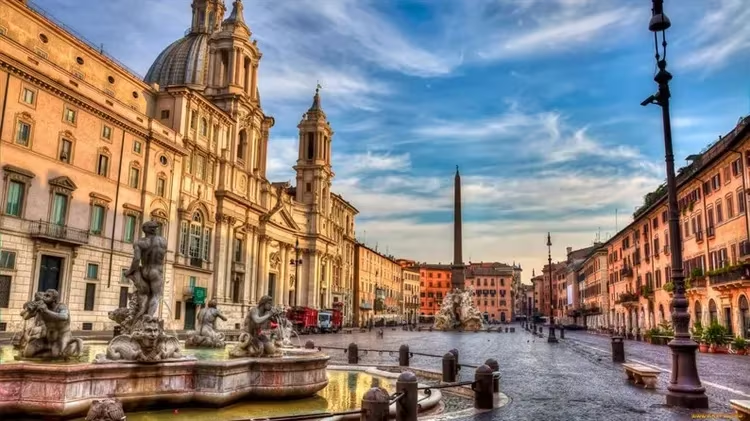
Another crown of Bernini's creativity is the Fountain of the Four Rivers, which adorns Piazza Navona. Next to the fountain is the church of St. Agnes – a brilliant creation of Borromini. Many art historians still agree that these two monuments appeared as part of a rivalry between two geniuses of Italian architectural thought.
Piazza Navona itself appeared long before this epic confrontation. It owes its unusual shape to Julius Caesar, who built a stadium here, later destroyed to create a market. During the French occupation, instead of market disputes, equestrian competitions were held here. However, the spirit of trade comes here hand in hand with the spirits of Christmas on the eve of the holidays, when a Christmas fair is set up here.
Pantheon
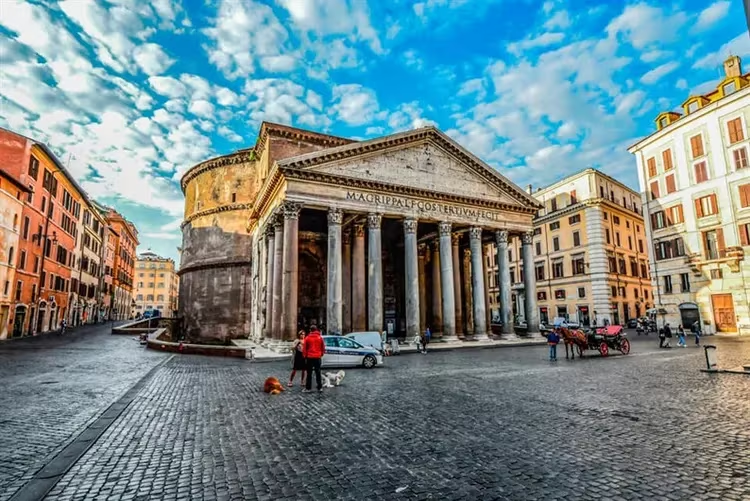
This pre-Christian building, erected to please all the Roman deities at once, in some incredible way managed to become a Christian temple. This ancient architectural object has been perfectly preserved, although it has lost its religious functions. The temple has an unusual layout – it has no windows. Light cascades from a nine-meter hole in the dome. This feature hides a metaphor for the unity of the Roman pantheon. The interior halls look amazing in winter, when snowflakes fly into the “window”, forming fabulous swirls.
Initially, the Pantheon was decorated with statues of the main deities. They were arranged in such a way that during the year – with the displacement of the Earth – the light alternately fell on each of them. Today they have been replaced by eighteenth-century art. Entrance to the Pantheon is free. To get here, you need to get off at the Barberini metro station.
The third day
Devote this day to the Vatican, the city-state located in the heart of Rome. To enter the territory of a state within a state, you need to cross the border marked with a white line on the square in front of the main cathedral of the Catholic Church. In a single stream, tourists often do not even notice it. You can get to the entrance to the main square of the Vatican by any transport, including sightseeing buses (they all stop at St. Peter's Square). If you choose to travel by metro, then it should be line “A” to the Ottaviano-S stops. Pietro or Cipro-Musei Vaticani, from which the Vatican is 10 minutes on foot.
Vatican Museums
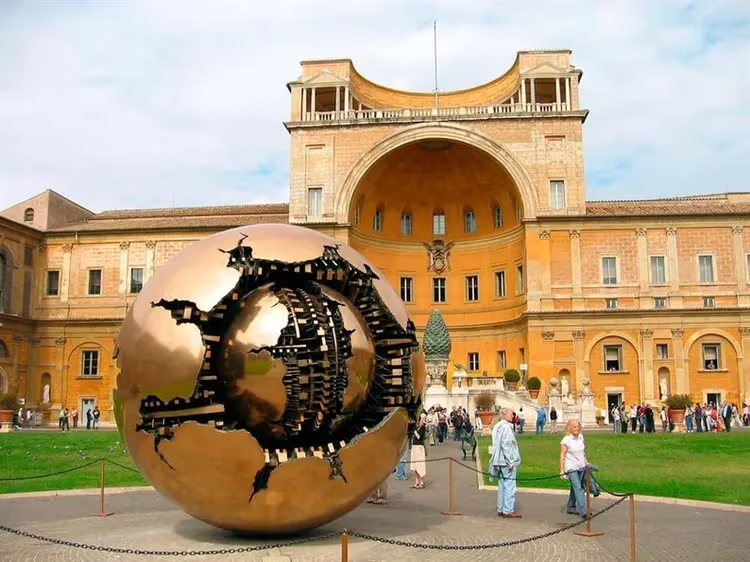
The Vatican Museum Fund is so huge that for a complete inspection it may take more than one day. The Vatican itself is a true museum, adorned with works by masters such as Michelangelo and da Vinci. Among all the complexes of the Vatican, the most important are museums dedicated to historical realities – especially much attention is paid to the Egyptian civilization – and various objects of art, starting from the Middle Ages.
Locations such as Raphael's Stanzas, the Borgia Apartments, the Vatican Library and the Tapestry Gallery enjoy continued popularity. In fact, to visit all these museums, it is enough to buy a general ticket worth 16€.
Saint Paul's Cathedral
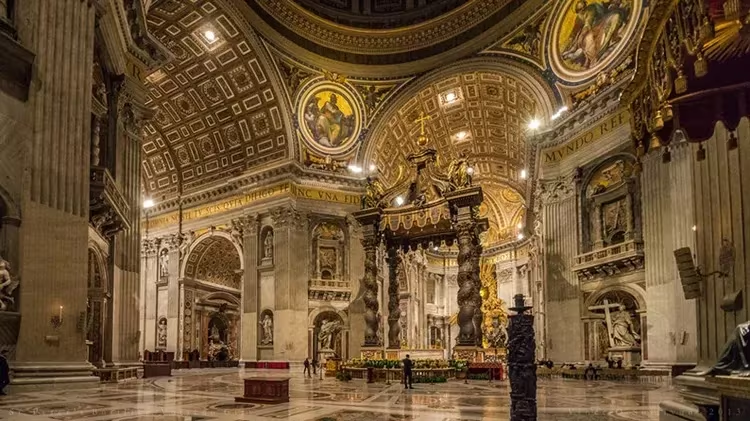
The epicenter of the Catholic world is the Cathedral of St. Peter, climbing to the dome of which you can see a stunning panorama of ancient Rome. The first – very modest – basilica appeared on the site of the cathedral in the fourth century. It was unremarkable until, at the beginning of the sixteenth century, an unexpected decision was made to reconstruct it. The dimensions of the modern cathedral are so huge that the largest cathedrals of the Eastern world can easily fit under its vaults – there are corresponding marks right on the floor showing the contours of the alleged cathedrals.
It will take more than one hour to list all the brilliant masters who at different times worked on the appearance of the cathedral. Entrance to the cathedral is free, but in order to climb the observation deck you will have to pay 8€ for the elevator or 6€ for wanting to climb the stairs. But you need to be careful with your desires – there are exactly five hundred steps, and the passage itself hardly reaches fifty centimeters.
Bridge Vittorio Emanuele II
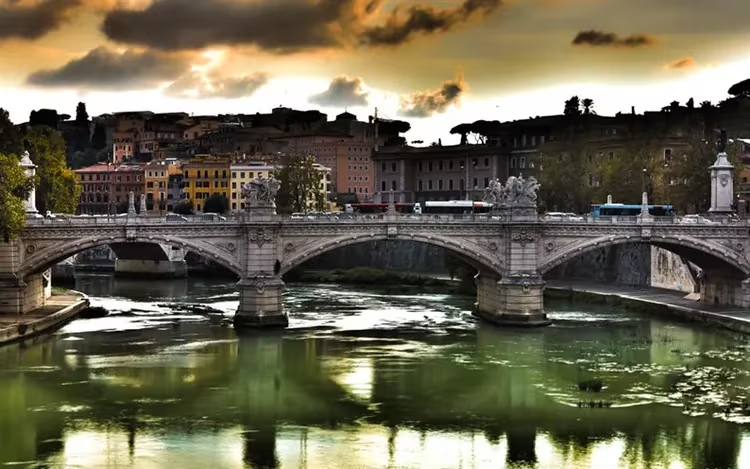
This massive three-arch structure connects the Vatican and the historic center of the Eternal City. It is named after the first king of Italy. Its length is more than a kilometer, and its width reaches about twenty meters. It offers a beautiful view of the Tiber and the city hanging over the river. The sculptural decoration of the bridge is really rich and allegorical – just see the sculptural group depicting unity and freedom.
Castle of the Holy Angel
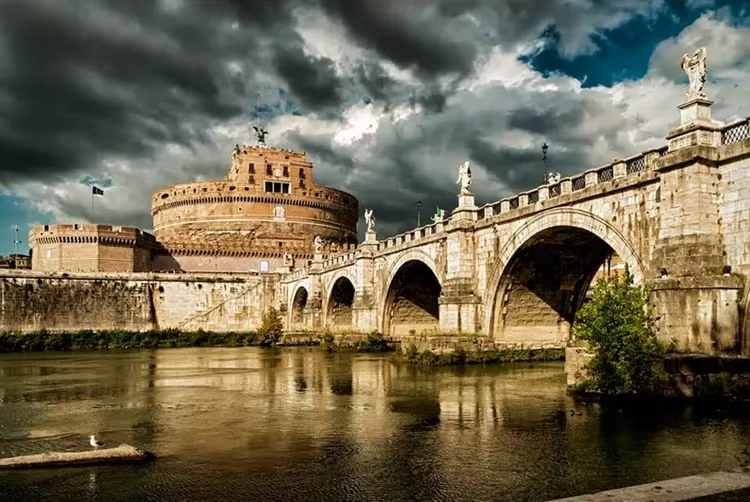
The construction of the castle began in 135, and therefore it is not surprising that for almost two thousand years of its existence, the castle was rebuilt several times. He managed to change his status more than once. At different times, there was an archive, a prison, a tomb, the residence of the Popes. Today there is a museum of military history.
The castle got its modern name in the sixth century, when another outbreak of the plague occurred in Rome. Gregory the Great, who was then Pope, saw the Archangel Michael on the roof. Subsequently, a statue of a marble archangel was erected on the roof. When you walk through the halls of the fortress, pay attention to the small holes in the walls, which were the prisoners' cells. The entrance ticket costs 10€.
Bridge of the Holy Angel
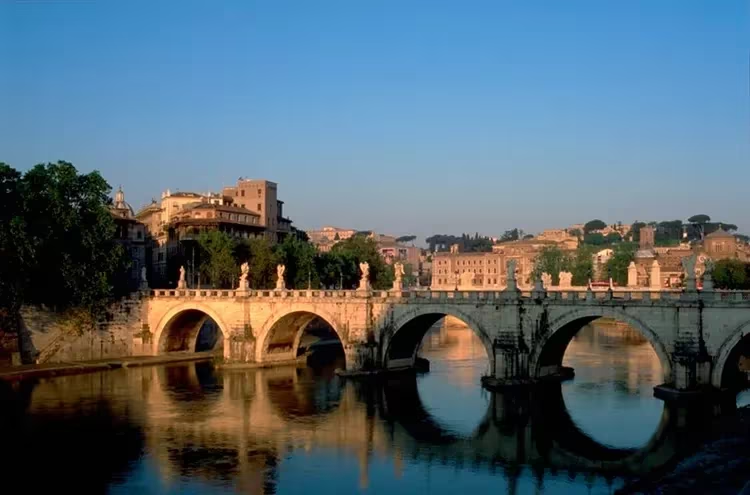
The Bridge of the Holy Angel is located just upstream of the Tiber. It is one of the oldest pedestrian bridges in Rome. The bridge was built in parallel with the Castel Sant'Angelo. Outside it is lined with marble. Initially, there were no sculptures on the bridge, but in the Middle Ages, a tradition arose to hang the bodies of executed criminals there. At the same time, sculptural compositions depicting saints appeared here, and after that Bernini added a dozen statues of angels to the bridge.
Palace of Justice
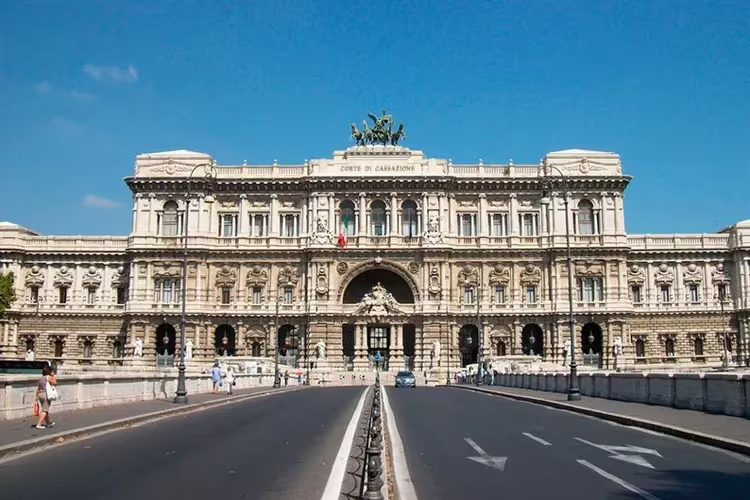
On the very bank of the Tiber there is an enchanting building of the Palace of Justice. Its construction took about twenty years. It is noteworthy that the place of its erection was chosen quite symbolically – on the former Hill of the Hangers, where, in fact, death sentences were carried out. This palace became perhaps the largest building in Rome, but it seemed to the city authorities that this was not enough.
Citizens had to unite to save the surrounding buildings from destruction. If you have any difficulty finding the Palace of Justice, focus on the Napoleon Museum, which is located directly on the opposite bank of the Tiber.
Fourth day
On the last day of your stay in Rome, you can continue your walking tour on a sightseeing bus, having previously determined the stops for yourself. Alternatively, carry out “point” sorties. Decide.
Baths of Caracalla
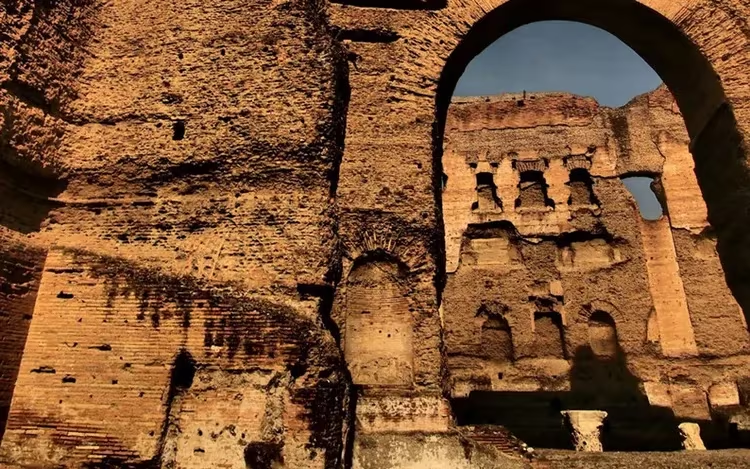
This most interesting historical complex was built by the decree of Emperor Caracalla at the beginning of the millennium. The once huge building was covered with a massive dome, inside there were halls for gymnastics, massages, pools with hot and cold water, and even libraries. Aristocrats and nobility took baths here until the 5th century. At the time of the raid of the next barbarians, who blocked the aqueducts of the city in order to starve the population with thirst, the baths were abandoned. Again, they started talking about at the time of random excavations carried out in the 16th century.
Today, in the summer, a huge stage is being built near the western wall of the Baths of Caracalla for concerts of opera singers and ballet performances. To visit the baths of Caracalla are open on any day from 9 am until the end of daylight hours, except Mondays, when the baths are open only until lunch. Entrance fee – 6 €.
Old Appian Way
From the pages of school textbooks, we all know the main road leading to Rome. Merchants, pilgrims, legionnaires passed along the Appian Way. Today, this ancient “highway” is a cluster of attractions. The appearance of such a number of monuments in this place is associated with the ban on burying the dead within the walls of the city. This prohibition applied to all Romans, and therefore burials were carried out along the main Roman route. Impressive tombstones, magnificent statues and monuments accompany the road for many kilometers. Of great interest to tourists are the catacombs with burial niches, which sometimes go several meters underground.
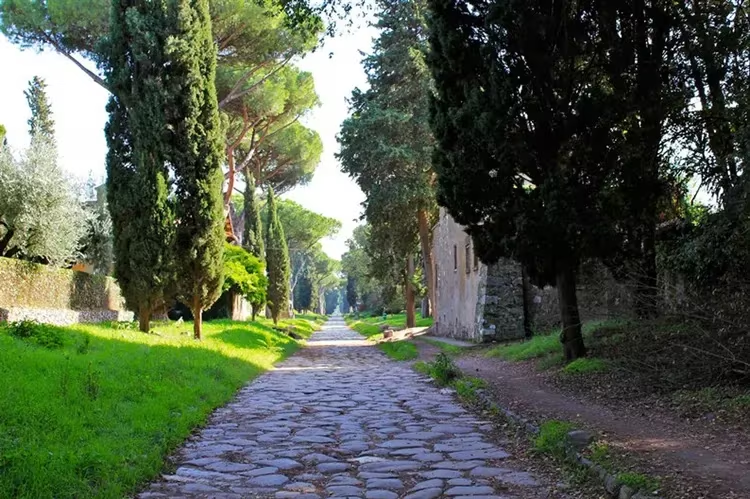
The most convenient way to get to the Appian Way is the Archeological trambus, a special sightseeing bus. Pick-up point from Piazza Cinquecento (Termini). It runs every half an hour, the ticket is 12 €.
At the gates of San Sebastiano, a milestone marks the beginning of the old road. Here you will see fortifications, bastions and you can visit Museo delle Mura (ticket -3€). Further, towards Caffarella Park, it is better to continue the journey on a bicycle, which can be rented near Domine-Quo-Vadis. A sign at the fork will show you the direction of travel towards the medieval farm and park. The street you continue down will later take you back to the Via Appia. And now the most interesting thing awaits you, the cemetery of San Callisto. These are ancient underground burials of Roman bishops, consisting of five tiers. They are open to visitors all days except Wednesday, from morning to 12 noon, then from 14:30 to 17:45. Entrance ticket – 5 €.
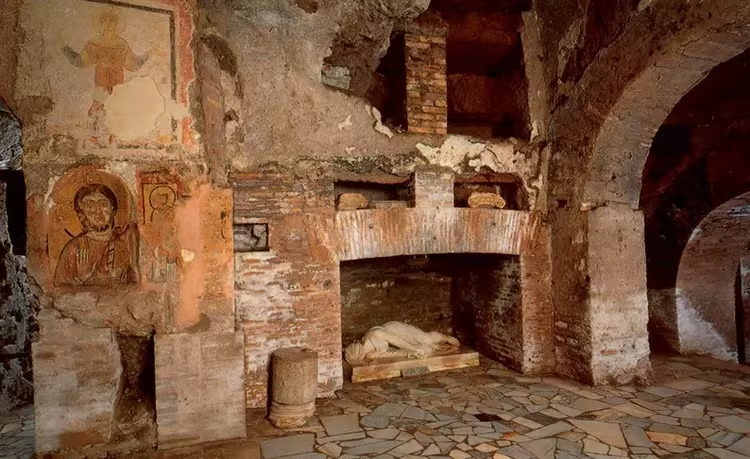
Continuing along the Appian Way, you will also be able to visit the catacombs of San Sebastiano and the Basilica of San Sebastiano, which receives visitors every day except Sunday, from morning to 12 noon and in the afternoon, from 14:30 to 17:00. The cost of visiting is 5 €.
At the end of the route, your eyes will see the remains of the temple of Romulus and the arena, which has been perfectly preserved to this day, which accommodated about 10 thousand spectators in its stands.
Days spent in Rome will make you convinced that this is a city of long walks, a city of unforgettable, lively images and vivid impressions. He beckons to himself again and again, promising to reveal the secrets of history to you again.