
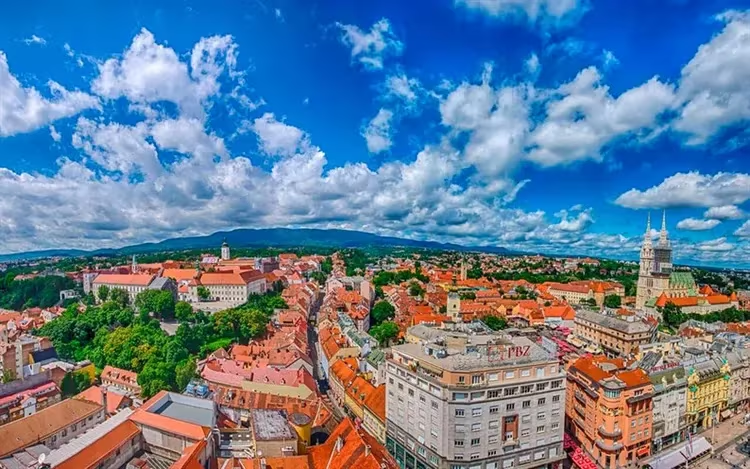
11 best sights of Zagreb – photo and description, map, what to see in Zagreb
Walking through the quiet and beautiful streets of this cozy European city, you can trace the history of his life. Every street is a magnificent building, a work of art. Museums, of which there are a huge number, do not make the city inanimate. Everything here is harmonious and charming. This is a city where you want to stay.
900 years of history
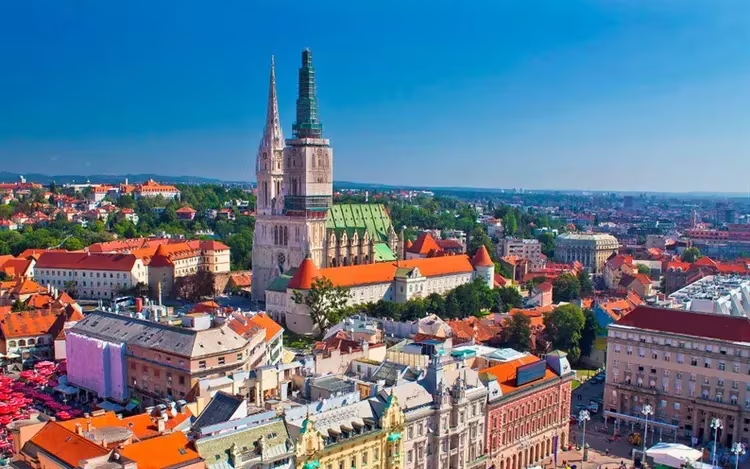
Zagreb became the capital of Croatia in the middle of the 16th century, and the first records about it appeared in 1094. Then the Hungarian king Laszlo I established a bishopric in the settlement on the Kaptol hill. Nearby was the settlement of Gradets. Hradec became a city in 1242. At the same time, the construction of the city wall and the construction of the tower began, where a bell hung, informing the townspeople about the closing of the city gates. At the beginning of the 17th century, Hradec and Kaptol merged into one city, which was given the name Zagreb. The history of the name is ambiguous. Many historians are inclined to the version according to which the old Croatian word “zagreb”, meaning fortification, gave the city its name.
As a city with centuries of history, Zagreb boasts an abundance of buildings, each one of a kind. Zagreb is sometimes called the city of museums. They are here at almost every step. For tourists, time and opportunities still have their limits, so it is necessary to highlight at least 10 of the best, of which everyone will choose to their taste.
Tower with a fortress wall
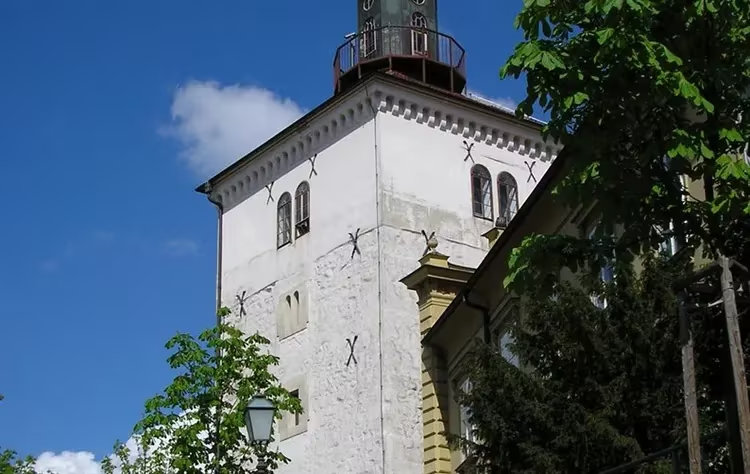
The most epochal construction of the city is the tower with the remains of the fortress wall. Its age is about 800 years. The stone gates were built at the same time. There is a small chapel with an icon of the Mother of God protecting the city from misfortunes. Citizens often come here to pray and thank for their city, in which they really want to live. The height of the tower is about 30 meters. If you need to take a beautiful panoramic shot, then you will not find a better place. You can see almost the entire city from here. Every day at exactly noon, the cannon in the tower fires a shot, which over the centuries has become an integral part of city life. Clocks are set on it.
Cathedral of the Assumption of the Virgin Mary and Saints Stephen and Vladislav
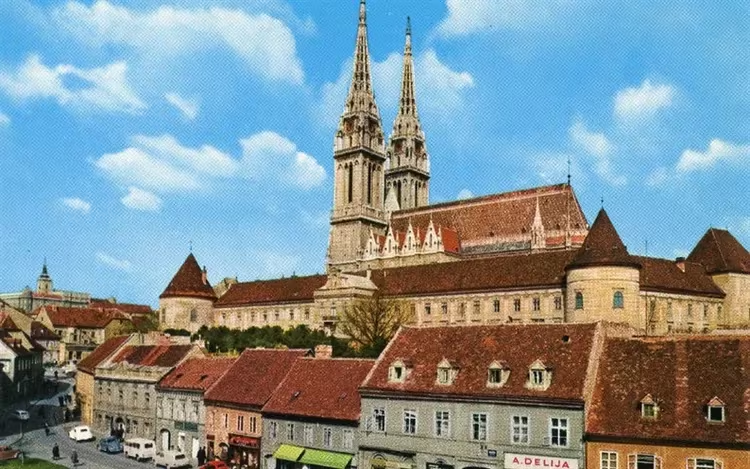
The next most important for the city is its symbol, emblazoned on the national currency. This is the Cathedral of the Assumption of the Virgin Mary and Saints Stephen and Vladislav. This temple was born as a dedication to St. Stepan, in 1175. Until now, it has been rebuilt several times. The final height of the building is 105 meters. Thanks to the light stone and carved decorations, the temple from afar seems to be floating in the air. But close up, a person is lost next to these impressive dimensions. Going inside, get ready for the atmosphere of this place.
The main shrine here is rightfully recognized as a sarcophagus with the relics of Cardinal Aloysius Stepinac. Sunlight entering the building through multi-colored stained-glass windows gives the whole setting a mysterious look. Unobtrusive moldings and numerous sculptures decorate the cathedral, making it not an ordinary temple for prayers, but rather a museum.
Croatian National Theater
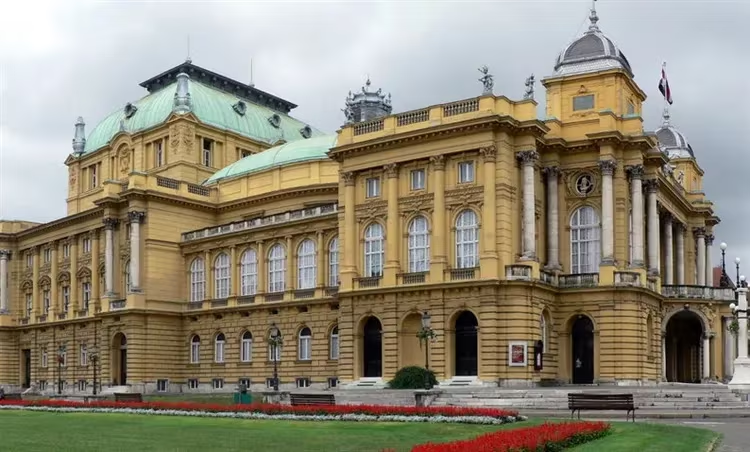
Another building can be admired in any weather. Depending on the lighting, it can be strict, solemn, and romantic. We will talk about the Croatian National Theatre, which can be safely called a work of architectural art. It was built in 1895 and is located on Marshal Tito Square.
The theater organically looks from all sides, surrounded by neat flower beds and lawns. Its yellow color becomes golden on a sunny day, and it seems to glow all over. And the evening illumination gives it solemnity and mystery. So it seems that the ticket will turn into a fan or an elegant hat, and you will enter inside as a different person, ready to contemplate this beauty not only from the outside, but also inside. And there is something to see here. Antique lodges, comfortable chairs. All in velvet. The curtain is decorated with an illustration from the opera. In anticipation of the beginning of the theatrical performance, the setting creates the most appropriate atmosphere.
The architecture of Zagreb is like a necklace of beautiful buildings, alternating temples with their holy walls and more secular buildings created for museums, theaters or exhibitions.
Church of Saint Mark
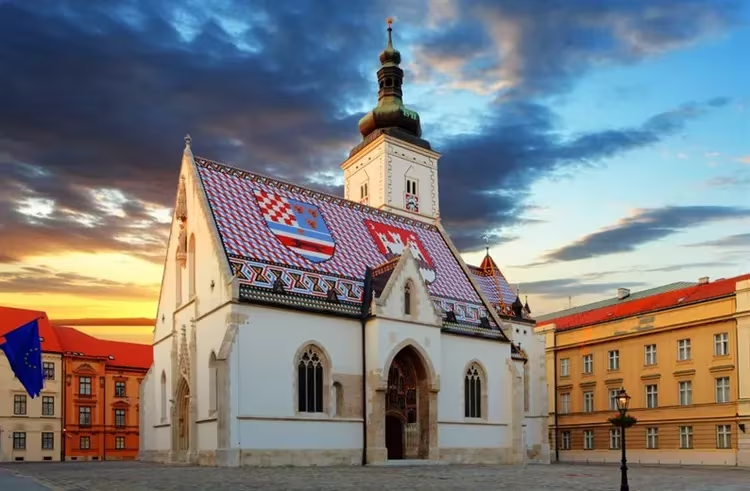
Temples decorate this city, as well as other architectural forms. The Church of St. Mark is ordinary only at first glance. Its roof is worth paying attention to. It is made of tiles of different colors. It turned out to be a mosaic. Unbelievable, but true. And all the elements formed into the coats of arms of Croatia, Slavonia, Dalmatia and Zagreb. This project took place in the 19th century.
Cullin's house
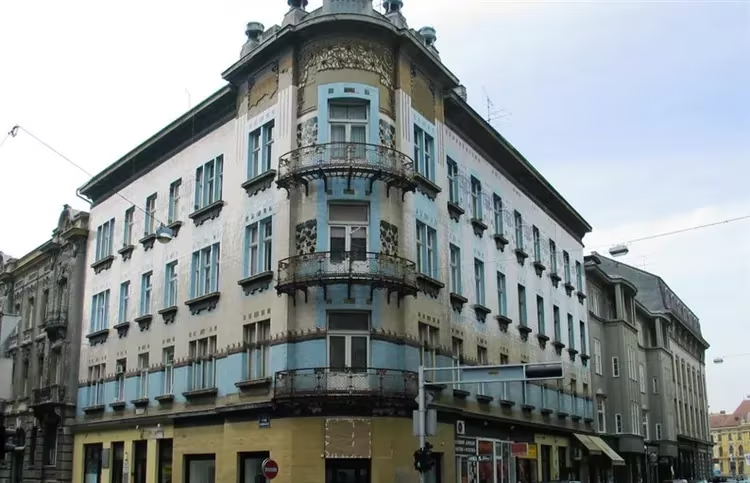
Continuing the tour of the city, you should definitely look at the Cullin House, located at the corner of Masarykov and Gundulichev streets. It was built at the beginning of the 20th century for an industrialist producing ceramic tiles and served as a kind of advertisement, since the walls of this building are completely covered with top-class ceramics. Openwork balconies give it elegance.
Strossmeyer Gallery
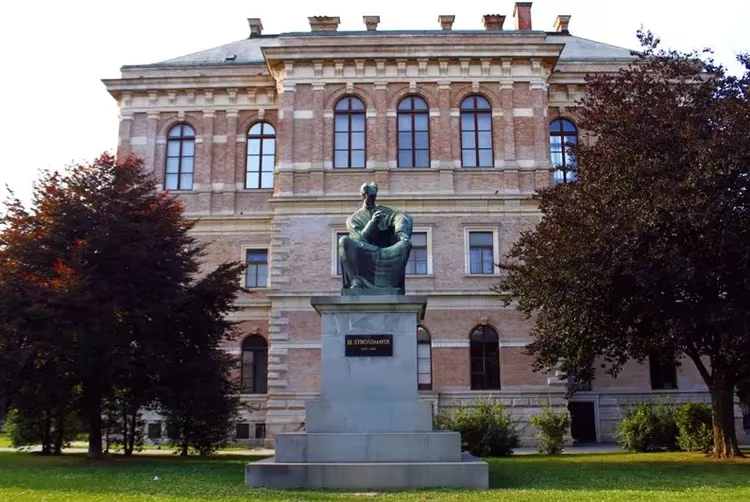
Zagreb is not only the political capital of Croatia. It is also a cultural center, which contains many theaters, museums, galleries and exhibitions. One of them is the Strossmeier Gallery or, as it is also called, the Old Masters Gallery. It was founded in 1884 at the expense of Bishop Strossmeyer. About 4,000 works of art are collected in this temple of fine arts. Among them there are works by Dürer, El Greco, Goya. In front of the gallery stands a monument to the creator and inspirer.
Mimar Art Gallery
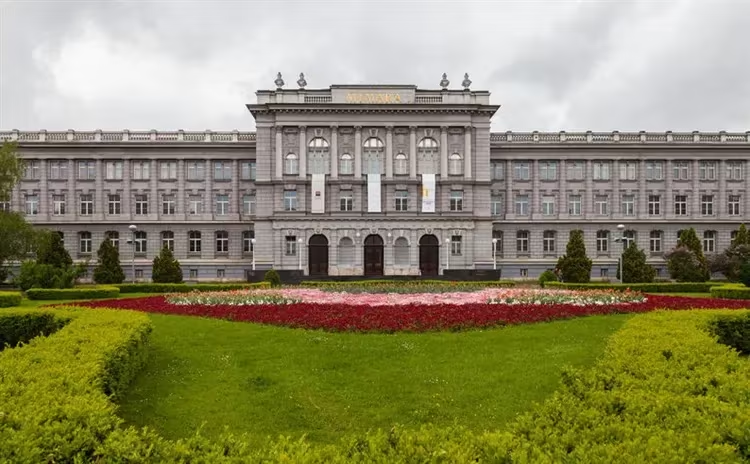
Another example of the cultural significance of Zagreb is the Mimara Art Gallery. Ante Topić Mimar, who was born in Zagreb but lived in Austria, has been collecting paintings and objects from all over the world all his life. At the end of his life, he gave it all to his hometown. For this priceless gift, a museum was even opened in the building of the former gymnasium, built in the 19th century. Its value lies in the unique canvases, of which there are about 3,700 copies. The works of the Flemings, Bosch, Rubens are exhibited here. Connoisseurs of this type of art can spend the whole day within the walls of the museum.
Park Maksimir
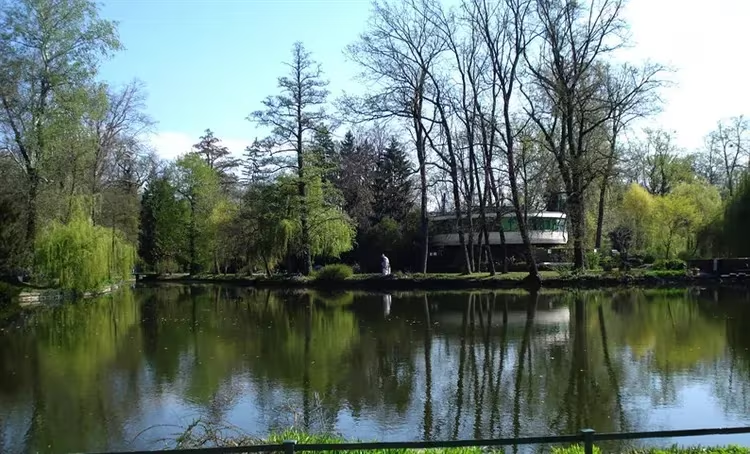
Happy, but tired tourists will be happy to relax in the Maksimir park, where the townspeople like to spend their free time. This delightful place will make you forget about fatigue under the murmur of water and the rustle of leaves. The park is simply drowned in the greenery of numerous plants. This work of landscape gardening art was created in 1794 and named after Bishop Maximilian Vrkhovets, who was the main inspirer of its creation. There are many lakes on the banks of which you can just sit on the grass. At the end of the 19th century, the park was supplemented by the Botanical Garden, which has tens of thousands of plants in its collection. Maksimir is recognized as a monument of park architecture.
Zagreb Zoo
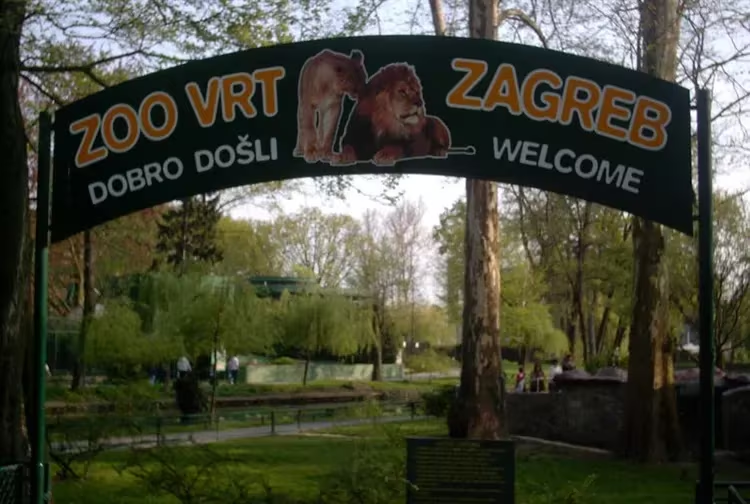
Speaking about this corner of Zagreb, one cannot but mention the Zagreb Zoo, located in the park. Outlandish animals, such as the pygmy hippopotamus, the beautiful and proud snow leopard, the elegant and graceful Saharan oryx, walk in spacious enclosures next to the animals that we have ever seen before. The entire staff of the zoo participates in the program for the conservation of rare species of animals, birds, and reptiles on the planet. This kingdom is spread over an area of about five hectares.
Cemetery Mirogoj
Each city is beautiful not only with museums and theaters. The memory of people who are always living, but not with us, is worthy of being respected. In Zagreb they know how to respect the memory of the departed people. The Mirogoj cemetery is not just a resting place. Everything here is beautiful – from the entrance and walls, immersed in greenery, to the monuments at the burial sites.
The entrance with columns entwined with ivy does not say in any way that this is a place of mourning. Greenery, knowing the care of a person, decorates this place. But it's not sad at all. Just peace, beautiful sculptures and many beautiful plants. I would like to think about the frailty of our existence. And nothing more.
Dolac and Hrelich market
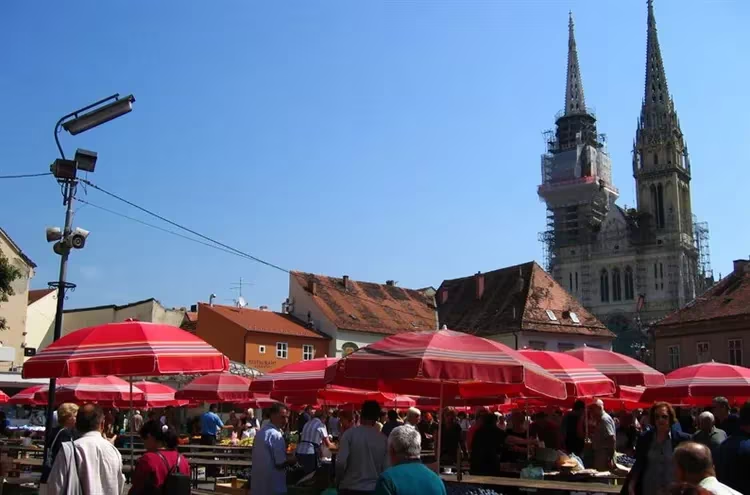
And at the end of the trip, it's nice to buy something in the local famous markets or on Ilica Street.
In the Dolac market, in addition to the freshest products brought by farmers in the early morning, there are also souvenirs, all kinds of delicacies, products of local craftsmen. If you didn't find anything interesting there, don't despair. At the most famous flea market in the country, Hreliche, you will definitely find something unusual that interests you. It sells everything from buttons to cars.
Fans of shopping in branded boutiques Zagreb will offer a walk along the longest street in the city of Ilica, where the head is spinning from the abundance of shops.