
16 best free things to do in Barcelona
A trip to the capital of Catalonia, the city founded (according to ancient legends) by Hercules, is not only long-awaited, mysterious, but also requires special preparation. To get acquainted with its history, to see at least a part of the sights is offered in a variety of excursion routes. Having paid for the services, you can feel the extraordinary atmosphere of the premises of the Main Royal Palace, where the kings of Catalonia solemnly welcomed Columbus. Enter numerous churches, cathedrals, the Town Hall building. Get acquainted with the “heart” of the city – the ensemble of buildings of the Gothic quarter. Freeze in amazement, looking at the architecture of Antonio Gaudi, visit museums, art galleries, theaters. Famous artists and sculptors created their masterpieces in this amazingly beautiful city. Some of them can be seen using the free entertainment in Barcelona.
Citadel Park
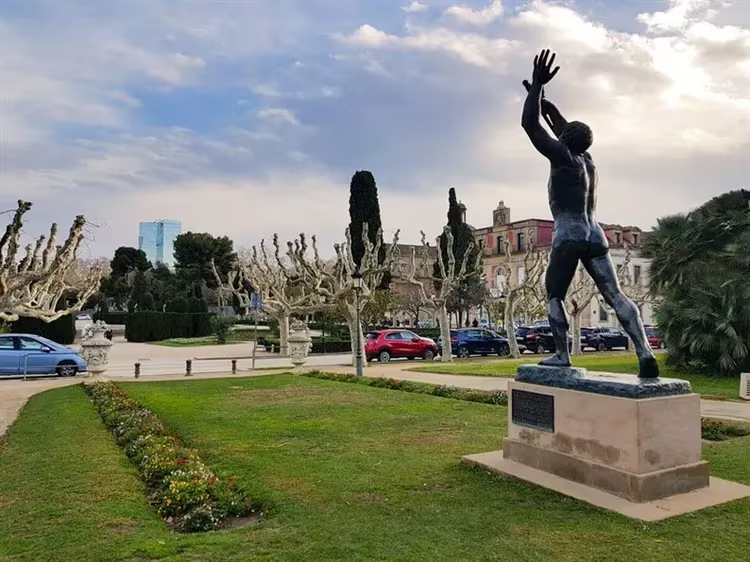
In the central part of the city there is one of the favorite places for recreation of residents, walks for guests. Its appearance is associated with the historical period of the XVIII century, the construction of the powerful walls of the fortress. Later, through the efforts of famous architects, the park was decorated with fountains, sculptures, flower beds, alleys. Part of the city has turned into a luxurious recreation area, harmoniously complementing its extraordinary atmosphere. It is nice to walk here with children, just relax on the lake.
See the huge fountain “Cascade”, made in the form of the Arc de Triomphe and unique sculptures of Venus, Aurora, mythical animals. Of great interest to children is the zoological museum (Castle of the Three Dragons), the zoo (here you need to pay an entrance ticket). It is one of the best zoos in Europe. Free of charge in the park it is offered to walk along the famous promenade – Kompanias alley.
View the buildings of the ancient chapel, the governor's palace, the arsenal. It is proposed to start exploring the Park from the location of the Arc de Triomphe of the city. It is located at the beginning of Kompanias Avenue. It is easy to get here by metro L4. Get off at Ciutadella / Vila Olimpica station. Tram #4 to Wellington stop.
Book a private transfer from the airport to your hotel for 3 167 RUB
Barceloneta beach
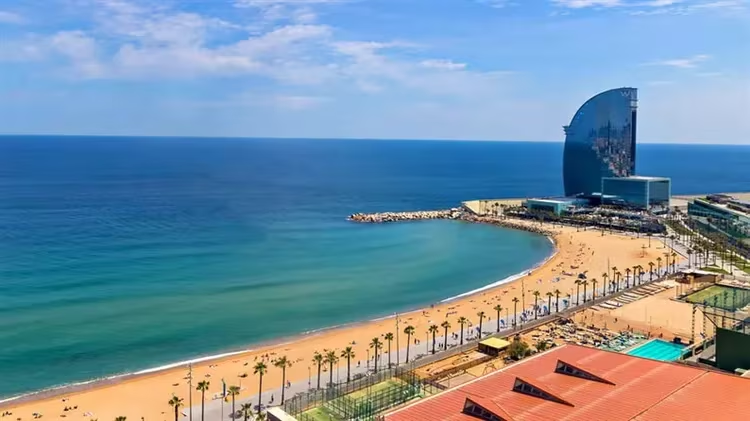
The city's oldest beach is a 15-minute walk from the famous Columbus monument. A wide coastal strip of golden sand (1.1 km long) appeared on the site of an old fishing village. The area of the city changed in preparation for the 1992 Olympic Games. A beach infrastructure was formed here, buildings of hotels, cafes, restaurants appeared. There is a promenade for leisurely walks along the seashore. Areas for roller skating enthusiasts have been allocated.
Sports, playgrounds and play areas are guarded by the police around the clock. The free beach is considered the safest, protected recreation area and loved by local youth and tourists. The beach area ends at the Olympic port. Nearby you can see interesting ships, the highest skyscrapers of the city. Their height is 154 m. For a small fee, walks on some ships are allowed. You can come to the beach by metro (there are several stops nearby), by land transport.
Metronome Museum
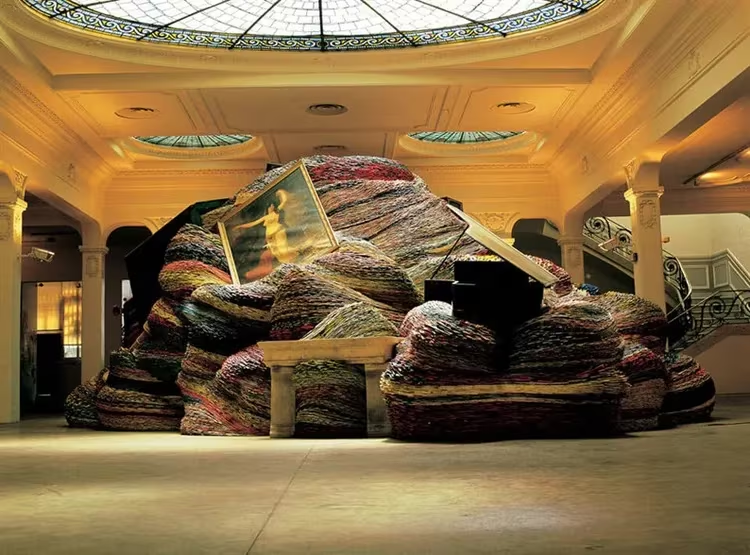
In 1980, one of the modern museums of the city began to work in the building of an empty wholesale warehouse. The initiator of the creation was the collector Rafael Tous. A feature of the exhibitions of the new institution was the innovative form of presentation of elements. The Metronome Museum has become a platform for the expression of new, unexpected ideas, experiments of masters of different areas of art and creativity.
Among the interesting expositions are sculptures, paintings, photographs, videos, original works of national culture. In some places, modern and forgotten dances and music are presented. Acquaintance with the exhibits of experimental art takes place using installations and other techniques of the new time. It is often difficult to attribute exhibition proposals to a particular type of art. United in one place, they are original and allow us to call the ensemble the Museum of the Future.
Exhibitions built with the use of modern technologies are invited to view without paying an entrance ticket. There are many such museums in Barcelona, which allows you to learn interesting facts from the culture of the country even during a short trip. Who knows, maybe among the innovative works, there are works of the future Dali, Gaudi, Picasso. The temperament of the Catalans, the sea, the sun, the mythical past have always formed great abilities in art here. Address: Carrer de la Fusina, 9.
Mount Montjuic
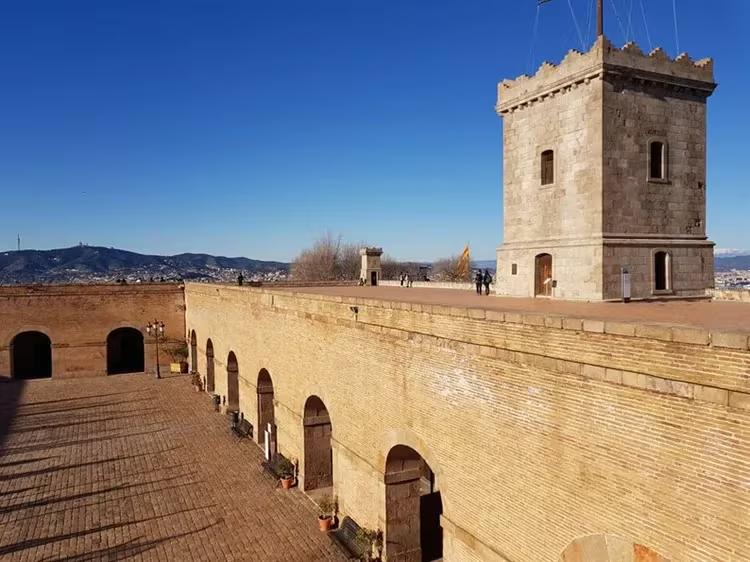
One of the best places to travel for free is the sightseeing of Montjuic. From its top there is an excellent view of the city, the Mediterranean Sea. Climbing the hill, 170 m high, it is recommended to start from the Plaza de España. The structures of the ancient land (bastions, watchtowers of the famous fortress built in 1640) guarded the capital of Catalonia and were considered strategic objects.
In the 20th century, the “Jewish Mountain” or “Hill of Jupiter” received a second birth: it became the largest European park. Next to the architectural masterpieces of the Middle Ages (the castle on top, the Spanish village), new buildings of museums and the Olympic Center have grown. Events in honor of the World Exhibition in 1929, the Olympic Games in 1992 put the green kingdom in order, created huge botanical gardens (their area is 300 hectares) with walking paths, cozy recreation areas, exhibition grounds, theaters.
Among the attractions on the mountain, the attention of tourists is attracted by: the main historical building of the Montjuic fortress, the Magic Fountain, the futuristic Calatrava Tower (TV tower). The amazing steel structure, designed by Santiago Calatrava, looks like an athlete holding the Olympic torch. The shadow of its spire determines the time, like a sundial. The ancient breath of life is most strongly felt during a trip to the old cemetery, opened in 1883. Columbarium, sculptures, monuments, Gothic monuments do not stand out against the background of modern buildings, but create a harmonious historical ensemble. You can play here all day long.
Magic Fountains
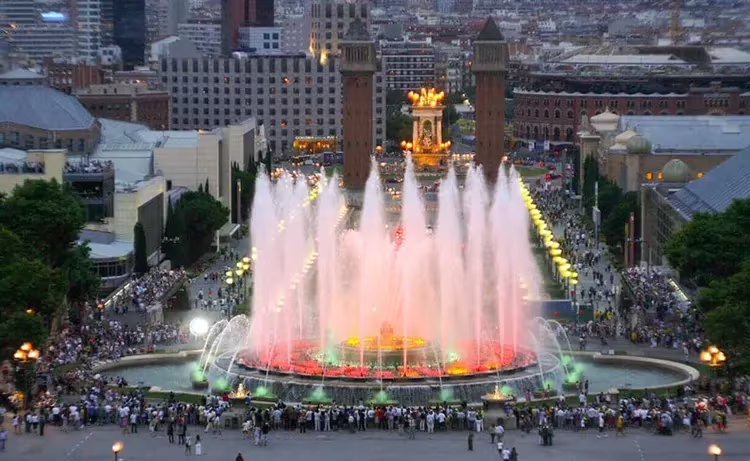
At the foot of Montjuic, against the backdrop of the majestic Palau Nacional National Palace, there is a light-musical, magical fountain Font màgica de Montjuïc. Millions of tourists come to admire the spectacle formed by an unusual hydraulic structure. It is difficult to convey the feelings of a person when in the evenings, simultaneously with music, over 3 thousand jets of water fly up and merge and intertwine in a single dance.
At the same time, the palace looks even more mysterious, more beautiful. The magical effect of the fountain is created by passing high-pressure water through special cermet filters. The illumination of the fountain is constructed from 4760 light sources with 50 shades. The fountain is supplied with water by five pumps and 2629 separate streams. They are controlled by computer programs. The equipment is located in the machine room. It is located under the center of the fountain. You can go to it. The main fountain is surrounded by oval pools built in the form of steps.
The total volume of water in them is 3 million liters. The height of the fountain streams reaches 50 m. The magic fountain is part of an ensemble of cascading fountains located from the National Palace to Plaza de España. A unique light music show takes place in the evenings (seasonal schedule applies) and lasts about 3 hours 20 minutes. Classical, folk, popular melodies sound above the square. Water jets dance to the beat of the music. It is best to observe the bizarre figures while sitting on the steps of the palace. It is proposed to get to the magic fountain by bus 150, 13, metro.
Museum of National Art
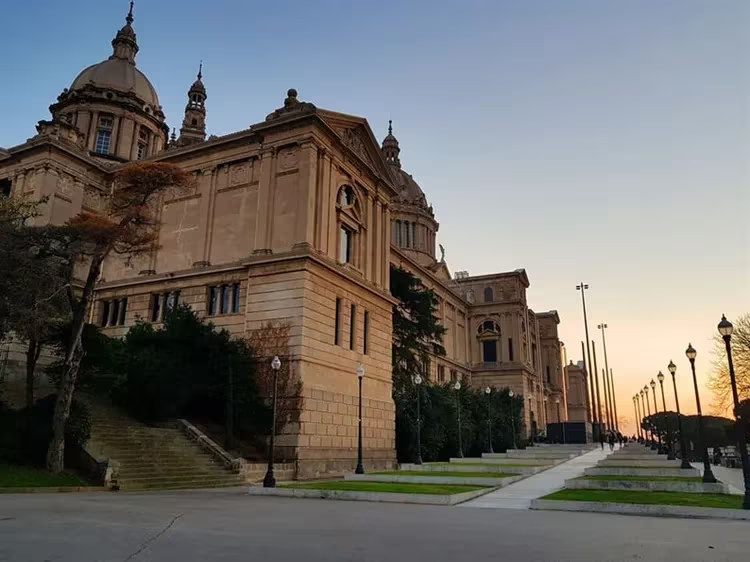
For the opening of the exhibition in 1929, the Palau Nacional was built. The building, designed by the architect Pedro Kendoya Oskoe, housed the Electricity Pavilion. In 1990, the building was restored and transferred to the Museum. The first collections were formed on the basis of elements of existing institutions of Modern Art and the Art Museum of Catalonia. Now the composition is supplemented by three cultural institutions. Since 1932, the Museum (the premises of the palace) has housed expositions of paintings, sculptures, and various art objects.
The museum is considered the center of collections of works of the Romanesque period. It contains many artistic masterpieces created during the Renaissance, works with elements of Gothic, Baroque, Catalan easel painting. They are represented by independent expositions. The Department of Contemporary Art of Catalonia was opened with paintings of Art Nouveau of the 19th and 20th centuries. A separate hall is dedicated to exhibitions of engravings and drawings. These are the best works created in the last three centuries.
Moments of the life of past times are reflected in a large collection of photographs. An understandable interest is the examination of the expositions of the department of numismatics. Here are the coins of the 6th century BC. The Museum houses restoration workshops and a library. The entrance ticket is valid for 2 days from the date of purchase. Its cost is specified on the website. To visit the Museum for free, you must come on the first Sunday of every month. Children under 15 years old, adults over 65 years old pass without payment on any day.
Park Guell
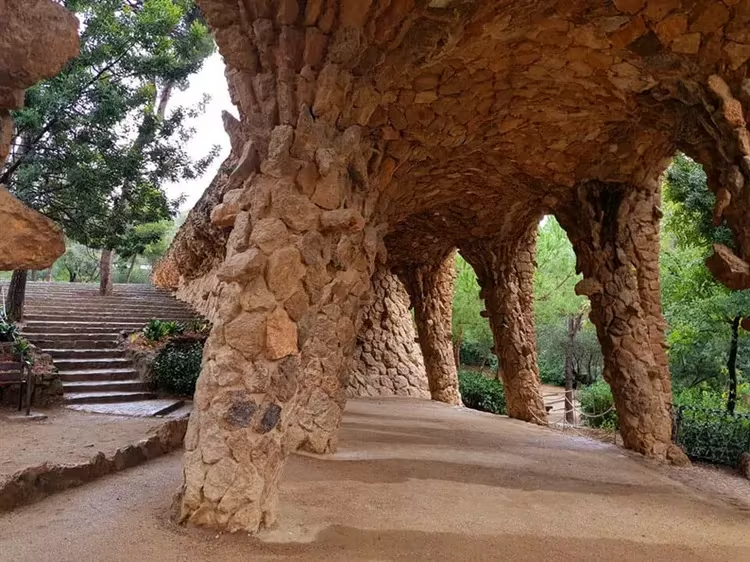
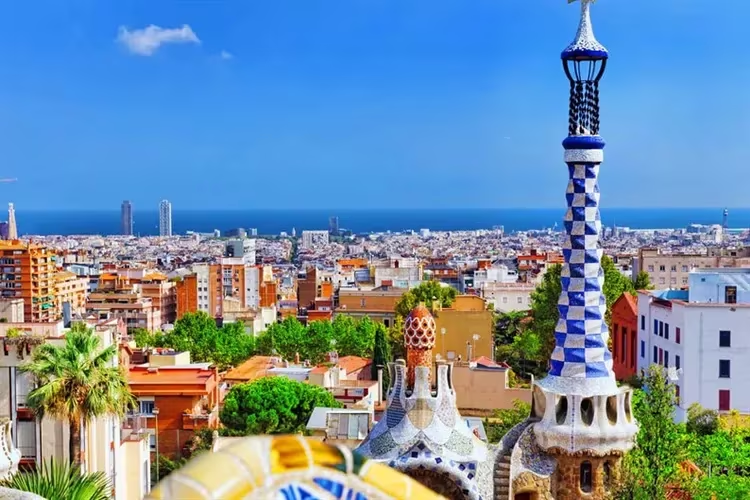
It is impossible to come to Barcelona and not walk through Park Güell. His story was born in 1900 according to the idea of the richest man of those times, Eusebi Güell. He proposed to create a city-garden on Bald Mountain, which can only be seen in a dream. For the work he invited his friend Antonio Gaudi. His unusual understanding of the world, the idea that “there are no straight lines in nature, it is not monochromatic” made it possible to build a monument of unlimited imagination, unpredictable architectural solutions.
It is difficult to determine where the elements of architectural styles end, the possession of masterpieces of sculpture, three-dimensional painting begins. Amazing buildings, hilly pavilions, caves, grottoes, figures of fantastic animals associated with the legends of the appearance of Barcelona, stone palm trees that look like living ones. In 1984, Parc Güell was included in the UNESCO World Heritage List. Since 2015, visiting the park has become paid. There is only one option (useful and not bad) to walk along amazing paths, sit on the famous bench or stairs, think while looking at the houses built by Gaudí without buying a ticket.
This is to go to the monumental area before the opening. There is an approved opening time for the park according to winter and summer schedules. At any other time, the barrier tapes are removed, providing access to free space. After analyzing your capabilities, it is proposed to boldly go for a walk. Twilight and darkness will not be complete, and the fairy tale looks even more real. Better yet, visit the park with a pre-ordered ticket (the main thing is not to be late by the specified time) and take a few walks in the evening or at dawn (work starts at 8, 8, 30 in the morning). Park address: Carrer d'Olot, 13.
Boqueria Market
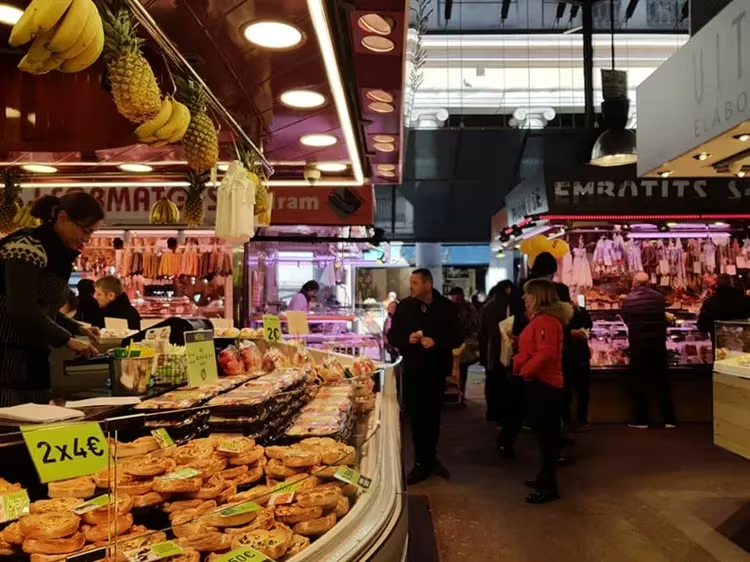
Visiting the market can be conditionally called free. There is no entrance fee to Sant Josep Market, but any wallet will be eased after a stroll through the popular food market. The first mention of the colorful market dates back to 1217. Not far from the entrance gates of the city of Boqueria, they set up shops and sold meat. In 1470, it was called the “Straw Market” (Mercat de la Palla), they sold pigs and any goods. Now it is a building made of glass and concrete, decorated with beautiful mosaics.
The metal roof appeared in 1914. There are many trading floors, the necessary equipment. Multi-tiered counters are lined with fragrant meat and fish dishes. They are always fresh, the assortment is made up of products brought from different regions of the country. It is best to try the famous jamon meat (“pata nigra”) here. And yet you can't pass by colorful tables with fruits, enjoy their unusual aroma and, of course, taste the fruits of the Mediterranean paradise.
The authentic atmosphere of the old market entices, gives pleasure from a “free” walk. To make the right purchase, it is recommended to visit the market several times. At the first impression, the eyes cannot stop at something specific and necessary. Market address: Placa de la Boqueria. The nearest metro station is called Liceu. Starts work at 7, 8 o'clock in the morning. The best time to visit is from 6 to 7 pm.
Sagrada Familia
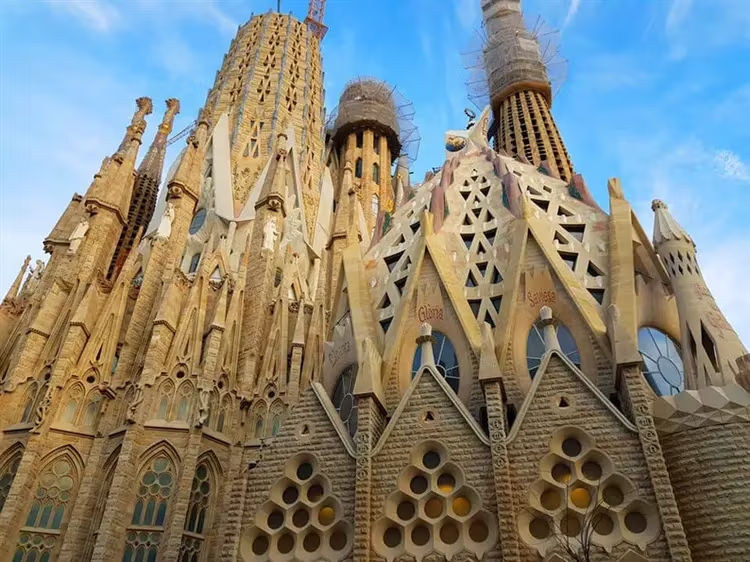
The temple is considered the most famous landmark. This is a redemptive church. From the point of view of Catholics, it is intended to atone for the sins of unbelief committed by the inhabitants of the city over the past two centuries. The construction of the church was carried out at the expense of donations. It is invited to see it from the inside and outside. Impressions will remain unique. As if a stone lace, created by an unknown force, descended from heaven, froze and aspires to the sky, the sun.
The long-term construction of the planet has an amazing history associated with the work of Gaudi. After the tragic departure from life, construction continues according to the drawings developed by the author. It was his fantasy, an unusual perception of the world that gave the descendants a magical stone fairy tale. The stone arms of powerful columns with capitals resembling tree branches securely hold the structure, which looks like a web of trunks of a wild natural forest.
Unusual engineering solutions of the architect, their full compliance with the laws of mechanics have been confirmed in our computer age. The consecration of the Temple took place on November 7, 2010. It is planned to complete the construction of the Temple in 2026. And then the highest Christian church of the planet (172 m high) will appear before the eyes of the surprised tourists. Now this place is occupied by the Ulm Cathedral in Germany. The Gothic towers of three facades (one Nativity facade was erected under Gaudi) will indeed “sing” from the wind, like an “organ for the Lord”, filling the Temple with the music of the Creator.
Mount Tibidabo
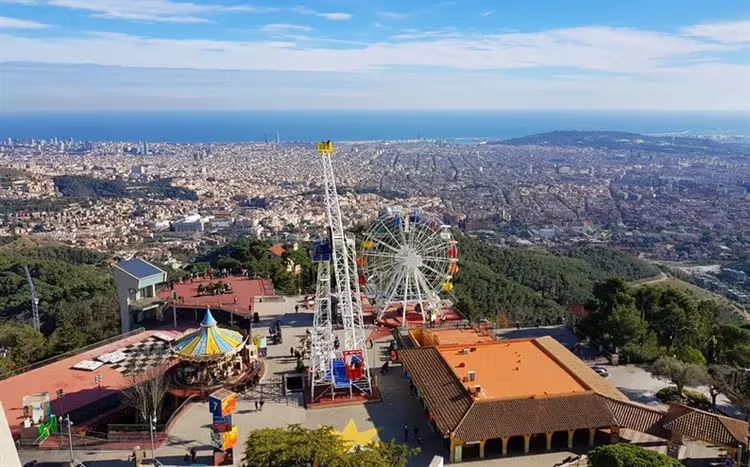
Standing on the observation deck at the feet of the figure of Christ crowning the amazing Gothic Temple of the Sacred Heart, one cannot help but feel the spirit of the legends of the birth of Barcelona. Moreover, it is visible from anywhere in the city and attracts with fantastic power. Here it is a magical world created by God as a priceless gift to mankind. “Tibi Dabo” or “I give to you,” the devil whispered to Christ, offering to give up all earthly joys. Christ did not betray man, and as a sign of gratitude, people erected a temple, aspiring to heaven, to the triumph of light, victory, and the sun.
Historians have proven that there was a monastery in the holy place long before the construction of the Temple. The aura of antiquity did not disappear, but entered the atmosphere of the Holy Temple. It is proposed to come to the panoramic platform on the famous blue tram. The ascent to a height of 575 m passes over steep slopes, green areas, gorges and makes a special impression on the trip. It is proposed to spend the whole day on the mountain (taking food, as there are few restaurants, cafes). Travel is of particular interest to children.
They can see the ancient amusement park with numerous attractions. This is “Air Train“, “Airplane Tibidabo”. During an extreme flight, the whole city is clearly visible. Despite their venerable age and original appearance, the rides are safe and comfortable. The museum of mechanical toys, robots, the Viking carousel, and the Ferris wheel operate on the territory. The park was formed at a time when the mountain was not listed as part of the city. The extraordinary panorama from the mountain will remain in memory for a lifetime.
Rambla Street
The pedestrian street of the city of the central part begins at Plaza Catalunya, passes to the Old Port. Structurally, it consists of 5 independent boulevards, connected into a single zone 1.2 km long. The spacious promenade on the seashore creates a noisy atmosphere of the city center and a popular promenade lined with interesting sights. There are always a lot of walkers here. They look at the pearls of Catalan architecture: the Liceu Theatre, the Boquería Market, the Virreina Palace.
Visit museums of wax figures, erotica. Next to the street is the famous Gothic Quarter, the building of the city's oldest university. On the first floors of houses standing on the street, there are many boutiques, restaurants, cafes, souvenir shops, and other elements of the tourist infrastructure. Useful information for those who want to shop: the biggest discounts (up to 70%) appear in August and January.
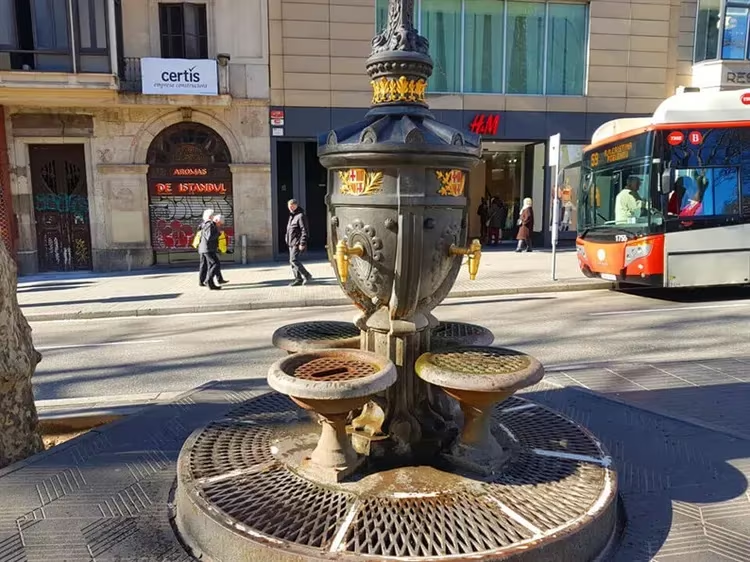
The walking boulevard is buried in flower beds, beautiful alleys. There are original “living” statues on it, there is a cheerful bird market. At the end of the boulevard, the waves of the Mediterranean Sea are splashing. The most beautiful street is often called the heart of the city. Near Plaza Catalunya (Marine Rambla or Canaletes) is the famous cast-iron fountain, made in the 19th century. Tourists rush to drink water from it to test the belief and be sure to come to Barcelona again.
Labyrinth Horta
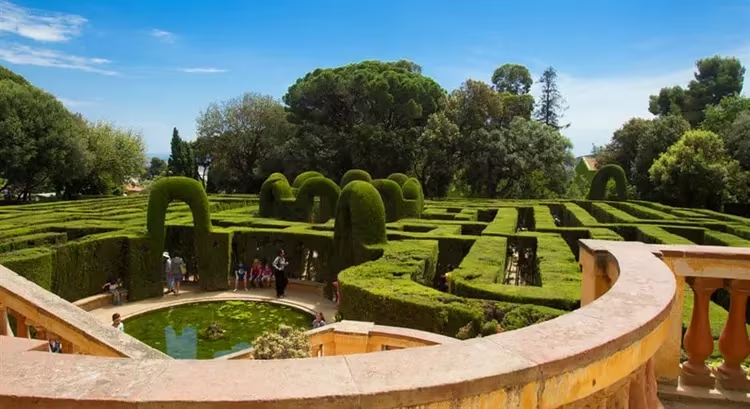
On the territory of the old manor Desvalls, located on the slopes of the Sierra de Collserola mountains, a neoclassical garden appeared in the 18th century, which became the oldest park in the city. The main part of the park (which gave it its name) was a labyrinth of cypresses. On an area of 50 by 50 m, intricate paths are formed, fenced with slender plantings. It seems to be easy to get through. But you don’t even notice how you find yourself in a green dead end.
From this moment begins an exciting game of victory over the labyrinth. Crowds of tourists try to fall into this place. At the central point of the labyrinth there is a platform with benches for rest. Gaining new strength, visitors find a way out. The park consists of several levels, a romantic garden. It has many beautiful flower beds. The pleasant streams of the waterfall ring. Above the labyrinth there are pavilions made in the spirit of the traditions of Spain.
Tuscan columns, statues of Ariadne, Danae, copies of ancient Roman temples. Near the stairs leading to the last tier, there is a statue of the god of winemaking Dionysus. On the upper part there is an interesting pavilion dedicated to the nine muses and a beautiful pond with water from an underground spring. Address: st. Passeig dels Castanyers? 1-17. It is proposed to travel by metro to Mundet station or bus routes 76, 73, 27, 60.
Bunker El Carmel
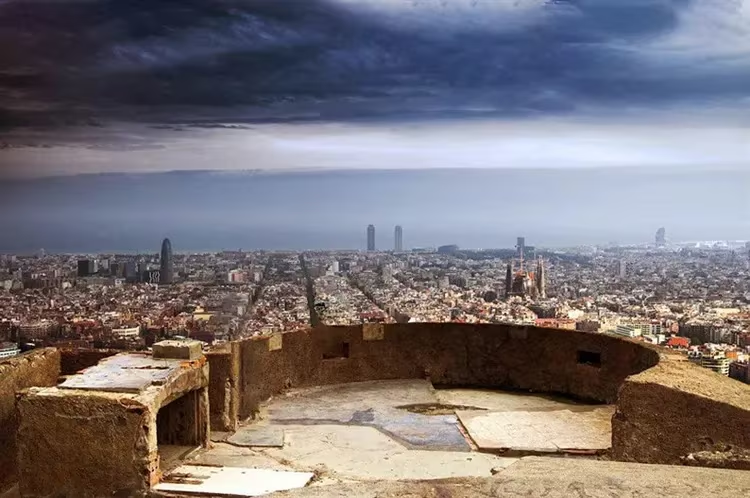
To see the beauty of Barcelona, tourists use equipped viewing platforms. There are many of them in the city. Among the best places is the observation area, located in the historical landmark of the city – Bunker El Carmel. It was built in 1947 during the civil war on top of the Turo de la Rovira mountain. The view from the bunker towers was 360 degrees. It was the most convenient place to watch the approaching enemy.
The walls, loopholes of two towers used for shelling have been preserved. They can be bypassed, examined in detail. From the observation deck you can see the streets of the nearest district of Eixample, running over the horizon. Port, boundless sea, Mount Tibidao, Park Güell, Church of the Virgin of Carmen. The city is very close. The bunker is located at Marià Lavernia, 59. The easiest way to get here is by bus number 119 of the Panorama-Labèrnia stop. But you can take the subway or walk. It is offered to enjoy the panorama of the city for free.
Plaza Catalunya
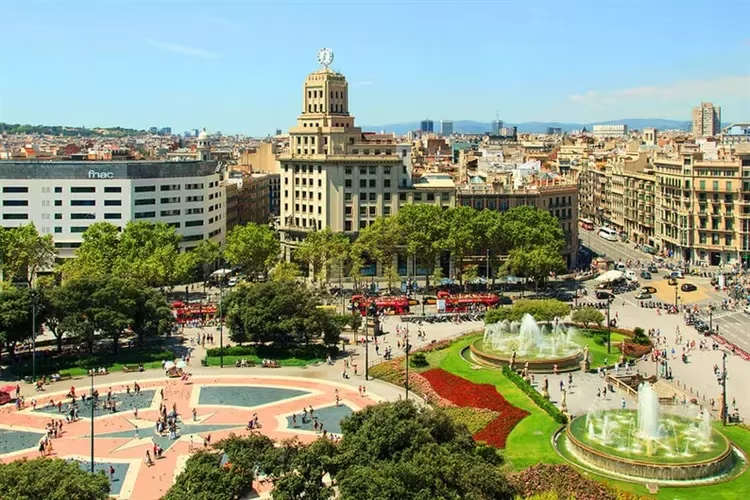
In this place it is convenient to start an independent (and together with organized excursions) acquaintance with the city. On the central square there are stops of many transport routes, tourist buses, four metro lines intersect. 9 well-known streets begin from the square, including the famous pedestrian Las Ramblas. Until the middle of the 19th century, there was a wasteland separated from the city by a wall.
According to the project of Ildefonso Cerda, the territory began to be built up with neoclassical and historicist buildings. 28 sculptural compositions made by famous masters were placed on the round square. An open-air sculpture museum was formed. It includes graceful statues of “Youth”, “Goddess”. Complicated works “Work”, “Wisdom”, “Shepherd”, figures of horses. Tourists are interested in the monument to the first president of Catalonia in the form of an inverted staircase, fixed on a stone pedestal.
Each of the four provinces of Catalonia is represented by its own sculptural group. Beautiful flower gardens, numerous fountains with drinking water, a green lawn surround the square, creating a natural oasis in the heart of the bustling city. Residents hold festivities and concerts on the square. Tourists are happy to get acquainted with the architectural masterpieces surrounding the square.
Among them are the Pech i Pon house, owned by the country's Credit Bank, the huge El Corte Inglés store with an unlimited supply of any goods and a panoramic restaurant. Triangle shopping center, Zurich cafe. It is proposed to come to the cult place of the capital (north – western part) by metro to the Catalunya station.
Las Arenas
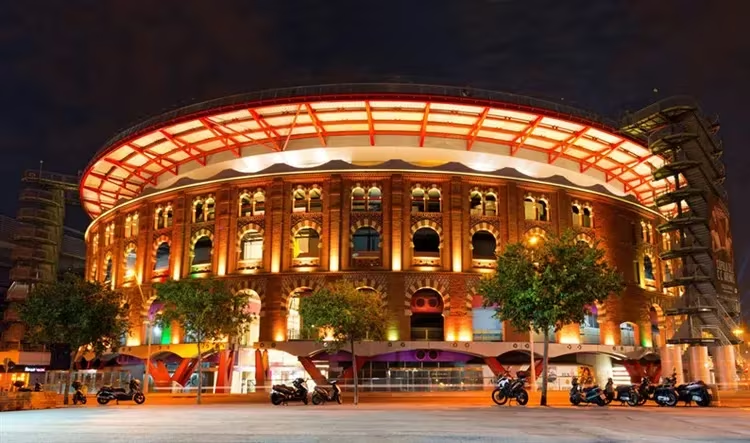
Walking along the Plaza de España, one cannot help but visit the huge shopping center. The history of the building is connected with the famous bullfights that took place here in a special arena. The ban on their holding in 2012 required changing the purpose of the building. The six-story building houses 100 shops, a cinema, a spa center, a hairdresser, bars, cafes, and restaurants. Shopping lovers are offered a choice of branded goods from Punto Roma Desigual Mango Celio.
Cosmetics, sports uniforms and equipment, household appliances, children's toys, clothes. The ground floor is like a market with lots of eateries. On the top floor is the main feature of the shopping center – an observation deck. It is proposed to come to the open terrace by a paid elevator, or free of charge by an escalator from the trading floors.
There are restaurants all around the terrace. There are 10 of them. Each menu includes a variety of dishes. Fast food, sushi, tapas, grilled meat prepared according to traditional recipes of Catalonia, masterpieces of Japanese cuisine, etc. Sitting in any of the restaurants, you can enjoy the view of the city, the extraordinary sunset. Shopping center address: Gran Via de les Cortes Catalans, 373 – 385.
Flea market Enkants
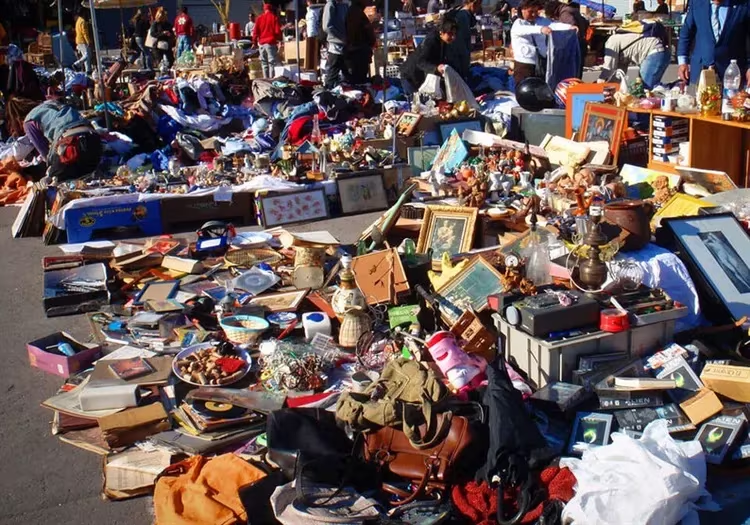
Most often, a place is allocated for flea markets in a wasteland closest to a big city. Lovers of antiques, old spare parts for various equipment, watches, cameras, etc. are drawn here. For them, it is a pleasure to check the mountains of old things in search of something interesting for themselves. Moreover, the price can always be negotiated.
The history of the creation of such an Encants market begins in the 14th century. It is considered the oldest flea market in Europe. A few years ago, a specific trade center occupied an ultra-modern building built using new materials and technologies. Convenient location near Glories metro station attracts locals and tourists here. The market stalls are filled with antique jewelry, lace capes, scarves, and porcelain items.
Black and white photographs, which decorate many of the stalls, create a special atmosphere of bygone times. The mirrored ceiling of the building multiplies an endless paradise of interesting goods. It is recommended to come here early in the morning. The chances of finding an antique silver tray, a vintage leather item, a unique watch, a painting are greatly increased.