
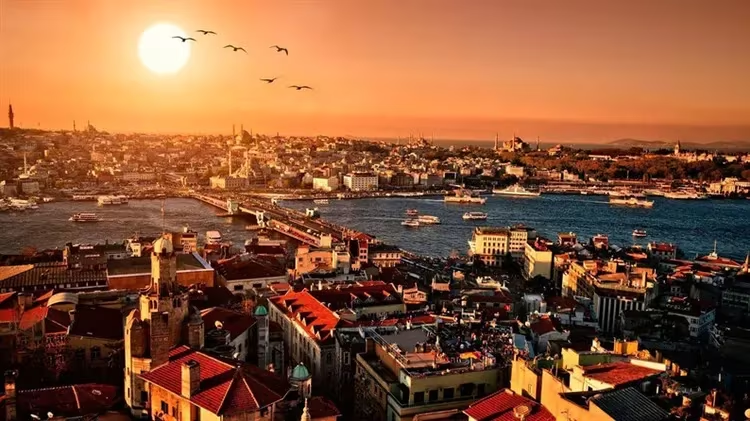
20 most beautiful places in Turkey – photo, description, map
Turkey is a fabulous country, which without exaggeration can be called a grandiose open-air museum. Here, from the depths of antiquity, ancient monuments of architecture grow before your eyes, breathtaking views of falling waterfalls and quiet blue lagoons delight, mysterious caves beckon to underground galleries. To get the most out of your stay in this amazing country, do not miss the opportunity to see the most beautiful places in Turkey. We will introduce them to you in the article.
Koprulu Canyon
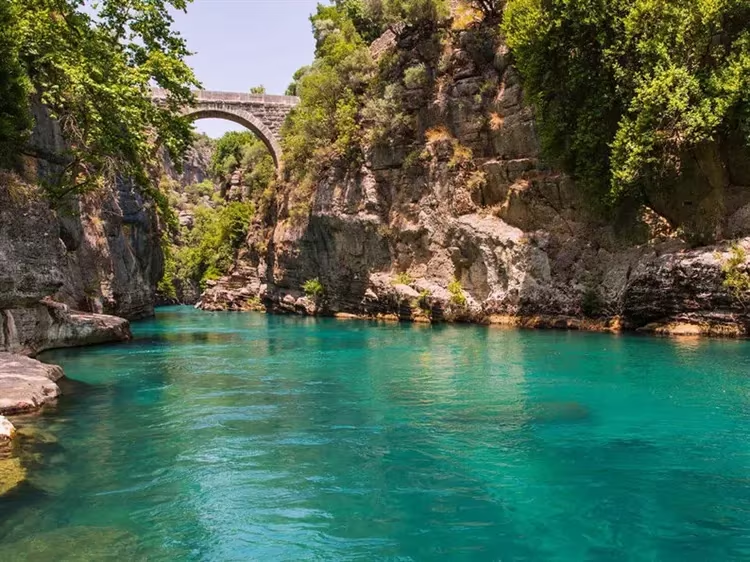
In Turkish, Köprülü means “canyon with a bridge“. The historical Oluk Bridge, which has survived to this day, in ancient times connected two cities on the banks of the river – Pisidia and Pamphylia. Koprulu Canyon is both a canyon and a National Park, spread over an area of 500 hectares in the vicinity of Antalya near the village of Manavgat. Having cut a gorge 14 km long and 400 m deep by turbulent water streams in the rocks, the canyon was formed by the mountain river Köprüchay, stretching for 183 km.
In the Koprulu Canyon National Park, you get the chance to see over 500 species of trees and plants that create a picturesque landscape. The variety of bird species and the giant one and a half meter sea turtles are amazing. Every tourist can have an exciting time in the park: go down a mountain river on rafts, take a horseback tour to the ruins of the ancient city of Serge, or travel by boat along the lakes and tunnels of a mysterious karst cave. It will be most convenient to visit “Köprülü Canyon” on a sightseeing tour.
Damlatas cave
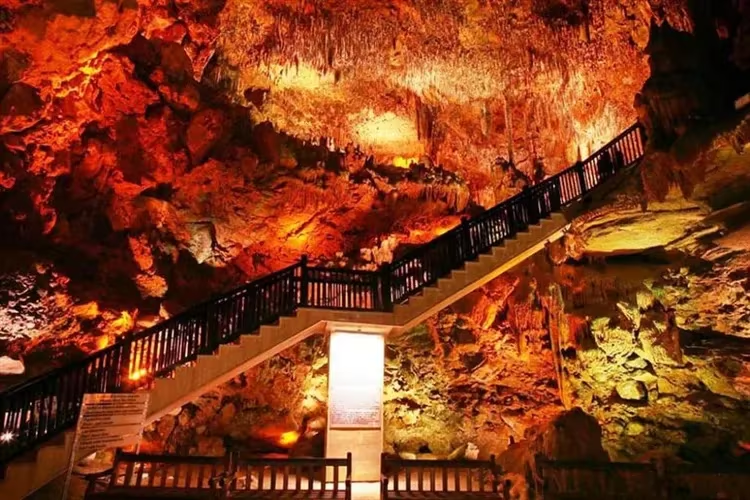
In the center of Alanya, near the famous Cleopatra beach and the historical fortress, there is an interesting attraction – the Damlatas Cave. It attracts tourists with ancient bizarre stalactites and stalagmites dating back to the 15th and 10th centuries BC. Two words merged in the name of the cave: damla – a drop, taş – a stone, because water continuously drips onto the stones from stalactites. The multi-color palette of figures formed by stalactites and stalagmites, created by artificial lighting, evokes the feeling of being in an unreal fantasy world.
A visit to Damlataş, thanks to its healing air rich in carbon dioxide, is beneficial for people suffering from heart disease and asthma. The cave is small in size and it will take no more than 20 minutes to visit it. There are benches along the walls of the dungeon, on which those who wish can sit down to breathe in the healing air. Damlatash is open daily from 10.00 to 19.00.
See prices for tours to Turkey
Dim Cave
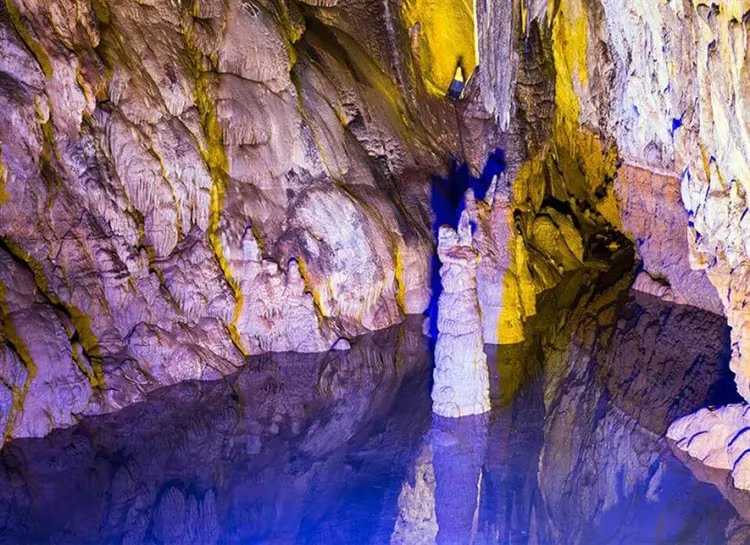
On the slope of Mount Cebel Reis, which is 12 km northeast of Alanya over the gorge of the Dim Chay River, there is an amazing Dim Cave, one of the largest in Europe. It was formed by water streams of rainwater that fell into a crack in a limestone rock. This cave is believed to be almost a million years old. Its corridors and tunnels are 10 to 15 m wide and branch into 2 branches. The right corridor leading from the entrance is small up to 50 m in length, and the left one stretches for 360 m.
Suspension bridges-paths are laid along the entire length of the corridors. Walking along them, you admire with admiration wall abstract landscapes created by nature from stalactites and stalagmites of various sizes. In the middle of the path, a flutist plays on the left branch. The sound of a flute under the arches of the cave gives rise to a game of imagination with the vision of bizarre images and figures. Moving along the corridor, tourists reach a small underground lake.
A visit to the cave will take no more than half an hour. Coming to the surface, it is good to go to the observation deck, which opens an amazing panorama of the Dim Chai Gorge and the Taurus Mountains. The cave is open from 9.00 to 18.30 for the last tourists.
Zeytin Tash Cave
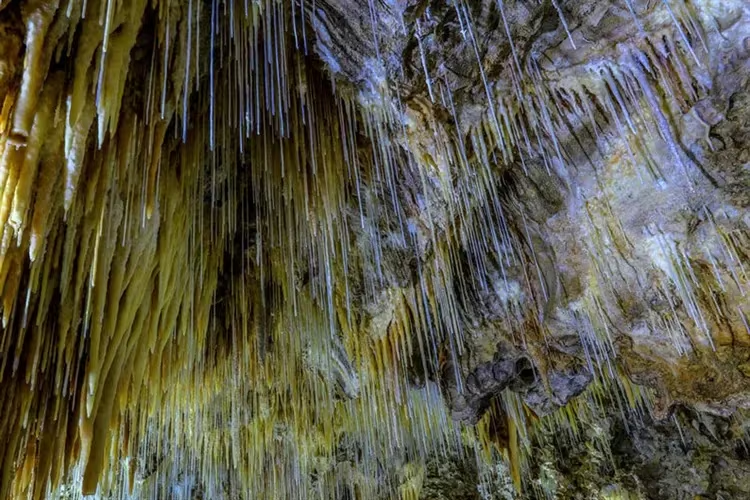
Just 20 years ago, not far from Belek, while developing a quarry, scientists discovered the Zeytin Tash cave (“Olive Stone”), a venerable age of 14 million years. Despite the incredibly fantastic beauty, the cave has not yet gained tourist popularity. It contains 2 connecting underground galleries, separated by halls – lower and upper. Only the upper corridor, which stretches for 136 m, is open to visitors. Due to the successful illumination of the world's thinnest stalactites and stalagmites hanging from the ceiling, reaching a length of up to 50 cm, a magical atmosphere is created in Zeytin-Tash.
Natural karst formations, reminiscent of patterned fringes, impress with skillful forms. The most beautiful of them in the form of openwork needles adorn the hall called Spaghetti. For the convenience of visitors, neat paths have been laid in the cave, along which you can even walk in heels. Inside the underground gallery, a constant temperature of 23ºС is kept. You can get into the cave with a tourist group, including no more than 10 people from 10.00 to 16.30, from May 1 to October 15.
Beldibi Cave
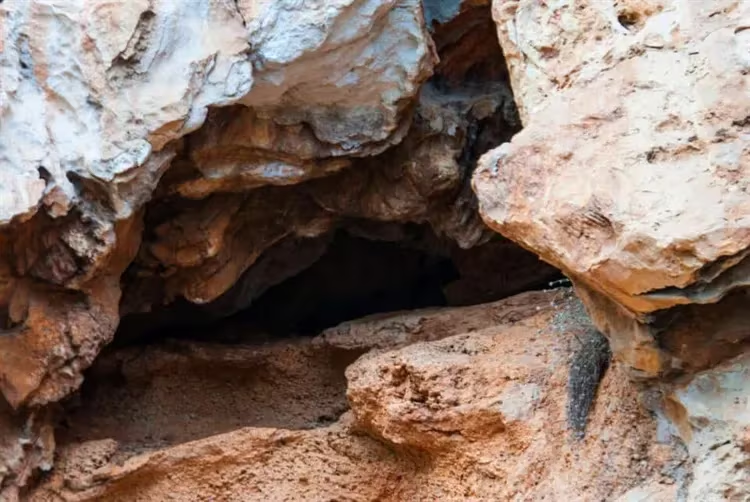
One of the brightest tourist gems of the Bedaglari National Park is Beldibi Cave, located 25 km from Antalya and 16 km from Kemer. She gained fame with the only petroglyphs in all of Western Asia. The name of the cave comes from the nearby village, along the coast of which a series of hotels stretched.
Currently, Beldibi is officially closed to visitors, but local guides continue to take daring tourists for 10 USD, who want to see the rock paintings of ancient ancestors with their own eyes. 6 cultural layers were found in the cave, representing the Mesolithic, Neolithic and Paleolithic eras with their transitional periods. This is evidenced by household items and labor of these eras, found here during excavations. Now these artifacts can be seen in the historical museum of Antalya.
Derinkuyu Underground City
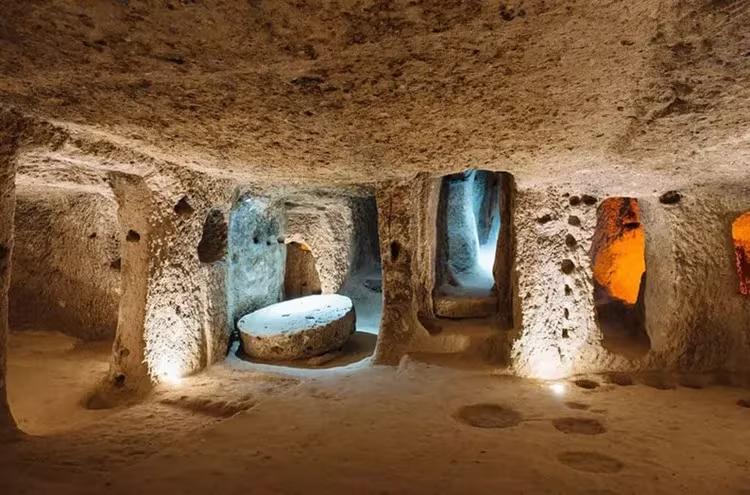
Cappadocia is known for its unique underground cities left by distant ancestors. The largest and most significant in cultural and historical terms is the underground city of Derinkuyu. It consists of caves carved in tuff, connected by underground rooms. The city, numbering 8 floors, goes 60 m deep into the earth. It is estimated that up to 20 thousand people could live in it.
You can get an idea of life in Derinkuy by seeing the premises of wineries and wine cellars, living rooms and kitchens, temples and chapels. There were dairies and workshops, schools, armories, water wells and even an underground cemetery. The city was equipped with ventilation shafts that ensured the flow of air. Scientists determined the age of Derinkuyu at 27 centuries, but it is still unknown whether they lived in it permanently or hid during the attack of enemies.
Today, 5 sites are open to visit the city with rather narrow and dimly lit passages, so it is better to take a flashlight with you. Know that the city was built taking into account that the enemy could get confused in the system of moves, so you should not deviate from the excursion route on your own. The underground city is open daily: April-October from 08.00-19.00; November – March from 08.00-17.00. Tickets stop selling 30 minutes before closing.
Duden waterfalls
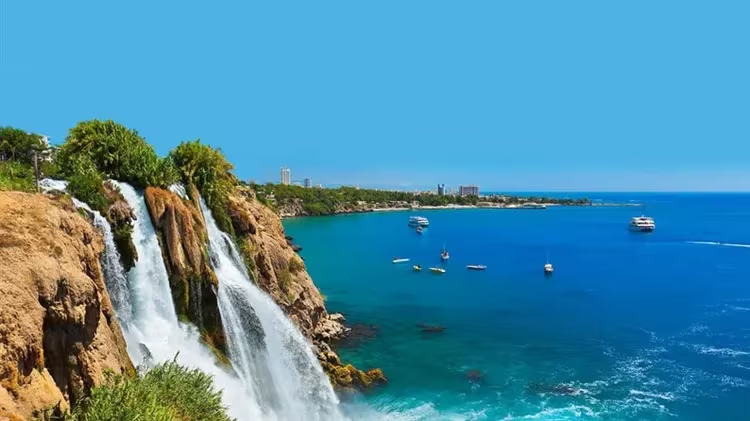
Two picturesque Duden waterfalls – Upper and Lower, cascading down from a height with the turbulent waters of the Duden River, tend to see many tourists. You can enjoy the view of the Lower Duden in the Duden Park or from the sea, sailing to it on a boat. The location of the Upper Duden is the Kepez district, 15 km from the Lower Waterfall. Let's take a closer look at each.
The peculiarity of the Lower Falls is the streams of water rushing from a height of 50 meters straight into the Mediterranean Sea. An incredibly beautiful view of the waterfall opens in the evening as a result of multi-color illumination, which invariably delights tourists on a sea excursion. You can also admire the picturesque waterfall from the park. There are places for recreation and observation platforms next to it.
The second name of the Duden waterfall is interesting – Karpuzkaldyran, which in Turkish means “bouncing watermelon”. In the Duden Park, in addition to visiting the waterfall, tourists who prefer active entertainment will be able to take part in rafting on the river and recharge their adrenaline on the Zip Line bungee.
The location of the Upper Duden waterfall is 11 km in the direction of the northeast of Antalya. Walking from the parking lot along a picturesque road, you will see a waterfall flowing down from a height of 27.5 m for about 600 years. The diameter of its water cascades is a little over 2 m. The waterfall becomes especially stormy in winter and spring, when the foaming water mass flows into the lake.
In the summer, in the absence of rain, water flows down from the rock in small streams. You can view the waterfall from different sides and different levels, thanks to the presence of equipped paths, ladders, bridges and slopes. After looking at the slope of the water, you can climb to the observation deck, next to which there is an entrance to the cave. From its windows opens a new perspective on the Upper Düden. Leaving the cave, you find yourself in a park where it is interesting to see the burials of the 2nd-3rd centuries AD.
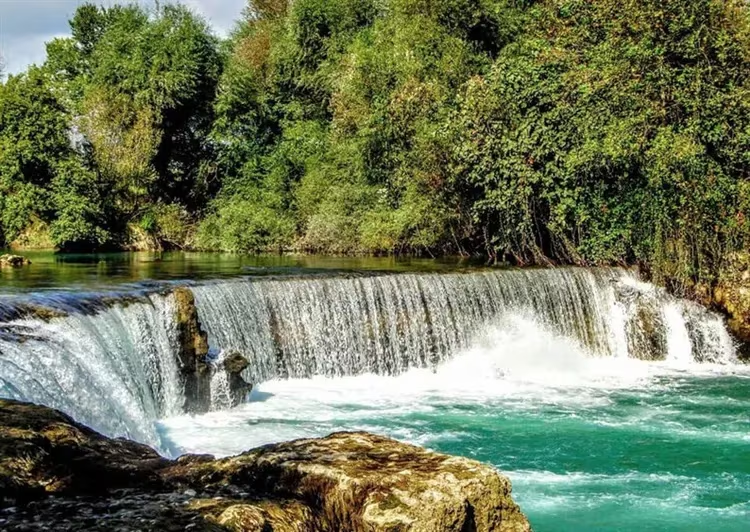
Not far from the resort of Side there is the city of Manavgat, which got its name from the picturesque mountain river. It originates in the Taurus Mountains and carries its waters to the Mediterranean Sea, cutting through the entire city of Manavgat. The waterfall formed by the river is located in the valley, in the central part of a small forest park. Its height is only 2 m, but its width, reaching 40 m, makes Manavgat unusually attractive.
The secret of this waterfall lies in the fact that it is a man-made attraction formed by a dam. On both sides of the hydraulic structure, platforms are equipped that open up beautiful landscapes. A visit to the waterfall is available from 8.00 to 19.00.
Olyudeniz
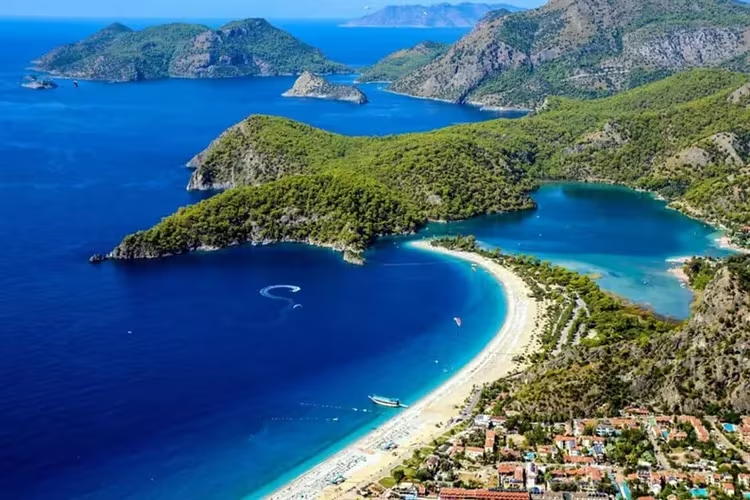
Oludeniz is a resort village located at the confluence of the Mediterranean and Aegean seas. Its name translates as “Dead Sea”. In fact, the sea here is amazingly turquoise in color, and the beaches covered with light sand and pebbles are some of the best on the Turkish coasts.
In Oludeniz, a beach holiday is perfectly combined with sightseeing tours, the main of which is Babadag Mountain, almost 2000 m high. It looks majestically among the three mountains surrounding the village. From the top of Babadag, tourists make breathtaking paragliding flights, and hiking enthusiasts make trails along the mountain slopes.
The tourist highlight of Oludeniz is the Blue Lagoon Reserve. This is a bay, embraced from the land by mountains, and from the sea by Turtle Island. The coast of the lagoon is buried in the greenery of the park, where you can meet various animals and birds. The beautiful landscape of the coast pleases with palms, pines and numerous flowers. The Blue Lagoon is a beautiful sandy beach surrounded by high cliffs. Another picturesque beach of the reserve is located in the Butterfly Valley.
Olympus
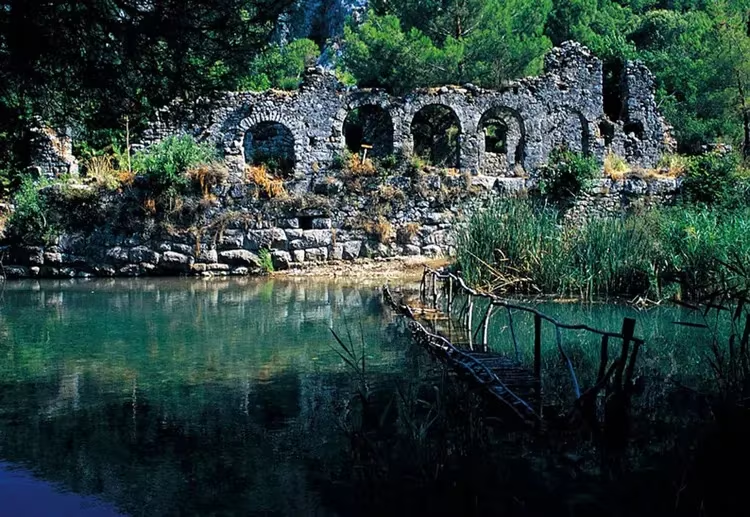
A visit to the ancient city of Olympos, located in the river valley near Mount Tahtali, 25 km from Kemer, will allow you to learn a lot of interesting things about the ancient era. Historians suggest that the city was founded in the 3rd century BC.
Today, excavations are underway on the territory of ancient Olympos. Tourists are given the opportunity to see only part of its territory, but it gives an idea of the heyday of the city in Roman times. Even the ruins of an amphitheater, a temple, residential buildings, a bathhouse, workshops and a water supply section speak of the skill of ancient architects and engineers. Here you will see more ancient Lycian tombs and sarcophagi.
On both banks of the river, fragments of embankments made of stone, a destroyed bridge and the remains of a city fortress wall have been preserved. Around Olympus there is a picturesque green area of the National Park with laurel and fig trees. Nearby is a beautiful wild beach of the same name, where during the season turtles lay their eggs in the sand. A visit to the ancient city is perfectly combined with a beach holiday.
Kaputas beach
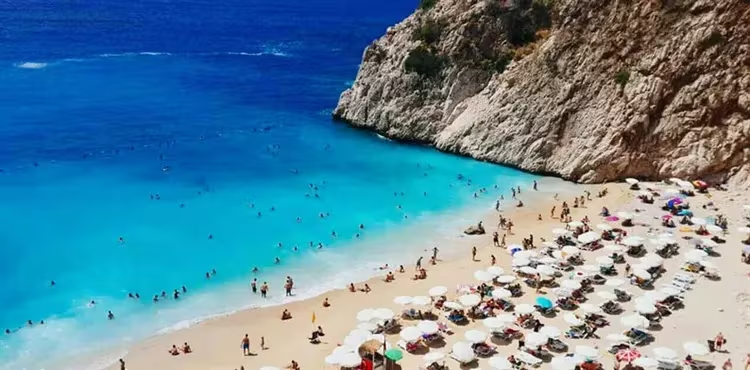
Kaputas beach, washed by the Mediterranean Sea, is without exaggeration one of the best beaches in Turkey. It is located 20 km from the picturesque authentic town of Kas. Kaputas, surrounded by rocks, does not stand out for its large size. It stretches for about 180 m in length and up to 30 m from the water's edge to the rocks. The beach is amazing with clear azure water and beautiful nature, unspoiled by civilization. The coastline is a mixture of large and small pebbles, with sand near the sea.
There is a minimum of beach infrastructure: only a cafe, changing cabins, a rental point for umbrellas and sunbeds. Even 20 years ago, the beach was completely wild, and it could only be reached by sea. Now regular buses go there from Antalya and Fethiye. But from the stop to get to the beach you have to walk, cross the bridge over the gorge and go down the stairs of 192 steps. However, the preceding pleasure from the surrounding landscape and the magnificent sea is worth it!
green canyon
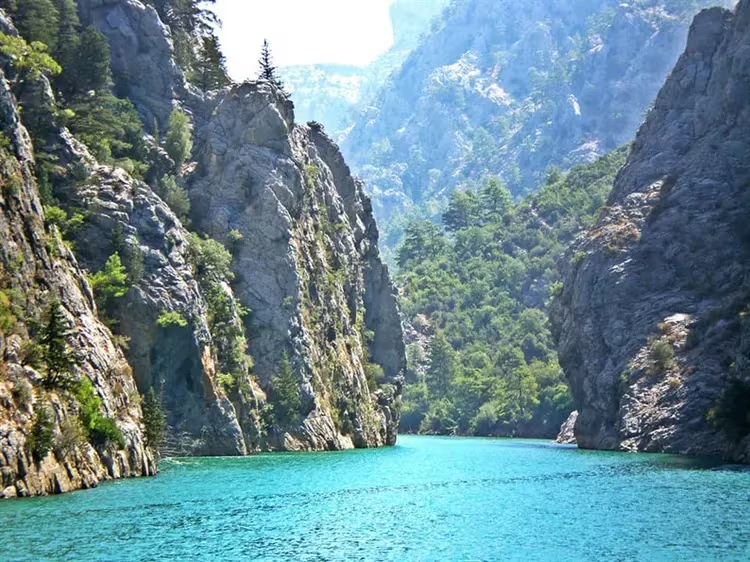
Among the Taurus Mountains, 10 km from Manavgat, there is a valley completely flooded with water, called the Green Canyon. Since ancient times, this place was a bend of the river and several lakes that fed the ancient Roman city with water. Today this place of 500 hectares is filled with the waters of an artificial reservoir, fed from 27 springs flowing down from the mountains. The canyon is called Green because of the emerald color of the water and the lush vegetation surrounding the man-made lake up to 100 m deep.
The amazing natural landscape delights, in which majestic rocks reflected in the surface of the lake, separated by cliffs and overgrown with pines, harmoniously fit. Another natural pearl on the territory of the Green Canyon – the Manavgat waterfall will delight you from the contemplation of extraordinary beauty. The green canyon and its surrounding territory is a National Nature Reserve, which attracts tourists with its picturesque nature.
North Anatolian Mountains
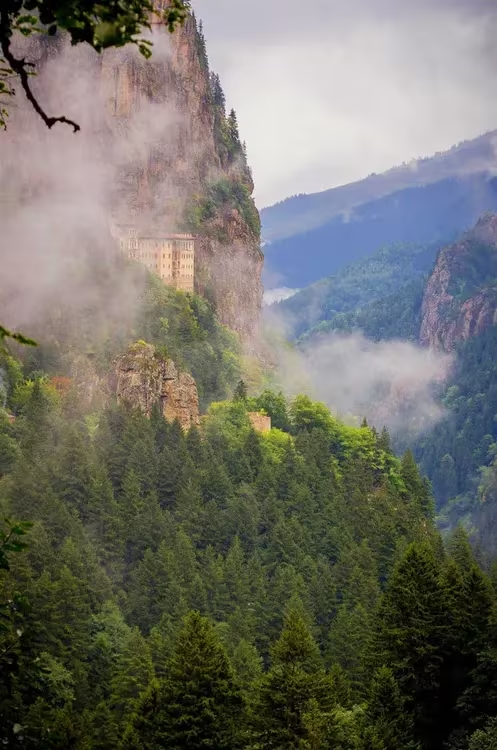
In northern Turkey, a ridge of the North Anatolian (Pontic) mountains stretches for 1000 km along the Black Sea coast. It is a series of parallel ridges that separate river valleys and gorges. The total width of the mountain range is up to 130 km. The peaks of the mountain ranges vary in height from west to east from 2000 m to 3932 m (Mount Kochkar), admiring their landscapes. The North Anatolian mountains, covered with malachite greenery, are famous for their picturesque panoramic views and healing mountain air.
They, like a magnet, attract people who are passionate about trekking, hiking along mountain trails and picnic lovers. The region of the Pontic Mountains is characterized by a flat coast, in several places of which small bays are formed, surrounded by mountains and rocks. The largest of the bays is Sinop, in the bay of which the resort town of Sinop is located.
Lake Van
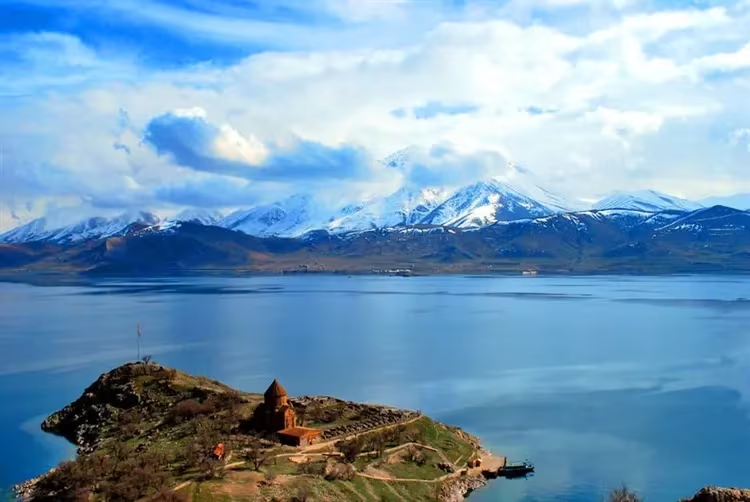
Lake Van is a unique reservoir in the east of Turkey, known throughout the world not only for its extraordinary beauty. Situated on the Armenian highlands, framed by luxurious nature, it is recognized as the only soda lake in the world of such a large area. Lake Van, which arose many centuries ago, is in the 4th position in the ranking of non-drying salt lakes of the world. In addition to salt water, it contains a large amount of soda, which turns lake water into a soapy solution that perfectly launders things.
This property has not failed to take advantage of the locals. The water in the lake is clear, beautiful aquamarine color. Due to the high concentration of salts, swimming in the lake is not recommended for people with sensitive skin. An interesting fact is that not so long ago, while exploring the lake bottom, they discovered the ruins of an ancient fortress dating back about 3 thousand years. Lake Van offers a picturesque panorama of the dormant volcano Nemrut-Dag.
Cappadocia
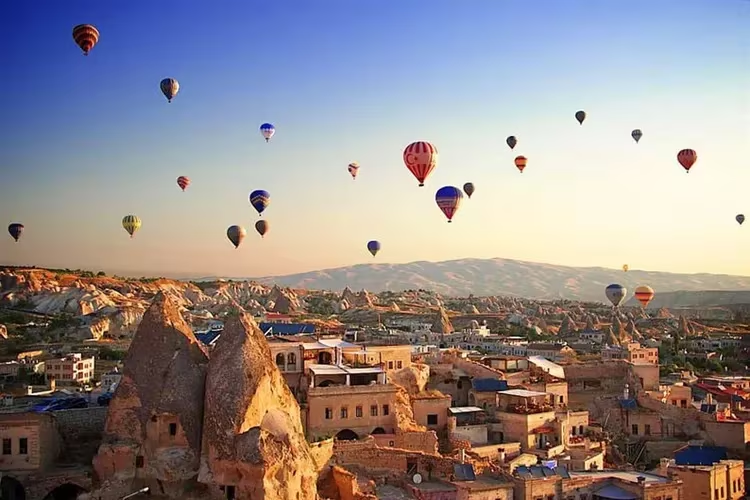
Central Turkey surprises tourists with an area with a fantastic landscape called Cappadocia. From Antalya to go here 550 km, but it's worth it! The unique terrain with canyons, underground cities, caves, temples, numerous pillars, towers and pyramids carved by natural phenomena from volcanic tuff is amazing. As part of the Goreme National Park, the cave towns of Cappadocia are included in the UNESCO World Cultural Heritage List.
The tourist center of Cappadocia is the city of Goreme. Its highlight was the various buildings located inside the rocks. It is interesting to spend the night in a rock hotel and dine in a restaurant carved into the rock. Under the ground of Gorem there is an underground city, which has several levels with corridors and rooms. During the tour you will see the ancient objects of labor and life of the peoples living here. Tourists are offered to explore the whole of Cappodocia from a bird's eye view on a trip in a hot air balloon.
lycian way
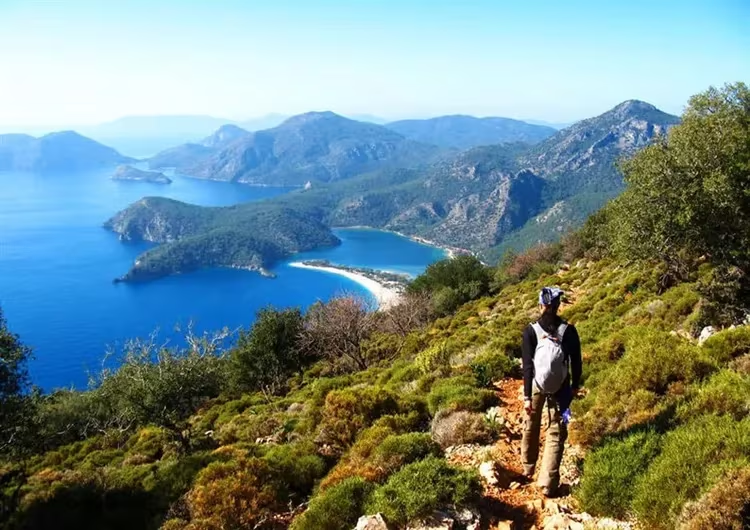
The peninsula between Antalya and Fethiye is notable for the Lycian Way or the Lycian Way. The name of this route, popular with tourists, comes from ancient Lycia, located in this territory in ancient times. The trail runs through the most picturesque landscapes of the area, and does not require special training due to its complexity.
Along the way, tourists discover amazing landscapes with rocks, beaches and ancient ruins. The mountain trails of the route, 509 km long, are sometimes replaced by unpaved and asphalt roads. But the tourist is not obliged to go through the track in full. The route is designed so that at a distance of a hike of one day, there are resort towns in which any participant can finish the track.
Pamukkale
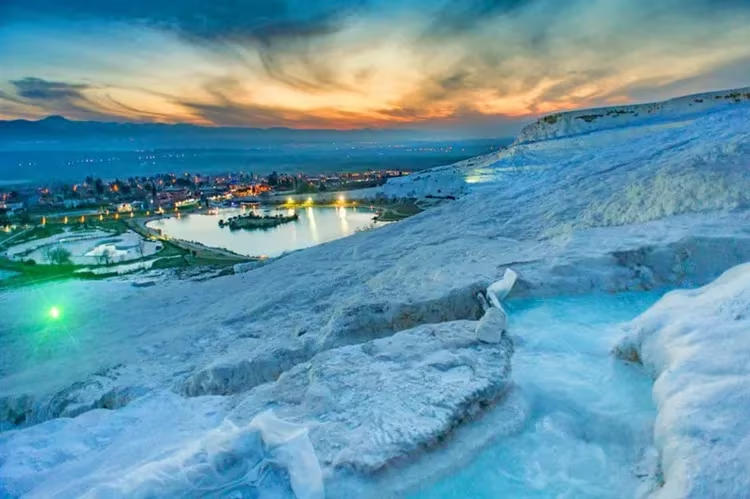
Pamukkale, translated as “cotton fortress”, is called the hallmark of Turkey. This is a unique natural phenomenon in the form of huge limestone walls with ledges that look like blocks of ice. In fact, Pamukkale has nothing to do with the ice. White formations with large bowls are a cascade of terraced pools filled with springs of different chemical composition and temperature with water from 30º C to 100º C, which has a healing and rejuvenating effect. There are legends that Cleopatra's beauty and youth were preserved thanks to bathing in local springs.
Each pool has a sign informing about the temperature and composition of the water. Local thermal water cures a wide range of diseases. Bathing in sulfur baths is effective for skin diseases, the water of “multi-colored” waterfalls is intended for the prevention of diseases of the joints and bones. At night, the pools of Pamukkale are illuminated, so you can take a bath here around the clock.
Ancient Pergamum
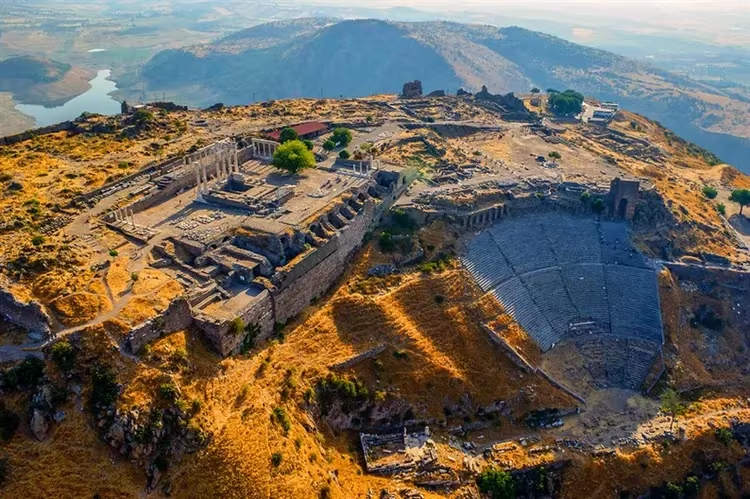
Resting in Turkey, it will be interesting to visit the ancient city of Pergamum, founded in the 12th century BC. Its ancient ruins appear 26 km from the Aegean Sea. Pergamum reached its heyday during the reign of the Hellenes, which was replaced by the domination of the Romans. On a hill of 300 m, the Acropolis has been preserved. You can imagine its greatness and beauty from the remaining fragments of the temples of Trajan, dating from the 2nd century AD and the goddess Athena, the ruins of the world-famous Pergamon Library.
Below the Temple of Trajan, which towered on the very top of the hill, the scale of the sheer amphitheater is striking, near which is the foundation of the altar of the god Zeus, where sacred rites were held to the deity. Sightseeing continues with the complex of Asklepion buildings, known far beyond the city as a medical sanatorium since the 2nd century AD.
It housed the medical school where Hippocrates studied. The complex had 2 temples, a spring with healing water, a library room, a theater and a hospital. Under the hill, near the bed of the river Bergama, the huge ruins of the Red Basilica, dating back to the era of early Christianity, have been preserved. An excursion to Pergamum will leave vivid impressions in your memory.
Phaselis ancient city
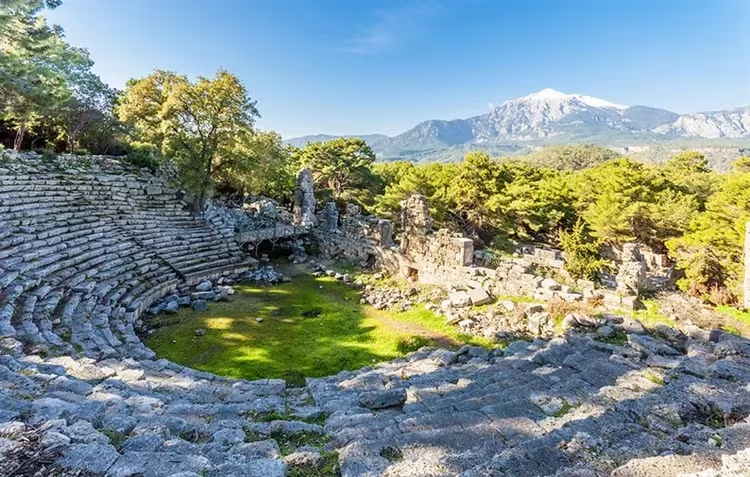
Near the foot of Mount Tahtali, mentioned in Homer's Iliad, is the ancient city of Phaselis. Bizarre cliffs, magnificent beaches and a quiet harbor with snow-white yachts add amazing beauty to the city. Nevertheless, the monuments of ancient culture are called his main calling card. Tradition says that Phaselis was founded in the 7th century BC by people from the island of Rhodes.
The sights of Phaselis in the form of ruins have been preserved since Byzantine and Roman times. Only the remains of the ancient city wall, which meet tourists at the entrance to the city, as well as fragments of the temple, date back to the 3rd century BC. On the slope of the Acropolis you will see the remains of the theater of Phaselis. Behind the northern harbor on the hills you can see the necropolis where, according to legend, Alexander the Great was buried.
Particularly impressive in Phaselis is the ancient aqueduct that supplied the city with water from a spring flowing from the northern hill. Walking through the ancient city, visit the three city agoras, see the ancient baths near the city square and hear the fascinating legends about the goddess Athena, who was considered the patroness of the city.
Yoruk Park
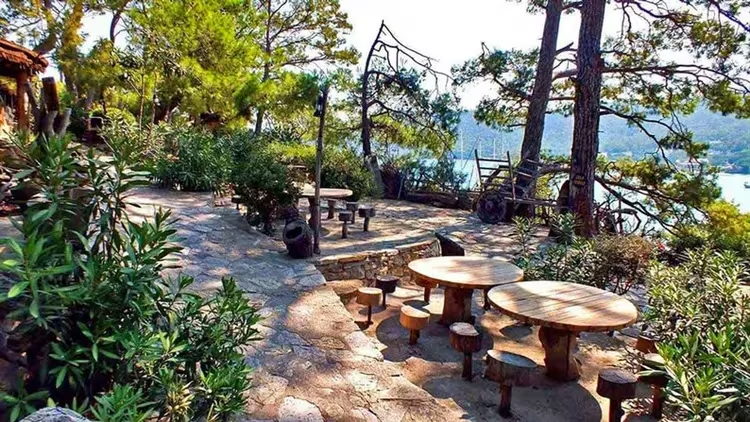
Yoruk Park is an ethnographic village that recreates the way of life of the Turkish people. The authentic museum-reserve is located not far from Kemer on Mount Kuchukburun, near the Mediterranean Sea. It got its name from the nomads – the Yorks, who lived either in the mountains or in the valley. In several tents of nomads, tourists will see the culture and life of different historical periods in the life of this people.
The exhibits introduce national traditions and rituals. Figures of people demonstrate national clothes and scenes of work of artisans. Here it is interesting to see how carpets are woven and exhibitions of leather products. Tourists are cordially treated to traditional cuisine and, of course, a water shore – a pie with a variety of fillings. After wandering through the Turkish village, the road will run to the park, where you can have a great rest on the terrace of the cafe, admiring the surrounding nature and the views of Kemer on the horizon.