
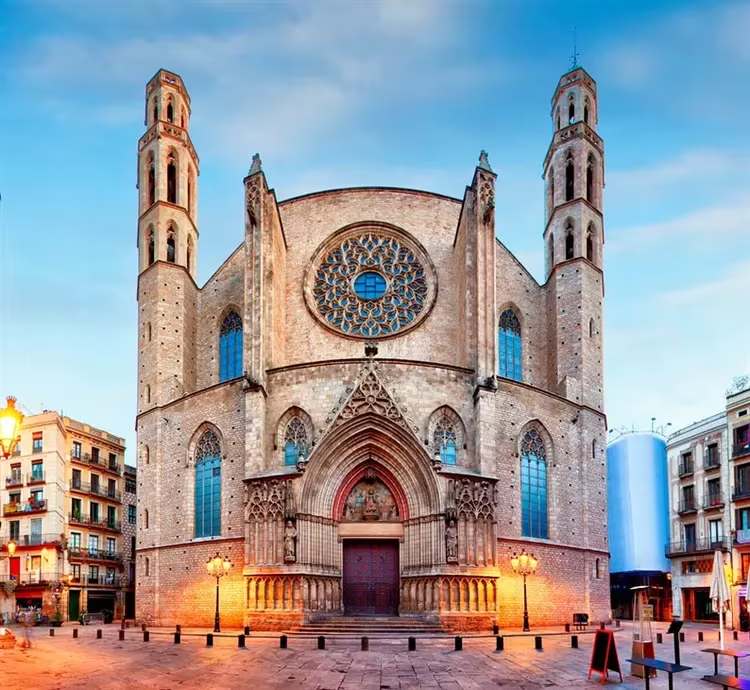
Church of Santa Maria del Mar in Barcelona – history, photo, description, opening hours, map
The Church of Santa Maria del Mar (Santa Maria del Mar – Church of St. Mary of the Sea) in Barcelona is located on a quiet street in the historic quarter of La Ribera (seaside) near the old port.
Construction history
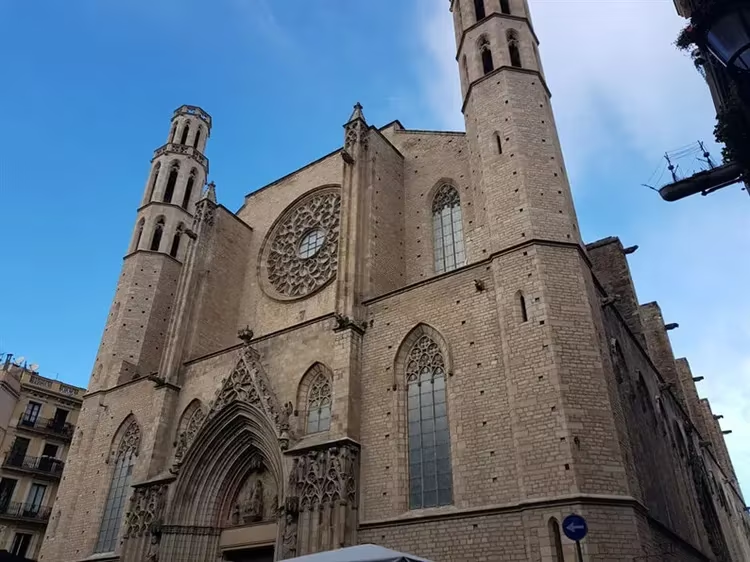
The church was built between 1329 and 1383 in just 55 years – a record short time for such a structure. For comparison, the Barcelona Cathedral took 122 years to build. If not for the misfortune that happened during construction, the temple would have been completed even earlier: in 1379, a fire broke out and destroyed a significant part of it. It took 4 years to restore, and on November 3, 1383 it was finally built, and in August of the following year it was consecrated and masses began to be held.
The place for construction was not chosen by chance. Until the 10th century, the Church of Santa Maria del Arenys stood here, where the remains of the martyr Eulalia, who is the beloved saint and patroness of Barcelona, were secretly kept. After the discovery of the relics, it was decided to begin the construction of the temple of Santa Maria del Mar on this sacred place.
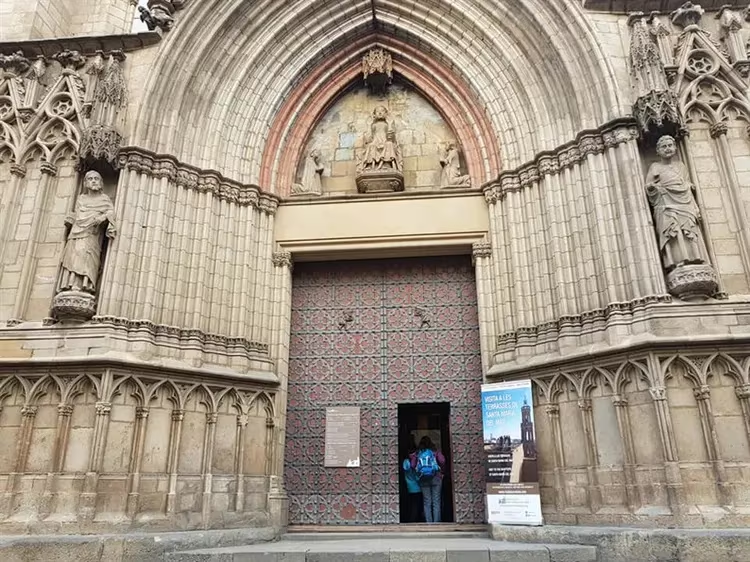
The cornerstone of the modern temple was laid on March 25, 1329. King Alfonso IV of Aragon was present at the laying. The evidence of this is embossed in Latin and Catalan letters, as can be seen by reading the two inscriptions on the sides of the front door. On the part of the monarch, this was a tribute to the higher powers for the prosperity of the country and the leading position that Spain occupied in the 14th century at sea.
The La Ribera area has long been known as a place of residence of the common people: artisans, sailors, fishermen, shipbuilders, port loaders, merchants. The church was built at their expense and by their forces. The life of these people depended on the changeable sea element, so everyone wanted to take part, contribute to the construction of the temple in honor of the Mother of God of the Sea – the patroness and protector of sailors.
The seaside poor decided to build “their own, sea church”, which would overshadow the magnificent Cathedral under construction at that time, intended for the royal family, church and secular nobility. It was a real folk building, where everyone took part: merchants and artisans donated money, porters and fishermen carried stones from the quarries of Montjuic. Their hard work is immortalized on the main entrance gate: bent figures of people carry heavy stone blocks on their backs. Here you can also see the coat of arms of the harbor workers' guild.
Architecture
The most talented architect Berenger de Montaguta became the author of the project. He designed the cathedral, which is one of the few examples of the pure Catalan Gothic style. Unlike the European Gothic style, the Catalan style is more minimalistic: it does not strike with pomposity, spiers and towers soaring upwards, stone lace and bas-reliefs.
The facade of the Church of Santa Maria del Mar made of gray stone is dominated by horizontal smooth planes, with a minimum of decorations. There is no vertical orientation in the building structure. Outwardly, he is strict, squat, somewhat massive and seems small. Actually, its dimensions are 80*33 m, the height of the central nave is 33 m.
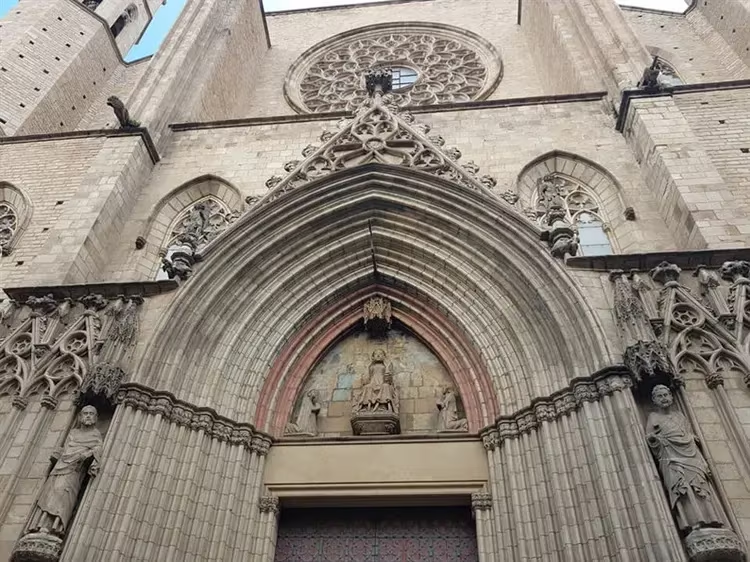
The stained glass windows of the building are very beautiful. Above the semicircular arched entrance is the only bright decoration of the cathedral – a magnificent large stained glass window in the form of a rosette, dating from 1459. On the facade – a lot of lancet arches, stained glass windows.
There are carved figures and patterns on the vault of the central arch. In the recess above the entrance gate is Christ the Savior sitting on the throne, the Virgin Mary and John the Baptist bowed before him in a low bow. On both sides in niches are sculptures of the apostles Peter and Paul. But the main secret of the cathedral, in which the genius of the architect manifested itself, is inside the building. Everyone entering the church is struck by the contrast: the gloomy outer walls hide a huge bright interior space, permeated with soft radiant light.
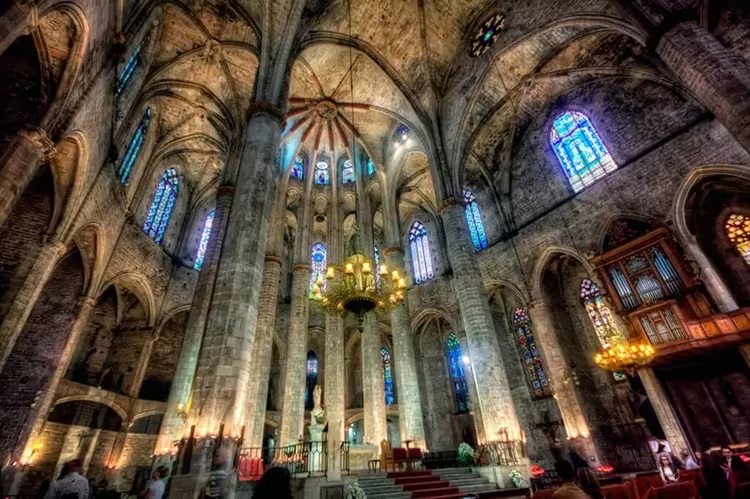
The lightness and airiness of the structure is given by 18 thin high columns of octagonal section, supporting a flat 33-meter vault. Their rare rows are 13 meters apart and visually divide the cathedral into three symmetrical naves. The height of the central and side nave is approximately the same. This is what gives volume and integrity to space, it appears to be one.
Interior decoration
The interior of the church is very laconic. This is explained by the fact that a huge amount of the valuable property of the temple was irretrievably lost: over the years, various shocks destroyed the basilica. But one of the greatest misfortunes happened during the civil war in July 1936. The temple was set on fire, and it burned for several days in a row.
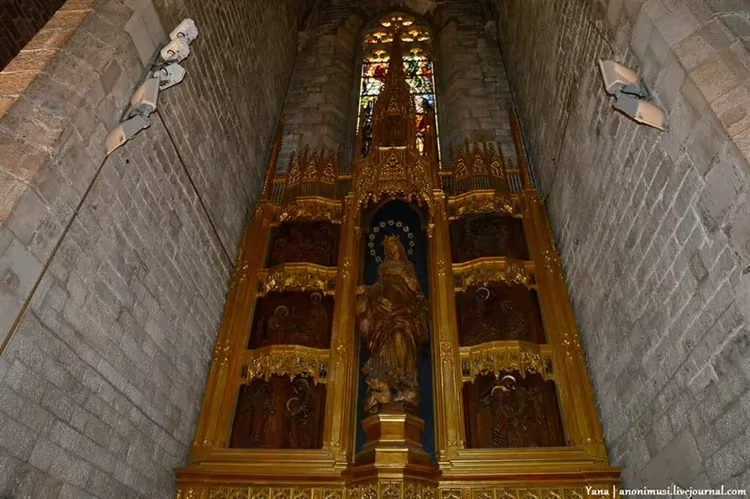
The magnificent baroque altar, liturgical objects, sculptures and many images were burned down. Only the walls, columns, and stained-glass windows on the upper level survived because the fire did not rise as high. After the restoration and elimination of the consequences of the fire, the harmony and proportionality of the forms of the structure, free from numerous objects, became even more obvious and striking.
An amazing atmosphere reigns inside the temple. The main decoration is the light penetrating through the many stained-glass windows of the 15th-18th centuries. The two stained glass windows depicting the Last Judgment were made by master Sendrius Desmasnes in 1474. On the rest you can see episodes on religious themes: Pentecost, Ascension and the Coronation of the Mother of God, the Birth of Jesus, the Annunciation and betrothal of the Virgin Mary, the Eucharistic allegory, etc. No less impressive are the bright stained-glass windows depicting fountains of living water, cypresses, palm trees.
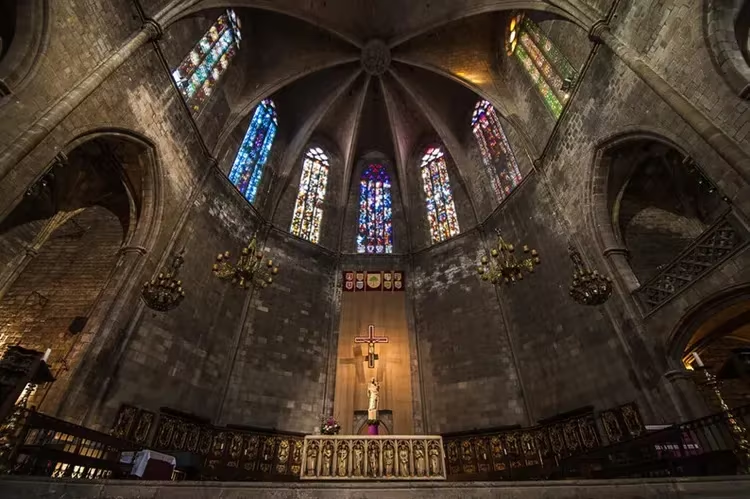
Successful color solutions, together with the elegance of designs, create a feeling of incredible spaciousness, not burdened by numerous sculptures, bas-reliefs, and stucco molding. At the altar there is a sculpture depicting the Coronation of Our Lady. At the feet of the statue is a sailing ship. This scene personifies the patronage of the Mother of God to sailors.
The temple contains the tombs of noble people, their names are engraved on the floor slabs along the walls.
The acoustics of the church are unique, organ music sounds here every day, masses are celebrated. The central nave is filled with numerous benches for the faithful. Often concerts of classical music are held within the walls of the temple. Many famous people come here to listen to mass, to perform wedding and baptism ceremonies.
Observation deck on the roof
Those who wish to look at the panorama of Barcelona from a height of 35-40 meters can climb a steep staircase to the roof and towers of the cathedral, where there are observation platforms. Watching time – 40 minutes daily from 13 to 17 hours. From a height, beautiful views of the city and its sights open up, which can be captured in the photo and they will remain in memory for a long time.
Working hours
From Monday to Saturday the church is open from 9.00 to 20.30. From 13.30 to 16.30 hourly excursions are held in English and the entrance is paid, the ticket price is 7 euros, and from 9.00 to 13.00, or from 17.00 to 20.30 you can independently explore the temple for free, listen to the organ. On Sundays and public holidays it is open for visiting: from 10.00 to 13.30 and from 16.30 to 20.00.
Where is the church and how to get to it
The Church of Santa Maria del Mar is located in Passeig del Born at Plaza de Santa Maria 1 (Santa Maria Square 1) near the metro stations: Jaume I (L3) and Barceloneta (L4). Also can be reached by buses: V15, B17, 40, 45 to the Via Laietana stop.