
In Pamukkale on your own – route, photo, description, reviews, map
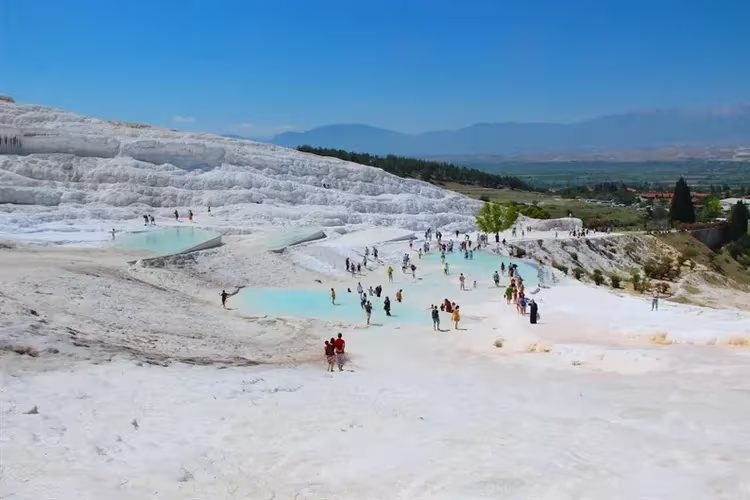
In the south-west of Turkey, there is a unique complex with geothermal springs, which has no analogues in the world. When you find yourself at the foot of a snow-white mountain, it seems that before your eyes there are snow-capped peaks, it is not clear where they came from in the middle of the Mediterranean green landscapes. Warm mineral water flows under your feet, pools with the purest geyser water look bold and bewitching, and dazzling white terraces go up 150 meters. Pamukkale is included in the UNESCO World Heritage List and is visited annually by one and a half million tourists. Nearby are the ruins of the ancient cities of Hierapolis and Aphrodisia, where you can literally touch the ancient artifacts. Many travel agencies offer the organization of excursions, but going to Pamukkale on your own is much more interesting and cheaper. And most importantly,
How to get on your own
The nearest airport to the destination is located in the city of Denizli, from there the thermal resort can be reached by bus in an hour. A ride on a Turkish Airlines shuttle costs 10 lira, and on a Baytur bus 26 lira. If you land in the city of Izmir, the journey to the mineral resort by bus will be at least 5 hours by bus or 7 hours by train.
A train trip is possible only from Izmir to Denizli, after which you will have to transfer to a bus or rent a car. It is better to rent a car in Turkey through the Internet by concluding an agreement with an international company. Street rental offices will offer a temptingly low cost of the service, but in this case you are not immune from problems with both insurance and the car itself. Keep in mind that it is most expensive to rent a car at a hotel and airport.
Where to stay
In the vicinity of a snow-white mountain oozing with mineral springs, there is a choice of accommodation options, including five-star hotels. Focusing on the cost of the room that is comfortable for you, the availability of the necessary services and the location of the hotel, you can very quickly resolve the issue of accommodation.
Doga Thermal Health & Spa 5*
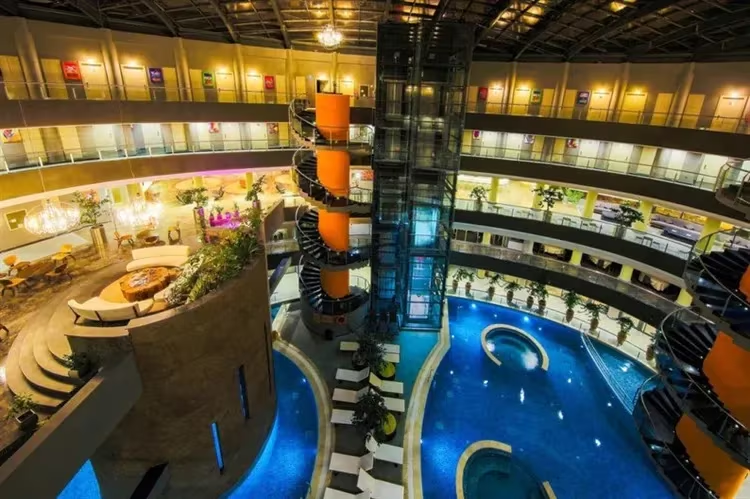
A five-star hotel with a spa complex is located 7 kilometers from the dazzling travertines. Whichever room you book, it will have a view of the mountains. Varied breakfast buffet, 2 swimming pools, spacious rooms, high quality service and only 10 minutes drive to the mineral springs. You can take a walk in the spacious garden, bask on a sun lounger or visit the spa complex, whose services are offered at affordable prices.
Richmond Pamukkale Thermal 5*
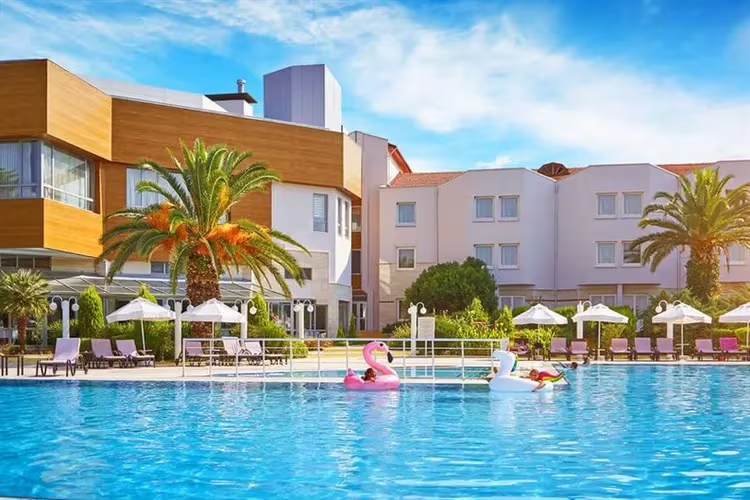
The thermal hotel is located 3 kilometers from the mineral travertines. In 2015 it was completely renovated. The indoor pool is filled with thermal water, there is a small pine forest on the territory, from which the aroma of coniferous freshness emanates. The spa offers a hammam, sauna, adventure cave and gym. Varied buffet breakfasts are served at the restaurant, where you can taste delicious dishes of Turkish national cuisine and dishes from the European menu.
Hierapark Thermal & SPA Hotel 5*
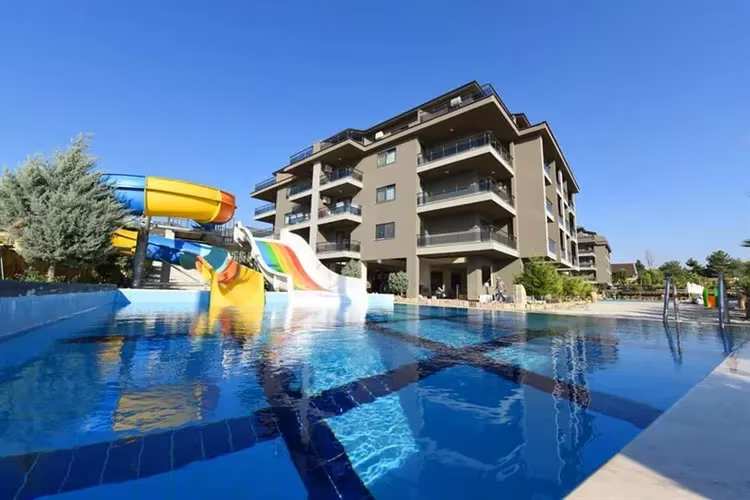
The distance to the travertine fonts is 4 kilometers. There is a mini-aqua park for children on the territory, and adults can relax, recuperate and improve their health in the spa complex. A hammam, a sauna and a steam bath are at guests' disposal. Lush olive and pomegranate trees create a cozy atmosphere of unity with nature. Guests are offered an airport shuttle, a restaurant with a varied menu, spacious comfortable rooms.
Venus Suite Hotel
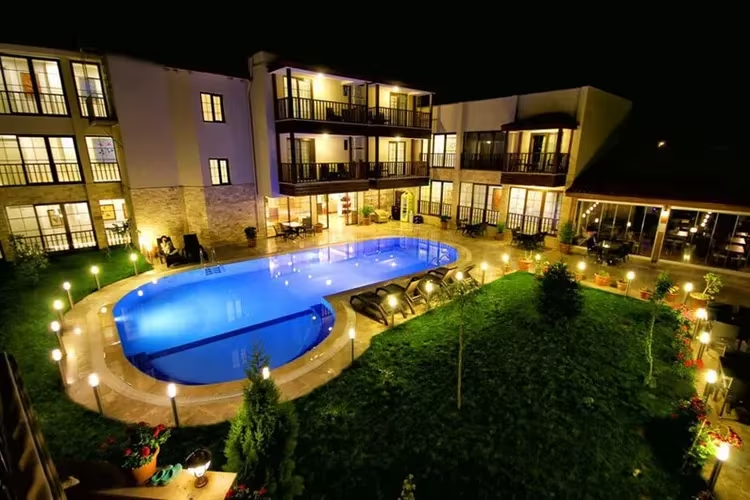
Venus Suite is located just 300 meters from the ancient city of Hierapolis. A free shuttle runs every 30 minutes to the center of Pamukkale. This cozy little hotel was completely refurbished and transformed in 2015. On the territory there is a swimming pool, a garden and a vegetable garden, the rooms have balconies. Facilities for people with disabilities are provided. Breakfast is buffet style and there is free Wi-Fi on site.
Pamukkale Melrose Viewpoint Suites
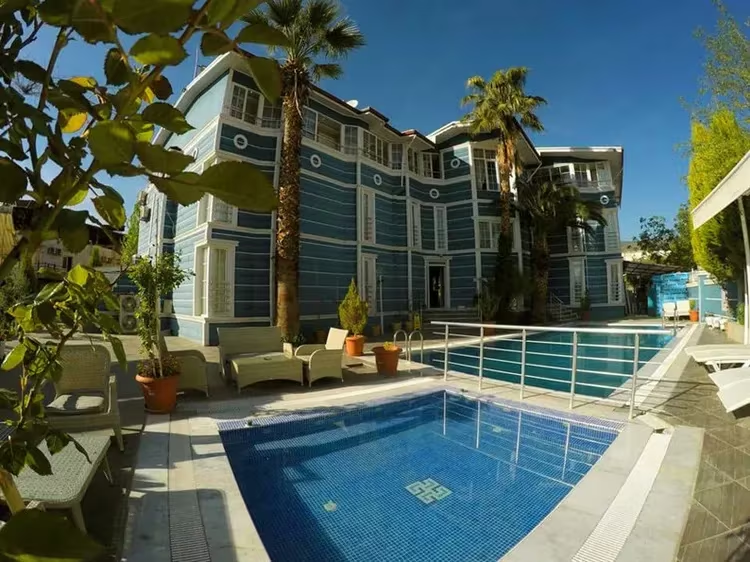
The proximity to the travertine terraces – only 700 m from the entrance – makes this accommodation option very attractive for resort guests who decide to stay in an unusual resort for a short time. The architecture of the building is made in an interesting stylish solution. There is free parking, swimming pool, garden, terrace. The hotel has non-smoking rooms, you can order a shuttle to the airport.
Hotel Sahin
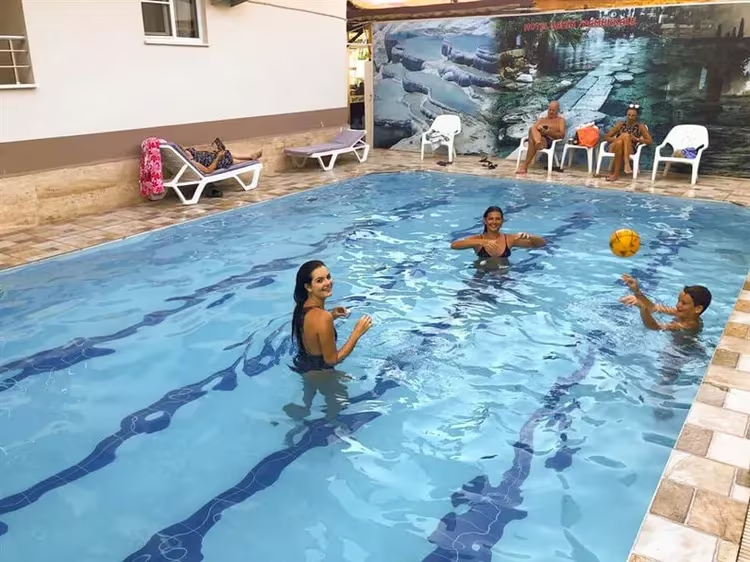
Sahin nestled just 20 meters from the travertines and the lake. The terrace overlooks the mountains, which are illuminated at night and give the visual impression that there are snow-capped peaks around. Some rooms have private balconies, there is a swimming pool on site, and a Turkish breakfast is served in the morning.
Travertines
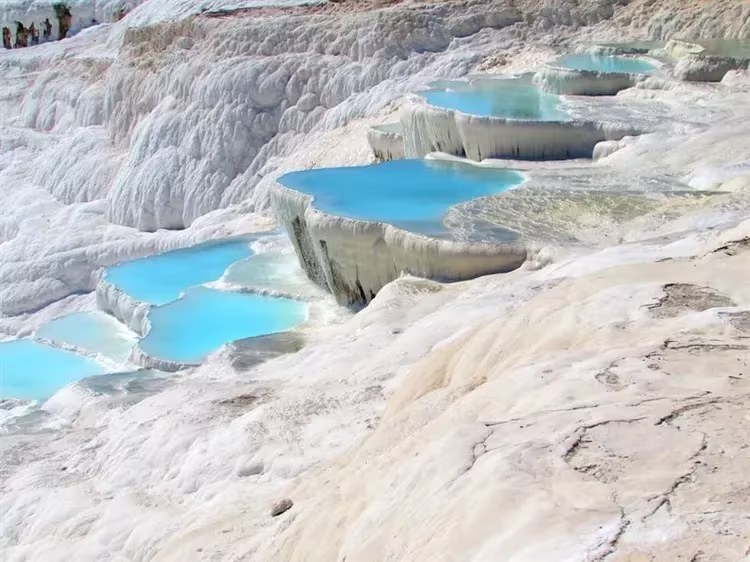
Hundreds of thousands of years have passed since earthquakes created cracks, and underground mineral waters rich in calcium, limestone and other minerals came out through them. Water came out through the porous rocks of small mountains. The waters descending down the slopes left calcium deposits, which formed snow-white cascades. Travertines are terraces with fonts filled with mineral water, its temperature is 35-38C. In total, there are about 20 thousand such terraces. The depth of the fonts is from 0.5 m to 2.5 m, and the area of one reaches 80-100 m.
Entrance to the territory is paid. Since the entire surface of the mountain is dazzling white, as if covered with snow, you need to have sunglasses with you. For tourists, hiking trails are laid along the slope of the mountain and observation platforms are equipped.
Walk, admire and marvel at the variety of amazing patterns of white mineral coatings. In order not to damage the fragile surface of the terraces, it is only allowed to walk on them barefoot. It turns out a wonderful peeling for the legs! In the pools filled with mineral water, you can take a bath free of charge. Their depth is about 30 cm.
Cleopatra's pool
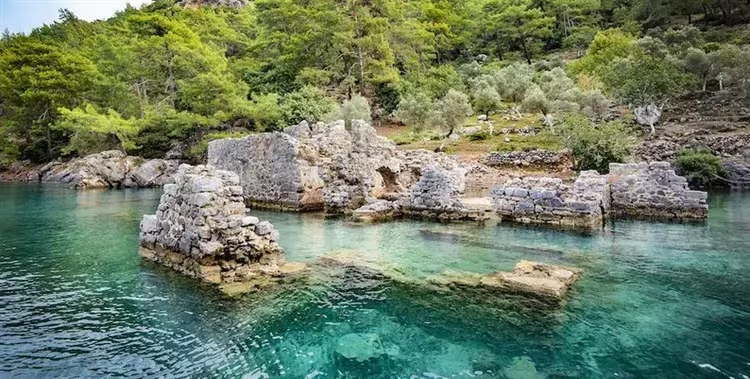
Not far from the travertines you will find the famous Cleopatra thermal pool. According to the legends, the Egyptian queen herself plunged into these warm thermal springs, the temperature of which is 35C. The water here is carbonated, which is why the body, when bathing, is immediately covered with millions of bubbles that pop up with a hiss, you just have to touch them.
The water in the Cleopatra baths is crystal clear. You can see artifacts at the bottom: the remains of columns and fragments of buildings from the time of the Roman Empire. Immersion in healing waters gives an incredible feeling of pleasure, lightness and bliss. Rumor has it that staying in these springs can rejuvenate a swimmer by 10 years due to the high content of minerals that saturate and rejuvenate the body. But bathing should not last longer than 2 hours, as in any thermal springs.
Ruins of ancient Hierapolis
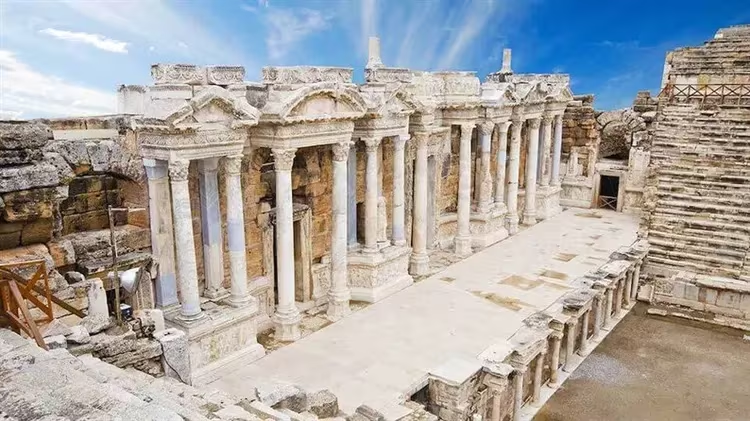
Hierapolis is a huge ancient ancient city located on the right side of the travertine terraces. The first settlements in it date back to 2 thousand years BC. The city attracted people with the proximity of thermal springs. From the first century BC it became part of the Roman Empire. Due to frequent earthquakes, it was destroyed, and it was repeatedly restored. But the last (in 1354) completely destroyed the city. Restoration began only at the end of the 19th century. Archaeological excavations are ongoing to this day. There are many interesting things to see in Hierapolis. Entrance to the territory of the city is free.
On the territory of the ancient city are the remains of the temple of Apollo, the construction of which dates back to the 3rd century AD. The temple was formed on the site, which was called Plutonium: it was here that there was a religious cave, which was considered the main gate to the kingdom of the dead. It is believed that the temple of Apollo was erected where he met with the Great Mother of the Gods Cybele.
Amphitheater
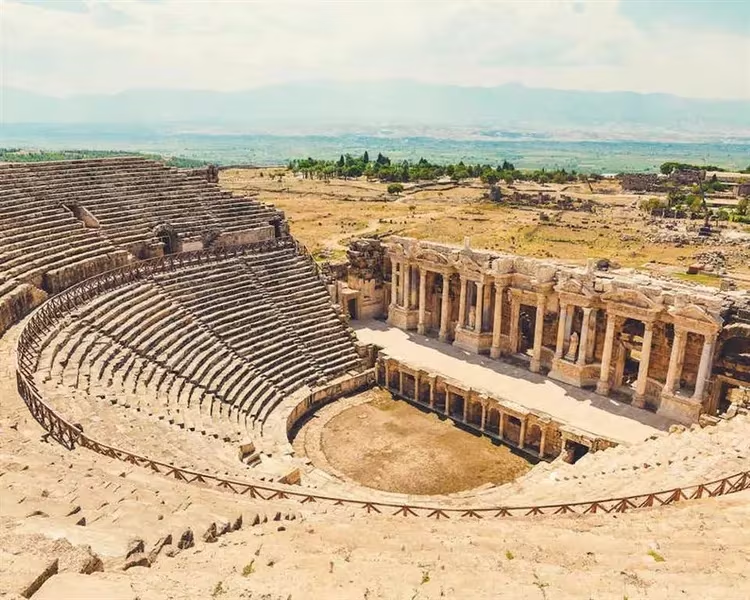
On the hillside in Hierapolis is one of the largest ancient amphitheaters with a capacity of more than 10 thousand spectators. The nobility of the Roman Empire came here to improve health in thermal springs, so such a large-scale structure was erected to entertain the public with gladiator fights. High-ranking spectators sat in front of the stage, which is located on textured columns.
The amphitheater survived many earthquakes, after which it had to be thoroughly restored. Over time, the building was used as a granary, and then even as a stable. And only in the middle of the 20th century, better times came for him again: work began on the restoration of the amphitheater, which continued until 2013. Being at the top of the amphitheater (its height is about 100 m), you can see the panorama of Hieropolis, which picturesquely opens before the visitors of this amazing museum.
Martyr of Saint Philip
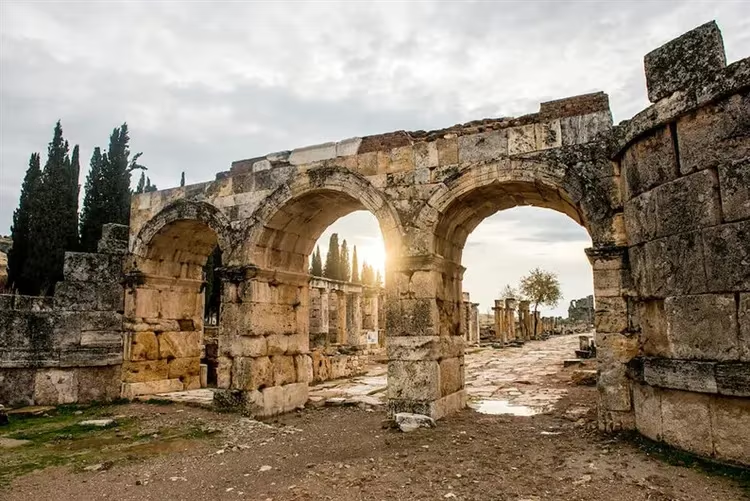
A martyrium is a church or chapel erected where a saint died or was buried. The personality of the Apostle Philip, one of the disciples of Jesus Christ, made Hieropolis significant in the spread of Christianity. Martyrium is located far from the tourist route, so there is no crowd of people who want to see it. The temple was erected in the 4th century AD on the site of the martyrdom of the apostle for the faith and the subsequent burial of the relics of the saint.
The temple, located on a hill, has suffered greatly from time to time, today you can see only the remains of columns and fragments of stone and marble walls, on which Christian symbols have been preserved. Despite the fact that Martyrius has practically not been preserved, it undoubtedly deserves the attention of visitors. On November 27, Orthodox pilgrims arrive here to honor the memory of the Holy Apostle Philip, and on May 3, representatives of the Catholic Church. Currently, the relics of St. Philip have found rest in Rome, in the Temple of the Twelve Holy Apostles of Christ.
Ancient Aphrodisia
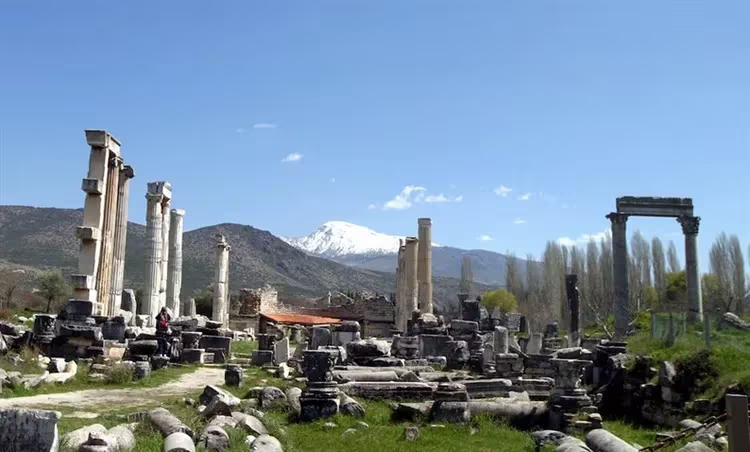
40 km from the geothermal springs and 80 km from the city of Denizli, there is an ancient city that is perfectly preserved and has many artifacts on its territory. The monumental stadium was built in the 1st-2nd centuries AD. It had a capacity of 30,000 spectators and is the largest ancient Greek stadium that has survived to this day.
From the temple of Aphrodite, built in the 1st century BC, only 14 columns remain. But the fact is curious that during the excavations, the foundation of an even more ancient structure was found, which scientists date back to the 7th century BC. It is assumed that this was the sanctuary of the goddess Aphrodite.
The theater of Aphrodisia was erected in the 1st century BC, after three centuries it was restored. Today, the building has retained a good view; it offers a beautiful panorama of the picturesque surroundings. Not far from the theater there are theater baths.
Bouleuterium (city council building), the fountain of Apollo, the baths of Hadrian, the museum, which contains preserved statues, reliefs, figures – these and other unique ancient sights of Aphrodisia are available for viewing to those who wish.
Opening hours and ticket prices
From April to October, those who wish can visit the archaeological complex of Hierapolis from 8 am to 9 pm, from November to May – from 8 am to 5 pm. There is a ticket for travertines and the ruins of the ancient city – 35 lire = 12 dollars. If there is a desire to visit the archaeological museum, it is paid separately and costs 5 liras, for swimming in the Cleopatra pool you need to pay 32 liras, for visitors from 7 to 12 years old – 13 liras, children under 6 years old are free.
Best time to travel
Considering the climatic features of the south-west of Turkey, it is better to go to Pamukkale from April to June and from the end of September to November. It is during these periods that excursions are not a burden, you will not languish in the merciless heat, this is not a high season for recreation, so there will be no crowds of tourists either. As for the time of day, it is better to come to the opening of travertines, because the sightseeing buses arrive at about 11 o'clock, so you will have three hours of pleasure from being in an amazing corner of nature, striking with its unique riches.