
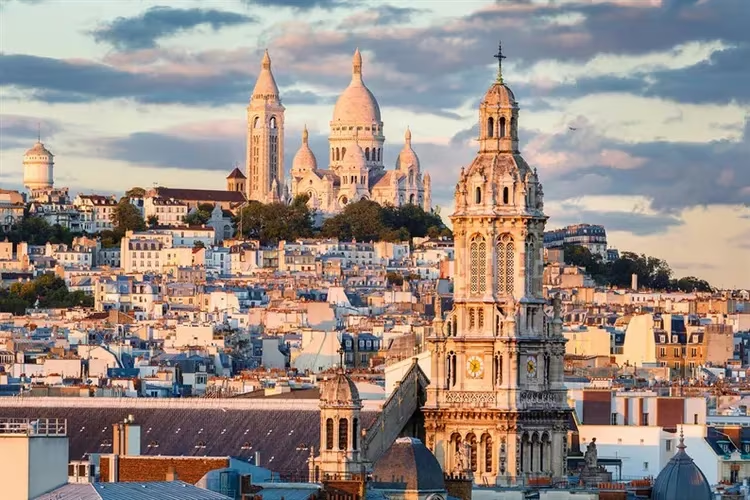
Montmartre is a place of pilgrimage for tourists who come here from all over the world. Temples of extraordinary beauty, legendary cabarets, cafeterias where famous people liked to visit, museums and galleries attract people.
Story
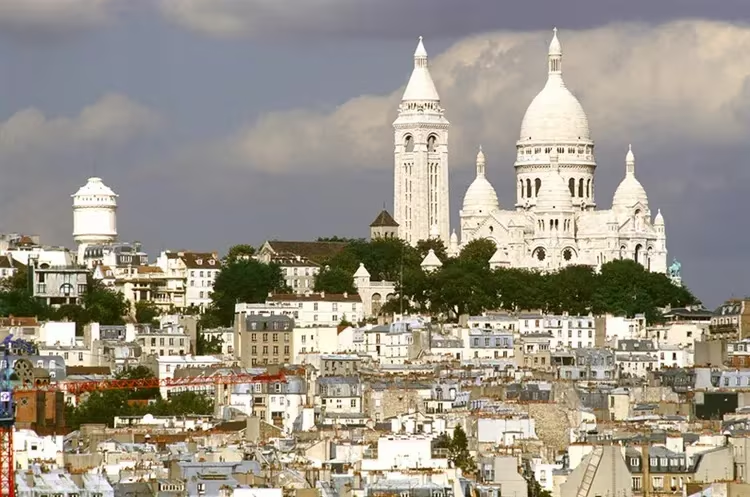
In ancient times, this place was a settlement of the Romans, they built two pagan temples – one dedicated to the god of war Mars, the other to the patron of trade Mercury. When gypsum was found on the hill, the area became rich – they began to build magnificent palaces and churches here. Presumably in the 3rd century in Montmartre, for Christian sermons, the head of the first Parisian bishop, St. Dionysius and his associates.
In the 12th century, Benedictine monks founded a monastery with the church of Saint-Pierre-de-Montmartre, consecrated in 1147. In the 19th century, the Langeron troops captured the heights, but in March 1814 they capitulated – the Russian Army entered Paris with allied troops. In civilian life, residents were engaged in the extraction of gypsum (one street is named White Square), mills were built, and vineyards were planted. Life in the capital was more expensive, so many, even representatives of the middle strata of the population, moved to this picturesque suburb.
According to the master plan for the reconstruction of Paris, the district was annexed to the capital in 1860 as part of the XVIII metropolitan district, at that time there were 57,000 inhabitants in it. Since the end of the 19th century, the quarter has become a habitat for bohemia – great artists, writers, composers, including Van Gogh, Toulouse-Lautrec, Picasso and Modigliani, Emile Zola, Hector Berlioz worked here. Almost all of them needed money, so they settled in barracks, from the amenities there was only cold water with one tap for all floors.
origin of name
There are several versions of the origin of the district's name:
- In 272, according to legend, the head of St. Dionysius, a Catholic priest. The hill was named after him, translated “Mons Martyrium” – means “Martyr's Hill”.
- The name comes from “Mons Martis” – “Mars Hill”, since in the ancient period there was an ancient Roman temple.
The exact meaning of the translation is not known.
sights
How can a person who has come to the capital for a few days see the most interesting and significant in all the variety of sights?
- Admirers of the talent of the eccentric Spaniard Salvador Dali should visit the museum dedicated to his work. Located near Place du Tertre. A small building with an inconspicuous sign. If you do not know that the room contains the most significant collection of works by the great master, you can pass by. A permanent exhibition is open and temporary exhibitions are organized.
- The legendary French singer of Italian origin Dalida lived in Montmartre. Grateful Parisians named a square in her honor, on which a bust of the singer was erected. You can get to it along Girardon Street.
- Those who are familiar with the work of the writer and screenwriter Aime know the most popular of his stories – “The Man Passing Through the Wall”. An interesting and peculiar monument to the hero of the story can be seen walking along the Rue Girardon to Marseille Aimé Square.
- The Wall of Love has recently appeared and has become unusually popular among couples in love. It was installed on the initiative of the artists Baron and Quito. Couples in love can write the cherished words “I love you” on the wall, this has already been done by thousands of people in more than 200 languages.
These are just a few attractions that may interest tourists, the journey is just beginning.
Sacré-Coeur Basilica
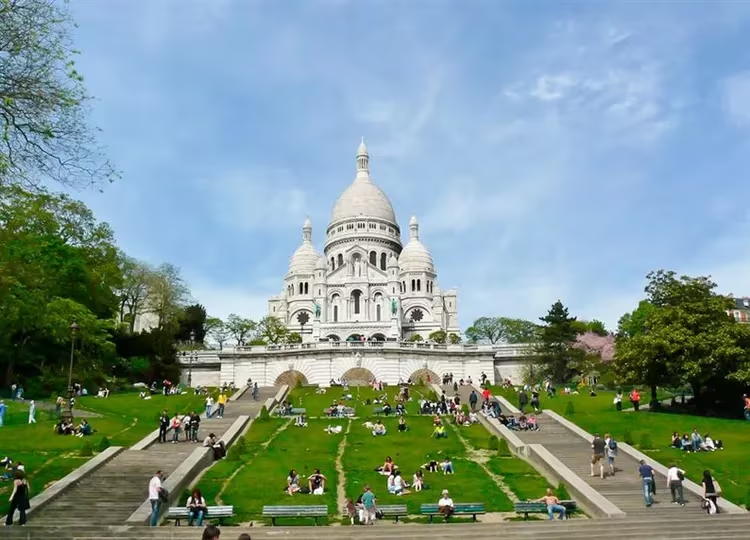
The main place sacredly revered by the French is the Basilica of the Sacred Quez (Sacred Heart), erected on the highest point of the mountain and visible from everywhere. The temple in the Roman Catholic style was designed by the architect P. Abadi. It was erected in 1875-1914 in memory of the victims of the Franco-Prussian war. It was built with charitable funds collected by the residents. White limestone was used for construction, the height of the building is 83 m. The dimensions of the largest bell in the capital of the basilica, cast in 1891, are striking. The weight of the bell is 19 tons, the tongue is 850 kg.
The facade is decorated with bas-reliefs and biblical figures – the Archangel Michael, an angel, above the portico there are statues of the national heroine Joan of Arc and St. Louis. In the central part – the figure of Christ the Savior. The forces of evil are represented by the serpent, gargoyles, chimeras. The interiors are decorated with stained-glass windows and mosaics on biblical themes, created in the first decades of the last century.
The largest organ is installed in a special niche. The wooden body is richly decorated with sculptures of angels and turrets in the Gothic style. Initially, it had a unique sound, but restorations and dust accumulating inside the instrument slightly worsened the sound. Under the altar is a crypt – where the remains of priests and famous people of Paris are buried.
Place du Tertre
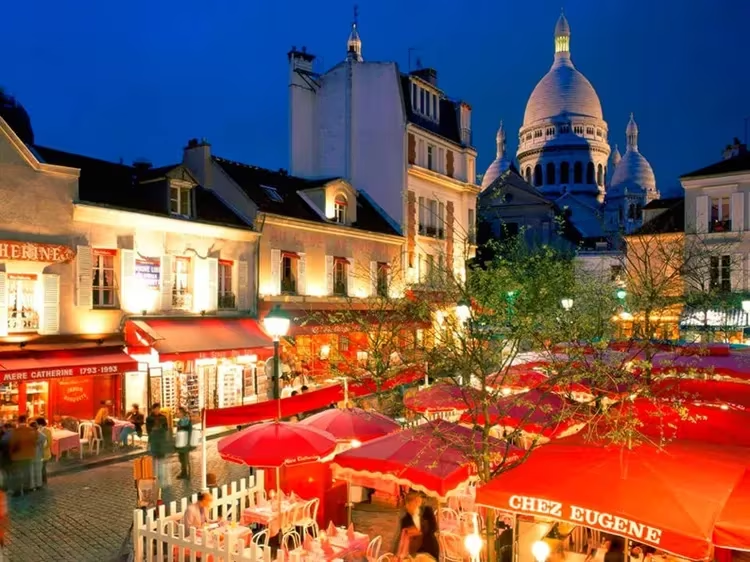
The main square of Montmartre is Tertre. There are always a lot of people here – numerous tourists, street painters and artists, local residents. Probably, the name comes from the word tertre – a platform for executions, which were carried out on this place in the Middle Ages.
At the beginning of the century, Pissarro, Van Gogh, Picasso and other representatives of cubism, surrealism, and impressionism began to work here. Nowadays, young talents work here, who in a few minutes will draw a cartoon or a city landscape. Almost all buildings are of historical value. On the first floors of the buildings there are antique shops, art galleries and cafes – which are proud of their famous visitors. a This is evidenced by the photographs hung on the walls.
Montmartre Museum
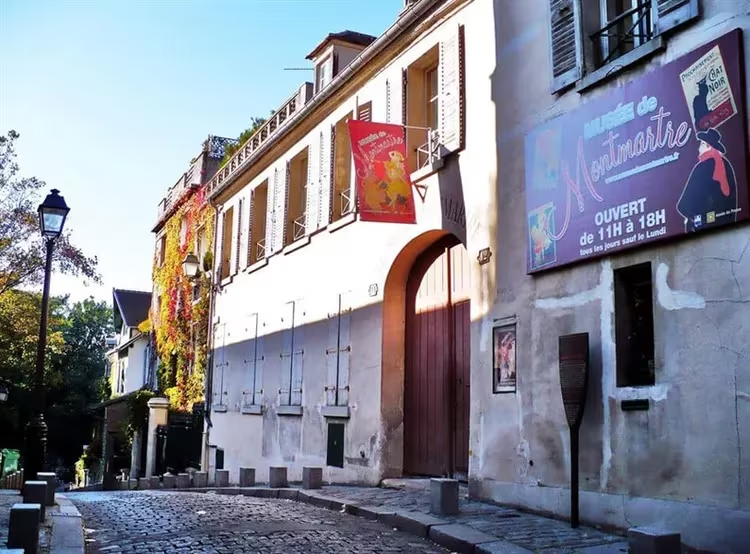
After walking along Tertre Square, drinking coffee and receiving their portrait, the guests of the capital are sent for real masterpieces collected in the Montmartre Museum. It is housed in the 17th century mansion Rosimon. At first, the actor of the theater troupe of Molière, the artist Dufy and the musician Satie lived in it. In the last quarter of the 19th century, the Renoir workshop was opened in the building, which became the property of the gymnast and artist Valandon and her son. The family lived in the house for several decades.
The museum's collection includes posters, paintings by famous masters of the brush, and photographs. The exhibition is dedicated to the topics:
The museum hosts temporary exhibitions and promotions, an extensive library, and a collection of chanson recordings.
Cabaret Agile Rabbit
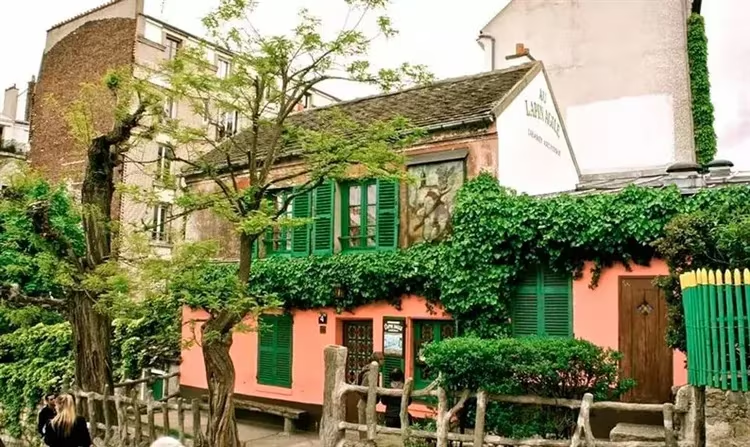
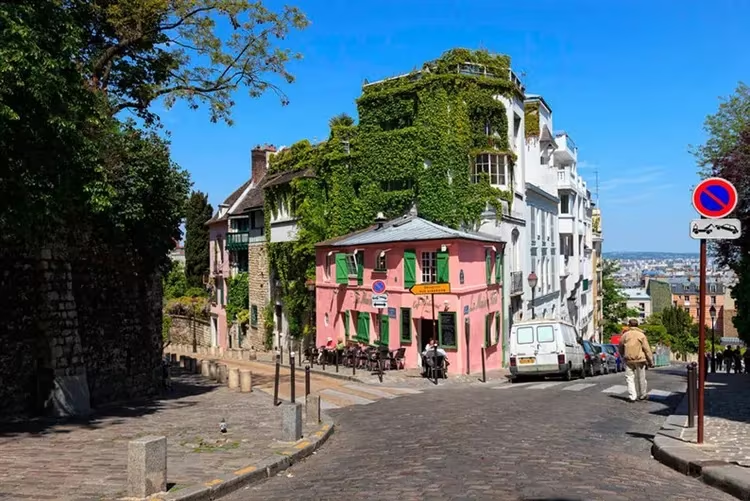
The two-story cabaret building lurks on the hillside and is not so easy to find if you do not know the exact address. The house looks like a fabulous, lilac color and a sign depicting a huge rabbit with a bottle of wine in his hands. At the entrance to the room – a wardrobe and a small hall. The performance takes place on the second floor in a semi-dark room. Actors sit among the audience. The hall is decorated with paintings that tell about the bohemian life of the quarter. The program has hardly changed over the course of a century – French songs from the repertoire of Edith Piaf, Charles Aznaur, Joe Dossen and other singers are performed to the accompaniment of accordion guitar and piano. Actors read poetry, present short plays. The atmosphere is relaxed and warm.
Vineyards
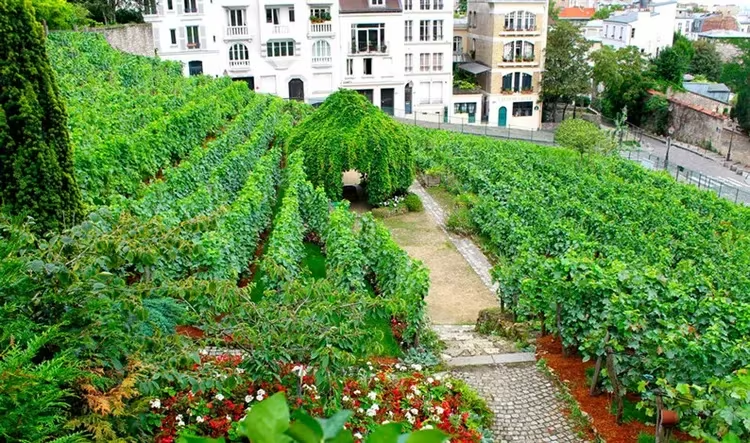
The vineyards of the quarter are located on Rue de Sol and Saint-Vincennes, occupying an area of just over 1.5 sq.m. There are 1762 vines of 27 varieties in total, from which up to 500 liters of wine are produced annually. Since the thirties of the last century, the New Wine Festival has been celebrated in October. According to legend, the first vine was planted by the Romans in 120. In the Middle Ages, almost all the inhabitants of the hills were engaged in viticulture, vineyards occupied a significant part of the territory.
Many taverns, taverns appeared here, people even came here from the capital, because wine in the suburbs was much cheaper. When the territory became part of Paris, the vineyards become smaller, they are cut down and houses are built. In 1929, on the initiative of the artist Pulbo and his associates, the remains of the historical site were saved. In 1933, the residents restored the vineyard on the north side of the slope.
Mill of the Moulin de la Galette
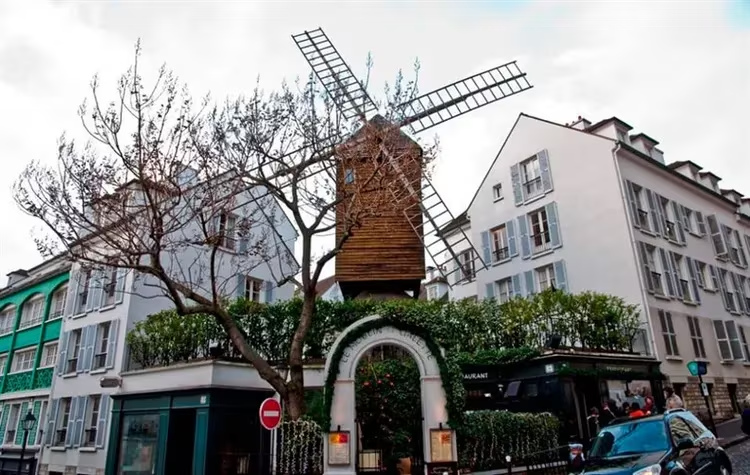
The Galet Mill is a mill built back in 1622. Initially, it was used for its intended purpose, but one day its owners, named Debre, built a shed and set up tables – the first restaurant with a dance hall appeared. In good weather, people had fun in the open air, in rainy weather they gathered in a room that looked like an ordinary barn. First, workers came here, seamstresses – ordinary people to dance and have fun after a working day. By the end of the 19th century, artists, artists and musicians, who are now known to the whole world, gather at the mill. Located at the intersection of Lepic and Tolose streets. It is under state protection.
Cafe “Two mills”
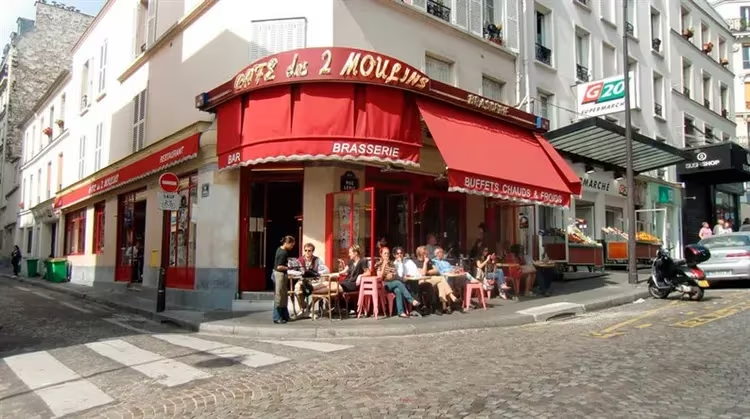
The cafe became famous after the release of the sensational film “Amelie” in 2001, part of its action takes place in the institution. After the film, new design elements appeared – a poster autographed by the actress Totu, who played the main role, a small museum of the film, placed for some reason in the men's room.
Opened at the beginning of the 20th century, the interior of the cafe has not changed since the 50s of the last century. Even the menu remains the same, the new owner has only removed the tobacconist and replaced the tablecloths with paper napkins. This is a cozy bistro with a cozy homely atmosphere, where you can order coffee, a glass of wine or the main dessert – creme brulee with cardamom.
Cabaret “Moulin Rouge”
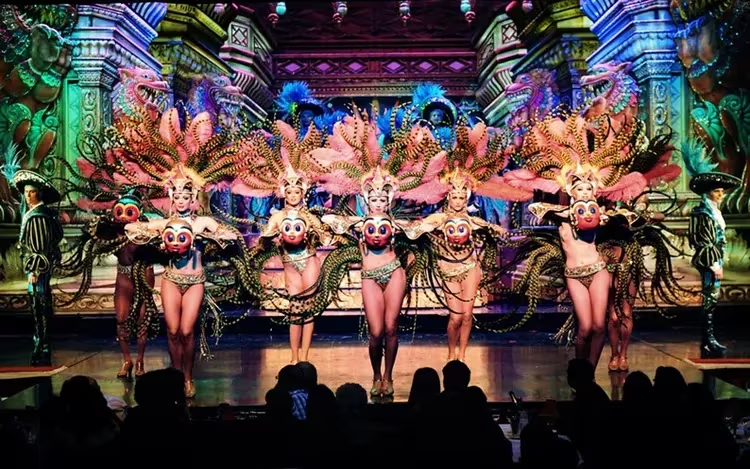
Moulin Rouge (Red Mill) is the most famous cabaret. Founded in 1889 by Oller and Zdler, it became in demand within a few months after opening. Tickets must be booked in advance, especially on public holidays. Here, for the first time, the cancan was performed to the music of Offenbach, created by Toulouse-Lautrec, and posters written by the artist's hand still hang at the entrance and in the room itself.
The duration of the performance is 1 hour 45 minutes.
Topics on the program:
- Moulin Rouge yesterday and today
- History of the Pirate Sandohan
- circus show
- The history of the cabaret is dedicated to the women who made the cabaret famous. Ends with an incendiary can-can.
- Chicago show
The productions involved 80 artists, more than 140 musicians and singers. 1000 colorful costumes from famous designers, decorated with rhinestones and feathers, were sewn. An enchanting spectacle!
Cemetery
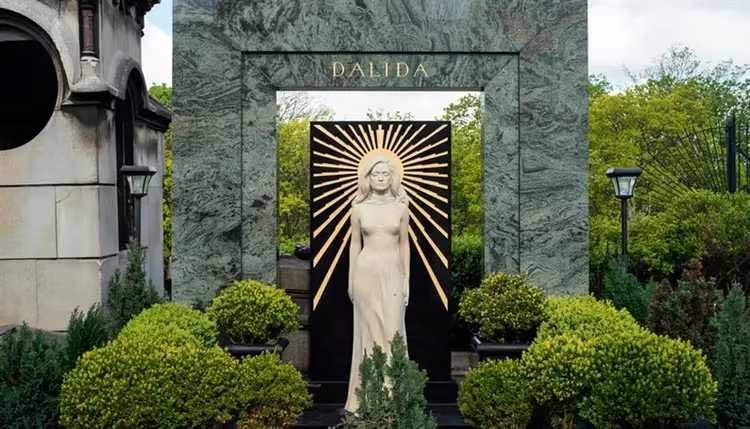
Opened on January 1, 825 at the site of a quarry where gypsum was mined. It occupies an area of 11 hectares, located in the western part of the district. Now there are 20,000 graves here, and since the cemetery is active, 500 graves appear annually. At the entrance, people are given a map of the territory.
Actors, artists, musicians, politicians are buried in the cemetery – Offenbach, the inventor of the saxophone Saks, artists Degas, Moreau, writers Heine, Stendhal, Dumas son. Alfonsine Duplessis was buried, sung by the writer Dumas in the work “The Lady of the Camellias”. Delilah, on whose grave you can always see fresh flowers.
Boulevard Clichy and Place Pigalle
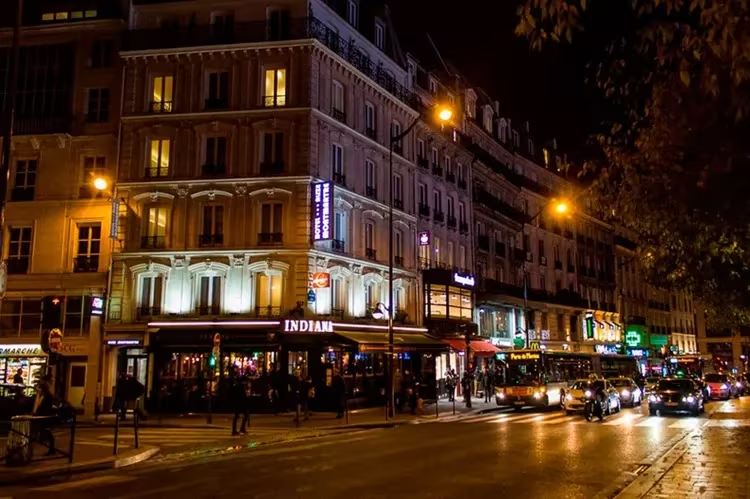
There are hundreds of sex shops, nightclubs with spicy performances, striptease clubs on the Boulevard Clichy. The boulevard is considered the center of the nightlife of the French capital. Although it is interesting to walk here during the day. The boulevard is historically famous for the fact that the battle between the Russian and French armies took place here during the campaign of 1814. Van Gogh often depicted this place on his canvases; he liked to visit the Tambourine cafe located here.
The Museum of Erotica, opened in 1997, is located on the boulevard. On the ground floor there is an exposition that tells about brothels of the 19th and 20th centuries, presenting furniture, erotic devices allowed for use in legalized brothels. On the second floor, paintings, of course, erotic themes of contemporary artists, caricatures and sculptures on sexual themes.
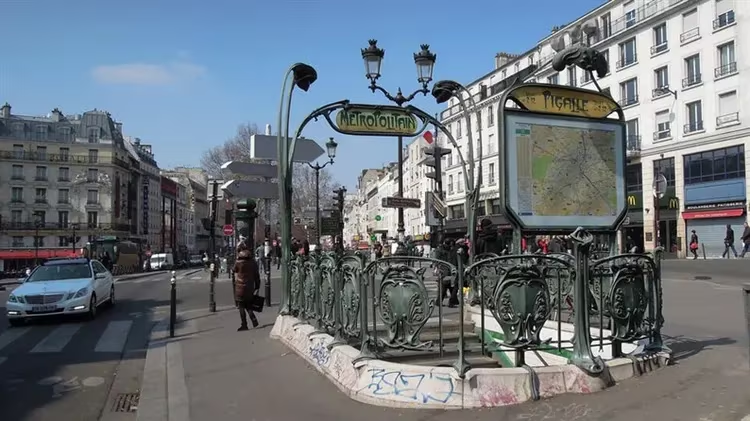
Walking along the boulevard, you find yourself on Pigalle Square, also chosen by creative bohemia. The famous Black Cat cafe is located here. It is interesting that many celebrities who visited it were poor and, for lack of money, paid with their drawings – among them Picasso, Renoir, Degas. Nowadays, the red light district is located here – there are sex shops at every turn, even on the street they sell spicy items. It is better not to walk with children. In the evening, at every step you can meet representatives of the most ancient profession.
Where is it located and how to get there
Montmartre is located in the 18th municipal district in the north of Paris, France.
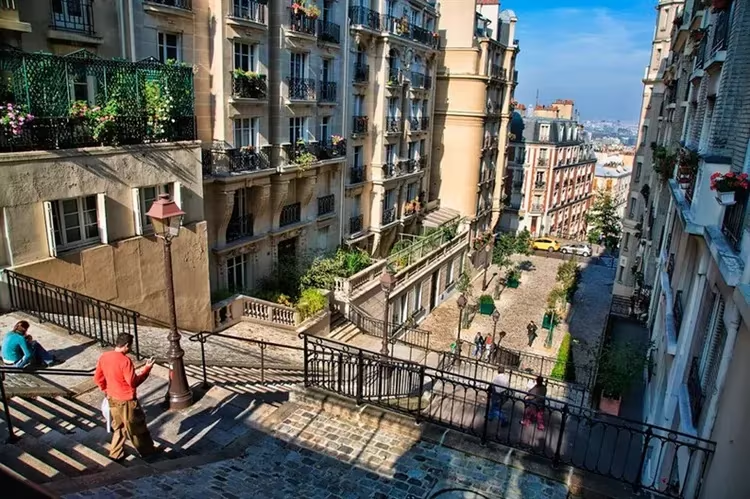
How to get there: take the metro to the stops: Anvers, Pigalle, Blanche (line 2); Lamarck, Caulaincourt and Abbes (line 12). Then climb the stairs or use the funicular.
There are so many attractions that are collected in the Montmarte quarter of Paris, it is difficult to describe and list everything. If you are lucky enough to be in the French capital, be sure to visit the bohemian quarter.