
Park Guell in Barcelona – history, photo, description, prices 2021, how to get there, map
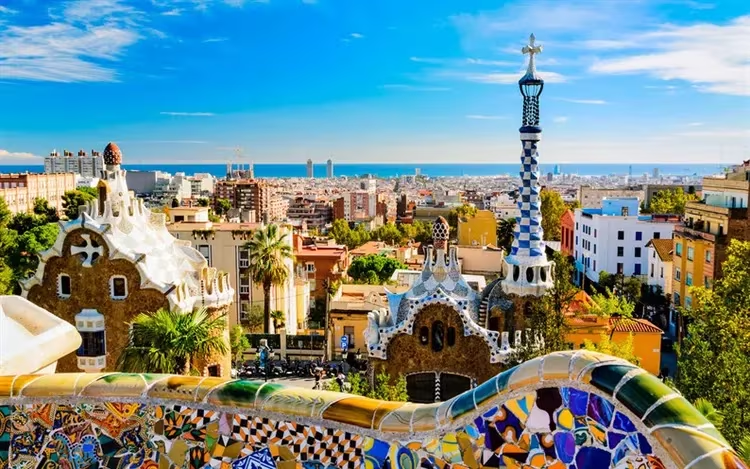
Park Güell in Barcelona is one of the most mesmerizing places in the world. It is located in the northern part of the port city on an area of 17.18 hectares. Designed by Antonio Gaudí, the ornate gingerbread houses, colorful main staircase and mosaic lizard seem like part of a fairy tale. Walking through the picturesque pine groves and palm alleys, admiring the inimitable creations of the genius of Catalan architecture, you will immerse yourself in a world where architectural masterpieces coexist in perfect harmony with nature.
History of creation
The creation of Park Güell is the result of a business and friendly relationship between Antoni Gaudi and the textile magnate Eusebi Güell, the main sponsor of this project. Their acquaintance began with the Paris World Fair. The stand, where the Spanish architect presented samples of glass and ceramics, impressed the businessman so much that he met with Gaudí and soon after began to financially support the Catalan artist.
The starting point for the creation of Park Güell was 1900. It was then that the industrialist purchased a 15-hectare plot of land on a deserted hillside with a fantastic view of Barcelona. The idea of Güell, who returned from Foggy Albion at the beginning of the 20th century, was to create a garden city in the then fashionable English style of an ecological residential area. The philanthropist planned the construction of 62 private villas surrounded by green alleys. According to a prearranged contract, future homeowners were not allowed to cut down trees with a trunk volume exceeding six inches.
In 1901, hired surveyors began to divide the park into sections, and Gaudi began to prepare an architectural concept. The second stage of construction included the formation of roads and the construction of three mansions. Between 1910 and 1913 a central entrance with unique pavilions, a curved bench and the Hall of 100 Columns appeared. Unfortunately, 1914 marked the end of construction and the collapse of the project. The idea of a “green paradise” failed miserably.
Wealthy citizens did not line up for houses in the estate, located on the outskirts of Barcelona. The situation was not saved even by three wonderful cottages erected by that time. Eusebi Güell died in 1918, and 3 years later his heirs sold the land to the municipal government of Barcelona. In 1926 the city park was opened to the public.
Architecture and the rich imagination of Gaudí
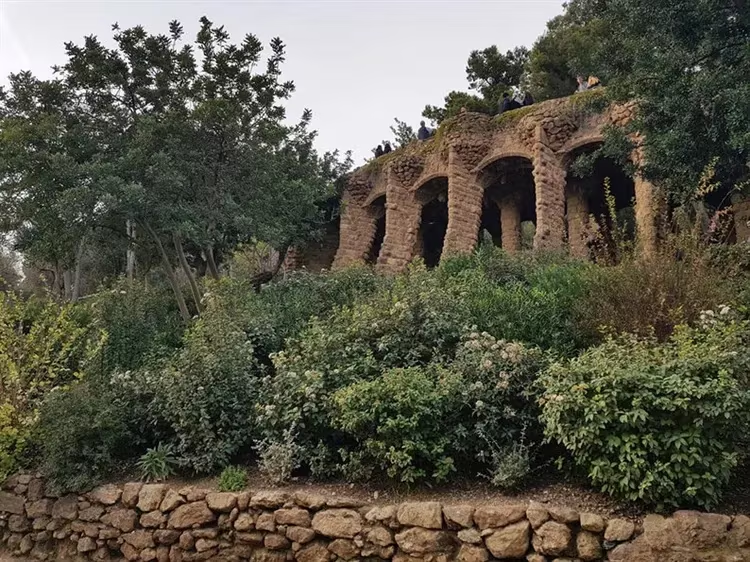
Today, in Parc Güell, you can admire the creations of Gaudí, which characterize the symbiosis of Catalan Art Nouveau and symbolism. The architect designed incredibly complex structures, riddled with mythological elements and historical allusions. As conceived by the author, all buildings should be hidden behind a two-meter fortress wall, laid out of stones of local rocks and crowned with medallions with the inscription Park Güell.
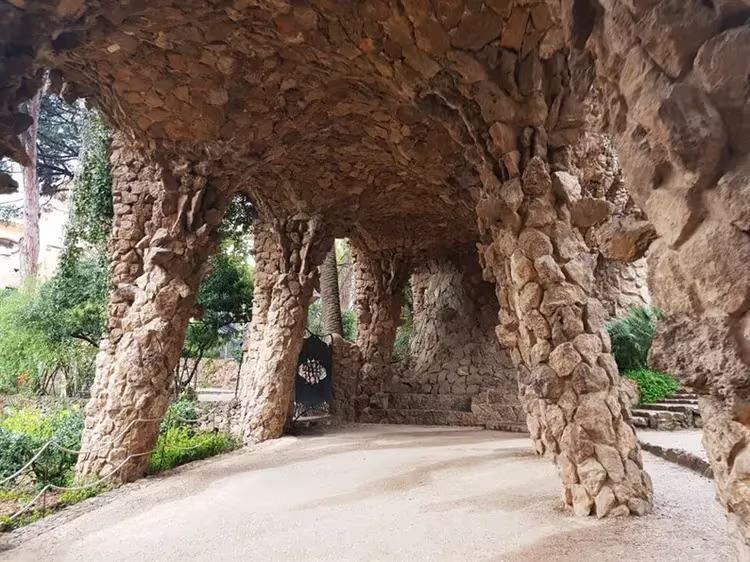
The uneven landscape of the hill caused the appearance of winding streets in the form of viaducts and two-level alleys in the park. Compositions, fountains and sculptures take visitors into the world of mysterious grottoes, wild jungles and fabulous creatures. Details of buildings, distinguished by unusual shapes and bright colors, are in perfect harmony with the surrounding nature. For the last time in his life, the author used the Mudéjar style in decorating architectural objects. Characteristic elements of Gothic, Moorish and Renaissance art can be seen in the tiles, brickwork, window bars and carved plaster.
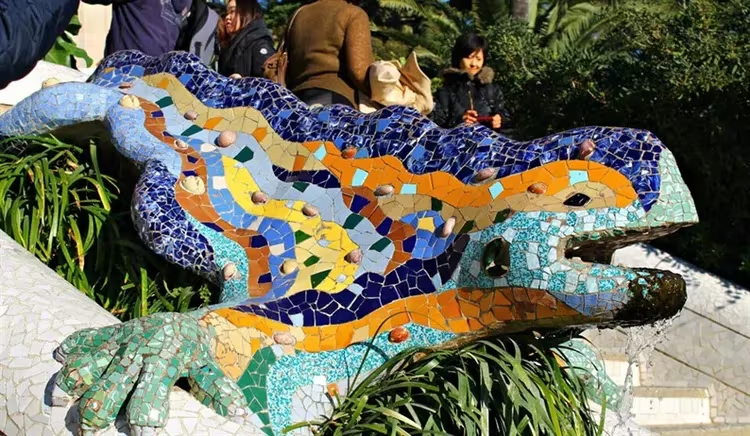
Making their masterpieces, Gaudí and his assistant Josep Maria Juchol used unusual materials: broken tiles and waste from ceramic factories. But despite the external fragility, all structures are unusually strong due to the principle of layering used in construction. So, the tower at the main entrance consists of layers of reinforcement, concrete and brickwork. The artist used this method in the construction of all park objects.
gingerbread houses
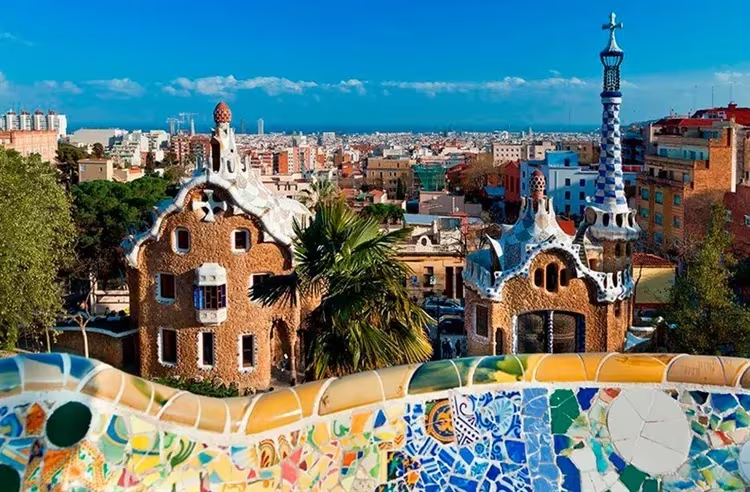
The most finished part of Park Güell is located at the main entrance. Visitors are greeted by two extraordinary houses that plunge into the world of fantasy and fairy tales. They say that Gaudí got the idea for their creation from the opera Hansel and Gretel by the German composer Humperdinck. The appearance of ginger cakes covered with a layer of glaze is given to buildings by trencadis, a special technique of mosaic decoration, the essence of which is the use of small pieces of broken ceramic tiles.
Despite the fact that the houses differ from each other, they are designed in the same style, which is manifested in streamlined shapes, curved roofs, the absence of right angles and raw stone finishes. The carved domes crowning the buildings look like speckled mushroom caps. If you look closely, you will realize that these dots are nothing more than images of cups – the symbols with which Gaudí indicated his desire to give up coffee.
It was assumed that in one of the outlandish huts, whose white-and-blue tower is decorated with a cross, the administration of the park would be located, and in the other, larger in size, the porter would live. Today, the service building houses souvenir shops and cafes, and one of the expositions of the city historical museum is located in the gatehouse.
Hall “100 columns”
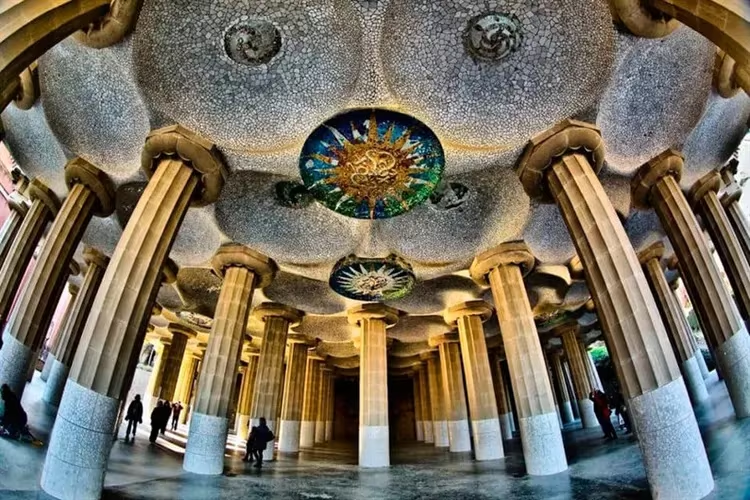
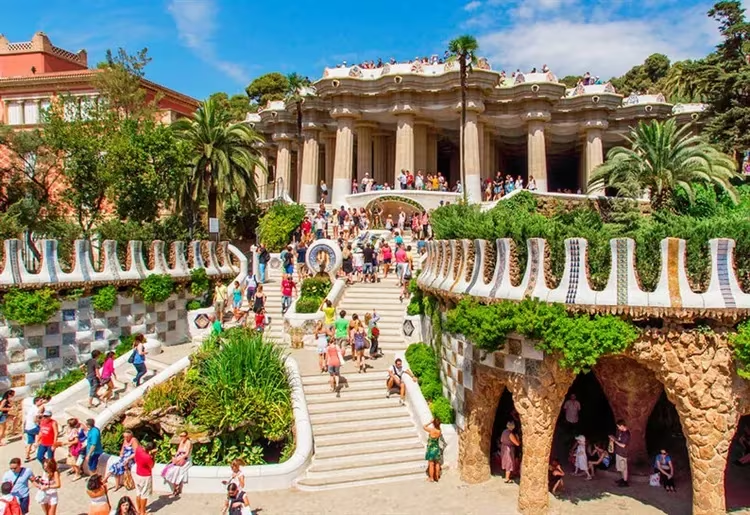
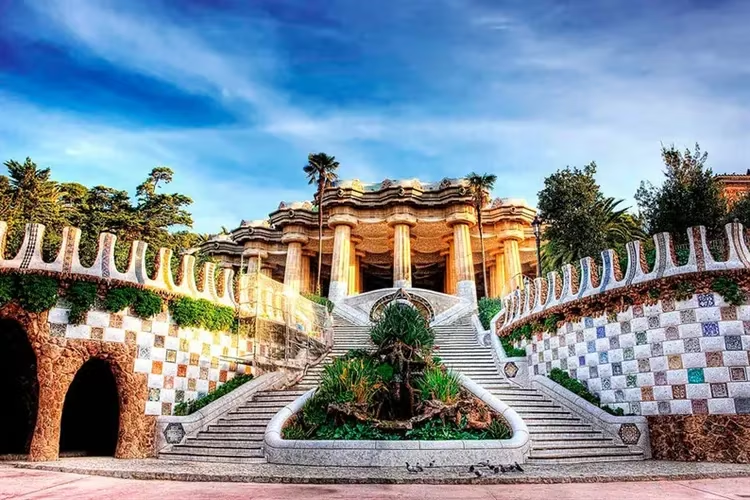
Just above the gingerbread houses, the forked front staircase leads to the Hall of a Hundred Columns. At its base is a fountain-grotto and a snake's head enclosed in a round medallion. A little higher – the emblem of Barcelona – the figure of a salamander, decorated with a mosaic of glass and porcelain. Climbing the stairs, you will come across a Doric hall, without walls and reminiscent of an ancient Greek temple.
The six-meter columns (by the way, there are only 86 of them) widening downwards and slightly inclined, are arranged in a cellular order and serve as the basis for the ceiling, trimmed with shards and four colored glass shades, symbolizing the seasons. The oval roof of the building is also an esplanade, which was originally conceived as a market square. Today, the terrace above the Hall of 100 Columns is the central and most crowded place in Park Güell. From here you can enjoy beautiful views of the capital of Catalonia.
curved bench
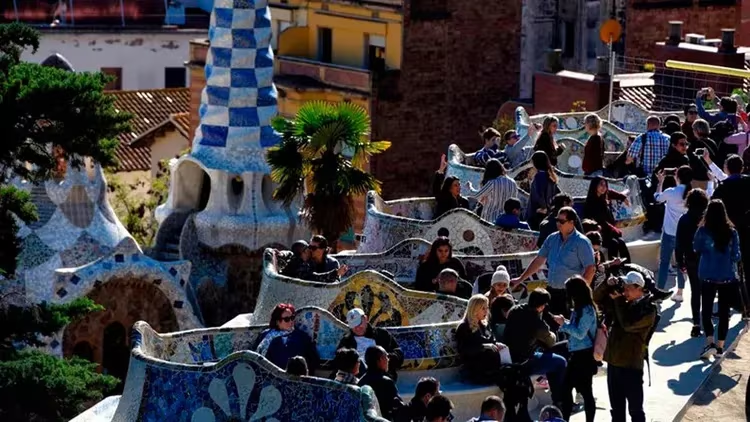
But not only the bewitching picture of the city spread out below and the opportunity to take a dozen or two photos attract tourists to the roof of the Doric hall. Here, smoothly framing the entire site, a bench winds, made up of individual concrete blocks and lined with ceramic tiles, fragments of pottery and glass bottles. Upon closer examination, the abstract pattern turns into magical figures, mysterious drawings and images of the signs of the zodiac.
As conceived by the master, the curving shape of the endless bench not only helped to accommodate more people who wanted to sit down and relax, but also created an intimate atmosphere for tête-à-tête conversations. Pay attention to the flawless recesses of the seats, repeating the curves of the human back. In order to achieve this effect, the cunning architect stripped the workers naked and seated them on the still wet mortar.
Three mansions that were bought
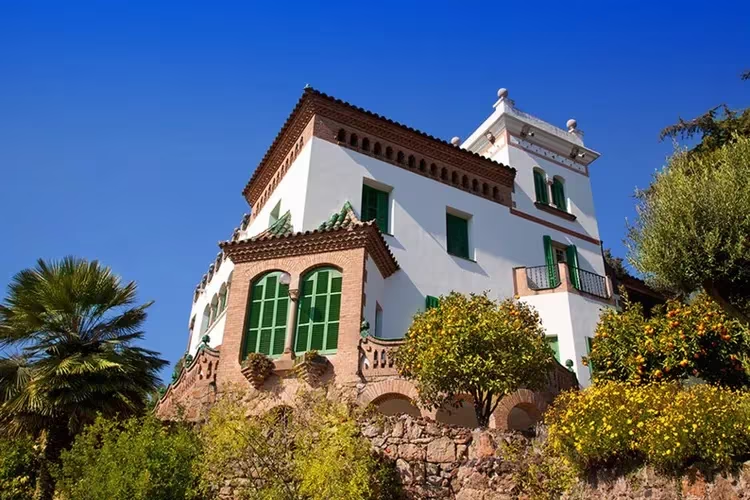
In total, there are three houses in the failed estate, one of which was bought by a friend of the industrialist and architect, lawyer M. Trias i Domenech. The project of the building was commissioned from the architect Julie Batlyavel, and Gaudí himself chose the place for construction. An elegant white building with green shutters can be seen if, while on the terrace of the Hall of 100 Columns, turn your back on the city and look to the right. The possession of Trias, surrounded by a green lawn, today belongs to his descendants.
Guell acquired the second mansion in 1910, creating his residence in it. Later, a municipal school was founded in the building. The third four-story villa, decorated with a pink spire, was bought by Antonio Gaudi and lived in it until 1925. The building was designed by his student, Francesc Berenguer. In 1963, the Friends of Gaudi opened a museum in the mansion. The collection consists of items belonging to the brilliant architect: personal items and furniture. Here you can also get acquainted with sketches of projects that were not destined to be realized.
Park Guell today
In 1962, the entire park area received the status of an artistic monument, and after another 7 years – a national treasure. In 1984, Park Güell, like many of the works of the greatest Catalan master, was added to the UNESCO list of cultural property to be protected.
Today, the park is one of the most interesting sights of Barcelona and a favorite place for the citizens to relax. Here, on top of a hill, where the air is much cleaner than in other areas of the southern capital of Spain, you can wander along the shady paths, listen to the birds singing in the alley or hide from the rain in the arched tunnel. Until 2013, anyone could enter the park for free, but the huge influx of tourists (more than 4 million people a year) forced the city authorities to limit entry and charge a bribe for it. Now about 95% of the park area is available for free visiting.
Opening hours and ticket prices
The opening hours of the park vary depending on the season:
Days off: 01.01, 25.12. and 26.12.
To enter the Monumental Part, which includes gingerbread houses, a curved bench and the Hall of a Hundred Columns, you must purchase a ticket that gives you the right to enter only at the specified time (or within 30 minutes after it). There is a restriction – only 400 visitors are allowed to pass every half an hour, which creates queues at the cashier. We advise you to book tickets online – in this case, their cost will be less than the base one by 1 euro.
Rates:
Before the trip, check the information about the visit on the official website www.parkguell.cat.
Where is it located and how to get there
Park Güell is tucked away in the northern part of Barcelona in the Gràcia district. This area of the city has a hilly terrain, so getting to it is not so easy. Due to the size and location of the attraction, try to plan at least half a day for your visit. You can get to the park area by public transport:
- Bus: Lines 24, 32, H6, 116 to the Travessera de Dalt stop and Bus Touristic or Barcelona City Tour to the Park Guell stop.
- Metro: green line L3:
The exact address of the park is Carrer d'Olot, 13, 08024 Barcelona.