
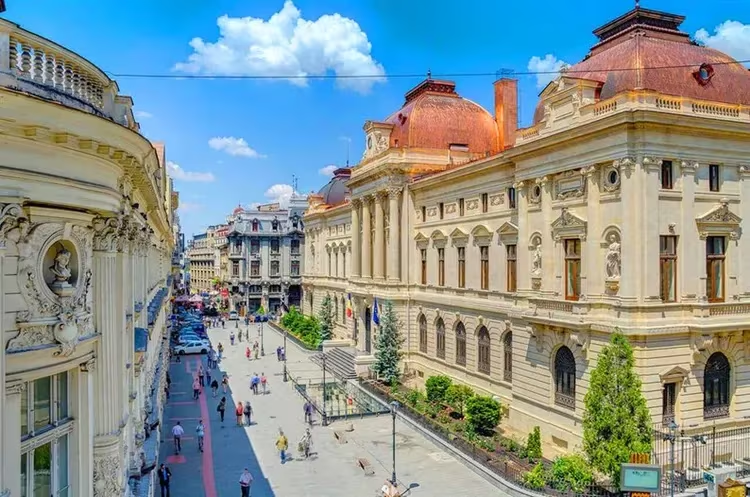
Sights of Bucharest – 25 most interesting places
The capital of Romania is one of the largest cities in Europe. The complex history of the country has many sad, difficult pages. Having survived all the troubles, the people of Romania were able to preserve many architectural masterpieces erected in different periods of life. Beautiful palaces, parks, interesting museums, temples and other sights of Bucharest are invited to see on your own or with guides during excursions. We will tell you where to go and what to see first.
Palace of Parliament
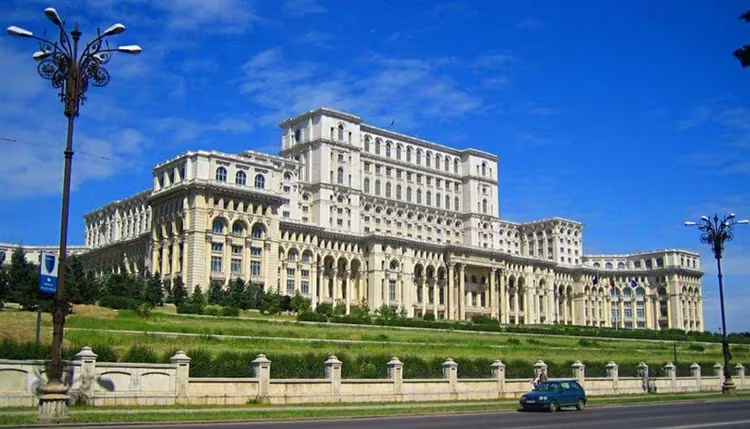
The idea of erecting a building of unusually large dimensions belongs to Ceausescu and came to him after visiting China and North Korea. The monumental buildings of Asia conquered the ruler of Romania. The 1977 earthquake helped make his dreams come true. Many buildings in the central part were destroyed. They were demolished, and in the most seismically safe area of the city a complex was erected, called the House of the People (the inhabitants identified it as the House of the Pharaoh, the House of Ceausescu). The volume of construction is 2% larger than the pyramid of Giza.
Its architectural style most closely matches the Empire style of Stalin's times. The height of the palace is 84 m or 12 floors (could accommodate 25 floors). The depth of the underground part is 92 m. It has 1100 rooms. 30 of them are occupied by luxurious halls. The area of the building houses 4 restaurants, 3 libraries, two underground parking lots, and a concert hall. By its size, the building is considered one of the largest administrative buildings in the world. In the “Massive Buildings” category, the Parliament took third place (ahead of the abandoned temple in Teotihuacan and the Space Center in Florida).
Book a private transfer from the airport to your hotel for 1 855 RUB
The appearance of the huge ensemble is complemented by unusually expensive interior decoration. Everything is here: floor, walls, windows, stained-glass windows, chandeliers. The ceiling, carpets, brocade curtains are made of the rarest materials. The building overwhelms with its grandeur, symbolizes the boundless power of a bygone era. It has long been the hallmark of the city. 30% of the premises are used for city events. Tourists are allowed to see them. For their convenience, a glass elevator was built, delivering those who wish to a chic restaurant, to an observation deck.
Address: Strada Izvor, 2-4.
Cotroceni Palace
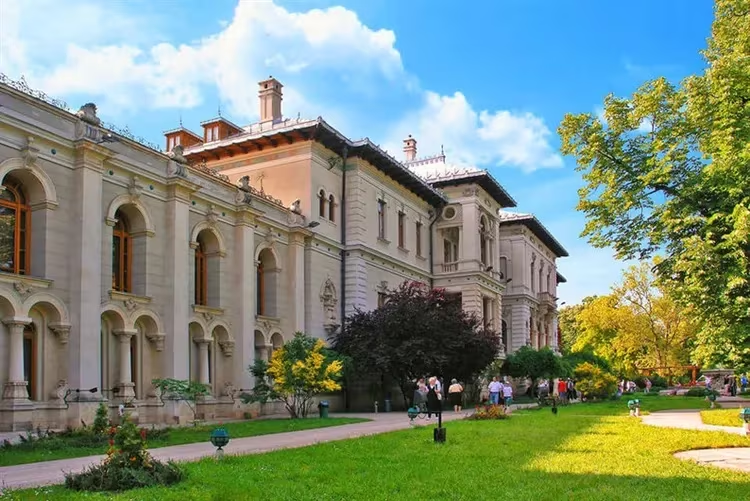
On the site of the ancient monastery that adorned the Cotroceni hill, in 1888, the palace of Carol I appeared, which became a famous example of architecture of the 19th century. After the overthrow of Ceausescu, the residence of the president was formed in the palace and museum expositions were opened. The luxurious building was designed by the architect Paul Hetero in the architectural style of the German neo-revival. The building had the status of a palace until 1949. It was occupied by various state institutions (House of Pioneers).
The building, restored after the earthquake, is decorated with two snow-white towers with bright tiled roofs, elegant columns with complex stucco elements, beautiful windows, and cozy balconies. The interior decoration strikes with richness and beauty. Their appearance has been preserved in its historical form. It is believed that the design of the interior took place under the guidance of the Queen. Due to its origin (the Queen was the niece of the English Queen Victoria), many elements have a European style from different eras.
Here are the Flower Salon, the German rooms, decorated in the Renaissance style, the Prince's Study, etc. During the excursions, it is proposed to see the preserved boudoir of the Queen, the East, the Norwegian Hall. The museum displays 20,000 exhibits. Among them are works of painting, sculpture, graphics, decorative and applied arts. A separate exposition presents ancient icons, works by Romanian artists, made since the 19th century.
Address: Bulevardul Geniului, 1.
Creculescu Palace
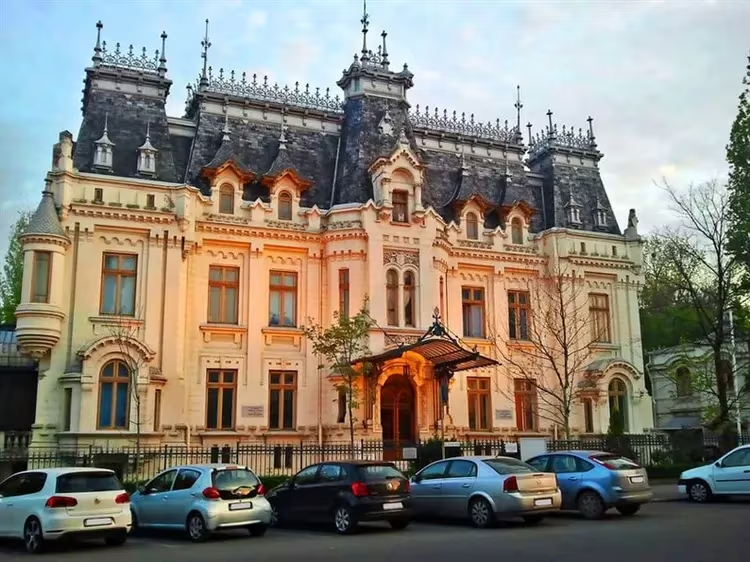
Looking at the beautiful palace, it is easy to imagine that it has been standing on this land since ancient times. And behind its amazingly beautiful walls lives a princess. Lace elements located at the top of the castle make it almost weightless, flying somewhere up. Its architectural style harmoniously combines elements of the New Gothic and Baroque styles. The fabulous building appeared 100 years ago. And it has long been included in the lists of the most beautiful symbols. The main use of the palace was the holding of cultural events by administrative, cultural organizations.
Until the outbreak of World War II, the premises of the palace housed a museum of religious art. Now it houses the Center for Higher Education “UNESCO-SEPES”. The palace is closed to tourists. It is offered to inspect it, listen to the history of its creation, the legends living next to it during an external inspection. One of them is the story that the underground passage from the palace leads to the Church of Skete Megureanu in Cismigiu Park. And in the mysterious depths there is a whole underground city located near Bucharest.
Address: Strada Știrbei Vodă, 39.
Kurtya-Veche
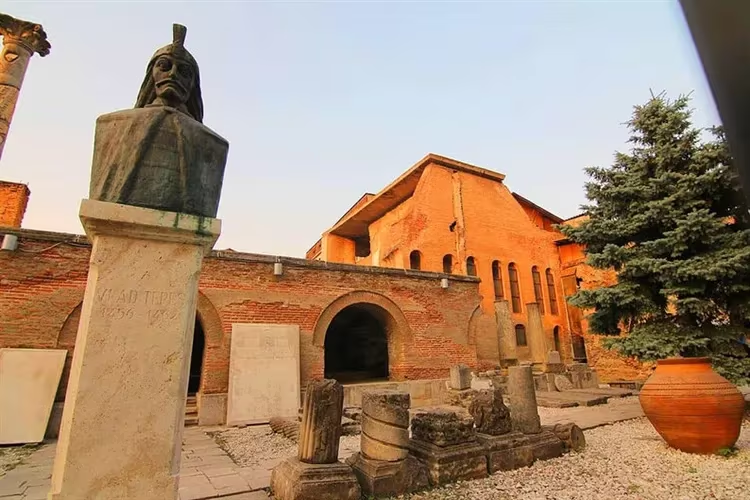
A rare attraction consists of restored buildings of ancient buildings that were part of the ensemble of residences of kings of different times. The first rulers of Wallachia lived here in the 14th century. Initially, there was an armed fortification, then a fortress. It was built under the leadership of Prince Vlad Tepes. The people and Bram Stoker gave him the name Dracula.
An important historical event is the signing of the document that became the date of birth of Romania. In 1545, the first church of Kurtya-Veke or the Temple of St. Anton and the Annunciation appeared on the territory of the fortress. It was used for a long time during the coronation of the next ruler of the country. Today the church is considered the oldest building in the city. The ensemble in open space includes: sections of the gallery, parts of the defensive walls of the fortress, segments of the ancient water supply system.
Turkish bath, separate architectural elements of decorations, paintings. The Old or Princely Court also includes Hanul-lui-Manuk. It was built in 1808 by Manuk Bey. A peace treaty was signed in the building to end the war with Turkey in 1812. Once majestic buildings were decorated with columns, beautiful staircases made of rare marble. Archaeological excavations at the site of the ancient fortress continue and bring new interesting elements.
Address: Franceza, nr.27-31, sector 3.
Palace of Cantacuzino
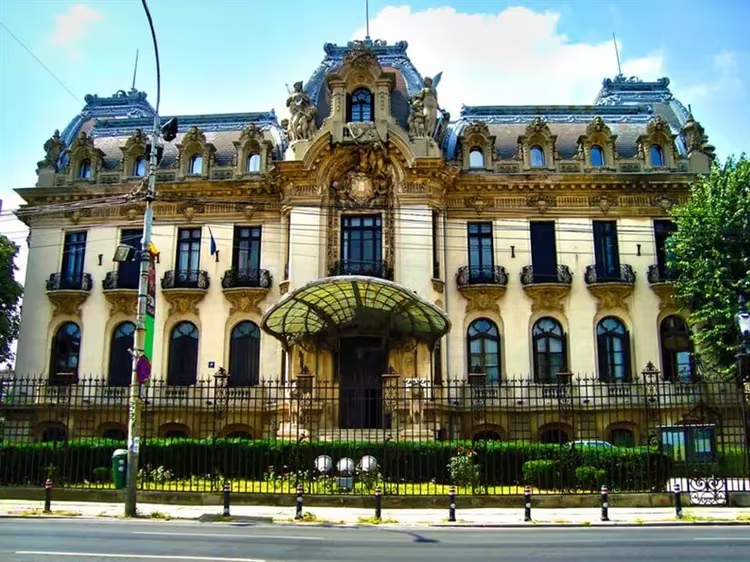
In the central part of the city there is a beautiful palace, built in 1903 by order of the mayor Cantacuzino. The best architect of that time worked on his project and created the appearance of the ensemble from elements of different architectural styles. The exterior of the palace is decorated with beautiful wrought iron balconies, high arched windows, luxurious entrance gates with two stone lions. Above the entrance is the coat of arms of the family. The facades of the building are decorated with numerous sculptural compositions and carved ornaments. Since 1956, a museum dedicated to the composer George Enescu has been operating in the building.
Equipped with three exhibition halls, salons for concerts, balls. The permanent exhibition contains personal items, drawings, sketches, musical instruments of a recognized master. It is also offered to see works of monumental painting by Petrescu, Kostina, Verona. The sculptural decor was made by Beckerem, Storka. Ancient carpets, furniture, lamps, stained-glass windows, tapestries have been preserved in the palace. Music festivals, meetings, dances are regularly held in beautiful halls. In summer, concerts are often held outdoors, in the magnificent park that surrounds the palace. Since 2007, it has been included in the lists of the protected heritage of the UNESCO World Heritage Site.
Address: Calea Victoriei, 141, sector 1.
Romanian Athenaeum
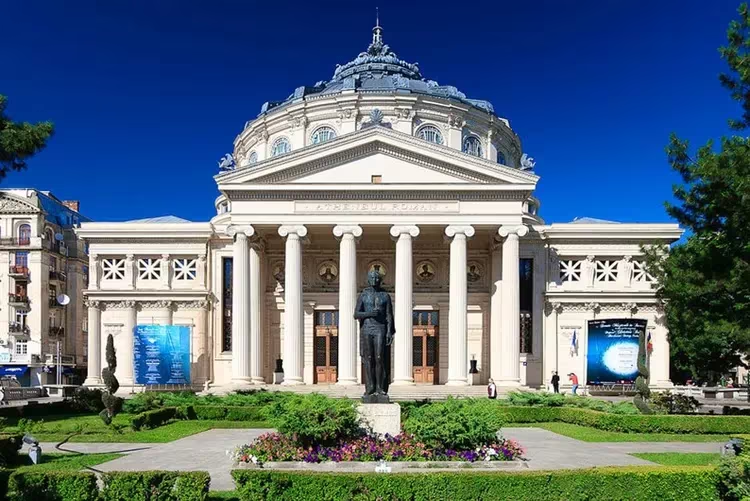
The Concert Hall of Romania is considered an outstanding landmark of the country. This is not just a concert venue for musical celebrations, but a unique temple of art. A symbol of the traditions of the spiritual beauty of the people, which has become one of the hallmarks of the city. The acoustic possibilities of the Ateneum are considered to be the best among all music halls in Europe. World fame was brought to him by the annual Enescu International Festivals.
A “temple of art” appeared in 1888 on the initiative of prominent figures, diplomats, scholars of Romania, who organized the “Romanian Ateneum” society. In the concert hall, in 1919, a meeting of the leaders of the regions of the country of Bukovina, Transylvania, Bessarabia with the Kingdom of Romania took place. It was decided to merge. The facade of the building resembles a Greek temple and is decorated with strict columns, a high pediment, openwork windows, and an elegant Byzantine-style dome.
The interior was formed over 10 years after the completion of construction. It turned out beautiful, luxurious. On the ground floor of the building there is a conference room. In the concert hall there are 600 seats in the stalls and 52 in the boxes. The walls of the hall are decorated with a huge fresco, reflecting the main historical events of the country, starting from the period of Dacia, Trajan.
Address: Strada Benjamin Franklin, 1-3.
Triumphal Arch
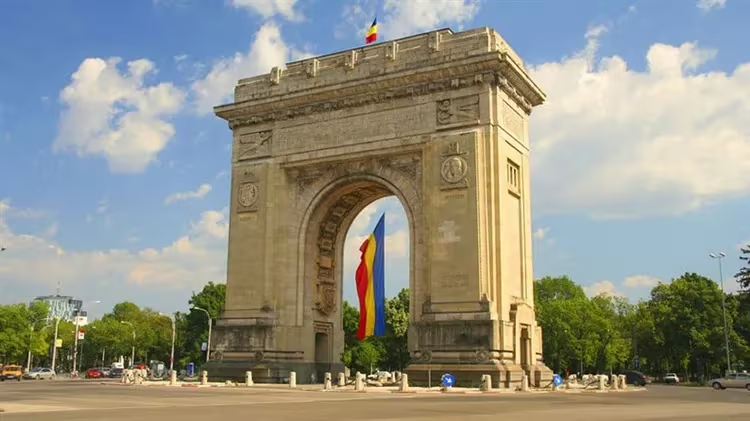
Memorial building, built on a busy artery of the city. The street bears the name of the famous Russian diplomat, Count, General Kiselyov. He was a respected person in the country. Every year on December 1, during the National Day, military parades are held here. According to the ancient traditions of different countries, it was customary to meet the winners at the symbolic gates to the city. Triumphal arches were built from different materials, decorated, became sights of many cities. One of the ancient customs of Romania was the meeting of the winners under arches of decorated fir trees.
The first building was built of wood in 1878 in honor of the country's independence. During the history of the arch was rebuilt several times. The opening of the Arc de Triomphe made of reinforced concrete, with sculptural elements, took place in 1922. The height of the structure is 27 m, the width of the passage is 10 m. Its height reaches 17 m. Stairs hidden in the walls lead to the top of the arch. The building ends with a pediment, a terrace from which it is proposed to look at the beautiful surroundings. In the Arc de Triomphe there is a museum with documents and artifacts confirming the history of its appearance.
National War Museum
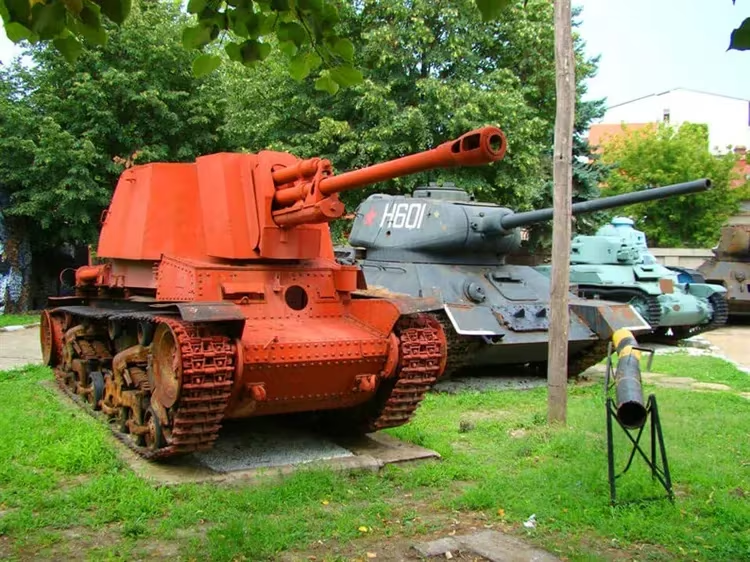
The exploits of the warriors of Romania were valued and respected in all historical periods of the country. The main events of the battles are forever preserved in the expositions of the Military Museum. The items shown are in chronological order. Its beginning dates back to ancient times and ends with the modern participation of the country's soldiers in peacekeeping operations. Fascinating additions to archaeological artifacts are models, drawings, dioramas, computer images.
The vaults contain a huge number of exhibits, from which new exhibitions are constantly being formed. The date of birth of the museum is 1923. Fire, earthquake, historical events required the frequent transfer of exhibits to other places. Modern expositions have been housed in the building of the former Cavalry School since 1957. There are busts of famous Romanian personalities in front of the entrance. Among them is the figure of Count Dracula or Vlad the Impaler.
A large area is allocated for an exhibition of real military equipment. Planes, guns, images of armored vehicles, missiles, naval weapons. All cars were manufactured at the factories of the country. A separate exhibition is dedicated to the collection of small arms and hunting weapons, military uniforms, numerous photographs, and medals.
Dimitrie Gusti Village Museum
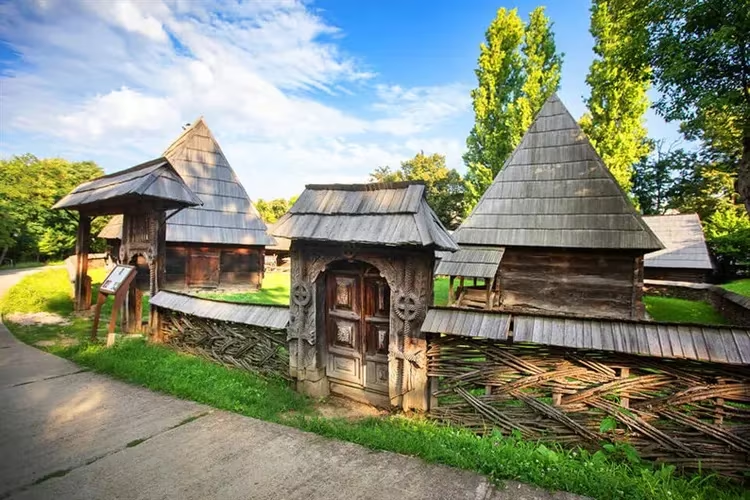
To relax among the extraordinary silence of the park, among the forgotten world of rural life in Romania is offered on the shores of Lake Herestrau. You don't have to go anywhere. A unique place is located in the central part of the city. According to the idea of the country's ethnographer Dimitrie Gusti, one of the first ethnographic museums in the world appeared here in 1936. Samples of rural buildings were brought here from all regions of Romania. Of these, 76 complexes of 322 buildings of different times were formed.
Among them are thatched roofs of Transylvanian houses, oak with carved entrance gates from Maramures, huts, dugouts. Churches made of wood, windmills, watermills, buildings for agricultural machinery, grain storage, animal husbandry. Some buildings have been preserved since the 18th century. Looking into the window of the former dwelling, it is proposed to see the interior decoration, the hostess, conjuring at the stove or rocking the baby in the original bed.
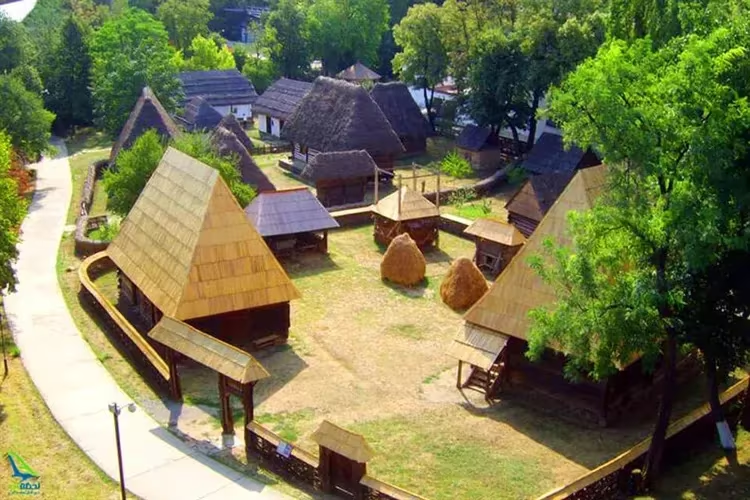
In the barn, almost mooing, almost a real cow, chickens running around. It is allowed to enter some houses, touch real furniture, household items. A separate exposition presents tools, millstones, oil mills, threshers. Fairs, exhibitions, national holidays, performances by artists are held on the territory of the open-air museum. The souvenir shops offer local souvenirs. The role of agriculture in the development of the country is invited to listen during the tour and visiting the local library.
Modern Art Museum
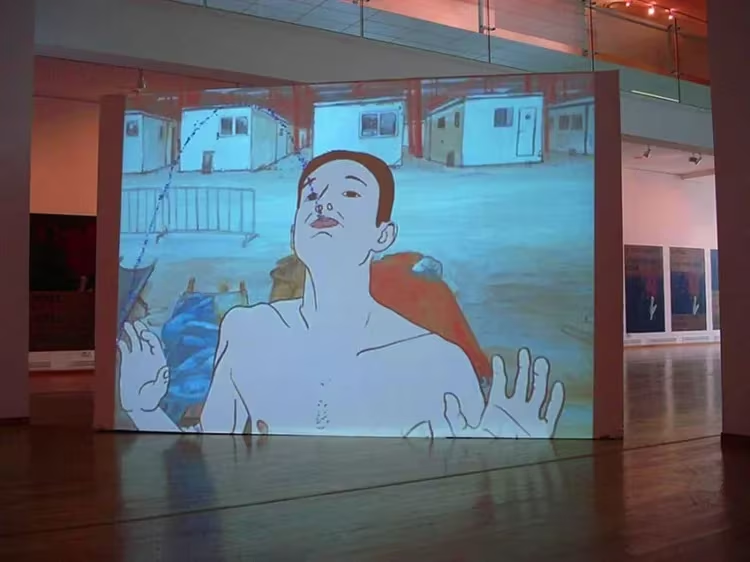
During the period of socialist Romania, the main building of the country, the Palace of Parliament, was supplemented with a glass extension. The four floors housed 30,000 works from the wealth of contemporary art. It is built on collections of paintings, sculptures, installations, modern proposals of computer technologies. The expositions are presented in the form that modern masters see art. The institution organizes permanent and temporary exhibitions.
Interest and controversial opinions were caused by an exposition of paintings glorifying the activities of Ceausescu and his wife. It contains portraits of the family, paintings from different situations of life. In one painting, Ceausescu is having a friendly conversation with King Stephen. The exhibition is not a tribute to love for the dictator, but is in the nature of a historical introduction. All pieces are hung upside down and tilted diagonally. The museum began its work in 2004. This is a great platform for young talents.
Many of them started with exhibitions in this building. Find out about the dates, names of events held from the catalogs of its own publishing house “MNAC Press”. Artists' workshops are located on the top floor of the building. In a separate wing there is a hall for a lecture hall, a cafe. Their activities diversify the list of major events.
Antim Monastery
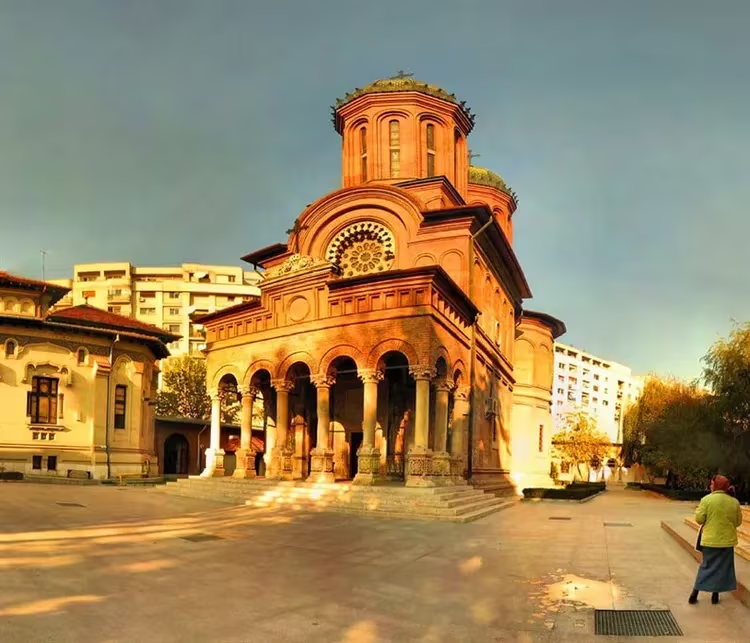
Many churches and temples were destroyed during the difficult years for the country. But this monastery survived the terrible earthquake of 1903 in Veliky Tarnovo and adorns modern Bucharest. A beautiful inscription on the portal of the doorway of the temple confirms its construction in 1715. The active male monastery is named after the founder Antim Ivireanu. For a long time, a well-known school of clergy worked in it. In the XX century, the monks were arrested, the monastery was closed.
Thanks to the care of the Romanian Church, the monastery has been restored and is included in the list of sights of the city. The architectural structure is made in the style of “brynkovyanu”. It appeared in the country in the 18th century and is still used in modern buildings. A distinctive feature of the style is the use of carved ornaments, decorative paintings, arches, columns. Beautiful ornaments, animal figures are fixed on the cornices, balconies. The elements harmoniously create an openwork, light appearance of the building.
Among the complex pattern above the front door, the image of a snail stands out. The first key to the gate (the most beautiful among building elements at that time) was made in the shape of a snail. This is a symbol of faith, humility and humility, the emblem of St. Antim. There is information that Antim made them. Above the Saint's head is a laurel wreath with a star on top.
Address: Metropolitan, 29.
Radu Voda Monastery
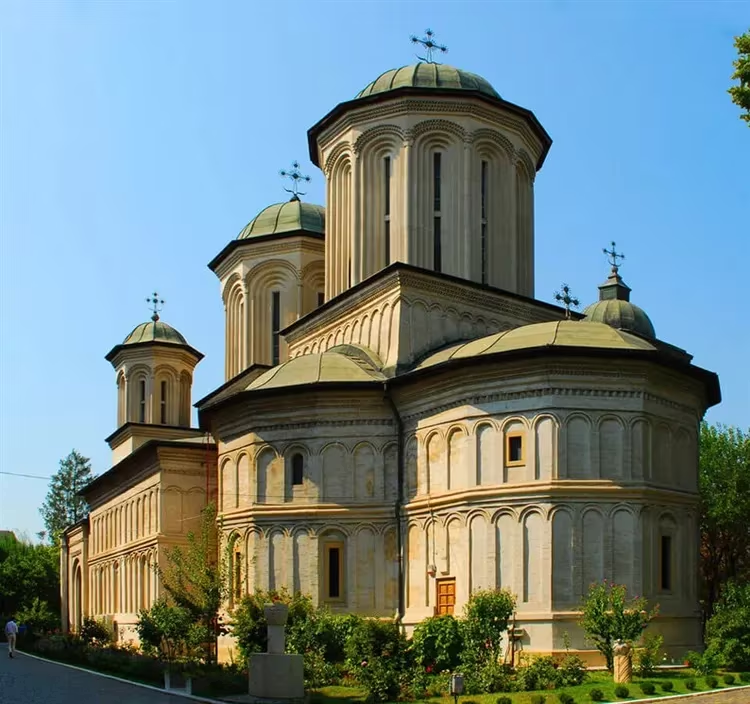
On the territory of the ancient hill in the center is an important center of the religious life of Romania, a monument of history, spirituality, art. Radu Voda Monastery was built on the initiative of Alexander II in 1568. It was originally called the Church of the Holy Trinity. The monastery owned estates, surrounding villages, creating a high prestige level throughout Wallachia. During the reign of Mikhia II, the first city library was created within the walls of the church.
There is a legend that the famous Bucur, who gave the name to the city, pastured sheep near this place. Previously, a magnificent palace towered here. Now it is proposed to look at its archaeological ruins. The monastery has a complicated life. It was often closed, destroyed not only by the forces of the elements. The last restoration was completed in modern times, and monastic life came to life in 1998. The bell tower and the walls of the temple have been restored. Interesting murals appeared, made by the icon painter Archimandrite Sofian. They were made to replace those lost and not subject to restoration.
Of interest are important archaeological artifacts. Their appearance is associated with the life of settlements during the Paleolithic. The monastery houses several tombs of famous church figures. One of them belongs to Patriarch Justinian Marina. Patriarch Dionysios IV of Constantinople is buried here.
Address: 24A Radu Vodă Street.
National Museum of Romanian History
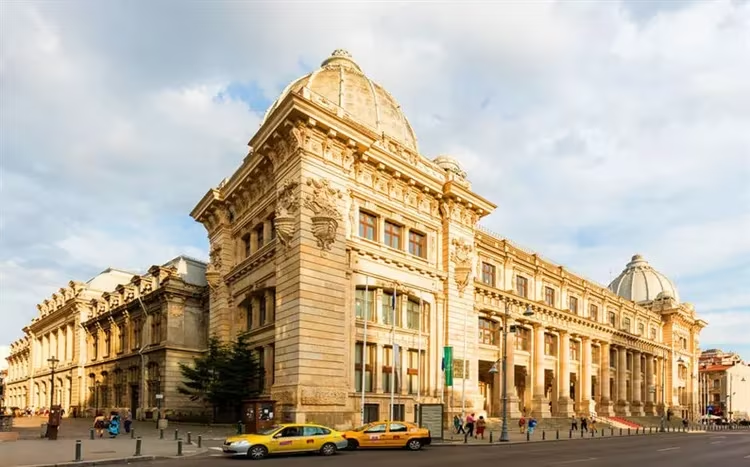
In 1970, the old building of the Postal Palace (it was built from 1894 to 1900) housed exhibition halls, rich expositions dedicated to the history and archeology of the country. In terms of the significance of the collections, the museum took first place among similar institutions in Romania. In rich collections exhibits are presented, revealing a thousand-year history. Artifacts confirming the influence of Roman and Ottoman troops on the territory of the country are highlighted in separate exhibitions.
Among them are historical documents, manuscripts, tombstones, monuments. On the porch of the building there is a monument to Troyan with a she-wolf in his arms, which confirms the presence of the Romans in the role of the ancestors of modern residents. Archaeological finds from the Stone Age, orders, medals received in various battles. Some damage to the collections, the building was caused by an earthquake in 1977, historical events in Bucharest. After restoration, restoration, the building received a second life.
Tourists are invited to walk through 41 halls of the former palace, see expositions with folk costumes, paintings, sculptures, items used in everyday life. In the Hall of the National Treasury, 3,000 pieces of gold, jewels of the king, 12 jewelry created in the 16th century are exhibited. In 1867, this collection was exhibited in Paris and was the most expensive in the world.
Address: st. Kalya Victoria, 12 (sector 3).
Stavropol Church
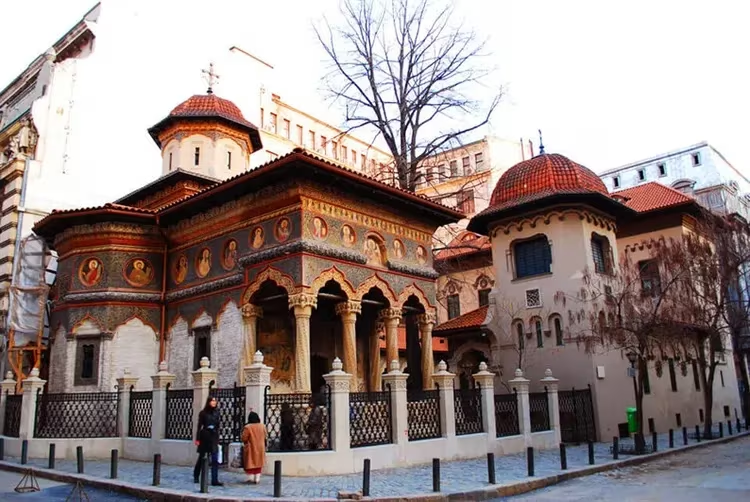
The beautiful building of the Stavropol Church occupies a special place in the rich architectural heritage of the city. Since April 2008, he received the status of a convent. The monastery got its name in honor of the elected Metropolitan Staropol of Caria. Located on the busiest street of the old city, the monastery surprises with its solemn, beautiful tranquility. Having appeared in 1724, it did not collapse and was preserved in its original form.
This is a vivid example of the Brynkovyansky style with a huge number of complex carved decorations, original architectural elements. The facade of the church, stone columns, a gallery, floral patterns, images of saints from biblical scenes have been preserved. Inside, the abundance of ancient frescoes covering the walls, icons of the 18th century, is striking. Upon entering, the visitor sees a wooden door with a unique work of craftsmen. Under the dome of the church, the singing of the church choir, known in many countries as an ancient Byzantine tradition, sounded. Another miracle of the beautiful monastery is its courtyard.
Among the realm of silence, greenery, there is a group of gravestones with ancient inscriptions. They make up elements from the exposition of the monastery's lapidary. It has a large library with works on church history, art, and theology.
Address: Strada Stavropoleos 4.
National Museum of Art of Romania
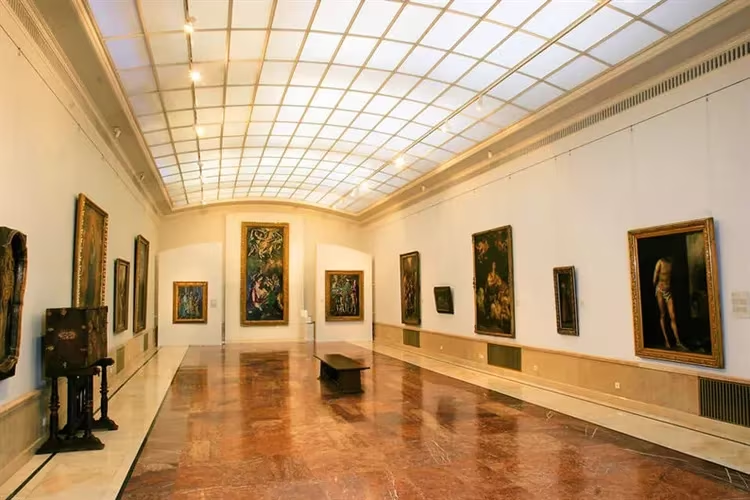
On the site of exhibitions, expositions with objects of foreign and national art, there used to be the residence of local kings. The neoclassical building was built in 1812. It offers to look at the historical process of development of fine arts. There are ancient icons, works of early painting, modern masterpieces. Separate expositions are devoted to the works of the Romanian artist Nicolae Grigorescu, the impressionists Lucian and Andreescu.
Surrealist Victor Brauner, portrait painter Corneliu Baba. Among the numerous sculptural works are the works of Constantin Brancusi, Dimitrie Pachurea. The birth of the collection of foreign masters was due to the personal collection of King I. Now the European Art Gallery houses over 3000 exhibits from the works of the masters of Florence, Rome, Naples, the talents of the Renaissance. The works of El Greco, Alons Cano, Francisco Zurbaran are placed in the art section of Spain.
Separately, an exhibition of masters of the golden age of artists from Holland, as well as a collection of paintings of Russian painting, is organized. Among them are the famous paintings by Repin, Aivazovsky, Serov, Malyavin. The work of the German painter, graphic artist Hans von Aachen is presented in the section of German art. During acquaintance with interesting expositions, it is proposed to see samples of furniture of those times, products from rare porcelain, faience, carpets, embroideries, lace, old table sets.
Address: Calea Victoriei, 49-53.
Museum of Peasant Art of Romania
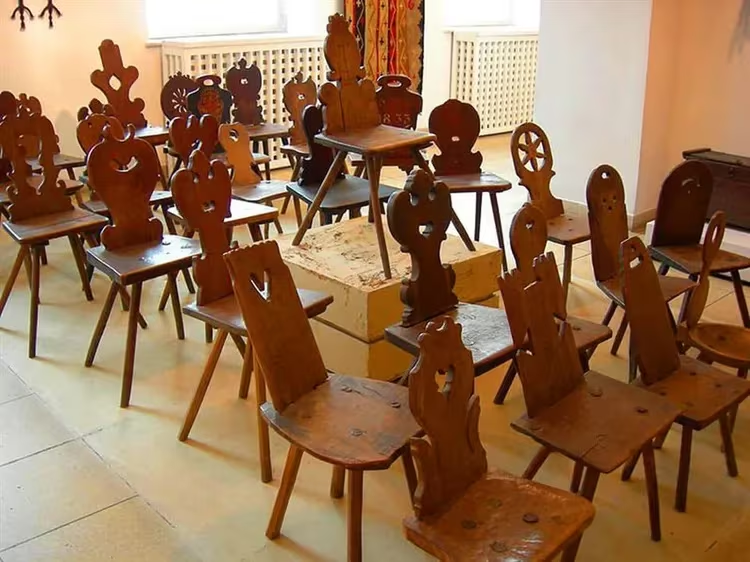
The history of modern Romania would be incomplete without revealing to her the original, unique features of peasant life. It was reflected in the original houses for life, the special conditions of the agrarian labor of the population, folk holidays, beliefs, and legends. The rural culture of the country was manifested in the peculiarities of clothing, outfits, jewelry, and culinary traditions. The inhabitants of the country strive to preserve the heritage of their ancestors, to pass on to future generations the knowledge of the customs and mores of simple peasant families.
The country has several museums that tell about the simple life over the centuries. One of these places, which has an extraordinary power of emotional impact on those present, is the National Museum of the Romanian Peasantry. In an elegant building with large arched windows, palace-like red-brick walls, visitors are invited to listen to historical facts and watch exhibitions. The building is decorated with floral ornaments, a decorative tower in the style of an old church.
On the territory there are real wooden houses, churches, agricultural buildings, primitive factories (compared to real enterprises) for baking bread, making cereals, cheeses. And inside the houses, furniture, icons, embroidered products, and photographs have been preserved. The idea of creating a place of living memory of the life of peasants was born in 1906 by Carol I. It took 29 years to create. In 1966, the institution was named the best in Europe.
Address: Soseaua Kiseleff, 3, Sector 1 (permanent exhibition), Strada Monetariei, 3, Sector 1 (Tempe Exhibition Hall).
Building of the National Bank of the CES
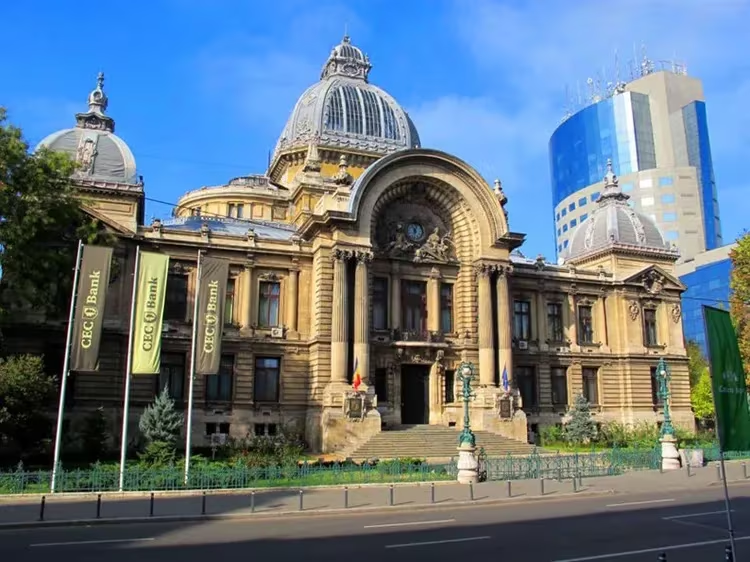
Among the beautiful buildings of the historic center, an architectural creation of 1885 stands out. It was built for the headquarters of the country's national bank. The palace served this purpose for 106 years. Subsequently, the local authorities decided to sell the building to the municipality. Here it became difficult to provide modern banking services to customers. Some of the offices have been preserved, but they do not serve the population. The luxurious halls hosted an event on the occasion of the 60th birthday of Princess Margaret in 2009.
The exterior of the building is distinguished by a dome made of glass and metal elements. The entrance to the building is decorated with an arch, reinforced on columns. On one side there is a monument to the first director of the National Bank. The building houses a museum. Among its expositions, it is proposed to see valuable collections of numismatic elements with the oldest coin and paper money of the country, a collection of gold coins. Learn the history of the building, the stages of the emergence of the national currency, the principles of the National Bank.
Museum of the History of the Jewish People
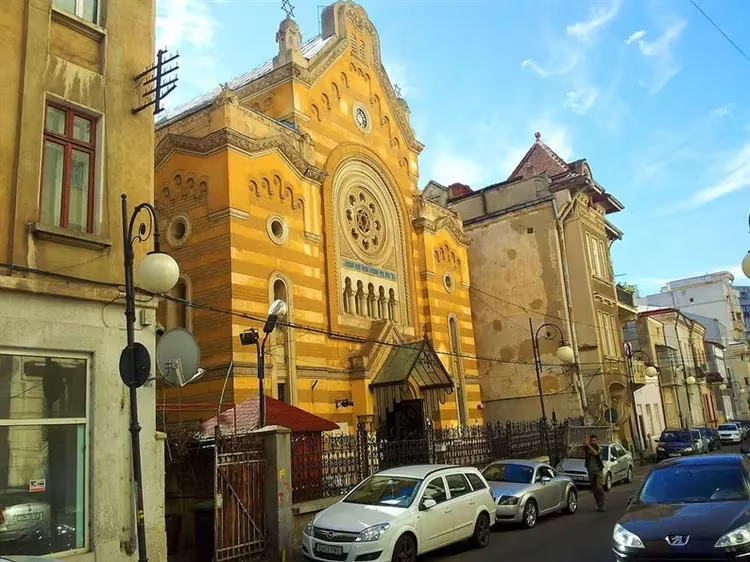
There are Jewish quarters in many European cities. Preserved houses, streets, synagogues, museums, telling about the real pages of the history of different countries. This place is located in the premises of the Great Synagogue, built in 1850. The museum appeared at a difficult time during the reign of Ceausescu in 1978 due to the efforts of the last rabbi, Moses Rosen. Expositions, exhibitions tell about the difficult life of the Jewish people in Romania. About its rich culture, traditions, achievements in culture, medicine. They do not allow them to plunge into the sad world of oblivion of the past.
The expositions are composed according to the principle of combining the historical stages of the life of Jews. They include archaeological finds, (especially from the time of the Roman conquests), a version of the book by Rabbi Binyamin (France). They reflect the features of interethnic relations, the features of the organization of trade, economic life. A separate exposition reflects the influence of Romanian Jews on the development of education in the country. Shown are documents confirming participation in the First Zionist Congress, held in Basel in 1897.
In the creation of the “Union of Local Jews in 1909”, which exposed the problem of protecting civil rights. The exposition of the Memorial Hall is called a tragic song to the Jews who died during the Holocaust of World War II. The valuable elements of the museum are considered to be a collection of Jewish women from art products, household items, manuscripts, finials for Torah scrolls, ritual clothing, etc.
Address: st. Mamulari, No. 3, sector 3.
King Michael I Park
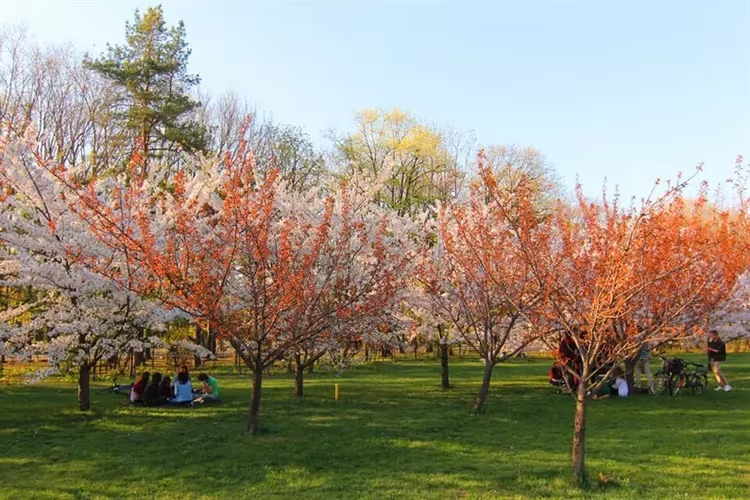
The historical center or Lipscany quarter is characterized by beautiful streets, many old buildings. Walking among them, you can not get tired, because next to the chic monuments there is always a cozy seating area. Bucharest is considered the green capital of Romania. It has many parks and gardens. The largest of them appeared on the site of an impenetrable swamp that surrounded Lake Herestrau. After it was drained in 1935, the National Park was created. In different years it was called Carol II Park, Herastreu Park, I. V. Stalin Park. It was demolished in 1956. It received its modern name in honor of the last king of the country in 2017. The area of the park is conditionally divided into two parts.
One of them houses the Open Air Museum. The expositions tell about peasant life. The other half is used for the rest of the city residents. Numerous statues stand along the alleys. Elements of the park's architectural structures bear the features of the Stalinist period. Previously, among them stood a sculpture of Stalin. There are fountains in the park, a lot of cozy benches for rest. On the shore of the lake there is parking for boats and catamarans. They are offered to take in the rental service for a relaxing walk on the lake.
Church of St. Nicholas
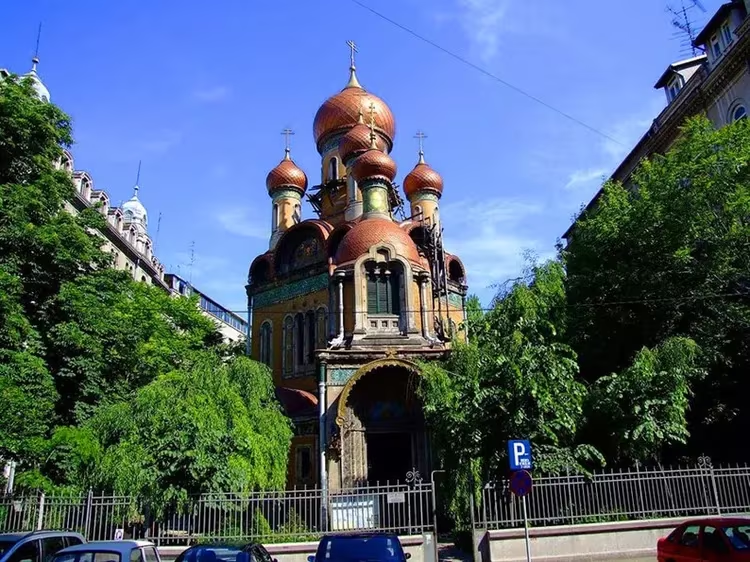
The Orthodox church was built on the initiative of the Russian ambassador in 1909. The emperor of Russia financed the construction of the temple. The parish of the new church was made up of representatives of the Russian mission living in Romania. In 1934, the building was given to the university, which gave it the second name “Student Church”. The re-consecration of the church took place in 1967. The graceful temple was erected in the pseudo-Russian style.
A square foundation was used. It is decorated with 7 domes resembling the onions of Russian churches. Initially, they were covered with gold. During the earthquake in 1977, the bell tower of the church was badly damaged. The interior space is decorated with a carved iconostasis with gold coating. It was made in the image of the Church of the Twelve Apostles of the Moscow Kremlin. The painting was made by V.M. Vasnetsov. The walls and ceiling were decorated under the guidance of the artist Vasiliev. The Byzantine style and elements of paintings from the monasteries of Russia were taken as the basis. Now the church belongs to the patriarchy of the country and is known as the temple of the university.
Address: Str. Ghica Ion 9 sector 3.
George Enescu Museum
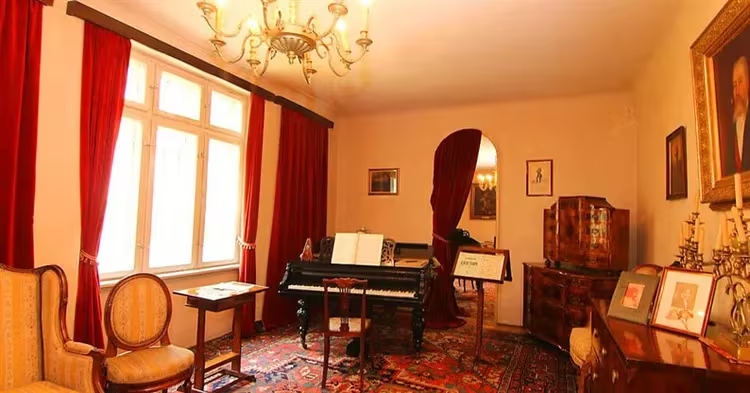
One of the most beautiful buildings (Cantacuzino Palace) hosts exhibitions dedicated to the famous composer and musician of Romania. A surprisingly harmonious combination of creations of two types of art that glorified the country – architecture and music. Luxurious interiors of a private house seem to be filled with the composer's eternal music. Personal belongings, documents of a person whose name will remain forever in the memory of people, cause surprise and respect. As a small child at the age of 5, he began to write extraordinary pieces of music.
The path of learning, becoming a composer, performer, teacher was not easy. But always in the masterpieces created, elements of distant childhood from Romanian folklore were preserved (for example, the famous “Romanian Rhapsodies created in 1902”). The character of Enescu's music was greatly influenced by the European romanticism of Brahms, Wagner, Schumann, and the operatic genre of Strauss. As a performer, Enescu performed with many famous personalities. He repeatedly came to Moscow, acted as a conductor in concert halls in Europe and the USA. The composer was one of the cultural figures with a specific civic position.
He helped the wounded, performed with charity concerts. To preserve the memory of the outstanding personality of the country, the Enescu International Society was created. The result of his activity is the release of collections with the legacy of the composer, scientific research of his work.
House of the Free Press
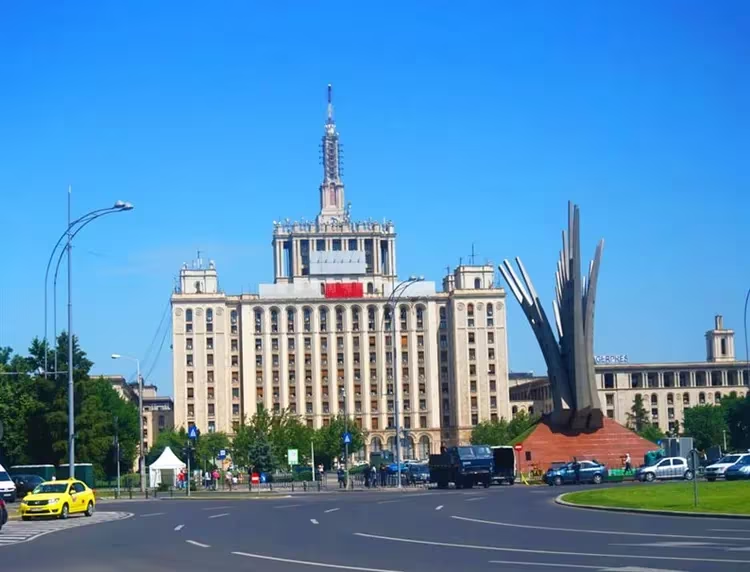
The heritage of centuries, political and cultural heritage is scattered across the countries of the planet. Each ruler left his mark in the form of majestic palaces, unique health centers, gardens, parks. Many of them have been preserved, restored and amaze with their beauty and direction of use. The architectural masterpieces of the Stalinist period cause an ambiguous opinion about their merits. In some countries they were destroyed. Monumental buildings are part of history, and their value will increase from century to century. The House of the Free Press was erected at the dawn of the Stalin era in 1956.
During its creation, 7 skyscrapers of Moscow became an architectural analogue. The height of the building was 92 m, plus 12 m of the antenna. In 1960, a monument to Lenin was erected on the square in front of the tallest building in the country until 20007. Now he is gone. Initially, residential apartments were located in the giant's premises. A large number of architects of the Soviet Union lived in them. The editorial office of the newspaper “Skynteya” or “Iskra” was also located here. During this period, the pulp was called the Printing Plant or the “House” Skintei “named after. I.V. Stalin.”
Almost all printing devices, halls of periodicals of the city were located on the territory of the house. Now part of the premises is used for offices of newspapers and magazines. In the southern part there is the Stock Exchange, the popular daily publishing houses Ziua and the National Journal. There is also a press archive and a photographic agency.
Bucharest State Circus
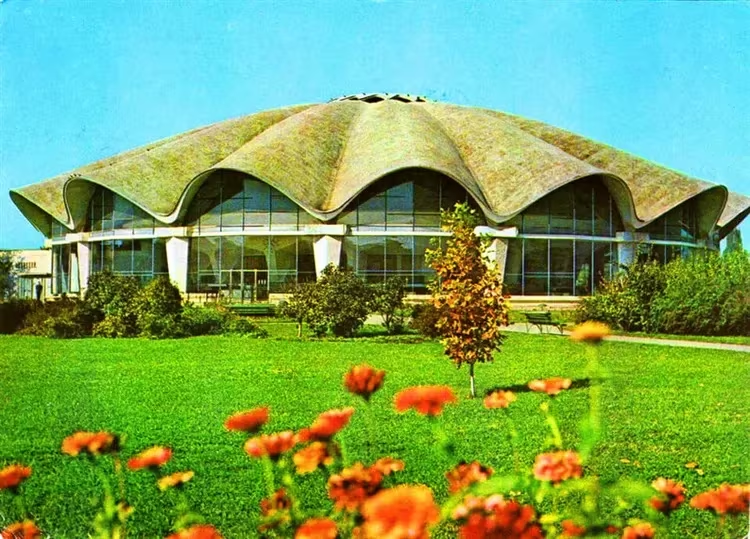
Along with the victory of democratic forces in the country, an active restoration of cultural traditions, the development of art, architecture, and education began. There were schools, scientific organizations created to implement programs for the improvement of the cities of the country. The improvement of the technological base of numerous industries has made it possible to use new elements in the construction of buildings. Gradually, frame metal elements were increasingly used in the construction of original buildings. They were created by the ideas of local architects. Such a creation was the building of the new circus.
In 1961 it was the largest circus in Europe. Here and now there are unique performances of the circus show “Globe”. The building has an unusual for that time round shape with a wavy roof. It is equipped with comfortable enclosures for keeping animals, a hall for 3500 seats. The original element is the lighting design of the roof. Powerful spotlights direct the beam to the central part of the dome. Illumination of hemispherical arches enhances the unusual effect. After reconstruction, modern compact LED sources are used to create it. Since 2010, the building has been declared a historical monument of the country.
Boulevard of the Union
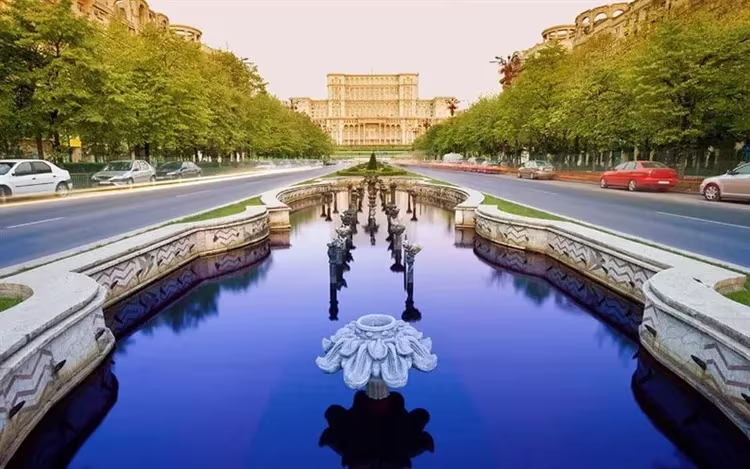
The central boulevard of the city, about 3 km long, resembles the Champs Elysees of Paris. Unirii Boulevard connects the Palace of the Parliament and Alba Iulia Square. It appeared in the 80s of the XX century as part of the work on the creation of the Civic Center to accommodate the main governing bodies of the communist movement and the residence of its leaders and officials. Previously, there were quiet streets, synagogues, churches, beautiful buildings of the 19th century, and ordinary residential buildings in this place. Sections of the square of the same name, September 13 Avenue, Svoboda Boulevard, passing in front of the House of the People, have disappeared.
The architectural composition of the Civic Center recalled a similar ensemble of the capital of North Korea, Pyongyang, which Ceausescu loved. In connection with the collapse of the dictator and his execution, not all plans came true. Part of the buildings of the boulevard, the parks surrounding it became the property of the city. Tourists are invited to take a walk next to the numerous fountains along the main pedestrian, sightseeing street of the city.
Bucharest Botanical Garden
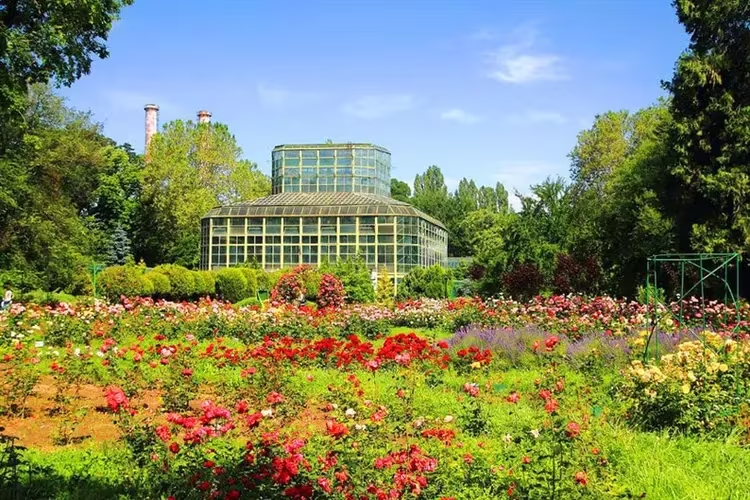
The first location of the botanical garden, founded in 1860, was a site next to the Faculty of Medicine of the city university. From 1874 to the present day, it has been located on the Cotroceni hill, next to the famous palace in a beautiful area and has become a masterpiece of garden and park art. On an area of 17 hectares, 10,000 varieties of plants are collected, a large greenhouse operates. At the entrance to the park there is a garden of ornamental plants. It presents 500 species of beautiful flowers, shrubs, trees. The Mediterranean Guest Section contains 100 species of the region's flora.
Thickets of flowering orchids, protected endemics, coniferous plantations, an Italian garden, along with numerous waterfalls, fountains create ideal conditions for walking and relaxing. At the same time, it is proposed to breathe in the aroma of a rosary, a collection of irises, to see a real oasis of herbs and plants used to improve health. The Museum of the Botanical Garden operates on the territory. On the exhibition stands of the beautiful building there are documents, devices, artifacts made from plants, herbarium, elements stored in alcohol, formalin.
Address: Sos. Cotroceni, nr 32, sector 6.