
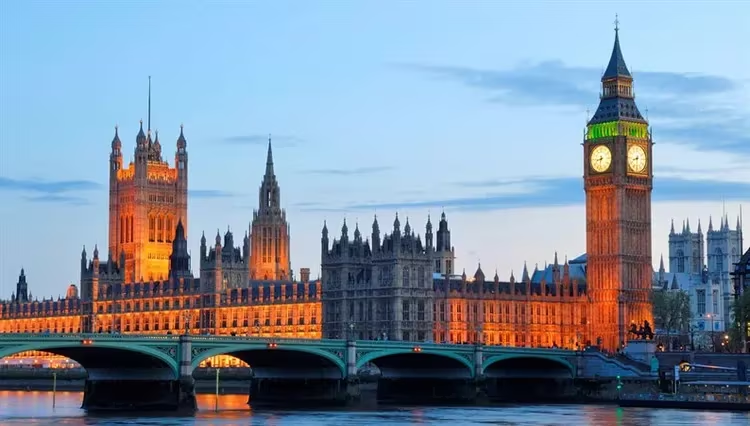
What to see in London in 2 days on your own – route, photo, description, map
The city, which comes to mind with a dozen symbolic places, becomes the dream of many people from school when they study detective stories about Sherlock Holmes and watch historical films with stiff English wandering through the foggy streets of medieval England. But when they first come to London, it also opens up on the other side: futuristic skyscrapers, flea markets, youth pubs and contemporary art are harmoniously combined with first-class restaurants, royal palaces and luxurious luxury hotels and shops. About how to catch it and what to see in London in 2 days, so as not to regret the missed opportunity later, we will tell below.
How to get from the airport to the center
The center can be reached by bus, metro, train and taxi. The train is the fastest way, as it takes you 40 minutes to get there. The cost of such a trip is 22 pounds. To do this, you need to get to the platform from which Heathrow Express or Heathrow Connect departs every 15-35 minutes. Opening hours: 05:07 – 23:48.
The fastest but most expensive trip is by taxi. Just 5 minutes walk to the point where taxi drivers offer services, and in an hour you will already be at your destination. €116 for a car ride and €274 for a minibus, the price of which can be divided by 7 passengers.
By bus, your journey can take almost 2 hours: first you need to get to the Victoria bus stop (15 minutes), then wait 20-30 minutes for the National Express bus itself, and spend another hour on the road. But the ticket price pleases – 6 euros. Opening hours: 05:30 – 23:30, break: 21:40 – 23:30.
Therefore, the subway is the most convenient way to travel around any city if you know how to navigate it. It runs every 5 minutes. You need to get to the entrance – it will take about 10 minutes, then find the Piccadilly line and in an hour you will be there. The ticket price is 5.7 euros, they are purchased at the station from vending machines. Opening hours: 05:00 – 00:00.
Order a private transfer from the airport to your hotel for 5 774 RUB
First day
The main attractions of the city are concentrated in one place, and if you want to shorten the path, then you definitely should not use transport. Literally at every turn there is a museum or a landmark historical building, which you will definitely have time to get around in one day if you follow the order of visiting described below.
Big Ben
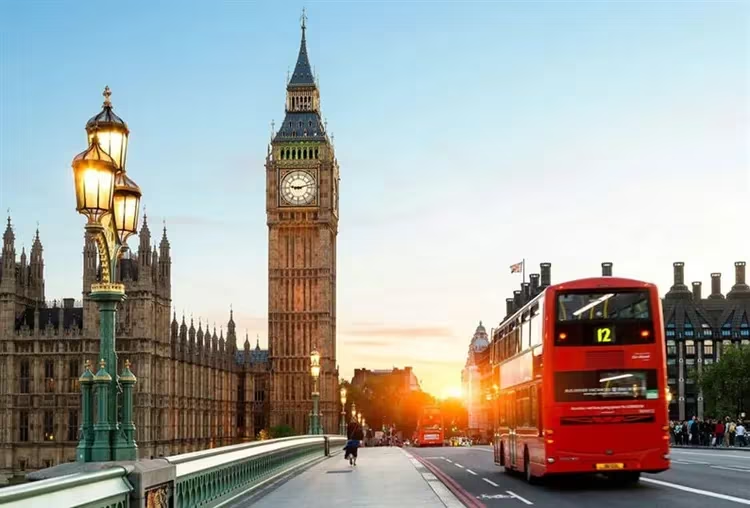
The history of the tower of the Palace of Westminster began in the 13th century, but several centuries later it was destroyed in a fire. The design of the recognizable symbol, as we see it now, was developed by Charles Berry in collaboration with Augustus Pugen already in the 19th century. At one time, they noted that this project turned out to be the most difficult for the entire time of their construction career. It was not so easy to lift five-ton dials to a height of 55 meters at that time, but the diligence of the builders and the development of architects was worth it: after a few years, even the German bombardment could not stop the clockwork.
According to one version, the tower is named after the construction manager. Today, Big Ben is the international standard of time, and tourists can hear their fight every hour – this is the only four-sided clock in the world with a fight. Unfortunately, it is rarely possible to inspect them from the inside – there is no elevator inside, and not everyone can overcome the 334 steps.
Westminster Abbey
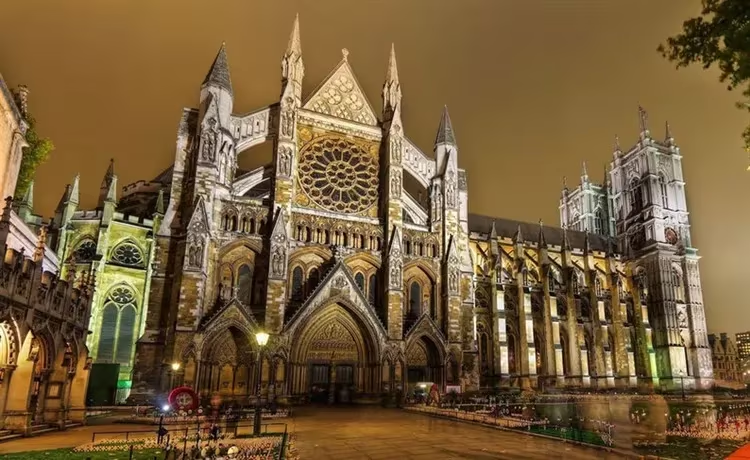
One of the largest churches of St. Peter in the city is closely connected with the history of the royal families and first appeared on the banks of the River Thames in medieval times. At first, the temple was built of wood, later of stone, and at the end of the 11th century, the royal nobility first noticed the building in the form of a cross and turned it into a place for the coronation of monarchs, adding galleries and chapels over time.
Since then, the church has been constantly transformed and the last modification appeared in the 18th century, when two columns 70 meters high were added to it. The religious complex is divided into several halls: the Shrine of the Monarchs, the Chapel of Henry VII, the Chapel of Edward the Confessor, the Hall of the Chapter, the Corner of Poets.
Curious and chilling legends are associated with each hall. For example, the Chapter Hall, which once served as the treasury of kings, witnessed the brutal massacre of a London merchant who got into the habit of stealing wealth and handing it over to the devil himself. He was skinned alive and chained to the door of the treasury. These and other secrets of Westminster will not let the tour turn into something boring and will be remembered for a lifetime.
Buckingham Palace
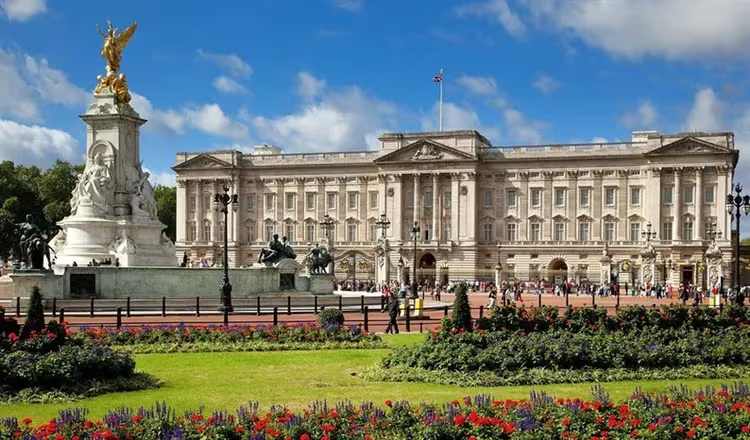
The royal estate was founded in the 18th century by one of the dukes of England, but he did not like the result, so the building was transferred to the hands of George III. It took architects almost 80 years to work on the palace to satisfy the tastes of the royal family. In 1837, Queen Victoria ascended the throne here and declared Buckingham Palace her official residence.
She was actively engaged in rebuilding the interior rooms, and only after 20 years the ballroom became worthy of holding royal festive evenings. There are 775 rooms in the palace, and only 19 of them are available for tours from August to October: ballroom, reception room, throne room, guest room, art galleries and rooms named after the predominance of one color or another in them – green, blue, white room etc. (there are the rarest antiques, antique furniture and paintings), as well as gardens with waterfalls, fountains and completely calm flamingos, who are not at all afraid of crowds of people.
It is especially exciting for tourists to wander through the royal halls and realize that somewhere at the other end of the palace the royal family of Great Britain lives and conducts its state affairs. An unpleasant disappointment is the ban on photography, in return for which only postcards with the interior of the palace are offered at the exit.
Trafalgar Square
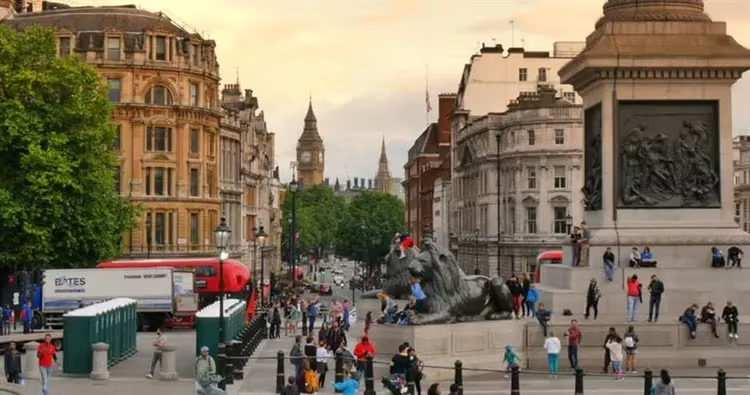
In the very center, in the 19th century, a square appeared where city events and holidays are now held, and earlier it was an abandoned wasteland with a poultry house and stables. The well-known Charles Berry again had a hand in its ennoblement, under whose leadership a forty-meter granite statue of Horatio Nelson towered over the square, surrounded by bronze lions and fountains on a pedestal with frescoes depicting memorable battles in which the British commander participated.
He died heroically at the Battle of Cape Trafalgar, managing to defeat the French without a single loss to his fleet. In addition to it, the square is decorated with pedestals of other prominent personalities of England – King George IV, Charles I, generals C. Napiru and G. Havelock, artist E. Lapper. This place is located at the intersection of the main streets of the city and it is simply impossible to miss it.
National Gallery
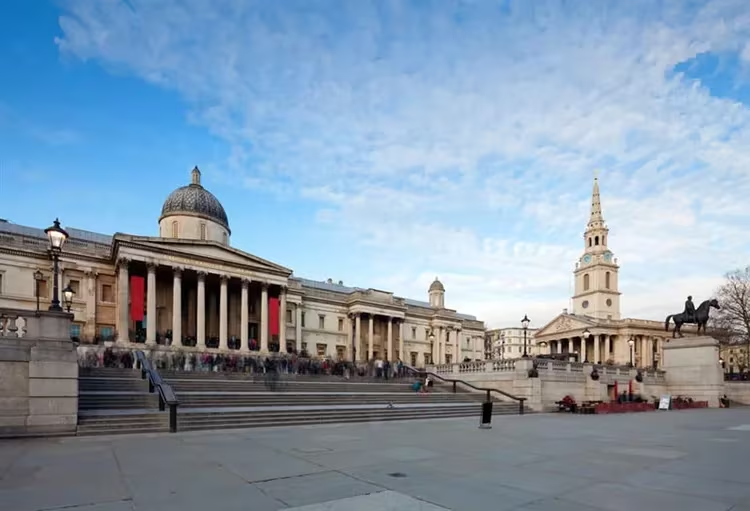
The life of the gallery began in the 19th century with the purchase by the government of the first collection of paintings from one of the London bankers – these were the works of Titian, Lorrain and other painters. Gradually, the gallery's fund increased at the expense of local patrons and grew to such a size that the question arose of opening a more spacious building. It turned out to be a monumental building with columns and domes near Trafalgar Square. The opening of one of the halls was attended by Elizabeth II herself, who did not stint on presenting canvases to the public from her personal collection.
Today, the National Gallery has more than 2,000 works, distributed chronologically into 4 wings, from the 13th century to the 20th century: Francesca, Botticelli, da Vinci, Bosch, Rubens, Turner, Rousseau, Renoir and others. You need to see the real masterpieces of world art with your own eyes at least once in your life, and here you can also do it completely free of charge.
Leicester Square
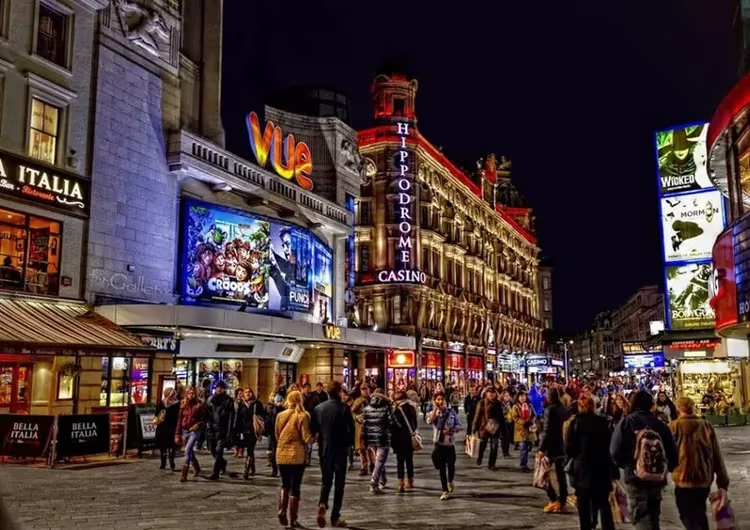
The pedestrian street, which is also located in the center of London, begins its entertainment activity at night, which attracts crowds of young people on weekends. During the day, people come here for souvenirs and sometimes get into impromptu street shows, but in the evening more grandiose theatrical performances are arranged, bars, cinemas, cabarets, casinos, nightclubs and restaurants open. But once the noisy bright square belonged to the earls and was not accessible to the public, and only by the 18th century it turned into a center of trade, and then into a prestigious area for the London elite.
Coca-Cola London Eye Ticket £27
Harry Potter Drive & Warner Brothers Studio Tour £76.50
Tower of London Ticket & Royal Treasure Exhibition £26.80
Madame Tussauds Ticket £29
Shard Skyscraper» – entry ticket and champagne – £27.20
St. Paul's Cathedral: fast track ticket – £17
Tower Bridge tickets – £9.80
Hop-on hop-off bus tour – £34
Westminster Abbey entrance ticket and audio guide – £21
Ticket to visit Stonehenge – £19
covent garden
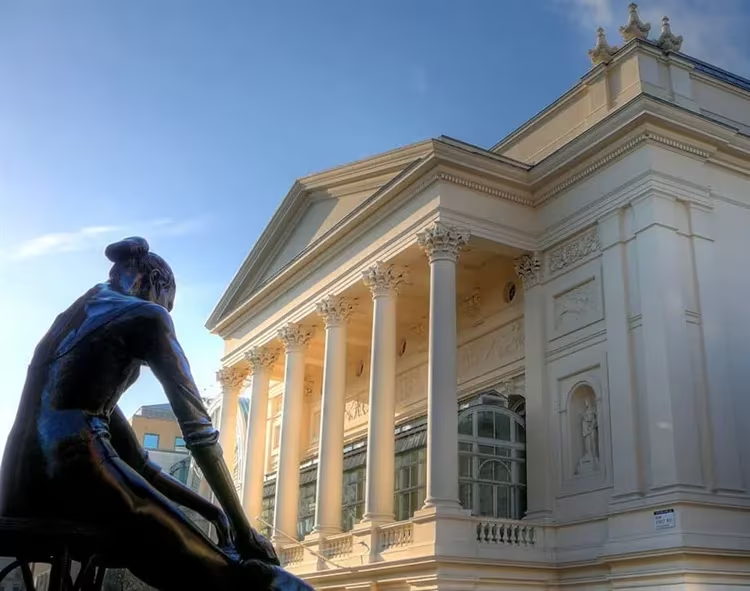
This drama theater has glorified Great Britain all over the world and still does not give way to its place in the top five most professional and beautiful opera houses in the world. Its opening began in the 18th century with the production of the ballet Pygmalion, which was so successful that after it the leaders began to acquaint the public with other types and genres of performing arts: operas, musicals, vaudeville, etc.
All productions were accompanied by a standing ovation from enthusiastic spectators until the theater faced the first fire in the 19th century, and 50 years later with the second. The last reconstruction took place at the end of the 20th century in order to increase the seats, and now the four-level hall can accommodate 2,000 spectators. In addition to attending performances, Covent Garden offers a tour, during which you can look behind the scenes, into the royal box and even visit rehearsals.
Fleet Street
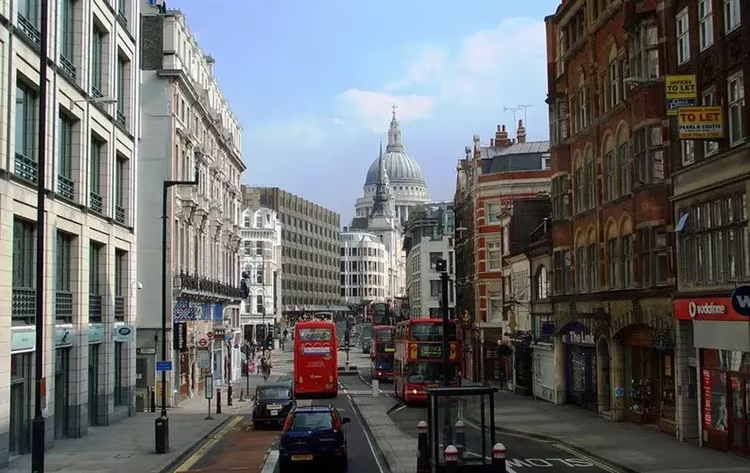
Once upon a time, leading British print media and editorial offices were located here, but with the development of computer technology, the printing house ceased to be in demand and completely disappeared from the area. But some of the sights that have remained here since those times can still be seen – Temple Bar, which served as a barrier to two districts, the Church of St. Dunstan in the neo-Gothic style, the Church of St. Brigid, which Charles Dickens constantly visited, the judicial chambers of Mild Temple Hall and decorated in the style of a medieval castle, the oldest pub “Old Cheshire”, a favorite place to relax Arthur Conan Doyle and Mark Twain.
St Paul's Cathedral
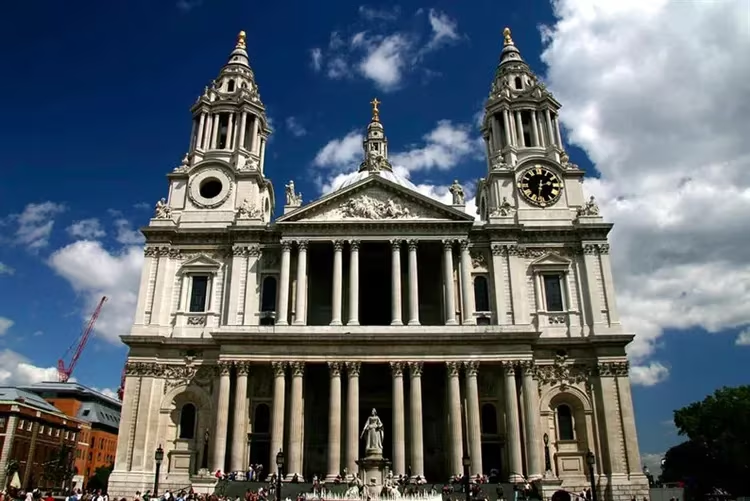
The largest church in England was subjected to constant destruction until the 18th century. The first mention of a wooden temple appeared in 604, which was built for the Anglo-Saxon king. After his death, the church burned four times and by the 14th century a Gothic-style cathedral appeared with a spire height of 15 meters and a building length of 180 meters. For a couple of centuries, the monumental building impressed the inhabitants until a series of wars came, finally destroying the Cathedral.
1711 was the beginning of the life of the baroque-classical church that we see now – Christopher Wren completed the bulk of the work and his main pride was the dome 111 meters high. Along the walls of St. Paul's Cathedral there are 67 statues of prominent personalities of England, from martyrs to generals. Today, the church serves not only as the residence of the bishop, but also as a burial place for military leaders, artists, writers and other famous figures of England.
One New Change Shopping Center
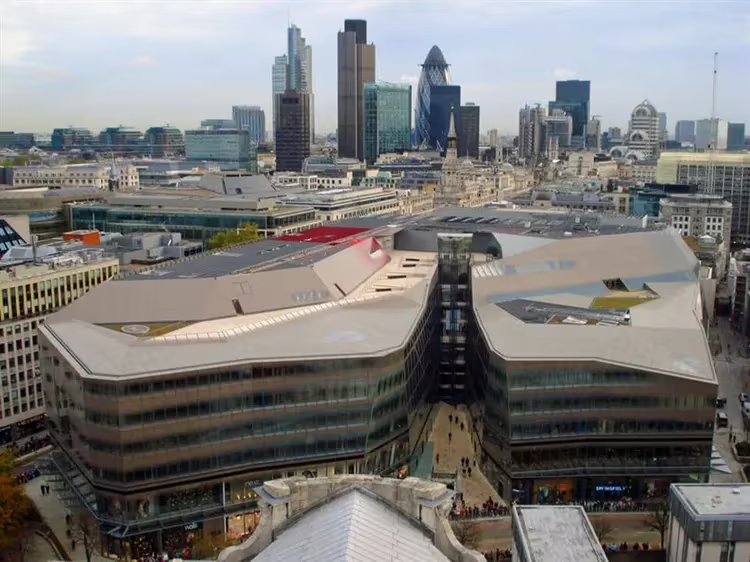
A few minutes walk from St. Paul's Cathedral is the ultra-modern One New Change shopping center, on three floors of which there are more than 70 world-famous branded clothing stores – HUGO BOSS, Calvin Klein, GAP, LACOSTE, CONVERSE, Timberland, jewelry – Swarovski, Pandora, cosmetics – Chanel, Dior, etc.
The eyes also run wide when choosing a place for a snack, including both small atmospheric coffee houses with confectionery products and themed restaurants with gourmet dishes. But the main highlight of this shopping center is the opportunity to touch the dome of the Cathedral for free and take a memorable photo against its background from the terrace, which offers a panorama of the city.
Leadenhall Market
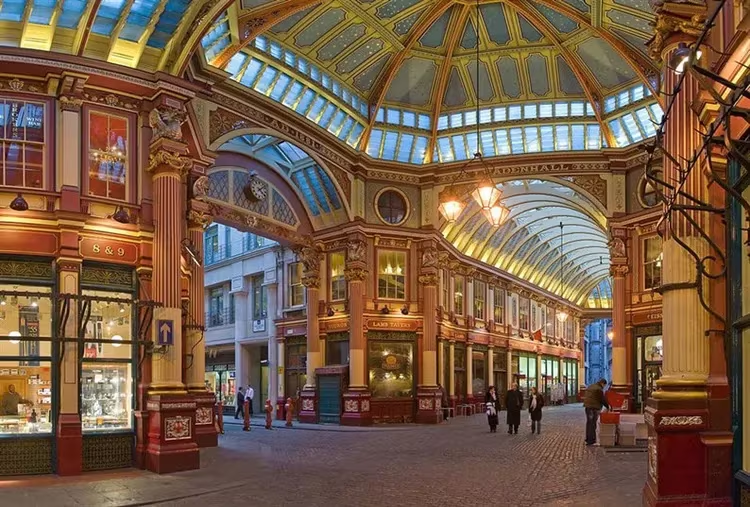
Another market worthy of attention is located in the center and is primarily remarkable for the time of its foundation – approximately the 14th century. Even then it was one of the main outlets in the city, and over time, the market only grew. At the end of the 19th century, a decision was made by the local municipality to decorate Leadenhall with a glass roof, stained glass windows and mosaics in the English style. The arcade designed as a gallery attracted a lot of producers and directors, whose shootings in Leadenhall we saw in films about Harry Potter, the wizard Parnassus and other famous films, as well as in the clips of the Erasure band.
This place is famous for the quality of the products offered, so people come here for shoes, clothes, pens, cigars, elite alcohol and cheeses at an attractive price. After shopping, you can relax in one of the many restaurants that offer from Korean to European cuisines.
Sky Garden Observation Deck
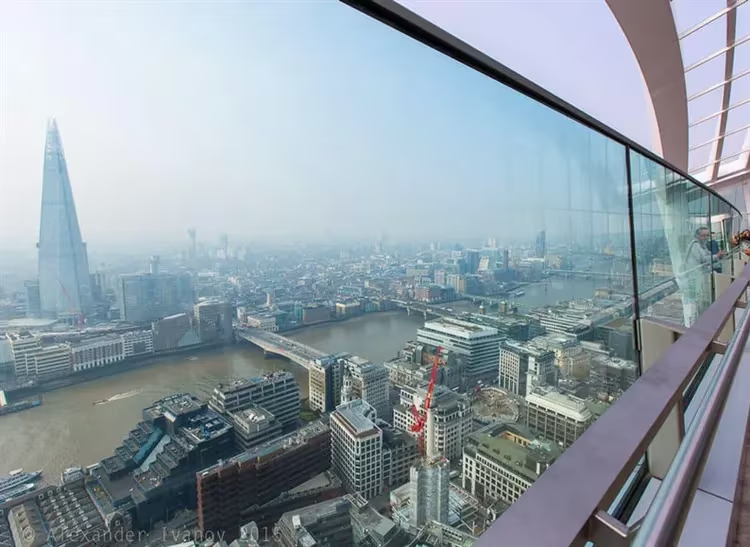
This young garden park in a futuristic style was built in the heart of the City, a stone's throw from the following two attractions on the roof of a business skyscraper. For the owner of this building, a condition was set on the possibility of building a high-rise building only if the roof was improved in such a way that people could relax there and enjoy the sun and greenery.
As a result, all the walls and roof are flooded with sunlight, as they are made of glass, and the recreation area itself is the size of a stadium, reminiscent of airport halls. Throughout the territory there are cafes surrounded by palm trees and ferns, in the shade of which you can hide from the sun. Prices in restaurants are overpriced, but for the sake of the panorama of the city, which opens from a height of 60 meters, it is worth overpaying. Skypod cafeteria is called one of the most democratic places.
Tower of London
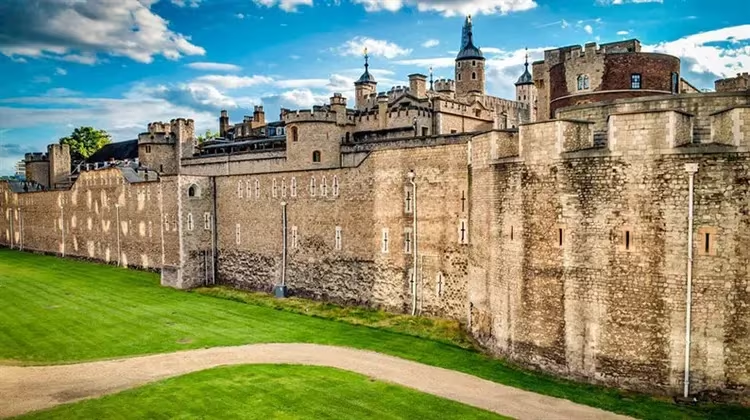
In the 11th century, a fortress with walls almost 5 meters thick was erected on the banks of the River Thames, which served as a royal residence, a zoo, an observatory and a treasury, but the darkest period during its existence was the time when the Tower was used to imprison criminals, which gave rise to the most incredible stories about ghosts wandering around the castle after dark. Even some scientists managed to capture on film moving clots of fog similar in shape to a human figure. At one time, Anne Boleyn was executed here, as well as several kings of Scotland and France.
At the entrance, tourists will be expected by a flock of ravens and guards who work here not to create a historical atmosphere, but to protect the crown, scepter and other jewels of England, which you can also look at. During the excursions, you will visit many expositions: the “Row of Kings” of the Stuart and Tudor dynasty, “Armor and Weapons”, “Royal Animals”, palace premises, St. Peter's Chapel, the Mint.
Tower Bridge
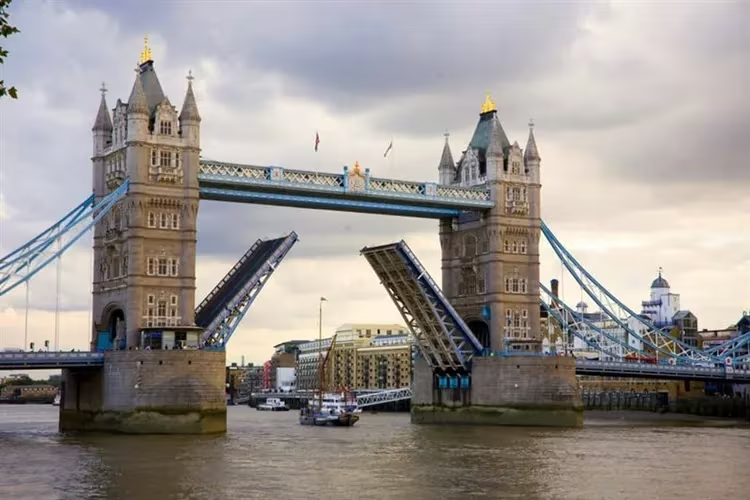
The drawbridge, 240 meters long, was opened at the end of the 19th century and consists of two parts: when the lower one opens for the passage of ships, it is still possible to move along the upper one from one bank of the Thames to the other. Inside the side towers is a museum, whose exhibitions are mostly devoted to the history of the bridge and steam engines, and between them, at a height of 40 meters above the water, a pedestrian gallery with a transparent floor and walls stretches, overlooking London.
Borough Market
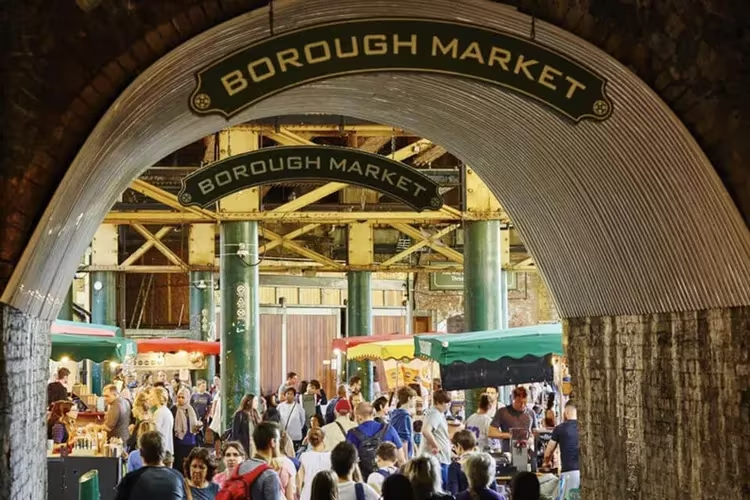
One of the oldest markets in the city has been used for its intended purpose for more than 1000 years, and if earlier the range of products was very modest, today there are delicacies for every taste from different parts of the world, from ostrich eggs to domestic eggplant caviar. Our tourists recommend visiting the cheese department, of which there are more than a hundred types, coffee shops with croissants, coconut pancakes, an oyster bar, chocolate bars, fish and meat restaurants. It is very clean and beautiful here, where, like in Leadenhall, colorful stalls with bright fruits and vegetables attract filmmakers.
Tate Modern
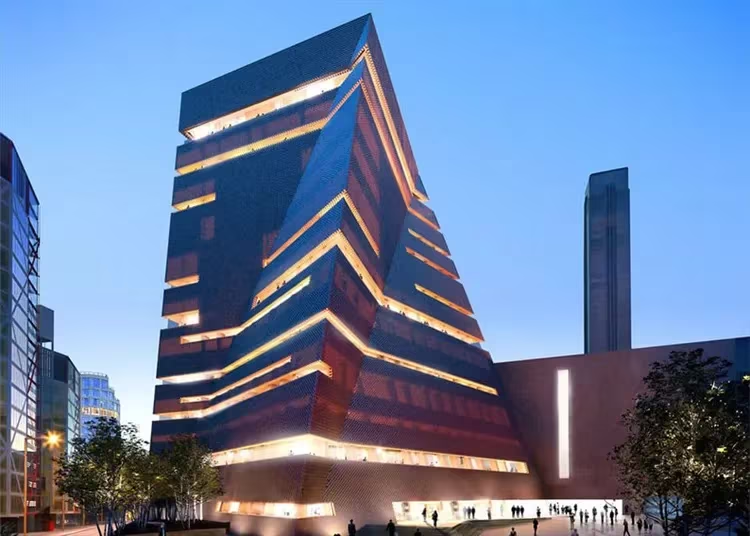
If you pass by an industrial-looking building, you might not guess that there is one of the best museums of modern art in all of Europe. Once there was a power plant here, but today unusual exhibits made of metal, wood and other materials amaze the imagination of an inexperienced viewer and fit perfectly into the general style of the building. In addition to unexpected installations, whose hidden meaning is not given to everyone, there are sculptures and paintings, posters, signs. However, their image is made in the genre of avant-garde, surrealism, cubism and abstractionism. Among the 70 thousand works of art you can find works by Picasso, Dali and Matisse.
Sea Life Aquarium
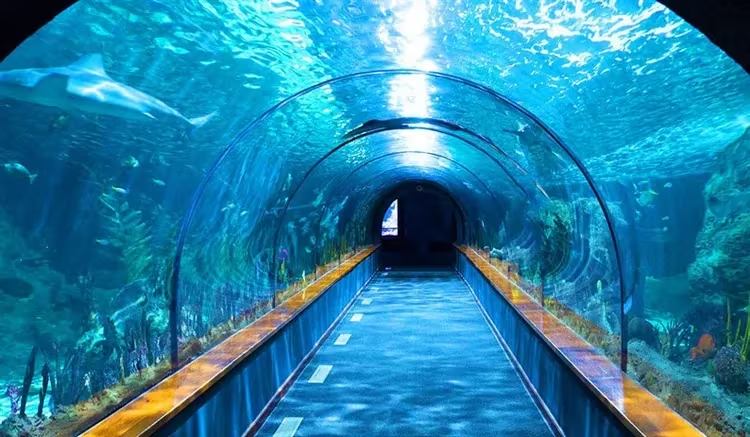
Only in 1997, the townspeople had the opportunity to indulge themselves in the secrets of the underwater world in the oceanarium, which became home to more than 400 species of marine life. Representatives of the marine fauna from the Indian and Atlantic oceans live in 14 zones of the aquarium, among them there are both dangerous predatory sharks and piranhas, the hunting of which can be observed, as well as nimble colorful coral fish, clown fish, jelly fish, robot fish, eared jellyfish, stingrays, and some of them (crabs, stingrays, starfish, penguins) can be touched in special pools designed for tactile contact with people.
For fans of extreme sports, you can go down to the shark for 15 minutes under water, the rest can be content with the view of swimming divers along with predators through the glass. For children, educational excursions, performances with animals, games and competitions are held.
Ferris wheel London Eye
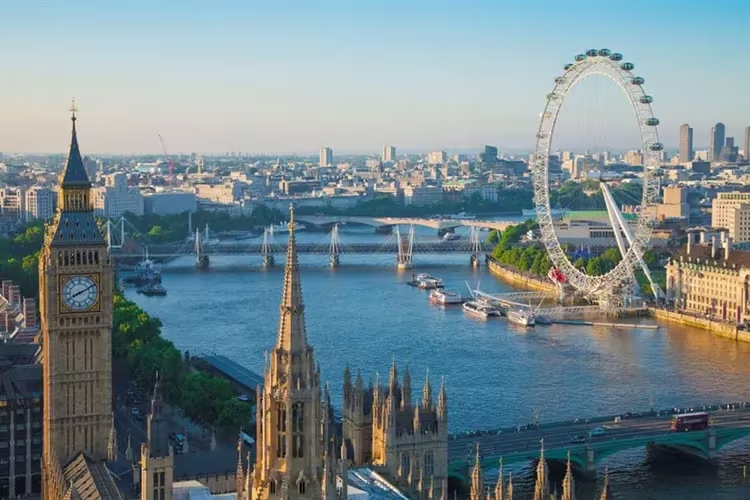
The most popular way to view the panorama of the city is a half-hour ride on a Ferris wheel from a height of 130 meters. It ranks second in the world in height after Singapore. 32 egg-shaped capsules weighing 10 tons can accommodate 25 people each. One of them can be rented for lovers and order service, champagne and snacks there.
At the end of the rental, the installed camera in the cabin will automatically take a picture with you and give it out when you exit. The cost of this attraction includes watching a 4D film about the celebration of the New Year and other solemn events of the city, which opens from the Ferris wheel, which captures them all year round.
After a tiring first day, head to the Jerusalem Tavern for a traditional ale, the historic Ye Olde Cheshire Cheese pub in a colorful medieval setting, or the secret bar behind the refrigerator door – Call Me Mister Lucky.
Second day
The second day promises to be no less interesting and eventful. We dress comfortably, have a hearty breakfast, do not forget to charge the phone to take a million more beautiful and memorable photos.
Flea market in Portobello
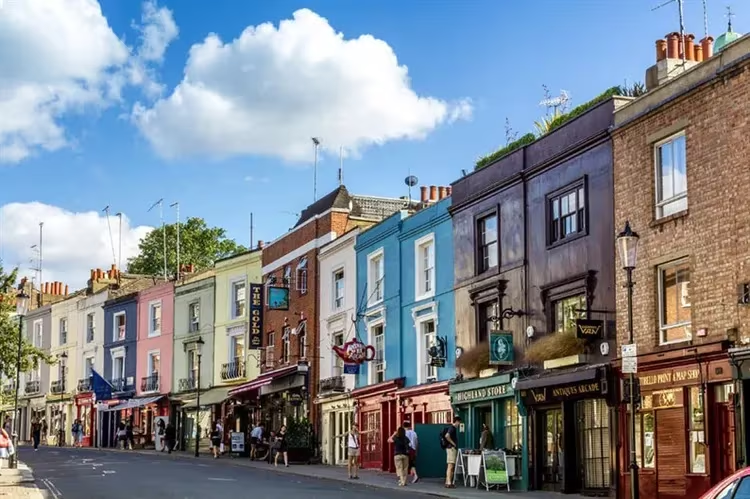
The west London antiques market began its activity in the 19th century, when there was nothing but a farm and a few buildings in the area. Over time, local businessmen liked the territory and they began to invest money here. Merchants flocked to Portobello hoping to get a good income from the constantly arriving new residents and expected the prosperity of the area. And so it happened – after 50 years, medicines, high-quality furniture and used household goods were sold here at low prices.
The fame of the market spread throughout the city and sellers of branded goods also began to place their departments in Portobello. Today they put things in order here, the territory was divided into 3 zones: antiques, food and luxury goods. Tourists note that sometimes on the shelves you can find collector's editions of books, old cameras, dishes for ridiculous money. And some well-known fashion houses send things with the slightest marriage to Portobello.
Victoria and Albert Museum
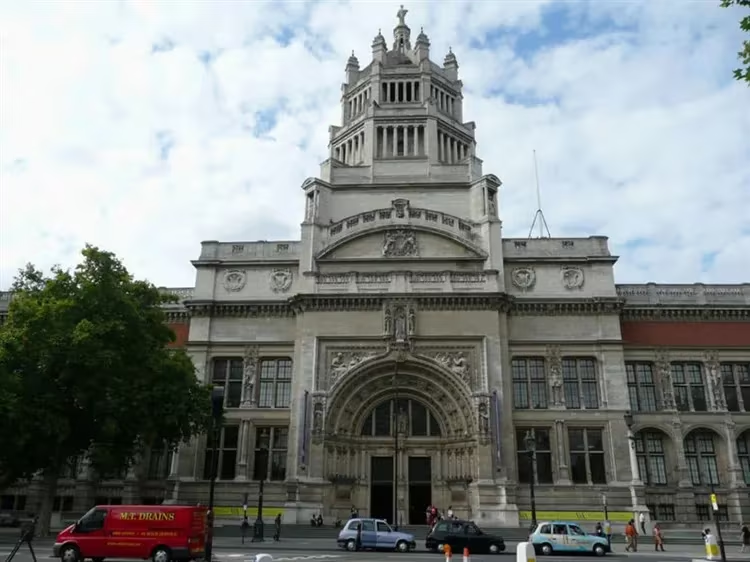
The largest museum of decorative arts and design in the world, named after the royals of England, began to collect a collection from the middle of the 19th century. More than 6 million exhibits (furniture, textiles, sculptures, ceramics, jewelry, photographs and paintings) from around the globe, related to different eras and peoples, are located in 145 galleries.
It is impossible to visit 16 exhibition halls in one or even two days, so it is better to immediately decide on the expositions that interest you. Children will not be bored either: everyone can try on a thematic costume of a court lady or gentleman, participate in competitions, learn the art of photography, painting or origami. Some exhibitions require payment, but general study halls do not require money for entry.
Natural History Museum
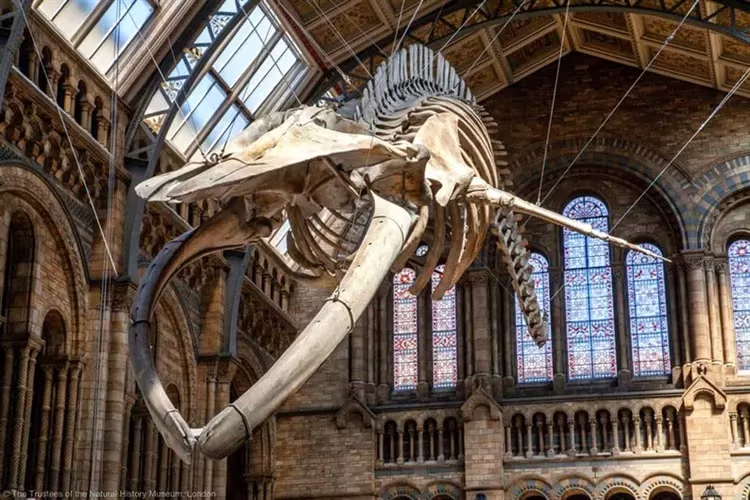
Right at the entrance to the museum, visitors will be greeted by a dinosaur skeleton, impressive in its size, a sculpture of Charles Darwin and a giant sequoia tree, which is over 1000 years old. Ahead are 4 zones about the secrets of our Earth with 70 million exhibits that will be of interest even to children. The red section is devoted to geology: volcanoes, floods, earthquakes and the origin of other natural disasters, some of which can be felt with the help of special “stimulants”.
In the Green Section, everything is connected with the ecology of our planet, animals and plants: stuffed animals and skeletons of extinct animals, moving scorpions and crabs, the evolution of butterflies, photographs. The blue section is about dinosaurs, amphibians, and fish, which can growl, blink, and move. The last Orange section is reserved for the Wildlife Garden and an exhibition of carnivorous plants and insects. Here you can also watch a 4D film on one of the themes of the expositions.
Hyde Park
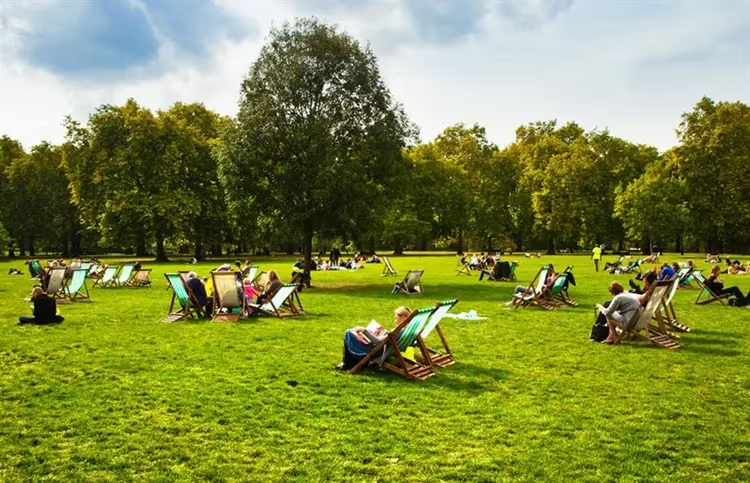
Previously, it was an ordinary forest, then royal hunting grounds, and Hyde Park became an ennobled recreation area for ordinary people only during the reign of Charles II. Then a lake was dug here and the Crystal Palace was built, but this attraction has not survived to this day. Now there are many fountains in the park, and water activities and fishing are offered on the lake. Everything around is greenery and flower beds, which attracts the British here for picnics.
In Hyde Park you can visit the Art Gallery of Modern Masters, the Animal Cemetery, the residence of the Dukes of Wellington and the equestrian school. On Sundays at Speaker's Corner you can listen to Londoners who are excited about the political or cultural events of the city. If you have something to add, you can also participate.
Grosvenor Square
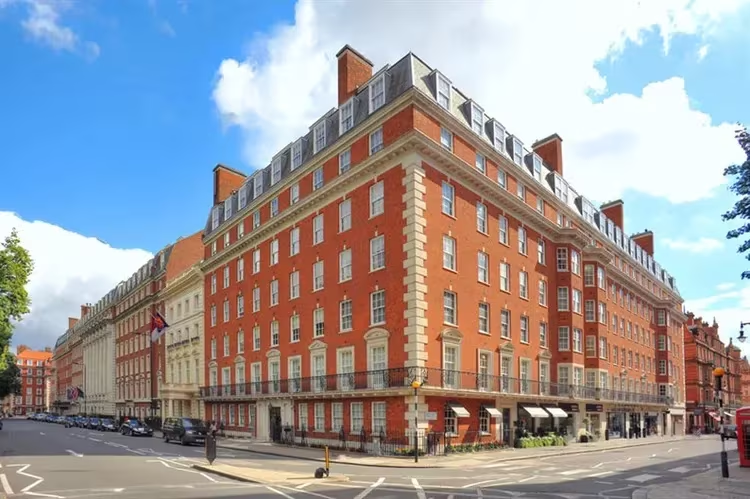
The huge estate near Grosvenor Square once belonged to the wealthy Grosvenor family, who were allowed to take a large plot of land for the construction of their estate, subject to the lease of the square and two streets around it. Now the square has been rebuilt and near it is the American embassy and the church.
There are many trees, shrubs and flower beds, a monument to Roosevelt and several memorial monuments in honor of the Americans who died in World War II and the British who died as a result of the September 11 attacks. A small square in the English style, where you can relax for a couple of hours, on benches in the shade of trees.
The following 5 cultural sites are located in different parts of the city and are huge complexes, which will take at least half a day to explore. Therefore, according to your interests, it is worth stopping at one of the university campuses, the royal castle or the mysterious Stowhenge.
Greenwich
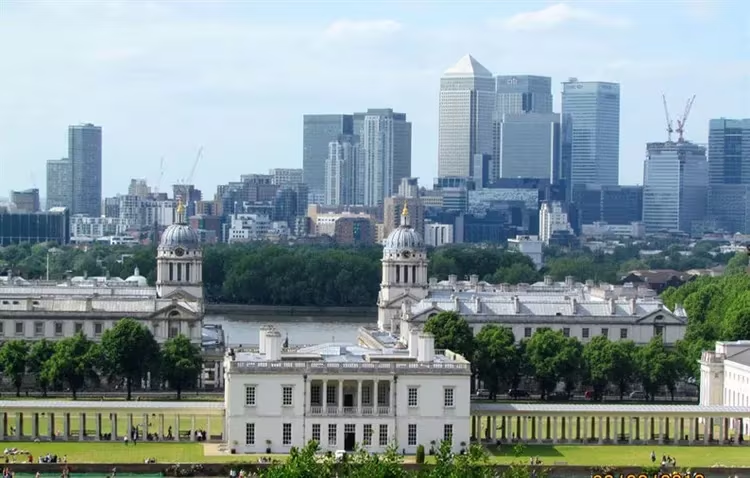
In the southeast, in the 15th century, a “green village” appeared, where members of the royal family liked to relax. Two centuries later, Charles II issued a decree establishing an observatory on this site, like the French “neighbors”. Today it is one of the most expensive areas here, the zero meridian passes here, which is indicated by a green laser line emanating from the upper floor of the Royal Greenwich Observatory, and standing on both sides of this beam, you can visit the eastern and western hemispheres of our planet at the same time.
During the tour of Greenwich, you will be told about how the famous Time Ball and Shepard's clock work, then you will be taken to the Royal Naval Hospital, Anna of Denmark House, the Cutty Sark ship, St. Alfeche Church, the National Maritime Museum and monuments to Yuri Gagarin and James Cook. After an informative tour, tourists walk through the park, visit souvenir and antique shops, a market with handicrafts, a beer pub and finally a tunnel under the Thames 300 meters long.
Cambridge
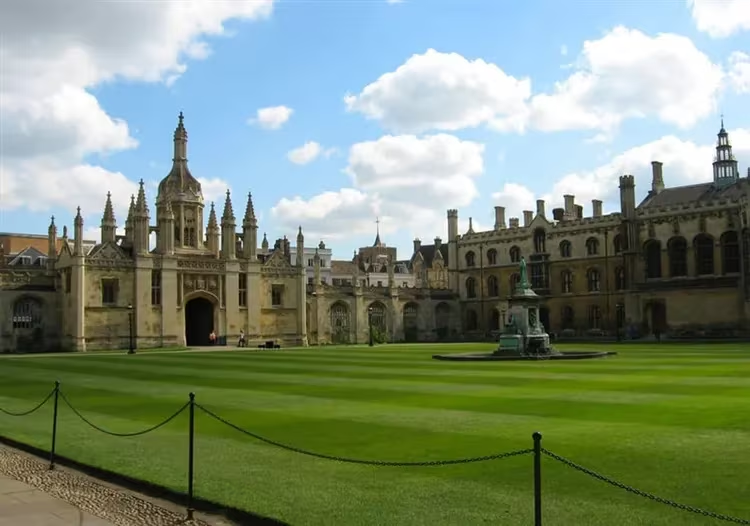
In the east of England is a city whose literal translation means “bridge over the river”, with a history of two thousand years. The first mention of Cambridge from monastic writings was associated with the deployment of Roman troops here. Two wandering scholars who passed on their knowledge to the younger generation were expelled from Oxford for a crime against a young woman and, unable to prove their innocence, settled in Cambridge. They founded the first college of the university here, which was recognized by the Pope, and by the beginning of the 13th century an entire university campus was formed.
Today it is represented by 31 colleges, libraries, museums (zoological, archaeological, anthropological, technological), gardens, churches and a hospital. At one time, Erasmus of Rotterdam and Isaac Newton studied and taught here, and the latter even designed a “bridge of sighs” for the university without metal fasteners. All the buildings are made in a medieval style, greenhouses, gardens and lakes are everywhere, and in the summer performances are held in honor of Shakespeare.
Oxford
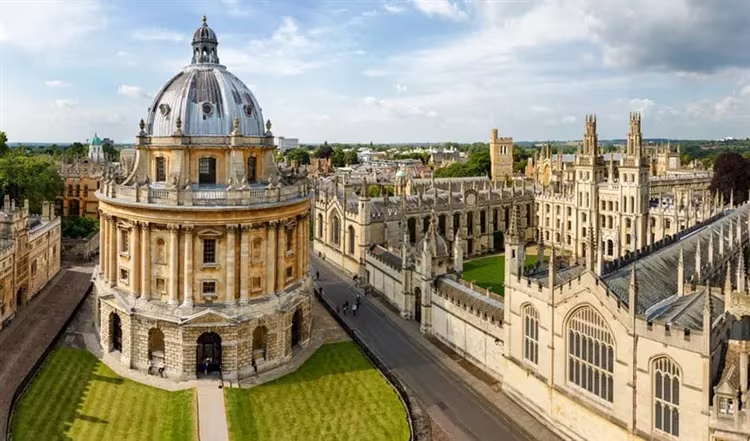
Another student city in the northwest, which is included in the list of the best universities in the world, whose natives were Margaret Thatcher, Ivan Turgenev, Anna Akhmatova, representatives of royal dynasties, the modern government of England and businessmen. Oxford is famous for its individual approach to students, so for every four students there is one teacher who develops a special educational program for them. In the 10th century, this city was a strategically important object, and therefore was constantly attacked. Later, a castle was built here, a school and a monastery were founded.
They managed to survive to our time and now they serve as a place for a hotel and a museum. During the tour, tourists are shown the Carfax Tower, the Church of the Holy Virgin Mary, the Museum of Modern Art, paleontological, zoological, as well as an art gallery with works by Raphael, Rembrandt, Leonardo da Vinci and other artists, and Christ Church College, where pictures of one of the films were taken about Harry Potter. It will take a whole day to inspect all university institutions, sights and gardens.
Windsor
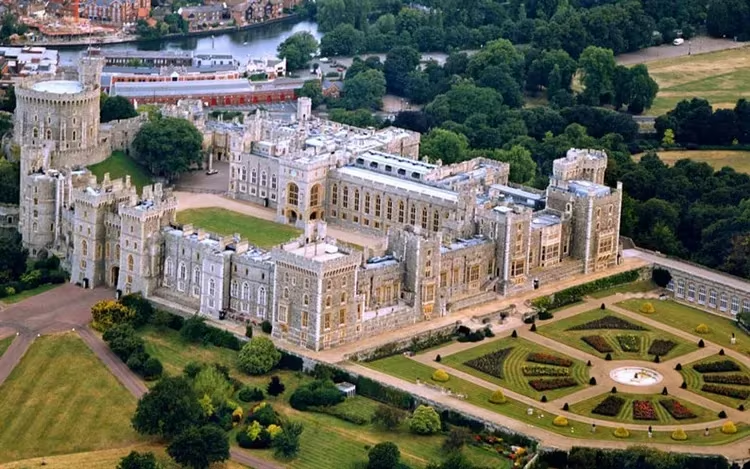
The largest castle in the world is located in Berkshire. It is a royal residence where receptions are held and important documents are signed. During the tour, by the way, you can find out about the presence of the queen in the castle: if she is, the flag is raised on the Round Tower, and vice versa. But, of course, they are not allowed into her part of the palace, and a whole detachment of guards in red suits monitors discipline. William the Conqueror at the beginning of the 11th century decided to build observation points along the Thames at this place to identify advancing enemy troops, then more reliable fortifications were erected around them, and by the 14th century, under the reign of Charles II, a whole castle appeared.
Interestingly, the modern palace managed to preserve all architectural styles from romantic to neo-gothic. Thanks to the audio guide in different languages, it is quite possible to understand the history of Windorse Castle and not lose sight of anything: the Dollhouse showing the life of monarchs in the 19th and 20th centuries, art galleries, the Throne and Dining Rooms, St. George's Chapel with the burial places of kings, etc.
Stonehenge and Bath
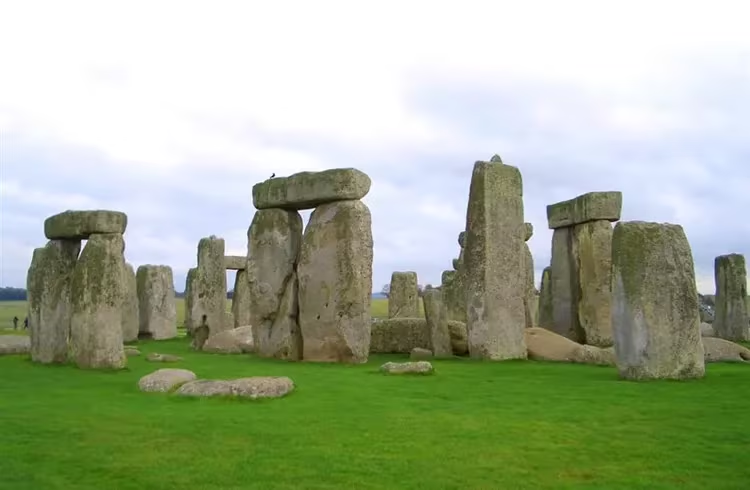
The most popular place among travelers, for which people come from the farthest corners of the planet. More than 140 thousand years ago, 82 giant blocks of stone formed a circle, which today is interpreted as a way of reckoning according to one version, and a place of worship of the gods according to another. But the method by which these stones were transferred here remains a mystery, because the weight of one stone is 25 tons, which is beyond the power of even a few dozen of the strongest people.
All the guesses of this miracle will be described in detail in the first half of the tour, and in the second half you will be expected by a picturesque town on a hilly area – Bath City. There are Roman thermal springs, a botanical garden, an art gallery and other attractions. The picturesque streets of the city are on the water, for which he deserved comparison with Venice.