
What to see in Seville in 1 day on your own – route, photo, description, map
One of the most famous Spanish cities – Seville – annually receives many tourists. Some come here for a long time, others can devote only a few hours to world-famous attractions. What to see in Seville in 1 day on your own? Depends on your preference. It can be ancient churches, the Flamenco Museum, theaters or an arena where bullfights are held. Or maybe you are interested in the architectural heritage of the Moorish period – the Golden Tower? It is possible that you just want to take a walk along the embankment, walk through the squares, look into cafes and shops…. There are dozens of attractions here. Let's talk about the most interesting ones.
Embankment of the river Guadalquivir
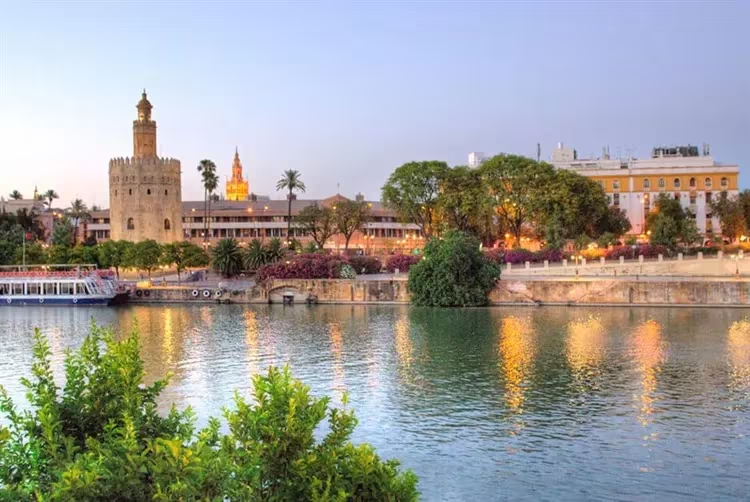
Perhaps it is from such a walk that one should begin acquaintance with the sights. It is worth drawing a parallel with St. Petersburg – when you look at the city from the side of the Neva, a very special, charming panorama opens before you. So here. You just need to prepare for such a walk – hit the road in the morning or in the evening, when it's not too hot, put on comfortable shoes. The embankment is very long – only in the historical center of the city its length is almost 5 km. During the walk, you will either walk along the road or go down the stairs to the water.
You can rent a bike – there are also special paths for this transport. And, of course, don't forget your camera. After all, along the way you will see many sights. You will have a view of the arena where bullfights take place, you can admire the Golden Tower and the famous Generation 27 fountain. Also, from an unusual angle, you can look at the buildings of the university and the theater named after Lope de Vega. You can end your walk in the beautiful Maria Luisa Park.
Arena for bullfighting “Maestranza”
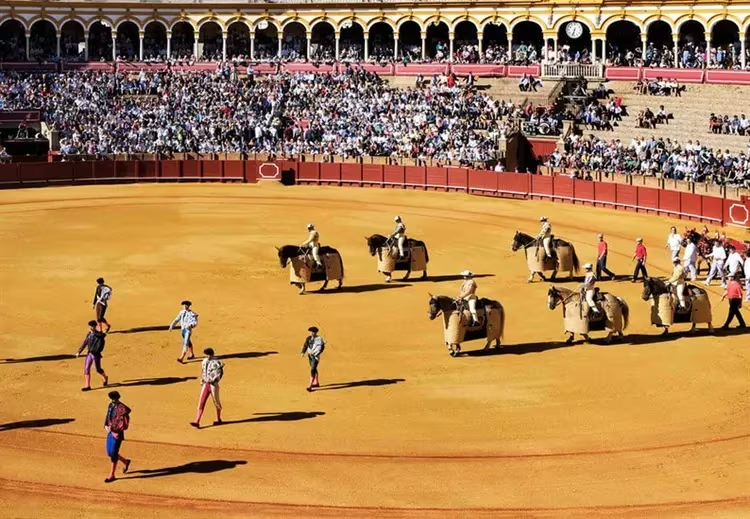
Bullfights have always been very popular in Spain. Initially, the arenas had a square shape, but in some cases it was not very convenient. Not all bulls were so brave that they were ready to fight the bullfighter. Often, the animals simply hid in a corner, and it was not easy to lure them out of there. Modern arenas are shaped like a circle. “Maestransa”, built in the middle of the 18th century, occupies, as it were, an intermediate place – the shape of its arena is oval.
Another fact related to this place. It was here that the matador fought the bull for the first time while on foot. Usually, a person entered into such a fight while sitting on a horse. It is worth seeing the arena, even if you are not a fan of this kind of entertainment. Maestranza itself is very beautiful, a royal box is arranged here. You can also look into the thematic museum – it is located nearby – there are many exhibits related to bullfighting. There is even a cloak on which the famous Pablo Picasso left his signature.
Maestranza Theater
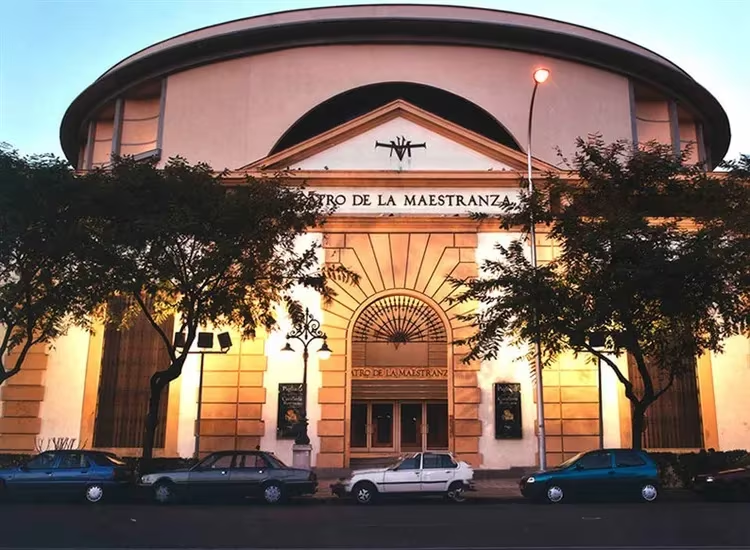
It is here that the Royal Symphony Orchestra rehearses and gives concerts. It is no coincidence that the theater is one of the most famous in Spain, and getting here is quite difficult. You will have to take care of tickets in advance. Although there are a lot of places, about 1800 spectators can enjoy the performance at the same time. Another important advantage of the theater is that in order to fully convey to the audience all the beauty of musical works, the latest technologies are used.
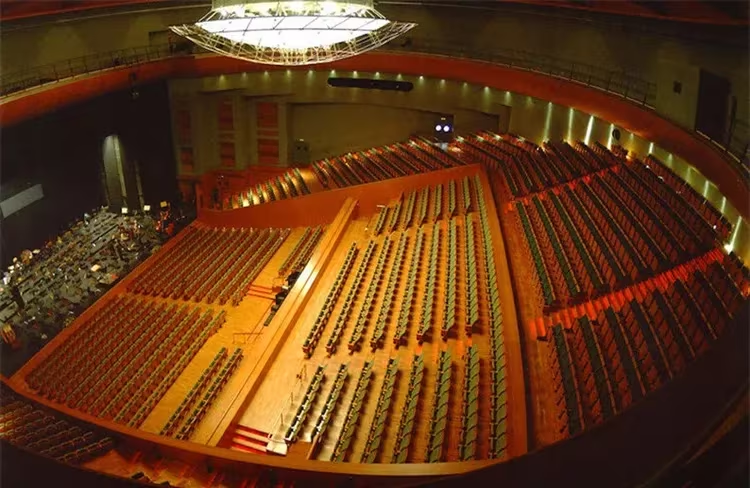
It is rare that a European theater can boast of such equipment. As a result, the most complex productions can be presented here, the audience – even experts – will fully appreciate them. The place where the theater stands is chosen very well – this is the bank of the Guadalquivir River, a historical district. Nearby are hotels, cafes, shops. So a visit to the opera can be combined with other pleasures, such as shopping.
Torre del Oro
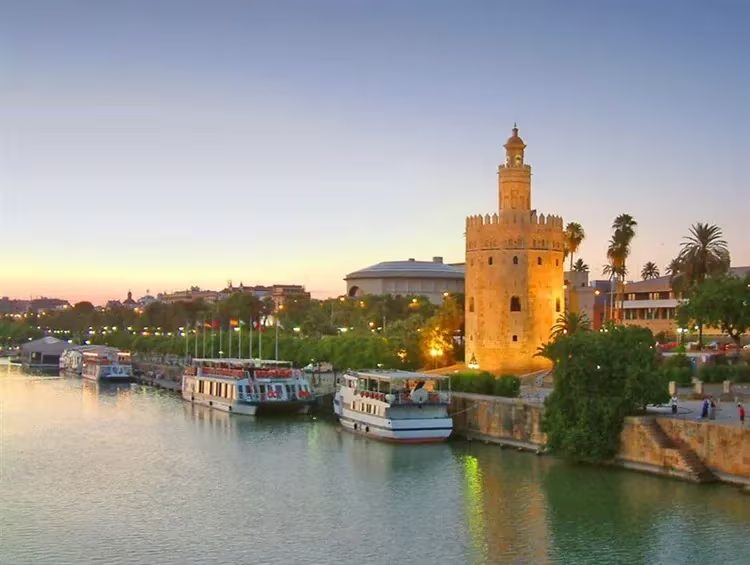
One of the most famous sights of Seville. The golden tower was built at the beginning of the 13th century. This is an architectural monument of the Moorish period. The original purpose of the tower was to serve as a lighthouse, so it was placed on the bank of the river. Behind it were the walls surrounding the city. A chain was thrown across the river, and boats were attached to it. So people moved to the other side. In later times, the tower played the role of a prison, gunpowder was also stored here, and offices were even placed here.
In the 18th century there was a devastating earthquake and Torre del Oro was rebuilt in the late 19th and early 20th centuries. Today there is the Maritime Museum here, you can climb to the very top – to the observation deck. It is worth mentioning one more thing – the tower got its name, probably due to the fact that it was built of bricks made of white clay. Illuminated by the sun or moon, they shone with gold. The golden tower can be seen in many films.
mercy hospital
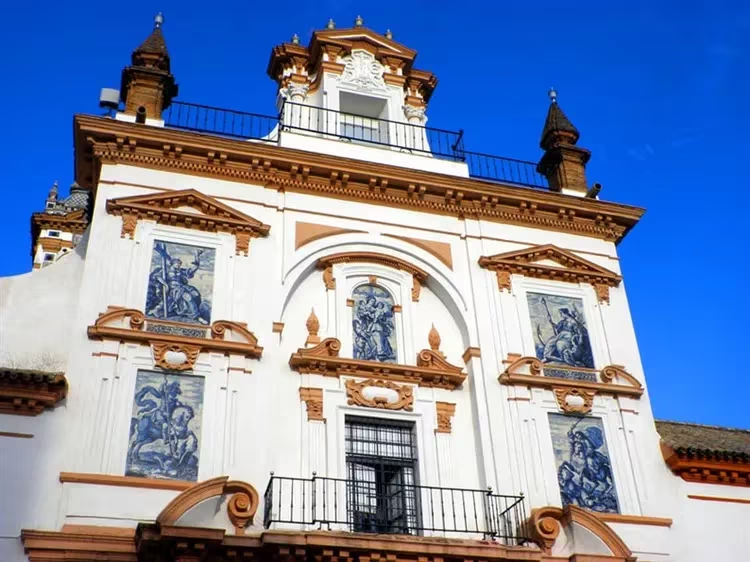
A beautiful medieval building that is surprisingly well preserved. The idea of creating a hospital where the poor would be treated was filed by Miguel de Manara. In the middle of the 17th century, he invited the monks to establish such a hospital. Today, his statue is installed in the garden, which is located in front of the hospital. It is significant that before this man led a rather unbridled life, there were no number of his mistresses, and it is even believed that he served as a prototype of Don Juan. But then Miguel had a vision during which he saw his own funeral.
Then he decided that he would devote the rest of his life to charity. It is not known how long the construction would have taken if not for the support of the king. It was his donations to a good cause that made it possible to build a fairly spacious building next to the city church. The hospital immediately became very popular. Within a few months, there was a shortage of places. Then the architect Francisco Ruiz de Escalon got down to business.
He managed to practically double the area of the hospital, and decorate its facade so that it looked organically next to the church. Today, many people want to admire this place. On the tiles at the entrance you can see the symbolic Faith, Hope, Love, as well as Saints George and Jacob. The patio is elegantly decorated with beautiful fountains. In the same building of the hospital housed an exhibition of valuable paintings.
Archive India
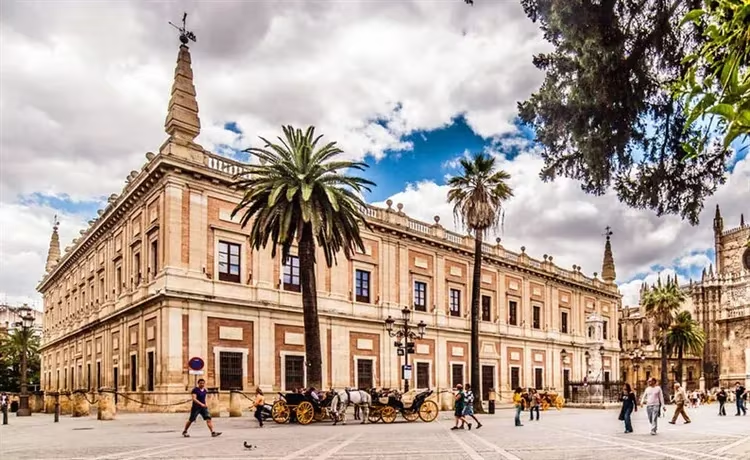
While scholars will no doubt admire the contents of this archive, tourists will primarily admire the beautiful building. It contains many documents related to the history of the Spanish Empire, which existed on the lands of America and the Philippine Islands. The building is a magnificent example of the Renaissance.
The project was designed by Escorial architect Juan de Herrera at the end of the 16th century. This house was intended for the local guild of merchants. The architect introduced a patio and balustrades along the edges of the roof into the project. For several decades, the building was decorated in every possible way. The archive was moved here at the end of the 18th century. There are so many documents that the length of the shelves is no less than 9 km, and if you count the pages, there are about 80 million of them.
Cathedral
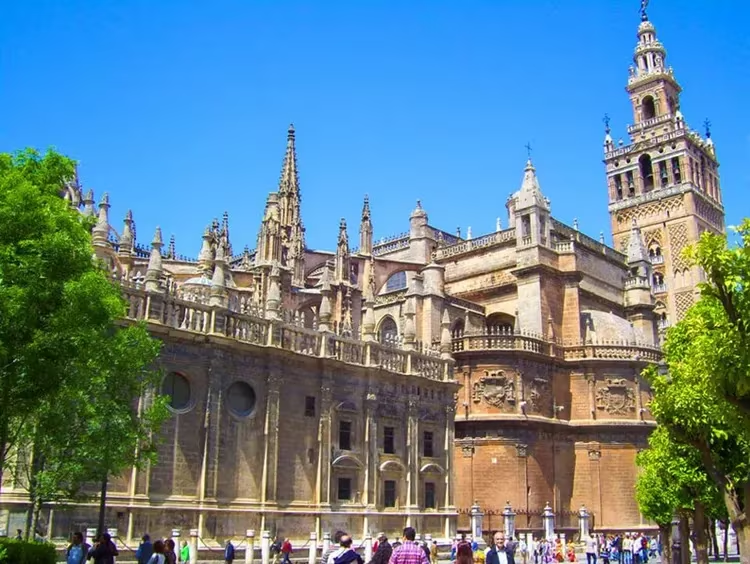
This is a real gem of Seville, one of the largest basilicas in the world. The construction of the cathedral began at the beginning of the 15th century, and the process itself dragged on for a long 4 centuries. We can also mention the fact that earlier on the site of the cathedral there was a large mosque. The neo-Gothic basilica was built, its length exceeds 100 m, and its width is more than 70 m. But, of course, you must definitely go inside. There are many treasures stored there. Starting from unusual lattices and ending with icons.
There are also masterpieces of painting and architecture. Guests come to the cathedral and then to bow to the ashes of Christopher Columbus – he rests here. Other people who played an important role in the history of Spain are also buried here. 9 gates lead to the cathedral. When viewing the architectural structure from the inside, be sure to go to the Chapter Hall to see the famous sculptures.
Giralda tower
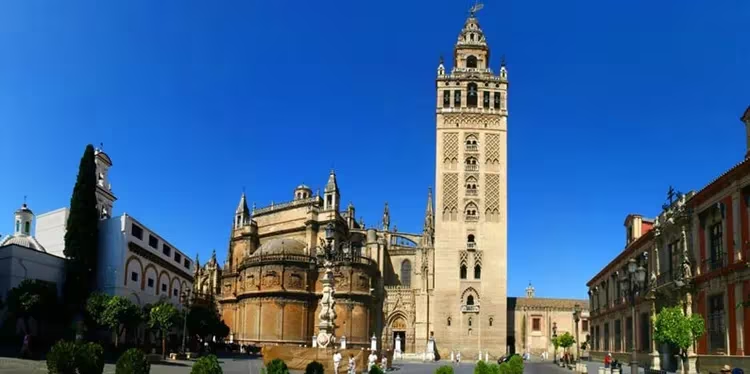
Today it is one of the best viewing platforms in the city. But the tower has an impressive history. It began to be built in the 12th century, and since then it has been a model of Moorish architecture. At that time, the tower was decorated with gilded balls. When the rays of the sun fell on them, they shone, and were visible at a great distance. Later, when Seville fell into the hands of the Spaniards, the balls were removed, the mosque was replaced by a cathedral, and an observatory was built on top of the tower.
In the middle of the 16th century, a belfry was built at the top, the height of the tower began to reach almost 100 m. It was crowned with a weather vane. From which its name came. In Spanish, “giralda” means “weather vane”. Despite numerous alterations, the tower looks amazingly organic, like a real work of art. Tourists do not miss the opportunity to climb it to admire the panorama of the city from a height.
Alcazar
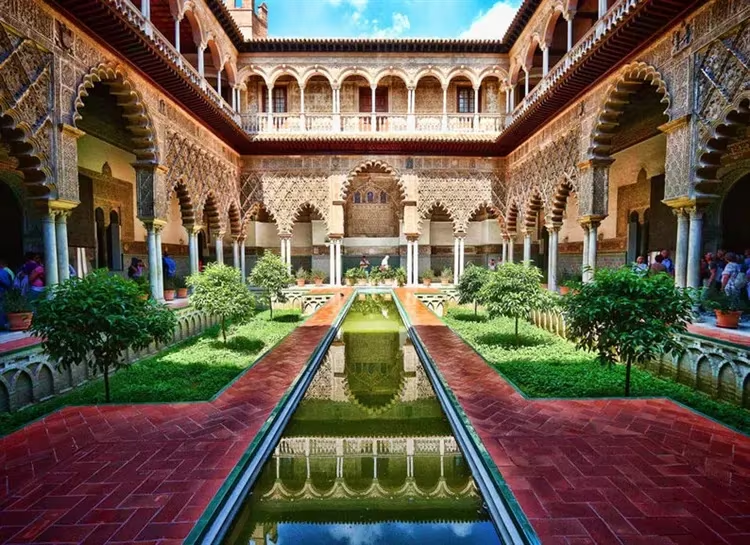
This palace, which later became the residence of the Spanish kings, began to be built in the 10th century, when Emir Abderrahman III ruled. The palace turned out to be so beautiful and poetic that it was called “the eternal haven of spring.” Today, little remains of its original appearance. Most of the halls belong to a much later period – 14-16 centuries. There are many courtyards, in fact, the premises are located around them.
In one of the halls, as it was established, official receptions were held, there is also a Court of Dolls – its walls are decorated with ornaments resembling figures. The Courtyard of the Girls is so named because of the legend – a hundred beauties were brought here so that the emir could select the best as a tribute to the caliph of Cordoba. You can also see the Hall of Justice and the Hall of the Hunt.
The guide will tell you many interesting facts related to them. The gardens surrounding the Alcazar are also delightful. Take time to walk around them. Orange trees bloom here, important peacocks roam, spreading their magnificent tails. Also here you can always meet artists. The Alcazar is of particular interest to fans of the film Game of Thrones – many scenes of the film were filmed here.
Museum of Flamenco Dance
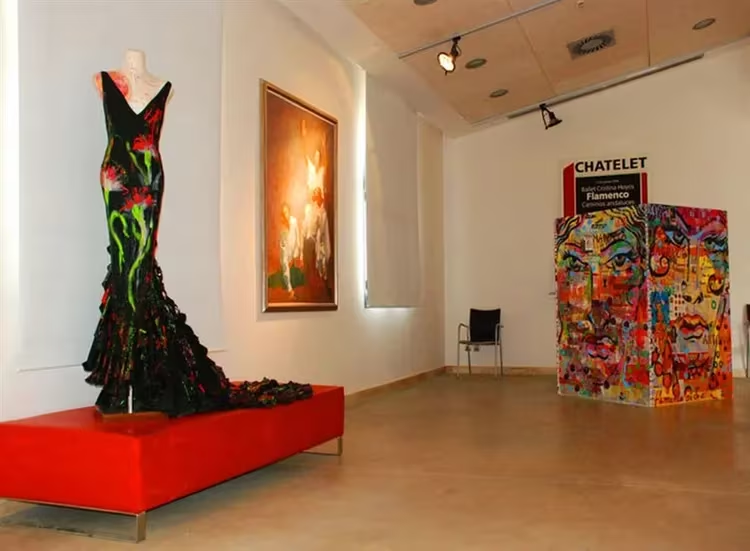
The incendiary flamenco dance is a real intangible cultural heritage of Spain. This original dance has many fans all over the world. And it originated in the 18th century in the villages of Andalusia, and ordinary peasants were the first to perform it. Since then, many interesting facts have appeared in the history of flamenco. You can learn about them in the museum, which is located in the Santa Cruz quarter in an old house. The founder of the museum was the famous dancer Christina Hoyos.
When purchasing a ticket, it is better to take a combined one. It will allow you not only to look at the exhibits, but also to see a bright show – it is held here three times a day and lasts about an hour. In the museum you will learn a lot of interesting things about flamenco, look at the costumes of the dancers and their partners, admire the castanets, see portraits, sculptures and much more.
If you have time, you can attend a master class and learn the basics of a beautiful dance yourself. The hall where the show is held is small, it is always full, so take care of tickets in advance. The performance is so bright and exciting that you can come here even with children – they definitely won't get bored.
Metropol Parasol
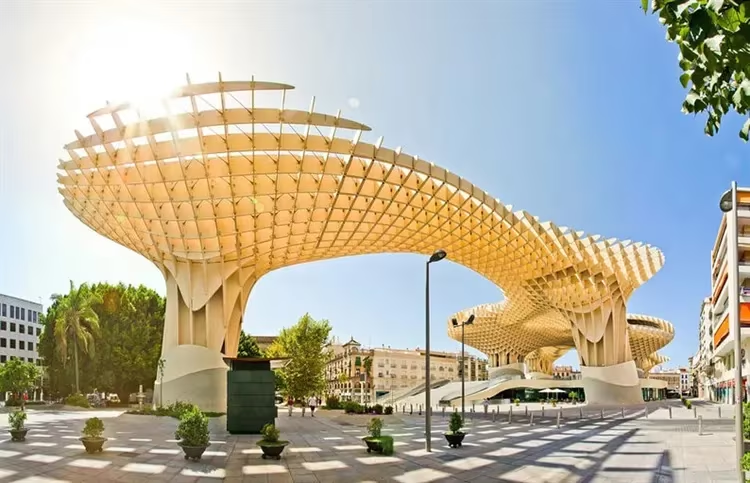
This architectural masterpiece seems to have come from the future. It is located on the Square of the Incarnation, this is the center of the city. In the 90s of the last century, they decided to reconstruct the square, in the process, traces of an ancient Roman settlement were discovered. In order to preserve it, it was decided to abandon the idea of equipping a parking lot here, and build something else.
The winner was the Metropol Parasol project, designed by Juergen Mayer. However, due to financial problems, construction was delayed, and its cost increased. Birch wood of the highest quality was imported from Finland. For a long time they could not find and approve a suitable glue. Only by 2011, “Seville Mushrooms” appeared on the square – this is how the new building was first dubbed by the people, and then officially. 6 umbrellas made of concrete and wood, 26 m high, are intertwined with their “hats”.
“Mushrooms” occupy an impressive area of 5000m2. Inside there are cafes, shops, a market where you can buy everything from seafood to the freshest fruits and vegetables. Instead of an underground car park below, there is now an archeology museum. You can go down here and admire the mosaics and paintings. At the very top of the building there is an observation deck. You can go up here on a high-speed elevator and look at the panorama of the city.
Basilica of Jesus del Grand Poder
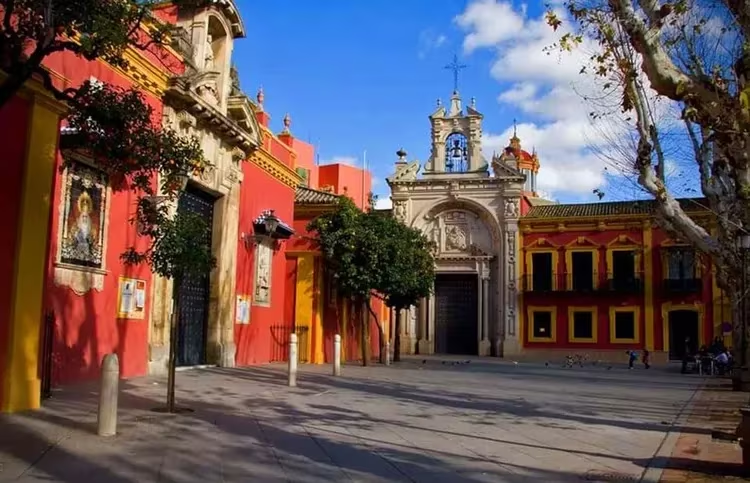
This Catholic church is small in size. Located in the San Lorenzo area. The project was carried out by Alberto de Orta and Antonio Delgado. The basilica was built in neo-baroque style. Going inside, guests can remember the pantheon in Rome. There is also skillful carving, there is also a beautiful altar.
A lot of people come here to bow to the image of Christ Señor de Sevilla, which dates back to the beginning of the 17th century. Especially crowded here on Good Friday. After all, this image is no less popular among the Spaniards than the Holy Virgin of Makarenskaya. With lit candles, believers turn to the Lord, asking Him for help.
Palace Dueñas
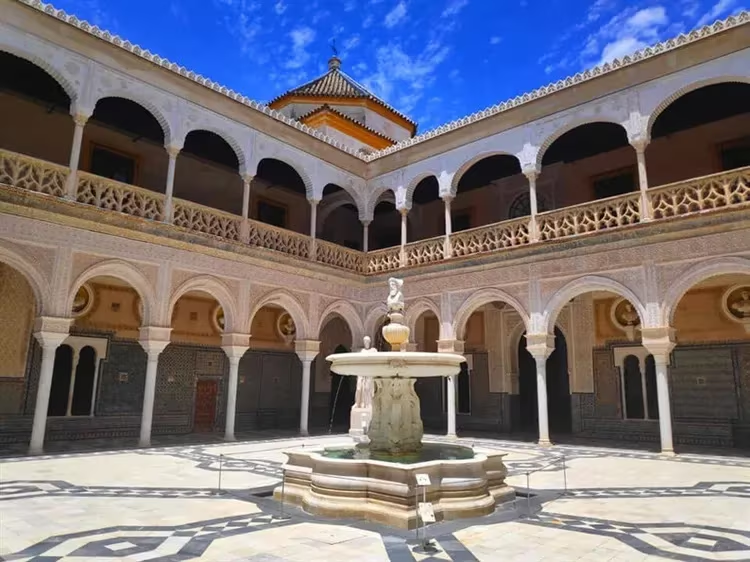
This palace was built in the middle of the 15th century. And he got his name in honor of the monastery of Santa Maria de las Duenas. The palace has a rich history. It was built by order of the Pineda family, but was soon sold to the de Ribera family, as the owners needed funds to ransom a relative from Moorish captivity. The new owners changed the appearance of the palace, giving it the features of a renaissance. Later the building became the property of the Dukes of Alba.
It should be mentioned that the poet Antonio Machado was born in the palace (his father served as caretaker here), and Baron Holland, who wrote a book about Lope de Vega, also lived here. In the 18th and 19th centuries, reconstructions took place in the palace. Today you can see different styles here – Gothic, Moorish, Renaissance. Very beautiful room with an octagonal ceiling, decorated with gold. Preserved patio, fountain. Very rare species of plants grow in the gardens.
You can also see the chapel of the 15th century, however, rebuilt. It is believed that this is where the marriage of Amerigo Vespucci and Maria Cerezo was concluded. The Duchess of Alba and Alfonso Diez Carabantes also played their wedding in the palace. Today, visiting the Dueñas Palace, guests will see a lot of antiques, luxurious furniture, tapestries, dishes, a rich collection of paintings.
Macarena Basilica
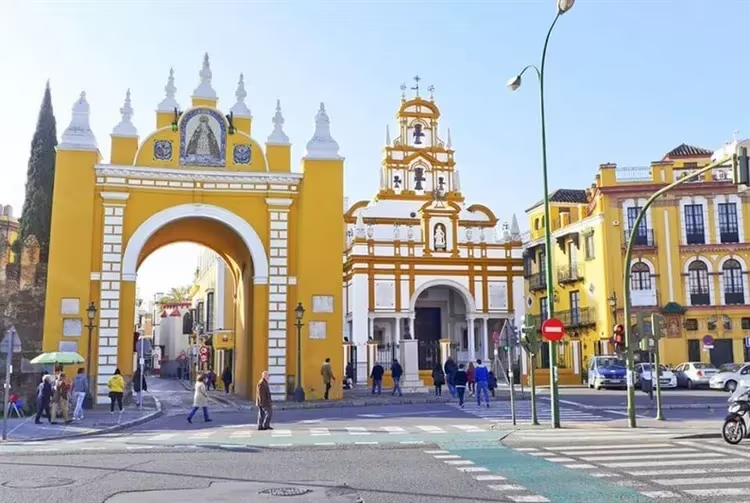
This attraction cannot be attributed to the monuments of antiquity, and yet it is very popular among tourists. The basilica is painted in traditional colors – white with ocher. A shrine is kept inside it – an ancient image of the Most Pure Virgin of Makarenskaya, the name of the icon painter has not been established. But the Mother of God is called the “Queen of Seville”. Her mantle is covered with gold and precious stones, in her hand the Virgin Mary clutches a white handkerchief.
And, of course, nowhere else you will see the Blessed Virgin in earrings. But this is not surprising here. During Holy Week, guests from different cities of Spain come here. The image is taken out of the temple and carried along the main city streets. The procession turns out to be very crowded, believers repent of their sins. It may seem strange, but museum exhibits related to bullfighting are also stored in the temple.
Bullfighters come to ask the Mother of God for good luck, bring her gifts. Some were even honored to carry a stretcher on which the image was installed. The project of the church was carried out by Aurelio Gomez Megliano, and it was built in the late 40s of the last century. Gradually, she gained more and more popularity. Guests admire the beautiful architecture, bow to the miraculous image, get acquainted with the museum collection.
Alameda de Hercules
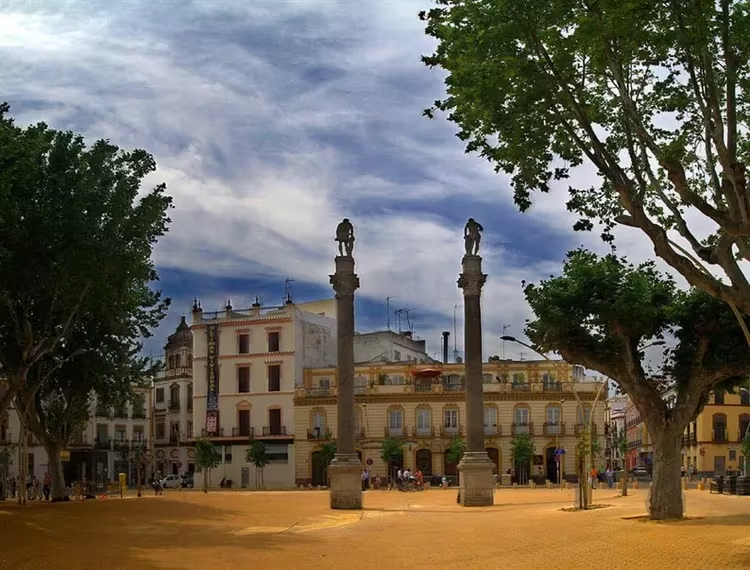
You can end your acquaintance with the city here. In the second half of the 16th century, a public garden was laid out here. The name comes from the rows of white poplars. Even earlier, there was a branch of the river, but at first it was cut off by a dam, and then the area was specially drained. The swampy pond has disappeared, replaced by canals and fountains. 4 columns were installed, and a couple of them used to belong to an ancient Roman temple. Sculptures were erected at the top.
In the 19th century, this garden was a very popular place, especially among the nobility. After the civil war, on the contrary, this area was considered the poorest, they were engaged in prostitution and drug trafficking. At the beginning of the 21st century, Alameda began to be restored. White poplars were planted again, benches and fountains appeared here. There are also some attractions here – the House of the Sirens, the chapel, the building where Gustavo Adolfo Becker was born. Today, Alameda is the center of the city's nightlife. There are many bars, pubs and discos here. The bar Tino, for example, is very popular.
From the reviews:
“Here you can try those Spanish dishes that we had only read about before. For example, oxtails with french fries and gazpacho, salads, which are just a huge mountain of vegetables. Everything is very tasty and, most importantly, the prices are more than democratic”
So it's worth coming here for lunch or dinner, how can you visit Seville and not try the national Spanish food? Everything here is delicious and cheap.
Of course, it is unlikely that you will be able to see everything in one day, but how can you have time to see at least what you are interested in according to the description? It is unlikely that the green sightseeing buses will help you, as they make only 4 stops, and the audio guide there is not of the best quality. You can order a personal tour with a Russian-speaking guide. If your plans include not a sightseeing tour of the city, but visiting specific places – for example, you want to see the Alcazar and Dueñas palaces – you should immediately go there. And only then, if you have the strength, you can see something else, or just sit in a cozy cafe, admiring the panorama of the city.
As a rule, those who came here for a short time want to come back again to get to know the sights of the ancient Spanish city in more detail. Let this wish come true!