
What to see in Tbilisi in 3 days on your own – route, photo, description, map
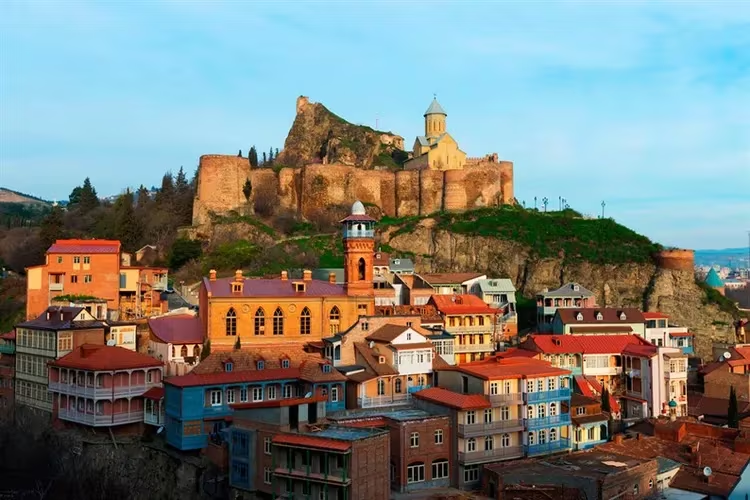
Ancient, freedom-loving, hospitable Georgia has always attracted with the extraordinary beauty of mountain ranges, ancient temples, cordiality and invariable sense of humor of its inhabitants and special culinary traditions. It is no coincidence that the name of the capital “Tbilisi” is translated as “warm”. Warmed by the sun, this city is good at any time of the year. If you have three free days, go to Tbilisi for a positive charge and new impressions. It is very convenient to just walk in this city. You can go wherever your eyes look and discover the city from a new, unexpected side, or you can plan a route in advance so as not to miss anything. We have prepared for you a route to the most interesting places in the capital of Georgia. So, we will tell you what you can see in Tbilisi in 3 days.
Tbilisi International Airport is located at the eastern end of the city. There are several ways to get to the center from here.
- A taxi will cost you from 20 to 30 GEL, depending on where you are going to go – to the center (say, to Freedom Square) or to the northern regions. To call a taxi, you can use the Yandex taxi or taximaxim application. The only difference is the payment method. In the first case, this is a transfer to a card, in the second, a cash payment. The trip will take no more than 25 minutes, in the summer it can stretch up to 40-50 minutes, especially in the high season.
- If you need to get from the airport to another city, you can order a transfer via the Internet. Here are the most popular routes in order of increasing price: to the city center ($12), to Gudauri ($45), to Bakuriani ($54), to Batumi ($80).
- If you are traveling without children and you do not have a mountain of suitcases, it is quite possible to opt for public transport, namely bus number 37. The stop is located three meters from the arrivals area. On the pavement, BUS is written in large letters, so the likelihood that you will get lost is extremely low. The fare will cost you 0.5 GEL. Buses travel along the route from 7 am to 23:35. You won't have to wait long – they come every 15-20 minutes. In the summer, they continue to walk at night. Avlabari metro station can be reached in 40 minutes, to the railway station (final stop) – in an hour.
1 day
The Georgian capital stands on the banks of the Kura River. The city is surprisingly lively, colorful and multifaceted, with a stable aura of a place where East and West once crossed. It is worth starting your acquaintance with the city from its classical old part.
Freedom Square and Pushkin Square
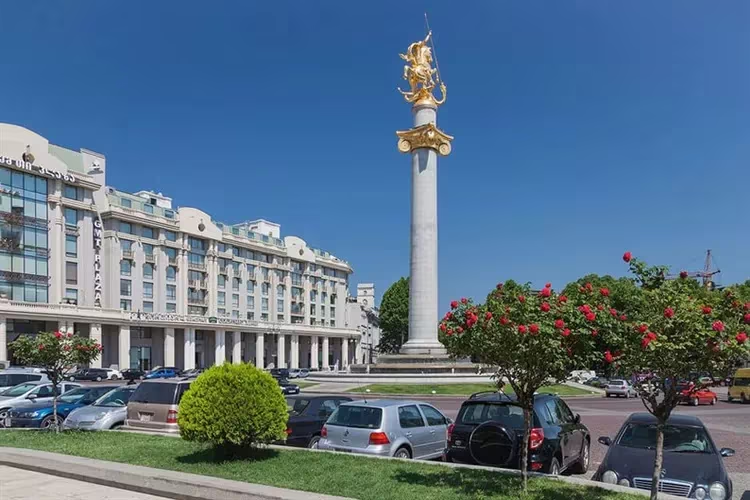
The main square of Tbilisi is located at the junction of three city districts. Once upon a time there were gardens of the local nobility, but in the 19th century they were cut down and the old ravine was covered up. The resulting area was called Erivan at that time. In one of the houses standing on it, A. S. Pushkin lived for 2 months in 1829, and now a square located nearby bears his name. After the revolution, the square changed its name several times, bore the name of Lenin and Beria, and in our time received its modern name – Freedom Square.
The square became the center of many dramatic events in the history of the country. Today, there are administrative government buildings, the central office of the national bank, hotels, shops and numerous souvenir shops. In Pushkin Park, you can relax on the benches by the fountain, book dealers often gather here, and there is a tourist information center. Behind the park, on the square is the Museum of Art. Once this building housed a theological seminary where I. Dzhugashvili studied.
Tbilisi funicular
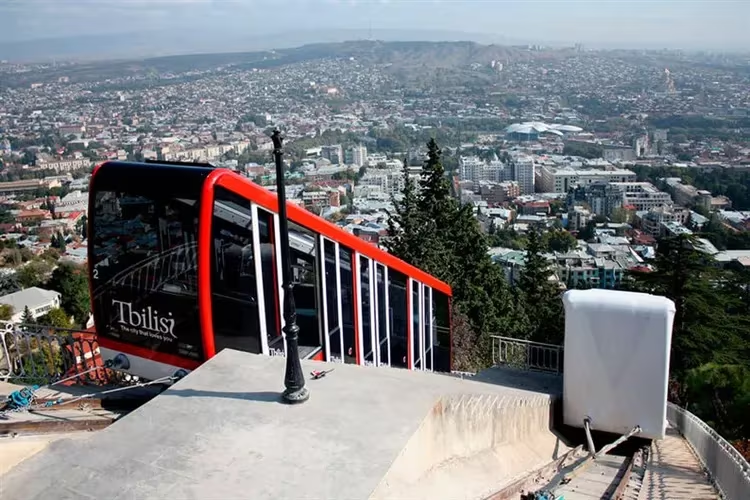
The funicular in Tbilisi is not only a vehicle that allows you to climb Mount Mtatsminda, but also one of the main attractions of the city. The famous “son of a Turkish subject” once “ride” on it. To ride the funicular, you need to buy a ticket, the cost of which is 2 GEL, and after midnight – 3. It has 3 stops. If you go to the second one, then you will get to the Church of St. David and the Pantheon, and the third stop – the ultimate goal of his route – is Mtatsminda Park.
Pantheon
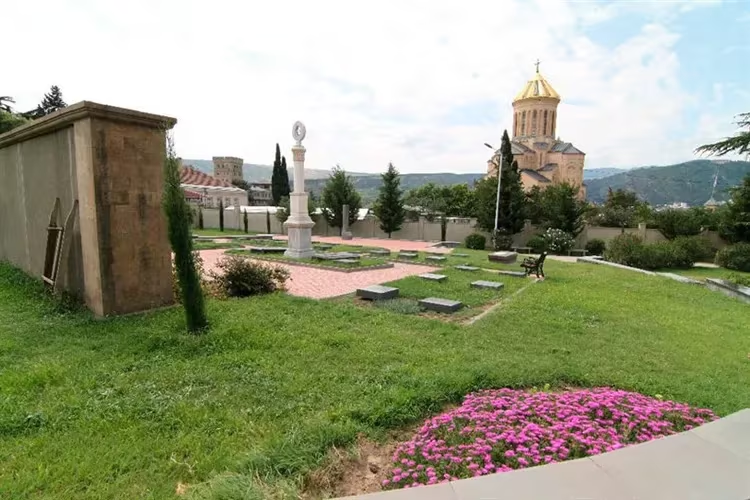
Here, on Mount Mtatsminda, near the Church of the Holy Father David, there is the Tbilisi Pantheon. The church was built on the site of the destruction of the rock of St. David. According to legend, in the 5th century, the ascetic David lived here in a cave, who descended from the mountain to the city only on Thursdays. A necropolis was organized near the walls of the temple, which now bears his name, in which the most prominent representatives of Georgian culture and public life are buried. It takes its history from 1829, when, on the initiative of Princess Nina Chavchavadze, her husband, Russian poet and public figure Alexander Griboyedov, was buried here. On the centenary of his death, in 1929, the Pantheon was opened here.
There is also the grave of Nina Alexandrovna Chavchavadze-Griboyedova herself, the great Vazha Pshavela, Veriko Anjaparidze, Ilya Chavchavadze, Vakhtang Chabukiani, and many public and political figures. In the Pantheon, you can find a tablet with the name of Niko Pirosmani, but his grave is not here, because the burial place of the famous artist remains unknown. Near the Pantheon, at the crevice of the cave in which St. David of Gareja lived, there is a holy spring. Make a wish, soak a pebble in water and attach it to the wall of the temple. If he holds on, then your wish will certainly come true.
Mtatsminda park and observation deck
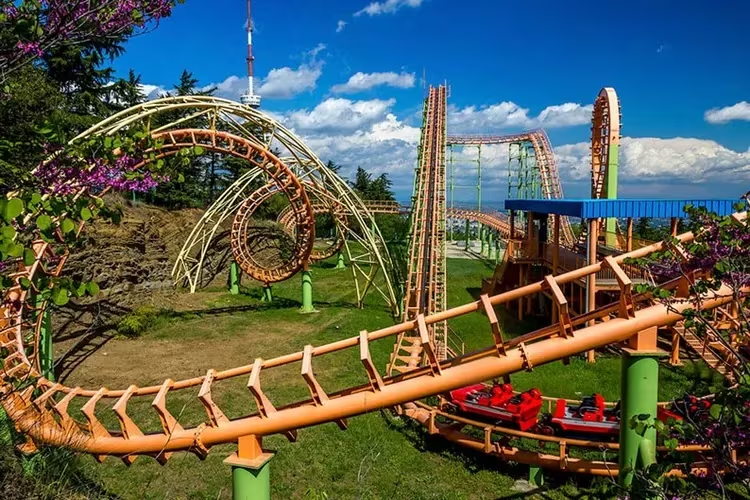
Back in the 19th century, Tbilisi residents began to go to Mount Mtatsminda (its name translates as “Holy Mountain”) for picnics in the summer. So, gradually it became a favorite vacation spot for the townspeople. There are many restaurants and cafes here. In the 30s of the last century, the slopes of the mountain were planted with trees. Today there is a large park with attractions for children and adults, a water park, a dinosaur park and a large Ferris wheel. Climb to the observation deck to enjoy an extraordinary view of the city. From here, the whole Tbilisi is perfectly visible, especially its old part.
Puppet Theater Rezo Gabriadze
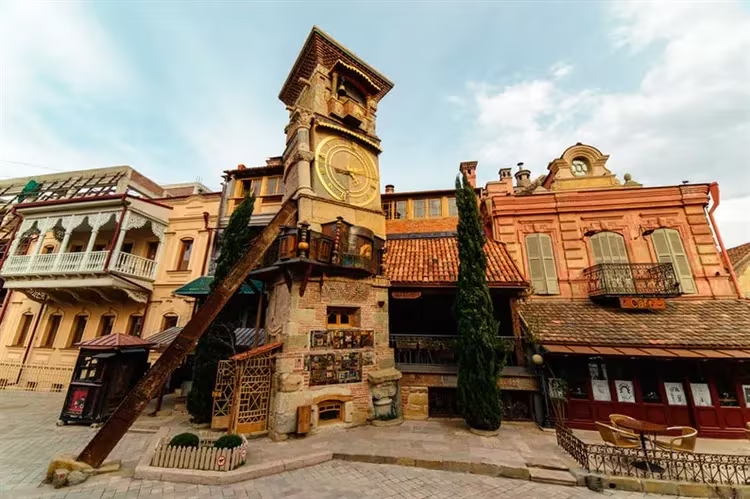
One of the main attractions of the Shavteli pedestrian street is the Rezo Gabriadze Puppet Theater located on it. His performances are known far beyond the borders of Georgia. To get to them in the Georgian capital, tickets must be bought in advance. Rezo Gabriadze himself is practically a heritage of culture, not only Georgian, but also world. This playwright, artist and sculptor created his own special world, touching which, you will begin to look at life with completely different eyes. There are only four performances in the theater program. All dolls are made by the artist himself, as well as the plays invented by him.
The theater building, created in 1981, is impossible not to notice. It is adorned with a clock tower. Every hour a door opens in it, and an angel beats the bell with a hammer. And twice a day – at 12 noon and 7 pm – a mini-performance “The Cycle of Life” is played here. The turret is decorated with tiles, which were painted by the artist himself, and a pomegranate tree grows on its roof.
On the pediment of the theater building, the motto of the artist's life is written: “Let our tears come only from onions.” Near the theater there is a cafe, the interiors of which were painted by the artist. Once it was the size of a small room and was called “Do not Cry!”, But gradually it grew and is now simply called “Gabriadze”. Scenes and phrases from famous films in which the artist took part as a screenwriter for Mimino, Kin-dza-dza and others are painted on the tables and chairs.
Shavteli street
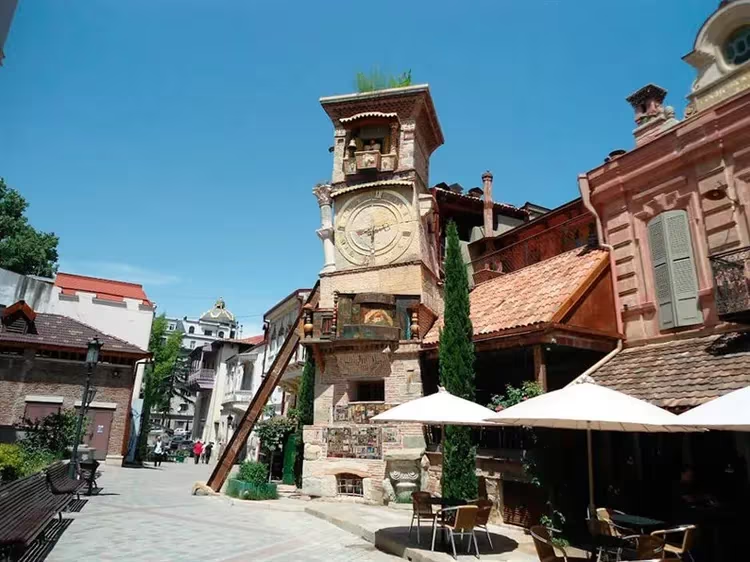
Another pedestrian street in the old town. It is named after the medieval Georgian poet, who lived during the time of Queen Tamara, Ioann Shavteli. Once it was the very center of the city, here stood the royal palace, and in front of it was the main palace square. This area was very prestigious in those ancient times. Notable townspeople and nobles built their houses near Tsarskaya Square. Both the square and the palace were completely destroyed in 1795 during the invasion of the Persian Khan Aga-Mohammed.
Now the buildings of the Georgian Patriarchate are located on this place, inside it is the functioning convent of the Most Holy Theotokos, opposite the ancient church of St. George, which served as the main court church since the 17th century. In addition to it, all the buildings on the street date back to the 19th century; there is practically nothing left of the old houses, palaces and churches. Here, on Shavteli Street, there is the famous puppet theater Rezo Gabriadze, and in the park opposite the Church of St. George there is a small fountain – a gift to the city from the French capital.
And here you can rent a car in Tbilisi from only $25 per day!

2 day
The second day is worth reviving somewhat with a breath of modernity – you can take a walk on the cable car, relax in the hot sulfur springs, thanks to which the city got its name (“Warm”), and also enjoy the natural wealth of the city.
Cathedral of the Holy Trinity, or Tsminda Sameba
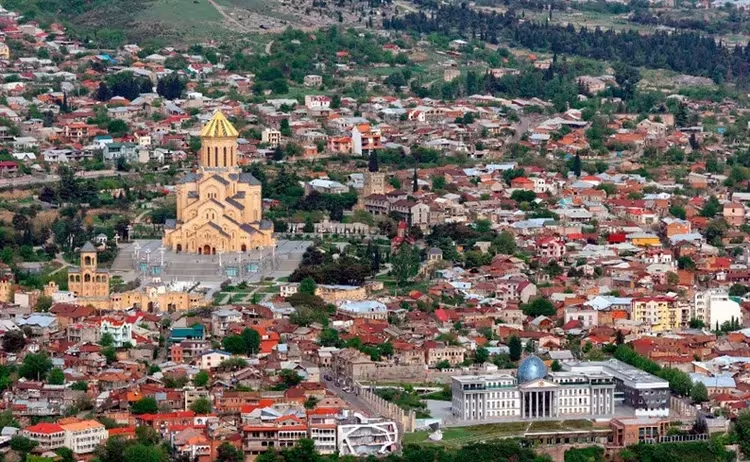
The Cathedral of the Georgian Orthodox Church is visible from anywhere in the city. It stands on the hill of St. Elijah on the banks of the Kura. This is the highest temple in Georgia – its height is 101 m. The history of the cathedral dates back to 1989, when a decision was made to build it, connected with the celebration of the 2000th anniversary of Christianity. But due to the difficult subsequent years, especially the events of the civil war in Georgia in 1992, the construction was postponed and the construction of the temple began only in 1995.
The first divine service took place here in 2002 around Christmas, although the temple was not yet completed. It was consecrated in 2005 after construction was completed. The complex includes 9 chapels, most of which are located underground, a bell tower, a theological academy, the residence of the Catholicos, even a hotel and a cafe. Inside the walls of the temple are painted with the most interesting frescoes, the best artists of Georgia under the guidance of Amiran Goglidze took part in the design.
Patriarch Ilia II himself painted several icons for the church. The church keeps the cross of St. Nino, which was installed on Mount Mtskheta as a sign of the baptism of Georgia. People say that the temple is literally built on bones. Once upon a time there was an old Armenian cemetery here. It began to be destroyed in the 30s at the initiative of Beria. And during the construction, the surviving remains were not reburied, and the plates and monuments disappeared.
Metekhi Temple
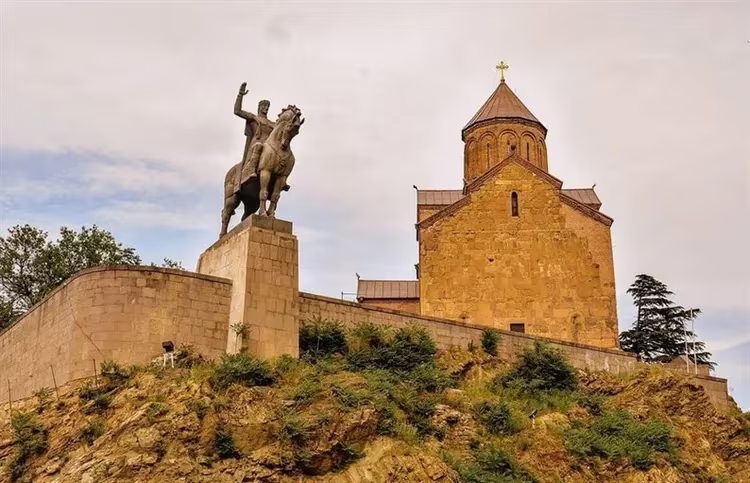
Metekhi Temple (Nativity of the Mother of God) is one of the main symbols of Tbilisi. It was erected in the 12th century next to the royal palace and has experienced many dramatic events over its long history. It was destroyed and rebuilt several times. It survived the Mongol and Persian invasions. In the 19th century, a Cossack regiment was placed in it, and in 1921 – NKVD dungeons. In 1937, the temple had to share the fate of most religious buildings – a decision was made to demolish it. However, many enlightened people and public figures opposed the demolition. One of them was the artist Dmitry Shevardnadze, participation in the rescue of an architectural monument cost him his life. These events formed the basis of the film “Repentance” by T. Abduladze.
This temple is of great importance for Georgian culture. Only here are examples of artistic stone carving traditional for medieval Georgian architecture of the 13th-15th centuries preserved. Attached to the north wall of the church is a unique portico decorated with carvings depicting a vine. Not far from the temple, already in 1967, a monument to King Vakhtang Gorgasali, the founder of the city, was erected.
Europe Square and Rike Park
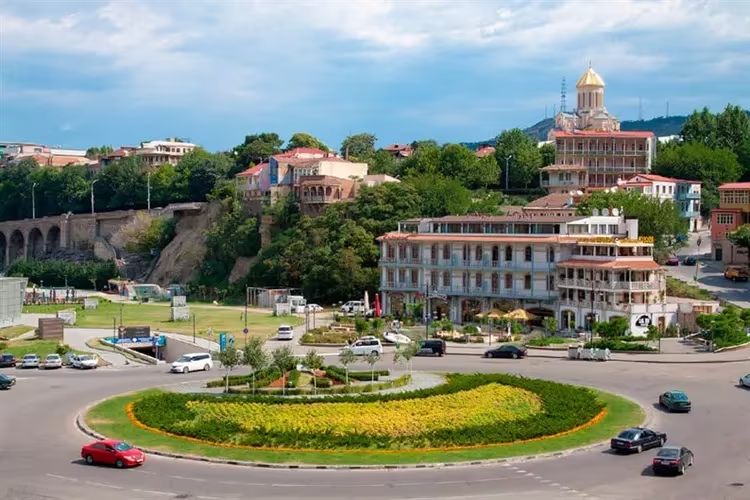
Next to Europe Square is the brand new Rike Park. It was founded just a few years ago, but has already become one of the favorite places for recreation of Tbilisi youth. It is good to come here both during the day and in the evening. In the park, you can find a piano in the bushes, play chess on a giant board, or sit on a bench with Ronald Reagan – the park sculpture is very diverse and not without humor, which is generally distinguished by local residents. In the evenings, the lights in the park turn on at the dancing fountains and the Bridge of Peace is brightly lit (Tbilisi called it “gasket” because of its great resemblance to this hygiene item).
The lights on the bridge do not turn on randomly. As conceived by the architects, the lights, using Morse code, convey the names of all the chemical elements that are an integral part of the human body. Thus, the authors of the project wanted to convey the idea of the unity and equality of all mankind, that all people are essentially the same. In the evening, from the park, you can clearly see the presidential palace and the old city, located on the other side of the Kura, sparkling with lights.
cable car
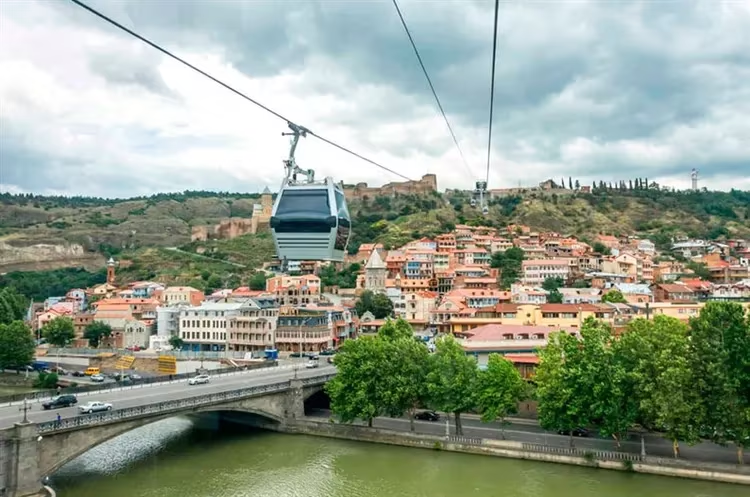
The bottom station of the cable car is located near Rike Park, next to the Peace Bridge. You will definitely notice the cabins that will fly over your head in the city center. For Tbilisi residents, this is the same public transport as the metro and bus, so you can use a regular metro card to pay for the fare. Launched in 2012, it is a modern, very fast and safe mode of transport.
Seven cabin capsules with panoramic windows can accommodate 8 people. They move smoothly and rapidly, stopping at stops. At the topmost, final stop of the cable car, there is an observation deck. From here you can look at the city and choose a new route for yourself. Not far from the site stands the monument “Mother of Kartli” – one of the symbols of the city, and on the opposite side of it – the medieval fortress of Narikala.
Statue “Mother of Kartli”
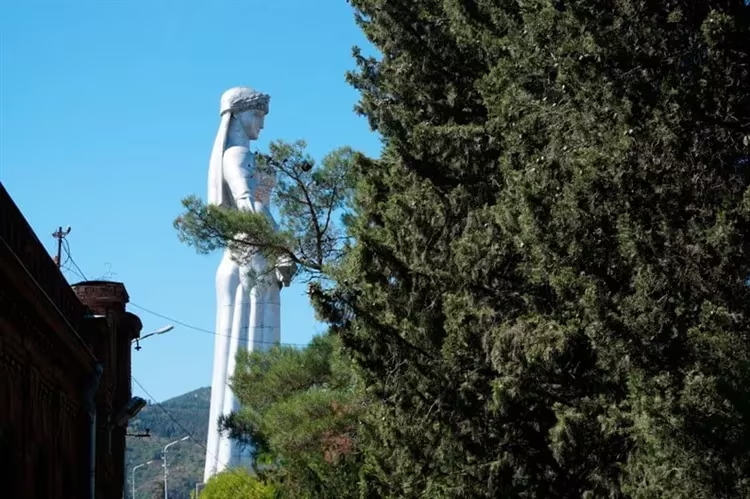
Next to the observation deck is a 20-meter statue of “Mother of Kartli”, or “Mother Georgia”. She is a symbol of the Georgian nation: in one hand she has a cup of wine, which she treats to everyone who came in peace, and in the other – a sword for enemies. The statue was erected in 1958 and was originally made of wood. In 1963, it was replaced with aluminum. In the 90s, the statue was also slightly reconstructed, in addition, the sculptors “put on” a scarf on the girl and made the dress a little longer.
Narikala fortress
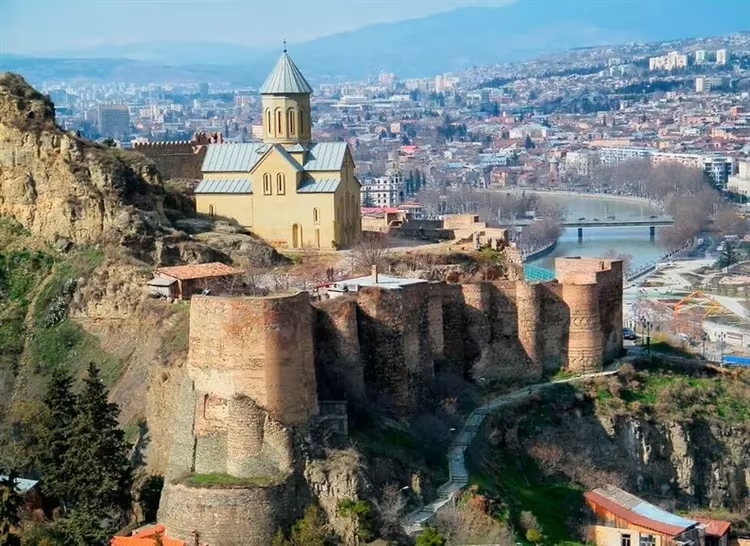
The remains of the old church, which began to be built in the 5th century, stands on the hill of the same name. There have never been royal residences or main churches, as in other city fortresses. She performed only a defensive function. Fortress many times tried to take by storm, completed and rebuilt. It was seriously damaged during a major earthquake in 1827. In the XII century, the temple of St. Nicholas was built in the fortress, unfortunately, nothing has survived from the old temple, except for the foundation.
In the 90s of the last century, the temple was restored on the old foundation. From the fortress itself, after the earthquake, the gates and fragments of the walls survived. On them you can see the famous decor, typical for the Georgian architecture of that time. The name of the fortress comes from the Iranian (Persian) roots “nari” (“younger”) and “kala” (fortress).
Sulfur baths
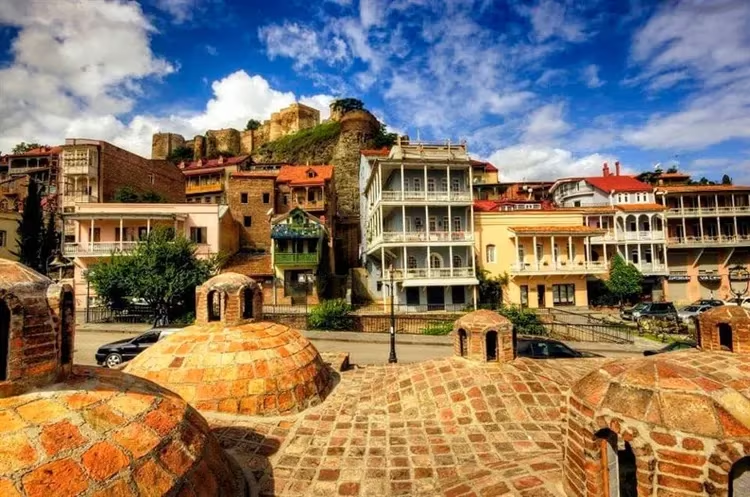
Sulfur baths are part of Tbilisi culture. These are ordinary public baths, the water in which is supplied from sulfur springs, which are many in the city itself and around it. Water saturated with hydrogen sulfide has healing properties. According to legend, even King Vakhtang noticed that a wounded pheasant drank water from such a source and immediately recovered. The king ordered to found a city on the site of these sources, which they called the “Warm City” – Tbilisi. Since then, the image of a pheasant has been one of the symbols of the city.
Initially, sulfur baths were taken in containers carved from stone right in the rocks. Gradually, houses for baths began to be built around. Today in Tbilisi there are several bathhouses where you can take a steam bath and order a massage. It is best to visit them in the evening, after long walks around the city. There are a lot of bath complexes that have developed historically in the Abanotubani area, look for more modern complexes with the best service on Lake Lisi.
Canyon with waterfall Legkhvtakhevi
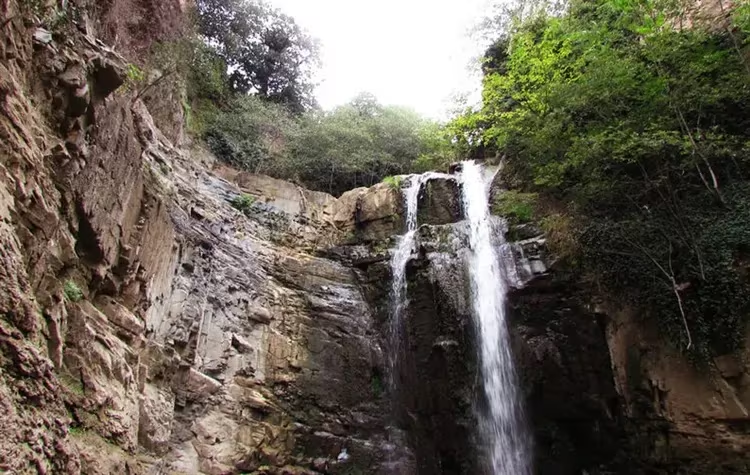
The Legkhvtakhevi waterfall is imposingly located right in the center of the city behind the sulfur baths. To get to it, you have to walk along the gorge. Tiny houses with carved balconies are located on its slopes. From one sight of these dwellings hanging in colorful clusters, the heart begins to pound. And then the view opens up on the waterfall itself – a majestic and clear stream of water falls to the ground with a terrible roar. It is here that the origins of the city are located. It is worth reaching the very end of the gorge to find yourself in this realm of eternal coolness.
3 day
The third day of your stay in the city can be devoted to the sights, dearly loved by the locals. For example, visit Turtle Lake or plunge into the motley cycle of the Dry Bridge.
turtle lake
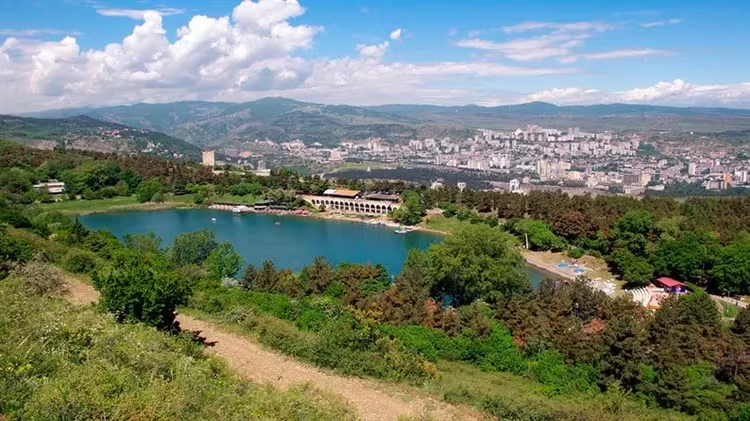
One of the favorite places for Tbilisi residents is Turtle Lake. There are two versions about the origin of the name. According to one, turtles were once found in the clear water of the lake, and according to the other, the reservoir from above has the shape of a turtle. You can get to it by the second cable car, which is the longest in Tbilisi. Its final stop is Turtle Lake. On the way, you can admire the views of the park, fashionable new districts of the city, and the lake from above. A recreation area is organized around the lake, it is good to relax here in the warm season. There are rides, trampolines and inflatable slides for children. You can sit in small cozy cafes and restaurants, which are quite a lot around the lake. For sports enthusiasts, there are sports grounds with exercise equipment and treadmills.
The lake is popular with lovers of mountain hiking and hiking. Here, through a low mountain range, two routes pass. You can come to the lake not by cable car, but climb up from Vake Park, located below. In summer, concerts, performances and club parties are often held on the shore of the lake.
Flea market “Dry Bridge”
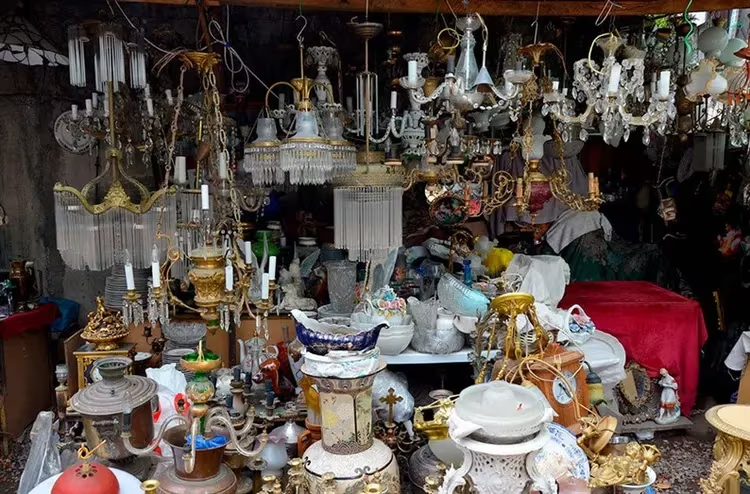
From Freedom Square, it is easy to get to the most famous Tbilisi flea market on the Dry Bridge. It was formed spontaneously in the 90s of the twentieth century, when the sale of things from home for many people was the only way to make ends meet. It is here that you can choose souvenirs for the memory of the trip for every taste. Right under the open sky, they sell handicrafts, antiques, local artists sell their paintings. Here you can buy old books, ceramics, goods of the Soviet era, vinyl records and cameras, handmade (and not quite) carpets and edged weapons. It is worth coming here for the real Tbilisi flavor, to feel the atmosphere of the city, to try to find among the useless junk something that will always remind you of this amazing city.
Shardeni street
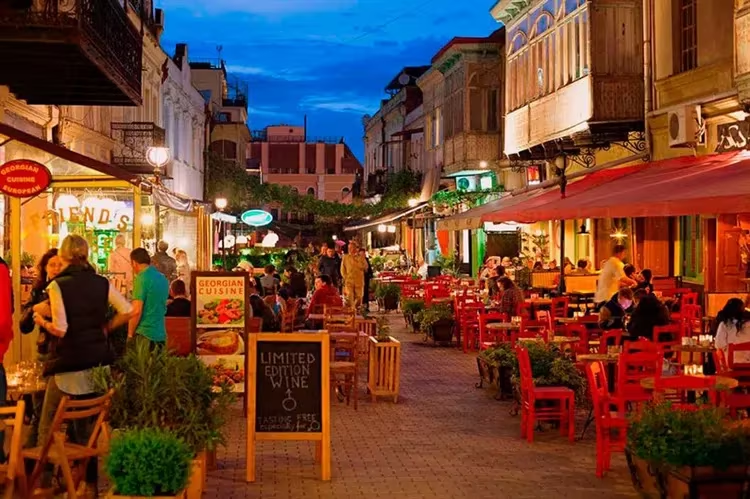
The most musical of the pedestrian streets of the old city at first glance resembles the picturesque Parisian streets. And even its name sounds French for a reason. The street bears the name of the French writer and traveler Jean Chardin, who in the 18th century visited Georgia on a Christian mission and left enthusiastic memories of it in his notes. Now this is a favorite place not only for tourists, but also for citizens. There are many cozy cafes, restaurants and interesting sculptural compositions – for example, a monument to Sergei Parajanov in flight, the famous “Tamada” or the colorful “Passenger” at the Singer restaurant.
This is a holiday street, flooded with light and music, which sounds here, it seems, even from under your feet. It is no coincidence that it is on this street that the main action of the annual celebration of the City Day – Tbilisoba takes place. Immerse yourself in the atmosphere of real Tbilisi fun and hospitality, sit in a cafe, bow to the memory of the great Sofiko Chiaureli – a monument to her and images of the four heroines played by her also stand here in a small square.
Square Maidan
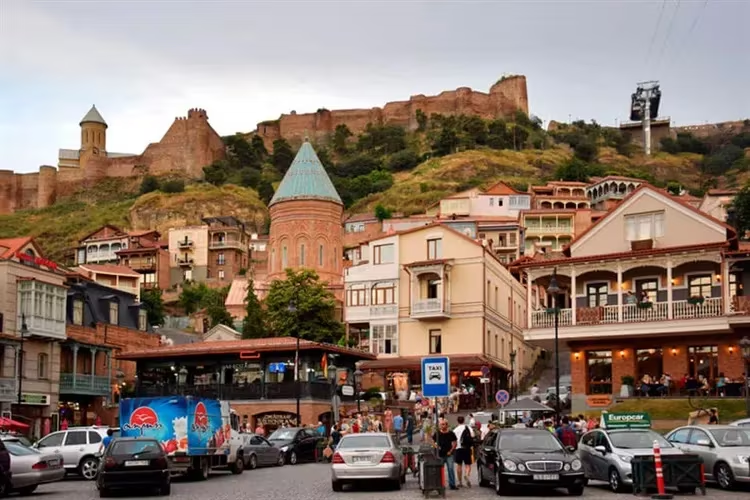
The oldest square in Tbilisi is the Tatar Maidan. Now it has been renamed Vakhtang Gorgasal Square. Once it was a market square. Caravans of merchants passed through the square. During the era of the Persian conquests, a Shiite mosque stood on the Maidan, and some of their traditions, including the famous Shahsei-Vakhsei ritual, survived until the beginning of the century. The mosque was demolished by order of Beria. It was possible to save only a few tiles with which it was lined.
This area remembers many great people. They say that just on one of the streets near the square, Niko Pirosmani was selling milk in a shop. The famous poet Sayat-Nova read his poems here, and later the future People's Artist of Azerbaijan Movsul Sanani worked in the shop. And today, the traditions and cultures of various peoples are intertwined on the square: next to the square there is a synagogue, the oldest Orthodox church of Sioni, the Georgian-Armenian church and the minarets of the mosque are visible. In old houses on narrow streets and small courtyards around the square, the traditional life and atmosphere of old Tbilisi are still preserved.
Tourism.com.de recommends the following hotels in Tbilisi: