
What to see in Turin in 1 day on your own – route, photo, description, map
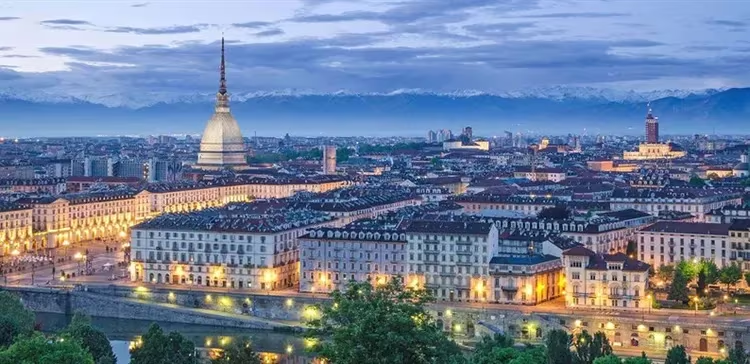
What to see in Turin in 1 day on your own is far from an idle question. After all, this city is ideal for tourists. Everything is here: the great Alps, which are visible from any point, monuments of architecture and culture, well-groomed streets and squares. Some guidebooks joke: in order to become completely perfect, Turin needs to add the sea to the already existing beauties. But it also exists! True, prehistoric. On Monte dei Cappuccini, fossils of marine organisms and shells are found. A tourist is in time trouble: he wants to see everything, but there is sorely not enough time. But if you correctly build a route, then you can see the main interesting objects in 1 day. And if something remains uncovered, well! – will have to return to the charming city again!
Palantine Gate
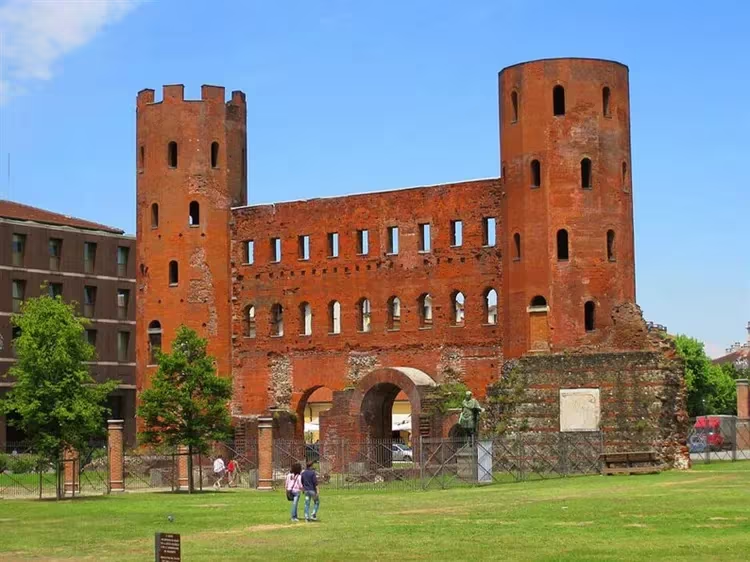
These arches were built in the 1st century BC. Their original purpose was the entrance and entrance gates in the fortress wall. Through them it was possible to get into the settlement, which was located on the site of the modern city. And the gates of Palantine are called, because they are located next to the Palazzo Reale.
The history of the monument goes back centuries:
Near the Palantine Gates, the foundation of the premises for the rest of the guard and a fragment of the fortress wall, built in the Roman era, have been preserved.
Sabauda Gallery
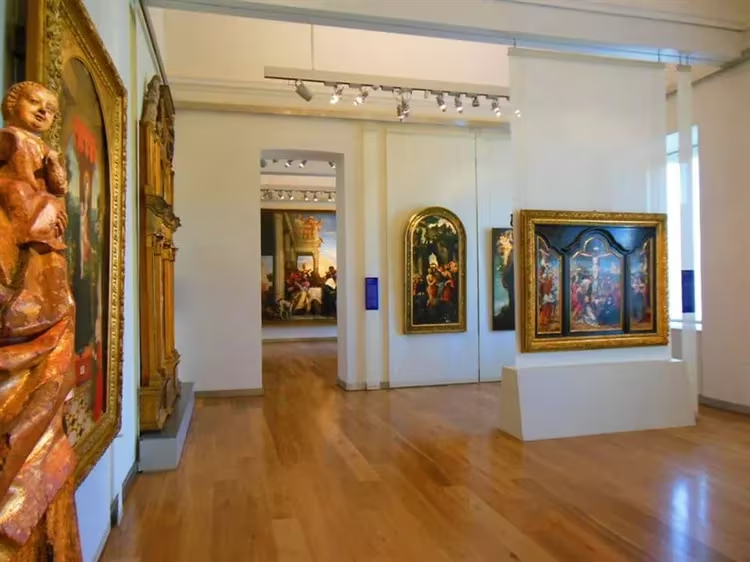
The beginning of the modern collection was a gift from the monks of the House of Savoy to the Kingdom of Sardinia. Today here you can see canvases created by European artists, ranging from the Renaissance to the 18th century. In the halls there are paintings by painters of the Italian, Spanish and northern schools. The corridors are lined with posters depicting artists and sayings of art historians about their work.
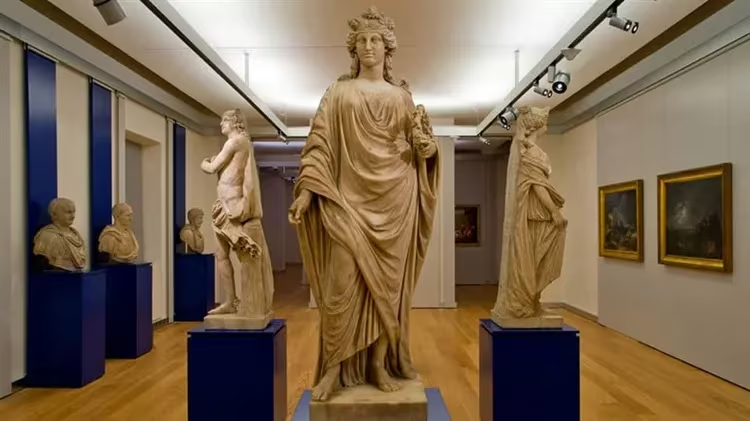
Sometimes the plots of paintings by different authors are repeated:
- Saint Francis receives the stigmata of Jesus Christ. This theme was reflected by Van Eyck and Pedro Fernandez.
- The Nativity of the Virgin was depicted by Apollonio di Giovanni. Bellini is the author of a traditional gift for a woman who has given birth to a girl: a round table with a painting. It is exhibited next to the canvas.
- Antonio Polayolo and Felippo Lippo depicted stories from the life of the Archangel Raphael. This is a fairly popular story among the painters of the Middle Ages.
- In the Sabauda Gallery, many artists depicted the bringing of gifts by the Magi to the newborn Jesus.
- The painters did not ignore the story about the mother of the Virgin Mary – St. Anna. She is considered to be healing from the plague and leprosy, therefore, a patient is drawn nearby, thirsting for recovery.
- Many artists were fascinated by the myths of Ancient Greece.
- And some authors reflected scenes from the life of commoners. Bassano has a reliable description of the city market.
The Sabauda Gallery is small, but the most significant exposition of Turin.
Cathedral of John the Baptist
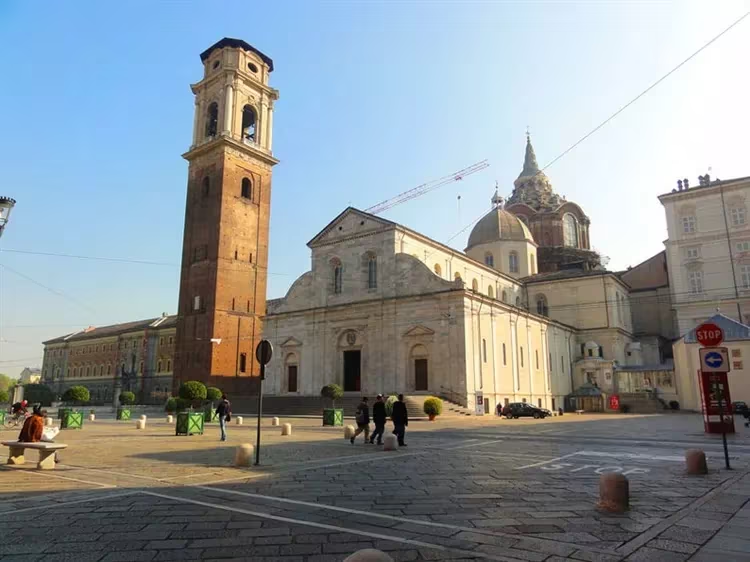
On the spot where the Cathedral of St. John the Baptist stands today, the first Christian churches were built earlier: Giovanni Batista, the Holy Savior and St. Mary. By order of Cardinal Rovere, the architect Caprina demolished the existing buildings and built the Cathedral of St. John the Baptist. The blasphemy was justified by the fact that the main temple of the city had to be erected on a place that had been prayed for over the years. Construction was carried out at an accelerated pace: it took only 7 years from laying the foundation to consecration. The first service was held in 1498. White stone was used for the temple. And today the cathedral stands out against the general background, because all other buildings in the city are much darker. The forms of the building are extremely strict. An ornate staircase leads inside.
After 2 centuries, it was necessary to build a special room for storing the shroud of Jesus Christ. The architect Guarini brilliantly coped with this task. The chapel is located on a hill, you have to climb steps carved from dark marble to get there; as you ascend, the illumination increases: all this symbolizes the path of the soul from darkness to light. But for pilgrims and tourists, only a copy of the canvas is exhibited in the chapel: the original is stored in the treasury of the cathedral, it is shown once every 25 years.
Royal Palace
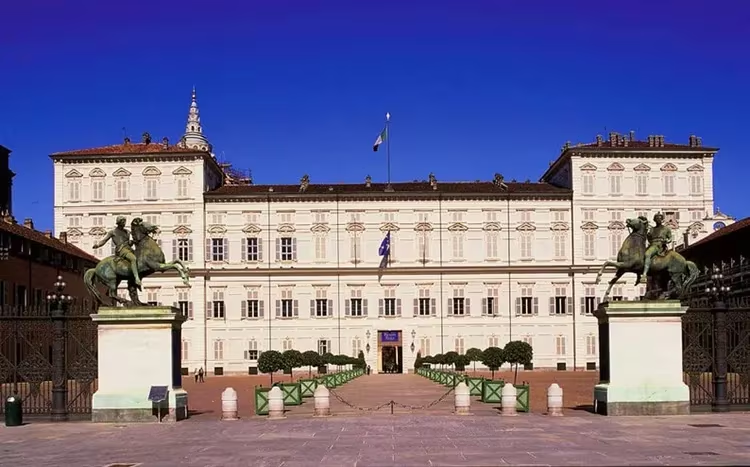
In 1997, the Palazzo Reale was included in the UNESCO World Cultural Heritage List. This object is willingly visited by tourists who arrived in Turin.
The history of the complex is quite long:
- Construction began in 1646. For the permanent residence of the Savoy royal dynasty, a building was required that met the then ideas of luxury. The place was chosen as a landmark: earlier the palace of the Bishop of Turin was located here (the building had to be demolished). Work went on without interruption for 16 years.
- Court architects erected the palace, giving it the features of baroque architecture. Representatives of the royal family lived in the building until 1865. After the transfer of the capital to Florence, the residence became secondary.
- Subsequently, the palace was completed: the architects gave it the features of rococo and neoclassicism. Today's style of the complex is difficult to determine. With its appearance, it simultaneously resembles the Palace of Versailles and the palace in Peterhof.
- In 1946, the Palazzo Reale became state property. After a minor restoration, it turned into a museum of the Savoy dynasty.
For quite a long time, a unique relic was kept in the Palazzo Real: the Shroud of Turin. But after the construction of the Cathedral of St. John the Baptist, it was moved to the chapel. Palazzo Reale communicates with the cathedral complex through an underground passage.
Royal Armory
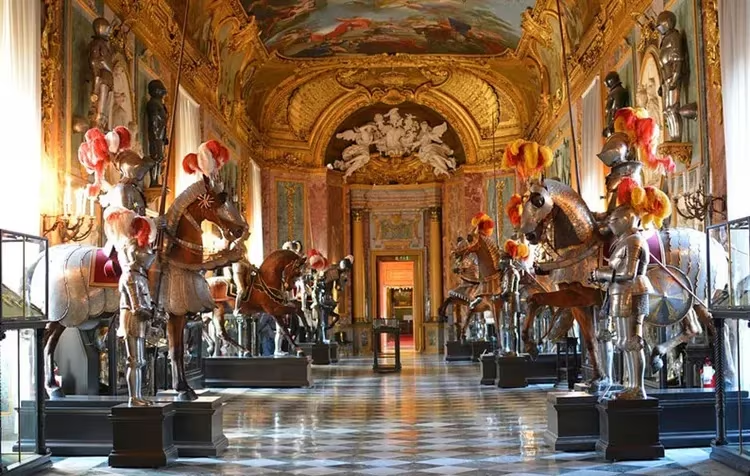
The founder of the modern exposition was Carlo Alberto: in 1832 he began to collect weapons. The location was chosen perfectly: part of the Palazzo Reale complex, practically next to the official residence. Sources of storage units are:
Museum work was carried out quite competently. Already in 1840, storage units were systematized: their catalog was compiled. The exposition received its first visitors in 1837. The guests noted the excellent selection and proper arrangement of items. Carlo Alberto was pleased. In 1554, the exhibition was supplemented by lithographs and books useful for studying weapons from different times.
The library became a visited place: researchers and ordinary citizens who were interested in this topic came here. 1946 changed the status of the gallery: it became a state gallery. The restoration was completed in 2005. Today, tourists will have to get acquainted with 5,000 items of storage: daggers, halberds, arquebuses, knightly armor are presented. The collection is constantly updated. The administration of the complex arranges thematic exhibitions, so no one will be bored in the center.
Palazzo Madama
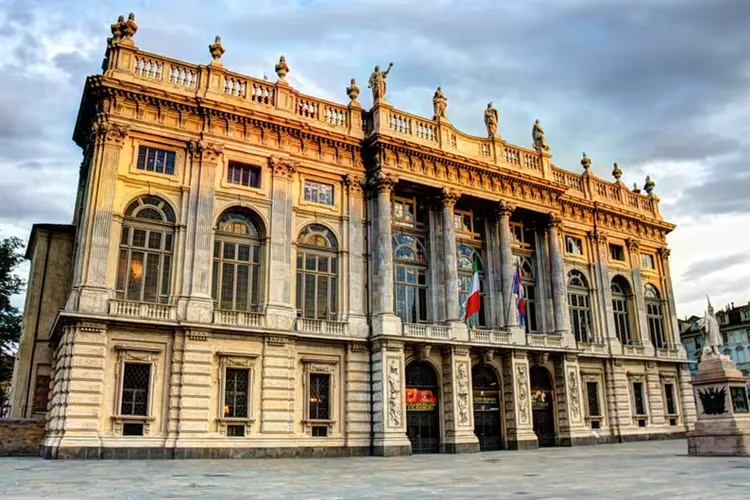
Palazzo Madama is built on the line of fortifications built to protect the city by the ancient Romans. The colony was founded in the 1st century: then it was a small fortress. In the Middle Ages, the status of the building changed: it was expanded, several towers were added. The building acquired a rectangular profile. After the Savoy dynasty came to power, it became possible to use the Palazzo as a royal residence. This is exactly what happened before the construction of the Palazzo Reale.
But even after the change in the location of the royal family, the significance of the palace did not decrease: the widowed queens preferred to live out their sad age here. Until her death, Marie-Christine of France stayed at the Palazzo Madama. By the way, the building got its current name thanks to this fact. Subsequently, the Palazzo Madama served as a court session, and famous artists exhibited there. And since 1934, the building has housed an exposition of ancient art.
Some researchers claim that a relic was kept here for a short time: the Shroud of Turin. The modern appearance of the Palazzo is unusual: it has a richly decorated facade and a modest overall appearance. Perhaps this is due to the fact that the building was originally used to defend the city. The exposition, located in the Palazzo Madama, will delight not only with ancient artifacts: a rich collection of items from the Middle Ages is exhibited here.
Reggio Theater
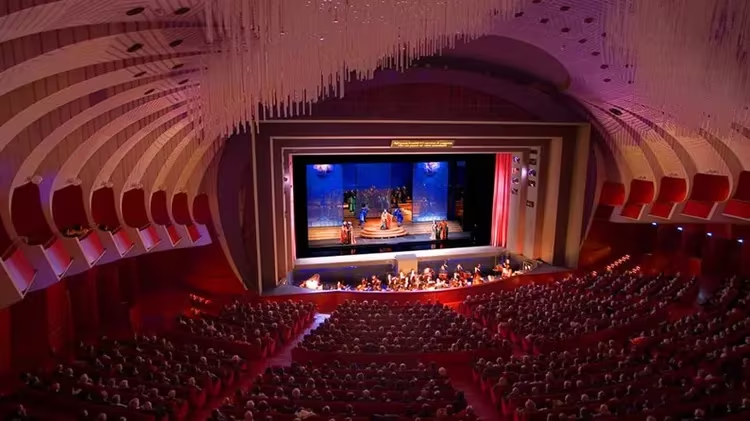
Despite the fact that Turin was the capital of the duchy, it did not have an opera house. Performances were presented either in the open air or on the stages of drama theaters. And only in 1713, on behalf of Vittorio Amedeo of Savoy, the architect Yuvara began to work on the design of the building. But construction began only after the death of the architect. In 1738, the project was finalized by Alfieri at the request of Duke Emmanuele 3 of Savoy. The monarch set the task: to build a luxurious royal theater. The task was successfully completed: in just 2 years, a building with an auditorium for 2,500 seats and excellent acoustics was erected. And the audience was placed on 5 tiers.
On this, the first favorable period in the history of Reggio ended:
- For 6 years (1792-1798) the theater did not work. After the re-opening, a series of name changes followed (National, Bolshoi Theater of Arts, Imperial). And the repertoire has also changed: it was necessary to take into account the tastes of the French.
- In 1914, the building again belonged to the Dukes of Savoy, the name was restored: Royal Theater. Reggio was then handed over to the municipality.
- The First World War affected the theater: it was closed until 1919.
- In February 1936, the theater burned out from the inside: the facade partially survived. After the reconstruction, Reggio opened only in April 1973.
Despite the difficult periods in the history of the theater, its stage hosted world celebrities. Toscanini, Puccini, Wagner, Strauss worked here. Today Reggio is the center of the musical and cultural life of the city.
Mole-Antonelliana
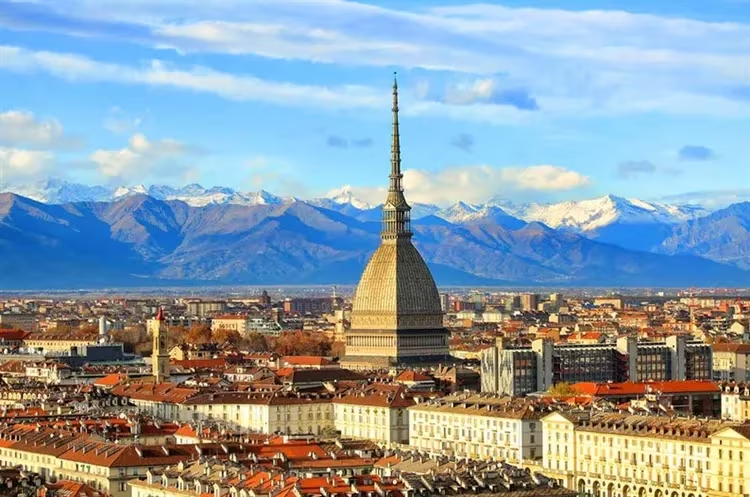
The height of Mole Antonelliana is more than 160 m, the spire accounts for about 50 m. The tower is the tallest brick building in Europe. The buildings of the late period were built using modern technologies and materials (glass, steel, concrete, plastic), and Mole Antonneliana was built from good old brick. The history of the tower is unusual. The city's Jewish community hired the architect Antonelli to design the synagogue. Money was collected from all over the world.
Antonelli announced a small amount, but the deadline was short. But after 13 years, it became clear that the end of the work was not yet in sight, although the construction budget was exceeded several times. The community withdrew funding and relinquished building rights. In 1889, the tower was completed with the money of the municipality. It was named after the name of the designer: Mole Antonelliana, and it houses the Risorgimento Museum. In 1938, the exposition was moved to another location.
Tourists willingly visit the tower: it has an observation deck, from where a stunning panorama of the old city opens. You can get here by high-speed elevator. And then you should visit the National Museum of Cinematography, located in the tower, and listen to funny stories that happened on the set of Italian films.
Museum of the Risorgimento
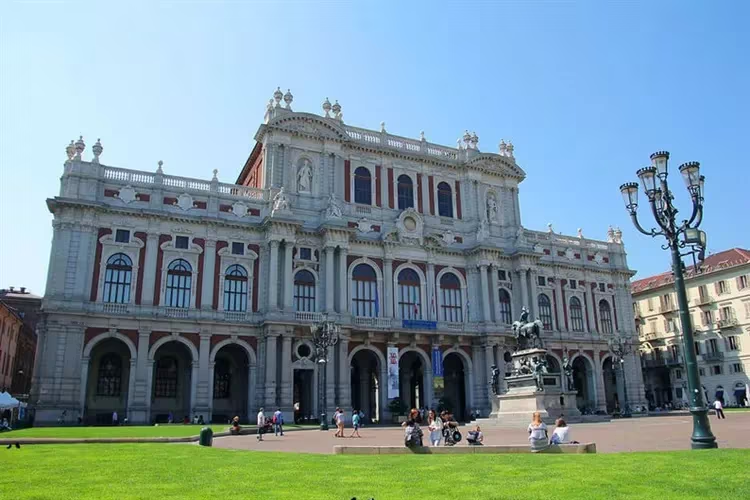
The exposition describes the most important period in the history of Turin and Italy: the struggle against the occupation and the unification of the country. And the city, as the capital of the Duchy of Savoy, played a leading role in the national liberation movement. Initially, the exhibition was located in Mole Antonellina. She was placed here immediately after the opening of the constructed tower. But in 1938, the Risorgimento was transferred to the Palazzo Giornale (Valentino Park). There, the exposition did not stay long and soon moved to the Palazzo Carignano, where it is located today.
In 2006, the Risorgimento was closed for restoration and replenishment of the exposition. The purpose of the work: to show the impact of the events that took place during the historical period of the Risorgimento on the political situation in European countries. The opening of the updated exposition was timed to coincide with the celebration of the 150th anniversary of the unification of Italy. The modern exhibition occupies 30 halls of the Palazzo Carignano. Here you can see: weapons, books, paintings, documents, flags, the form of the Risorgimento era.
The center of the exposition is the Chamber of Deputies of the Subalpine Parliament. This is the world's only reconstructed parliament hall. The complex is equipped with modern equipment: guests are offered interactive screens, audio and video guides. Ramps and lifts have been installed for people with limited mobility. It is possible to book a tour.
Palazzo Carignano
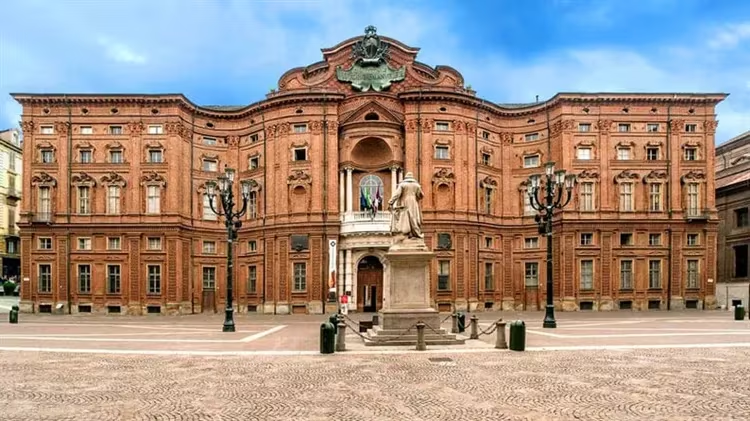
The palace is reminiscent of the Royal Palace in beauty and luxury, although it was intended for living on the side line of the Dukes of Savoy. Unusual architecture and interiors attract visitors to Turin. Palazzo Carignano is listed as a UNESCO World Heritage Site. The building began to be built in 1684. The author of the project was Guarino Guarini, and Pietro Somazzi and Stefano Legnani participated in the arrangement of the interiors.
Guarini skillfully changed the traditional style of the facade: the red-brick Baroque took on a wave-like contour. Stairs inside the premises completely follow the external contours. The window openings of the 1st floor are unusually decorated: they are bordered by the Indians' attire. So the architect immortalized the merits of the Carignan regiment during the conquest of North America by the French troops.
And from the reverse side of the Palazzo Carignano is stunningly beautiful: the facade is made in the pseudo-Renaissance style and is decorated with porticoes, columns and bas-reliefs. In front of the entrance is a statue of the Duke of Sardinia, Charles Albert. At the beginning of the 19th century, Carignano became the property of the state of Sardinia, and before the transfer of the country's capital to Rome, the first government met in the Palazzo. In the 90s of the twentieth century, a large-scale reconstruction of the palace was carried out. Today it houses an interesting exposition: the Risorgimento.
Egyptian Museum
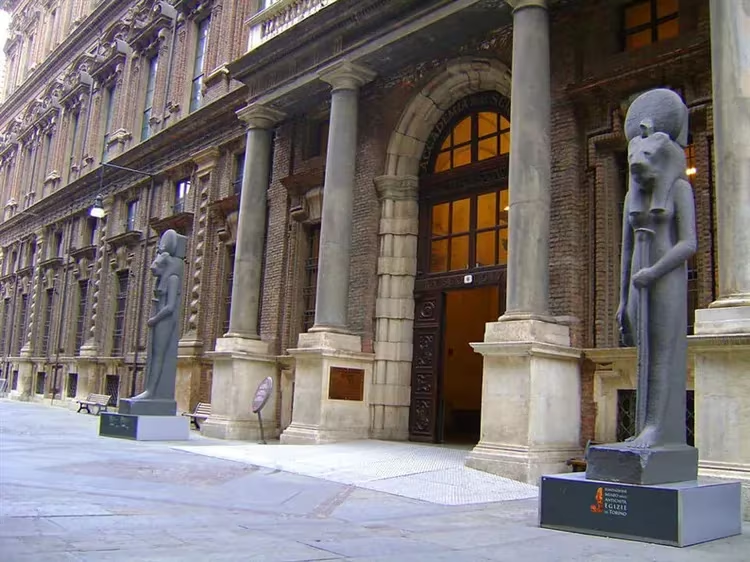
The initiator of the creation of the exposition was the Duke of Savoy Carl Felix. He acquired Drovetti's personal collection of over 5,500 artifacts. To this collection, the duke added the personal collection of the Dukes of Savoy, which was collected by Vitaliano Donatti. This is how the Egyptian Museum in Turin appeared. Subsequently, the exposition was constantly replenished with finds made during excavations in Egypt.
The laws of that time allowed the export of 50% of items to another country. Italy actively participated in archaeological work, so the collection of the center is second in value and volume after Cairo. The permanent exhibition is located in the Palace of the Academy of Sciences. The building itself is worth seeing. Initially, the building was designed by the talented Guarino Guarini, but completed by Michelangelo Garove.
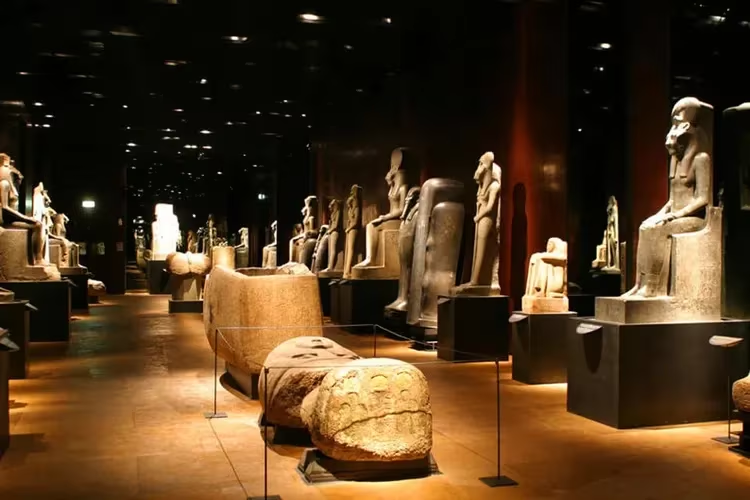
Of the presented artifacts, you should definitely inspect:
All artifacts have tablets in several languages. You can rent an audio guide at the box office.
Solferino Square
In the 18th century Piazza del Bosco was an unremarkable place on the outskirts of the city. The buildings around were the most diverse, and the shape of the square was irregular. The gardens added some variety. But in the 19th century, the city authorities decided to reconstruct: the city grew and was actively upset. Piazza del Bosco was almost in the center. According to the project of Carlo Promi, the square became square, and the buildings surrounding it acquired a single style.
Unfortunately, most of the gardens had to be demolished: only one section survived (now it is a boulevard). At the end of the 19th century, the territory acquired its final shape: it became oval. The name has also changed: now it is Piazza del Solferino. This perpetuated the memory of the final battle for independence at the town of Solferino. The last reconstruction was carried out at the beginning of the 21st century. For the 2006 Winter Olympics, the Atrium Gallery was erected in the center, which was then demolished. On the other hand, the center was supplemented with a designer solar clock built according to the project of Lucio Morra. Today, here you can have a great rest on one of the lawns planted with grass, walk along the boulevard or see popular monuments:
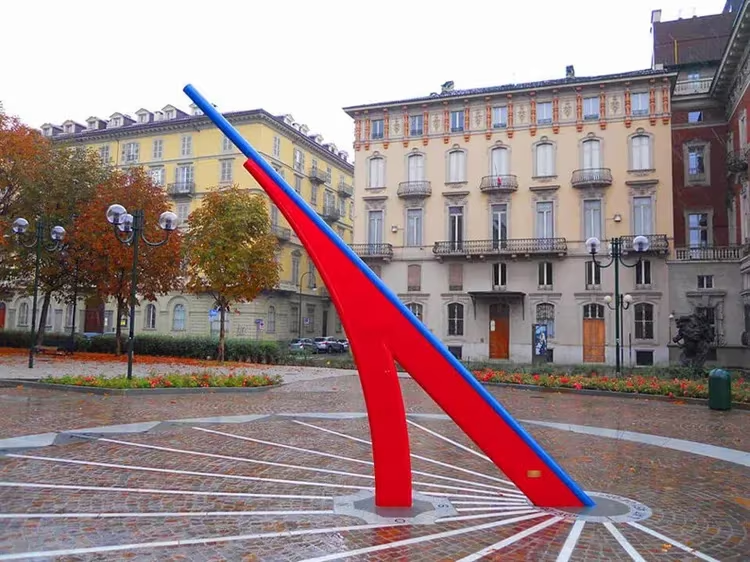
Tourists willingly take pictures near the blue-red clock installed in the center of Piazza del Solferino.
Temple of the Great Mother of God
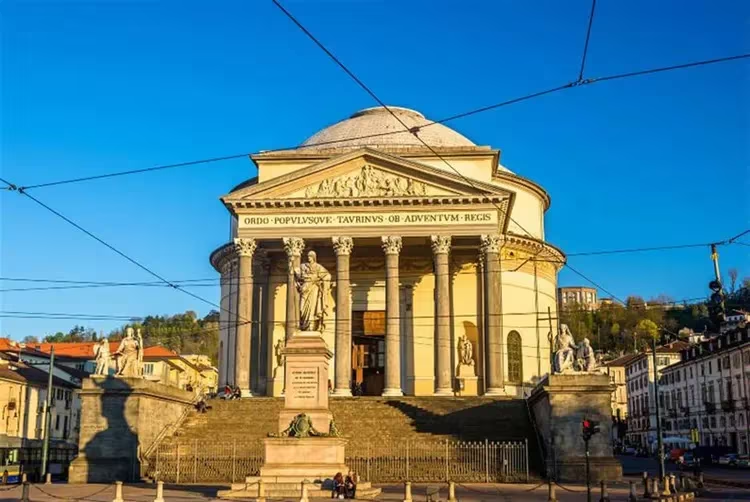
The Temple of the Gran Madre was built by grateful citizens in honor of the restoration of the power of the Dukes of Savoy in the country. The decision to erect the building was made immediately after the defeat of Napoleon Bonaparte in 1814, and the first service in Grand Madre took place in 1831.
The Temple of the Great Mother of God is strikingly different from Christian churches:
But Gran Madre also attracts tourists with the legends that Turintians tell:
- Gran Madre – the top of the triangle that controls the dark forces (the base is the London–San Francisco line)
- Grand Madre – part of the triangle that controls the forces of light (other components are Lyon and Prague)
- a finger was cut off from the statue of Verus: if he were present, he would point to the place where the Holy Grail is hidden
- the statue of Religion guards with its cross the place where the Holy Grail is located (therefore, the relic cannot be found)
- proximity to the river Po enhances the natural energy of the temple
Too many symbols that are not related to Christianity give the temple a special charm. By the way, the owner of Gran Madre is the municipality, not the Roman Catholic Church.
queen's villa
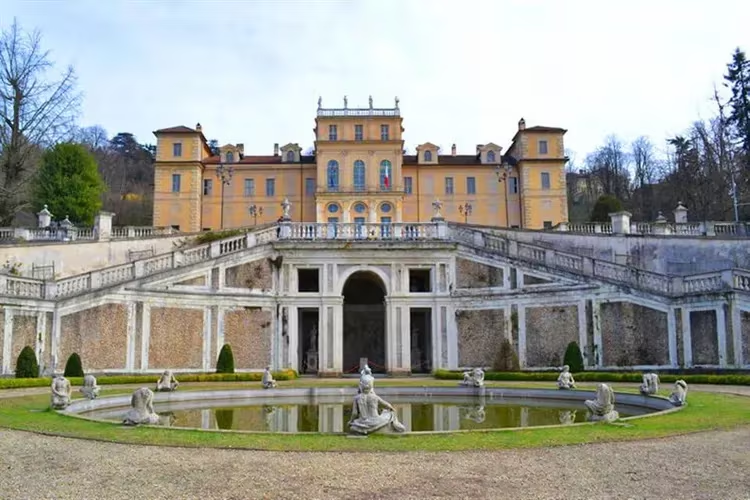
In 1562, by order of the Duke of Savoy, Emmanuel, Turin became the capital of the state. And in order to exalt the ruling dynasty and give pomp to the city, the king decided to build palaces and mansions, attracting the most fashionable architects to design. Villa della Regina was created as a country residence for Maurizio, Cardinal of Savoy, at the beginning of the 17th century. And in the end, the wife of Victor Amadeus of Savoy, Anna of Orleans, began to own it. Then the residence acquired its current name: Villa della Regina.
When Rome became the capital of united Italy, the landscape gardening complex turned out to be abandoned and useless. It gradually deteriorated, and during the Second World War it was badly damaged by bombing. Villa della Regina stood in ruins until 1997: at that time, the government decided to carry out a large-scale reconstruction of the garden and park ensemble. Work was carried out until 2006. Within a few years, the complex was restored to its historical appearance.
But it was not possible to return to its former grandeur: some details of the interior were lost forever. When examining the premises, this is noticeable even to an inexperienced tourist. The halls decorated in Japanese and Chinese style have been most successfully restored. The garden and park complex was restored quite accurately: the paths were cleared, sculptures were installed, and gazebos were repaired. But they refused to add the missing elements: there are no statues on some pedestals.
Hill of the Capuchins
At the time of the founding of the city and until the end of the 11th century, a fortress was located on this hill: from a height it was convenient to observe the crossing over the Po. All arriving in Turin had to pass through the fortress gates for control. Then the Franciscans built a monastery on the top. It is active: all people who seek peace and solitude find refuge here. Any tourist can come here and stay to think about existence.
But most often, guests of the city come to Monte dei Cappuccini to see the stunning views of the city: the top of the hill is a natural observation deck from where the whole of Turin is visible. And on the slopes of Monte dei Cappuccini, fossilized shells and the remains of marine organisms are found. Scientists have concluded that the mountain was once a hill located at the bottom of the sea.
Valentino Castle
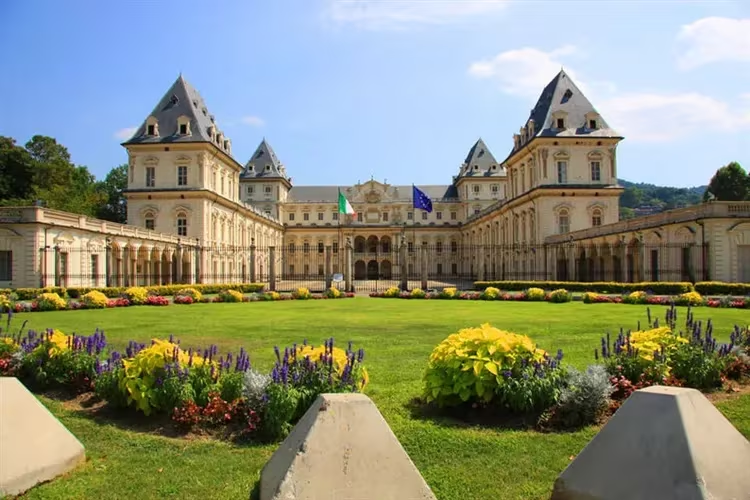
Not far from the building is the temple of St. Valentine, which is why the castle is named after the revered saint. And it was built in the 13th century by the Dukes of Savoy as their own fortification. But in the 17th century, the new owner of the castle, Marie-Christine of France, rebuilt it. As a result, the residence acquired a look that has survived to this day. A characteristic feature of the building: a curved facade, the two sides of which are strikingly different. One is ceremonial and elegant, the other is modest and ascetic.
At the beginning of the 19th century, Valentino was abandoned and dilapidated. But already at the end it was transferred to the Polytechnic University. After reconstruction in 1900, the halls of the castle hosted the first art exhibition. Subsequently, they began to be held regularly. The unusual appearance of the Valentino castle, the original interiors contributed to the fact that it was included in the UNESCO World Heritage List.
medieval village
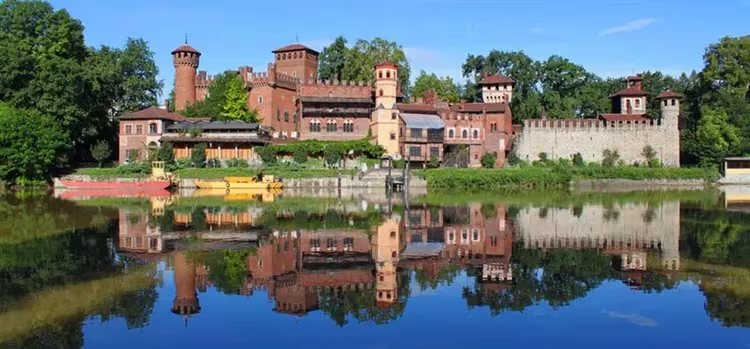
This unique complex depicts the life of the inhabitants of the duchy in the 15th century. But it was built in the 19th century for the opening of the Industrial Exhibition. The authors of the project are a team of historical artists. The village consists of houses in which peasants and poor townspeople lived, workshops (pottery, carpentry, weaving, forge). A fortress was built nearby to protect a small settlement. The complex was supposed to be destroyed after the closing of the exhibition, but the residents fell in love with the installation. Today the village welcomes guests from Italy and other countries. And during the holidays, wine, cheese, fruits that are grown in Piedmont are sold here.
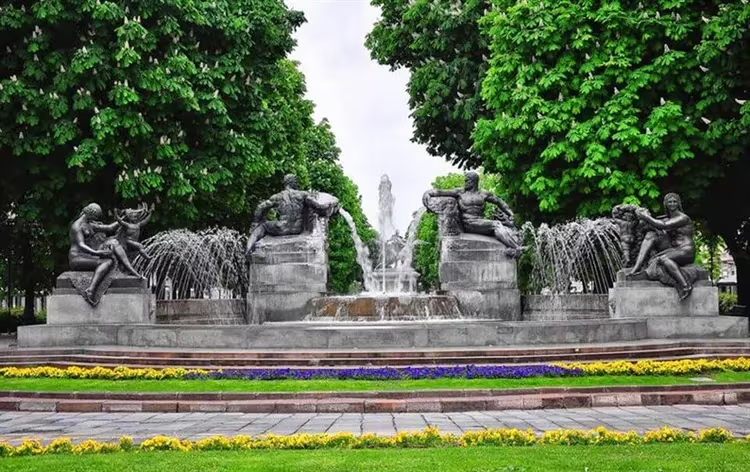
Fountain “Twelve months”
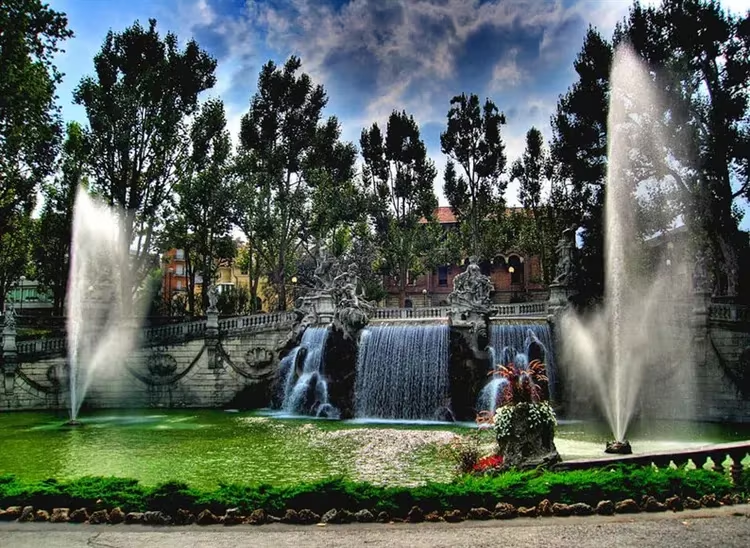
Great place for romantic dates. A fountain was built as part of a grandiose project to celebrate the 50th anniversary of the Constitution of Piedmont. The remaining elements of the exposition were dismantled after the end of the celebrations, and for 12 months they have been delighting tourists to this day. The pool itself is slightly sloped. Water pours into it from the central fountain, and along the edges of the gradually lowering terrace, on pedestals, there are statues of 12 calendar months. 4 compositions next to the waterfall symbolize 4 rivers flowing through Turin: Po, Dora, Stura, Sangone. There is a lot of greenery around the fountain, lanterns are lit in the evening. This is a popular place with tourists from different countries.