
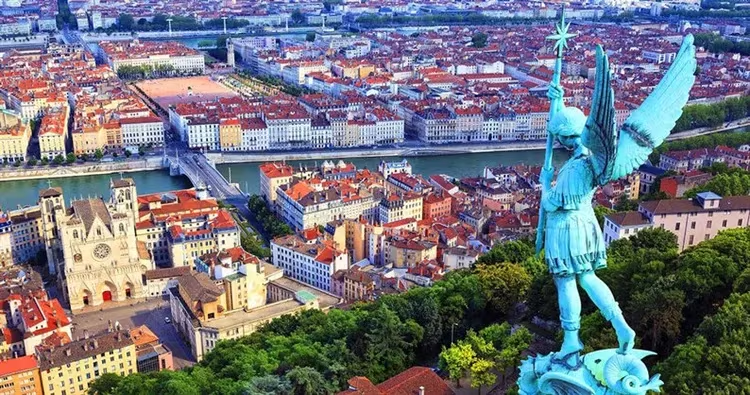
Sights of Lyon – 30 most interesting places
The ancient French city is full of special charm, and tourists come here with pleasure. The sights of Lyon are numerous and admirable. There are old buildings and churches, but there is also the Museum of Modern Art, which contains the world‘s largest collection of installations. Those who are interested in art will also visit the house where the Lumiere brothers lived and make sure that cinema was born here. You can attend performances in one of the Lyon theaters, or you can go to a wonderful zoo, where all the animals seem to be in their natural habitat. In a word, it will be interesting here for both adults and the smallest. You can order a sightseeing tour, or get acquainted with the sights in advance with the help of books or the Internet, and decide for yourself what you want to see the most.
Exchange Palace
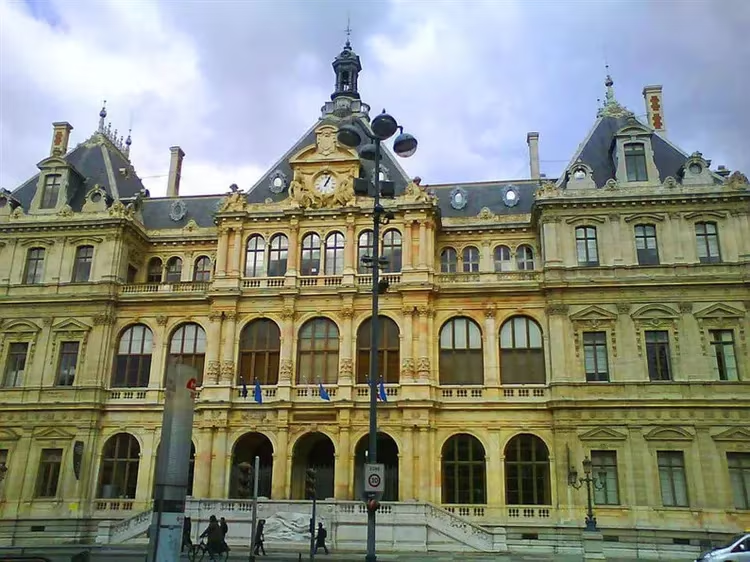
One of the most beautiful buildings, all tourists try to see it. It is located on Republic Street, and seems to symbolize the great importance that Lyon played in the life of France in the 19th century. Looking around the building, the guests remember both the heyday of the state and the tragic day when the President of the country was killed here. The decision to build an exchange was made in 1853. It was supposed to house the museum, the chamber of commerce, numerous shops, and stock agents in one building. A majestic building, similar to a palace, was erected in a short time – 4 years.
In 1856, the first stone was laid, and in 1860, France celebrated the grand opening, which was visited by Emperor Napoleon III. The palace is 4 pavilions connected by a large luxurious hall, which was painted by local masters. The place where President Sadi Carnot fell, hit by a bullet, is also marked. It happened in 1894. This building used to house both a commercial court, and a society that united silk merchants, and a court for the protection of workers' rights, and a bank. Now it houses the Chamber of Commerce and Industry.
Забронировать индивидуальный трансфер из аэропорта до отеля за 5 025 RUB
Bartholdi Fountain
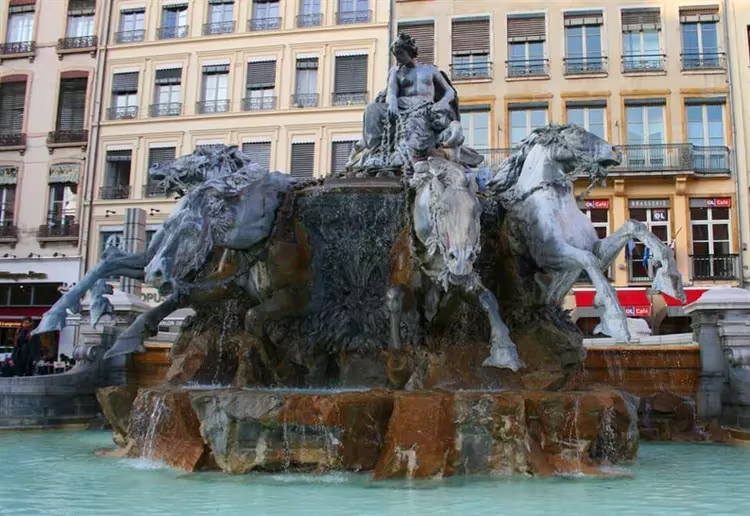
Located in Terro Square. This fountain has long been a symbol of the city. It can be seen on postcards, calendars, magnets – in a word, on all the souvenirs that tourists so willingly buy. And the fountain is worth it. At one time, his project was presented by the young Frederic Bartholdi, who decided to participate in a competition held in Bordeaux in 1857. However, the construction of the fountain was not immediately started, the project was frozen. Everything changed in 1886, because it was Bartholdi who became the author of the Statue of Liberty, which to this day welcomes guests of New York.
Then the authorities of Bordeaux remembered the fountain, but it seemed to them “too expensive.” The authorities of Lyon did not share this opinion, and in 1892 the opening of the fountain took place here. Anyone who comes here today can also enjoy the spectacular lighting of the sculptural group. In the center is a woman personifying France, she controls four horses – these are the main rivers of the country. Now the fountain is considered a historical monument, and the state is responsible for its safety. Evening illumination turns on at about 18 hours.
Celestine Theater
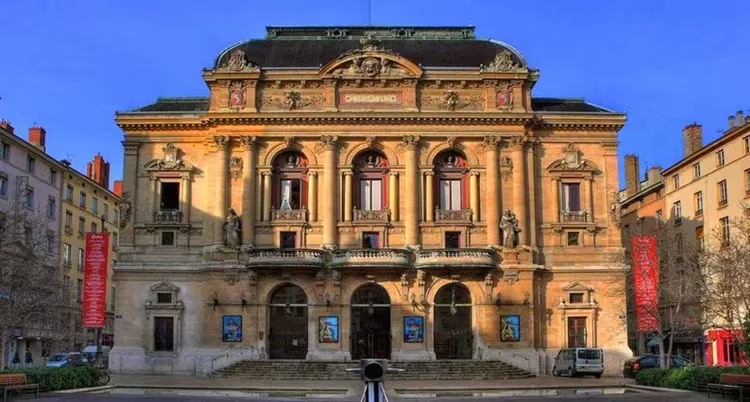
Just some dollhouse. The theater, known throughout the world, was built according to Italian models and is no less popular than the Comédie Frances. It is already more than two hundred years old, and such popular actors as Sarah Bernard and Jean Marais, who gained fame even in Russia, played on its stage, and Napoleon Bonaparte can be considered the most famous spectator. Where does such a strange name come from? From a monastic order. The theater is located where at one time, on the banks of the river Sona, there was a monastery.
The Celestine Society in the 18th century began the construction of the theater, as well as houses in its vicinity. Initially, there was a variety show. However, strong fires that broke out from time to time at that time caused significant damage to the architecture. The flames did not spare this building either. A fire in 1871 almost destroyed the theatre. But, in a way, it was probably for the best. After all, a small hall could no longer accommodate everyone who wanted to watch the performance. And then Gaspard Andre won the competition for the best project.
The new theater was built and the audience could enter it as early as 1877. However, another fire three years later did away with this building. Andre had to restore it literally from ruins. The last restoration took place at the beginning of the 21st century. In particular, the security system has been improved, in addition, much has been done for the convenience of the actors who are preparing for the performances. Now performances in the theater are held regularly, the price of tickets is quite acceptable. You can buy them both at the box office and online. A quarter of an hour before the start of the performance, the so-called “burning tickets” are sold at a symbolic price.
Amphitheater of the Three Gauls
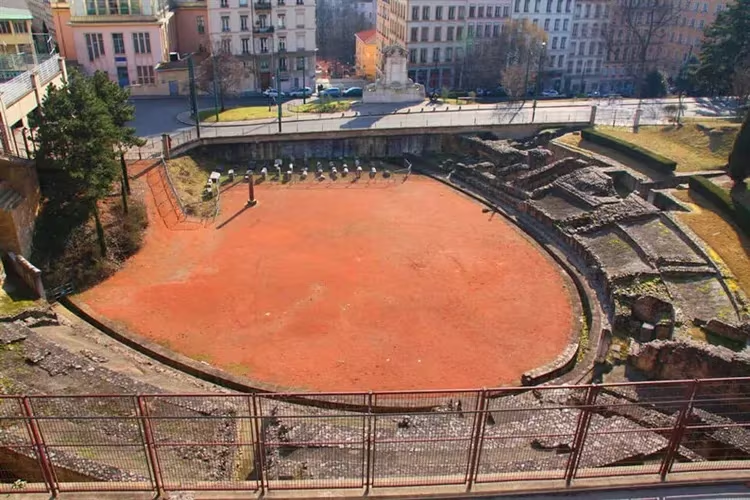
In the place where the city is now located, the Romans lived in ancient times. They built the amphitheater of the three Gaul. These are the three provinces of the Roman Empire, whose lands were located on the territory of present-day France. A large amphitheater was built around 19 AD on the site of an ancient Gaulish settlement. Later, he “became famous” also for the fact that here they gave the first Christian martyrs to be torn to pieces by lions.
According to legend, neither the ferocious predators nor the bulls that replaced them touched Saint Blandina. In the end, the warriors killed her with their swords. Now on the territory of the amphitheater there is a monument to the martyr. The ancient theater makes a big impression, and there are always a lot of tourists here. The photographs are also exceptionally spectacular.
Basilica of Notre Dame de Fourviere
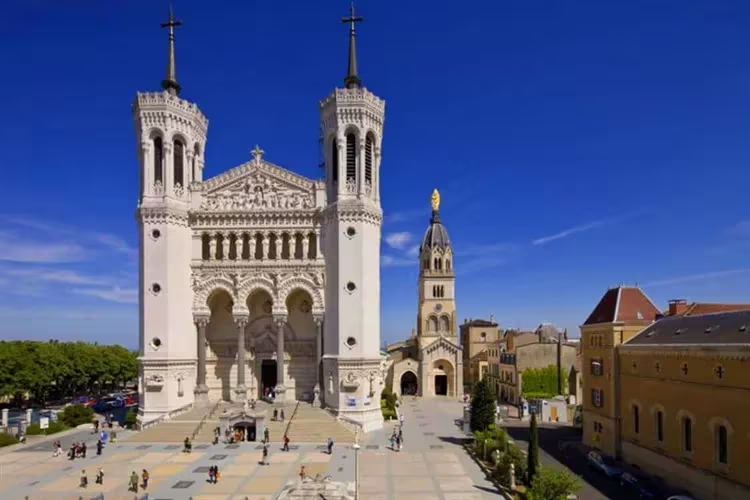
The basilica is located on the top of the Fourviere hill next to a metal tower. It was built at the end of the 19th century according to the project of Pierre Bossan, the temple was consecrated in honor of the Virgin, and the crypt in honor of St. Joseph. It happened in 1896. Nearby you can see the chapel tower, which was left from the church of the Middle Ages – it was destroyed in the 16th century. Here Anne of Austria prayed, asking the Virgin Mary to grant her an heir. At the end of the 17th century, a plague raged here, the city authorities and residents prayed on Fourvière Hill for the “black death” to recede as soon as possible.
And the epidemic went down. In the 19th century, the dilapidated chapel was dismantled and rebuilt. A statue of the Mother of God was also installed here. In 1870, moving from Paris, the Prussian army advanced on these lands. And again, the inhabitants turned to the Virgin Mary with a prayer, asking her to protect the city. Bismarck's army never took Lyon. After that, a basilica was built in honor of the Virgin. The final decoration was completed in the middle of the 20th century. The upper temple is especially richly decorated.
Metal tower on Fourviere
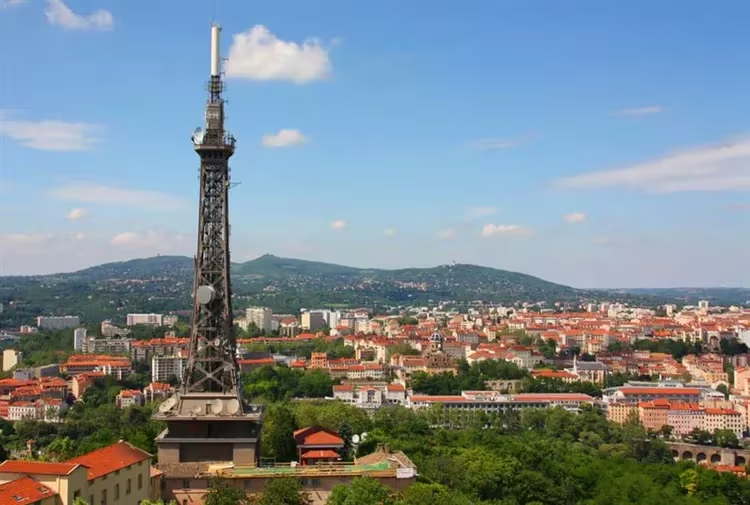
It was built after the success that the Eiffel Tower had in Paris. In 1894, the city was supposed to host the World Exhibition, it was assumed that it was by this date that the younger sister of the Eiffel Tower would appear here, on Fourviere Hill. The architect in this case was Mr. Colle. For some time, it was even thought that the tower would be named Avelanova – in honor of the Russian admiral Avelan, but later this option was not considered by the authorities.
Today, there is a waiting room on the first floor of the tower, a restaurant on the second floor, and an observation deck at an altitude of over 350 m from the foot of the hill. In total, the metal tower reaches 89 m in height. From here you can admire the Alps. During World War II, the invaders wanted to melt down the tower, but in the end it survived. In 1953, it was acquired by the leadership of the French Radio and Television, now it plays the role of an antenna.
Antique theater on the hill of Fourviere
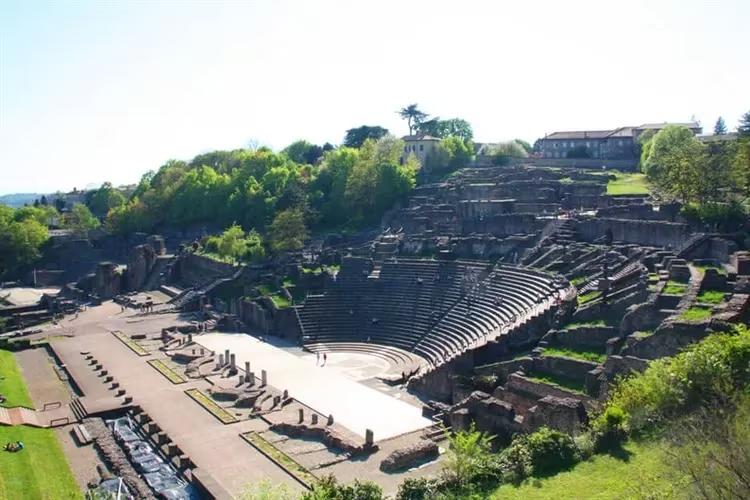
Forms a single ensemble with the odeon. Construction began in the time of Octavian Augustus. Then an arena appeared here, the diameter of which reached 90 m. The steps rose in a semicircle, two and a half dozen sectors spread out in the form of a fan. The elegant parterre was made of colored marble; there were semicircular niches on the stage.
For construction, stones were brought from the city of Glanum. The third floor was built in the 2nd century. At the same time, the theater could accommodate up to 10 thousand spectators. Most often, comedies were staged here, music was played. Excellent acoustics made it possible to enjoy the performances. The performances were held in the warm season – the “season” began in the spring and ended in the fall. In the 19th century the theater was found, in 1933 it was decided to restore it. Now the festival “Nights at Fourviere” is held here every year.
Museum of Gallo-Roman Civilization
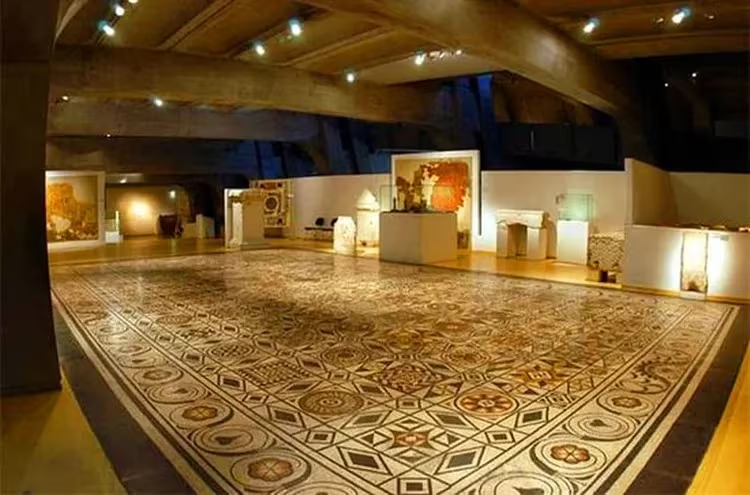
This museum is also located on the Fourviere hill, not far from the ancient theater. Archaeologists have established that there was a Roman settlement here. For the first time, the museum opened its doors to visitors in 1975, the building was designed by Bernard Serfus. He managed to fit his creation into the general landscape so that it does not violate the overall impression. Many interesting finds have been collected at the site of the Roman settlement. There are statues, and decorations worn by noble people, and clothes – formal and household, various household items.
A model of the Lugdun settlement itself was also created, so that museum guests today have the opportunity to see how people lived here in antiquity. A very interesting mosaic depicts chariot races taking place in the circus. You can also see the parade chariot, made of bronze. Also, guests pay attention to the calendar, altar, sarcophagi. A special place in the collection is occupied by silver items – the owners hid them in a cache around the 3rd century.
Rue Saint-Jean
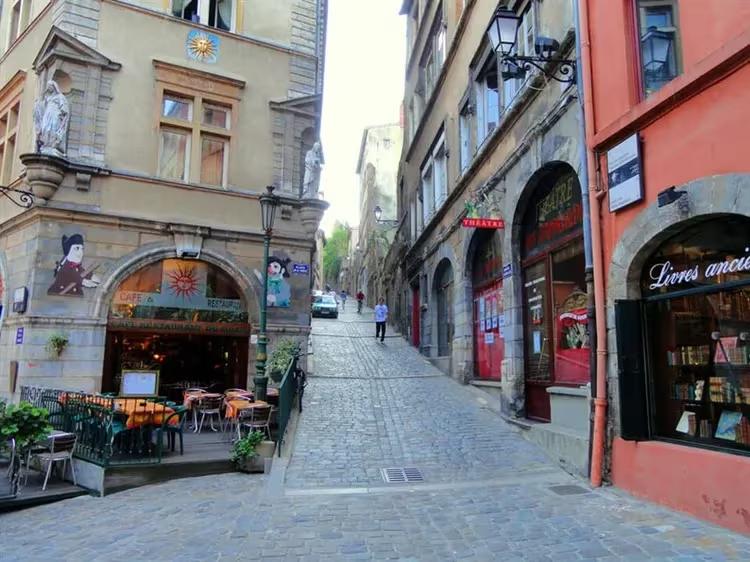
The oldest district of the city lies at the foot of the Fourviere hill. The area of Old Lyon exceeds 420 hectares, and includes several blocks. One of them is called Saint-Jean, once here was the political center of the city. The main street of the quarter is also called Saint-Jean. Today it is of great interest to tourists, as there are many historical sights. The cathedral, built in the Gothic style, strikes the imagination.
Every day, guests come to the Museum of Miniatures – in the 15th century, this building housed a tavern. The building of Manekanteri is also interesting, which is a vivid example of the Romanesque style. And finally, no one leaves here without taking a picture of the 17th century Rose Tower. There is a beautiful legend according to which the walls of the tower are painted with the blood of a young beauty who died from unhappy love. In fact, the walls were painted to make the tower look appropriate in the Three Musketeers movie.
Lyon Cathedral
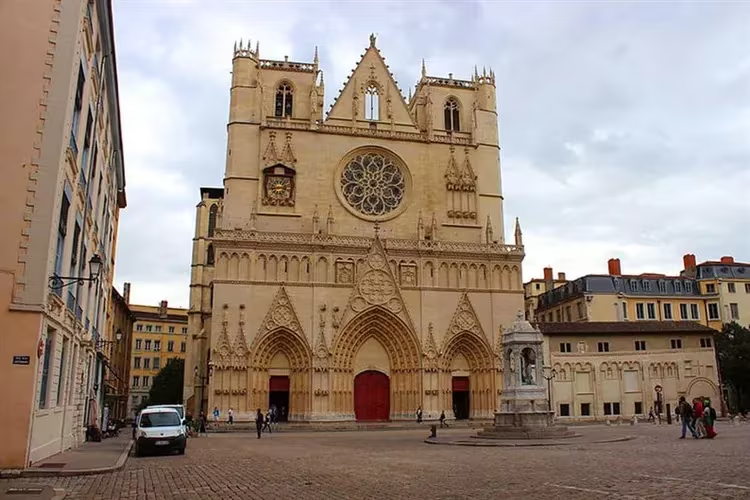
This is a truly unique cathedral – and not only because of its architecture, but also because of the numerous historical events associated with it. Although many call it simply “Saint-Jean Cathedral”, it must be remembered that it was consecrated in honor of John the Baptist. And add that this is the Cathedral of the Archbishop of Lyon. An old astronomical clock from the 14th century is kept here, and in the “archaeological garden” you can see the ruins of churches from the 11th century and a baptistery from the 4th century. You can visit the cathedral every day – it is open until the evening.
Only on major holidays, tourists are allowed access only in the morning. The construction of the cathedral began in the 12th century, on the site where the ancient church once stood. Among other building materials, the workers used stones left over from the destroyed ancient Roman structures. The main façade was completed only towards the end of the 15th century. Therefore, there is a mixture of styles in architecture – the part that was built first is designed in the Romanesque style, and the later one is in the Gothic style.
The decoration suffered from the Huguenots in the 16th century and from the most aggressive citizens during the French Revolution. Only in the first half of the 20th century, the cathedral was restored to its original form. Repairs were made at the end of the 20th century. It was here that the 13th and 14th Ecumenical Councils were held, and Pope John the 22nd was crowned here. Henry the 4th and Mary Medici were married in this cathedral, and the enthronement of Richelieu, who became a cardinal, took place here.
Guests of the cathedral are advised to pay attention to the astronomical clock, which shows not only the exact time, but also the position of the Sun and Moon, as well as the time of the rising of the brightest stars. Four times a day they call, and the dolls associated with the clock “play out” whole pieces. There is also a fine 19th century organ.
town hall
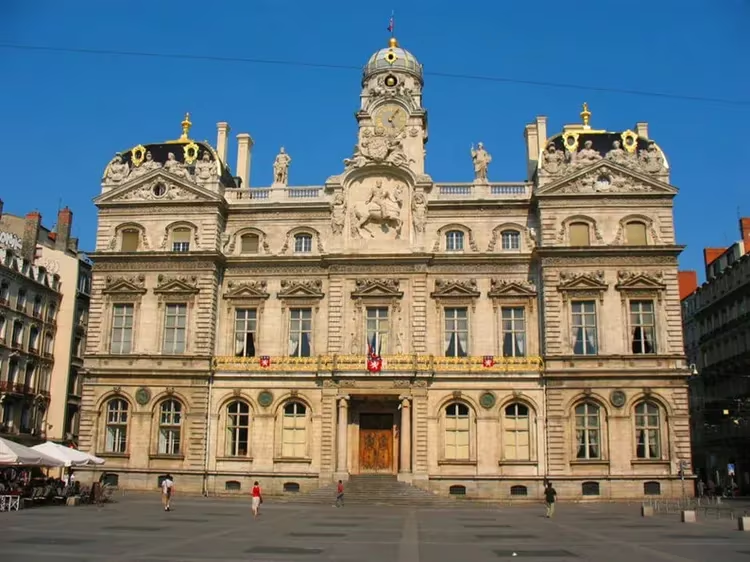
National Historic Monument, and the town hall played a big role in the life of the city. Previously, Terro Square was traded and, accordingly, it was dirty. When the town hall was erected on the square in the 17th century, it became the city's administrative center. However, soon after the completion of construction work, there was a strong fire, the town hall building had to be restored. This was done by the court architect Jules Hardouin-Mansart.
As a result, sculptures appeared on the facade – in particular, King Henry the 4th on horseback, as well as lovely women personifying the Saone and Rhone rivers. However, after a few years, the building was so damaged by fire that it needed restoration. The pride of the town hall is also its bells – there are 65 of them. The inner courtyard is also very beautifully decorated. If you get inside the town hall, you will see an amazing painting of ceilings and walls, expensive furniture, and luxurious stucco molding.
Museum of Miniatures and Cinema Scenery
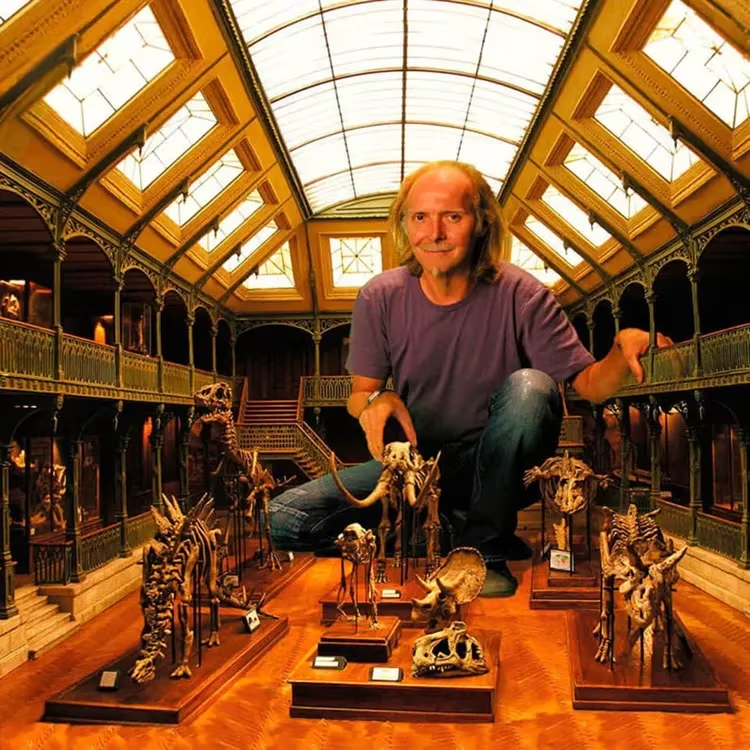
It was the French, the Lumiere brothers, who gave the world cinema. At first it was just moving pictures that changed each other to the sounds of a piano, but now the special effects that we see in films make my head spin. But humanity is still grateful to the Lumiere brothers. That is why there are always so many guests at the Museum of Miniatures and Cinema Scenery. It is not that big, and viewing the exhibits will not tire you. But you will visit an amazing world.
The museum is located in an old mansion built in the 14th century. And such an unusual cultural center was founded by Dan Allman, who traveled a lot around the world and collected rare specimens for his collection. Olman himself was engaged in the manufacture of miniatures, brought the most interesting gizmos from the United States. Here you can see the legendary Schwarzenegger Terminator jacket, as well as his weapons. The hat of Indiana Jones is stored here, as well as exhibits related to Star Wars.
A dozen of the museum's current employees are Allman's associates. The miniatures are just amazing. Here, historical interiors are recreated in the smallest detail, visitors can see the famous theaters “from the inside”. It takes about six months to work on each such miniature. The scenery for the film “Perfumer” is a real masterpiece. Adults can visit the exhibition dedicated to horror films. But impressionable children should not be brought here.
Confluence Museum
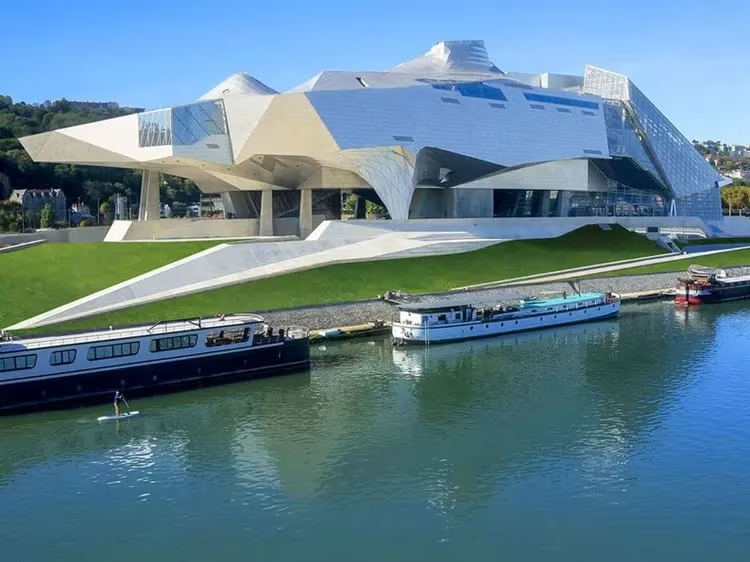
The museum, which has such an interesting name, stands where two rivers merge – the Rhone and the Saone. The architecture of the building is so unusual that it seems as if this project came from the future. And the company Coop Himmelb (l) au brought it to life, construction was completed in 2014. The museum is called by different names. The company itself calls it “Crystal”, while residents noticed a large hole in the center of the building and dubbed it “The Hole”. The area of the museum is huge – over 29 thousand m2.
Therefore, the “Crystal” can be seen from afar. The museum is divided into parts that are intended for temporary and permanent exhibitions. It will also host various scientific events – conferences, seminars. Here you can come to a lecture, attend a meeting with a famous scientist. The main theme of the expositions is natural science. The exhibits will help to give an accurate answer to the question – where did humanity come from.
Trinity Chapel
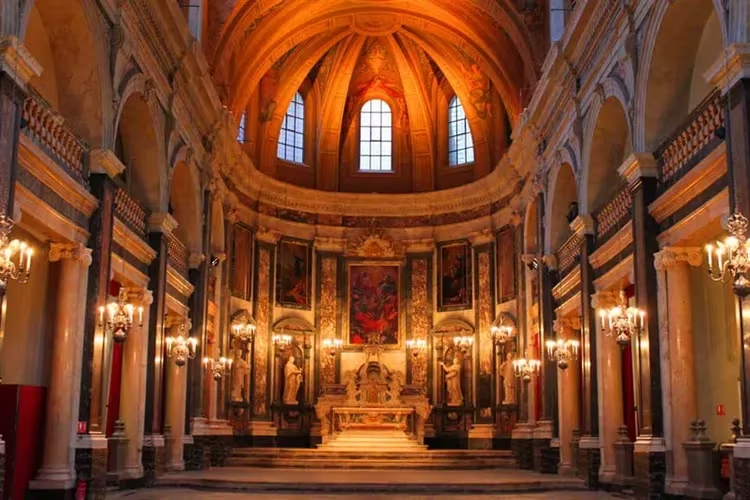
The chapel is located in the building of the lyceum, which stands next to the Palace of the Exchange. There are not many tourists here. Those who are really interested in history and want to see the most interesting come here. In the 16th century in France, the role of the Jesuit Order increased, the Chapel was built in the 17th century, the architect gave it baroque features. The chapel opened in 1622 on the land of a Jesuit college. She immediately made a great impression on the townspeople. In 1802, Napoleon proclaimed the Italian Republic in this building. The college became an imperial lyceum, the great physicist Andre-Marie Ampère lectured here.
The refined interiors of the church are decorated with marble. The wall panels were made by the famous sculptor Pierre David. The chandeliers, stylized as the 17th century, give a special effect to the room. They appeared here at the end of the 20th century, and are almost like two drops of water similar to those that hung here before. Today, various events are held in the chapel – exhibitions, concerts, festivals. The most famous of these is the annual Early Music Festival.
Gadan Museum
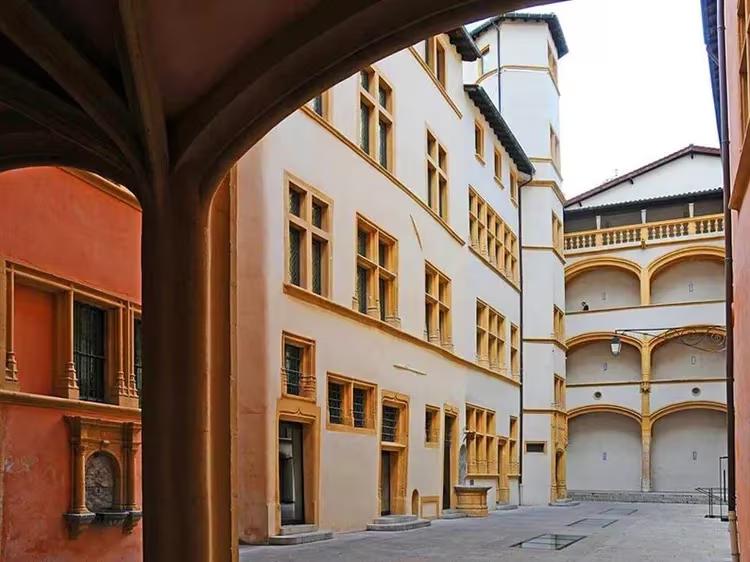
The Gadan Museum is located in the Saint-Paul quarter. An interesting object that unites two cultural centers – the Historical Museum and the Puppet Museum. Surprisingly, the building was also suitable for this purpose. It was built in the 16th century, the Gadan Hotel was located here, and it belonged to a wealthy family that bore this surname. When the Gadan brothers quarreled, they actually divided the house – each took his own half, and began to lead his own way of life. Moreover, they divided the building so thoroughly that it was not easy to even go from one part to another.
Today you can see a picturesque courtyard here, and parts of the building are connected by galleries. In the Historical Museum, after restoration, you can see about 80 thousand exhibits telling about the history of the city, starting from the Middle Ages. Looking around the premises, one can imagine how rich people lived at that time. There is also a small Puppet Theater where, in addition to performances, seminars are held. There is also a typical medieval garden in the building. In 1950, museum visitors were able to see a collection of puppets, and in the early 2000s a separate museum was opened, occupying 9 exhibition halls. Puppets from all over the world are represented here.
House-Museum of the Lumière Brothers
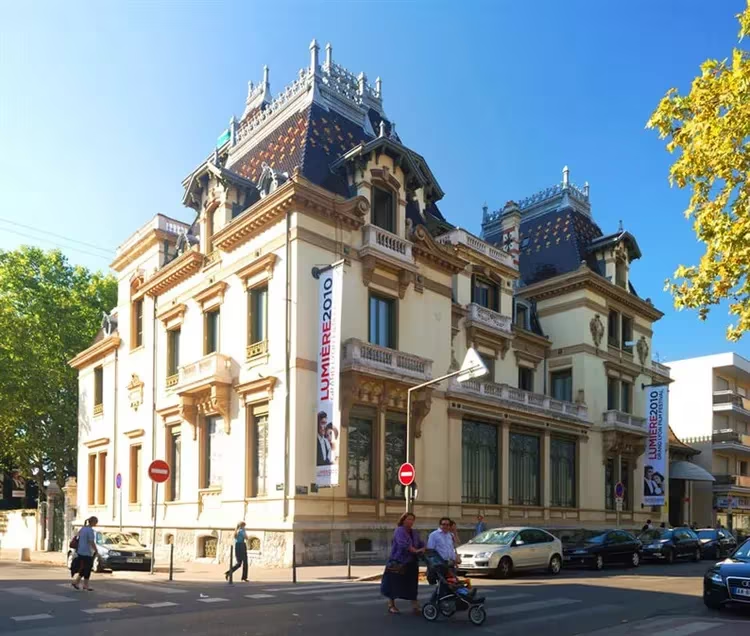
The city can be proud of the fact that it was here that “cinema was invented”. True, the Lumiere brothers did not think that they were creating a new direction of art. Auguste and Louis just made the first short film. It was called “Exit of workers from the factory of the Lumiere brothers.” The public saw it in 1895. Shown in a Parisian cafe, the film unexpectedly brought its creators a profit. After that, the brothers shot several more short films.
They were documentaries – no script, no scenery, no actors. What the film will be about could be understood from the title – “Breakfast of the Baby”, “Arrival of the Train“, etc. Located on the territory of the factory, owned by the brothers. The exposition tells about their life path. Nearby stands the “Hangar of the first film” – here you can watch old films, meetings with actors are periodically arranged.
Lyon Opera
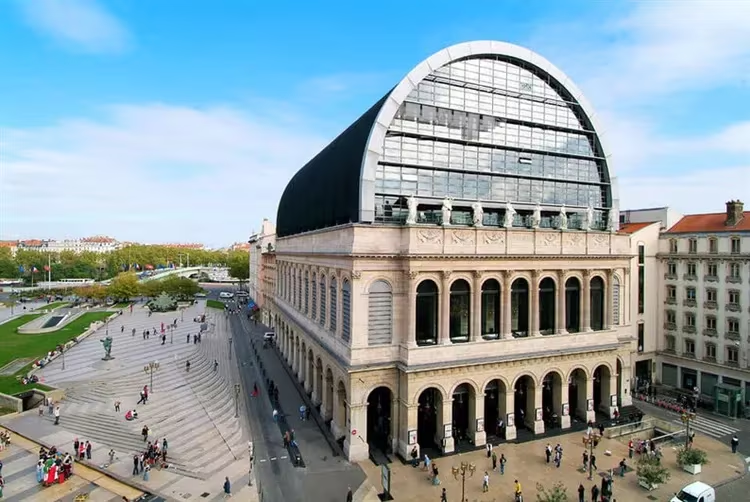
This is the third theater built on the same site. The first one was built in the middle of the 18th century. It quickly became clear that it was too small for a large number of spectators who wanted to see performances, and in 1826 it was demolished. In its place, a new building was erected, designed for 1200 people. Great operas premiered here. For example, at the opening of the theater in 1831, the opera The White Lady was shown, Mussorgsky's Boris Godunov and other masterpieces were staged here.
In 1985, it was decided to practically build the theater anew, retaining only some details from the previous building. The architect of the project was Jean Nouvel. Construction was completed by 1993. The new opera house has become much more spacious. Now the actors could prepare for performances in the rehearsal rooms located in the underground part of the building. A glass dome appeared above the theater, where the ballet troupe was located.
The height of the building exceeded 60 m, and the area of 80 thousand m2. On the facade you can see “traces of the past” – 8 sculptures of muses that adorned the former theater building. Despite the fact that the area of the theater has increased, there are no more seats for spectators. No more than 1100 people can watch the performance at the same time. If you have the opportunity to purchase tickets for an opera or ballet, be sure to take this chance.
St. Paul's Church
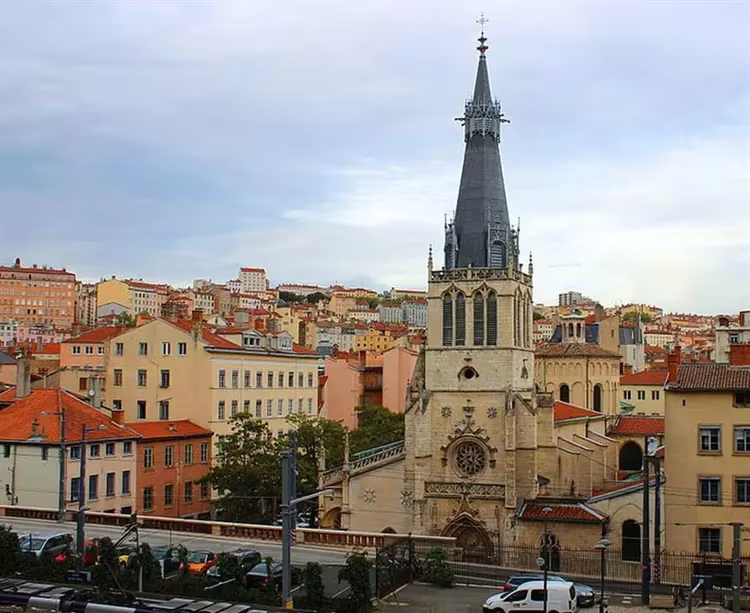
It was Lyon that was one of the first church centers in this part of Europe. Therefore, the remains of old temples have been preserved here. The Church of St. Paul, located on the banks of the Saone River, also deserves attention. It is already mentioned in the earliest documents relating to the history of the city. The building is not amazing. It is quite small, but very interesting from an architectural point of view. It is designed in the Romanesque style. The acoustics here are amazing. Chapels were built around the central nave.
The one on the right has a very unusual stone vault, and the one on the left has beautiful medallions. In the 19th century, some elements were added here – a spire and a portal in the western part, small columns. But in general, these innovations did not violate the Romanesque style of the church. At that time, such churches were rebuilt to become more spacious and bright. But in this case, limited to only a few Gothic elements.
Aquarium du Grand Lyon
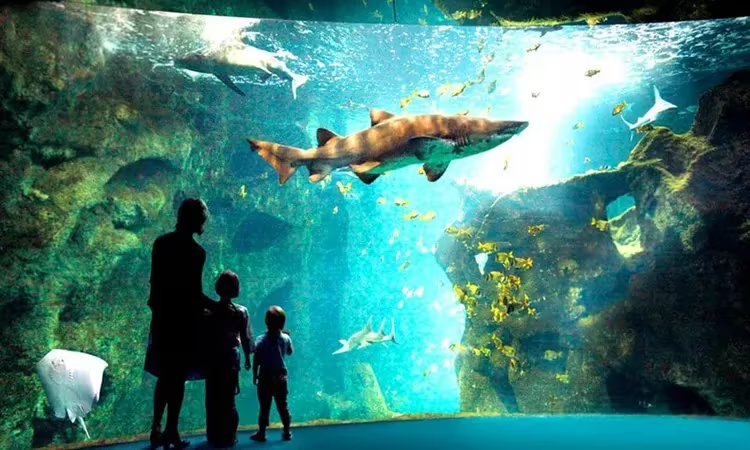
It will be interesting to visit here for both adults and small tourists. The aquarium appeared in 2002. Or rather, not one aquarium, but about fifty – with a total volume of water about a million liters. Here you can see which fish live in local waters and which live in tropical seas and oceans. Most attention goes to an artificial reservoir with sharks and rays.
Everything here is arranged so skillfully that it seems to the audience as if a ship sank on the seabed. Durable glass reliably protects the inhabitants of the aquarium. In addition to the sightseeing tour, you can visit the feeding of fish. Some are allowed to be stroked, and even here you can swim with dolphins. Children are delighted.
Old Palace of Justice
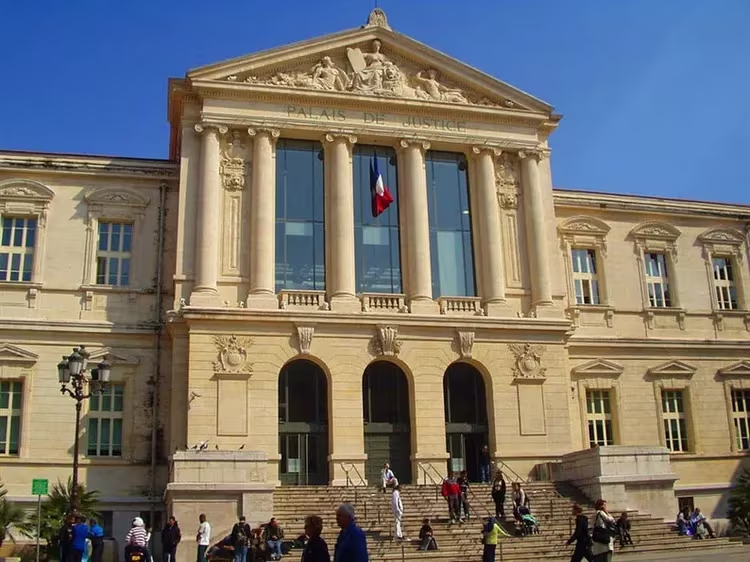
It stands on the banks of the Sona. First you could see a medieval palace here, then a prison. The Palace of Justice was built in the 19th century, in 1842. The building has a strict appearance, designed in neoclassical style. The many columns are also impressive – there are as many as 24 of them. The new building for the Palace of Justice was erected much later – already at the end of the 20th century, in 1995. Now the courts are located mainly there. But the old Palace of Justice is not empty either – the jury of the Rhone department sits here, as well as the court of appeal. The appearance of the building is completely preserved as it was originally.
Art Museum
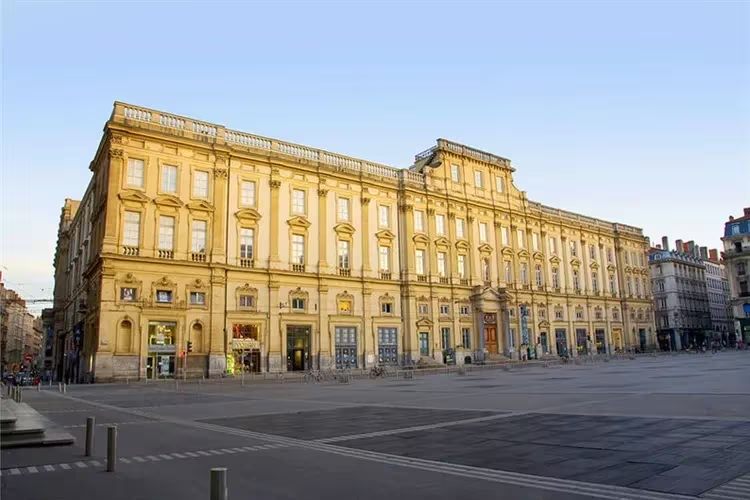
It is located in a building that in itself is worthy of attention. There was once a nunnery here. He was famous among the nobility, even members of the royal family came here. Much has changed here in the 17-18 centuries, various improvements were made by order of the monarchs. For example, a baroque refectory was built, as well as a beautiful staircase. Thanks to renovations carried out at the end of the 20th century, the building can be seen in all its splendor. But, most importantly, of course, the richest collections that are exhibited here.
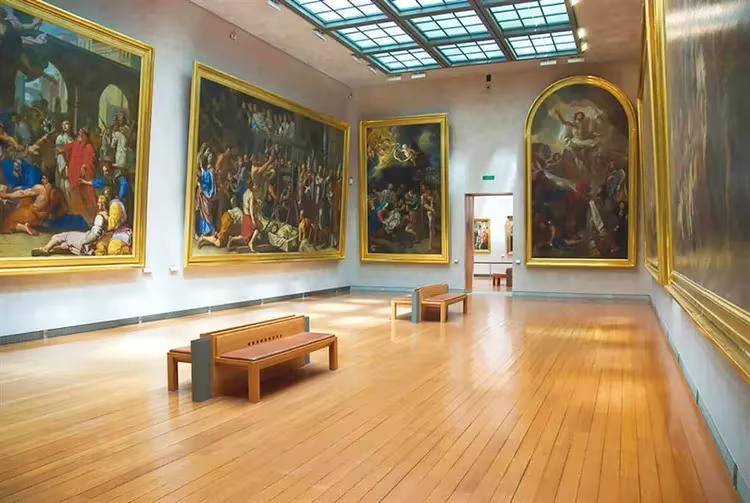
Here you can see a lot – from objects of the ancient era, to paintings in the Art Nouveau style. The canvases of artists who worked in the 14th-20th centuries occupy 35 halls. There are real masterpieces – works by Rubens, Rembrandt, Matisse, Picasso, Modigliani and many other painters. Two sections of sculpture are also interesting. One of them presents creations of the Middle Ages and the Renaissance, the other exhibits statues created by sculptors of the 19th and 20th centuries. Those guests who are interested in the history of Ancient Egypt will find many exhibits here – from vessels to sarcophagi. Presented in the museum and the Department of graphics, a collection of coins, etc.
Modern Art Museum
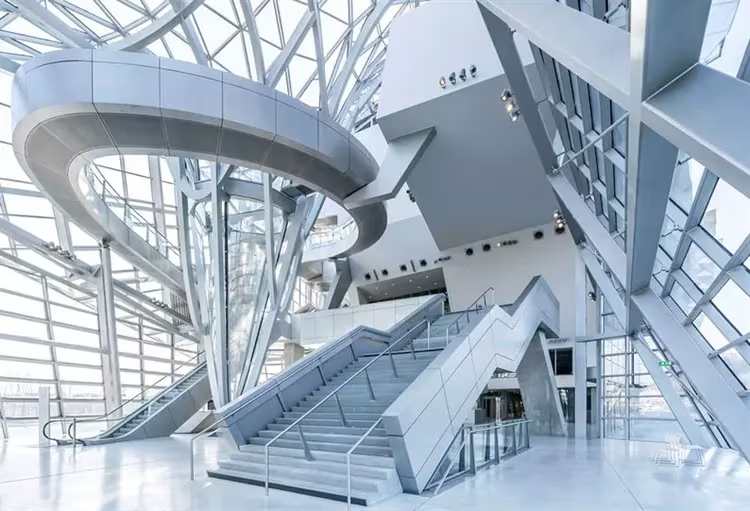
A very nice place that I can safely recommend to visit. Artists in the second half of the 20th century expressed a just wish – the city needs a museum where modern painters could exhibit their works. And so, in 1984, the Museum of Modern Art opened in a building standing on the banks of the Rhone. Its difference was also in the fact that the masters could work on their canvases right here. Nearby is the wonderful Tête d'Or park.
And the museum itself shows two facades to the guests: the neoclassical one overlooks the park, and the pink one overlooks the river bank. Guests can see the world's best collection of installations, paintings and statues, photographs and films. Exhibitions change frequently. Every year the Festival of Contemporary Music takes place here. There is also a cafe, and a library, and even a bookstore. Also, various events are regularly held here – from scientific to entertaining.
The Tete D'Or Park
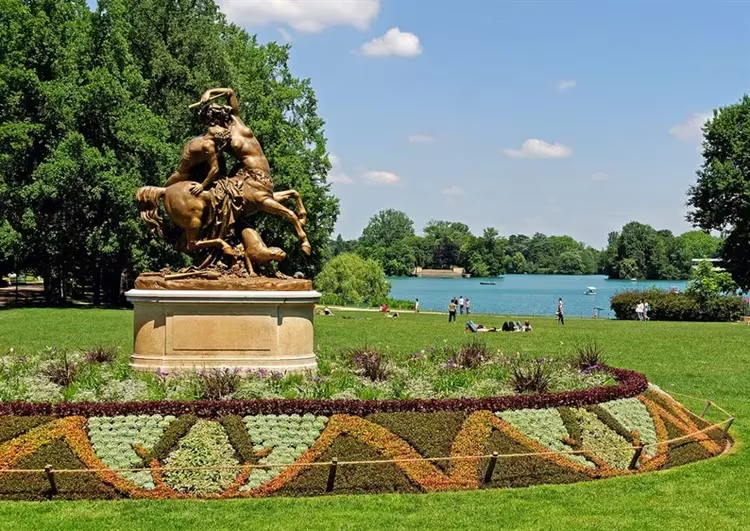
A huge city park is located in the north of the city. Its area is about 105 hectares. There is a large artificial lake with islands, a botanical garden with rare species of trees, shrubs and flowers, a zoo popular with residents, and various entertainment facilities. The name of the park in translation means “golden head”. It is believed that a treasure is buried somewhere here – the head of Jesus Christ made of gold. And although at one time about 3 thousand people worked on the creation of the park, the treasure was never found.
When the lake appeared, a legend was born, according to which the golden head rests at the bottom of the reservoir filled with “tears of Christ”. The park opened in 1857. Two famous exhibitions were held here – World and World International and Colonial. The territory of the park itself was divided between Lyon and Villerbant.
This caused a lot of inconvenience, but only in 1894 the lands were transferred to the city according to the decree of the President of France. There are 8 entrances to the park, the main one is decorated with the beautiful “Gate of the Children of the Rhone”. Here you can just take a walk, admiring the vegetation. The lake is also impressive. It will be interesting to travel around it by rail – there is a special excursion route. On the largest island (there are 4 in total) there is a velodrome, on the other – a monument to the inhabitants who died during the First World War.
Zoo
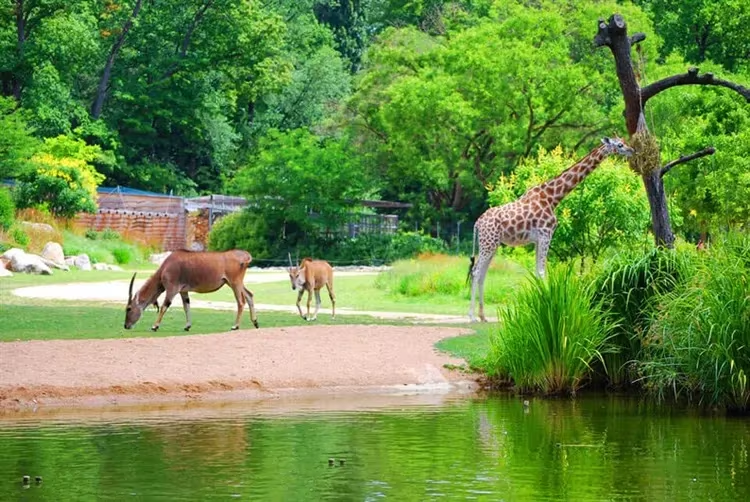
The zoo in the Tete d'Or park appeared, one might say, immediately. But at first it was more of an agricultural farm – most of the animals presented here were domestic. But now the zoo is able to really surprise. Walking along the paths of the park, you will not even notice how you find yourself in it. There are no usual cages here, and cramped enclosures in which animals feel like in a prison. It seems that animals and birds live in their natural environment, and you just came to visit them. Geese importantly cross the road, nimble squirrels jump from branch to branch.
Beautiful guests admire – pink flamingos. Zebras and antelopes graze peacefully on the lawns, ostriches walk around. Of course, some zoo pets are still reliably separated from the audience. For example, crocodiles. But they are also behind a glass wall, a reservoir is arranged for them, and predatory reptiles feel great.
True, it is one thing to admire giraffes up close, and another thing to admire lions. But everything is thought out, and nothing threatens visitors. Children, as a rule, linger near the enclosure with monkeys. Entire jungles are arranged here, funny primates sway on the branches, and the guys laugh, watching their games. Having visited the zoo, you begin to dream that the same one would appear in Russia.
Botanical Garden
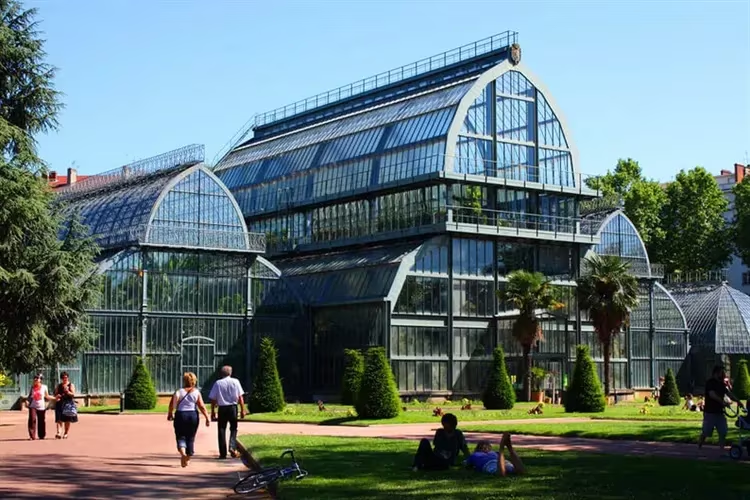
This is a beautiful complex that any city can envy. And the first botanical garden appeared in the city a very long time ago – in 1792. It would seem, who will think about plants in the midst of the French bourgeois revolution? But Jean Gilibert laid out a garden on the former lands of the monastery. Approximately 65 years later, the garden, which had already grown by that time, was moved to the Tete d'Or park. Nicolas Serenge did this, and he was appointed director.
The area of the botanical garden is vast – about 8 hectares, and over 15 thousand species of trees, shrubs and flowers grow here. Many of them are very rare and endangered in the wild. So the garden is the pride of not only Leon, but the whole of France. Already at the end of the 19th century, the construction of greenhouses for heat-loving plant species began. Now there are many different greenhouses – large and small, cold and warm. There are even for carnivorous plants and for aquatic. And the rose garden was opened here by the Princess of Monaco, the famous Grace Kelly.
Today, about 30 thousand bushes grow in it, you can imagine what a fragrance reigns in it. There are also small rose gardens. One is of particular interest to sightseers, as it is “historical” and tells how different varieties of roses were bred, and in the second, new varieties are being bred. The botanical garden also has its own greenhouse, very beautiful – winter and alpine gardens, a nursery where young trees grow and a very popular botanical school.
Mini World Lyon
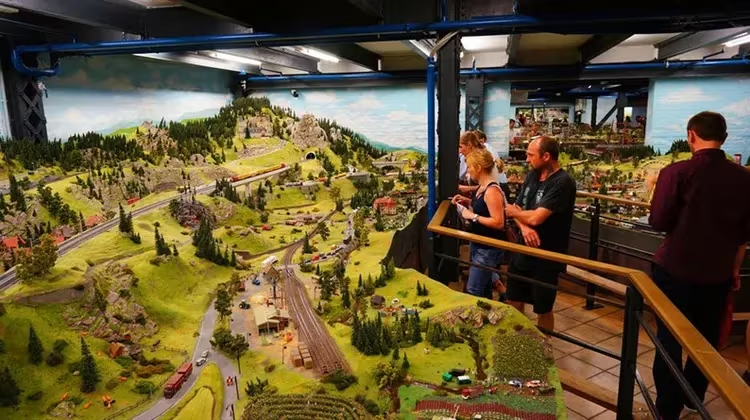
Every visitor to the Park of Miniatures wakes up a child, because he sees a real fairy-tale world in front of him. There is everything to admire here. Tiny people and cityscapes. One is drawn to enter this picturesque mini-town. Trains are moving along the rails, cars are moving, lanterns are burning, mountains covered with snow attract the eye. The park opened relatively recently, in the suburbs. It is located in a pavilion with an area of 4500 m2. Here you can see copies of famous sights, everyday scenes, moving vehicles. The park makes a great impression on children and adults.
Park Olympique Lyonnais
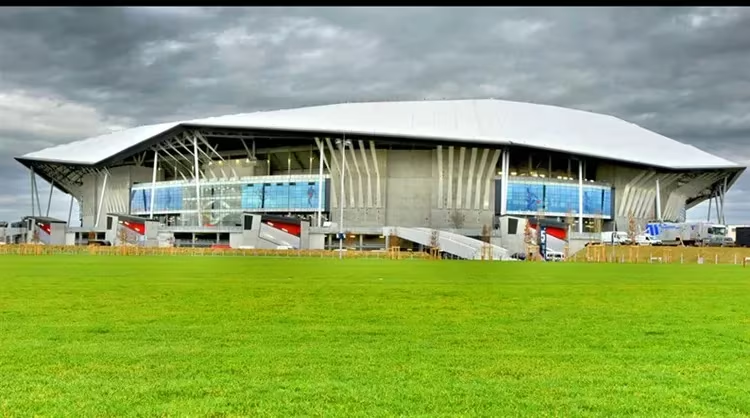
It is located in the suburbs, 10 km from the city center, and is the home arena of the Olympique Lyon club, it can accommodate almost 60 thousand spectators. The city needed a new stadium for a long time, but funds for its construction were constantly lacking. But then France was scheduled to host the Euro 2016 championship. And then the process began. Construction of the new stadium began in 2012.
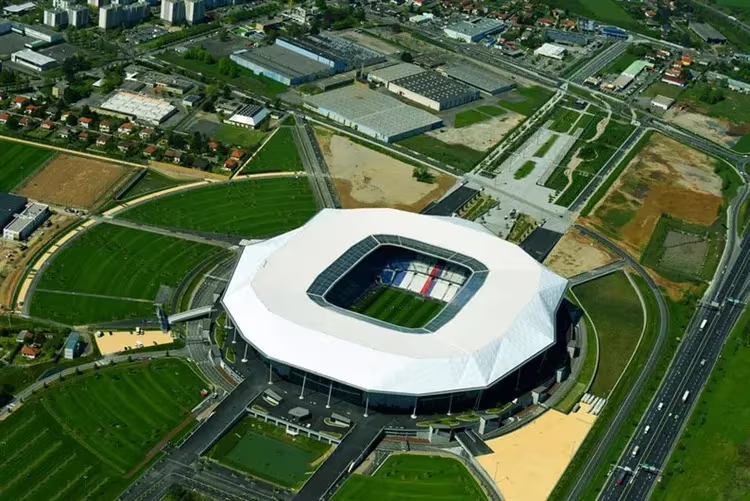
The funds required were large – over 400 million euros. The stadium opened in 2016, there was a match between the two teams Olympique Lyon and Troyes, the home team won. Since then, there have been many matches that have gone down in history. Including 6 – within the framework of the European Championship 2016. The stadium meets all modern requirements, here, in particular, there are about 6 thousand VIP seats. There is a conference room and a supermarket.
Park Blandan
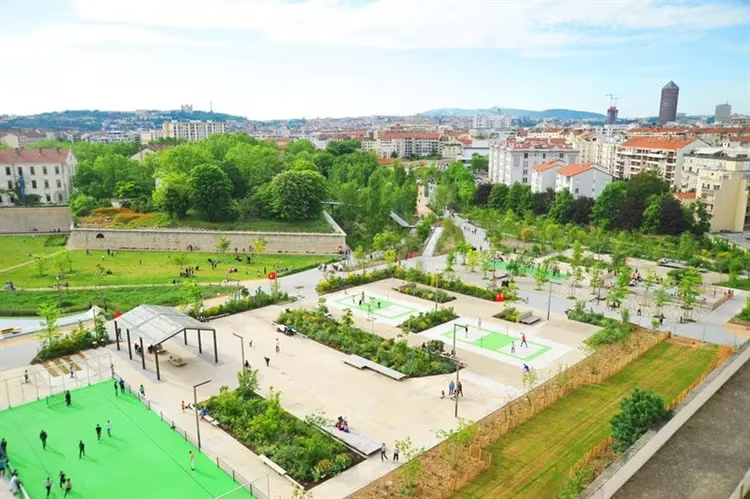
The public park, which covers an area of approximately 17 hectares, was opened to visitors in 2013. Previously, this place was the barracks of Sergeant Blandan. The central square of the park is located where the bridgehead used to be. There is a lot to please guests here. For example, little tourists are delighted with the wooden wall, where secret passages and slides are arranged.
There is also a garden with a large lawn. You can take a walk, have a picnic, or just play. The castle of the 15th century also evokes admiration. And those young guests who prefer outdoor activities can visit the skate park, in general, in this park it is allowed to ride anything. Not only on skateboards, but also on roller skates, on bicycles. Many walk along its paths with four-legged pets.
Hotel Dieu de Lyon
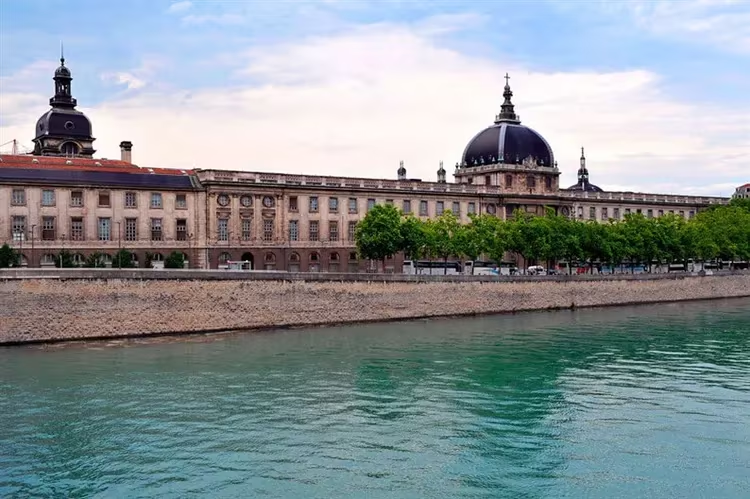
This is a historical hospital, including the complex of buildings in which it was located. It has recently been considered a historical monument. There is no hospital here now. It belonged to the so-called “God's houses.” Once upon a time, pilgrims and wanderers were accommodated here, that is, it was more likely not a hospital, but a hotel. Usually such centers were located near temples or monasteries. The first such “House of God” appeared in the 6th century. And in the 12th century, in a modest building, located near the bridge thrown across the Rhone, another “House of God” was opened.
A dozen patients could be accommodated here at the same time, and Benedictine monks looked after them. Over time, the hospital grew, and soon the number of beds increased to almost 200. For some time, the famous Francois Rabelais was a doctor here, during these years he wrote Gargantua and Pantagruel. In the 17th century, the hospital was rebuilt, new buildings and a chapel appeared here. At the beginning of the 21st century, the complex of buildings was recognized as a historical monument. Soon the departments of the hospital were transferred to other hospitals, the restoration of buildings began. Now there is a hotel, a shopping center, numerous offices.
But, even without going inside, tourists can admire the main facade, which is decorated with sculptures, a large dome crowned with angels, a small dome set over the church, where they prayed for the recovery of the sick. Several graves have also been preserved, in one of them the daughter of the poet Jung is buried. The chapel in honor of the Virgin, built in the 17th century in the Baroque style, is also interesting. It is also decorated with sculptures. The Almshouse Museum houses exhibits related to medicine and gifts made to the “House of God” by wealthy patients.
Trabouli
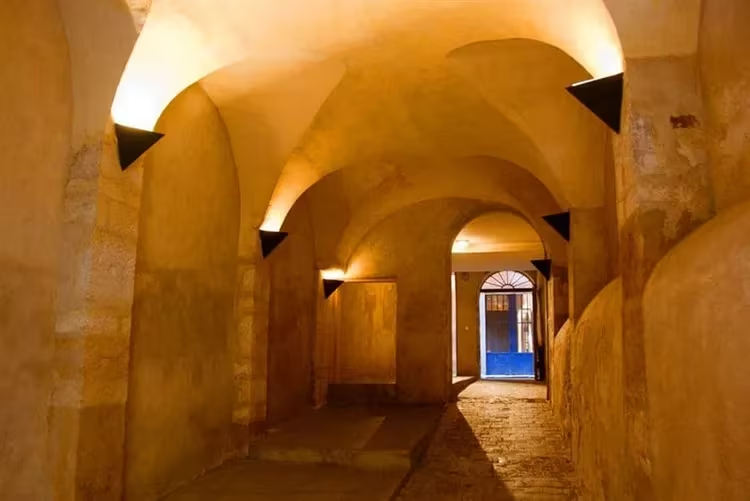
This is a pedestrian passage through the block, thanks to it, you can get from one street to another. Traboules look different. Sometimes it is a simple corridor, and sometimes it is a complex path with stairs and covered galleries. There are several versions of how traboules appeared. According to one of them, in the 4th century, the local settlement was going through a crisis in order to have unhindered access to water, the inhabitants moved from their houses, which were previously located on the slopes of the hills, to the banks of the Sona. Here the first streets appeared, and in order to pass from one to another and quickly get to the water, the first traboules were made.
There is no proven evidence for this version. But it is known that when water began to be taken from wells that were dug in the yards, traboules were arranged so that residents of neighboring houses could also quickly approach these wells. It is interesting that in a number of places there were traboules for the nobility and for commoners, so that representatives of different classes would not collide. In the 19th century, the Croix-Rousse hill began to be built up, it was the traboules that then helped the inhabitants to descend from the hill to the center in a matter of minutes. And during the Second World War, resistance fighters, who knew the city well and appeared in front of the enemy as if from under the ground, moved along these passages.
To see traboules, you need to go to the old quarters. Some passages are owned by the city, others are private property. But, as a rule, you can see everything (private until 19-20 pm). The most famous are: the Long traboule – it connects 4 courtyards, the traboule of the Pink Tower, inside it there is a staircase, the Yard of Voras – an open gallery that connects three houses.
In addition to the above, there are many more attractions, and it will take a long time to see them all. For example, it is worth visiting Place Bellecour, admiring the alleys – they are especially good when chestnut trees are in bloom, and the statue of Louis XIV, as well as visiting Place Carnot, where the monument to the Republic is erected. You can wander through the streets of the Old Town, stand on the banks of the Saone, look into numerous boutiques, sit in small cafes, this will give you the opportunity to feel the local atmosphere.
One of the most beautiful is the Government Square, it is paved with cobblestones, a tree grows in the center, and the area of the house is surrounded by 4 floors, each of which can be called a work of art. Beautiful Renaissance buildings can also be seen on Rue Mercier. Bridges also deserve attention – 27 of them are thrown across the Rhone and Sona. They are especially good at night, when artificial lighting is turned on.
Perhaps you are lucky and you will come when one of the city holidays takes place. So, the Festival of Light began to be celebrated in the 19th century. It is dedicated to the Virgin Mary, who protected the city from the “black death” – the plague. On this day, many thousands of lights are lit here, residents put candles and lamps on the windows. This holiday is mobile, it falls on different days of the year. It is very effective and attractive for tourists.
Nuits de Fourviere – this celebration takes place in the summer. Thousands of spectators gather for the Music, Theater and Film Festival. And at the end of May there is a chance to get to the Nui Sonor Electronic Music Festival. This is what Lyon is like – hospitable, ancient and at the same time modern, full of secrets and mysteries. And he is waiting for you.