
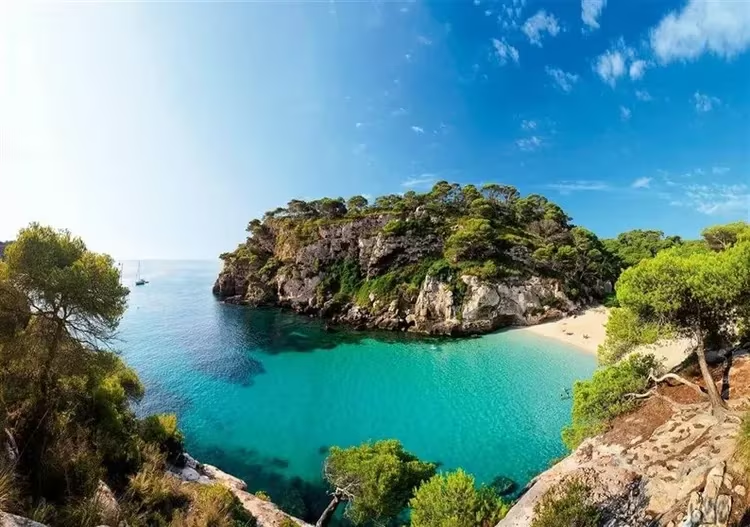
15 best islands in Spain for holidays – photo, description, map
Spain – Tourists from all over the world speak breathlessly about its first-class beaches, rich culture and amazing cuisine. But not only the mainland attracts travelers. The country is famous for its island possessions. Whether you're looking forward to long walks through fantastic landscapes, a fun-filled non-stop party, or a dream of seclusion and tranquility by the sea, Spain‘s islands offer holiday options for every taste.
Majorca
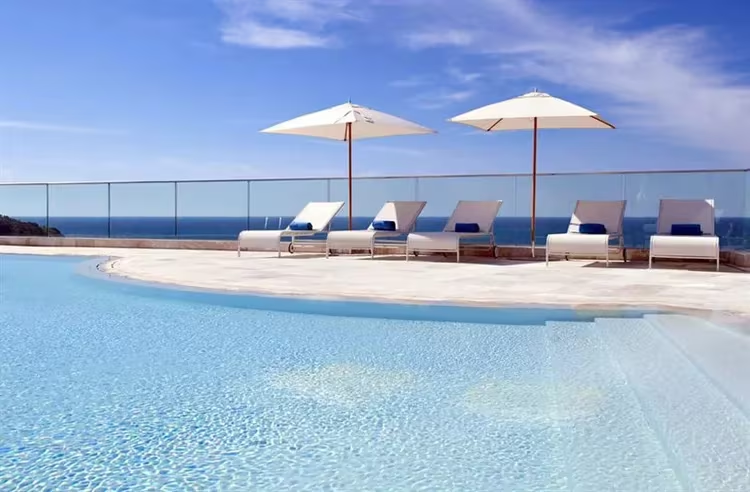
The largest of the Balearic Islands, scattered in the Mediterranean Sea, is an explosive mixture of bohemian relaxedness and club parties, well-groomed sandy beaches and wild rocky coast, modern architecture and magnificent Moorish palaces. This is the perfect place to relax. Stretching for 554 km, the beaches attract not only fans to soak up the purest sand, but also diving fans and those who want to go sailing.
Mallorca is also rich in sights, including the Gothic Cathedral of Palma, the Spanish Village in Son Espagnolet and the Carthusian Monastery in the town of Valldemosa. Art lovers should not miss the Joan Miro Foundation. The Museum of the famous artist includes a workshop and an exhibition of paintings by the master of Catalan art. Are you still thinking about the theme of a trip to Mallorca?
Then the last argument: this island is the favorite vacation spot of the Spanish royal family.
High-ranking persons stay at Marivent Castle, whose picturesque palace gardens can be visited by everyone. The royal vacation, which always takes place in August, is timed to coincide with an annual six-day event – a spectacular status regatta. Philip VI himself takes part in the races.
Menorca
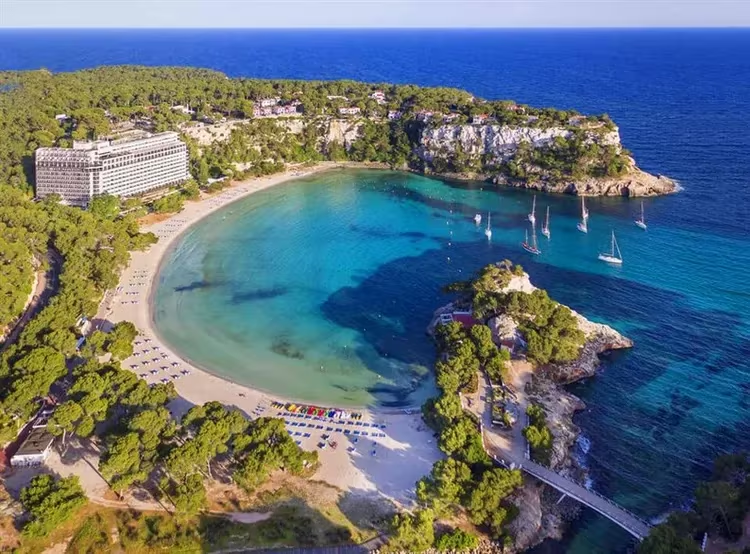
Mallorca's younger brother, Menorca, is best known as a UNESCO-recognized biosphere reserve. On its territory, covered with dense primeval forests, the construction of high-rise buildings is prohibited. Perhaps that is why here, even at the height of the holiday season, it is not crowded. Those who prefer a measured rest away from the city noise come to Menorca.
Here you will discover heavenly places: a beautiful coastline with bizarre rock formations, thickets of green heather, secluded coves and wide sandy beaches with playgrounds that will appeal to young tourists. And for adults, we advise you to visit the famous cave systems and plunge into the secrets of the production of the unique Minorcan gin Xoriguer in the wineries of the capital Mahon.
Menorca is popular among lovers of horseback riding. Routes have been developed for travelers to get acquainted with the unique flora and fauna. Divers are not indifferent to this place. The goal of diving enthusiasts is the resort of Cala Blanca. Its water area is distinguished by the crystal clear sea – even at a depth of 30 meters you can see in detail the inhabitants of the kingdom of Neptune.
Ibiza
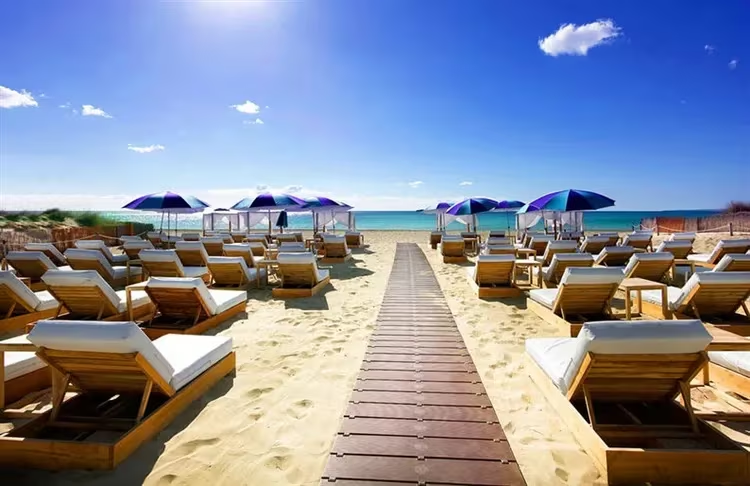
If your friends who were vacationing in Spain returned from vacation happy, but absolutely not tanned, you should know that they were in Ibiza! On this island, rightfully bearing the title of the capital of youth subcultures, people come not to take sunbaths and indulge in bliss on the seashore. People flock here to participate in fun parties and visit world-famous discos.
Ibiza's music-beating resorts are filled with colorful restaurants, intricately decorated houses and architectural monuments from Carthaginian and Phoenician times. Hotels, shops, bars open around the clock and, of course, popular clubs stretch along the embankments of cozy cities, the most famous of which are Amnesia, Privilege, El Divino, Ushuaia and Pacha.
Book a private transfer from the airport to your hotel in Ibiza for 3 546 RUB
If you still have an hour or two of free time between endless dances, then honor the beaches with your presence, where you will be met by golden sand, crystal clear water and diving schools. Or head out to see the local attractions: the 1585 Taules Fortress, the 13th-century Cathedral, the ancient necropolis of Puig Molins and the Ses Salines Natural Park.
View prices for tours to Ibiza
Formentera
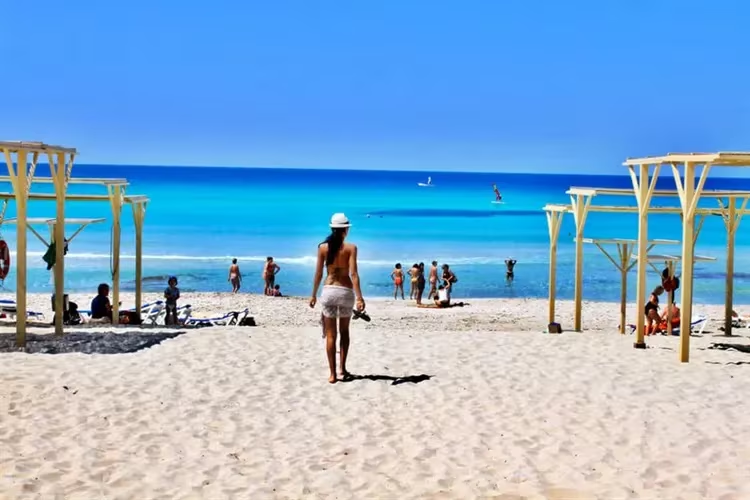
Formentera is the opposite of bustling Ibiza. This tiny island, which is a rocky plateau with an area of only 83 km2, welcomes its guests with ringing silence and peace. Rest here is not for everyone. Disco lovers will be disappointed by the lack of youth parties, and families with children are unlikely to enjoy the huge number of naked sunbathers.
Amusement parks, historical sites, shopping and social life – you will not find all this in Formentera. People who dream of a clean coast, endless wide beaches covered with white sand, meditation, yoga classes and complete solitude come here. For active travelers, there are diving centers and cycling routes passing through fishing villages and thickets of fig trees.
One of any tourist activities is seafood tasting in local cafes and restaurants. Even gourmets vacationing on the mainland visit Formentera to feast on the grilled lobster, famous throughout Spain, prepared according to a special recipe.
Cabrera
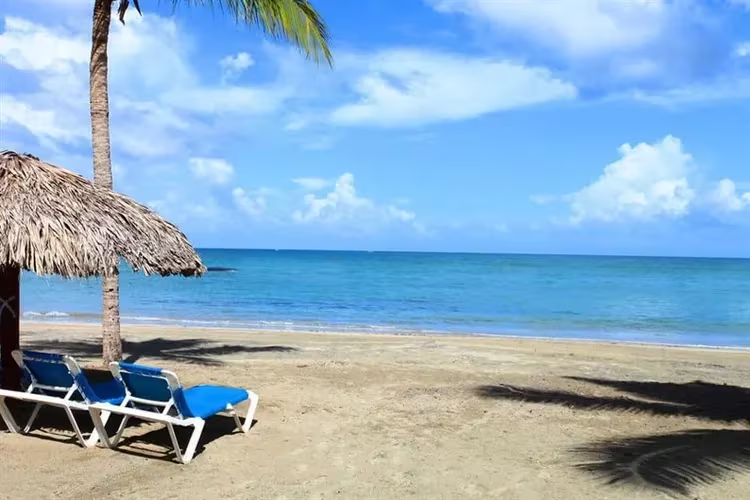
The only Spanish mixed land and sea reserve is the Cabrera archipelago, made up of 18 tiny islands. There are no hotels, restaurants and entertainment centers here. The owners of this land have long been only endemic plants (559 species), Balearic lizards and colonies of gulls, cormorants and petrels. The man-made sights of Cabrera are the ruins of the Byzantine necropolis, the remains of the barracks of the captured soldiers of the Napoleonic army and the stone castle built in the 14th century to protect against pirates.
The transparent waves of the waters of the Sa Platceta beach hide an amazing world in which giant algae grow, and dozens of fish of all shades of the rainbow scurry among corals, mysterious caves and dark tunnels. After the dive, enthusiastic divers are treated to a refreshing iced coffee prepared in a thatched-roof waterside bar. One thing is upsetting: a fabulous day ends with the horn of a departing boat. Tourists are not allowed to stay in this green eden overnight.
Gran Canaria
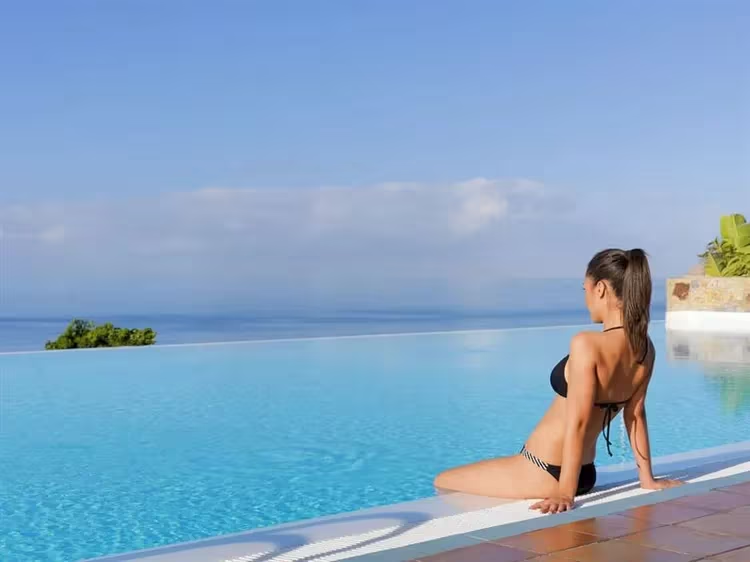
The almost complete absence of rain, 350 days of sunshine a year and the splendor of the diverse landscapes make Gran Canaria a paradise for tourists. A mountain range runs through the entire island, thanks to which 14 microclimatic zones dominate here. Traveling along the multifaceted region will give you the opportunity to see subtropical forests, and snowy peaks, and rocky shores, and green valleys, and extinct volcanoes.
This place is ready to fulfill the desires of any traveler. Families with children will love Maspalomas' gently sloping coastline and sheltered Puerto Rico beach. Adventure seekers will be delighted by the deep gorges, pine forests and remote villages, which can only be reached by a serpentine winding around the mountains.
And those who, even on vacation, do not want to leave the usual city streets, will be met by the capital Las Palmas, replete with shops, restaurants, museums and entertainment centers. There is no shortage of hotels in Gran Canaria either. Among the 3,842 hotels, there are both luxurious “five” and budget “three”. A profitable option for budget tourists will be private guest houses and apartments.
Tenerife
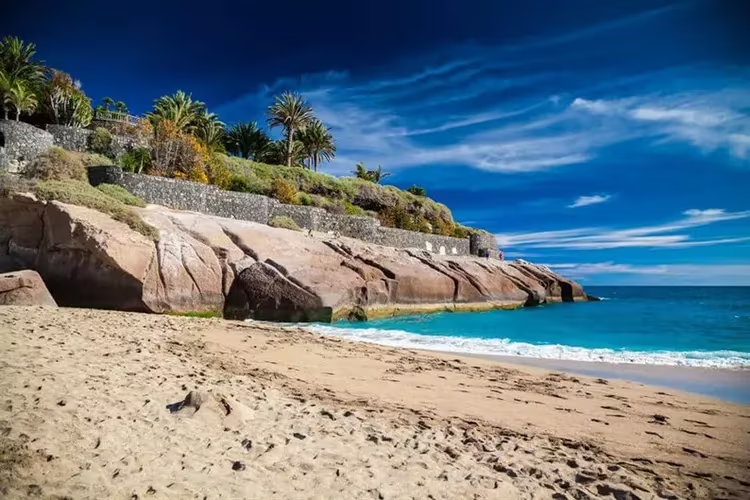
Nowhere else in the Canaries is there such a variety of landscapes as in Tenerife. Here you will find beautiful sandy beaches and impregnable cliffs, bizarre mountain ranges and fertile fields, lost villages and old colonial-style cities. Tulips and meter-high poinsettias turn the island into a blooming garden of Eden. And above all this splendor rises the highest mountain in Spain – the 3,718-meter extinct volcano Taide.
The variety of Tenerife beaches will surprise even seasoned tourists. The bright yellow coastal area near the city of Santa Cruz contrasts sharply with the black volcanic sand of Los Gigantes. For families with children, Playa del Duque in Costa Adeje is ideal, where calm ocean waves dominate. A completely different picture opens in El Medano. The relentless trade winds attract windsurfers from all over the world.
Tip: Don't limit your vacation to the beach and take a trip to the Guimar Desert. Its main attraction is the six ancient pyramids. Until now, scientists have not been able to establish when, by whom and why these unusual structures were erected. Another famous place in Tenerife – Siam Park – offers entertainment of a different kind. A wide variety of water slides (including the 28-meter “Tower of Power”) make it one of the best water parks on the planet.
View prices for tours in Tenerife
Fuerteventura
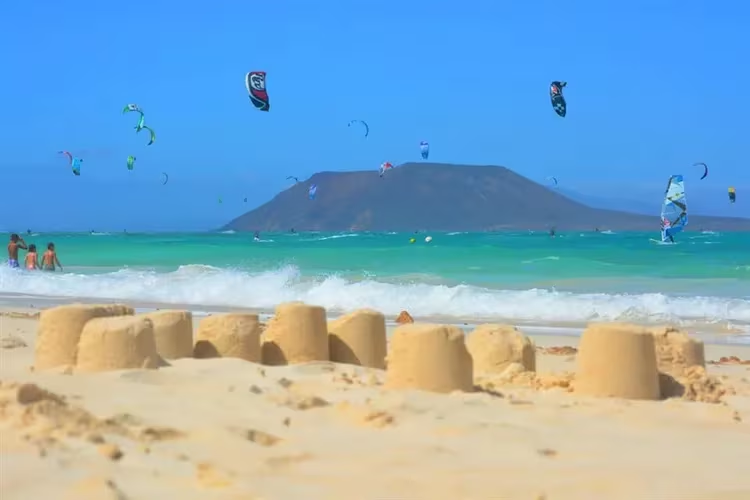
Don't be intimidated when you first come to Fuerteventura. On the way from the airport to the hotel, you may be unpleasantly surprised by the devoid of vegetation landscape, reminiscent of the lifeless valleys of Mars. But don't worry. A couple more kilometers – and you will see the azure canvas of the magnificent ocean, which will make you forget about the plain landscapes.
The barren land, located 115 km from the African continent, has endless beaches. Fine light sand stretches to the horizon, filling 50 km of the coastal zone. That is why the second largest island of the Canary archipelago is considered a real Mecca for lovers of sea waves and sunbathing. This place is also ideal for windsurfing, skimboarding and fishing.
A beach holiday in Fuerteventura can be diversified with a trip to OasisPark, where giraffes, antelopes, flamingos, parrots live, and crocodiles and sea lions give performances. The picturesque village of Las Playitas with snow-white houses decorated with blue ornaments will remind you of Andalusia, and the ancient village of Antigua will surprise you with functioning windmills.
View prices for tours on about. Fuerteventura
Lanzarote
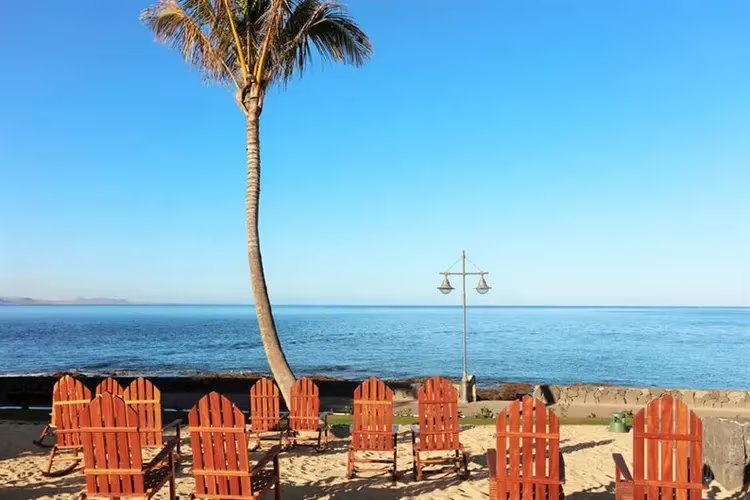
Lanzarote is the most “fiery” of the Canary Islands. About 300 years ago, almost a quarter of its territory was buried under the lava and ash of an erupting volcano, which turned the once green region into a kind of lunar craters. Hot magma is still boiling at a depth of 15 m. Employees of Timanfaya Park show admiring tourists how hot the earth is: a bucket of water poured into a buried pipe shoots out a fountain of scalding steam after a few seconds.
Lanzarote does not have a developed infrastructure and premium all-inclusive hotels. The goal of most is to get to know hundreds of volcanoes. It is allowed to see black vents standing out against the blue sky, go down the slopes covered with ash and touch the frozen lava with your hands only as part of a bus or walking tour. The most courageous can see the beauties of the national park while riding a camel.
Against the backdrop of towering craters, a truly breathtaking sight is a picturesque coastline. Particularly beautiful is the El Papagayo beach in the southern part of Lanzarote. The quiet bay is protected from the wind by steep cliffs, so nothing prevents you from sunbathing on the golden sand or basking in the emerald waves of the ocean.
La Palma
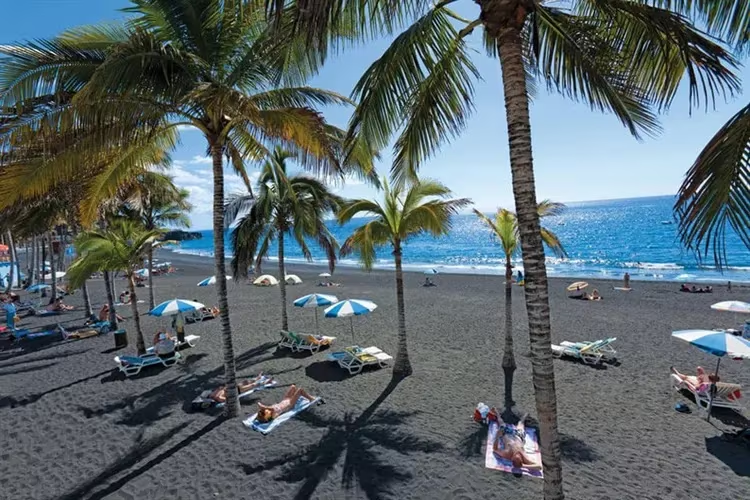
Blooming La Palma captivates its guests with liveliness of colors, mountain ranges overgrown with dense laurel and pine forests and the largest volcanic crater in the world. This place attracts lovers of peace and relaxation, who dream of feeling complete harmony with nature. It is also popular among hikers.
For those who are not afraid of long walks, there are many hiking trails on La Palma. You can tickle your nerves by climbing the mouth of the extinct Tenegia volcano or get acquainted with exotic butterflies and birds in Palmitos Park. And to rest tired legs and discuss with friends what you have seen over a cup of the national drink barraquito (coffee with condensed milk and liquor) we recommend in one of the restaurants in the lively resort of Charco Azul.
The coast of La Palma is steep cliffs descending to the waves of the Atlantic Ocean, so there are few places for swimming. Those wishing to swim and sunbathe on the gray volcanic sand are better off choosing the western tip of the island for relaxation. The most famous local beach – Puerto Naos surrounded by coconut palms – is equipped with comfortable sun loungers, showers, changing rooms and bars.
La Gomera
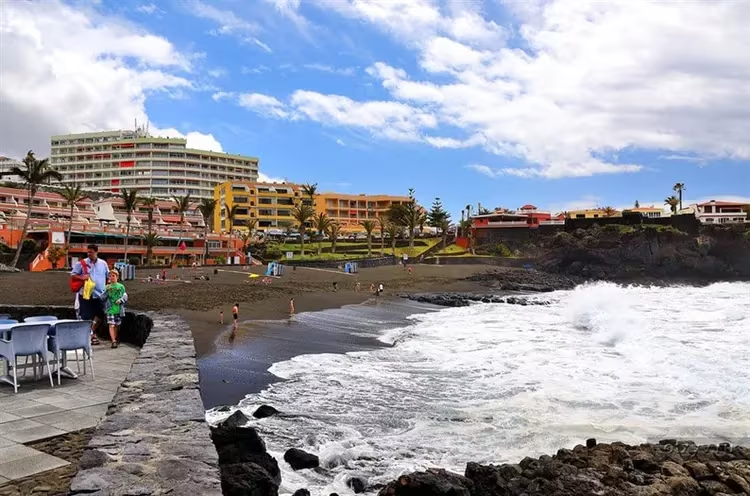
On one of the small islands of the Canary archipelago, from where Columbus began searching for a sea route to India five centuries ago, you will not find luxury hotels. For an overnight stay, arriving on La Gomera choose between inexpensive hotels, apartments and guest houses. There is no own airport here either – you can only get to the former land of hippies and hermits by ferry from Tenerife.
Basalt columns, steep passes, terraced fields and palm groves create a unique landscape. In fact, La Gomera is a single mountain range. Each walk along it turns into a great journey. Many kilometers of hiking trails lead through banana plantations, wild ravines and green valleys to the top of the 1,487 m high Garajonay cliff. The main local attraction, the national park, is home to relict laurel trees that grew on Earth millions of years ago.
There are few beaches on La Gomera. The most popular is Playa de Santiago, which stretches for one and a half kilometers. Playa del Inglés impresses with its wild, romantic charm, while the quiet lagoon of Charco del Conde is ideal for children.
Hierro
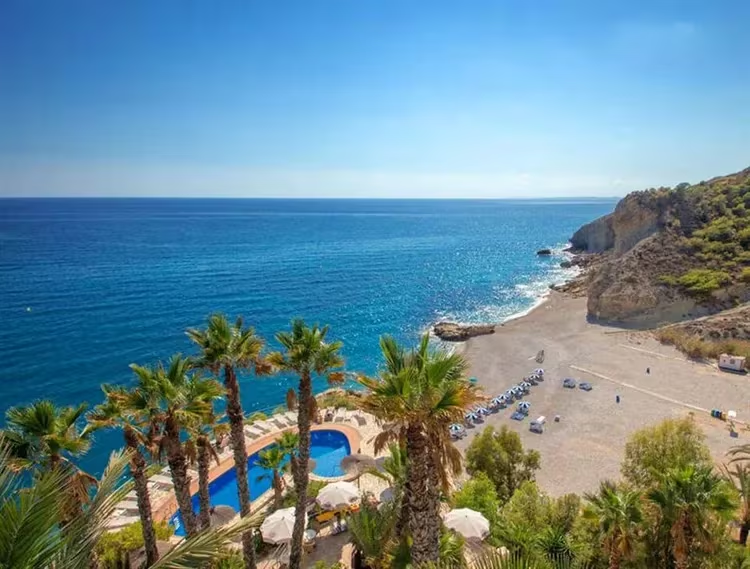
The island, stretching for 24 km from north to south and 27 km from east to west, is the smallest in the Canaries. It seems that time has stopped in this fabulous land located on the edge of Europe. Holidays on Hierro will seem boring to people who appreciate the noisy whirlwind of megacities, social life and entertainment. In this lost world, there are no large cities, no modern water parks, no shopping centers, and the network keeps disappearing on the phone.
The hallmark of tiny Hierro is nature. Appreciate the harsh beauty of volcanoes and try to decipher the ancient symbols carved into the rocks – traces of lost civilizations. Be sure to explore the labyrinths of the Don Justo cave-pipe formed from hardened lava and look into the village of Casas de Guinea, where ethnic tribes still live, the descendants of which saw the landing of the conquistadors who arrived from Spain.
Having seen enough of the stunning landscapes, head to the coast. The local water area is an element for divers. The ocean here is crystal clear and exceptionally quiet, which is not typical for the Atlantic. Even the Caribbean can envy the richness of the underwater world. While scuba diving, you will encounter angel sharks, scorpionfish, cuttlefish, bighead turtles, groupers, rays, barracudas, moray eels and mackerels. The inhabitants of the deep sea are so accustomed to people that without fear they allow themselves to be photographed even at close range.
Grace
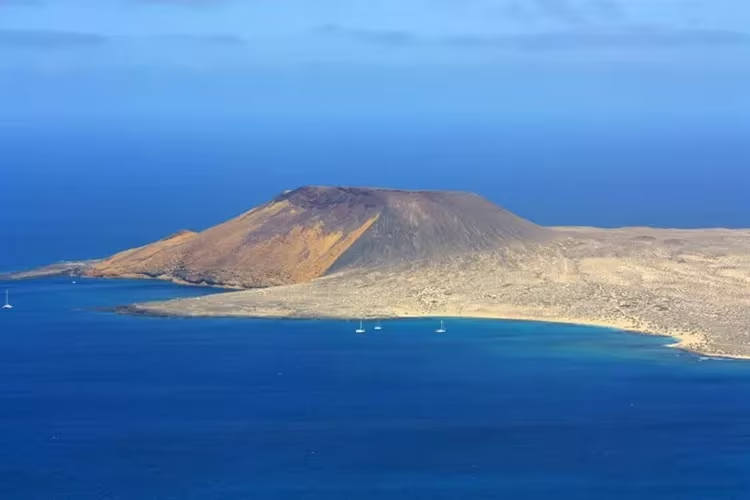
The mention of Gracios is rarely seen in the catalogs of travel companies. But those who once were destined to see the red-brown mountains rising against the backdrop of the radiant blue of the ocean, remember this sight forever. Life here takes place in two settlements – the port of Caleta del Cebo, formed in the 19th century, and the fishing village of Pedro Barba. A post office, a bank branch, a small supermarket, a bicycle rental and a couple of guest houses – that's all the local infrastructure.
Tourists come to Graciosa to admire nature, unspoiled by human activity. It is famous for its endless beaches. On white sand mixed with fine-grained quartz and basalt, you will not find any sun loungers with umbrellas or vendors of soft drinks, but you can meet fur seals and turtles.
Graciosa is popular among fans of fishing. The underwater world of the water area is incredibly rich – hake, sea bream, tuna, mackerel, stingray, moray eels, manta rays and small species of sharks live here. Connoisseurs come to catch blue or white marlin. Having taken a photo with a huge fish, whose weight reaches 60 kg, the lucky ones are obliged to release their prey into the habitat. Those are the rules.
Lobos
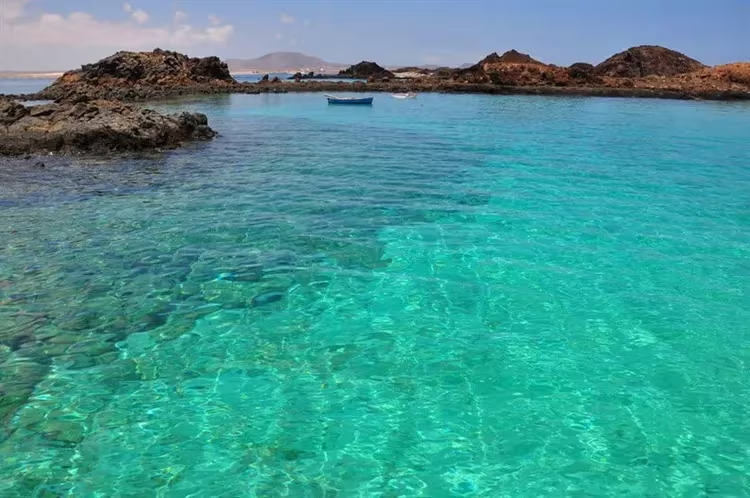
“Wolf Island”. This is translated from Spanish as the name of a small piece of land that is part of the Canary archipelago and located in the strait between Lanzarote and Fuerteventura. However, do not think that Lobos is inhabited by gray predators. Once upon a time, monk seals that lived here were called wolves. The true owners of the island were exterminated because of valuable meat and fat, but the local authorities still do not lose hope to revive the population of these mammals.
People have not lived on Lobos since 1982. Currently, this place is visited only by tourists vacationing in the Canary Islands. You can get here on a pleasure boat departing from the city of Corralejo (Fuerteventura). Already from the sea, travelers have a magnificent view of the main attraction – the extinct volcano Montaña de Caldera.
They say that 130 endemic representatives of the flora grow here, but it is quite difficult to find them. Here – wherever you throw your eyes – you will be surrounded only by stones, withered grass, bushy moss and half-dried trees. Therefore, we recommend a trip to Lobos only to lovers of wild landscapes, devoid of lush greenery.
Sies
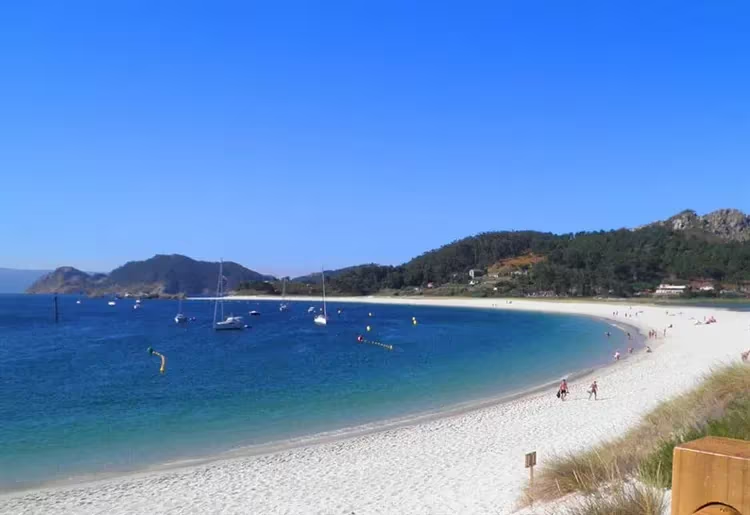
The Cies archipelago, consisting of the small islands of San Martino, Monteagudo and Faro, is located in the autonomous region of Galicia. In 1980, this wildlife oasis was given the status of a national reserve. People come here to enjoy the purity of the air, take pictures of impregnable rocks and watch the numerous birds that strive to steal food from tourists.
It is here, in the land of untouched forests and quiet bays, that Rodas is located – one of the most beautiful beaches on the planet stretching for two kilometers. The greenish-blue waves of the Atlantic Ocean wash the snow-white glossy sand, which can shame even its Caribbean counterpart. The coast is framed by dunes, where cormorans and gulls build their nests. A little further, majestic pines and eucalyptus trees rise to the sky.
Attention! No more than 2,200 people can visit the archipelago every day, so you should take care of tickets for the ferry from the port of Vigo in advance. Don't hesitate to book a spot at Ilias Cies Campsite, the only legal campground on the islands. You can only move along the established paths here, and you need to take all the garbage, including cigarette butts, with you – you will not find a single urn in Cies.
Best time to travel
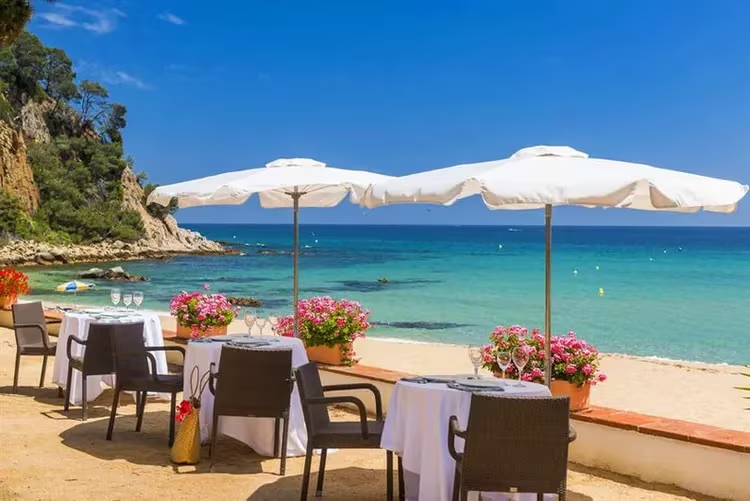
In the Balearic Islands, the holiday season starts at the end of May, when the air temperature rises to +25 °C, and the water – up to +20 °C. At the height of summer, the sea warms up to +26 ° C, the air – up to +38 ° C, but the blessed fresh breeze does not let the heat spoil your vacation. If you are attracted to sightseeing holidays, and the main purpose of the trip is to get acquainted with the culture and history of the country, then go on vacation in the spring. In March and April, the archipelago turns into a blooming paradise, and the absence of heat favors long walks.
The Canaries are called “islands of eternal spring”. This definition is quite deserved: the average annual air temperature here is about +22 °C. Rains rarely visit the land created by volcanoes, and mountains serve as reliable protection against hurricanes. Such a comfortable climate is formed by humid trade winds and the proximity of the African Sahara.
In the hottest months – July and August – the thermometer rises to +35 ° С. The peak of the swimming season begins in June and lasts until the end of October. At this time, coastal waters warm up to +23 °C. But travelers in January and February should pack light jackets in their suitcases – during the day the air temperature rarely exceeds +21 ° С, and in the evening it gets cold to +15 ° С.
Which one to choose for families with children
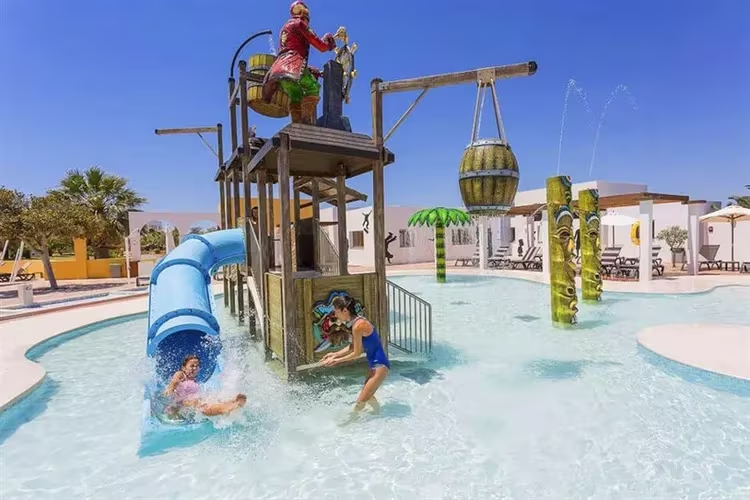
When planning a summer vacation with the whole family, pay attention to the Balearic Islands with their developed infrastructure, mild climate and plenty of sun. For holidays with children, go to Menorca – the edge of the sandy coast and the turquoise sea. This natural paradise is also rich in entertainment. The little ones will be delighted with the slides of the Aquarock and Aqua Center water parks, while the older children will appreciate the flora and fauna of the national park and horse rides offered by the Menorca a Caballo center.
Mallorca will also be a good place to relax with a child. Book a hotel in the resort of Alcudia and you will find the famous 3.4 km Playa d'Alcudia beach, famous for its crystal clear waters, silky sand, gently sloping sea and well-equipped playgrounds.
The Canary Islands are less suitable for family holidays. Famous for its capricious character, the Atlantic rarely pleases with warm surf and sometimes surprises in the form of high waves and cold water (in winter, its temperature can drop to + 12 ° C). Therefore, when deciding to travel to the archipelago with a child, be prepared to swim only in the pool.
If such a prospect does not scare you, then we advise you to choose Tenerife as your vacation spot. Young tourists will surely like amusement parks. The largest of them – Loro Park – will delight you with a botanical garden, a huge aquarium, a zoo and spectacular shows with parrots, dolphins and killer whales.