
20 most beautiful places in Barcelona – photo, description, map
Spain is not only a wonderful climate, a high level of service and a wonderful beach holiday, but also a rich excursion program. How many “pearls” of history, architecture, culture are concealed by Barcelona alone. She surprises at every turn. And even if you come here for a long time, you still may not have time to get acquainted with all its curiosities. It is very difficult to single out the most interesting places in Barcelona, but it is still worth a try.
Gothic Quarter
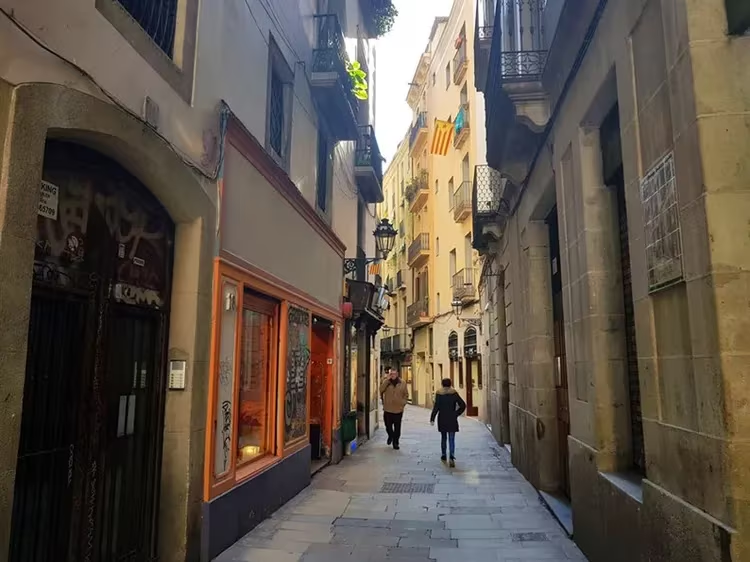
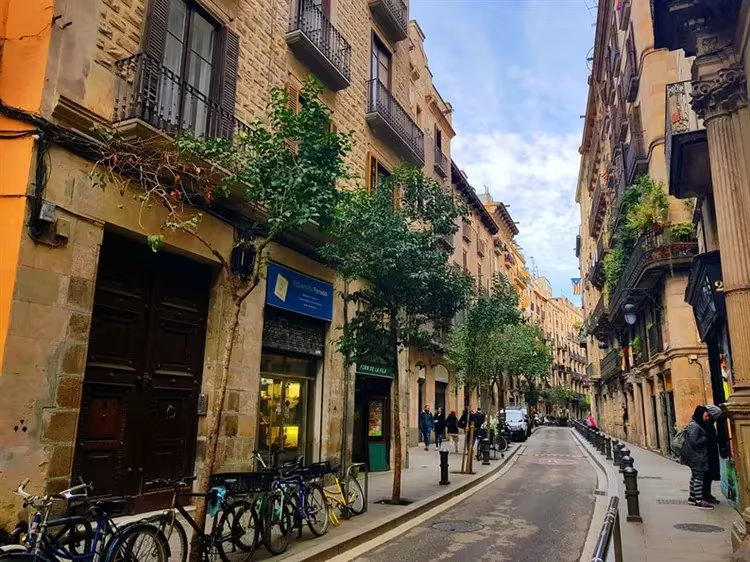
This is one of the most significant places in Barcelona. The Gothic Quarter is located in the center of the city, there are not only many attractions, but also enough cozy cafes, so there is where to sit and relax. Once upon a time there was an ancient Roman city surrounded by a high wall. Later, in the 5th century, the conquerors destroyed everything here to the ground. The buildings that tourists can admire today date back to the 14th century and beyond.
Gothic style creates a certain atmosphere. The beginning of the quarter can be considered the Plaza Nova (New Square), which appeared here in the middle of the 14th century. Once upon a time there was a brisk trade in slaves. From the fortress walls that were here, there was nothing left but the towers. Here you can also see the Bishop's Palace, built in the Baroque style. A relatively modern building is the College of Architects, which Pablo Picasso had a hand in creating.
The House of the Archdeacon deserves attention, this ancient building was rebuilt more than once, and today it can be noted the features of various architectural styles, now documents of the city archive are stored here. It is worth walking along the main street of the famous quarter – Bishopskaya. Look at the House of Canons, which has a unique layout. And, of course, to bow to the majestic cathedral, erected in honor of the young Eulalia, who was executed for the Christian faith.
Book a private transfer from the airport to your hotel for 3 452 RUB
Sagrada Familia
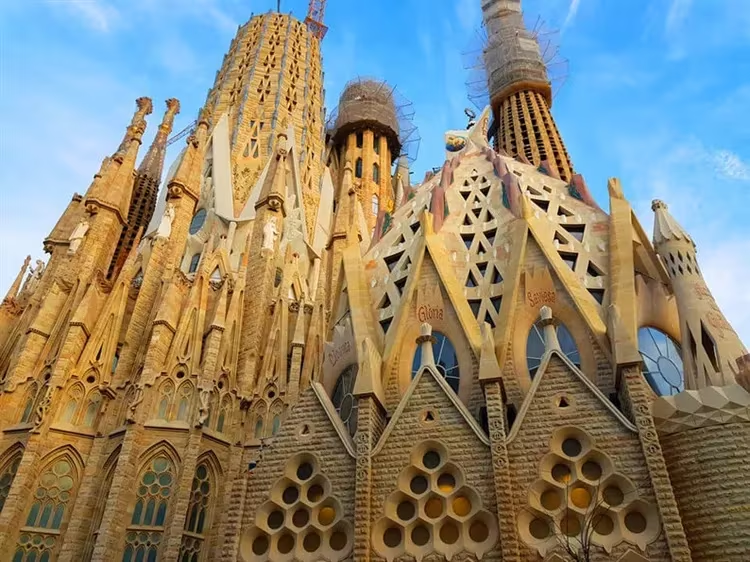
It is rare to find a cathedral with such an interesting history. And it's not just that it's still under construction. The temple was laid in 1882, and in the end, it should become the way the great architect Antonio Gaudi intended it to be. For him, this temple became the work of a lifetime, although orders rained down on Gaudi from all sides. It is interesting that another person began to build the temple, Gaudi was entrusted with the work later.
According to legend, one of the main customers had a dream that a man with blond hair and blue eyes would build the cathedral. Gaudí fit this definition. He used such innovative architectural techniques that contemporaries did not believe in the strength and durability of his work. He said that he takes nature as a model, tall, powerful and harmonious trees that God created. Impressive are the high columns of the cathedral, stretching into the sky, and the capitals look like branches. Gaudí died in 1926 when he was hit by a tram.
In the 1930s, anarchists destroyed its blueprints, which were supposed to guide those who were to complete the construction of the cathedral. In its final form, it should have three facades. Now two of them are ready – the Nativity and the Passion of the Lord. It remains to build the third – in honor of the Ascension of Christ. The cathedral turns out – marvelous beauty. Gaudi dreamed that when the wind blows, as a result of resonance, people near the numerous towers of the cathedral will hear the Music of the Creator.
Mount Tibidabo
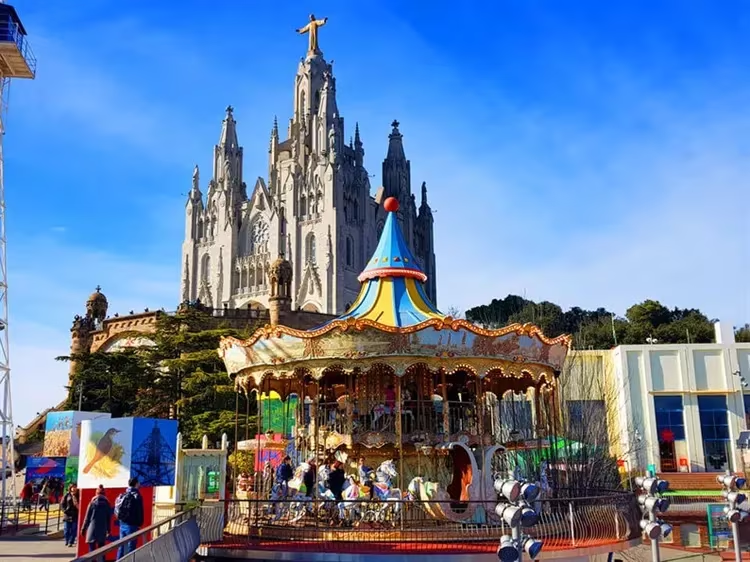
This mountain offers stunning views of Barcelona, so climbing here is definitely worth it. At the end of the 19th century, it was decided to build a Catholic church here. But, like many objects in Spain, it has become a long-term construction. At first, a neo-Gothic chapel was erected. It has survived to this day. It was planned that there would still be an observatory here, but later it was decided to build it elsewhere. The temple of the Sacred Heart itself took 60 years to build, and it was completed only by 1961.
Its architecture is unusual – it definitely consists of two churches, placed one on top of the other. Going inside, you can see beautiful stained-glass windows – one of them depicts the moment when Jesus Christ is tempted by the devil, sculptures of saints are also displayed here, below – in the crypt – rich murals. But tourists climb Tibidabo not only to visit the temple. There are excellent observation platforms, one of which is located on the TV tower. Tibidabo Park also attracts guests. Here you can ride amazing rides. Its location also speaks in favor of the park.
Riding a roller coaster and admiring the panorama at the same time is worth a lot! At one time this place was called “Children‘s Paradise”. Today, children and adults can ride both modern and vintage rides. For example, there is a metal tower with cabins where guests can climb up to 50 meters. This tower was built at the beginning of the last century. Over time, the Ferris Wheel, cars, and the “Palace of Light”, as well as much more, appeared here. Visitors to the park willingly buy talismans as a keepsake – figurines of a good witch.
Park Guell
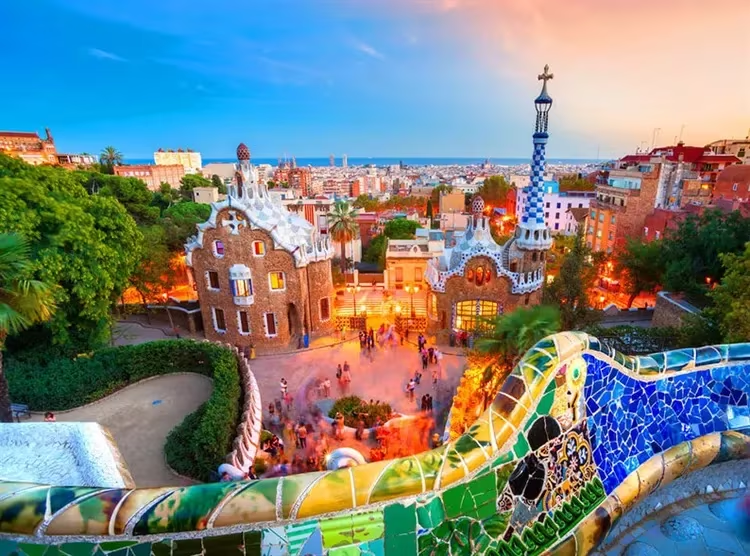
Initially, Eusebi Guell conceived to equip a green residential area here, a kind of garden city. However, plots of land here were not popular – rich people believed that this place was remote from the city center. Work began in 1901. They strengthened the slopes of the hill, erected pavilions at the entrance, and later an architectural masterpiece appeared – a winding bench. Several mansions were also built. One of them was intended for Antonio Gaudí – now there is a museum dedicated to him.
However, due to financial problems, Güell sold the land to the mayor's office, and a city park was located here. Today, visitors admire the houses at the entrance (they have fantastic shapes), inspect the “Hall of a Hundred Columns”, and a long bench, curved in the shape of a sea serpent. You can take a walk along the numerous footpaths, admire the quaint architecture of the park, visit the Gaudí House Museum.
Casa Batlló
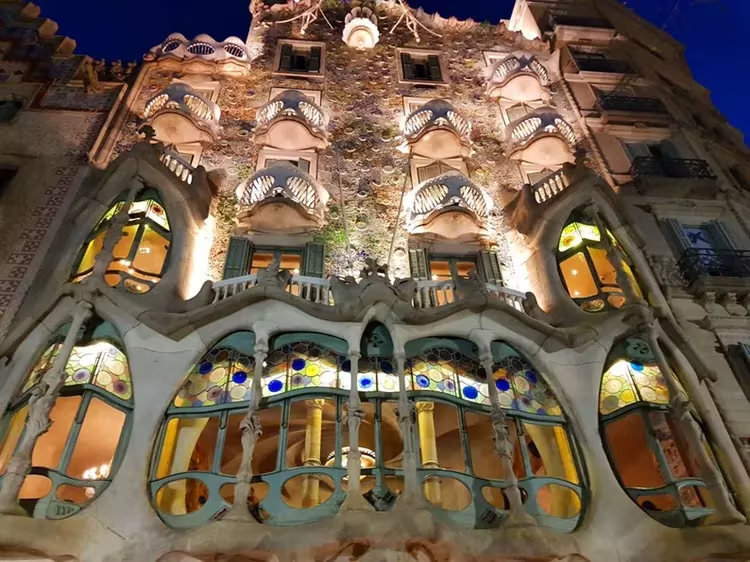
Another work of the great architect Antonio Gaudi. The house was built in the style of modernism. It is so popular that it is difficult to count the number of people who visit it every year. Something like a million. Gaudi worked on this project for about two years. It was here that the unique handwriting of the master was developed.
It was assumed that the old building would be demolished, and in its place there would be an apartment building for the magnate Batllo. But Gaudi decided to do everything differently, and carried out the reconstruction of the existing building. He used ceramic tiles, as a result of which chiaroscuro played, completed the basement and terrace, as well as the attic, arches. The result of the work was a real architectural masterpiece. Later, this house belonged to the Bernat family, and since the mid-90s of the last century it has been a museum. There are various events dedicated to Antoni Gaudí.
House Mila
Another masterpiece by Antonio Gaudí, and his last “secular” work. After that, he gave all his strength to the construction of the cathedral in honor of the Holy Family. And this house was ordered to be built by the spouses Mila-i-Kaps. They wanted the view of their mansion to capture the imagination of the inhabitants of Barcelona. There is no doubt that Gaudi succeeded.
Although due to disputes with the customer, he never completed the work, other people did it. Anyway, Mila's house turned out amazing. Gaudi, as always, took nature as a model. The building resembles a rock washed by the sea, it seems that everything flows here, everything changes. This impression is created due to the fact that the architect gave smooth shapes to the outlines of the house, and metal gratings resemble algae. The courtyards, where the windows of the utility rooms open, also have a round or oval shape.
The walls are covered with paintings. The chambers of the owners “look” at the street. The attic looks very impressive, where now there is a small museum that tells about the life and work of Gaudí. An unusual innovation was the brick arches that support the roof. Directly from the attic you can go to the terrace. Here you will see turrets and columns, sculptures and mosaics. Equipped in the house and an apartment-museum – you can see how the bourgeoisie used to live.
Boqueria Market
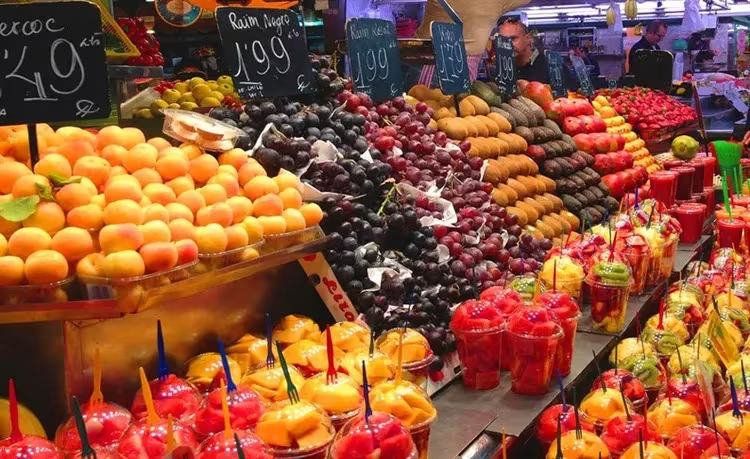
This is a historical place – for the first time they began to trade here in the 13th century. However, only in the middle of the 19th century a market building was built here, and it was covered with a metal roof in 1914. Visiting the market will be beneficial for those who come to Barcelona and live in apartments with their own kitchen. In Boqueria you can buy the freshest meat and fish, vegetables and fruits, without any preservatives and at very low prices.
You can come here by car, leave it in the parking lot, take a special cart and rush for food. Although the market opens at 7 o'clock, it is better to arrive a couple of hours later so that all the traders start working and there is more choice. If you drop by Boqueria to buy something as a souvenir, there will be less choice. However, it is definitely worth bringing nuts and spices from here. And of course, you can come to this place just to appreciate the magnificent historical market.
Almost any kind of meat, fish – fresh from the sea, oysters and various delicacies, a variety of southern fruits and vegetables – all this, collected under one roof, makes a stunning impression. Although it is customary to bargain in the market, you should not hope that they will give you a big discount here. Prices are already much lower than in stores, and the quality is higher. If you want to try something outlandish for you, for example, oysters, it is better to ask the sellers for advice so that they tell you which delicacies are worth buying.
Monastery of Montserrat
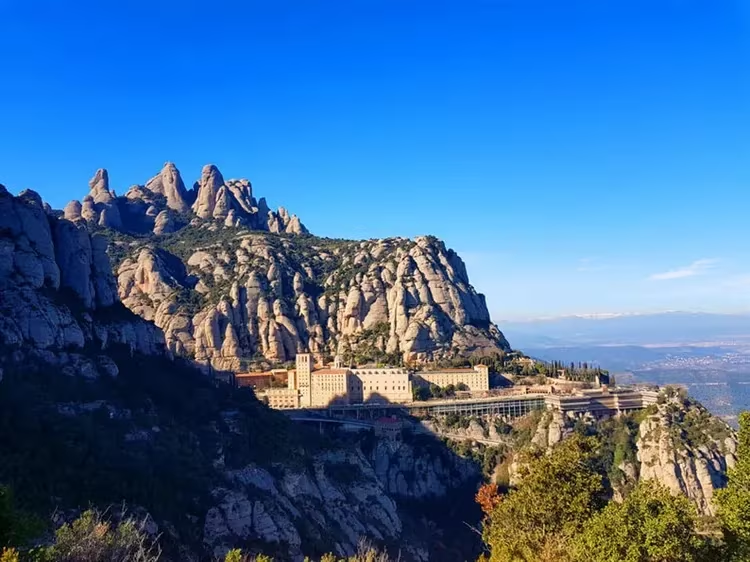
The ancient Benedictine monastery is located in the mountains, 50 km from Barcelona. You can go up by rail or cable car. Here you will admire the picturesque limestone rocks with bizarre shapes, take a walk along special hiking trails. All of them are well-groomed and safe. In the 9th century, there were several sketes on this site, in the 11th century a monastery was founded. In the 16th, a new Renaissance cathedral was consecrated.
In the 19th century, the monastery buildings were destroyed during the invasion of Napoleon's troops, few survived. Restoration work began three decades later. In the 20th century, during the brutal dictatorship of Franco, only in this monastery were worship services in the Catalan language. Today, the monastic buildings are a mixture of different styles, but most of all, the features of modernism can be traced. The Holy Virgin Mary of Montserrat appears before the faithful on a throne made of cast silver. The boys' choir sings a hymn to the Mother of God every day.
Also, another shrine is kept here – a statue of the Virgin Mary, made of black poplar. Art historians attribute it to the 12th century. This statue is called the “Black Madonna”, and the people call it “Darkie”. Pilgrims from around the world come to worship the Black Madonna. There is a museum on the territory of the monastery. Here you can get acquainted with archaeological finds, look at icons and jewelry, as well as beautiful paintings and sculptures. In particular, here you can see the works of Monet and Degas, Picasso and Dali, as well as other famous artists.
Citadel Park
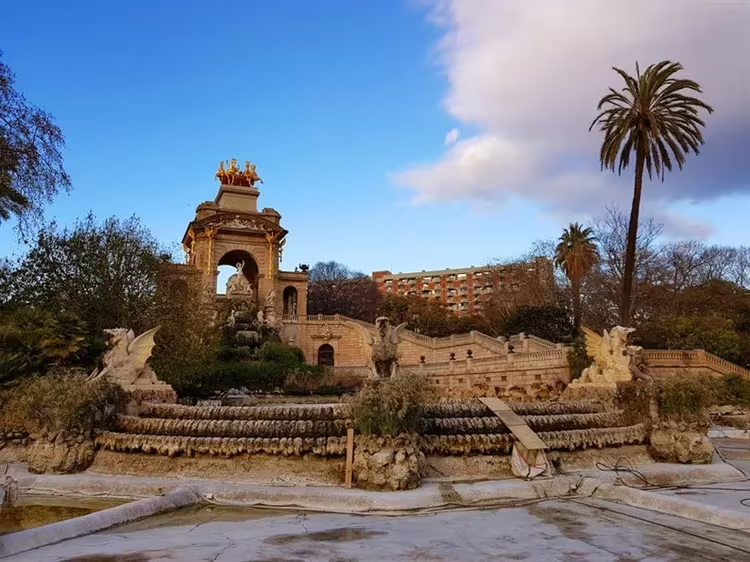
The park is located in the old part of the city and is a real open-air museum. The history of its appearance is interesting. In the 18th century, the city was captured by King Philip the Fifth, and in order to maintain power over Barcelona, he ordered the construction of a fortress here. Naturally, all the houses at the construction site were demolished. In the 19th century, the citadel ceased to play its role, most of it was destroyed, and a park was laid out on the vacant territory.
Later, many interesting objects appeared in it. Today the park occupies about 30 hectares, you can visit it on any day of the week. The Triumphal Arch located here, decorated with coats of arms, and sculptures that personify the sectors of the economy are beautiful. It impresses with a lot of flowering trees and shrubs, there is also a large lake in the park – fish live in it, waterfowl gracefully glide over the surface. The remarkable Cascada fountain attracts attention; the young Antoni Gaudí had a hand in its creation.
Another must-see object is the “Castle of the Three Dragons” – a square building crowned with towers. It houses the Museum of Zoology. In the southern part of the Citadel there is a zoo, where many animals and birds live. The inhabitants participate in the performances that take place here daily. Especially interesting is the Dolphin Show. Also on the territory of the park are the Museum of Geology and the glazed gallery, where exhibitions are held in winter.
Fortress of Montjuic
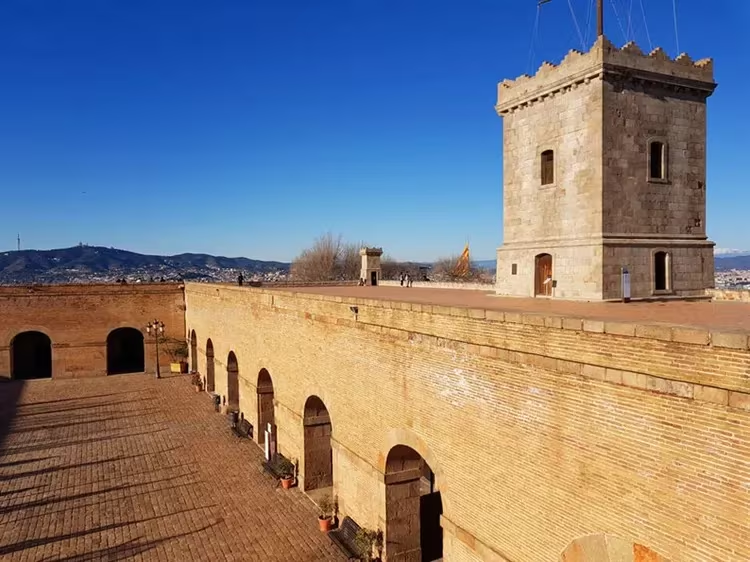
This fortress is inextricably linked with the history of Barcelona. Once upon a time, only a watchtower towered here. The fortress itself was built in 1640, when the inhabitants of Catalonia rebelled against the ruling Habsburg dynasty. Later, in 1705, the British captured the fortress for a short time, this happened during the War of the Spanish Succession. A few decades later, the reconstruction of the fortress began. It was clear that in order to fulfill its purpose, it must be strengthened. The area of the barracks increased, the number of guns increased, a deep ditch was dug.
But all this did not help, when in 1808 Napoleon's troops approached the fortress and captured it. During Franco's dictatorship, the fortress was a military prison. Luis Companys, who headed the government of Catalonia, was shot here. Then a museum was opened here. Today you can come here on foot or climb with the cable car. The fortress looks impressive, it also offers a beautiful view of Barcelona.
Zoo
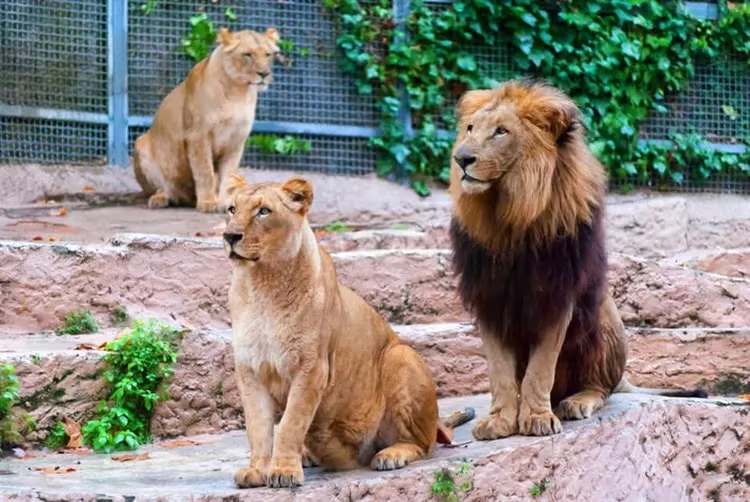
The zoo, which has already been mentioned, is located in Citadel Park. Today, over 300 species of animals live in it, and rare plants can also be seen here. Since the territory is quite vast, you can move not only on foot, but also by tram or bicycle. Especially such an offer will interest parents with children. The age of the zoo is quite respectable, it was founded at the end of the 19th century.
Moreover, it was immediately decided to arrange it in an unusual way: animals are separated from each other and from visitors by ditches with water. This contributes to the fact that the inhabitants look like they are in a natural environment. The employees of the zoo in Barcelona are doing a lot of scientific work. For example, otters were quarantined here and then released in the northeastern part of the country, restoring the natural habitat of this species. The exposition of the menagerie is interesting.
Here are the inhabitants of palm forests, rare birds, gorillas, aquatic animals, even “dragons”, that is, monitor lizards. Pleasing to the eye and beautiful sculptures. It is worth recalling that it was in the Barcelona Zoo that the only albino gorilla in the world lived for many years. During his life, Snowball left dozens of descendants.
National Art Museum of Catalonia
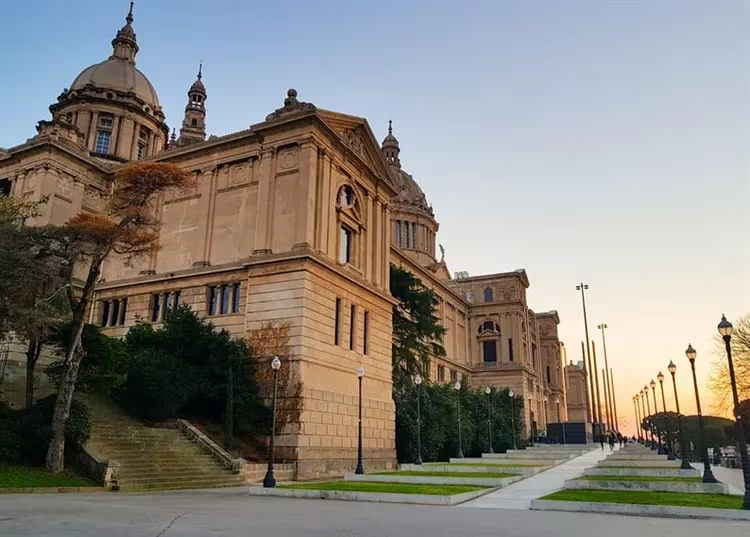
A very beautiful and relatively young palace, which attracts attention from afar with high towers. It was built in 1929 – the World Exhibition was then held in Barcelona, here, in front of the palace, it was opened by the king. Since the mid-1930s, the palace has been a museum. First – the art of Catalonia, then it became the National Museum of Art of Catalonia. Its appearance has also changed – the features of modernism have disappeared, it has been replaced by neo-baroque.
Sections have been fully operational since 2004. A visit to the museum will be very comfortable. Magnificent halls, coolness, even when there is summer heat behind the walls, soft carpeting, audio guides, comfortable sofas so that guests can relax, a cafe and a souvenir kiosk – all this will please sightseers. If you want to learn more about the exhibits on display, you should book a tour, which will be conducted by a museum employee, who will also answer all your questions.
What cultural treasures can be seen in the museum? This is a unique collection of Romanesque paintings, furniture made by the great Antonio Gaudi, works of art related to modernism, avant-garde, romanticism and other trends. There are hundreds of thousands of exhibits here, so it's not surprising if you can't see everything in one day.
spanish village
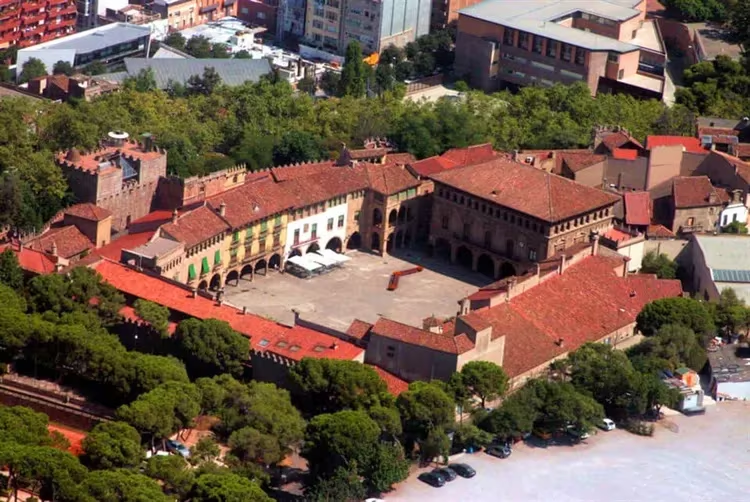
Another architectural object is the open-air museum, which was built for the beginning of the World Exhibition. The idea was implemented so successfully that subsequently similar projects were implemented in other countries. The architects and artists who created the park traveled a lot around the country, taking on board the most interesting city and village houses. Further, on a relatively small area of the park, they erected over 100 buildings in different styles.
Most of them are built in full size, and only a part is reduced. The materials used were the same as those used to create the prototypes. Moreover, the architects by no means pursued the goal of building here all the iconic architectural masterpieces of Spain. They wanted the guests to appreciate the variety of styles typical for different regions of the country during a short walk. There is also a main square, personifying the market squares of Spain, and a 16th-century Renaissance palace, a neoclassical mansion, a farmhouse, and much more.
Craftsmen's workshops are located here – guests can get acquainted with the process of making pottery, jewelry, glass and other products, buy something for memory. In the evenings, life here is even more lively, there are performances, for example, you can see how the Spaniards dance flamenco.
Basilica of Santa Maria del Mar
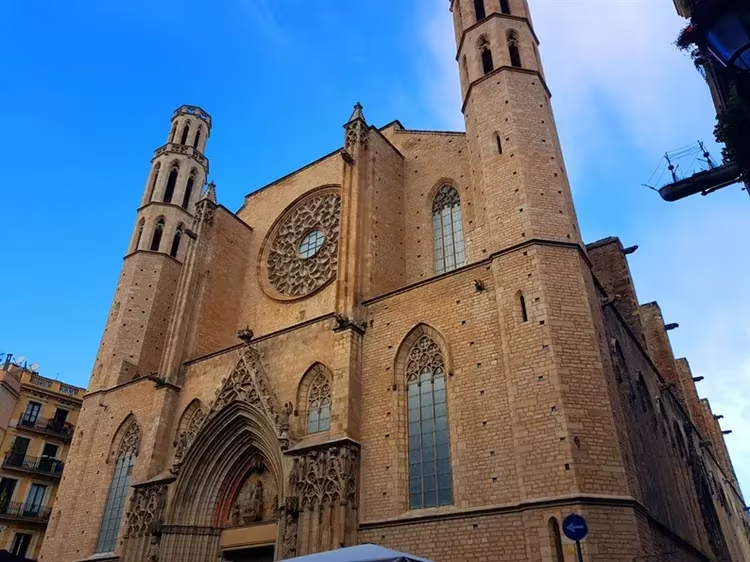
According to legend, the place where the basilica now stands was once preached by the Apostle James. The first mention of a temple built here dates back to the 10th century. But this church has not survived to this day. And today, guests of Barcelona admire the basilica, built in the best traditions of the Gothic. The place is one of the most visited in the city, and many newlyweds play their weddings here.
The basilica was built in the 14th century according to the design of Berenguer de Montagu. Since then, it has been destroyed several times. This happened as a result of fires, earthquakes, wars. Of course, not only the building itself suffered, but also the works of art that were in it. So, the civil war of 1936 caused great damage to the basilica.
The final restoration work was completed only by 1990. It is better not to limit yourself to a walk around the basilica, but to go inside. You will see the main nave, admire the stained-glass windows through which the light streams, and perhaps hear the historic organ, which has also been restored. You can book a tour and go upstairs. You will hear the story of the construction of the temple, and you will walk to where you have a stunning view of Barcelona.
Labyrinth Horta
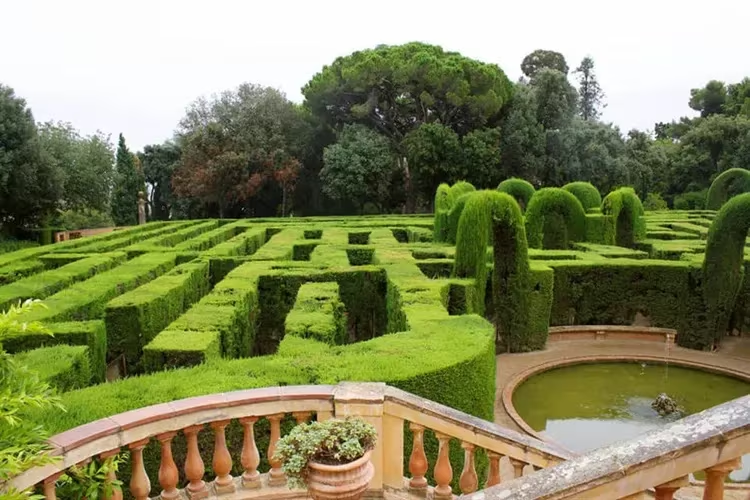
The Spaniards take great care of this oldest garden – here you can not only admire rare flowers, fountains and sculptures, but also listen to music. The number of guests is limited so that nature does not suffer from an excessive influx of tourists. The idea of creating the park belonged to the Marquis Anthony Desvalls, then several more architects joined his project. The name of the park was given in honor of the area where it is located.
Horta was handed over to the city authorities in 1967, the park needed restoration. Now a number of restrictions have been imposed on visitors: for example, you can't ride bicycles here, sit down for a picnic, and so on. The impression on the guests is made by a labyrinth made of living cypresses. You can really get lost in it. Once in the very center of the labyrinth, you will see a platform where the statue of Eros is installed.
There is also a large picturesque pond in the park, which is fed by an underwater source, a beautiful waterfall. Many rare trees, shrubs and flowers grow here. A special note is made by coniferous plants, of which there are also many. The air, thanks to them, seems especially clean. During the warm season, the park closes at 20:00, in winter – one hour earlier. There is no admission fee on Mondays and Wednesdays.
Monastery of Pedralbes
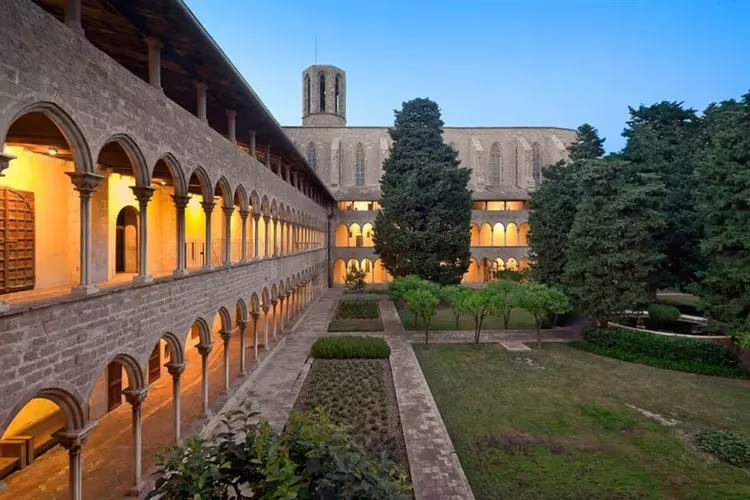
The monastery is located in a prestigious area where the mansions of the city's richest people stand. There are also many green spaces here. Pedralbes was built in the first half of the 14th century, by order of the queen. Therefore, the complex turned out to be truly luxurious. The best masters of Spain worked on the design of the premises. One of the cells was intended for a relative of the royal family – it is decorated with magnificent paintings. The octagonal tower is also admirable.
Tourists love to wander around the monastery garden – it seems that the 14th century lingered here. Gothic features are traced in the design. Tangerine trees, a well, a fountain – all this looks very picturesque. You can sit on one of the benches and enjoy the view.
Camp Nou stadium
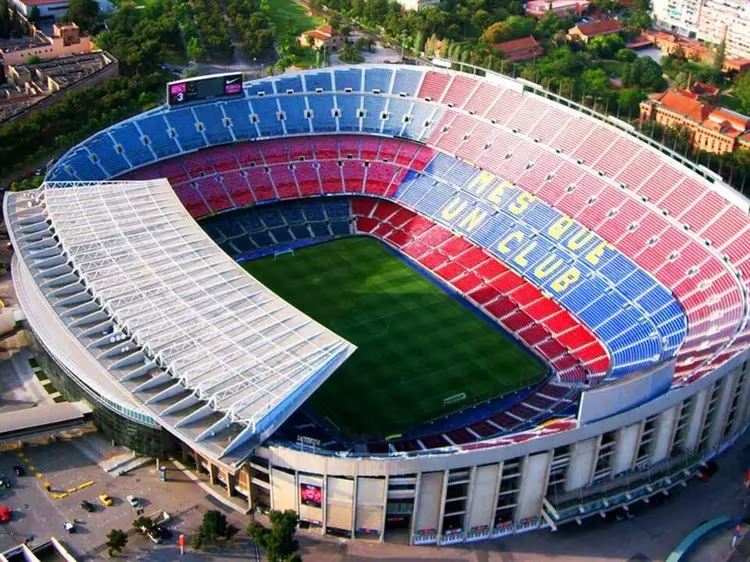
This stadium of the Barcelona football club has gained worldwide fame, although it was built relatively recently – in 1957. 5 stars according to the UEFA rating is the evidence of recognition. Only a few stadiums have a similar status on our planet. Therefore, even if you do not buy a ticket for a football match, it is worth coming here for a tour. Please note that it is carried out without any guides. You will have the impression that you just visited the “behind the scenes”. As part of the tour, you can also visit the museum and the multimedia center.
You will understand the scheme of the stadium yourself, you can ask for help from employees, security guards. They will tell you how to get to one place or another. Along the way, you will see various exhibits. Usually the journey begins with a visit to a virtual stadium, as if you were at the match, especially for children. You can also look into the dressing rooms, see the spa where the players relax, the meeting room and the chapel where the players pray before entering the field. In short, you will find a lot of interesting things.
Park “Catalonia in miniature”
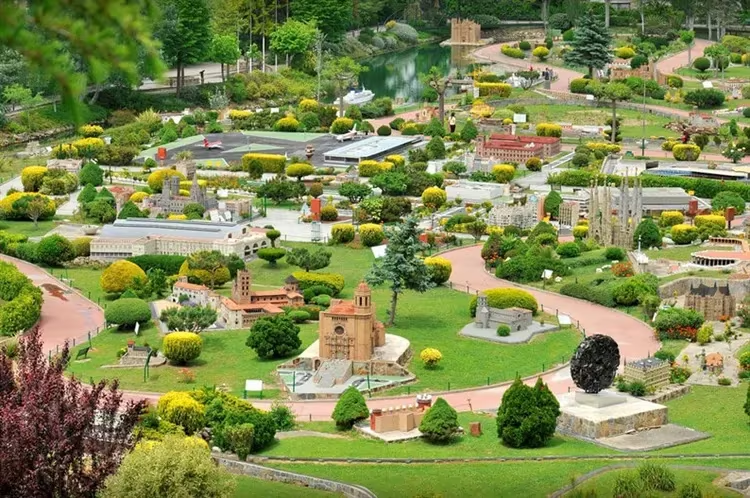
This open-air museum park is located 12 km from Barcelona. It is definitely worth coming here. The ticket price is low, the walk will take about 2.5 hours. But you can see miniature copies of the most famous back of Catalonia. Among them there are both historical sights and just houses that reflect the diversity of architectural styles of this part of Spain. The park opened in 1983. Today you can see almost 150 miniature buildings here.
All of them were handmade by craftsmen. You will see the Sagrada Familia, and Park Guell, and the Salvador Dali Museum, and much more. The choice is great. Someone will like ancient castles and churches more, and someone will like a stadium or an airport. There are working models: cars and trains run, skiers leave the slopes of the mountains, and so on. You can go around the park on foot or take a mini-train, which has only two cars. Such a trip will be very convenient for parents with small children.
Cathedral of the Holy Cross and Saint Eulalia
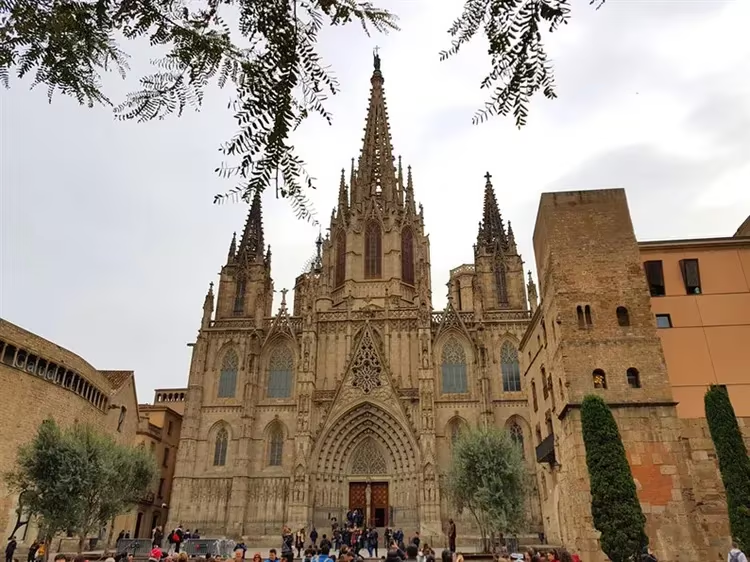
This is the main cathedral of the city, here is the residence of the archbishop. Young Eulalia accepted death from the persecutors of Christians. In the 7th century, she was canonized as a saint. There used to be a Romanesque church on the site of the cathedral. It was destroyed, and in the 13th century the cathedral began to be built. Its construction dragged on for many years. The facade was decorated only at the end of the 19th century, the high spire appeared even later. The cathedral is an example of the Gothic style.
Despite its large size, both inside and outside the building looks very light and airy. The stained-glass windows are beautiful, through which multi-colored rays of light pour in, a large place is allocated for the choir. In the cathedral, in a sarcophagus made of alabaster, the relics of St. Eulalia are kept. Each of the 26 chapels is a work of art, the altars are richly decorated. You can also listen to a 16th-century organ here. In the courtyard of the cathedral there is a fountain and a beautiful garden.
Rambla Street
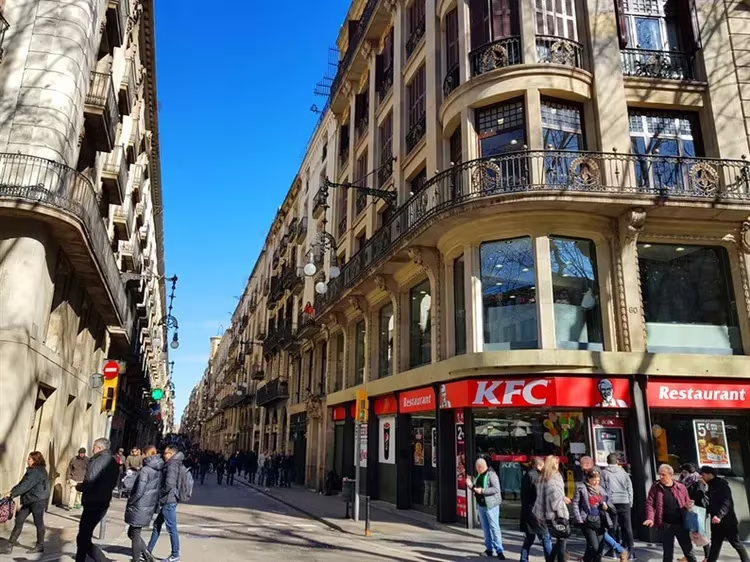
This is the central street of Barcelona, its length is over a kilometer. It is worth going through it – from Plaza Catalunya to the monument to Columbus. When Barcelona began to expand its borders in the 18th century, the fortress walls were destroyed, and the townspeople were able to walk here. And so the Rambla was born. Walking, you can see a lot of interesting things. For example, the Canale̒tes fountain, which is associated with many signs (footballers especially love it). The well-known Boqueria market is also located here.
The Miro mosaic, the Liceu opera house, the Royal Square with the wonderful Three Graces fountain, the Güell courtyard – all this is the Rambla. The street is mostly pedestrian, there is little public transport, it moves along special narrow paths, so you can walk freely. Here are some amazing places in Barcelona, one of the most beautiful cities in Spain. Don't miss the opportunity to see them.