
Famagusta in Cyprus: ghost town, photo, description, sights, history
The history of Cyprus is confused and ambiguous. This was especially evident in recent centuries. Ethnic strife, kindled against the backdrop of a very favorable geographical location and wealth of natural resources, literally does not allow the population of the island to develop and flourish. The golden sand of local beaches, which attracts tourists from all over the world, the warm sea, wonderful landscapes cannot reconcile the Cypriots themselves among themselves.
Since 1974, Cyprus has been one of the most militarized places on the globe. But this does not prevent travelers from enjoying colorful views of architectural monuments, beach holidays and clean air, saturated with the aromas of fragrant greenery.
Before traveling, be sure to Interesting facts about Cyprus – only on our website.
sights
In Famagusta there is something to see for connoisseurs of antiquity. The city is located on the Karpas peninsula. Once upon a time, before the invasion of the Ottoman Empire in the 16th century, these lands were simply fabulously rich. The famous siege of the city fortress by the Turks is sung by Emilio Salgari in the exciting adventure book Captain Tempesta.
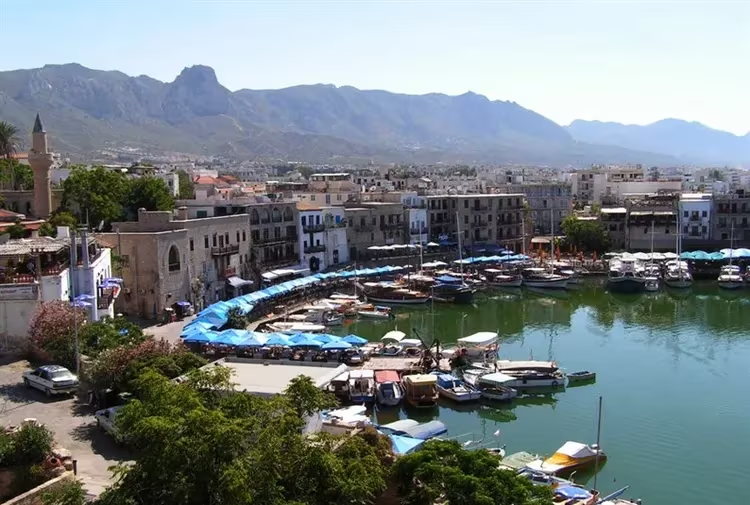
The stone citadel, the governor's house and ancient fortifications 15 km long surround the old city, keep traces of the feats of arms of their defenders. And on the central square, among various-sized cannons and neatly folded cannonballs for them, between the statues of lions, sitting on empty powder kegs in the shade of huge trees, you can taste real Turkish coffee. Narrow streets with small houses, which seem to be completely untouched by civilization, carry the walkers back to the Middle Ages, as if by a time machine.
Othello Tower
Some argue that Shakespeare wrote the tragedy “Othello” based on the events that took place in one of the city's towers. According to legend, the influential nobleman Christoforo Moro killed his wife Desdemona, suspecting her of infidelity. The building is called “Othello's Tower”. They say that somewhere in its cellars there are countless treasures hidden by Venetian merchants who fled from the Ottoman conquerors.
Cathedral of Saint Nicholas
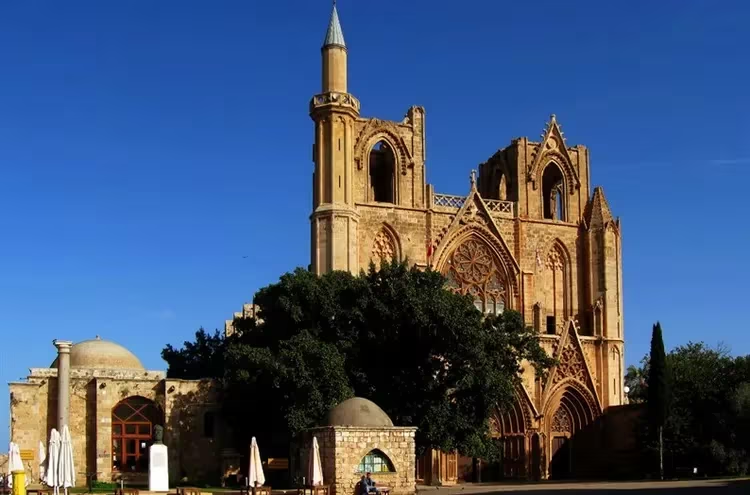
In the 14th century, the Cathedral of St. Nicholas was erected here. In the late Gothic style, the temple impresses with a sense of solidity, delightful exterior decoration. Inside, a vaulted ceiling over elongated windows and slender columns gives the impression of sublime fullness.
In 1571, it was seriously damaged by cannonballs, and almost all the sculptural decorations disappeared. In addition, the Turks transformed it. Now it is the mosque of Lala Mustafa Pasha, one of the Ottoman commanders. The church of Peter and Paul, which is also an outstanding architectural monument, was also made a Muslim temple.
Church of St. George
In the same bombardment, the church of St. George of the Latins was practically destroyed. Built in the middle of the 13th century, it was the first Catholic parish church. The remaining wall protects the grandeur and monumentality of the entire structure. But the palace in the Renaissance style, created in 1552-1554 by the architect Sanmikeli, was heavily rebuilt, but retained the texture and splendor of those times.
Ganchvor
In 2003, the so-called Ganchvor, located on the territory of the Turkish military base, was opened for excursions. This is a monastery built in 1346 according to all the canons of Armenian architecture. The temple was repeatedly restored, as several times it “fell under the arm” of militant Turkish Cypriots.
Ancient Salamis
At a distance of some 7-8 km from Famagusta, there is an undoubted miracle of archeology – the remains of ancient Salamis. This city was founded in the XI century BC. the hero of the Trojan War Teukrom. Many myths accompany his arrival in Cyprus. The temple of Zeus erected by him, even in a state of ruins, conquers with its scope and former pomposity. The marble forum, surrounded by ancient statues, whose heads, unfortunately, adorn the collections of European antiquarians, has been perfectly preserved.
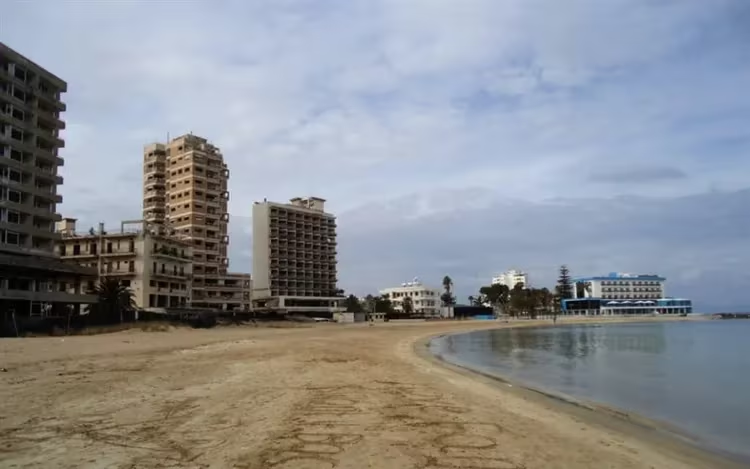
Fragments of mosaic panels on some walls were walled up during the Christianization, so as not to embarrass the people with “shameful” pictures. Thanks to this, it is now possible to please the eye with the art of the masters of distant antiquity. The stands of the stadium, the amphitheater, the market and public restrooms have survived. Archaeologists have discovered the remains of an educational institution. Everything speaks about the well-being of the citizens. But a series of earthquakes and pirate raids forced them to move to Famagusta.
Why a ghost town
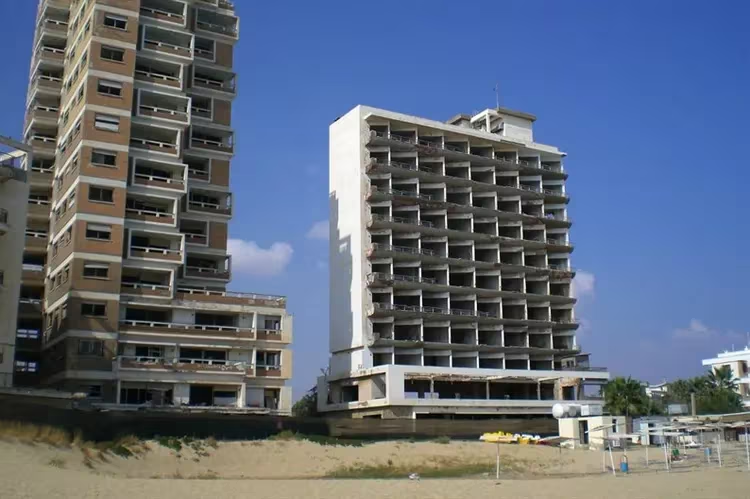
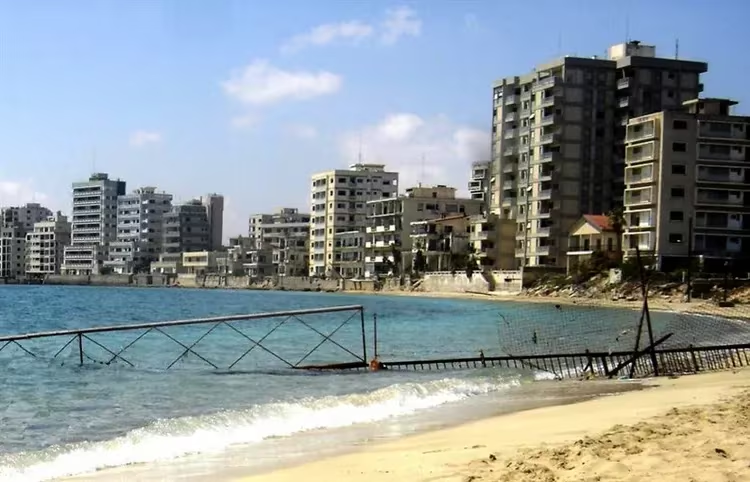
It began to be called a “ghost town” with the light hand of a journalist from Sweden, Jan Olaf Bengtson. In September 1977 he visited Varosh, a closed area of the city, and described abandoned houses and streets. Pictures of the desolation of the once prosperous tourist center shocked him to the core. Then, in August of the 74th, people were evacuated in a hurry, they were allowed to take only two bags with them. In a matter of hours, comfortable skyscrapers, fashionable hotels, shops and expensive restaurants were empty.
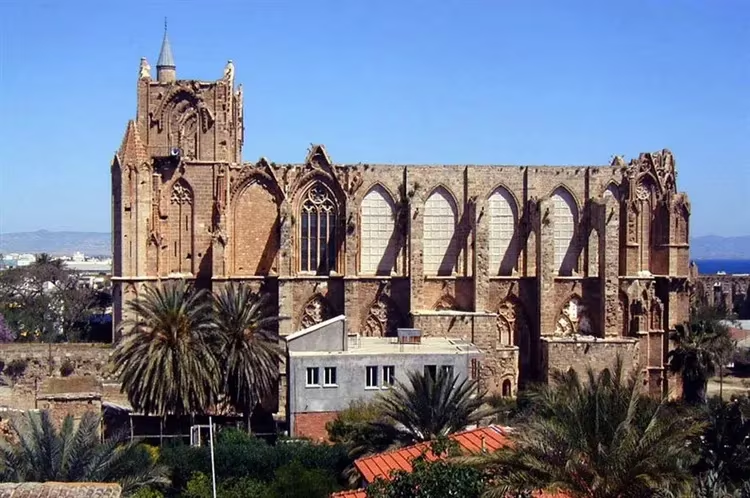
In his essay, Bengston wrote about tables set, stalls stocked with merchandise, and even lights on forgotten in abandoned rooms. Photos depicting a half-unloaded pickup truck with Pepsi-Cola bottles empty in the sun, the wide doors of dusty mezzanines with kitchen utensils flew around the world. They can be easily found on the Internet.
District Varosh
Since 1960, when Cyprus became a separate independent power, Famagusta has gradually grown, becoming a major industrial metropolis. It turned into a real paradise for successful businessmen, authoritative politicians, popular artists who want to spend their holidays in a prestigious resort. The largest number of fashionable new buildings, which housed elite hotels, nightclubs, concert halls, was concentrated in Varosha.
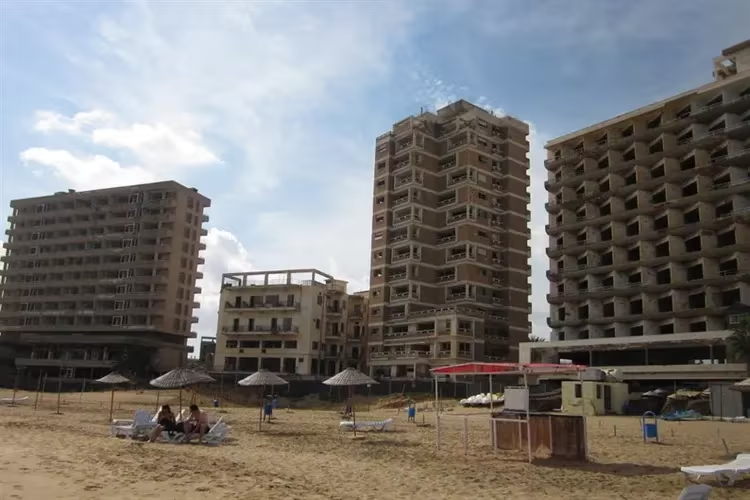
It was this area that was “frozen” during the “Cyprus Peace Operation”, as Turkish sources indicate the emergence of the “Turkish Republic of Northern Cyprus”. This state to this day remains recognized only by Turkey. Greek Cypriots now live in the south, Turks in the north.
The conflict is kept unresolved in our time, but in 2008, a wall was destroyed in the capital of Nicosia, dividing it into two parts. Today, although passing through customs, you can freely move around the island, enjoying the sights and delights of nature.
We also recommend that you familiarize yourself with Hotels in Cyprus for families with children.