
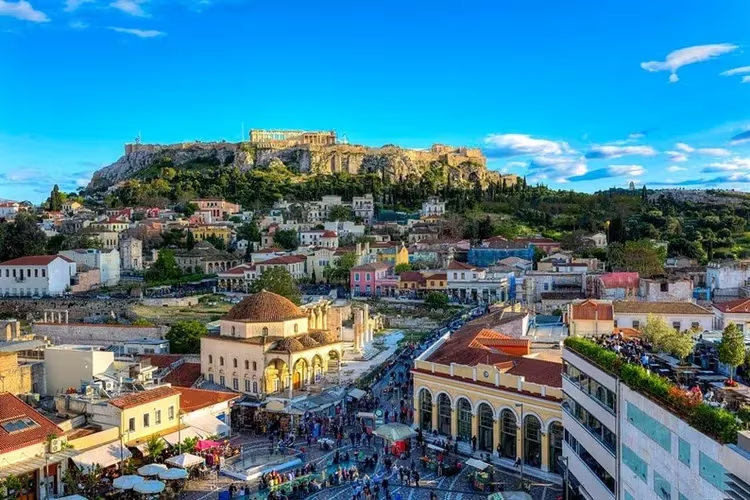
Greece is an ancient country that has experienced ups and downs, hundreds of rulers, nations and even civilizations. Her heart, her capital, Athens, is immersed in greenery in the summer under the scorching southern sun. The streets and squares of this city are a multifaceted, sometimes complex history of the state. In the marble ensembles of the Acropolis and Agora, time froze. Echoes of the Middle Ages can be heard in Christian cathedrals. Joy and hospitality live in the hearts of the Athenians. Get to know the culture of this country better with the help of locals, amazing cuisine and attractions of Athens, famous all over the world.
Athens Acropolis
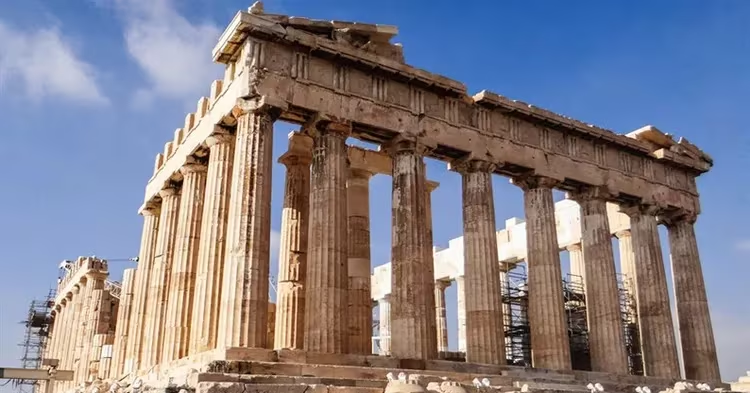
This country has experienced many wars, victories and defeats. The Acropolis of Athens is a monument to those events, because its name is translated from Greek as “fortress”, and the buildings themselves rise on a rocky hill.
Temples and shrines built in the 4th century BC served as a refuge in case of war. Now the whole complex is included in the UNESCO heritage list and meets hundreds of tourists every day. This amazing place is worth a visit even for those who consider the “ruins” to be boring and uninteresting. The majestic white stone columns against the blue southern sky amaze with their elegance of form and monumentality.
The masters of Ancient Greece created their masterpieces of architecture for several centuries. The entire architectural complex is considered one of the largest fortresses ever built in the country. It includes the temples of the Parthenon and Niki Apteros, the covered gates of the Propylaea and other buildings. The historical monument is currently being reconstructed.
Visitors may also be surprised by the fact that the sculptures are not originals, but only their exact copies. Real statues are kept under the supervision of scientists in various museums around the world and are protected by scientists from the destructive effects of the environment.
The ancient city is located near the modern civilization. You can get to it by various public transport, the easiest way is to take the metro, getting off at the station of the same name. Here, the noisy modernity is abruptly replaced by the grandeur of antiquity. It is better to visit the Acropolis of Athens at the beginning of the day, as there is practically nowhere to hide from the scorching sun on the plateau. And most tourists usually get here closer to dinner. Entrance to the territory is carried out daily from 8 am to 6 pm. Depending on the holidays and the season of the year, this time may vary.
A ticket per person will cost no more than 20 euros. The price includes some other attractions. Its validity period is 4 days. Young people under the age of 18 enter for free. You can also get here as part of an excursion, but Russian-speaking guides often unreasonably inflate prices. An audio guide or guide will be useful to those who wish not only to see the monuments of antiquity.
Stock up on water: the price of it increases greatly as you approach the architectural monument. Souvenirs and other small items can be purchased at the foot of the hill: they are much cheaper there. Tourists bored among the ruins can look at the Central Market of Athens. It is located nearby and pleasantly contrasts with its liveliness.
Parthenon
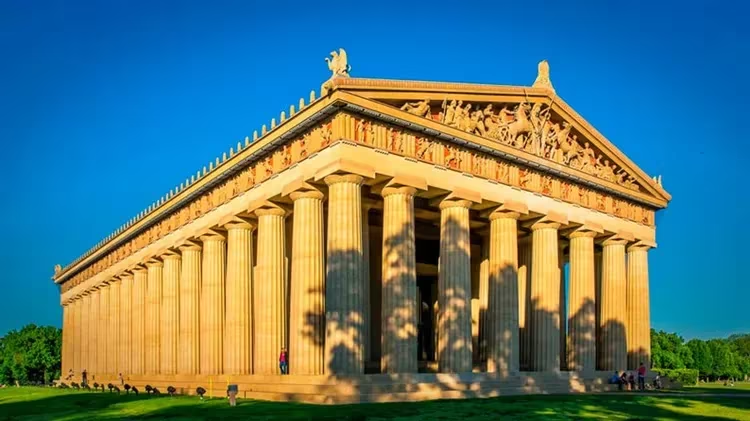
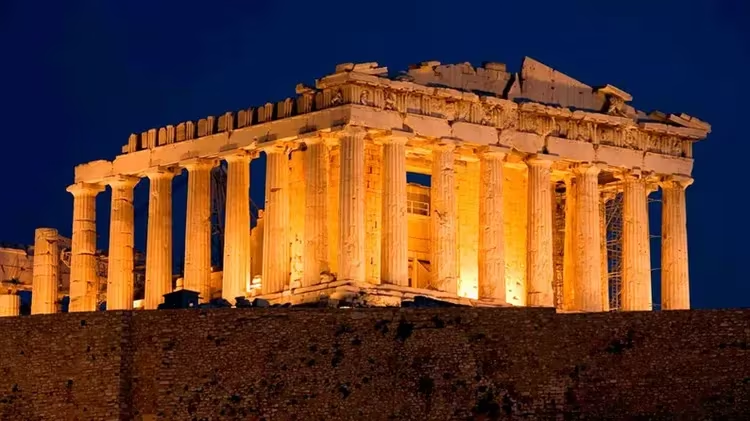
The central place in the architectural ensemble of the Acropolis hill is occupied by the temple of the goddess Athena Parthenos. This building is one of the most recognizable and visited by tourists in the world. Indeed, who has not seen at least once in his life a photograph of these perfectly straight columns? And for many it is no secret that they are not straight at all.
The Parthenon became the crowning achievement of architects, sculptors and artists of that time. The place for the construction of the temple was chosen in such a way as if the building is a continuation of a natural hill and, when approaching it, it gradually “grows”.
Due to the location of the columns at a certain angle, looking at them from the side of the main entrance, he sees the temple in volume, that is, 3 walls at once. The curvature of most of the lines creates an optical illusion, due to which they all appear perfectly even. Repeating elements in the architecture of the sanctuary give it a special harmony and grace.
Built a masterpiece of architecture of white marble. Over time, under the influence of sunlight, the southern side of the temple complex acquired a golden hue, and the northern side became purple. Stop and take a close look at the Parthenon. Remember that you can't touch it with your hands, but you can safely take pictures. Take a closer look at the sculptures of the colonnade. They were created under the direction of Phidias, and many details of this decoration are now in various world museums.
Theater of Dionysus
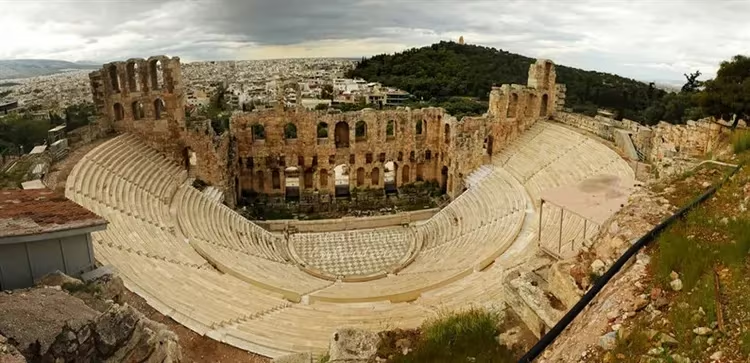
In the southeast of the Acropolis in Athens, there is another monument of architectural skill and love for the art of the ancient Greeks. Visit this place to yell and sing for an experiment. The amazing acoustics of the amphitheater makes it possible to perfectly hear the orator speaking on stage even to the most distant spectator. In antiquity, performances were shown in this place, theatrical art, classical in our understanding, was born and glorified.
Initially, the building was wooden, but over time it was reconstructed, made of marble. The theater never had a roof, so all the festivities were held in the open air. The auditorium was able to accommodate about half of the inhabitants of Ancient Athens, that is, 17,000 people.
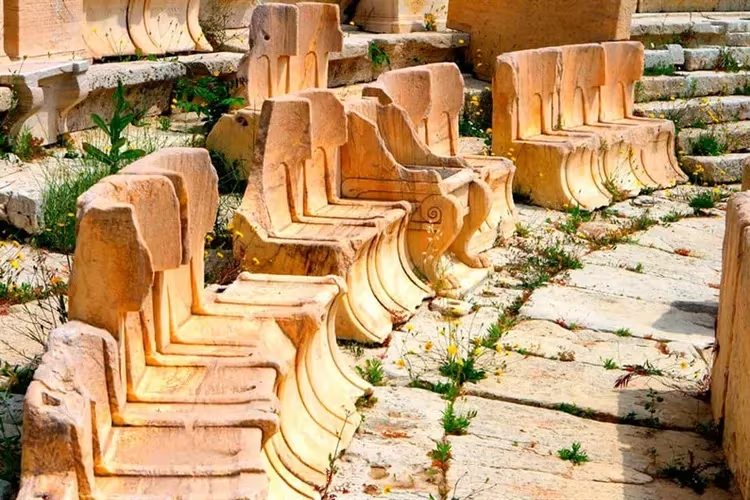
The row closest to the stage was intended for guests of honor and consisted of 67 seats. For their manufacture, an expensive and extremely rare type of marble was used. On the surviving places of the first row, you can see engraved names. During the reign of the Roman emperors, the theater was rebuilt for gladiator fights, supplying the front rows with bumpers and iron bars. A frieze depicting satyrs also appeared here. Having served people for about 5 centuries, the building was abandoned. Not so long ago it was restored, along with other objects of the Acropolis.
Hadrian's Library
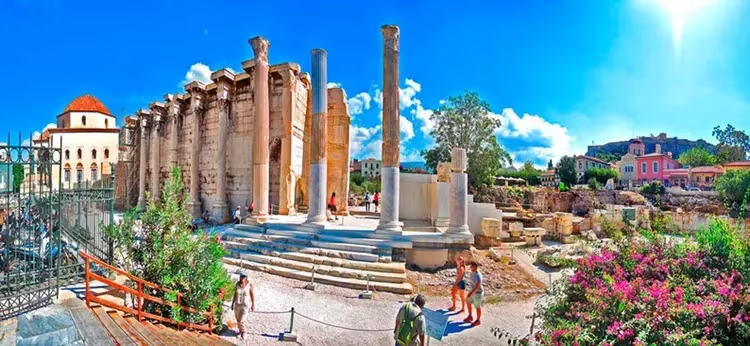
In the dilapidated columns on the territory of the Athenian Acropolis, a library is now hardly guessed. In ancient times, this monument was built to the glory of human wisdom. There was a repository of numerous manuscripts, lecture and reading rooms, and a garden with fountains in the courtyard. Inside the spacious building, decorated with gold and marble statues, one could hide from the heat and bustle of the world.
The building served as a library for no more than a century. For two and a half centuries, it was rebuilt several times and changed its purpose. Only the western wall has come down to us, which was originally made of marble. In 2004, it underwent restoration and was opened for viewing by tourists. Like all Greek ruins, Andriana's library deserves attention, presenting only a fragment of a monumental structure. We can only guess how magnificent and grandiose this architectural creation was, if even a small part of it leads to the admiration of many.
Odeon of Herodes Atticus
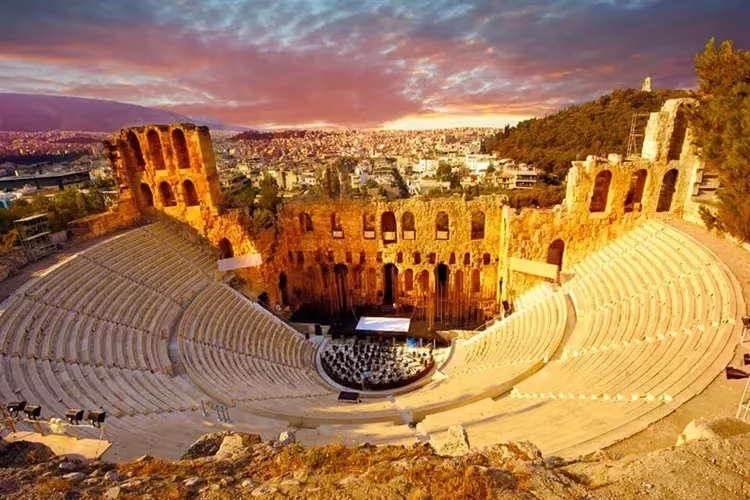
There are 2 theaters in Athens on the Acropolis Hill. And if the theater of Dionysus fascinates with its scale, then the odeon of Herodes Atticus attracts the public with its romantic history and various performances taking place today in the open air. A detached building is located in the south of the Acropolis. It was built much later than others in this architectural ensemble: in the 2nd century AD. The idea of erecting an odeon and funds belonged to the philosopher and orator Herodes Atticus, who dedicated this creation to his young and beautiful wife who passed away.
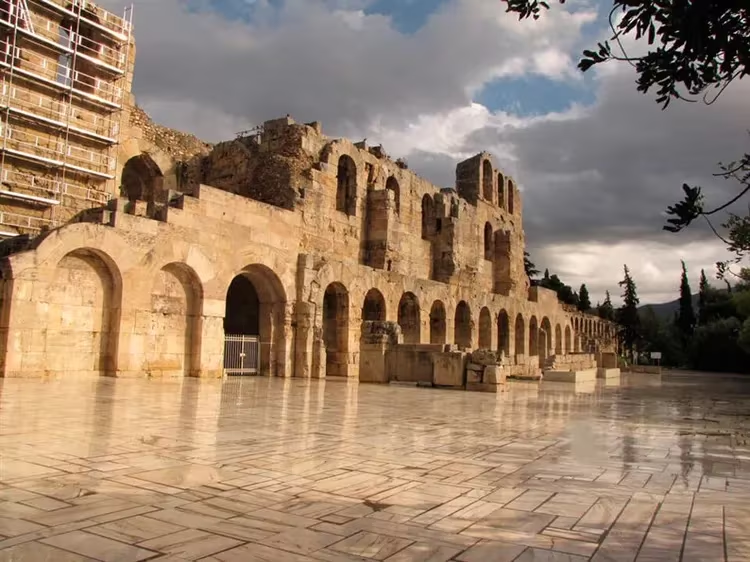
The architectural monument is well preserved. Only the roof and marble statues in the niches of the wall behind the stage are lost. In the middle of the 20th century, the amphitheater of the auditorium and the stage were restored in order to once again gather lovers of music and theatrical art. For half a century, the odeon has hosted the Bolshoi Ballet, operatic tenor Andrea Bocelli, Elton John and many other celebrities. Up to 5,000 people can be here at the same time.
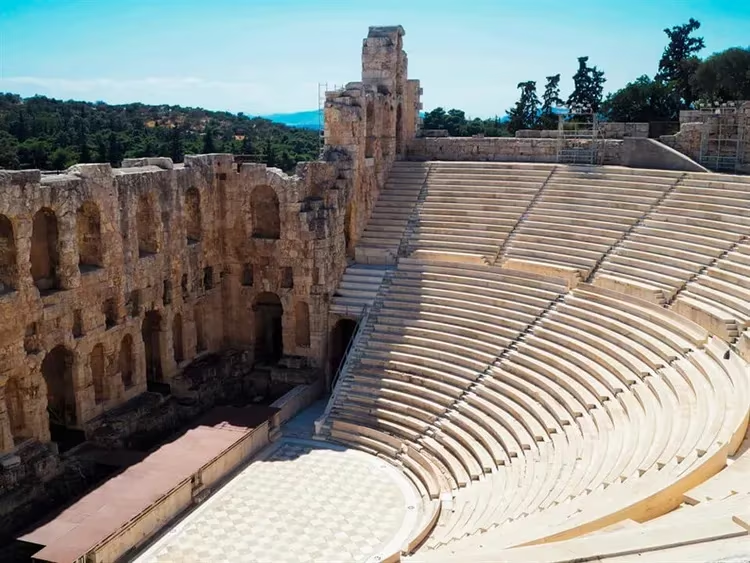
Entrance to the odeon of Herodes Atticus is limited. You can get inside during performances and festivals that take place annually from June to September. Tickets should be taken in advance. The easiest way to get to the theater is by bus number 230. The stop is opposite the main entrance. The magnificent Roman-Greek architecture can be admired from the top of the hill, coming closer to the Parthenon.
ancient agora
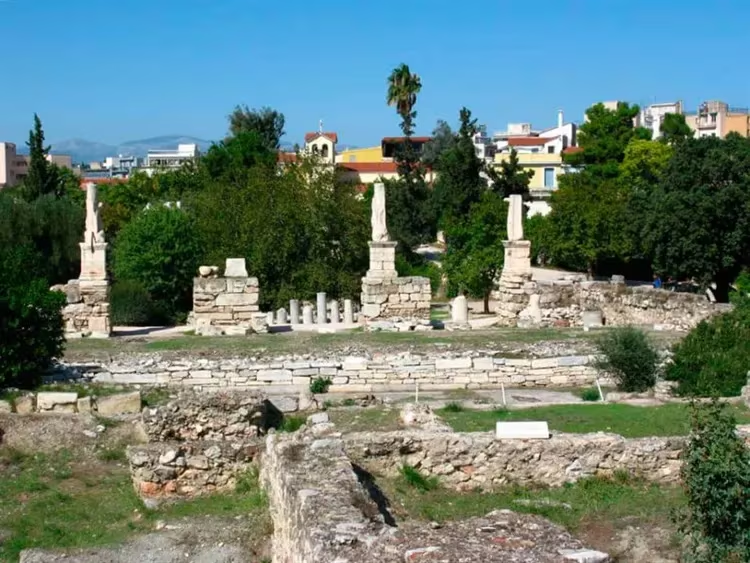
The Agora in Athens is the central square of the old city. Here in ancient times the most important social and political events of the Greek capital took place. In importance, this place was second only to the Acropolis. On an area of 5 hectares at the foot of the Acropolis hill, there were an administrative center, temples, a theater, a library, platforms for various discussions, meetings and trials. The liveliest was, of course, the market. All sorts of goods were brought here from different countries: from things necessary in everyday life to outlandish expensive trinkets.
Today, the agora in Athens is associated primarily with the shopping area of Monastiraki. Fairs are held on its streets every Sunday. This mixture of the Middle Ages, Greek folklore and modernity attracts travelers with the opportunity to plunge into the culture of the country, into its everyday life. Cafes and bars are located nearby. Feel free to enter any of them. The Greeks are hospitable, so their portions are rich, and they often give visitors a compliment in the form of a glass of wine or dessert. You can get here by metro, landing at the stations of Fision or Tezeion.
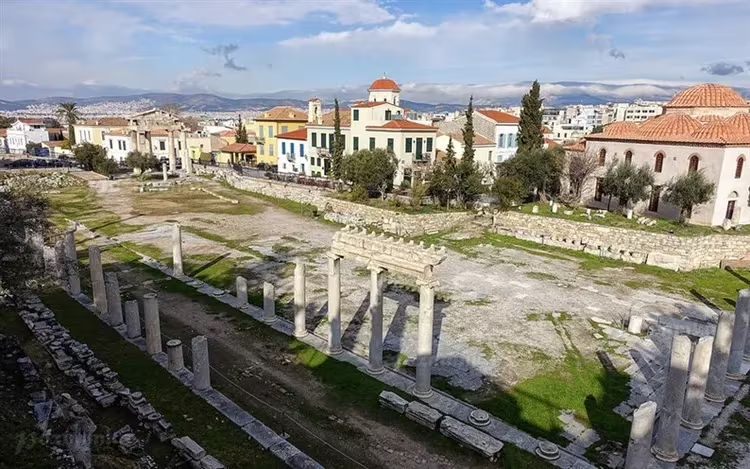
The surviving monuments of Greek architecture, once part of the agora complex, can be visited with a subscription to the Acropolis for less than 20 euros. The pass is valid for 4 days, during which you can get around almost all the architectural sights of Athens. On the territory of the agora you will see several temples, the odeon of Agrippa, the mint and the reconstructed standing of Attalus. The latter is a monument of ancient architecture in itself. Also in this gallery is the Agora Museum.
Temple of Hephaestus
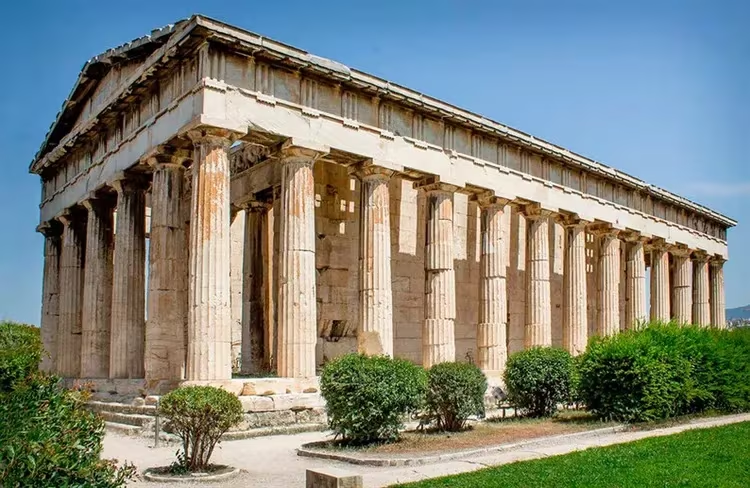
The ruins of the Acropolis are disheartening, confirming the idea that time does not spare even a stone. The Temple of Hephaestus, built as part of the agora, is perhaps the best preserved of all ancient monuments in Athens. The main elements of the building are intact, only in some places the roof and the interior of the temple were damaged.
This ancient building is comparable in its grandeur to the Parthenon and is dedicated to the patron of fire and blacksmithing, Hephaestus. Both temples were built in the same period, and their architecture is in the Doric style. However, the temple of Hephaestus was the first creation of architects in Athens, built of marble. In the XII century, the sanctuary went to the Christian church, which saved it from destruction. It was referred to as the church of St. George until 1834, when it was the national architectural monument of Greece.
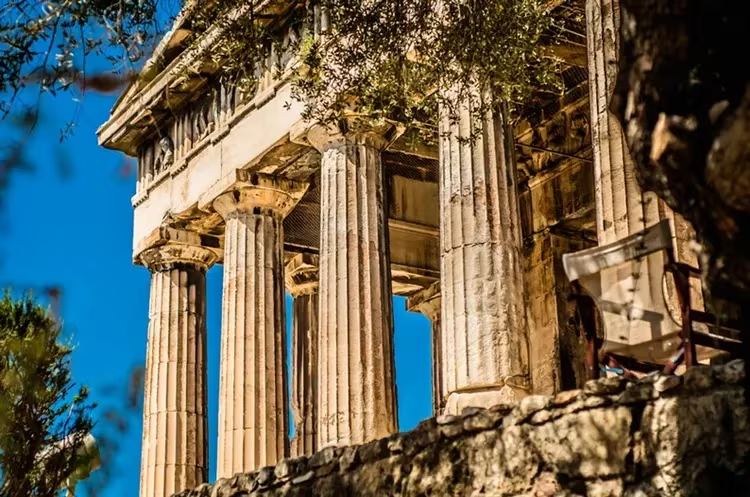
The monument is located in the center of Athens. You can get here by underground and ground transport. You will need to get off the subway at St. Thisiou”, or use the bus route number 227. A visit to the national monument is included in the price of the tour of the Acropolis. From November to March, every Sunday, the temple is open to everyone completely free of charge. Although on this day it is more pleasant to look at the agora fair: there are many people, but there is also more space.
Tower of the Winds
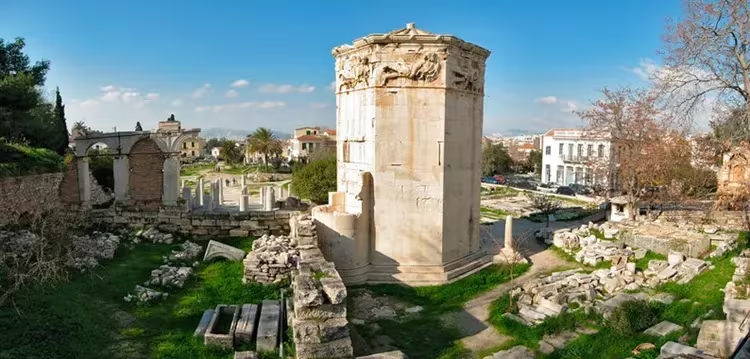
In the open and well-ventilated agora is the Tower of the Winds. The white marble building, 12 meters high, has the shape of a regular octagon, which corresponds to 8 divine winds. Another name for this architectural monument is the “Clock Tower of Andronicus of Kirr” or “Clock of Kirrist”. Andronicus of Kirr was an astrologer. According to the plan, the building was supposed to rise above the city so that the weather vane indicating the direction of the wind and the sundial on the roof were visible from any part of it. In addition to determining the time by the sun, the Greeks used a completely accurate hydraulic chronometer located inside the building. The tower was of great importance for the townspeople, as it was the meteorological and astrological center of Athens.
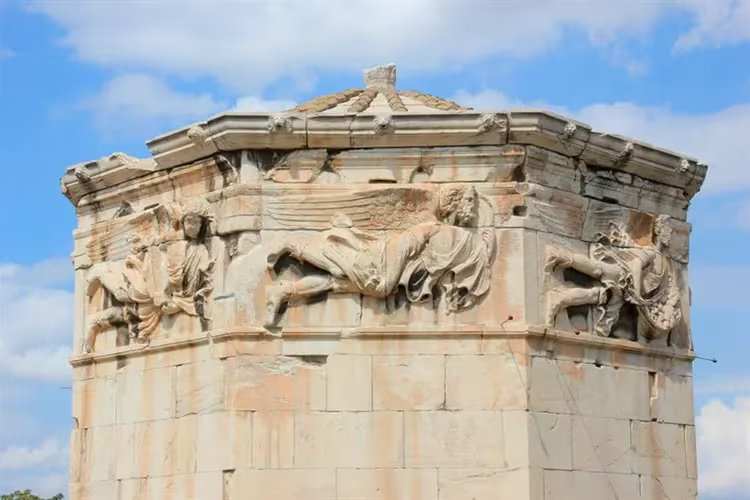
Currently, preparations are underway for the reconstruction of the tower. Relative to other architectural monuments in Athens, it has been well preserved, but its external lining and internal vaults are constantly being destroyed. The central location of the building in the old town makes it easily accessible to tourists. The Plaka area, where the Tower of the Winds is located, can be reached by any public transport to the Monastiraki station. The monument is open for visiting every day, except for holidays, from 8 am. During the tourist season it closes at 7 pm, the rest of the year at 3 pm. The entrance fee is included in the Acropolis pass. Inspection of the tower with
Agora will cost only 3 euros.
Eleusinian ruins
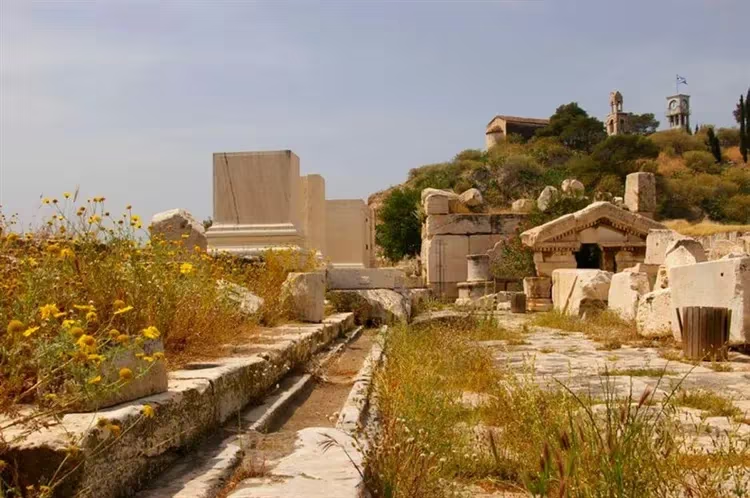
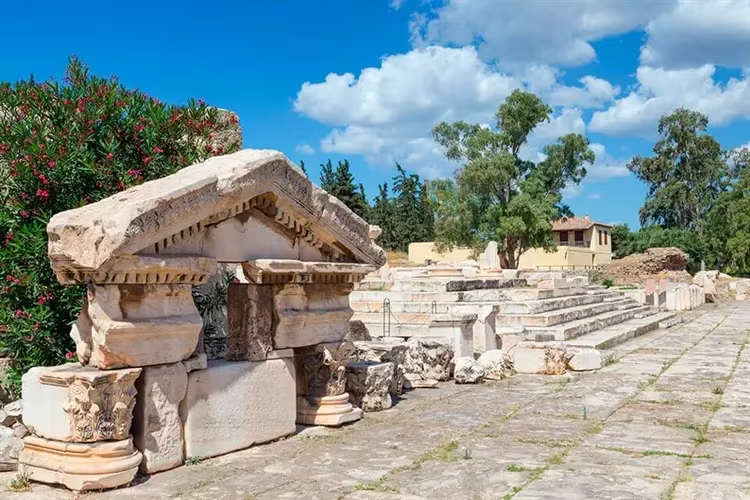
The noise created by hundreds of tourists in the Acropolis or Agora can distract from the study of ancient culture. In the suburbs of Athens, the ruins of the sacred city of Eleusis are comfortably located. In ancient times, the capital of Greece was connected to it by a road along which a procession of pilgrims dedicated to the goddess Demeter and Persephone stretched every year. The whole mystery ended in the main temple of Demeter with secret rites, about which their participants had no right to expand. But anyone who spoke Greek could participate in them. Even slaves were allowed to perform sacred rites.
Archaeologists claim that the first sacred buildings were carried out as early as the 15th century BC. There are no particularly significant monumental structures left in this old city. Lovers of antiquity come here for unity with antiquity, because the Eleusinian ruins are allowed not only to watch and photograph, but to touch them.
In Eleusis, on the coast of the bay, there is an archaeological museum. Its exhibits are ceramic products, architectural and sculptural works. All of them reflect the events of the Eleusinian mysteries. The museum receives visitors every day, except Mondays and holidays, from 8.30 to 15.00. The entrance ticket costs 3 euros. The Megara bus runs to the Eleusinian ruins. The starting point of his route is the metro station “Thissio”. There is also a railway station near the city.
Temple of Olympian Zeus
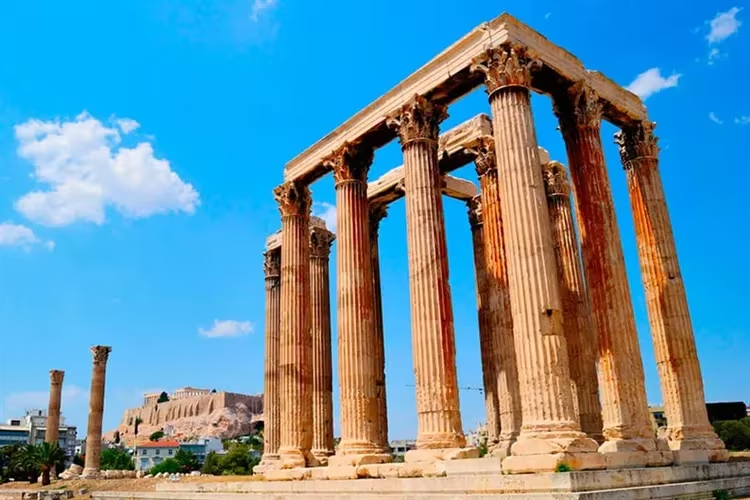
Many emperors dreamed of creating something that would perpetuate their name. So Pisistrat laid the foundation for the construction of the temple of Zeus, which, according to his ideas, was to become the largest temple among the existing ones. The Greeks grumbled, seeing in the monument only a manifestation of the whims of the ruling tyrant. For this and other reasons, the building was erected for 6 centuries, and only 3 stood. 16 columns have come down to us, 14 of which form the corner of the temple of the once majestic Temple of Olympian Zeus. The building was of impressive size.
Height – 17 meters, it was 96 meters long, 40 meters wide. Historians say that the main statue of Zeus was made by craftsmen from gold and ivory, just like the statue of Athena in the Parthenon. Both originals of these creations are lost forever. The monument of antiquity is located near the Acropolis and the metro station of the same name. You can also get here by land transport. The time for visiting the ruins is no different from many others in the city: daily from 8 am to 7 pm in summer, and until 5 pm in winter.
Archaeological Museum
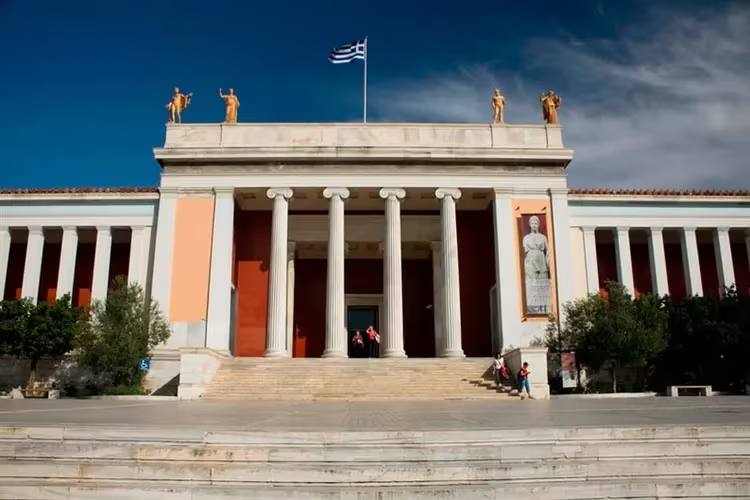
In especially hot or, on the contrary, rainy weather, acquaintance with the monuments of ancient Greek architecture can bring nothing but discomfort. In this case, a complete immersion in the culture of antiquity is possible at the National Archaeological Museum. It can rightfully be called the main repository of Greek culture. The expositions of the archaeological museum in Athens include more than 20 thousand exhibits from all eras of the state. It contains almost the richest collections of sculptures and ceramics in the world.
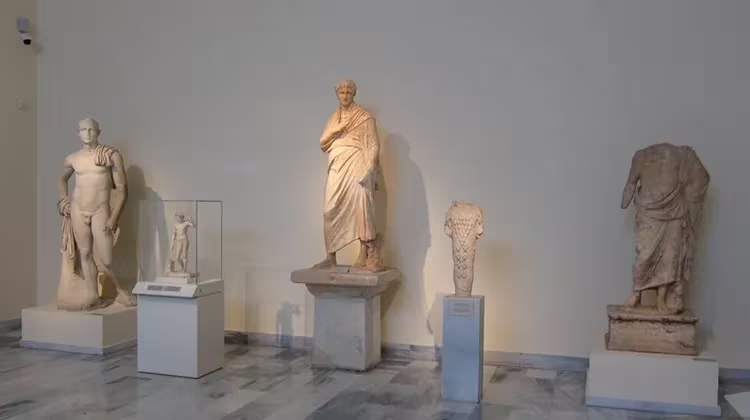
The museum building is so large that it is possible to get lost in its galleries. For even a non-detailed view of all the halls, you need a whole day. But it does not matter, because the ticket is valid all day. It is allowed to exit and enter again. There is a chance to transfer the entrance receipt to another visitor, although the cost of it is already low: 7 euros per person. Entrance to visitors under 18 is completely free. The museum is closed on Mondays and holidays. On Sunday the working day is short and ends at 3 pm. On other days, visitors are expected from 8 am to 8 pm.
Monastery of Daphne
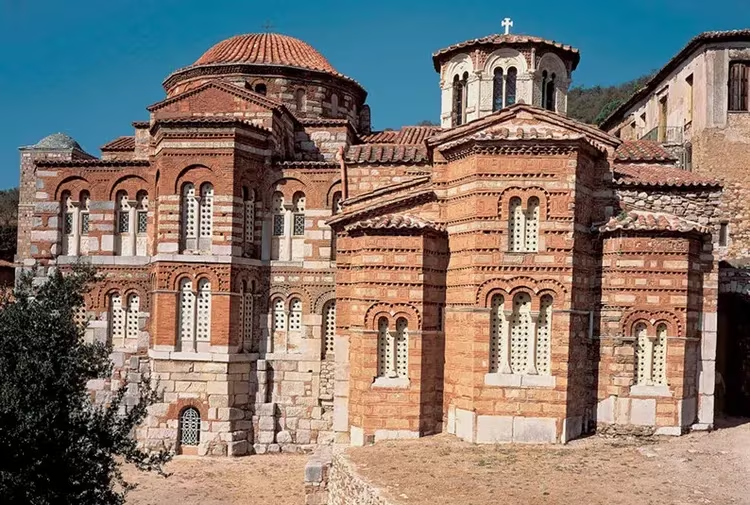
In Greece, in addition to the monuments of ancient culture, there are also many architectural creations left over from other eras. So the monastery of Daphni represents Byzantine architecture. The mystical location left its mark on the fate of the structure. The Christian complex was erected in the 6th century AD on the road from Athens to Eleusis in a laurel grove on the site of the destroyed ancient Greek temple to Apollo.
Some of the remaining fragments of the old sanctuary were not demolished, but overgrown with new walls. Over the course of several centuries, the monastery was completed and developed. The most large-scale and significant were the works of the 11th-12th centuries, when the main temple was decorated with the famous Byzantine mosaics. Its fragments still adorn the vaults of the sanctuary, and with your head up, you can see the face of Christ under the dome.
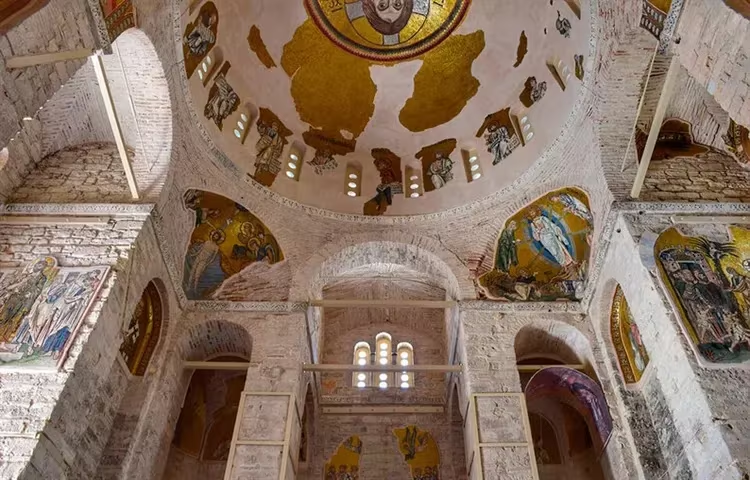
Daphne Monastery is a UNESCO World Heritage Site. In 1999, it was badly damaged by an earthquake, after which it was temporarily closed for reconstruction work. Now the temple is open to visitors twice a week during the summer on Thursdays and Fridays from 9 am to 2 pm. the entrance is free. You can get to the monastery in 2 ways: either from the Daphne metro station, call a taxi; or from the city center to get on the buses going along the routes No. 880 and No. 860. Not far from the sacred place is a psychiatric hospital of the same name, so for the Greeks, “go to Daphne” means “go crazy.”
She cried
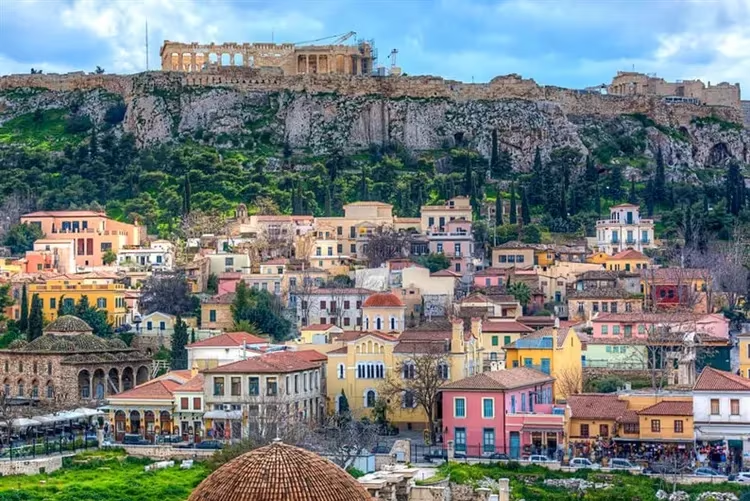
The place where the centuries-old history of Athens began is called Plaka. The area stretching to the east and north of the Acropolis is named after a stone slab found in the Church of St. George of Alexandria. Today, the central area of the city is a labyrinth of winding streets, cozy restaurants of national Greek cuisine, wine cellars, souvenir shops and a popular flea market. It is here that the most famous sights of various eras are concentrated:
Visiting the picturesque Plaka, you will find yourself in the capital of Greece, as it was at the turn of the 18th-19th centuries. The neoclassical buildings that fill the ancient quarter appeared after a ferocious fire in 1884. The foundation for them was the remains of buildings of ancient times.
Agora
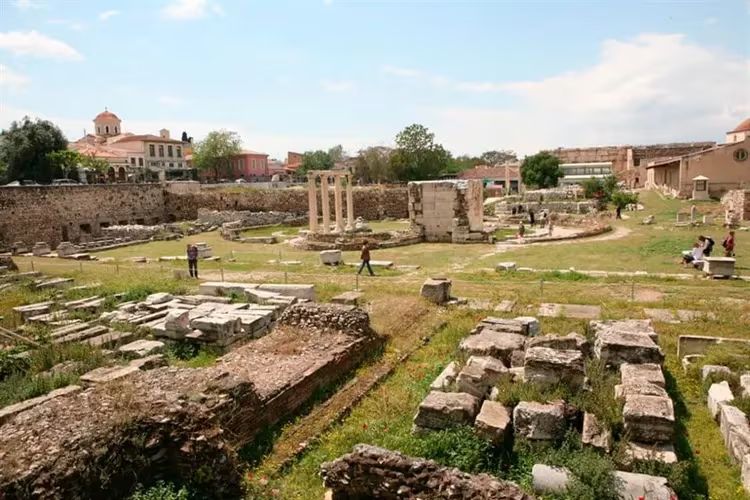
Back in 594 BC. e. Agora was the “first violin” in the city, being its religious, administrative, political and cultural center. Here, in the majestic Temple of Hephaestus, the gods of arts and crafts were sung, and musical performances were held in the Odeon of Agrippa. The Panathenaic Way ran through the ancient square, along which, during the honoring of the wise warrior Athena, the patroness of the city, solemn processions were sent to the Acropolis.
Today, the once monumental buildings of the Agora lie in ruins. The most preserved buildings are the grandiose Temple of Hephaestus, whose Doric columns still support the vaulted roof, the Church of the Holy Apostles, which appeared in the 10th century and was restored in 1956 by the Stoya of the Pergamon king Attalus.
You can visit ancient relics daily (except weekends and holidays):
Entrance – 8 euros.
Standing Attala
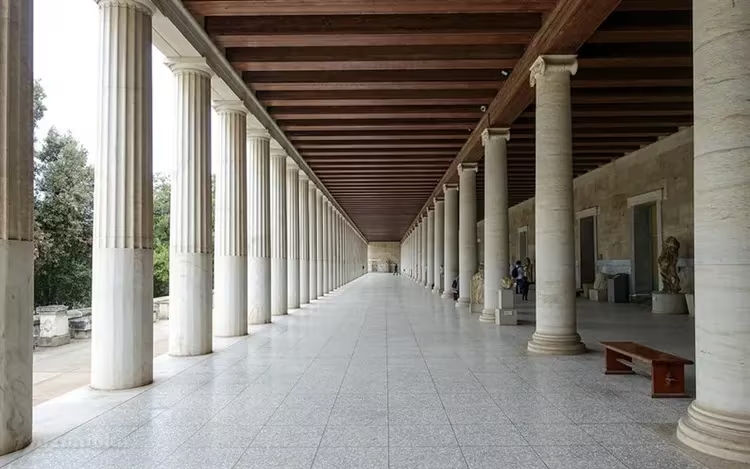
The ancient inhabitants of Hellas called the covered colonnades erected at temples, markets and houses standing. Such a gallery was built as a sacred gift to Athens by the king of Pergamum Attalus II, whose reign fell on 159-138 BC. e. The grandiose building made of limestone and Pentelian marble, 115 m long and 20 m wide, which served as a place for trade and unhurried walks, was destroyed in 267 by the ancient Germanic tribe of the Heruli.
The modern layout, exactly reproducing the appearance of the destroyed relic, was created in 1950 on a few fragments of the original walls. Today, the two-story building houses a museum. Here you will find details of ancient decor, the remains of columns, sculptures, amphorae, clay, glass and bronze items, collections of coins, jewelry and genre figurines. Acquaintance with the collection is included in the price of visiting the Agora (8 €).
Kerameykos
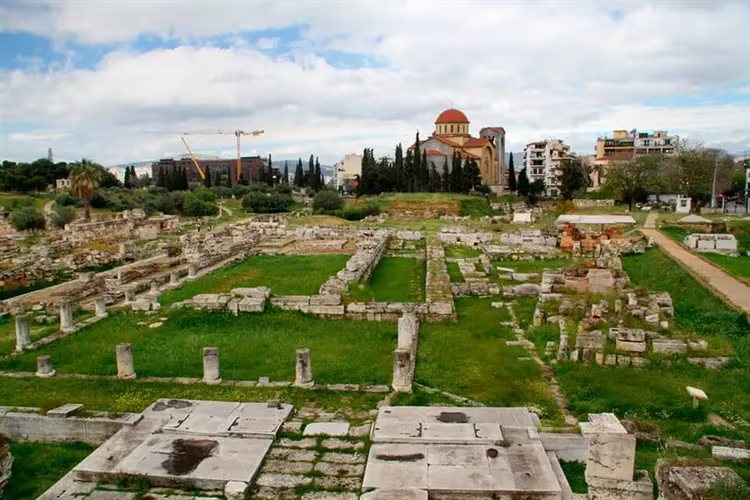
The ancient necropolis is the burial place of the nobility, which appeared in the 11th century BC. e., – was located at the intersection of the main routes leading from the suburbs. Until now, you can see the remains of the famous city gates: Dipylon, which served as the official Athenian entrance, and Sacred, through which religious processions passed. While walking along secluded paths, you will get acquainted with the results of archaeological excavations that began in 1870 and continue to this day.
The main objects of the cemetery: a 2.10-meter statue sculpted by the sculptor Dipylon, a marble figure of a bull towering over the tomb of Dionysius and the ruins of Pompeion, a building used to store sacred relics. After visiting the “city of the dead” you can look into the Ceramics Museum. Its halls are filled with ancient artifacts: sculptures, ceramic decorations and household items.
Byzantine Museum
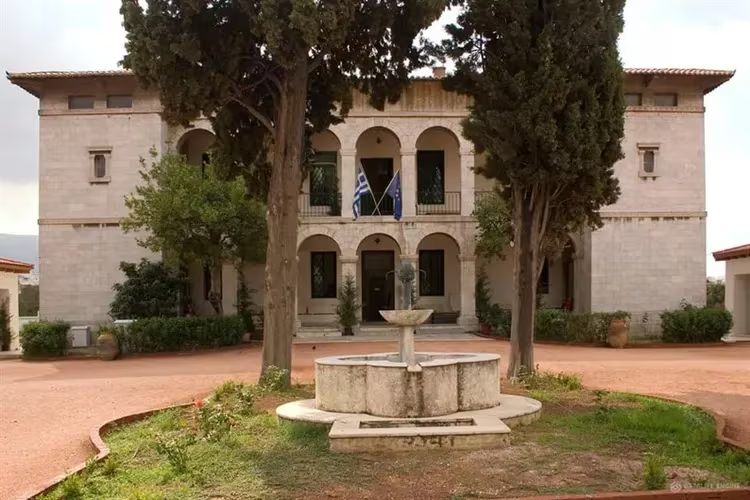
One of the richest art collections, including 25 thousand exhibits reflecting Christian and Byzantine art of the III-XX centuries, can be found at the address: Leoforos Vasilissis Sofias Street, 22. The founder of the museum, created in 1884, was a private collector – theologian Georgios Lampakis. Initially, his treasures were exhibited at the Academy of Athens, and in 1930 they settled in a new building.
The exhibition includes two parts. By visiting the first of them, you will witness the flowering of Byzantine art in the 4th-15th centuries. and get acquainted with unique wooden icons, marble steles, sculptures, mosaics, frescoes. The second exposition is the exhibits of the 15th-20th centuries, which illuminate the church and everyday life of Christians: the robes of the clergy, jewelry and household items.
The museum is open from 8:00 to 20:00 (Tuesday-Sunday). The ticket price is 8 € (full) and 4 € (reduced).
Book a private transfer from the airport to your hotel in Athens for 2 620 RUB
Military Museum
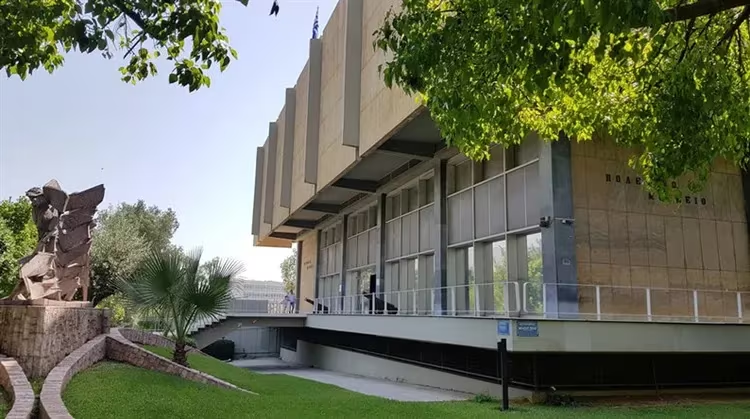
The stone building, built in the shape of a cube, is in dissonance with the ancient buildings inherent in the appearance of the capital. However, it also attracts many tourists who want to get acquainted with weapons and military equipment of various eras – from Antiquity to the Second World War. The largest exhibits of the collection are exhibited on the adjacent territory – guns and aircraft, among which the American jet Starfighter E104 and the Nortrop F-5 twin-engine fighter of the 70s of the XX century are of particular interest.
The building, built in 1975 at the intersection of Rizari, 2 and Vassilissis Sophias Av., meets tourists with a collection of military awards and uniforms of the military of the Greek army. The flagship of the museum is an exhibition of cold weapons of the Middle Ages, models of military sailboats from the time of the Turkish invasion and canvases depicting battles. The expositions can be viewed from Tuesday to Friday from 9:00 to 14:00. On weekends, the museum opens 30 minutes later. Ticket price – 3 € (preferential – 1.5 €).
Cycladic Museum
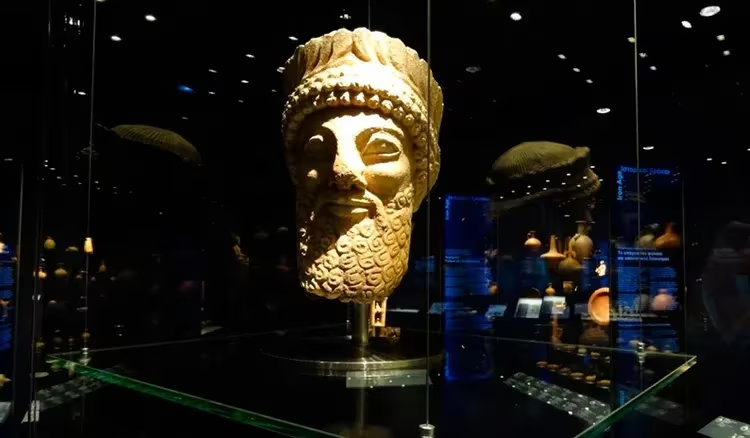
Mysterious artifacts of bygone centuries will meet you in the museum, opened in 1986 and focusing on the acquaintance of visitors with the art of bygone civilizations – the lands washed by the Aegean Sea. The focus of this unique collection is placed on objects illustrating the life of the inhabitants of the Cyclades islands, lying southeast of the Greek coast. The age of the exhibits to which the second floor of the cozy mansion is dedicated is III-II millennium BC. e. The pearl of the exhibition is female idol figurines carved from marble. Temporary exhibitions are held on the first floor. On the third floor you will find works of art from Ancient Hellas, and the fourth floor introduces the treasures of Cypriot culture from the 4th century BC. e. until the Middle Ages.
Address: Neophytou Douka, 4. Expositions can be viewed daily from 10:00 to 17:00 (on Thursday – until 20:00). Day off – Tuesday. A visit will cost you 7 € (full ticket) and 3.5 € (preferential).
Benaki Museum
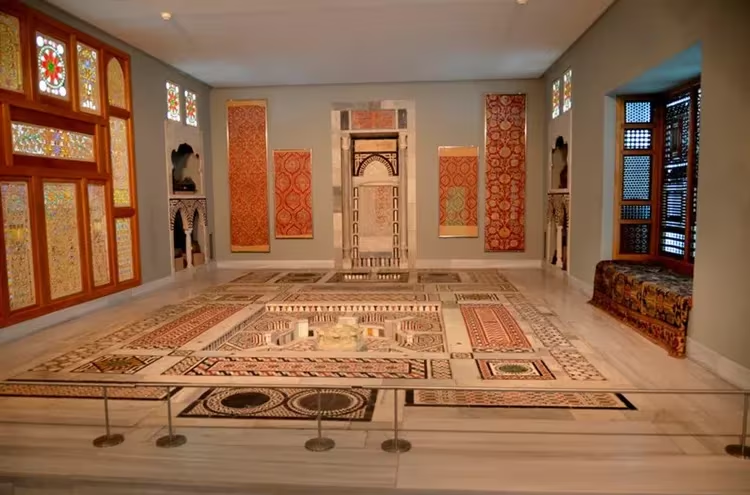
You can get to the museum from 9:00 to 17:00 (Wednesday, Friday), from 9:00 to 24:00 (Thursday, Saturday) and from 9:00 to 15:00 (Sunday). Entrance ticket price: full 9 € and reduced 7 €.
Temple of Nike Apteros
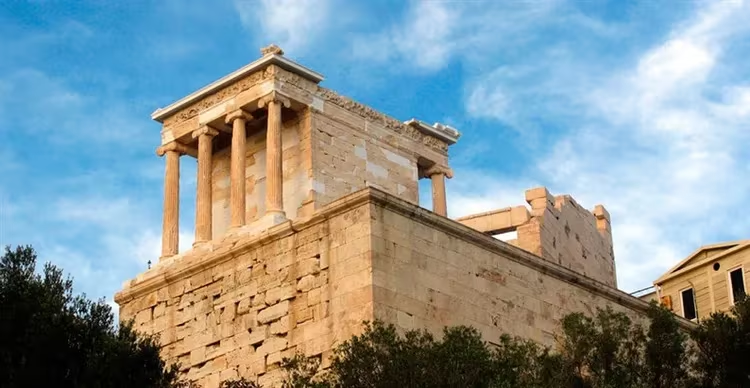
A monument of classical Greek art flaunts a small temple on the territory of the Acropolis, built around 427 BC. e. during the Peloponnesian War. The Athenians, dreaming of an imminent triumph over the defeated Sparta, placed a wooden statue of Nike in the sanctuary. In Greece, the goddess of victory was always depicted with wings behind her back. But the inhabitants, who wanted the celestial to remain forever in the city, deprived the statue of its traditional attributes.
To this day, the Temple of Apteros (wingless), towering on a three-stage base, has come down almost in its original form. After the last restoration in 2000, the elegant stone building, 9.56 m long and 6.8 m wide, is still decorated with Ionic columns and reliefs depicting military battles. Time did not spare only a few front columns and the roof of the structure.
Cruiser Georgios Averof
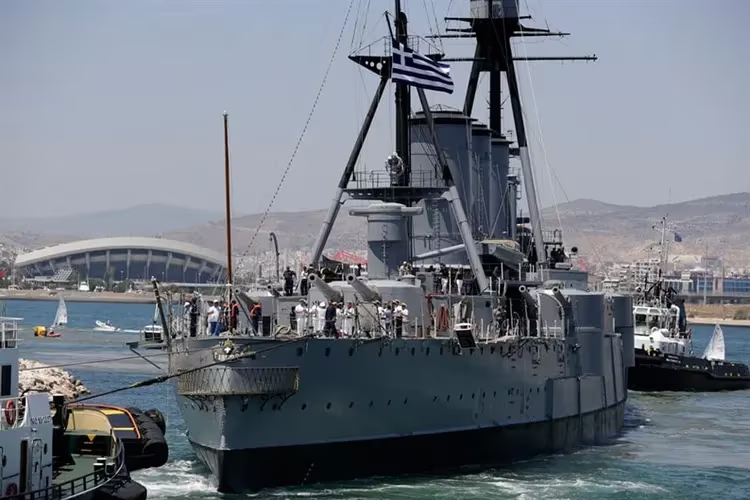
There are very few ships left on the planet that plied the seas during the First World War. One of them is the combat flagship, the cruiser Georgios Averof, built at the Italian shipyard of Livorno and sold to Greece in 1910. During its centuries-old history, the warship, whose image is depicted today on a postal miniature, went through 5 wars and changed many captains.
Since 1985, the legendary cruiser has been moored forever in the port of the Athenian suburb of Paleon Faliron. There is a museum on board. Instead of exhibition halls, there are cabins, the equipment of which has been preserved since the beginning of the 20th century. Visitors can find out what the steam engine looked like, the conditions in which the sailors lived, and what kind of furniture the officers' cabins were furnished with. “Georgios Averof” is open to tourists from 9:00 to 14:00 (Tuesday-Friday) and from 10:00 to 17:00 on weekends. Entrance – 2 euros.
Athens Academy of Sciences
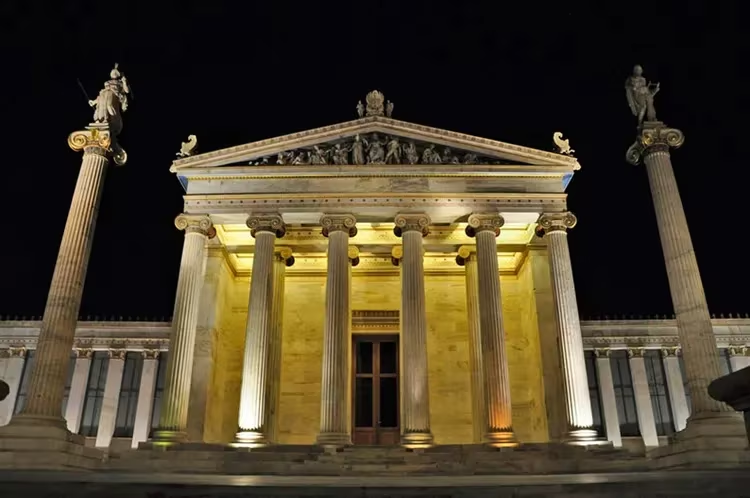
In 385 BC. e. The Academy of Plato was founded, which became the foremother of the modern research institution – the Academy of Athens, the main activity of which is the study of art, natural sciences, morality and law. For tourists, the National Academy is interesting primarily for its architecture. Built in 1887, the main building, whose facade is decorated with an Ionic colonnade with a triangular pediment and a portico, is an example of the neoclassical style.
On both sides of the building, which in its appearance resembles an ancient temple, rise columns crowned with the figures of Athena and Apollo. At the entrance, everyone who wants to become part of the scientific world is greeted by statues of Socrates and Plato. The interiors are decorated with paintings reflecting the myths and history of Ancient Hellas.
Church of Panagia Kapnikareya
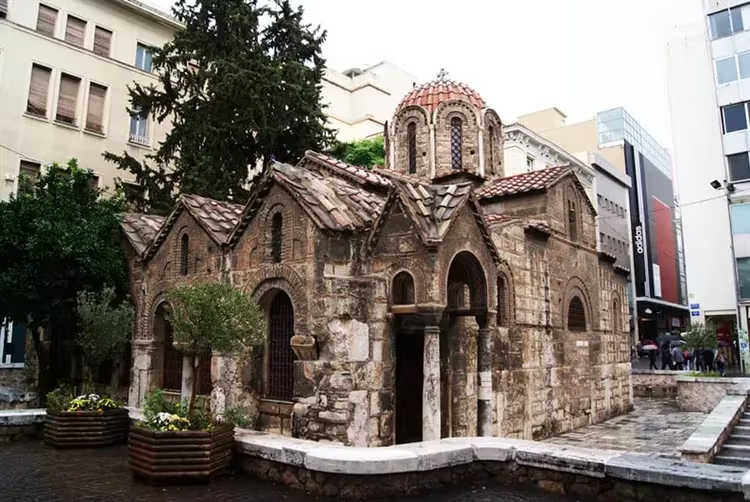
Surrounded by the central busy streets, among the hustle and bustle, there is an oasis of silence and tranquility – a Byzantine church built in honor of the Virgin Kapnikareya. The temple, built in the 11th century, was founded on the ruins of an even more ancient basilica. Built-in capitals, Latin inscriptions and sculpture elements remind of the ancient building.
The architectural style of the Church of Panagia Kapnikarei is characterized as cross-domed. The structure, created from special carved bricks, includes three buildings, harmoniously interconnected by arches and columns. On the north side, a chapel dedicated to the Great Martyr Varvara was added. The temple owes its interior to the Greek painter Fotis Kondoglu. His most famous work is the icon of the Mother of God with the Child, an object of worship for hundreds of Orthodox who visit the Holy House, which still operates to this day.
Areopagus
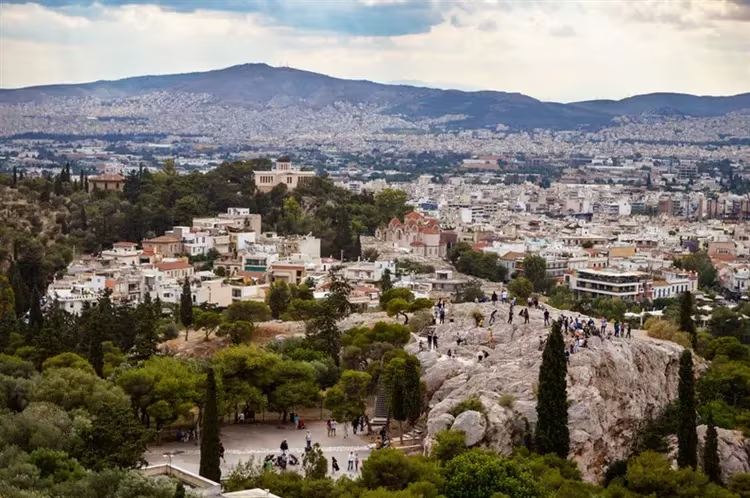
You can admire the magnificent city and take the best photos of the sights of Athens by climbing the hill located northwest of the Acropolis. A staircase carved in stone leads to its smooth top. According to legend, the first trial took place here, at which the ruler of the seas, Poseidon, accused the militant Ares of killing his son. For those of you who are familiar with the Acts of the Apostles, the Areopagus is known as the place where St. Peter addressed the pagans with a speech about the “Unknown God”.
In antiquity, this rock aroused respect and awe among the Athenians. Until the 5th century BC e. the rocky cliff served as a meeting place for a powerful council of elders, which has unquestioning power and makes verdicts on religious, civil and political matters. Later, the Areopagus was deprived of part of its prerogatives, leaving only the consideration of criminal issues in its jurisdiction.
Hill of Muses
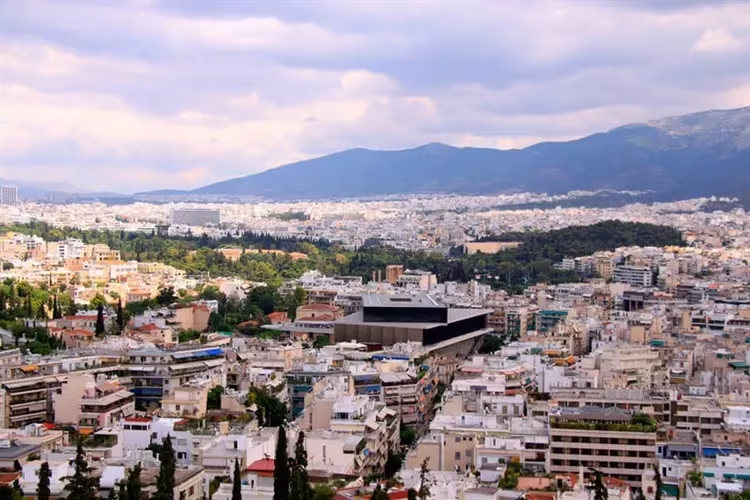
Another observation platform from which a breathtaking circular panorama of Athens opens is the 147-meter Hill of Muses. A stone-lined path leads to its top, winding in the shade of Mediterranean pines. In addition to the beautiful view, travelers can also expect historical sites here: a monument to the Prince of the Kingdom of Commagen – Philopappos, an artificial cave “Prison of Socrates”, where, according to legend, the philosopher was forced to drink deadly poison, and the current church of St. Dmitry, built in the 16th century.
Experienced tourists recommend climbing the hill at sunset. Enjoying the singing of cicadas and inhaling the aroma of numerous flowers, you will see a stunning picture. Slowly plunging into darkness, the city lights up the lanterns one by one, solemnly highlighting priceless architectural monuments against the black sky.
national garden
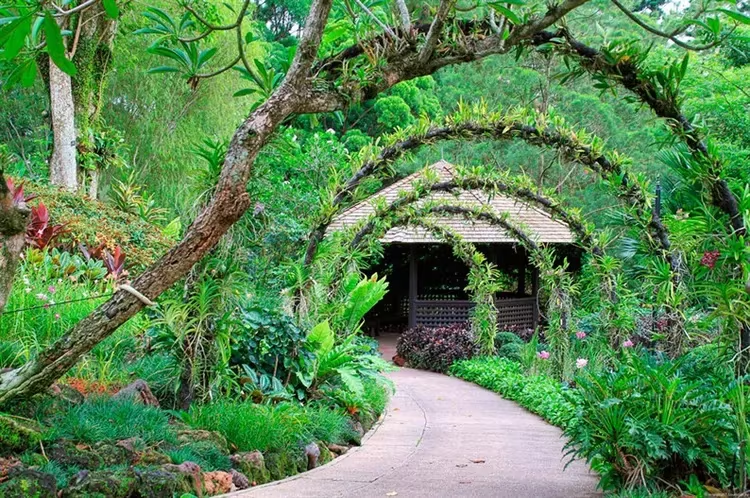
A visit to this park is like a breath of fresh air among the beautiful ruins and historical buildings devoid of greenery. A picturesque corner appeared in the center of Athens in 1840 by order of Amalia of Oldenburg, the wife of King Otto I. The project was entrusted to Friedrich Schmidt, a garden master from Prussia. The queen also contributed to the creation of the garden – the hourglass designed by her to this day (albeit with flaws) shows the time.
Today, on the territory of 15.5 hectares, there is an atmosphere of silence and peace. Citrus trees exude a delicate aroma, benches and shady arbors invite you to relax, fountains and decorative ponds give coolness. The National Garden serves as a haven for representatives of the fauna: birds, turtles, domestic animals. There was also a place for traditional Athenian ruins, mosaics and elements of Corinthian columns.
Mount Lycabettus
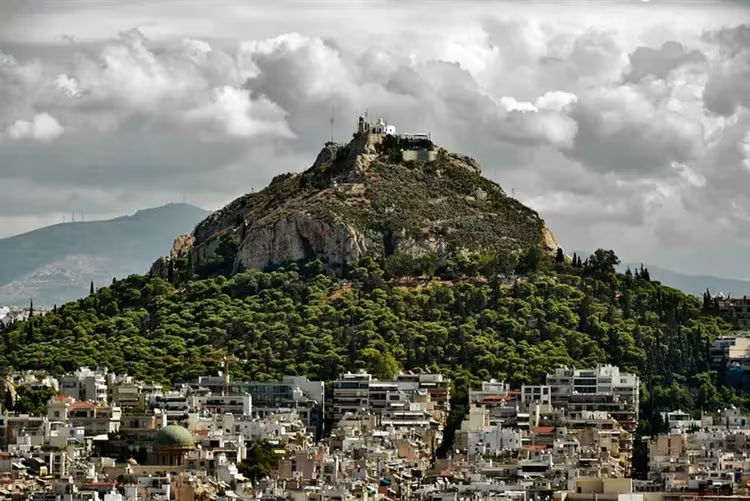
The name of the mountain, rushing to heaven among the central quarters, is translated as “wolf hill”. In ancient times, in dense forests overgrown with cypresses and pines, wolf packs lived, guarding the shrine – the temple of Zeus, located at the very top. In the era of the Ottoman invasion, the Turks conquered and burned out all the plants that covered the gentle slopes. The restoration of the flora began only in 1880.
You can climb the mountain, which rises 277 meters above the Kolonaki area, both on foot, resting on numerous benches along the way, and on the funicular that goes up the tunnel dug inside the hill. In addition to the magnificent views stretching all the way to the sea, the snow-white chapel of St. George, a restaurant, a cafe with a veranda and souvenir shops are waiting for travelers at the top. A little lower is an open theater. In the summer, colorful performances and concerts take place on its stage.
Erechtheion
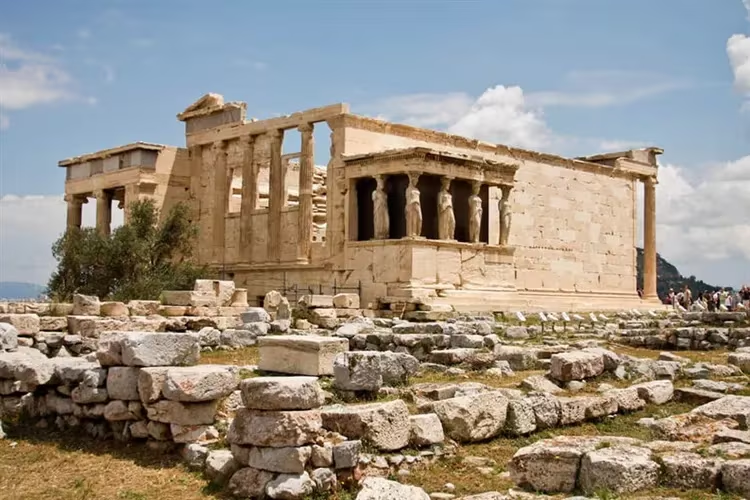
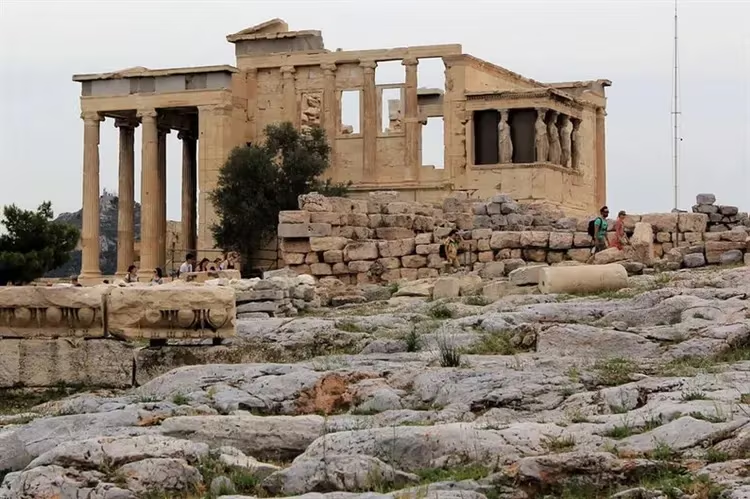
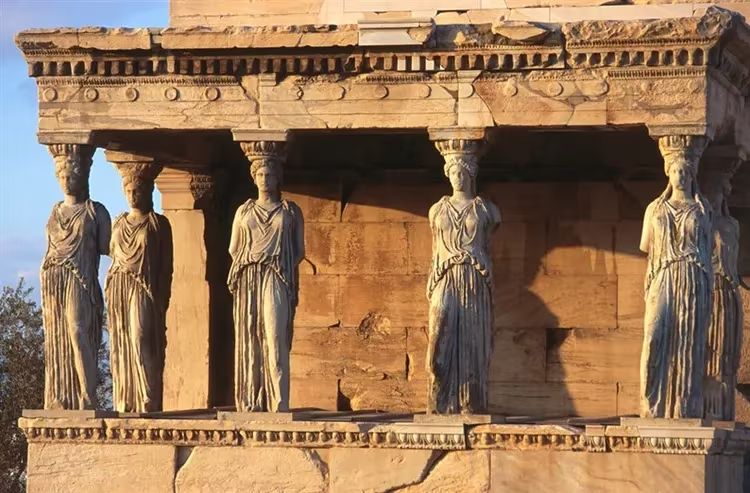
No architectural object characterizes the famous Acropolis better than the Ionic columns and marble female figures – caryatids, which serve as a support for the roof of a structure that is ready to compete in fame with the legendary Parthenon. And if the latter was a “people's” temple, then the Erechtheion, which combined several sanctuaries, performed sacred functions. Here the priests performed religious sacraments and worshiped the inhabitants of Olympus.
The Erechtheion was built in the 5th century BC. e. According to legend, the construction work was preceded by a quarrel between Poseidon and Athena. The two celestials could not decide which of them should own the great city. The temple got its name in honor of King Erechtheus. Over the centuries, it has experienced several global reconstructions, so the original appearance is now almost unknown. Today, the structure is an irregularly shaped building divided in two, erected on a foundation measuring 23.5 x 11.6 m.
Panathinaikos Stadium
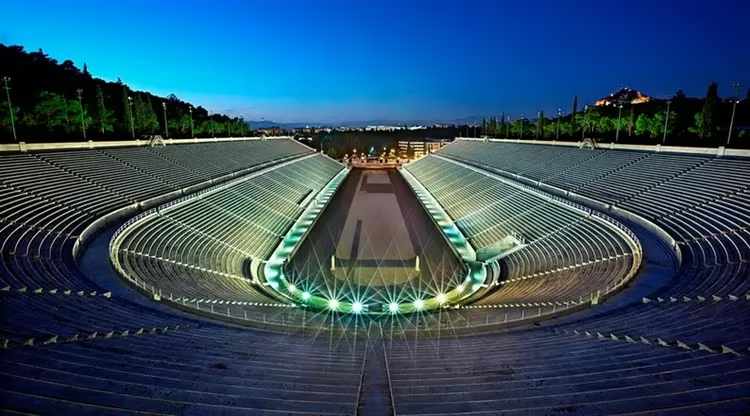
In 566-565 BC e. The stadium, whose stands are made of white marble from Mount Pendelikon, hosted the first Olympic Games in the history of the planet. For their sake, all world wars have been suspended. The grandiose building in the shape of a horseshoe was erected in 329 BC. e. Its remains were discovered during archaeological excavations in the middle of the 19th century.
The design of Panathinaikos differs from current stadiums. In particular, treadmills lose in length to modern “tracks”. Today, framing the oval arena (area – 6,784 m2), the stands can accommodate about 80,100 people. In 2004, the Olympic Games were again held here. A picturesque place among the Athenian hills is filled daily by hundreds of tourists. The most inquisitive visit the underground Olympic Museum, hidden behind wrought iron bars. In addition, Panathinaikos serves as the venue for Open Air concerts.