
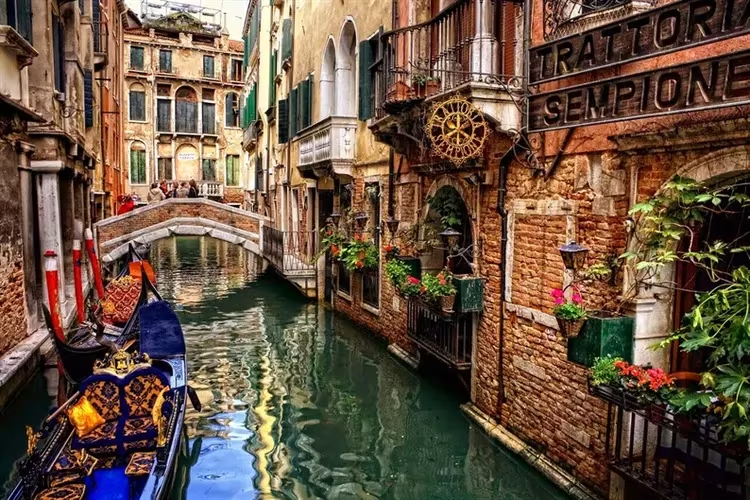
A trip to Venice (another name for the city is Serenissima or the Brightest, Clearest) can be compared to a fairy tale. The most beautiful, romantic city in the world with beautiful palaces, ancient temples, numerous museums, blooming parks, gardens gives rise to the difficult task of what to see in Venice in 4 days. How not to get lost in the beautiful realm of Gothic, luxurious Baroque, reflected in the waters of quaint canals? The article offers one of the options for getting to know the city in a short time.
First day in Venice
This is usually the noisiest, most hopeful day of travel, when you want to see everything at once. When, dumbfounded by the delight of the first impressions of the “city on the water”, he is still full of energy, ready for any trips.
Piazza San Marco
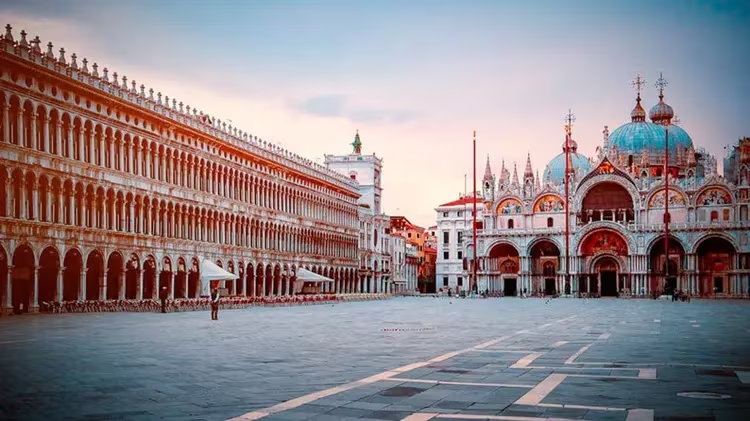
You can't miss this place. Every tourist who comes to Venice necessarily appears on it. Only this (central square) is called by the Italians the piazza. Others are called campo, campiello (field of different sizes). The square acquired its modern dimensions, the shape of a trapezoid in 1777. It is located next to the ancient Cathedral of St. Mark. A bell tower rises above it, dominating neighboring buildings, majestic sights are located: the Doge's Palace, St. Mark's Basilica.
Old Proscurations (together with the clock tower), New Proscurations, library. There is not a single simple building along the perimeter of the square, without an ancient, interesting history. Their walls remember the sounds of the merry Venetian carnival that takes place on the square at all times. It is also famous for its flocks of pigeons, amazing wooden footbridges in case of floods. Movies were often filmed on the square. Many interesting legends are known about it, which you can listen to during excursions.
Giudecca Island
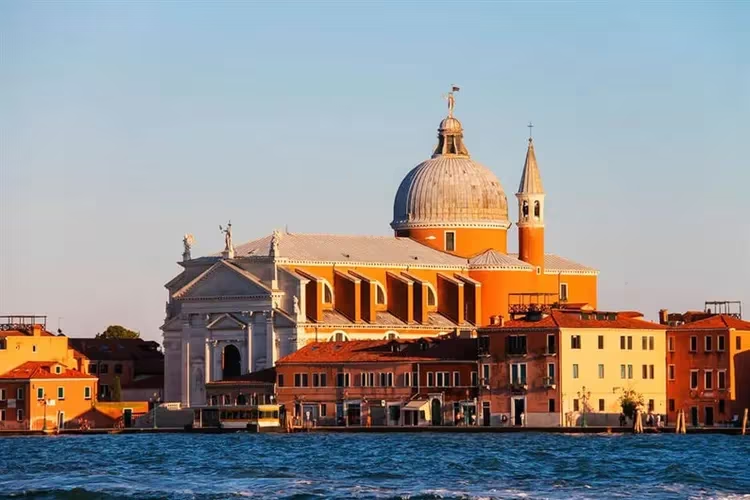
The wide canal of the Giudecca affair (formerly called Viganò) separates Venice from the romantic, cozy island. Even from a distance, houses with red roofs, three majestic marble churches, luxurious modern villas of local rich people attract attention. There is silence (there are no bridges on the island), romantic tranquility, beautiful nature. The main attraction of the island is the Church of Il Redentore (Christ the Savior). The temple was erected in 1592 as a sign of getting rid of the terrible plague in Italy (by the way, it did not reach the island).
The temple is considered an ideal example of the architectural creation of the famous master Palladio. Ideal proportions, a wide staircase, an original dome create an atmosphere of antique buildings of antiquity. Inside the church are rare frescoes, paintings by masters from Venice of the Renaissance. Among them are the works of Francesco Bassano, Paolo Veronese, Tintoretto. By the way, tourists are forbidden to use a flash in the church (it has a negative effect on ancient paints).
Embankment of the Incurables
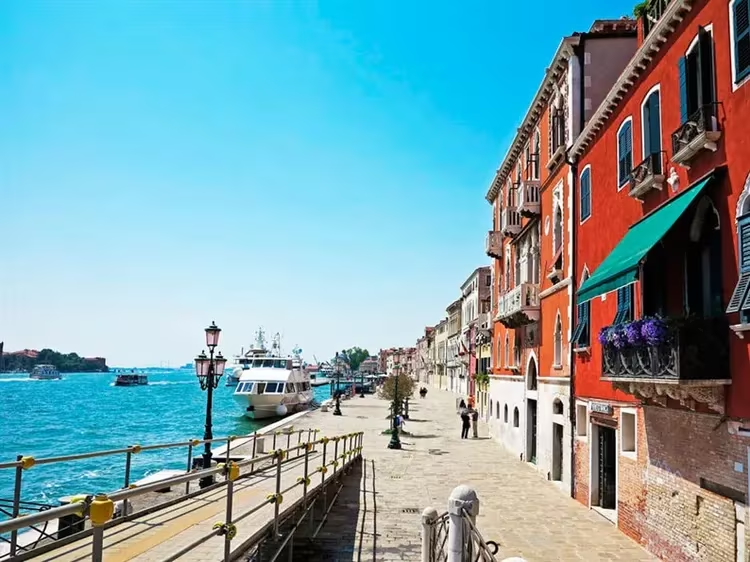
Parallel to the island of Giudecca, the Zattere promenade runs along the canal. In the distant past, this place was the mysterious embankment of the Incurables. It is not found on modern maps of Venice. An indirect confirmation of its location is the current Cathedral of Santa Maria della Salute, erected in memory of the victory over the plague. It is located on the Dorsoduro spit and separates the quarters of Incurabili (there was a hospital for terminally ill people) and the Academy. As well as signs with the inscription “Dzattere, former Incurables” hanging on the houses.
In Russia, the mysterious embankment is known from the famous essay by Joseph Brodsky. He loved Venice, often came here. He dedicated beautiful poems and essays to her. After his death, the ashes of the poet were transferred from New York to the island of San Michele. In 2009, a memorial plaque was erected here (there is information that since 2010 the former name of the embankment has been returned, but there is no confirmation of this fact on the maps).
Campo Santa Margherita
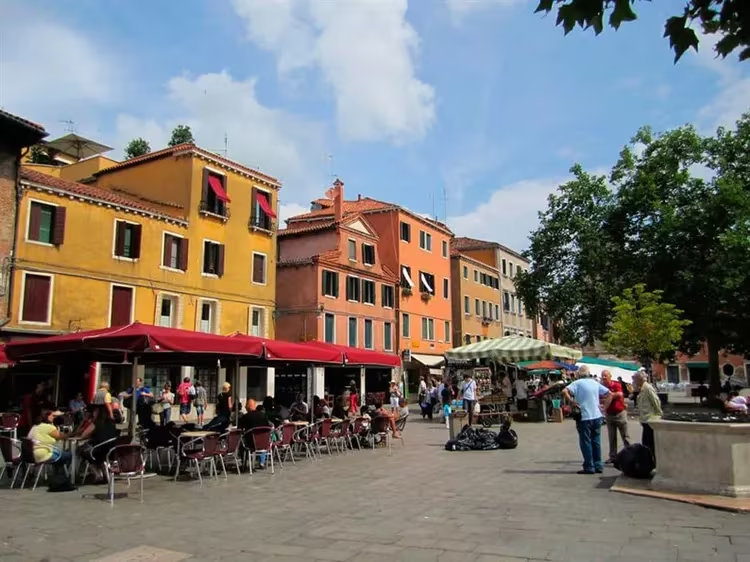
A small area in the Dorsoduro region was formed along with the city in the same century. The whole life of specific islands is connected with campo. There were markets on them, children played, artisans worked in their shops. In the center stood a well to collect rainwater needed by the inhabitants. After the advent of aqueducts, the need for it disappeared, and the functions of many campos changed. The largest still hosted religious events, performances, bullfights, processions, and public performances.
Piazza Santa Jaogherita is one of them. There are restaurants, cafes, shops, market. Nearby are Ca Foscari University, several colleges, a railway station, which have made the square a favorite meeting place for young people. The architecture of the old church complements the atmosphere of real Venetian life.
Cathedral of Ca' Rezzonico
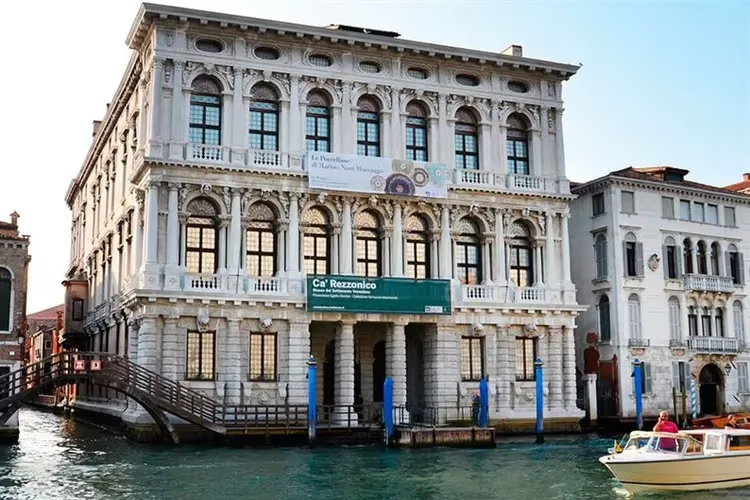
You can admire the luxurious palace while walking along the Grand Canal. The palace was bought by the Retzioniko family, and was called the Golden House. Its external beauty is complemented by rare collections of paintings, furniture, the best works of art of the 18th century, when, despite the decline of the reign of the Venetian Republic, the world plunged into the magic of theaters, luxury, and the brilliance of amazing art. I learned the names of the great masters who became great personalities in the history of the planet. Detailed information about the life of Venice during this period can be found by visiting the museum located in the palace.
His inspection will begin with a hike along the amazing staircase (ceremonial) of the palace with a collection of paintings by Veronese Tintoretto, Mestrovic. The eleven rooms on the first floor contain priceless exhibits of the 18th century (sculptures, paintings, frescoes, furniture). Up to the fourth floor, expositions with new discounts constantly appear in the halls. Museum address: Dorsoduro, 3136, fondamenta Rezzonico. From spring to autumn, the museum is open from 10 am to 6 pm. The cost of entrance tickets must be specified during a particular trip.
Cathedral of Santa Maria della Salute
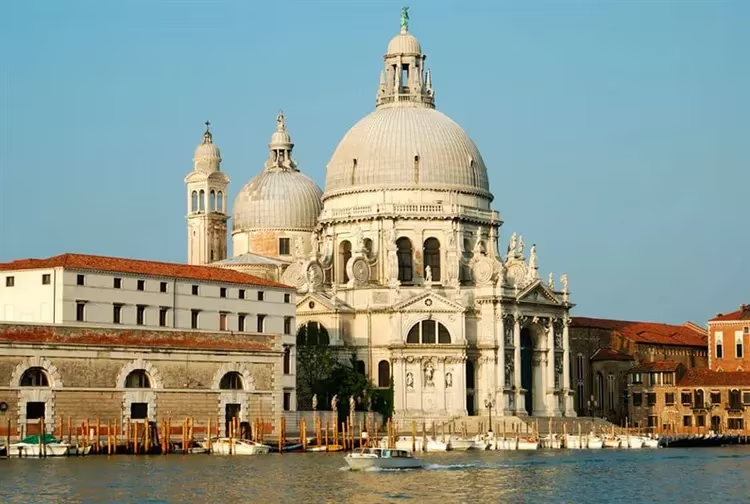
The building is one of the symbols of Venice, standing opposite the ancient Doge's Palace. The majestic Baroque cathedral was erected in 1681. Like many buildings in Venice, its appearance is associated with the end of Italy‘s disaster from the plague, which claimed the lives of 100,000 citizens of the country. Two snow-white domes (one large, the other smaller cathedral), two small, beautiful bell towers rise above the building. Mass is celebrated here every year to mark the end of the deadly disease.
A pontoon bridge is built between the Basilica and the Doge's Palace on this day. Rich pilasters, bas-reliefs, columns are visible on the massive facades of the church. They are securely fixed on 100,000 wooden piles. Above the altar, created by Longen, there is an icon of the Mother of God, brought from the island of Crete and made in the Byzantine style. Inside the church are several unique works by famous artists. Cathedral address: Dorsoduro, campo della Salute 1b. The church is open from 10:00 to 17:30.
Church of Santo Stefano
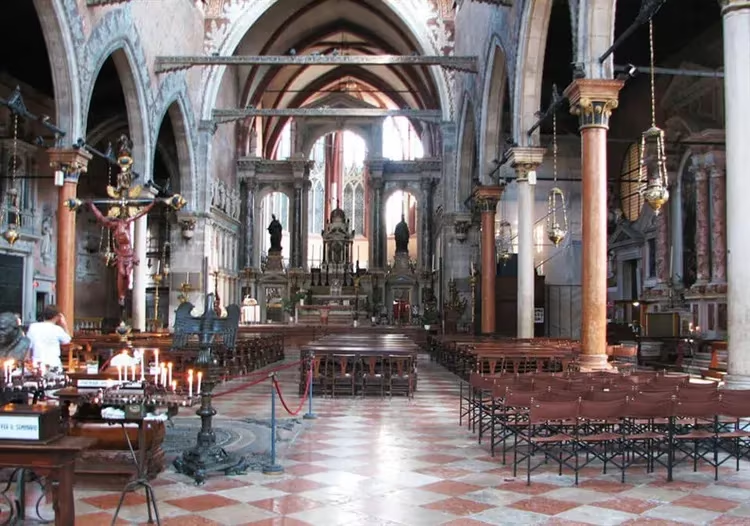
The building is a sample building, made in the Gothic style. Above the entrance rises a bas-relief of St. Stephen standing in front of an angel (the work of Bartolomeo Bona). The cathedral was built in the XVIII century for the monks of the Order of St. Augustine. The end of construction was made in 1325. Inside the church there is a large number of art paintings, statues (in the form of figures of famous masters). The ceiling is made from the keel of a ship. It rests on columns made of beautiful types of white and red marble. The church has one central, two side naves, three apses.
The walls are painted with patterns in the shape of acanthus leaves and decorated with diamonds. The painting “Massacre of the Innocents” makes a strong impression. During the initial period of 250 years, the church was consecrated six times. The church is located at Venice, Chiesa di Santo Stefano. Entry free of charge from 10:00 to 18:00. Paintings by Tintoretto, stored in the sacristy, are allowed to be viewed with an entrance fee of about 3 €.
Cathedral of Santa Maria Glorioza dei Frari
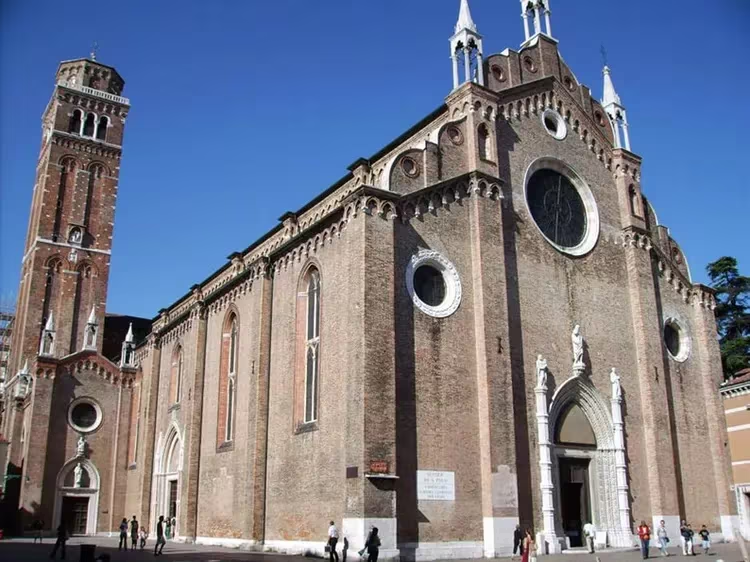
The locals call the cathedral dedicated to the Assumption of the Virgin Mary, in one word Frari. the most famous cathedral is located on the square of the same name in the San Marco quarter. The building has the appearance of a Latin cross, erected in accordance with the requirements of the Italian Gothic. There are pilasters and capitals on the brick facade of the church. They are made in the Byzantine style. The decoration of the main portal is the snow-white statues of the Resurrection of Christ, the Virgin Mary, Francis of Assisi.
Inside the church there are sculptures of famous saints, monuments to famous residents of Venice, luxurious altars, bright frescoes, original stucco made by Italian masters. Among them is a monument to the Doge of Pesaro, made of beautiful multi-colored marble (Baroque style), famous paintings by Titian, an old cross of the XIII century depicting Christ. Here is stored a crystal vase with the blood of Christ, which is the greatest of the relics. Near the cathedral there is a bell tower. It has an observation deck that opens up an extraordinary panorama of the city.
Dinner at Cafe Florian
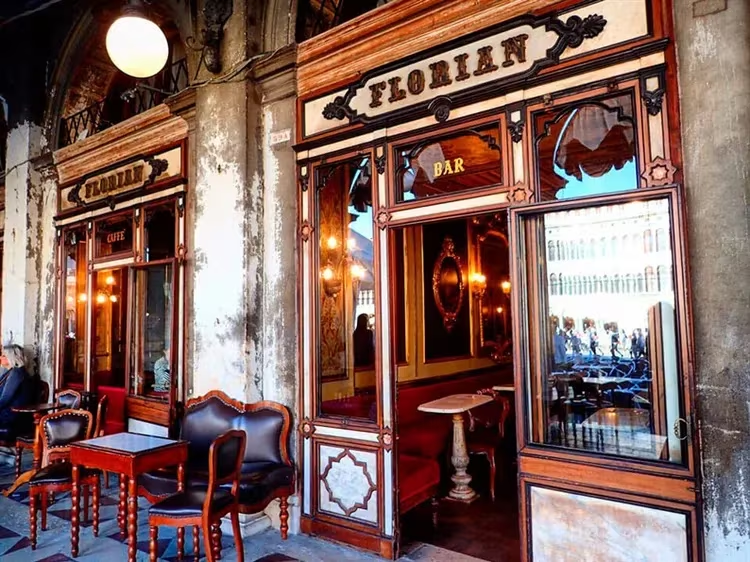
It is pleasant to sit in it, summing up the beginning of the journey. Plunge into the atmosphere created by past eras (the cafe was opened in 1720), the interior of the halls, which are distinguished by the lush decor of different styles, the unusual smell, the taste of coffee and the view of the main square of Venice. In the oldest cafe in Europe, coffee is prepared according to 33 recipes that have made it a Mecca for drink fans. Important matters are still discussed over a cup of coffee, exhibitions are held (the first international art exhibition was held here in 1895).
Many famous personalities (Hemingway, Brodsky, Byron, Goethe, Casanova) were frequent visitors to the cafe with the original name “Triumphal Venice”, “Arab”, and then by the name of the owner Florian. Prices in a cafe are high, but visiting it, finding yourself in the heart of Venice, the center of the old social life of the city, is similar to visiting another attraction. No wonder Byron wrote that Florian is at the same time a reading room, a stock exchange, a theater cafe, a confessional, a meeting place for businessmen and lawyers.
Second day in Venice
Before traveling to Venice, it is useful to make a preliminary plan for exploring its sights. Among them there may be famous places and small, especially interesting houses, parks, sculptures hidden among the city streets. The second day of the trip reveals some of them.
Bookstore Libreria Acqua Alta
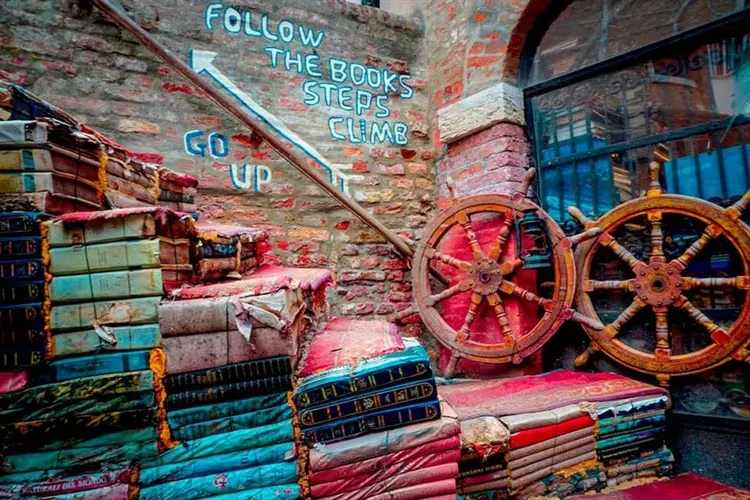
The bookstore (owned by Frizzo Luigi) is considered the most unusual bookstore in the world. Water and books miraculously exist here during the seasonal rise of water in the city, capturing the first floors of buildings. But this rise is not terrible for books. They are not stored on well-kept shelves, but lie in barrels, tubs, gondolas, and other devices. Important, serious cats closely monitor the order in the store. On the original staircase, created from the volumes of the encyclopedia, you can go to the exit of the store on the bank of the canal. There is no regular vaporetto stop nearby.
You can get to the store by water taxi or walk along interesting streets, bridges over canals. It is difficult to find a more original, attracting the attention of visitors, a place. Looking at the halls of the store with high stacks of books (sometimes they create real labyrinths), you get into the atmosphere of antiquity, the smell of raw paper. Among the book chaos (at first glance) you can find books from different countries of the planet, magazines, posters, postcards, souvenirs, reproductions. Store address: Sestiere Castello, 5176/B 30122. The store is open daily from 9 am to 8 pm.
Church of San Giacomo di Rialto
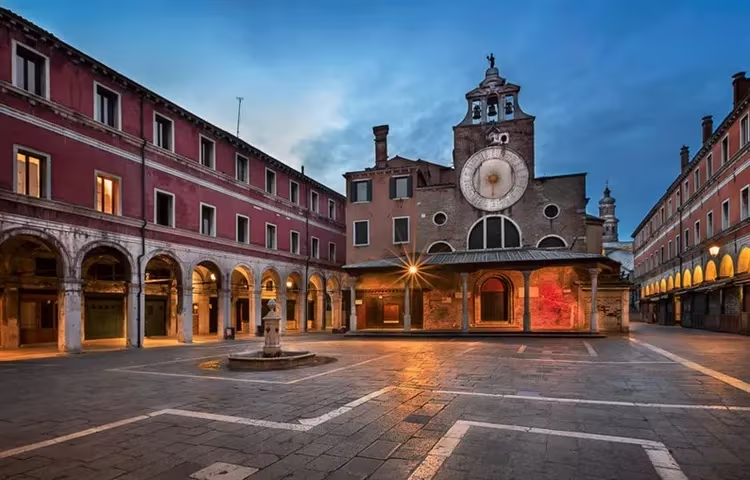
The cathedral is considered the oldest in Venice, built in 421, the year the city was founded. Locals often call the architectural landmark the Church of San Giacometo. The exterior of the church has been preserved in its original form. The history of the building is connected with the development of the ancient Rialto market, located on a small square in front of the church. Inside it were numerous private altars of merchants dedicated to specific saints. Next to them they prayed, asked for help, good luck in business. Historians say that the first trade deals in Venice took place within the walls of this church.
Here, in the 15th century, the first bank of the state was opened. On the central part of the facade of the church (a small bell tower) there is still an old clock of the 15th century with a unique dial. Inside the church are statues of James, Antonio the Great, created by the great masters Alessandro Vitorria and Giropamo Campagna. On the square there is a granite statue of the 16th century “The Hunchback”, a small fountain. Temple address: San Giacomo di Rialto, Campo San Giacomo, 1. You can visit the church from 9 am to 6 pm daily, without payment.
Basilica San Marco
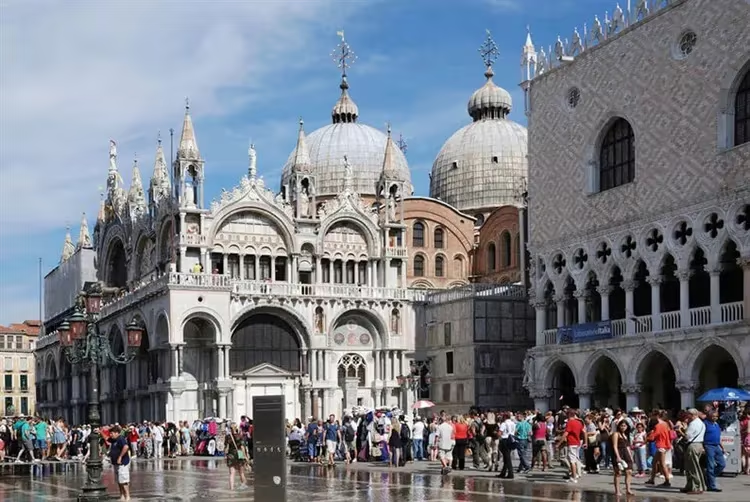
The beautiful, famous Church of Peace is located in St. Mark's Square in ancient Venice. The five-domed temple was erected in 828 as a court chapel of the Doge's Palace. It housed the relics of the Apostle Mark. They were brought from Alexandria in January 829. The basilica has been rebuilt several times, acquiring by now numerous elements of different architectural styles. The temple was consecrated in 1094. The famous cathedral played an important role in the history of the republic: it hosted public speeches by doges and official ceremonies. In the 19th century, the Museum of San Marco was organized on the squares of the upper floors of the cathedral, introducing the history of the ancient cathedral of Venice.
Separate expositions present the history of the creation of a mosaic pattern that adorns the cathedral, collections of icons, precious stones, unique woolen tapestries, and ancient chorales. The famous dome “Creation of the World”, “Golden Altar” or Pala d'Oro, unique figures of four horses made of bronze, gothic arrows created from woven statues and numerous ancient relics captured in military campaigns. The current temple is located at the address: Piazza San Marco. The ticket price for visiting the cathedral (according to a special time schedule) is 3 €.
Doge's Palace
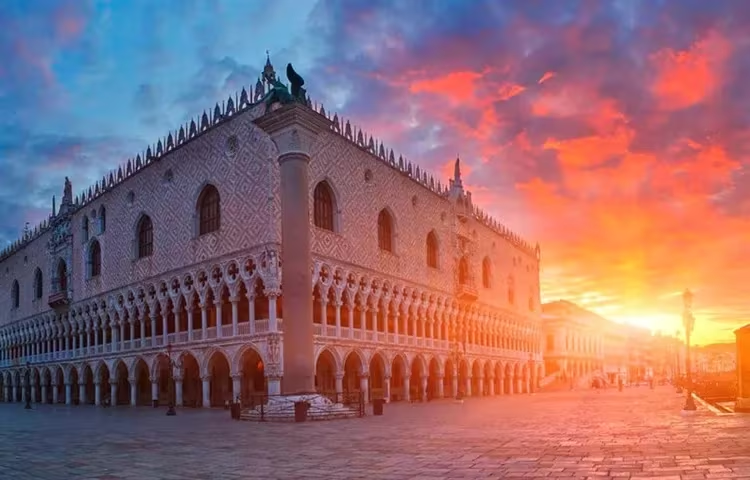
The main element of the famous architectural ensemble of Venice is the Doge's Palace (now it houses a museum). The monument of the late Gothic style was created during the heyday of the Venetian Republic according to the project of the Calendario around 1424. From the side of the lagoon, the palace resembles an inverted ship. Several gates lead to the courtyard of the palace, including the famous Paper Gate, on which the orders of the rulers were hung. This is a three-story building, resembling the letter “P”, made of marble of different colors. The ground floor consists of a gallery of pointed arches. The second is built on the basis of high, thick columns with boxes decorated with floral ornaments.
On the third floor, there are numerous windows of different sizes in the snow-white marble wall. An important element of the palace is a festive balcony with a monument of justice, located on the southern facade. From here decrees, sentences, considered in the meeting room, were announced. The Supreme Court, the secret police, censorship, the maritime department functioned inside the building, special niches (lion's mouths) for denunciations were built in. The imposing staircase of the Giants, made of Carrara marble, was often used for the solemn ceremonies of Venice (the most important, called the wedding of the Doge). Palace address: San Marco 1, entrance from the lagoon. The ticket costs 20 €. You can see the sight from 8.30 to 19 daily.
Correr Museum
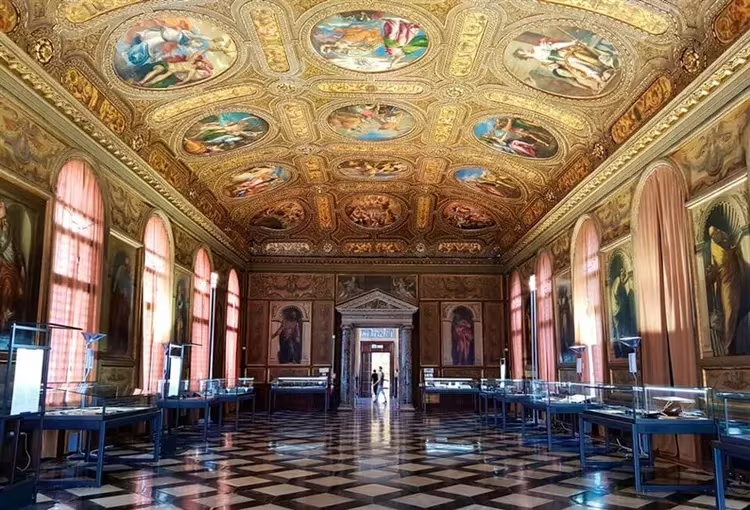
The famous art museum owes its existence to the passionate collector, Count (Abbot) Teodoro Correr. The basis of future rich expositions was personal collections of antique objects and paintings. They were in the building of an ancient palace located in San Zan Degolo. The premises of the museum (a complex historical ensemble created in 1830) contain rare historical, divine works of Venice. The expositions occupy 33 halls on the territory of two floors of the New Procurations building.
Among them are famous symbols of the Venetian Republic, seals, personal belongings of the Doge, old nautical charts, old navigation devices, portraits, etc. 19 halls of the third floor are occupied by an art gallery. It contains canvases from the early paintings of the masters of the Flemish school of painting to the present. Among them is the famous work of Vittore Carpaccio “Courtesans”. Egyptian and Roman artifacts are exhibited in the archaeological department of the museum. Museum address: Venezia, San Marco, 52. The entrance is organized from the main square of the city through the premises of Napoleon. Museum hours are from 10:00 to 19:00. Ticket price 16 €. There are preferential options.
Saint Mark's Clock Tower
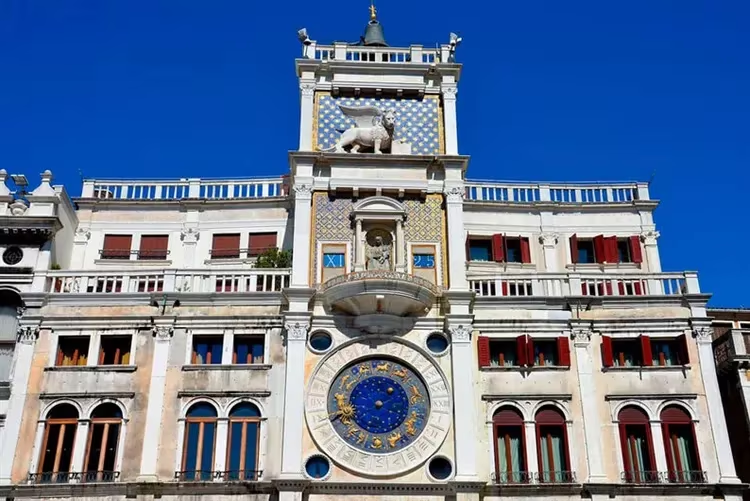
The monument of the early Renaissance period (the end of the 15th century) is easily recognizable by the elements (symbols of Venice) in the form of a winged lion with a book and the Virgin Mary with the Christ Child. At the top of the tower there are two male bronze figures that strike a bell when the clock hands approach a certain position. Sounds that appear on impact are heard throughout the lagoon, reporting the current time. In 1493, not every city could afford the arrangement of such clocks.
They have a sea-green dial with a globe in the center. The clock shows the change of seasons, the path of the Sun, the Moon through the signs of the Zodiac. The hour disk (with two facades) is decorated with zodiac figures covered with gold. There are bright stars on an attractive blue background. More than five centuries ago, they were created by a father and son from the Ranieri family. The clock tower is located on the main square of the city, it is open to visitors (by pre-booked excursion tours) from 9 am to 4 pm.
Venetian arsenal
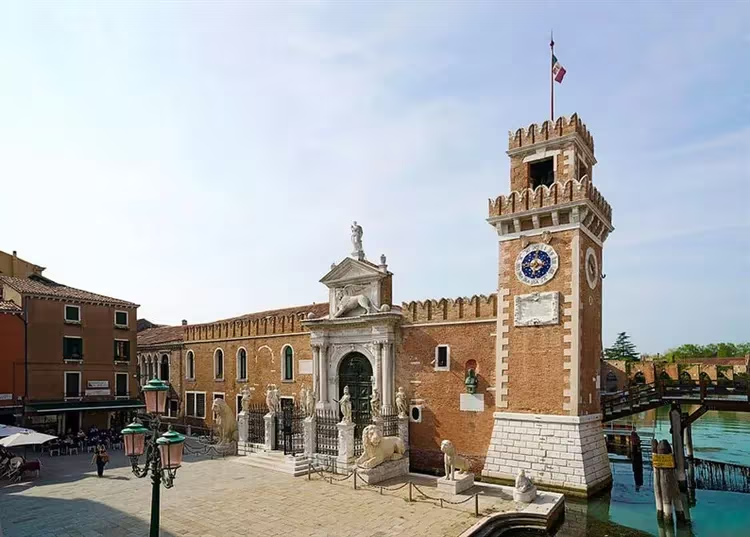
The “Workshop” or Arsenal of Venice is considered the first shipyard that gave ships to the whole world. In the Middle Ages, the Venetian Republic was considered the strongest maritime power. Its power is born from the mighty capabilities of the Arsenal. The famous three-masted galley “Galeas” for the transport of heavy military equipment was created at this shipyard. The ship had a great influence on the subsequent stages of the development of marine technology. The construction of the attraction began in 1104.
Now the Maritime Museum of Venice is located here (it occupies the premises of the Arsenal granary). The first floor is occupied by exhibits reflecting the level of artillery of the powerful Venetian Republic. The second floor is occupied by copies of the famous ships of Venice. Among them is a copy of the ship “Bucintoro”, which served for the ceremonial events of the Doge. The museum houses the famous bronze bell, which heralded the beginning of work for many centuries. Arsenal address: Venice, Castello, 30122. Now it is closed to the public.
Church of San Pietro di Castello
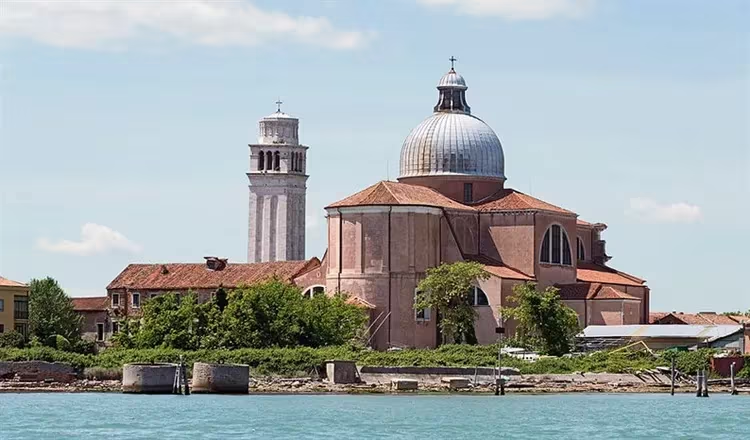
The city of Venice is located on 118 islands. Among the first inhabited islands is a small piece of land in the form of the island of San Pietro (Olivolo). Together with the dwelling of the people, a church appeared, which for a long time served as a cathedral (during the period from 1451 to 1807). Since 775, the Church of San Pietro di Castello was considered an episcopal see, served as the religious, administrative center of the city. The magnificent Basilica of San Marco, during this period of time, was the chapel of the Doge's Palace.
The church has a monumental facade, a huge dome (its diameter is 54 m), the main baroque altar, a bas-relief depicting the “Adoration of the Magi”. The main treasure of the church are paintings by Veronese, Tintoretto, the famous frescoes of Jacolo Palma. On the territory of the church there is a snow-white “leaning tower”, designed by the architect Coducci. The church is located at: Campo San Pietro 2787. You can see it from 10 am to 5 pm.
San Vidal Concert Hall
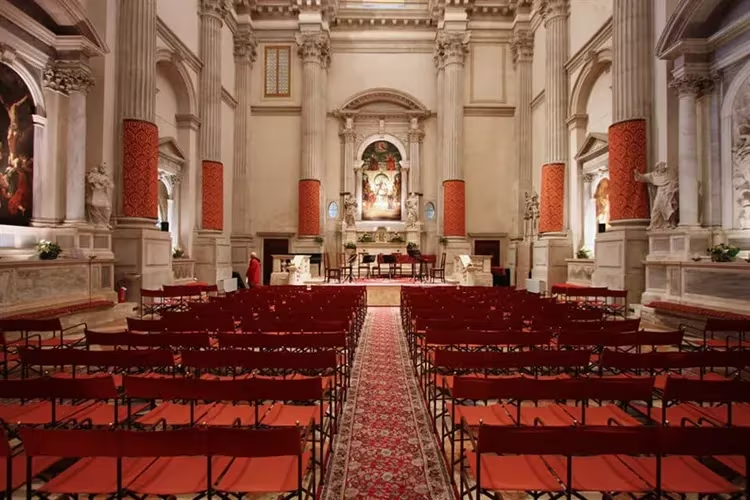
The beautiful church of San Vidal was erected in the 11th century by decree of the current Doge Vitale Falier (named after him). It acquired its final form in the 17th century. Since 2016, the church has been used as a permanent hall for chamber music concerts. Those who wish to view the church can do so without payment. The single-nave church is small and has a vaulted ceiling. There are carpets on the floor, and numerous musical instruments along the walls. Instead of the usual church benches, folding chairs have been installed.
The walls are decorated with paintings by famous artists. Above the altar is one of Carpaccio's larger paintings. Every year, the church hosts about 200 concerts of the Venice Violin Ensemble “Venetian Interpreters”, playing classical pieces in their own special style on original instruments. The ticket price for the concert is about 30 €. There is an assumption that the tomb of the composer Baldasare Galuppi is located in the church.
Dinner at Al Portego Restaurant
Trying interesting dishes of Mediterranean cuisine, just a good meal of a special meat dish with an original sauce is very desirable at the end of an intensive day of traveling around beautiful Venice. Moreover, during dinner, along with offers of culinary excellence, you can continue to admire the classic view of the private territory. The restaurant is located in a renovated village house, which has preserved the atmosphere of comfort, simple rural elegance. A beautiful summer garden, famous Italian wines, a small cicchetti appetizer (considered a special dish of the restaurant) will help you relax, learn the merits of the local cuisine.
Al Portego restaurant address: Castello San Lio, 6014, 30122. There are always many people who want to. it is better to arrive early or reserve a seat in advance.
Third day in Venice
Numerous islands of the Adriatic Sea belonging to Venice, 150 canals and 400 bridges that unite them, have their own history and interesting sights. Large and small cities were formed independently and under the influence of Byzantine Constantinople. On the third day of the trip, it is proposed to see the following places.
Academy Gallery
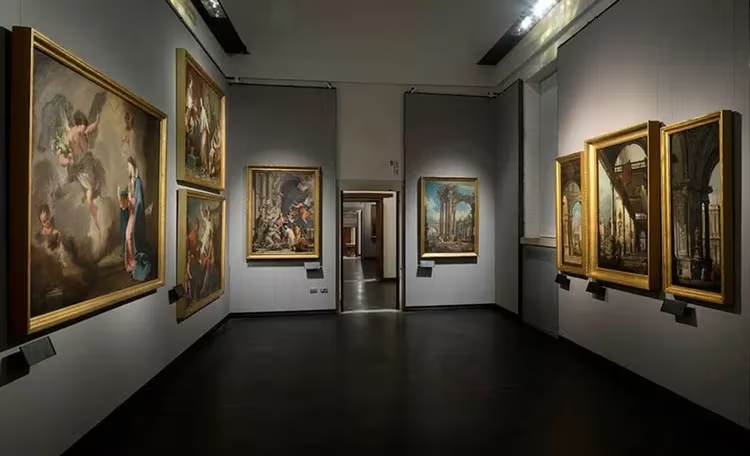
Among the numerous museums of the city, the famous Academy Gallery plays a leading role. Its funds contain the most significant collection of paintings in Venice from the 14th to the 18th century. It appeared in 1750 with the aim of making the city an important point for artistic development, education, and education, similar to Rome, Milan, Florence. The gallery was awarded the status of a museum in the 19th century. The gallery has been known as the Royal Academy of Arts since 1807. Young people studied painting and architecture here.
For the first time, a school of restorers was formed. Several buildings have been allocated for the gallery (an ancient monastery, a church). They contain priceless collections of works by famous Italian artists (Tizian, Bellini, Carpaccio). 25 halls are reserved for the exposition of the museum. The gallery is located at Campo della Carita 1050 on the south side of the Grand Canal. The museum operates according to the established regime, the ticket price is 15 €.
Scuola San Rocco
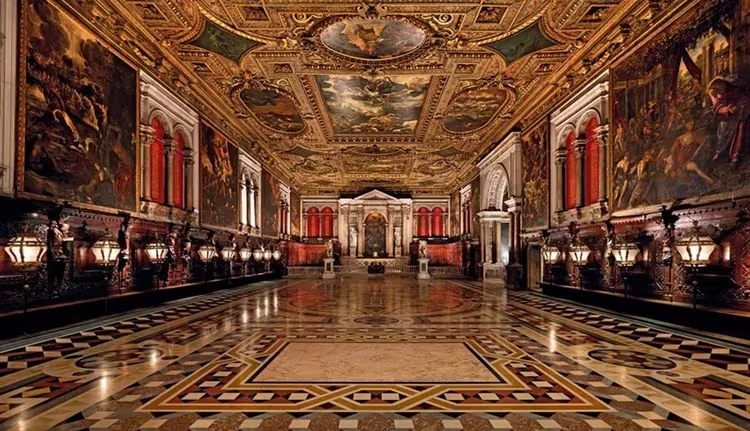
The church is located in the San Polo area. It was erected in honor of the famous Saint Roch, a plague healer. Together with St. Mark, he is considered the patron saint of the city. “Scuols” are the brotherhoods of the Middle Ages in Italy (modern associations, corporations), created on the examples of the Dominican or Franciscan order. In Venice, they helped poor people in difficult situations. Churches were built at the expense of the funds of the brotherhood, they were engaged in the development of crafts, various types of art, being considered a social institution of the country. Scuola San Rocco became one of the first architectural landmarks of the High Renaissance style.
The church has a rich interior, many paintings by famous artists. For 23 years, the famous master Tintoretto painted the walls and ceiling of the church with scenes from biblical scenes. In the Albergo room there are only paintings by this artist (for example, “Crucifixion”). In the center of the ceiling is a mural called “Saint Roch in Glory”. Church address: San Polo, 3052 – 30125. The scuola is open daily from 9.30 to 17.30. The ticket price is 11 €.
Museum of Palazzo Mocenigo
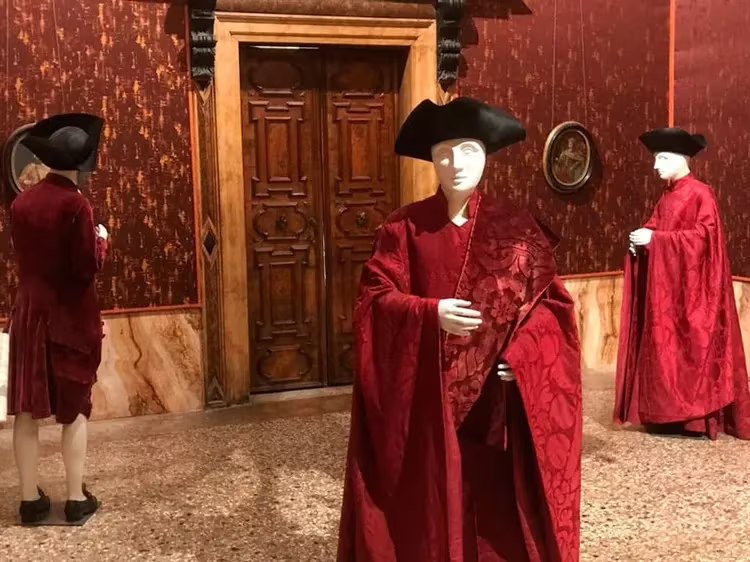
In a beautiful building of the Gothic style, the former palace of the Mocenigo family, there is an interesting museum of Venice, which is included in the fund of city museums. The family was one of the most noble families in Italy (7 doges came out of it, a large number of important figures of the state, clerks, artists). In 1945 the palace was donated to the city. Since 1985, it has housed a museum of textiles and costumes. Its pride is a rare collection of historical costumes and fabrics. Fashion items from the 18th century can be seen in the vaults of the building.
After the restoration in 2013, the museum can see 20 rooms showing the internal structure of the palace of the 18th century. In addition to the collection of fabrics, costumes, you can see a permanent exhibition dedicated to the history of Italian perfumery. All exhibits can be smelled. Museum address: Santa Croce, 30135. You can visit it with a single Venice museum ticket or with excursions. The cost of an individual excursion to the museum is 140 €.
Ca' d'Oro Palace
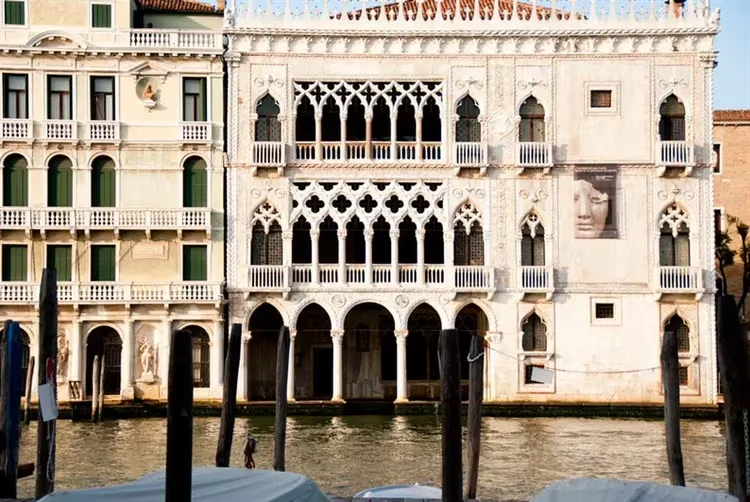
It is worth going to Venice just to see the extraordinary lace palace. It strikes with beauty from the first moment and is remembered for a lifetime. Palazzo Santa Sofia, the Golden House, thanks to the architectural elements in the form of lace, makes it airy, fills it with romance. The painting of the facade with the help of expensive, rare materials, gold leaf makes it fabulous. You can enter the palace, built around 1440, through two entrances. Enter to see the collection of old paintings, ceramics, sculptures, collected by the last owner of the palace, Giorgio Franchetti. Thanks to his action, the palace acquired its original appearance, became an invaluable gift to the city.
On the first floor of the palace there is a small chapel, a cozy gallery with antique statues. It offers an extraordinary view of the Grand Canal. An ancient wooden staircase, built in the 15th century, leads to the second floor to the luxurious chambers of the palace. In them you can see the famous frescoes, Flemish tapestries, paintings with views of the city. In the courtyard there is a unique well made of red marble, allegorical statues of figures of Fortitude, Justice, Mercy. You can see the wonderful palace daily, along with excursions, alone. The entrance ticket costs 6 €. Visiting time from 8.15 to 19.15 hours.
San Michele Island
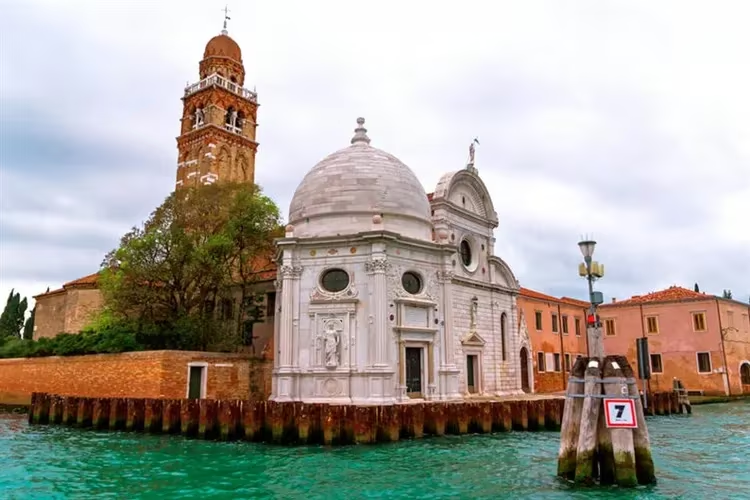
A small island in a beautiful lagoon is located near the Cannaregio quarter. Once it was a favorite place for fishermen, lovers of a relaxing holiday. There are few historical sights on the island. This is the snow-white church of San Michele in Isola, built in 1469 (the first church in Venice of the Renaissance architectural style). A monastery that served as a prison for a long time. The main feature of the cypress island is the cemetery that operates on it. Its appearance is associated with the ban of Napoleon to carry out burials near the churches of the city.
The cemetery was designed by the architect Antonio Selva. For its implementation, the channel between the islands of Cristoforo and San Michele was filled up. The structure of the cemetery includes three zones: Catholic, Orthodox, Jewish. The city authorities allowed to bury famous people whose life was connected with the city at the cemetery. Among them are the burials of our compatriots (Igor Stravinsky, Joseph Brodsky, Sergei Diaghilev). The cemetery is still active today.
Murano Island
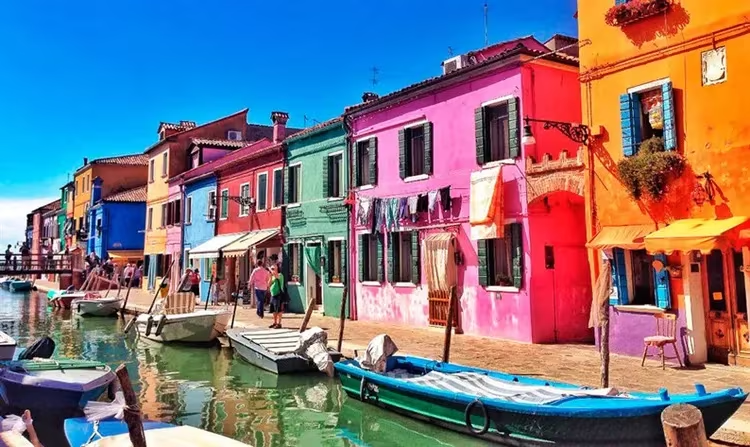
Many interesting places are located on the outskirts of Venice. The Murano area is like a mini-city with its palaces, cathedrals, museums and other attractions. The popularity of the island of Murano is associated with Murano glass, famous all over the world. The production was located in Venice, but the desire to keep the secret of the manufacturing technology, to increase the volume, led to the need to transfer it to a separate island. This was done in the 15th century. The history of its creation is invited to learn in the Museum of Glass.
You can buy a souvenir made of real, the most expensive glass in the souvenir shops that filled the island. For many years, the art of glassblowers flourished on the island, giving birth to unusual figurines and other blown glass products. You can see the work of glassblowers in numerous workshops (the cost of the trip is 3 €). The ancient masters kept their work a secret, passing on their experience to representatives of their generation. The Glass Museum is located at: Fondamenta Giustinian, 8. The museum is open from 10 am to 6 pm. The ticket price is 4 €.
Island of San Giorgio Maggiore
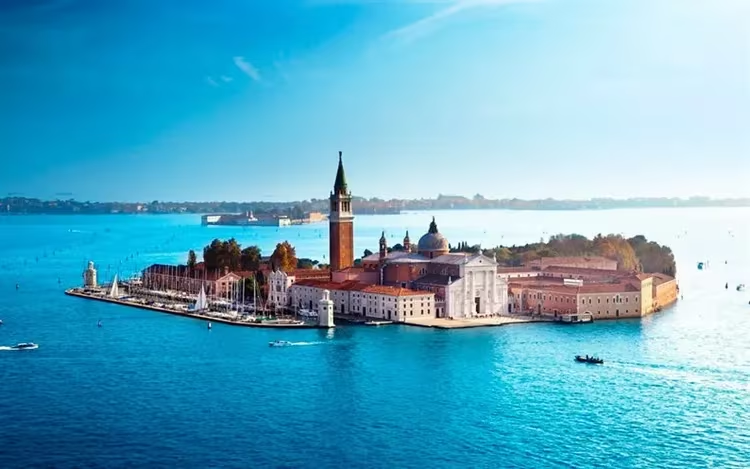
A small island (with an area of only 0.1 sq. km.) Is located opposite the Doge's Palace, Piazza San Marco. Known since the period of the Roman Empire, it struck with the beauty of its gardens, vineyards, cypress thickets. In the 10th century, a Benedictine monastery was built on the island. You can visit it by paying a ticket of 12 €. In 1810, the Cathedral of San Giorgio Maggiore was built according to the design of the architect Andrea Palladio. The walls of the cathedral are made of combinations of red and white shades of natural stone.
Inside the church are the last paintings of Tinoretto “Manna from Heaven”, “The Last Supper”. Of particular interest to tourists is the opportunity to create interesting panoramic images from the top of the bell tower (there is a view of the center of Venice, the yacht harbor, and the surroundings). The bell tower is similar to the same building in Piazza San Marco, but lower in height. Since 2003, walks have been allowed throughout the island.
Lido
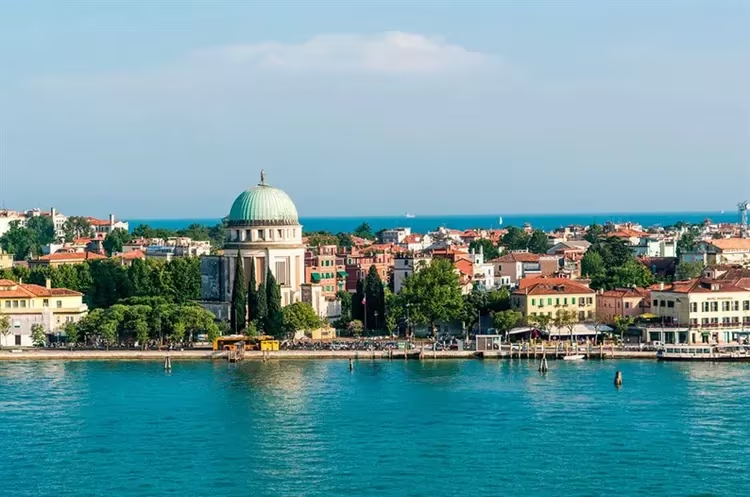
A small island and a city with the same name attracts Venetians, guests of the city to relax on the beaches of the Adriatic Sea. In the Middle Ages, the island was called the name of St. Nicholas (the patron saint of sailors). In the northern part of the island there was a Benedictine abbey built to store his remains. This place has a gently sloping sandy bottom, which is convenient for families with small children. Two breakwaters (named after St. Nicholas the Wonderworker and Alberoni), as well as many other small protective devices, reliably protect the coast from high waves. They are equipped near all beaches.
They always have a tent in the form of a large gazebo with a canopy, a veranda. On the beach you can rent any equipment, sports equipment. Lido beaches are covered with fine golden sand. Depending on the location, they can be free, with payment at different prices depending on the type of services provided. On the island, the main street is Santa Maria Elisabeth, leading to the sea. On it there are hotels, restaurants, shops. You can get there by the Giudecca canals and the Grand Canal. Travel time from Piazza San Marco is about 15 minutes.
Dinner at Birraria La Corte Restaurant
While visiting any restaurant in Venice, you have the opportunity to try the famous pizza, pasta, many original dishes from culinary excellence. Especially original are dishes prepared from seafood according to recipes that have been tested for centuries. Most often, restaurants are located in interesting historical buildings that complement the atmosphere of a festive dinner. The Birraria La Corte restaurant has been known for over 75 years.
In this place in the 16th century there was a corral for bulls participating in the festive races in Piazza San Marco. In the 19th century, there was a brewery here. In 1930, an avant-garde restaurant with an outdoor area opened in its place. Now here you can try 30 types of pizza, salads, appetizers, cold cuts, Italian wine, and other dishes. Restaurant address: Campo San Polo, 2168, 30125.
Fourth day in Venice
The last day of your stay in beautiful Venice is the saddest. I don't want to say goodbye to her, but the fees on the way back are inevitable. Therefore, it is not so busy, but the desire to get acquainted with the sights still makes you hit the road.
Burano Island
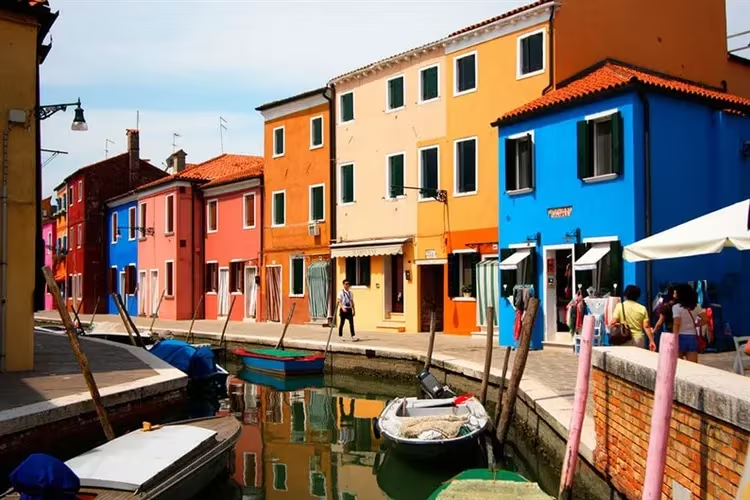
From a distance, the houses of the island of Burano resemble a children's coloring book made with bright felt-tip pens. Real flower fireworks on the walls of houses standing on a small embankment. You can hear many versions of why the inhabitants of the island always paint their houses. But one of them is the most likely: in a foggy city, it was easier for fishermen returning from swimming to find their way to their home faster. The island has the only church of San Martino with a sloping bell tower.
It belongs to the few local attractions. An ordinary fishing town became famous for the skill of weaving lace. In 1981, the Museum of Lace was created in it, revealing the secrets of the history of craftsmanship, the cost of a ticket to the museum is 5 €. Venetian lace was created on the basis of ancient traditions that continue in the famous Buranskaya lace school. They, together with colorful houses, the famous Essi cookies, form the romantic atmosphere of the island. You can get here by waterbus vaporetto from anywhere in Venice.
Torcello Island
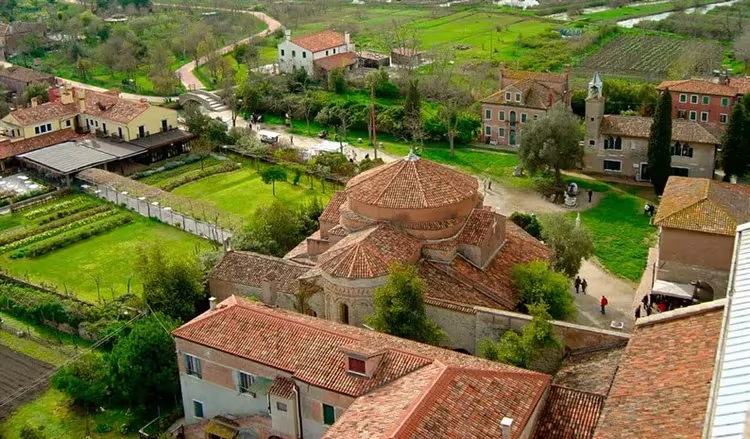
Only 18 people live on this island. But it is famous for its gardens. Flower abundance, vineyards. Restaurants operate on the island, the Basilica of Santa Fosca (the patroness of the island) operates, famous for its extraordinary Byzantine mosaics of the 12th century. Back in the 11th century, the island (founded in 452) was one of the largest settlements on the islands of the Venetian lagoon. In the 12th century, the harbor turned into a fetid swamp, creating outbreaks of malaria, and life on the island changed.
The buildings were dismantled, two small palaces were preserved from medieval palaces (they contain museum exhibits), the Cathedral of Santa Maria Assunta (867). A secluded island in the northern regions of the lagoon is considered an abandoned, romantic place in Venice. It is attracted by the famous mosaic, the amazing stone “throne of Attila”, which brings good luck and the elite gourmet restaurant Locanda Cipriani.
Jewish ghetto
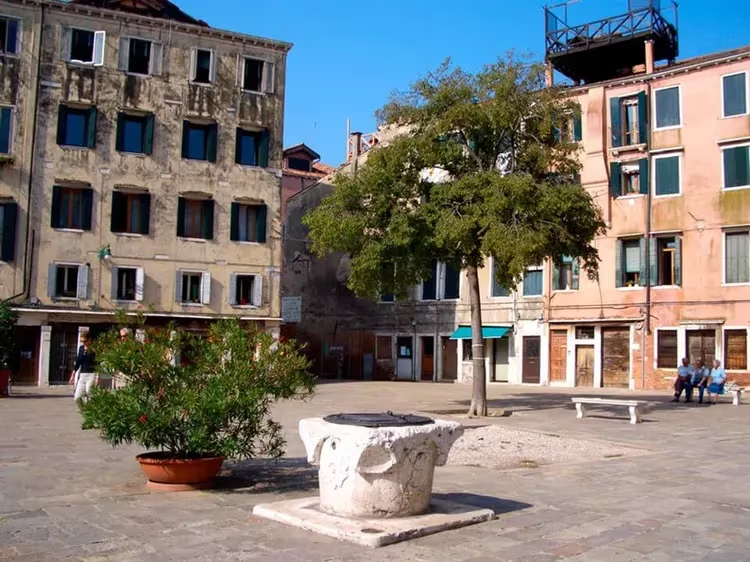
In the languages of different peoples, the word “ghetto” is known to everyone and sounds in connection with the history of the life of the Jews. People, eternally persecuted, smart, great and their compact place of residence. The roots of the word are associated with an isolated section of Venice in the Cannaregio district. There was a foundry (ghetto in Italian) here. The area was located on the outskirts of the city, was surrounded by canals, and was notorious. By decision of the authorities, all the Jews who had lived on the island of Giudecca since the 12th century were settled here (after the collapse of the foundry and the devastation of the territory).
A set of rules for the life of the Jewish population was announced, and barrier gates were erected. Now there are about a hundred people in the Jewish community, five synagogues continue to operate, a library operates, and a monument has been erected in honor of the victims of the Holocaust. Next to it is an old stone slab. It says that “a Jew who secretly observes Jewish rites will be severely punished.” Special schools (yeshivas) appeared in the community. They train young men from all over the world. The Museum of Jewish Art works, a kosher restaurant is open.
Palace of Fondaco dei Tedeschi
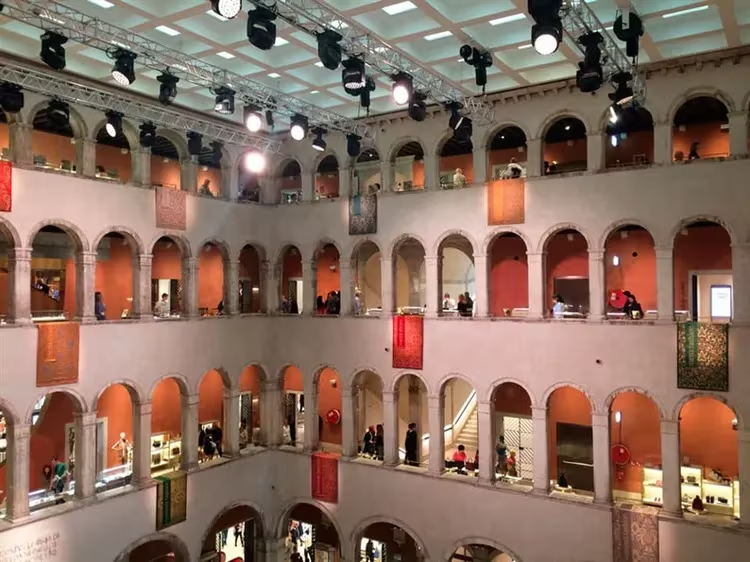
In 1228, a huge palace was erected on the Grand Canal (near the Rialto Bridge) for German merchants. It contained their residential, commercial, warehouse premises (the word fondaco is translated from Arabic as “warehouse”). The author of the project was the architect Tedeschi. Initially, the facade of the palace was decorated with frescoes, the canvases of famous Italian artists were placed inside. Gradually, these elements were transferred to other palaces, and this building served exclusively to solve the trade problems of the Germans.
In the 20th century, the headquarters of the Italian Post was located in the German courtyard. Since 2008, the modern corporation Benetton has become the owner of the building. Having developed a new project, having restored the palace without changing its historical form, the corporation created a huge shopping center. It organizes the sale of products of international and local manufacturers. Here you can buy Italian goods, products, relax in the restaurant.
Peggy Guggenheim Museum
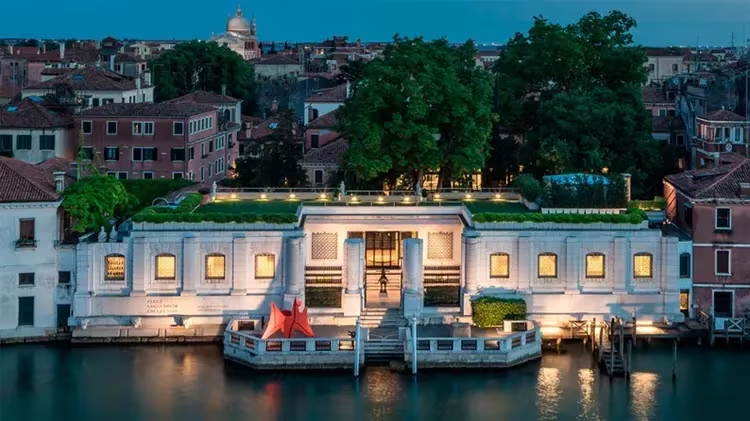
The rich heiress, who appreciated and understood art, held permanent exhibitions of paintings by famous artists for 30 years once a week in the old palace, built in the 18th century. A magazine was published on her financial investments, and material support was provided for talented youth. The heiress led a bohemian lifestyle, had the right to have her own gondola. Based on the collection (about 300 works), the Peggy Guggenheim Museum was created.
It is located in the elegant and harmonious Palazzo Venier dei Leoni on the Grand Canal. The collection is considered the cultural wealth of Venice. It consists of masterpieces by Picasso, Léger, Miro, Chagall, Kandinsky and other famous artists. The museum is open from 10 am to 6 pm. The ticket price is 15 €. Benefits apply. Museum address: Dorsoduro, 701, calle San Cristoforo.
This concludes the four-day trip to Venice. I would like to say “See you again, the most unforgettable city in the world.”