
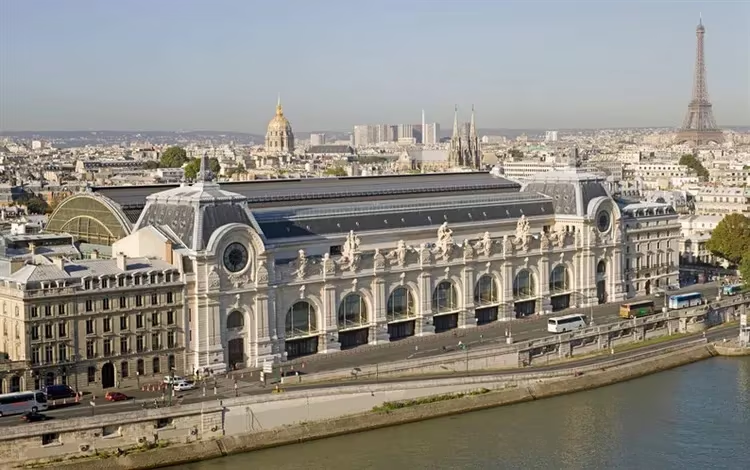
Over 3 million visitors a year, more than 2 thousand sculptures, about 13 thousand photographs and about 500 paintings – this is what distinguishes the Orsay Museum or Muse Orsay (as it is also called) among other attractions of the French capital, putting it in 3rd place in popularity rankings.
History and concept
The museum occupies the premises of the former railway station. Built for the opening of the World Exhibition in 1900, thanks to the architect Victor Lal, the building was in perfect harmony with the quarter itself and continued the traditions of the Louvre, admiring with its luxury and innovation. Despite the fact that it was the first electrified station, it quickly became obsolete and already in 1939 served only suburban trains.
Later, it housed a theater studio, auctions were held, it served as a mail center and even the scenery for psychological films, and finally just stood abandoned. A huge building in the center of Paris could not be left in such a state. After much debate about its possible use, it was decided to house a museum in it. The station was to become a museum for the exhibition of works of the II floor. 19th – early 20th centuries
The falling layer of art, which did not find enough space either in the Louvre or in the Pompidou Center, recognizing its significance, was allocated a separate museum. He had to link the era, so the exterior and interior of the building, which was to be turned into a palace of arts, were supposed to be minimal changes. Already in 1980, reconstruction began, which lasted 6 years.
Structure
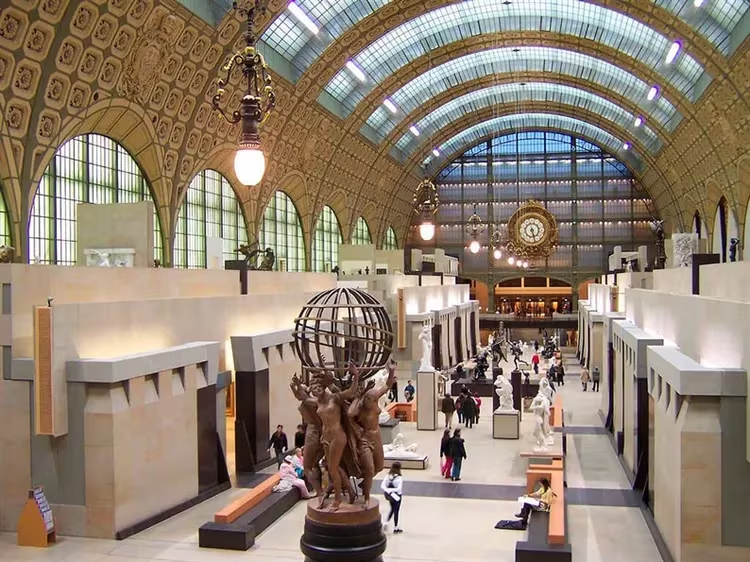
The restorers used everything that was left of the huge metal structure covered with a layer of stone and glass. Stucco, beams, columns – everything fit into the style of the new interior.
It was decided to divide the central hall into two parts, between which there was a wide nave. Stretching along the entire length of the hall, it created the illusion of an infinity of the exposition, which combined painting, sculpture and architecture. In turn, each part consists of separate halls or blocks for thematic exhibitions. All rooms are created by panels, i.e. do not have a ceiling, which allows natural light to penetrate.
Under the very dome there is a long gallery, the lighting of which was a real find for the Impressionist works and sculptures exhibited here. However, it would be a mistake to call d᾽Orsay just a museum. This is another cultural and educational space where meetings, conferences and lectures are held. In addition, the atmosphere of the building is so monumental, and the acoustics are suitable, that concerts and shows are often held in the building.
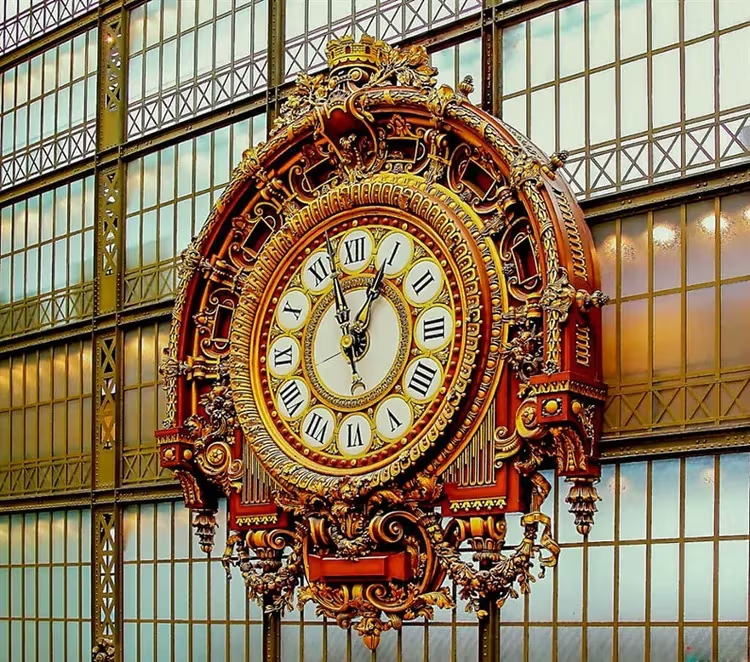
The museum is located on 3 floors (besides it, there is a cafe and a restaurant, a bookstore and a souvenir shop in the building). The peculiarity of each tier is the combination of paintings, drawings, sculptures, furniture and photographs of a certain period. Moreover, the works of famous masters alternate with those whose names did not go down in history. Despite the fact that the museum's collection is represented by more than 6 thousand exhibits, about half is available for daily viewing. The rest is at exhibitions in other museums, exhibited periodically or simply lie in storage.
Exposition on the first floor
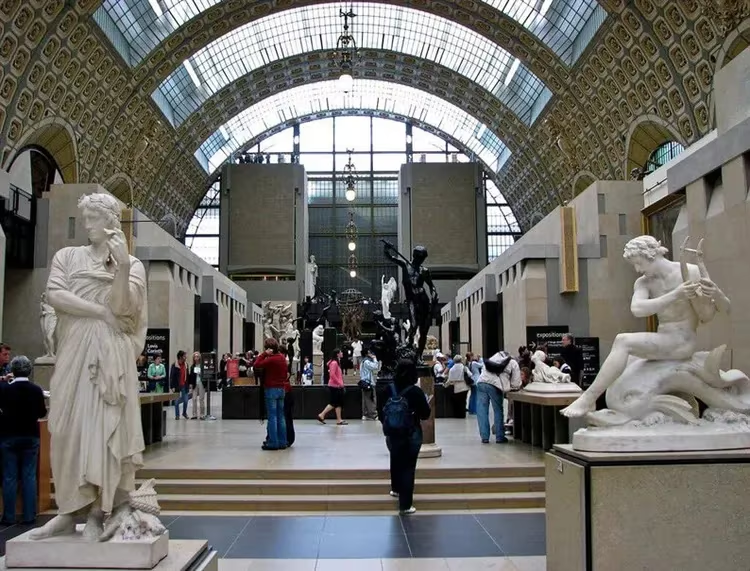
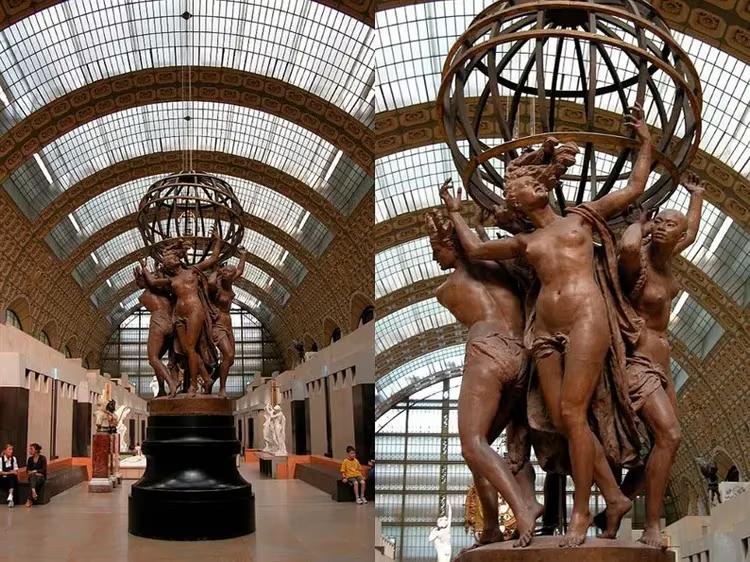
The exhibits of the museum are divided into three floors, each of which corresponds to its own period of time. On the basement and first floor, works of the 1840-1860s are exhibited. The first thing that impresses visitors is the huge nave lined with the finest examples of Ser. 19th century Mostly these are the works of Carpo: full of drama “Ugolino”, the originals of the provocative sculpture “Dance” and the fountain “Four Parts of the World”, etc. There are also works by other authors: statues of Cavelier, Bari and Klesinger, busts of Cordière, medallions of Preo.
Paintings are exhibited in the side rooms. The exposition consists of works by Delacroix, Moreau, Millet, Daumier, Courbet and other predecessors of impressionism. Crowds of visitors are always attracted by halls with paintings by early Monet and Manet, Cezanne and Degas. Nude nature in the paintings “Olympia” and “Breakfast on the Grass” by Manet at one time caused indignation and scandal. Separate rooms were allocated for the exhibition of photographs. There is no lighting in them and only the works are highlighted – this technique allows you not to be distracted by the interior of the museum.
Exhibition on the second floor
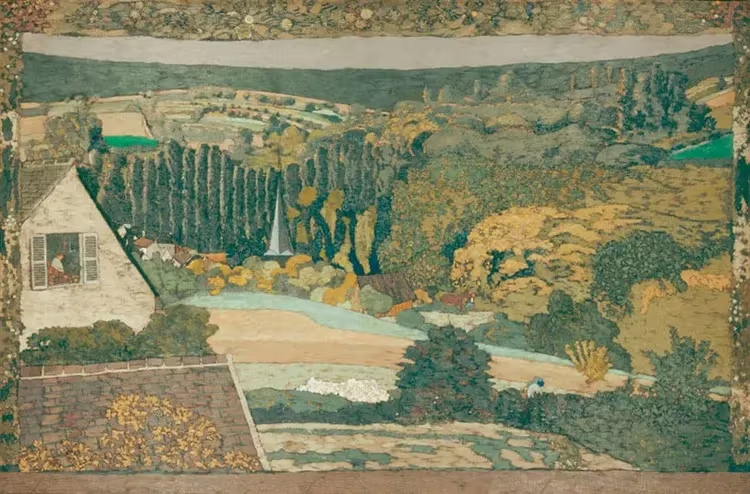
If you follow the chronological sequence, then the tour must continue on the upper tier, and then go down to the second. The floor reflects the trends of the XIX – n. XX centuries, i.e. the period of time from 1880 to 1914. The works of the post-impressionist Kaganovich are exhibited here, which are placed in 2 rooms. The terrace of Lille is occupied by the exposition of Bonnard and Vuillard, which belong to Art Nouveau. Their paintings show influences from both the impressionist significance of color and Japanese painting. This can be seen in the panel “Public Gardens” by Vuillard and the painting “Croquet Party” by Bonnard.
Completes a number of presented areas of painting symbolism, most clearly displayed by Klimt and Munch. Their work should be sought on the terrace of the Seine. You can also meet lesser-known artists Blanche, Cormon and Detaia there. The picture of the last “Dream” invariably arouses the interest of visitors. Parallel to the terraces, Rodin's masterpieces were placed, including “Fleeting Love” and “Ugolino” (the latter seems even darker than the statue of Carpeau). Works by Rodin's student Claudel, such as “Mature Age”, are also exhibited here.
The floor of the exhibition is completed by halls with furniture, dishes and works of applied art in the Nouveau style. Visitors rarely see the international exhibits placed here, because. usually there is no strength left for the last premises. If you completely go through the floor, you can admire the unique stained-glass windows, Bugatti and Quartti furniture, Muller vases and much more.
Exhibition on the third floor
On the top floor there is a collection of impressionists, which is rightfully considered the pearl of the museum's treasury. It opens with a hall where paintings from a private collection are exhibited – a gift from the collector Moro-Nelotone. The following exhibition spaces showcase Renoir's secular portraits, the landscape master Sisley, Manet's contrasting paintings, and the work of Morisot, the first woman of the Impressionist.
The works of Degas and Monet, located in the same room, clearly demonstrate the triumph of life in the movements of the dancers of the first, while the canvases of the second are distinguished by the play of light, making them life-affirming. The landscapes of Pissarro and Cezanne, written from the same nature, seem absolutely dissimilar. Due to the difference in manner and accents, only an attentive eye will notice that where Pissarro is dominated by man, Cezanne prefers nature.
Ambiguous feelings are caused by the works of Van Gogh, especially his Starry Night over the Rhone. The exhibition is completed by paintings by post-impressionists Rousseau, Gauguin and Toulouse-Lautrec. Due to the peculiarities of the image, Georges Seurat and his follower Signac stand apart.
Cafe and summer terrace
D᾽Orsay houses several cafes and a restaurant. At the Seine Tower near the statue of the “Polar Bear” is an inexpensive Café de l'ours, where visitors are offered light snacks, desserts and drinks. The historic restaurant, which first opened in 1900, is located on the second floor. Traditional French cuisine is served amid gleaming gilding and elegant chandeliers.
Café Campana, located on the top floor with an outdoor terrace, enjoys great attention. This brasserie features a cozy Art Nouveau interior and wonderful views. Unpretentious fast food, buns and salads are easily compensated by the opportunity to take panoramic photos of the area and the whole city from above.
Opening hours and ticket prices
Open:
Closed: Monday, 01.05 and 25.12. Price: 12 € – full price. 9 € – for EU citizens from 18 to 25 years old – from 18.00 on Thursday and from 16.30 on other days.
Free admission for visitors under 18, the first Sunday of the month.
Where is it located and how to get there
On the left bank of the Seine, not far from the Louvre, the Tuileries Gardens, the Latin Quarter and the Abbey of Saint-Germer, at 62 Rue Lille, is the Musée d'Orsay. This is the very center of Paris, so you can easily get here by the following transport: