
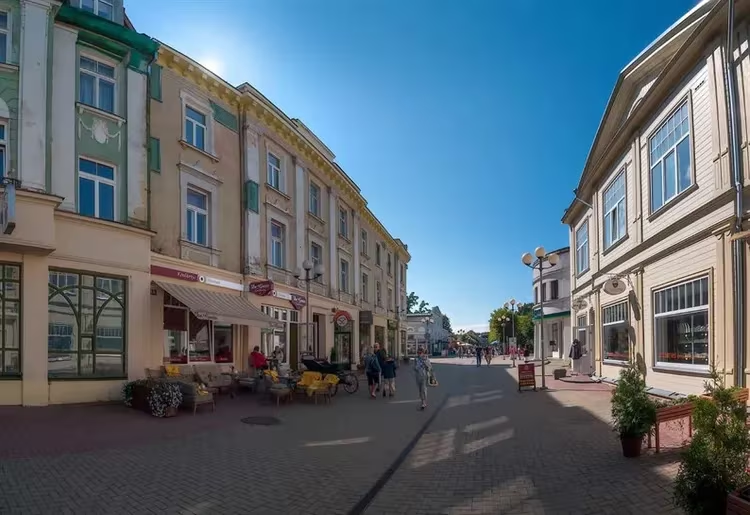
Sights of Jurmala – 20 most interesting places
Until the 18th-19th centuries, fishing villages were located on the territory of the modern resort town on the shores of the Gulf of Riga. Gradually, settlements changed status. In 1920 they were merged into the city of Riga Seaside (“Riga Jurmala”). After 29 years, it became a separate district of the capital of Latvia. In 1952, Jurmala regained the status of a city, where today more than 50 thousand people live. The activity of the townspeople is mainly connected with tourism, sanatorium and resort sphere. Many sights of Jurmala have a difficult fate. If Riga is the heart of Latvia, Jurmala is one of the manifestations of the soul of the Latvian people: restrained, proud, reasonable.
Forest Park “Dzintari”
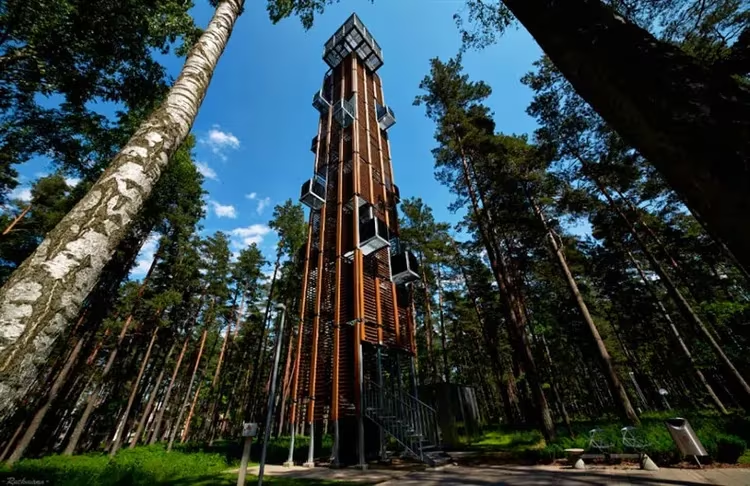
In the center of the resort, not far from the beach, there is an evergreen forest park “Dzintari” – a beautiful place where you can relax with family or friends. The 200-year-old pine grove is of particular value. For the convenience of visitors, smooth and wide paths are laid throughout the territory. This is a very calm and quiet place – without noisy music, an abundance of restaurants, barbecue and other outlets. There is a small cafe that offers delicious pastries or ice cream, a cup of coffee or a soft drink.
The park area is equipped with places for active recreation – interesting playgrounds. Children of all ages will find something to do – the smallest ones prefer swings or trampolines, older ones climb rope labyrinths or ride electric cars and roller skates. A tower with an observation deck at the very top rises above the entire park, from which coniferous forest, dunes and the sea are perfectly visible. The design of the tower is interesting – it sways, especially in windy weather, given that the structure is lattice, it can be scary.
Jomas street
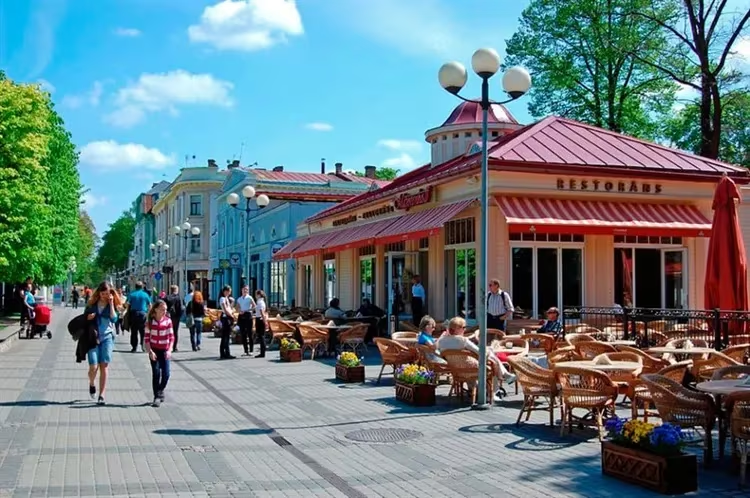
Jomas Street is located in the center and is the oldest on the seaside, known since the end of the 19th century. Now it is a busy place with souvenir shops, a market, pharmacies, cafeterias and hotels. The appearance of Yomas changed many times – fires and wars contributed to this. Wooden houses were burned or destroyed during wars, as a result, new beautiful buildings appeared. Currently, one of its edges goes to the Maiori railway station, on the other side to one of the resort's attractions – the globe.
The street is for pedestrians only. Especially a lot of people in the summer – a wonderful maritime climate, coniferous forest, excellent cuisine, clean air make the resort attractive to visitors. Every year, local residents organize Jomas Street Festival, on this day they hold exciting contests and attractions, organize concerts and other interesting events.
Holiday complex of Kristap and Augusta Morberg
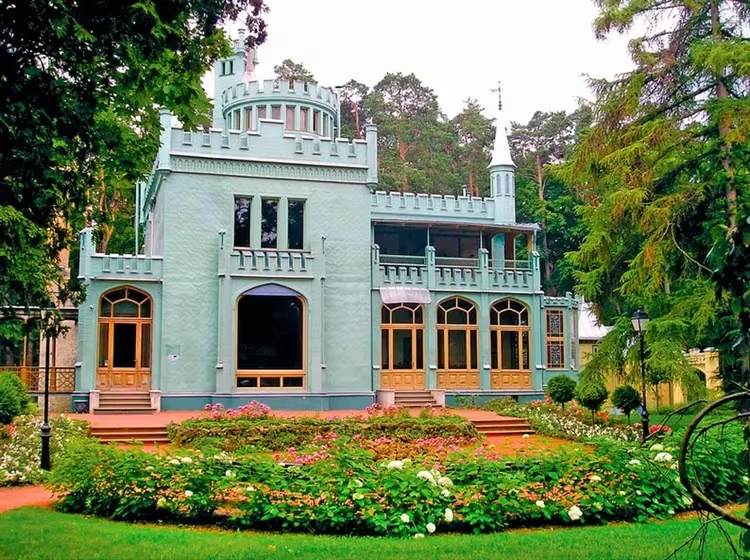
Vacationers will definitely be interested in the summer residence of the construction magnate Kristaps Morberg and his wife. A peculiar wooden building was erected according to the project of Morberg himself in the neo-Gothic style. The construction of the mansion began in 1883, the project was changed over several years, in total, construction lasted more than thirty years. The result was an amazing architectural residence.
Jagged turrets with weather vanes, colorful stained-glass windows and openwork terraces give the structure an elegant weightlessness, making it look like a castle from a children‘s fairy tale. Mr. Kristaps loved to experiment and turned his fantasies into his brainchild, in particular, he led the pipes of the house inside to pour rainwater on the greenhouse plants. Morberga's house was bequeathed to the University of Latvia. Recently, the mansion was restored, recreating the former appearance of the interior and facade.
Jurmala Open Air Museum
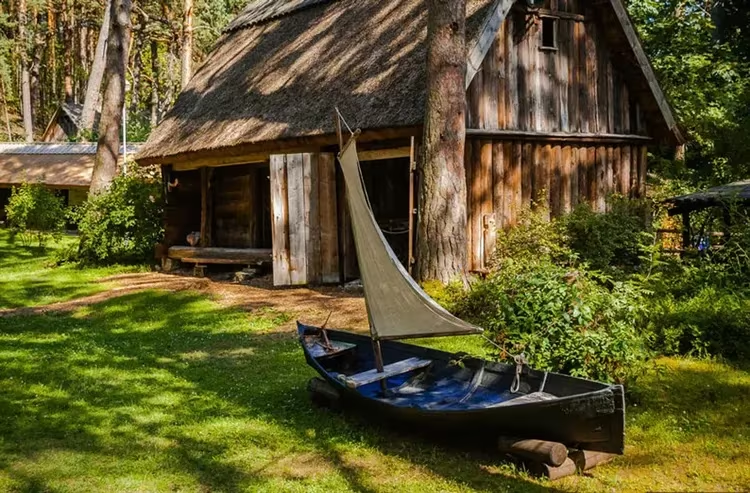
Once on this territory there was an ordinary fishing village: men caught and smoked fish, women did housework. It was decided to equip the exposition on the site of the settlement in 1970. Boats, smokehouses, nets, anchors, fishing houses, everything that the inhabitants used, began to be brought from all over Latvia.
The management of the complex organized interesting and informative excursions, where not only dwellings and tools are shown. Here you will learn how to repair nets and tie a sea knot, offer to taste freshly prepared smoked fish and listen to Latvian folk songs. All items of the museum, up to the huts, are original; they were used by fishermen and their family members.
Tuesday – Sunday from 10:00 to 17:00. The entrance is free. Located in the Dubulti region.
House-Museum of Aspasia
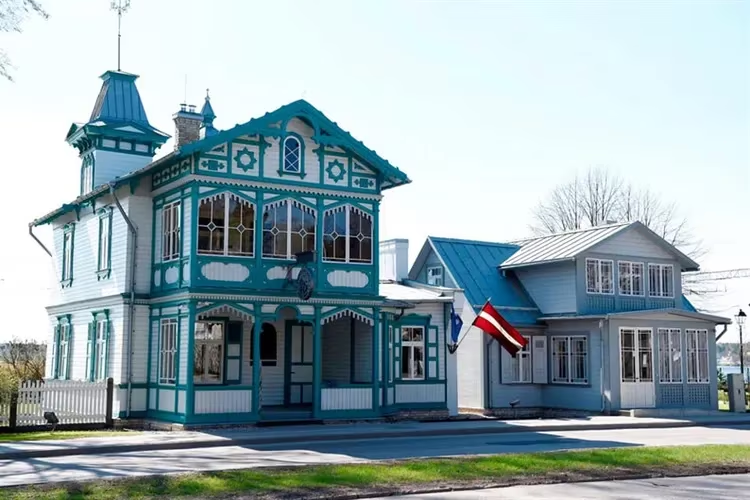
Aspasia is a well-known Latvian poetess, the wife of the poet and public figure Jan Rainis. After the death of her husband, the widow decided to leave Riga, and in 1933 she acquired a small mansion in the small town of Dubulti. The blue building is decorated with azure carvings. During the life of the hostess, guests often gathered here – writers, writers, artists and other creative people. In 1943, the poetess died, and since there were no heirs left, the house became the property of the local government. Every summer vacationers lived here, who did not care about the legacy of Aspasia.
In 1990, a group of enthusiasts decided to reconstruct the building using documentary materials and testimonies of people, old photographs were found. They collected clothes of those times, furniture, household items, and in 1996 opened the Aspasia Museum. A surprisingly warm atmosphere of the former life has been created in the room – calm music plays, people read Aspasia's poems in her native language, tea parties are arranged during excursions. A large room on the ground floor works as an exhibition hall – works of painting, sculpture and photography are presented.
Opening hours: from 11:00 to 18:00, Tue-Sat – days off. How to get there: fixed-route taxi No. 7021, 7023 to the stop “Dubulti” from the railway station of Riga.
Globe of Jurmala
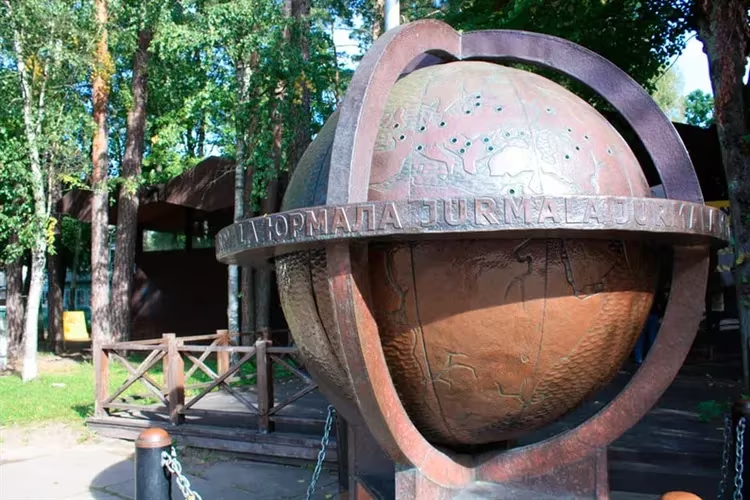
The largest globe in the country with the inscription “Jurmala” is located at the intersection of Jomas and Turaidas streets. The globe is made of copper plates fixed on a steel frame and mounted on a low pedestal. The structure weighs almost a ton. The monument began to be made in the late 60s, in 2003 it was restored. In 2015, during work, the globe was accidentally damaged by construction equipment.
It was decided to dismantle it and carry out a complete repair, during which the electrics were replaced, a rotation mechanism was installed. In the evening, lights are lit on the site of world capitals and it can spin like a real globe. This is a popular place where lovers meet; tourists like to take pictures against its background.
turtle sculpture
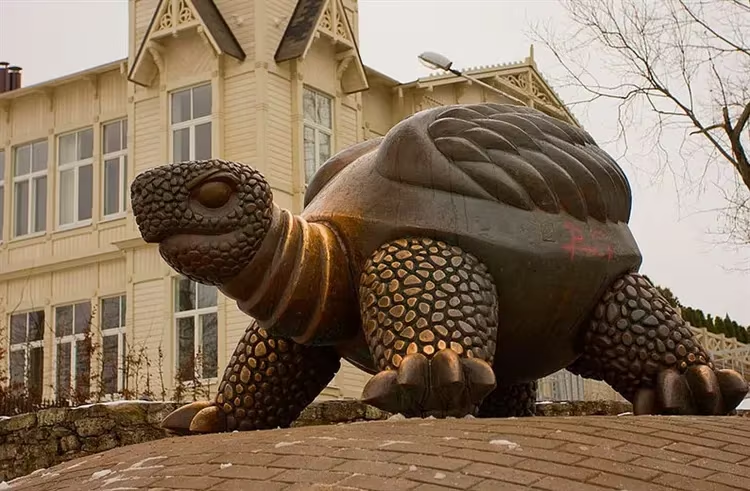
On the seashore, next to the marine pavilion, in 1995, a bronze monument depicting a turtle was erected by the famous Latvian sculptor Janis Barda. There are several opinions about why the turtle, an animal uncharacteristic for these places, is installed near the beach. According to one version – as a symbol of longevity, according to another – speaking of the leisurely life of the resort. According to the third – the turtle just decided to swim in the cool waters of the sea. Each guest takes a photo with the animal, now it has become a tradition. Another tradition is to rub the turtle's head, then any wish will come true. Located in Majori, from the railway station along Atra street.
Ragakapa Natural Park
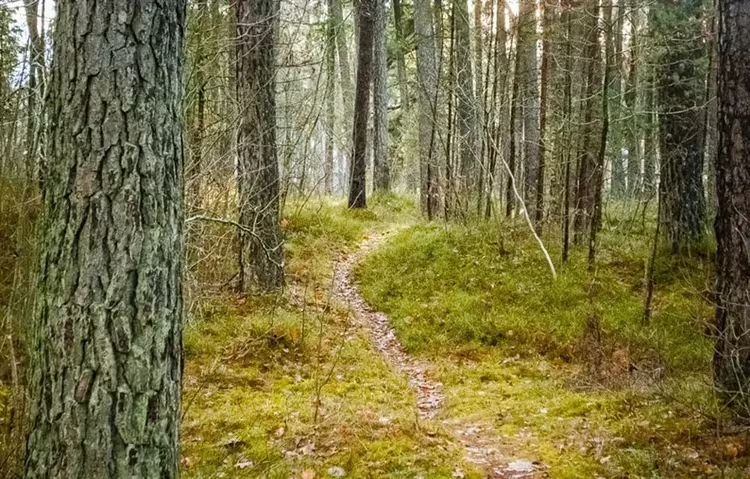
Be sure to take a walk in the park “Ragakapa”, located in one of the districts of the resort town – Lielupe. It is not crowded here and people tired of noisy cities can relax in peace and quiet. “Ragakapa” is a place where a large number of relic three-hundred-year-old trees are concentrated. Among the attractions are the highest (up to 18 m) and wide (18 m) dunes in Latvia. Such a picture can be observed along the coast – this bewitching sight delights everyone.
On the territory of the park area, there are, in addition to pines, other rare trees, as well as animals, which are becoming less and less on Earth. There are convenient ecological trails for visitors, which have names such as “Natural” or “Insect Trail”. Since the forest is located on the dunes, the paths and steps on the ascents and descents will help both children and people with disabilities to move easily. The highest points are equipped with viewing platforms. So that tourists do not get lost, signs are installed everywhere.
Getting to the park from the city is easy – walking along the coast from the beach in Maiori.
Concert Hall “Dzintari”
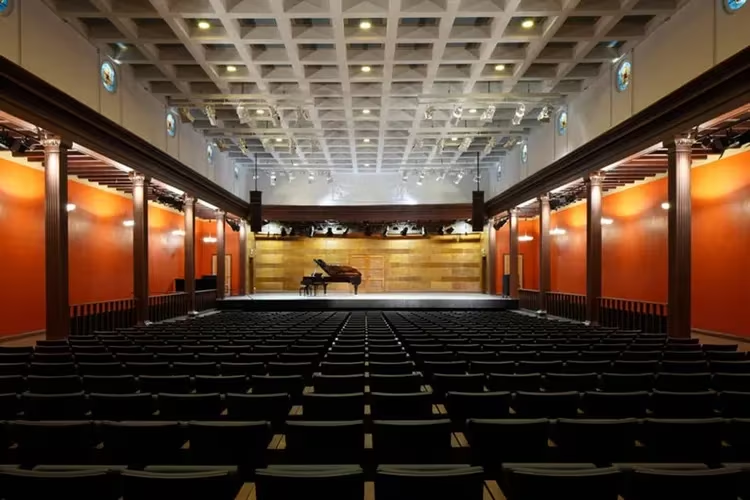
In 1897, a stage platform was erected in the city, called the “Concert Garden of the Edinburgh Kurhouse”. Modern auditorium “Dzintari” in 1962 by architect Modris Gelzis. The structure has no walls – only a roof, can accommodate up to 2000 spectators. Dzintari was reconstructed in 2006 – the stage was updated, it became five-level and is suitable for performances of both wind and symphony orchestras. The acoustic systems were replaced, infrared heaters were installed, and soft, comfortable seats for spectators were installed.
The Dzintari complex also has a small hall, a small heated wooden building that can accommodate 500 people. Built in 1936 by architects Alexander Birznieks and Viktor Mellenbergs. It is now recognized as an architectural monument. It was reconstructed in 2012, expanding the capacity to six hundred spectators. Now the concert hall hosts most of all festivals and concerts in Latvia. The hall is located a hundred meters from the bay, in the city center. Electric trains run from Riga, the stop is Dzintari.
Ķemeri National Park
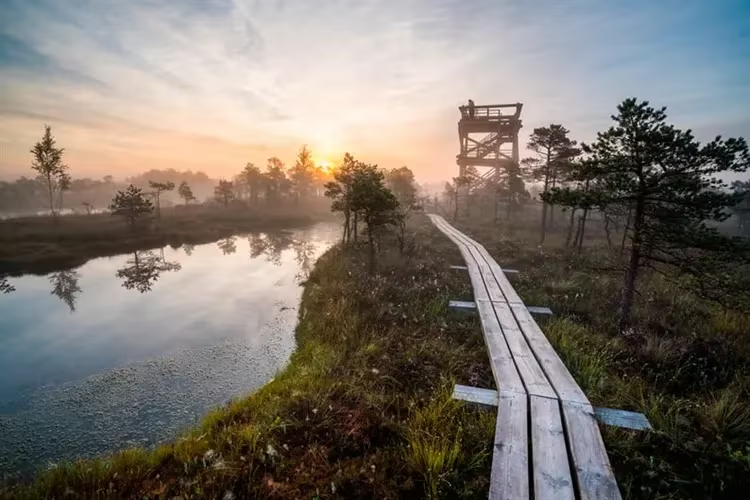
Kemeri Park is a protected forest with a picturesque swampy area. The flora and fauna of the national park is very rich. It is convenient to observe birds nesting in swamps from specially equipped sites. A little further away is the black alder forest – it is unique, there is almost no such vegetation left in Europe. A fabulous view is created by lianas hanging from trees and hazel branches, which form an arch high above the ground.
The territory is divided into conditional zones, only two are open for visiting, tourists are not allowed into the specially protected area – this is done to preserve the unique nature. On one side of the park stretch the most beautiful sandy beaches, picturesque and bizarre dunes. Of interest are the mineral springs, decorated with images of a toad and a lizard, which were installed here more than a hundred years ago. For the convenience and safety of guests, the area is equipped with all kinds of paths and bridges.
From the center can be reached by minibus number 10.
Jurmala City Museum
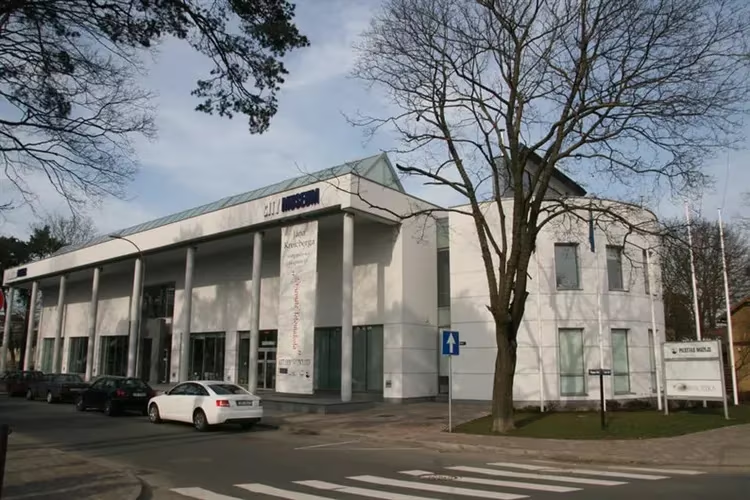
The City Museum was founded in 1962. The exposition presents the history of the resort town from the beginning of the 19th century. The museum's collection contains almost 50,000 items that tell about the life of this place – finds raised by marine archaeologists from the bottom of the sea, a wide collection of beach bathing suits, old postcards, paintings by local artists. The exhibition “Ships in the Abyss” tells about the development of shipping in the country – it introduces various types of ships, submarines and schooners.
Another exposition is about the history of the Riga seaside resorts and the life of vacationers. About how the sanatorium and medical industry developed, how its healing qualities affect a person, about the climatic resources of the coast. The exhibition introduces the balneological sanatoriums of Kemeri, the peculiarities of the coastal climate.
Guests can learn from old photographs about how the streets of the resort used to look, what buildings have survived to the present day and what fashionistas preferred to wear in the century before last, about the interiors of residential premises: original furniture, dishes and other household items are presented. It tells about the cultural life in the city – festivals of folk and classical music, festive concerts, and other events.
How to get there: by fixed-route taxis from Riga No. 7021, 7023 to the stop “Dubulti”.
White dune in Lielupe
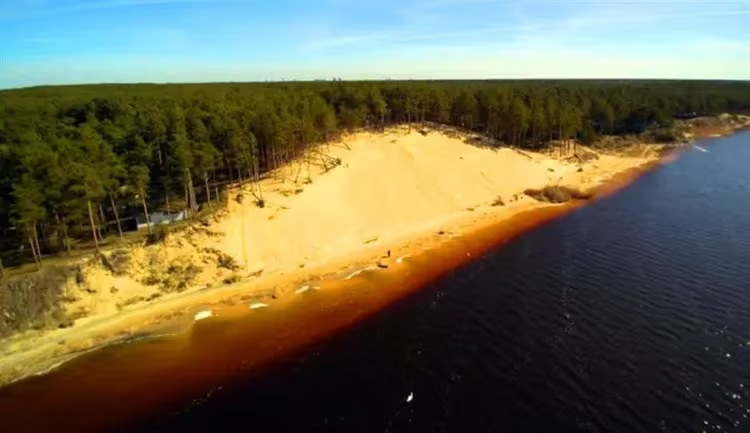
On the territory of the Baltic States there are several attractions with a similar name. The emergence of this unique natural monument dates back to 1757. Numerous tourists are attracted by the opportunity to see magnificent landscapes from the height of the dune. Not far from it are the Ragakapa Nature Park and the Priedaine summer cottage area, where travelers stay in guest houses. The latter is interesting for its buildings of the 18th-19th centuries and the railway station in the style of functionalism (built in the 20th century).
The Lielupe River, which has more than 250 tributaries, has repeatedly changed its course due to ice jams during spring floods. The white dune was formed as a result of such a phenomenon. At the place where the river flowed, there is a hill 17 meters high. The hardened white sand of the dune looks like sandstone. According to scientists: it is doomed to extinction. The dune is destroyed under the influence of winds and rains. To save the landmark, local residents use garbage to strengthen it, plant bushes and trees on the slopes of the hill. These measures slow down the erosion process, but do not stop it.
Livu Aquapark
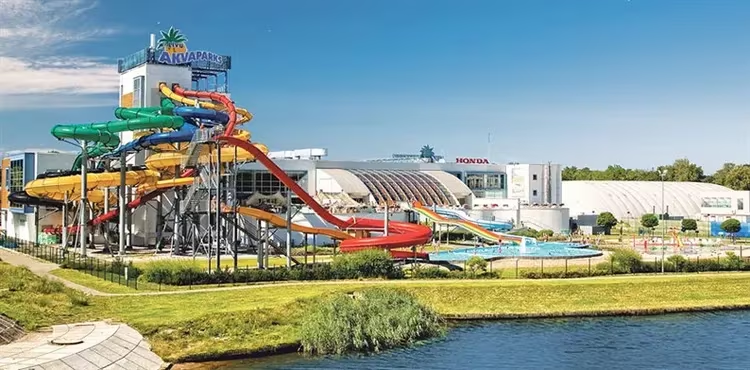
The entertainment complex was opened in 2003; it is recognized as one of the largest water parks in Eastern Europe and the Baltic States. More than 16 million euros were spent on the construction of the facility. Every year it is visited by up to 300 thousand guests. In the center of the water park are a three-story building and a 25-meter tower. The authors of the project and the builders of the entertainment center managed to create a tropical paradise on the banks of the Lielupe River. On the territory of the water park there are pools of various sizes, water slides, fountains. The number of attractions is constantly increasing.
In 2019, a new waterslide was opened, where special mats are provided for going down head first. The water park is divided into thematic zones, they are designed for lovers of extreme sports, outdoor activities and those who prefer a quiet pastime. The entertainment complex offers festive programs for birthdays of children and adults; its infrastructure includes bistros, bars, cafes, fashionable swimwear shops, and souvenir selling points. A special place among the services of the water park is occupied by SPA-procedures.
Former bath of Emilia Racene
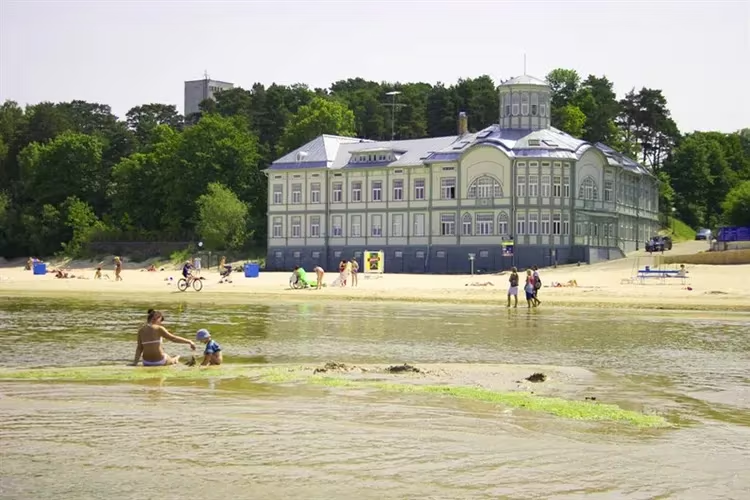
The elegant building is named after the woman who invested in its construction at the beginning of the 20th century. Construction work lasted 5 years, in 2016 the bath was opened. Its visitors at any time of the year took hot baths with sea water and pine needles. The bath staff offered clients wellness treatments using essential oils and medicinal herbs. The institution continued to operate during the Second World War. It was not closed even later: the baths served as a resort clinic, where the latest equipment functioned, highly qualified doctors worked.
A major overhaul in 1982 led to the palace-like building losing its original appearance. The decor was restored, but the builders made significant changes to it. The historical monument has a different entrance and new windows. Only 15 years later, it was possible to partially return one of the most beautiful buildings on the Riga seaside to its former appearance. At the moment, the baths are a private residence, where there is no free access. Near it are popular cafes, restaurants, from where you can admire the sights.
Wacker House
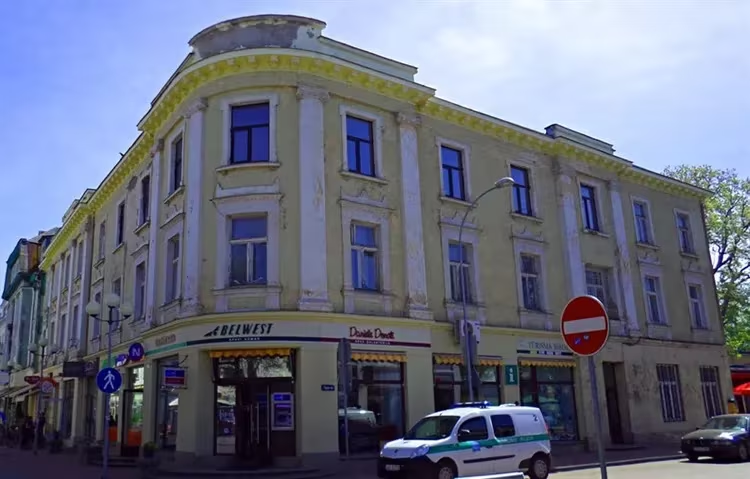
The building was erected in 1914, but its history began earlier. Until the 20th century, the yard of the baker Steger, which resembled a small estate, and Korovin's shop were located here. A local market worked on the farmstead, later it belonged to Leopold Wacker. On the territory of the estate there was a bakery, an ice cellar, two dachas, outbuildings. The two-story houses and barns burned down in 1913. Soon a new three-story building was built on the site of the fire – Wacker's house.
Initially, its premises housed shops, hotel rooms. In the 30s of the 20th century, the building was occupied by the Maiori hotel, a chic restaurant, and a city bank. After 20 years, a state fish shop was opened in the house on the ground floor. The walls of the trading premises were decorated with author's paintings and original decorative elements. The pride of the trading platform was the fish pool, whose bowl was decorated with mosaics. Nothing remains of the past interiors. Local authorities managed to save only the appearance of the unique house. Nowadays, private shops rent premises in it, and the upper floors are reserved for apartments.
Marine pavilion
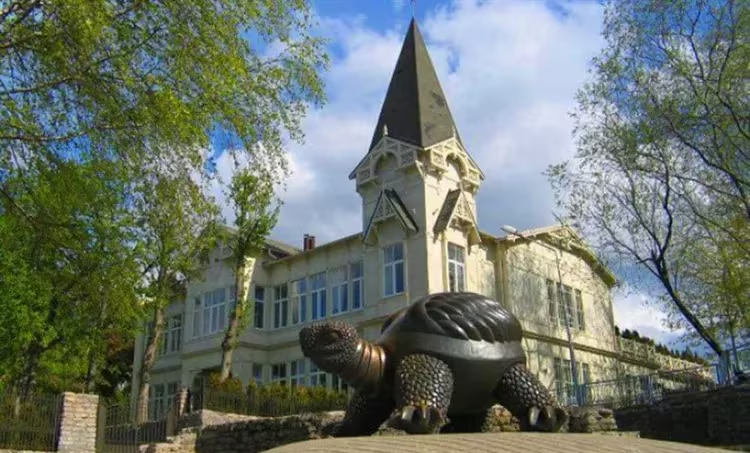
The two-story wooden building of the entertainment establishment was opened to the public in 1909. The dates of its construction given in historical sources differ because the work began 10-12 years earlier. Externally, the pavilion resembles a miniature royal palace. The building was built in the style of historicism, but its exterior can be called an example of Riga Art Nouveau. The latter has several varieties, whose boundaries are very arbitrary.
The pavilion is a confirmation of this, because elements of eclecticism and national romanticism are inextricably intertwined in its architecture. The entertainment facility was intended exclusively for wealthy local residents and a respectable public vacationing at the resort. King Gustav V of Sweden (whose controversial policy made it possible to maintain the integrity of the borders of the Scandinavian state during the Second World War) repeatedly visited the pavilion.
In the 80s of the last century, the owners of the building (Latvian enterprises, organizations) made significant changes to the interior of the premises. As a result, new stained-glass windows, chandeliers, and decorative elements appeared in the pavilion's dance hall, which in general did not benefit the architectural monument. After 25 years, the restorers managed to restore the original appearance of the building, which is considered one of the hallmarks of the city.
Sad Gorna
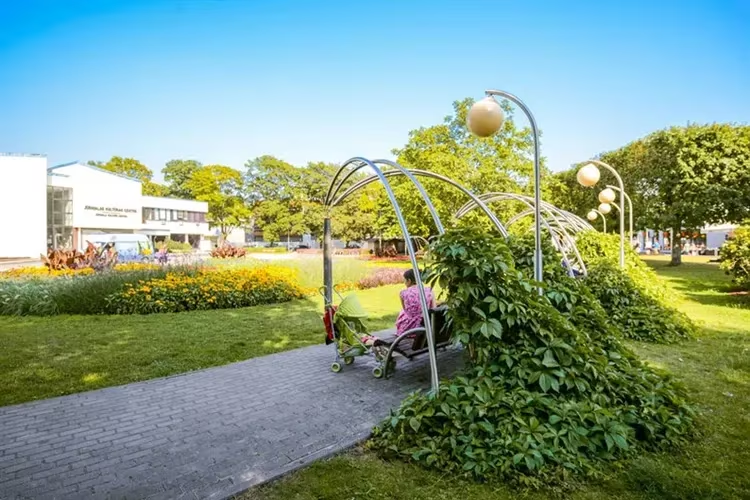
The park is named after a local resident who owned this site in the 19th century. Before the garden in this area was a cemetery. There is nothing surprising in this fact: in many European countries, the practice remains to this day when recreational zones are created on the site of the “God's fields”… By the end of the 19th century, the Horn Garden was completely transformed: two concert venues, a cinema, a restaurant were built here.
In 1905, for the first time, a piece of music was publicly performed in the square, which later became the official anthem of Latvia. After 8 years, the garden burned down. Since the 1920s, its restoration began. A new platform was built on the territory of the park. Major landscaping work was suspended during the Second World War, but the locals did not stop caring for the garden, keeping it clean and tidy.
In the 70s, large-scale construction began in the park: a cinema was erected on its territory, later renamed the House of Culture. A monument to famous Latvian poets, writers, public and political figures – the spouses Rainis and Aspasia – was erected at the entrance to the garden after 20 years. At the beginning of the last century, a husband and wife performed at concerts in this square.
4 years after the death of Rainis, Aspazija moved to Jurmala, where she spent the last years of her life. For the Russian-speaking audience, the work of this amazing woman is associated not with politics, but with a tender lullaby from the TV movie “Long Road in the Dunes”. It was created to the words of Aspasia's poem “Christmas Candle”.
Sculpture “Turaida Rose”
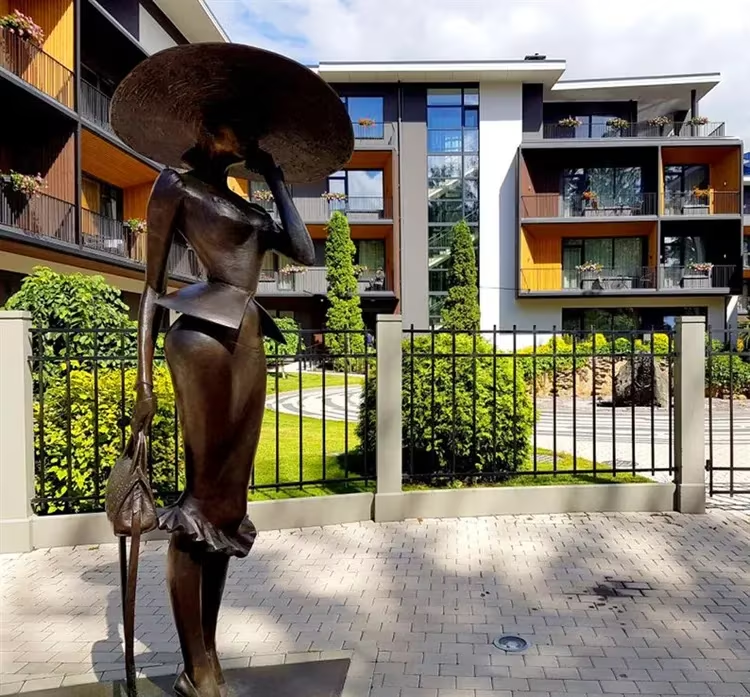
Medieval legends can come to life in the most unexpected interpretations. The Turaida Rose monument is a confirmation of this. The heroine of the Latvian legend – the beautiful girl Maya – preferred death to dishonor, not betraying her fiancé. She invited the seducer to test the power of her “magic handkerchief”, which allegedly made any person invulnerable in battle. He demanded proof of the miraculous properties of things. Maya tied a scarf around her neck and quite calmly said that she should be hit with a sword. The girl, of course, was killed.
The tomb of the Turaida Rose (as the people around called Maya) is located near the old linden tree, 68 kilometers away – in the city of Sigulda. It is there that the newlyweds come to the tree to lay flowers and honor the memory of Maya. Authentic documents have been preserved, testifying to a similar tragedy that occurred, to which the people's memory eventually gave a romantic coloring.
And in the city there is a sculpture of a fashionably dressed girl, she calls on a cell phone and is waiting for the groom. From the graceful figure of Maya breathes tenderness, hope, sadness. Such a contradiction between the modern vision of the image of the Turaida Rose and the gloomy medieval history did not prevent the sculpture from becoming one of the popular attractions of the city.
Theater of luminous pictures “Inner Light”
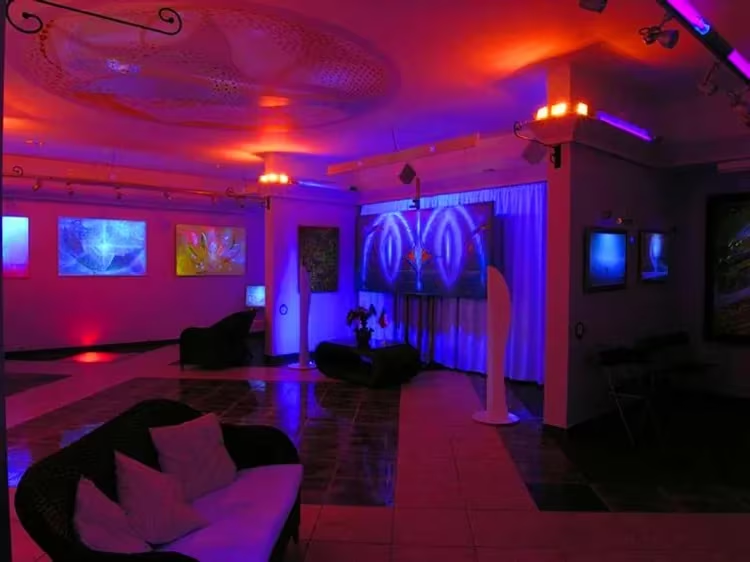
The gallery-theater is located in a cozy two-story wooden mansion. The author of the paintings presented at the exposition is the artist Vitaly Ermolaev, well-known far beyond the borders of the Baltic States. The name of the gallery and the technique of creating his works in translation means: “Inner Light”. The master patented his method of applying images “Inner Light”, but the origins of this method of working with paints go back to antiquity.
In Egypt, at the time of the pharaohs, the technique of wax painting was used to paint the walls of palaces, temples, and tombs.
Ermolaev improved it: he added fluorescent paints, which allow the paintings to look completely different in different lighting conditions. Pleasant music sounds in the halls of the gallery-theater. The lighting in the rooms is constantly changing. The paintings, like actors, “play” different roles, creating the illusion of being in some kind of parallel world for the audience. The collection is regularly updated with new works. In the theater, the author of the paintings conducts master classes for adults and children, where everyone can learn the basics of the Inner Light technique. The gallery has a popular art cafe in the city.
Jurmala House of Artists
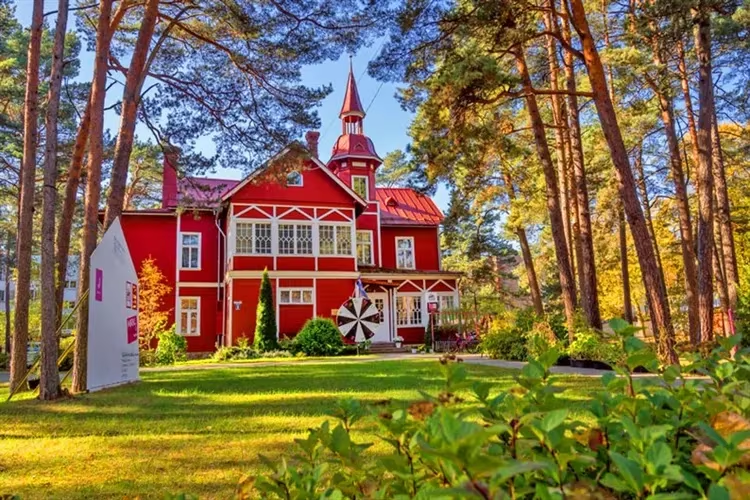
The two-storey building is a well-known architectural monument in Latvia. The wooden house was built in 1920. Its architecture is considered typical of Jurmala and the Baltics. The combination of traditional design solutions made it possible to create a cozy atmosphere in two small exhibition halls of the house for creative meetings, art exhibitions, master classes, and applied arts. The object belongs to the Latvian Union of Artists, a branch of this organization operates in the city.
There were moments in the history of the building when its future was threatened, but the public managed to prevent the building from being demolished. The House of Artists simultaneously functions as a museum, an art gallery, a creative platform where representatives of the intelligentsia, craftsmen, and art lovers gather. He is known in the Baltics for his training programs for those who want to master the craft of weaving. A special place in its activities is occupied by children's and youth activities, holidays, designed to educate the younger generation in the spirit of love and respect for national culture.
Jurmala is an excellent resort that beckons with peace and quiet, excellent service and clean air. At least once in your life you need to visit these unusually beautiful places.