
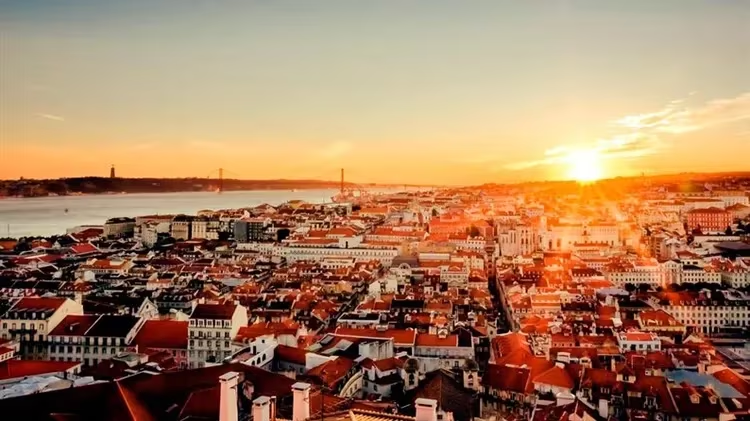
Sights of Lisbon – 35 most interesting places
Lisbon is one of the most remote capitals of Europe from our country, free from prejudice, which gave the world the great Vasco da Gama and Ferdinand Magellan. For those who are planning to visit this beautiful city in the near future, we recommend that you familiarize yourself with our overview of the most popular attractions in Lisbon. A fascinating but long walk awaits you, because there are so many unique and interesting places here that you want to see everything at once.
Aqueduct Aguas-Libris
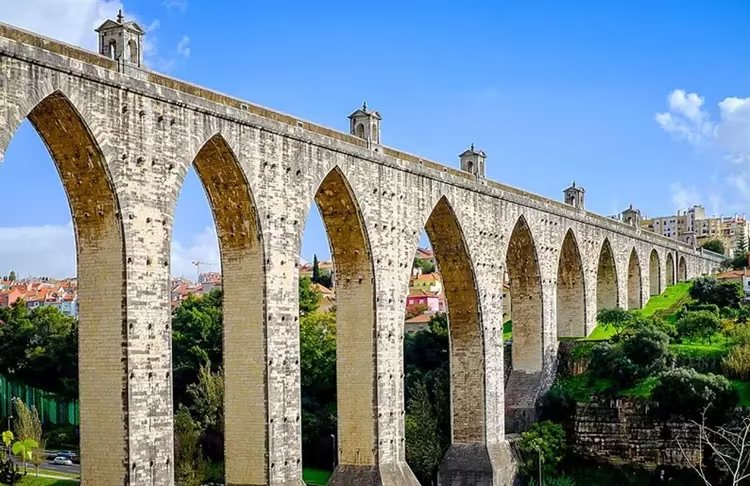
The capital of Portugal is one of the most homogeneous European cities from an architectural point of view. This is due to the fact that almost all the sights were restored at the end of the 18th century, after the city survived a severe earthquake. Today they form a single ensemble, which cannot be imagined without the Aguas-Librish aqueduct.
With his help, one of the most important city problems was solved – local residents have suffered from a lack of drinking water since time immemorial. By the way, despite the fact that since the commissioning of Aguas Librish to the present day, a lot of water has flowed under the bridge, literally and figuratively, it still contributes to the city's water supply system.
The aqueduct was built using the latest achievements of scientific and technological progress of that time. Its length is more than a dozen kilometers, but tourists are only interested in one section, which runs along the Alcantara valley. It is on this territory that the legendary 30 arches are located, which today have become the architectural heritage of Portugal.
For a long time, one could only look at the aqueduct from afar – its significance was too great and tourists were not allowed on the wall itself. However, now you can walk along it again. Interest in the construction is also great due to the fact that it was miraculously preserved after the earthquake of 1755.
Забронируйте индивидуальный трансфер от аэропорта до вашего отеля за 1 779 RUB
Queluz Palace
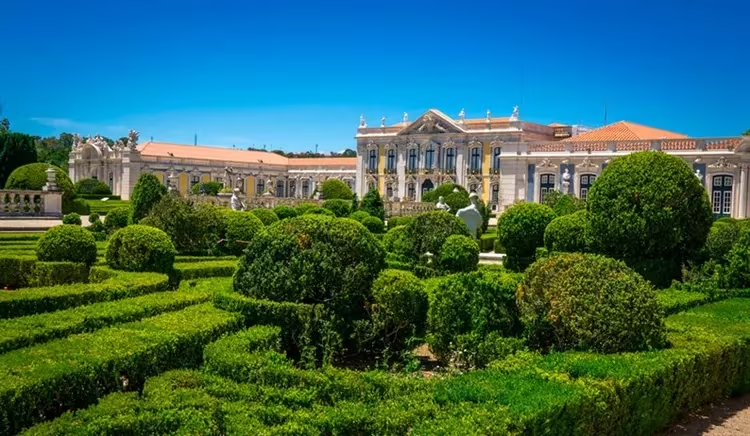
For many years, Portuguese monarchs lived within its walls. Today, the luxurious residence is old public property. Built in the 18th century, Queluz Palace has long been the summer residence of the Portuguese kings. They not only rested here, but also had fun, as they say, to the fullest – legends about Queluz receptions and balls at one time excited the whole of Europe.
Today, everyone can enjoy the former splendor – almost all the halls that have been perfectly preserved to this day are available for inspection. Even the fire that the palace had to endure did not affect its splendor – the restorers carefully and reverently restored every detail of the external and internal decoration.
The Portuguese kings not only loved luxury, but also appreciated art. In almost every hall of the palace, in addition to interiors, you can look at paintings by famous and not so famous artists, as well as numerous statues.
In addition to the palace, a beautiful park deserves attention. To this day, like many years ago, all the shrubs here are carefully trimmed and the flower beds are fragrant. Fountains and fountains complete the picture. At the end of the walk, you can sit in one of the pavilions or, if you're lucky, attend a concert of live instrumental music.
Mafra Palace
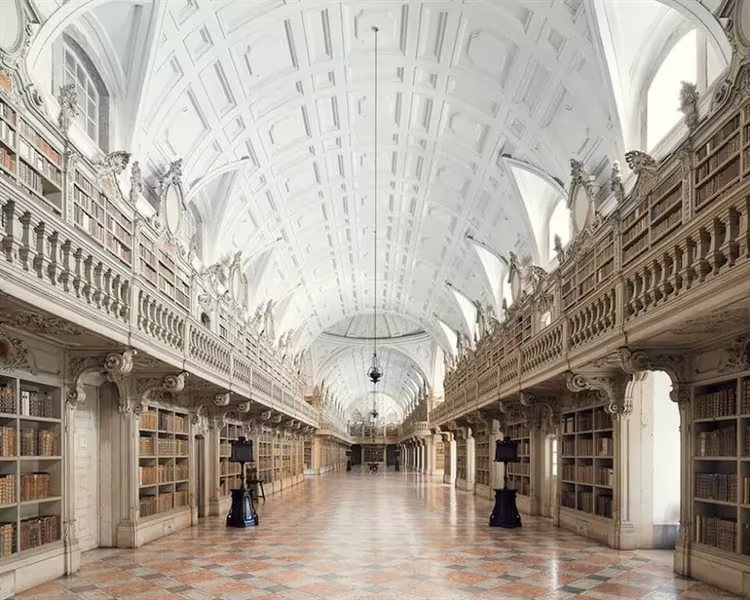
The construction was conceived on a grand scale and to this day the complex impresses with its scale. The palace was built in the 18th century, and not just like that, but on occasion. In the royal family, João V and his beloved wife Anna of Austria, after several years of waiting, finally had their first child! Naturally, this event was celebrated on a large scale. To this day, Mafra remains one of the largest and most luxurious palaces not only in Portugal, but throughout Europe.
In total, it consists of 1,200 halls and rooms, which in terms of area can be compared with ten full-fledged football fields. In addition to the usual premises, the complex includes a small monastery, a basilica, two romantic towers, on top of which there are bell towers, and a library. The fund of the latter amazes even seasoned art historians, to say nothing of ordinary tourists. If you are lucky, during the tour you can not only learn about the palace, but also hear the legendary ringing, which is emitted by more than a hundred bells sounding at the same time.
Mafra Palace is located in the suburb of the same name. Getting to it is problematic – public transport does not go to this place. You will have to rent a car or, much easier, join an organized group. Trips are offered by almost all travel agencies. On Tuesdays, as well as on public holidays, the palace is closed. The rest of the time it works from 9-00 to 18-00.
National Museum of Ancient Art
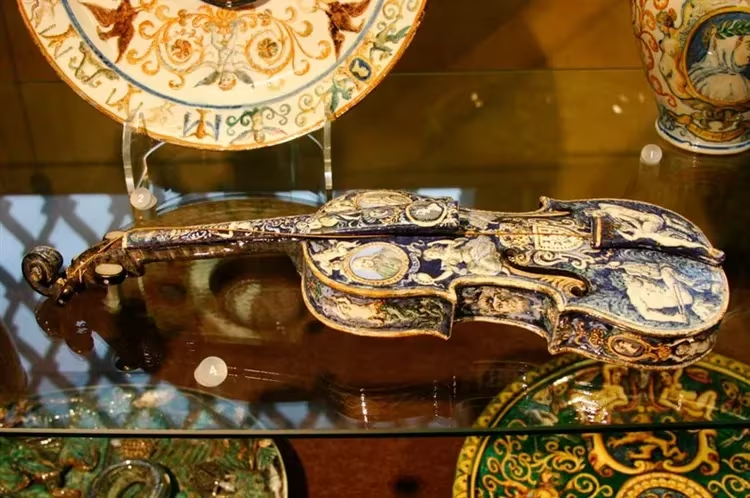
It is difficult to say when the history of the museum began. However, for a long time it was a small exhibition organized at the monastery of St. Francis. However, over time, there were so many exhibits that it was decided to build a separate building for them. The grand opening took place in the 90s of the XX century.
Today, the collection includes paintings, antique furniture, sculptures and even luxurious jewelry. All this is conditionally divided into three groups, each of which has a separate floor. The first includes the work of European masters. Here you can find paintings by famous artists, such as Raphael, and much less popular ones. The second part of the museum's exposition is the medieval art of Asia and Africa.
Portuguese navigators were interested not only in goods, but also in painting, and often brought canvases with them. Today, most of them are collected in the national museum of ancient art. And, finally, the third part of the museum is devoted exclusively to the work of the Portuguese. It is she who arouses the greatest interest among those who come to get acquainted with the customs, traditions and culture of the country.
Located on Rua Janelas Verdes. Buses No. 713, 714 or 727 follow to the stop of the same name.
Archaeological Museum at Karmu Monastery
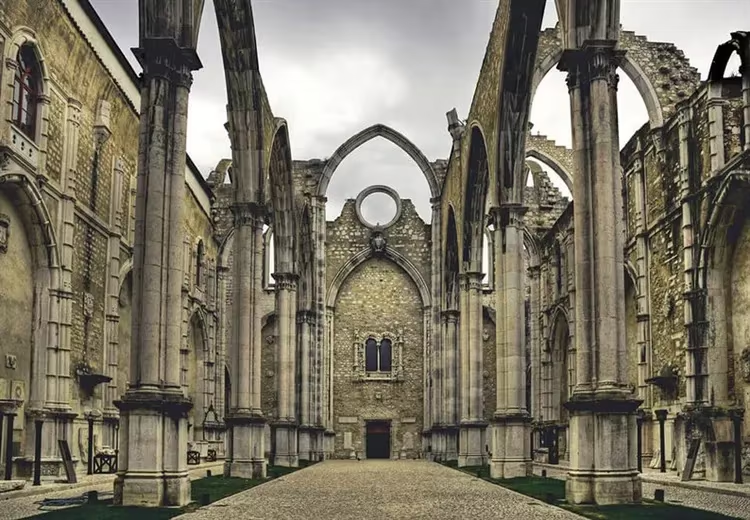
Reminds of the distant times of Byron, medieval battles, valiant knights, dizzying victories and devastating defeats. Today, within its walls there is a lot of interesting things: a church, residential buildings, the Santa Justa elevator and, of course, the archaeological museum. The history of the archaeological museum began in 1864. It was then that a group of enthusiastic archaeologists organized a small exhibition at the now defunct Corfu monastery, consisting of exhibits found in the area. Gradually, archaeological finds from all over the country began to “flock” here.
Today it occupies the underground premises of the monastery. The setting itself is designed to immerse yourself in distant epochs and make a journey through time. As for the exhibits, there are plenty of them. The richly decorated sarcophagi, including the Egyptian one, are considered the pearl of the collection. However, much more guests are amazed by the real mummies brought from Peru.
Against their background, the exposition dedicated to the history of architecture does not look so impressive. However, those who are at least a little versed in this matter or simply consider themselves an amateur have a completely different opinion about it. After all, fountains from different eras, magnificent Azulejo tiles and other decorative elements presented in the museum are quite rare in real architecture.
Guests who consider history boring and archeology something uninteresting should definitely overcome their prejudice and look into the underground halls.
Basilica de Estrela
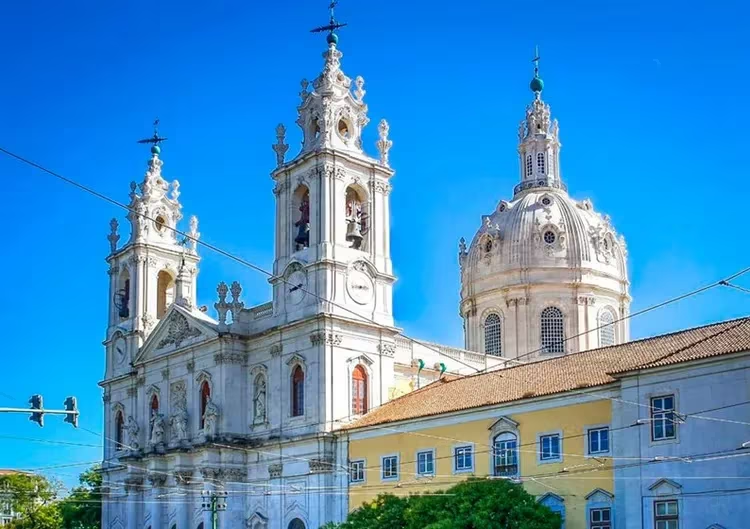
The Basilica de Estrela, standing on a hill, can be seen from almost anywhere in the city. The appearance of the basilica resembles the palace of Mafra. The same style of late baroque with elements of classicism, which has just begun to come into its own. The same ornate details. And, of course, both of these buildings look not just great – luxurious. But it turns out that it is not only their appearance that unites them.
The basilica, like the palace, was built for a reason, but on the occasion of the birth of the long-awaited heir. In 1761, Maria I of Portugal had a son, José. However, it was not possible to start work immediately and did so only in 1779. Unfortunately, the prince himself did not live to see them completed in 1790 – he died two years earlier. That is why the grand opening of the basilica did not work, and Queen Mary later turned this place into her tomb.
Today it is worth going into the temple at least to look at the numerous sculptures decorating it. The most famous are included in the Christmas group, consisting of 500 small figurines. There is also a good collection of paintings by the Italian Pompeo Batoni. An observation deck is open at the top of the basilica, which can rightly be called one of the most spectacular.
You can get on tram number 28, which is always popular among tourists, and get off at the stop of the same name.
Belem Tower
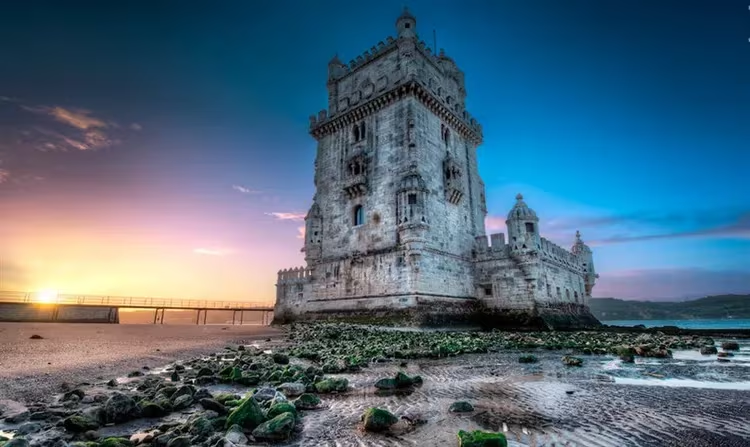
Belem Tower is considered one of the seven wonders of Portugal. Its appearance is reminiscent of the distant times of seafaring merchants and discoverers of distant lands. What can we say about the history, which reflected more than one period of the country's development. Like many years ago, the Belen tower serves as an excellent guide for ships, and the Virgin Mary of Safe Returns, whose sculpture is installed here, rejoices for those who have returned to the mainland and patronizes those who are still far from her.
Once the tower was not only a symbol of successful navigation, but also a defensive bastion. Today, 16 powerful guns installed in casemates remind of this. But much more tourists are attracted by the second floor, where the legendary statue of the patroness of sailors is installed, and there is also a small balcony, from where many years ago the royal family welcomed ships sailing from afar. At the top of the tower there is an observation deck, which offers a breathtaking panorama of the Tagus River, as well as a view of the city itself.
The architecture of this building mixed a huge number of styles, resulting in not a traditional impressive, but light and soaring, but still a fortress. On the walls there is a huge number of decorations related to the marine theme. You can get to it by tram number 15 or buses number 714, 727.
Lisbon City Museum
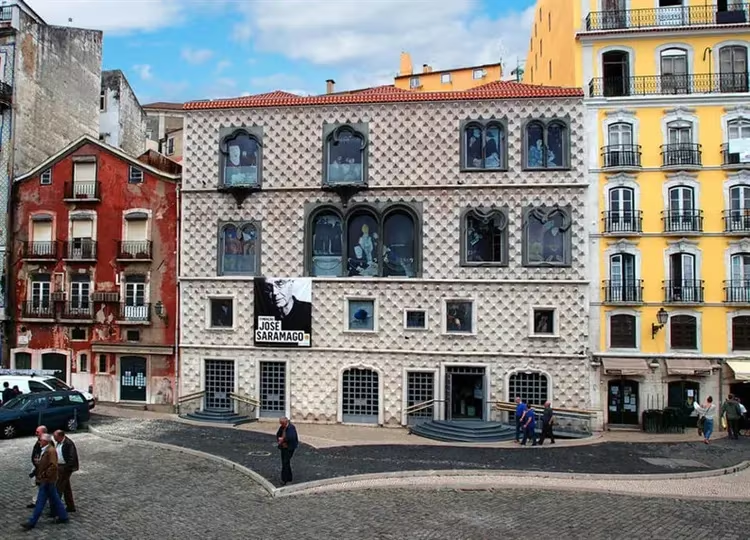
During a several-hour excursion or just a walk through the halls, guests have a chance to look into a variety of eras, as well as get acquainted with certain areas of art. The history of the museum began several centuries ago. Every year it expanded, the collection increased, and today it is already able to amaze even seasoned travelers. For the convenience of guests, all the exhibits are very clearly divided into groups, each of which is dedicated to a particular time or area.
Of greatest interest is the collection of geographical maps of the 17th-20th centuries. The Portuguese have always been leaders in the field of navigation and exploration of new lands, and here you can trace the history of discoveries in the best possible way. And, who knows, maybe there are still corners on planet Earth that have yet to be mapped? Another room worth paying attention to is the one dedicated to azulejo tiles. For more than one hundred years, it has been produced in only two countries: Spain and Portugal, so the craft can really be considered unique. The collection presents unusual and best samples made at different times.
And finally, a small but very interesting part is the unique House with Peaks, Casa dos Bicos. Unusual masterpiece of local architects. You can get there by metro. To do this, get off at the Campo Grande station.
Castle of St. George
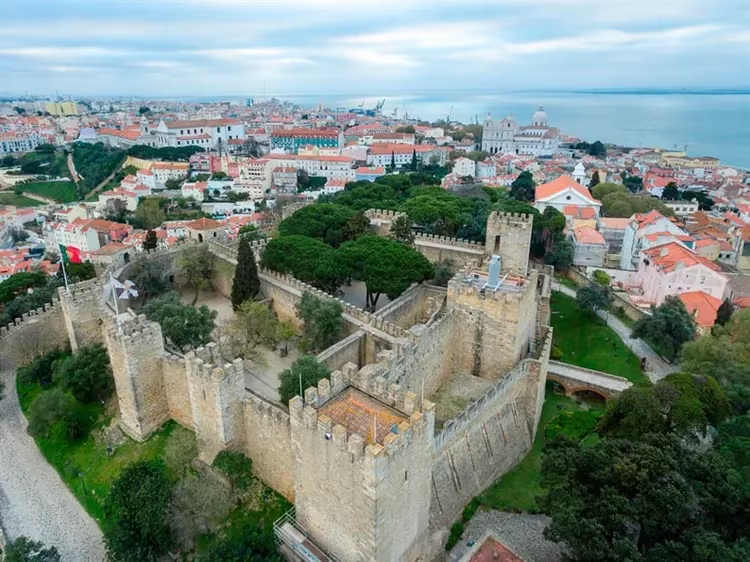
Many call it none other than the Kremlin. The majestic and formidable fortress, which is visible from almost any part of the city, appeared on the banks of the Tuzhu River in the distant 12th century. Since then, she has been a witness to all the historical events associated with Lisbon, a participant in wars and coup d'état. True, nowadays Portugal has not been threatened for a long time and the defensive structure has turned into a museum.
So, what awaits guests behind the massive and impregnable walls. First of all, there is a cozy yard, where peacocks slowly walk around. In the center of it is a colorful restaurant. Although this was not always the case – once there was a royal residence here, which has not survived to this day. Right there, in the courtyard, you can get acquainted with a variety of medieval tools. In the basement of the fortress there is a small but very interesting archaeological museum. It is worth visiting if only to learn more about the old, medieval Lisbon.
And, of course, a visit to the castle of St. George is impossible to imagine without a walk along the fortress walls. When else will the Portuguese capital be right at your feet? Finding the castle of St. George is not difficult – it is visible from anywhere.
Zoo

This is a place where you can relax from architectural masterpieces and escape from the bustle of the city. In addition, acquaintance with the world of animals is a must for those who travel with children. It differs from most other urban zoos in that its inhabitants do not live in cages, but in conditions that are as close to natural as possible.
Lions and tigers rest on the grass, reminiscent of the savannah, monkeys climb trees, and the rhinoceros is the luckiest of all – his house resembles an African village. In order to make it convenient for guests to observe the animals, benches and tables are installed throughout the zoo. Here you can not only rest, enjoy nature, but also have a small picnic.
At a specially set time, employees come up to the enclosures with animals and invite everyone not only to look at a variety of animals, but also to feed them. Children are delighted with this opportunity. Naturally, all this is done in compliance with safety rules and does not apply to predators.
Those for whom the feeding show is not enough can look at the performance of dolphins, visit the kingdom of reptiles or tickle their nerves by walking on the cable car.
You can get there by buses No. 16.31, 70, 96, as well as by fixed-route taxis. You need to get off at the Jardim Zoologico stop. In summer, it is open from 10:00 to 20:00, in winter until 18:00. It is better to check the schedule of the dolphin show before visiting on the official website or in current advertising brochures.
Cathedral
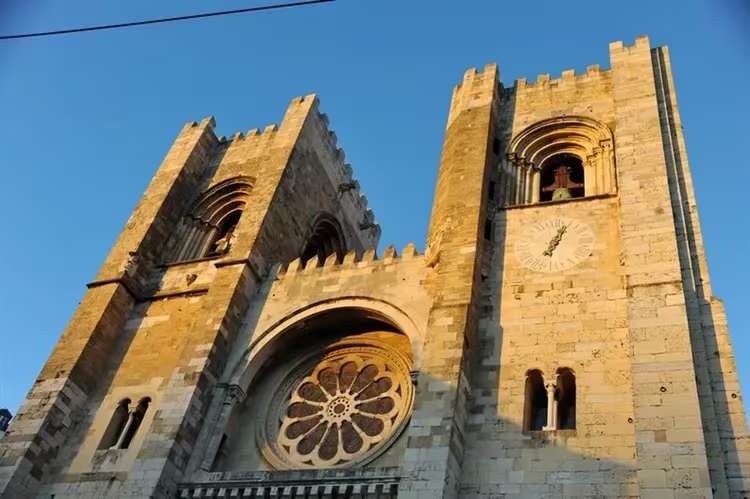
It is one of the significant architectural symbols of the capital of Portugal. The temple was erected on the foundation of a destroyed mosque in the 12th century. The shrine outwardly resembles an impregnable fortress with powerful walls. This is the only building in the city that survived the strongest earthquake in 1755. The exterior and interior of the religious building reflects Gothic, Baroque and Romanesque styles of architecture.
The strict building of the cathedral in plan is made in the form of a Latin cross with three naves. The facade of the shrine is devoid of sophisticated and pompous decorative elements. Attention is drawn to two wide jagged bell towers with arched windows and loopholes, as well as a large central rose window. In the interior decoration, the exquisitely decorated vaulted ceiling and the abundance of sculptural images of saints attract attention. The temple is open for visiting from 9:00 to 19:00. Free admission.
Elevator Santa Justa
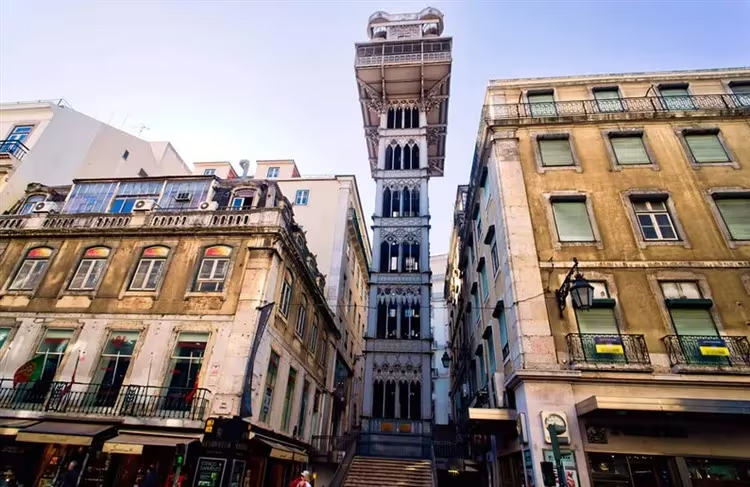
On one of the central streets rises a steel construction striking in its beauty, decorated with filigree patterns of metal lace. This is the famous tower with two elevators – Santa Justa. The engineering structure was designed and built at the beginning of the 20th century. Its height is 45 meters. For 5 euros, polished wood elevators with mirrors take tourists to the observation deck, from where an amazing panorama opens. The ascent to the observation platform is carried out from 7:00 to 21:45. Cabin elevators can accommodate up to 20 people.
Praça do Comercio shopping area
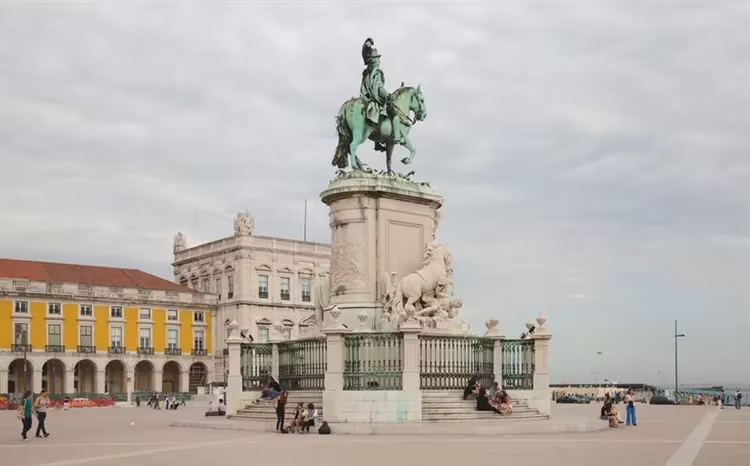
On the embankment of the majestic river Tagus of the Iberian Peninsula is the Market Square or Praça do Comércio. Until 1755, when Portugal was shaken by a strong earthquake, the square was a luxurious royal palace. As a result of the raging elements, the building was literally washed away by a giant wave. After the restoration of the city, the square was surrounded on three sides by a new architectural ensemble, consisting of buildings of the same type with colorful facades and arcade galleries on the first tiers.
The buildings housed chambers of commerce and government services. The central composition of Praça do Comercio is a bronze equestrian statue of King José I, mounted on a high pedestal. The area is open to the public around the clock. Free admission.
Rossio Square
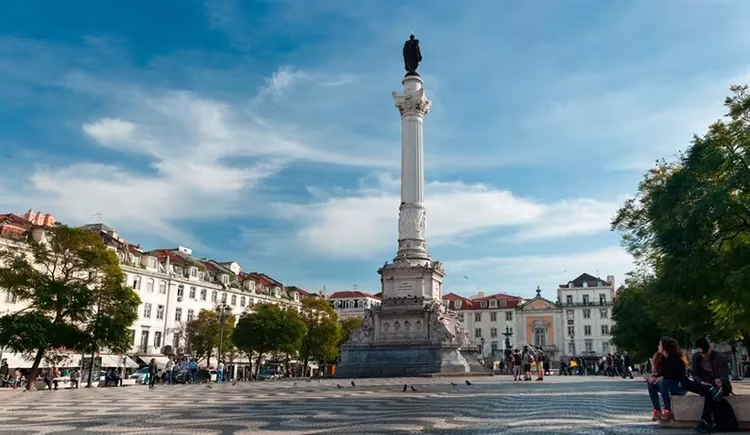
In the center of the capital of Portugal lies the original and vibrant Rossio Square. This is one of the must-see places that will give tourists an unforgettable pleasant experience. From time immemorial, active life is in full swing here around the clock. Since the Middle Ages, bullfights and festivals have been held on the square. Today, this is the busiest part of the city attracts with its originality.
The rectangular space of the street is paved with picturesque mosaics.
White and black paving stones are lined with wavy ornaments, which can make impressionable people feel slightly dizzy. The square is framed by historical buildings, among which the monumental National Theater stands out with a massive six-columned portico. Two fountains with sculptural compositions, a column with a statue of King Pedro IV and numerous cafes give the square a special charm.
Alfama area
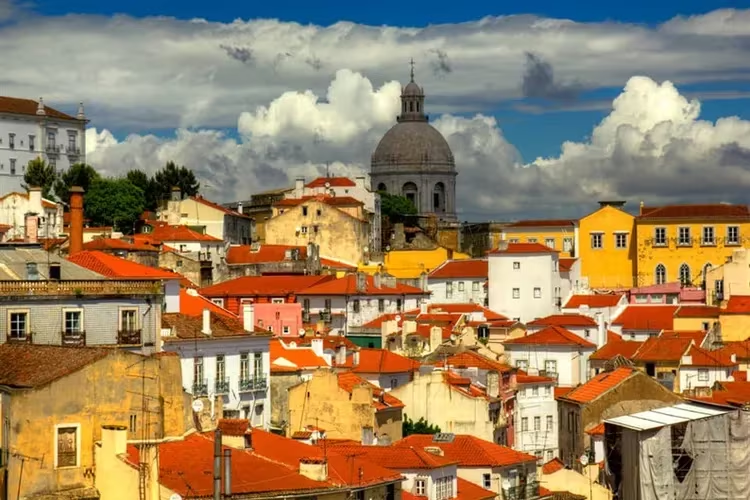
A walk through the oldest quarter of Alfama promises tourists the opportunity to get acquainted with the original way of life of the Portuguese. On the hilly slope are favelas with labyrinths of cobbled narrow winding streets, ornate lanes and stairwells. This is the only area that survived the devastating earthquake in 1755.
Randomly built and tightly packed buildings immerse visitors of the ancient district in the era of past centuries. Here you can see a lot of dilapidated centuries-old buildings, as well as quaint houses, the facades of which are decorated with magnificent tiled tiles. Hanging clothes on clotheslines across the streets, sounding melodic Portuguese romances, cozy restaurants and hospitable locals create a colorful atmosphere.
Statue of Christ
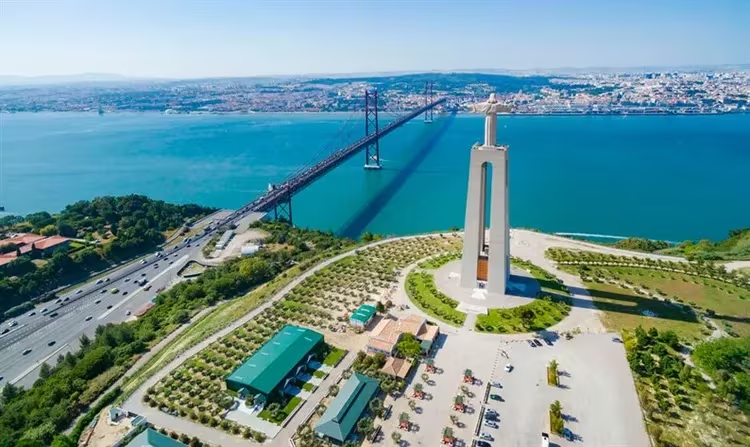
The statue of Christ deserves the attention of the guests. The grandiose monument is a reduced copy of the world-famous Brazilian sculpture. The statue symbolizes gratitude to the Savior for protecting Portugal from participation in World War II. The opening of the Statue of Christ took place in 1959. The sculpture with open arms rises on the opposite left bank of the Tagus River in the suburbs. The total height of the breathtaking large-scale structure is 110 meters. The monument is installed on a pedestal, inside which there is an elevator.
Tourists can climb to the foot of the statue of Jesus, from where picturesque views of the city open up. Visiting the attraction is available from 9:00 to 18:00.
Augusta Street and Triumphal Arch
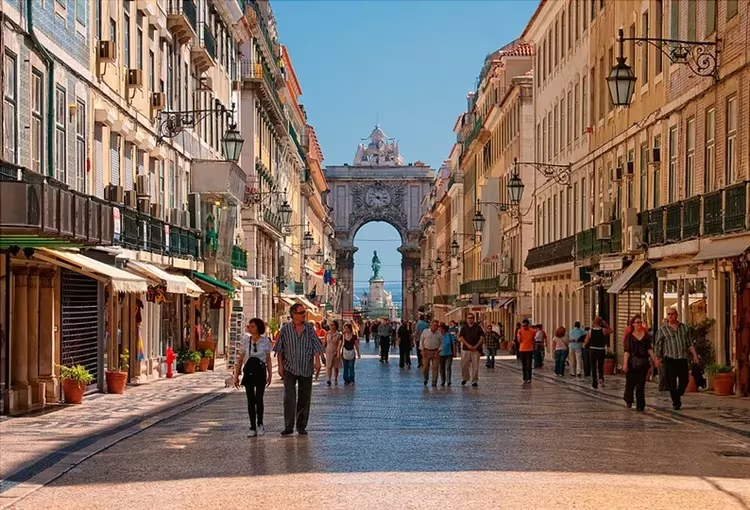
The central pedestrian street Augusta attracts guests with its festive and serene atmosphere. On both sides of the quarter, historical buildings lined up, which housed branded boutiques, taverns, restaurants, souvenir shops and other entertainment venues. The pavement of the street is paved with white and blue mosaic paving slabs. The colorful illumination on the facades of houses pleases the eye. Entertainers, musicians and artists entertain tourists with their skillful talents.
The main decoration of the Augusta quarter is the Arc de Triomphe. The magnificent architectural creation was erected in 1875. The high arch is decorated with columns, bas-reliefs, stone carvings, sculptures of famous statesmen, as well as allegorical statues. There is an observation deck on the roof of the building, where you can climb for 3 euros daily from 10:00 to 18:00.
Belene Palace
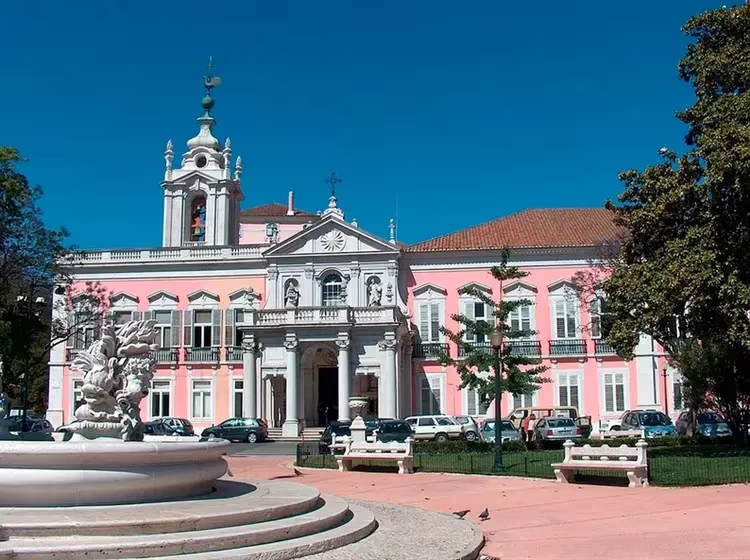
The official residence of the President of Portugal rises in the hilly parkland of the Belém district. The palace ensemble, surrounded by a garden and a fence, is a national architectural monument. The baroque mansion was founded in the 16th century and served to receive high-ranking guests of the Portuguese kings. Belensky Palace is a complex of unusual and rather modest five buildings interconnected. They differ from each other in the number of floors and layout.
Pink facades of buildings with snow-white fragmentary wall decoration are harmoniously combined with green spaces. The buildings are topped with hipped roofs. An interesting terrace with a balustrade, which is richly decorated with beautifully painted tiles. The palace is open to tourists during the president's absence on Saturdays, according to prior appointment. The ticket price is five euros.
Ajuda Palace
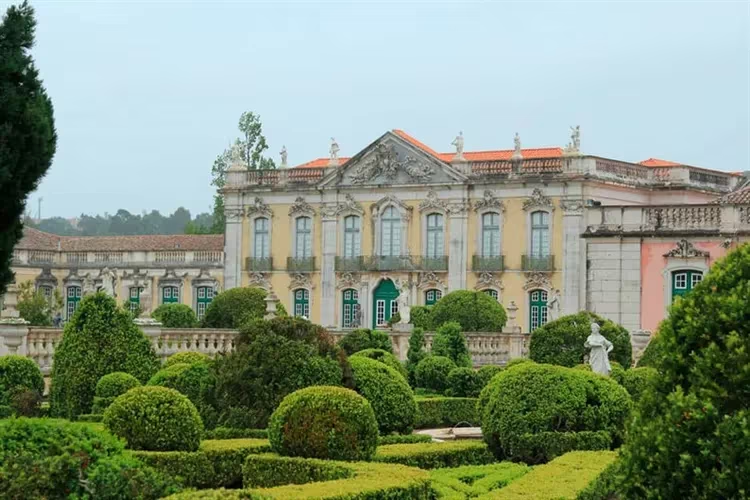
An earthquake in 1755 destroyed the royal palace, which stood on the modern Market Square. Members of the royal family were forced to choose a site for the construction of a new residence. They became the hilly hill of the Ajuda region. The construction of the palace began in 1796, and was interrupted by the invasion of the Napoleonic troops. Rectangular in plan, the three-story building, made in the neoclassical style, accepted the royal couple only in the middle of the 19th century. The bright facade of the palace is decorated with pilasters and sculptural compositions.
The interiors of the Ajuda Palace, which have been preserved in their original form, are striking in their splendor. The spacious halls are furnished with antique royal furniture and decorated with works of art: ceiling frescoes, paintings, tapestries, statues and antique household items. Tourists can get acquainted with the way of life of the royal family for 5 euros. The palace is open every day from 10:00 to 18:00.
28 tram
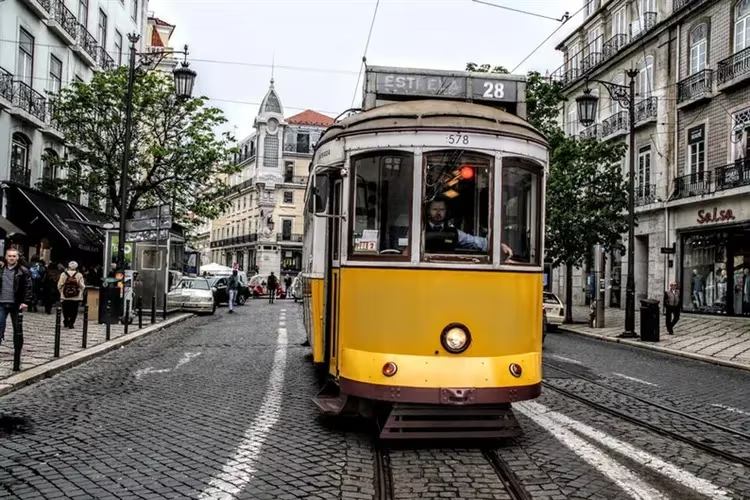
The famous tram number 28 is both a public transport and a fascinating tourist attraction. The route runs through the historical quarters of the city, full of architectural sights. Antique yellow trams ply through streets so narrow that passengers can reach their hands to the walls of the facades of houses.
Despite their century-old age, retro wagons confidently rumble up, down hilly terrain and shake frighteningly at sharp bends. Not everyone will be able to enjoy the trip, since the number of people who want to ride the iconic tram significantly exceeds the capabilities of vehicles. You can buy a single ticket from the driver for 2.90 euros.
25 April Bridge
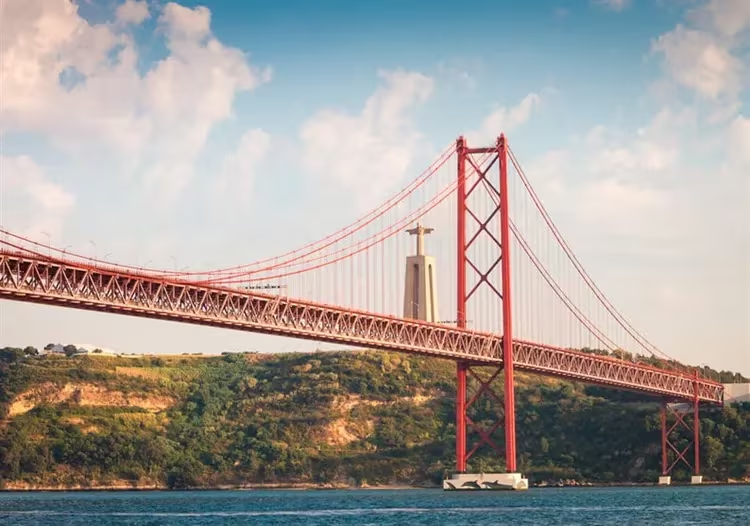
During a walk along the embankment, tourists will see the grandiose bridge named “April 25”. An ingenious engineering creation hangs over the Tagus River, connecting the capital of Portugal with the town of Almada. The length of the bridge structure is more than 2000 meters. The bridge was built in 1966 by an American construction company. Outwardly, the large-scale structure has a striking resemblance to the famous Golden Gate of San Francisco. Movement on the architectural structure is carried out in two levels. The upper track is intended for cars, and trains run along the lower tier.
Initially, the bridge was named after the then Prime Minister of Portugal, A. Salazar. After the overthrow of the power of the dictator during the bloodless April Revolution, the building received its current name – “April 25”. The fare on the bridge is 1.75 euros.
Vasco da Gama Bridge
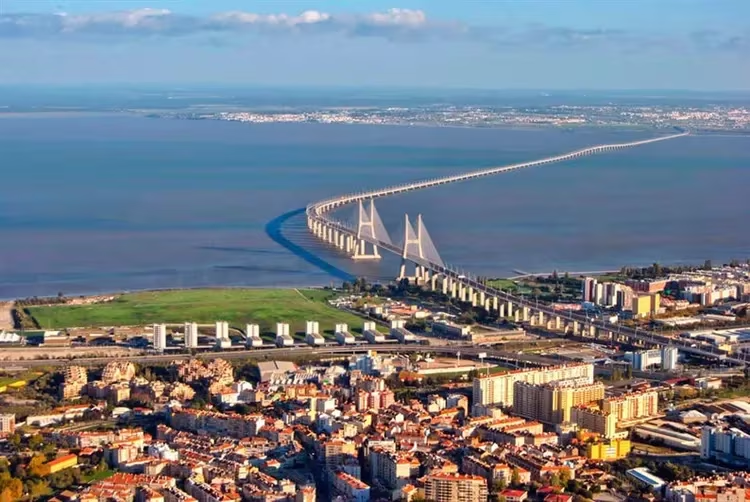
It connects the banks of the Tuzhe River at the widest point of the channel. One of the longest bridge structures in Europe impresses with its scale. It was solemnly opened in 1998. The majestic architectural structure consists of numerous highly stretched cables (cables) and massive support pillars. The central part of the structure rises 47 meters above the water, which allows large liners to pass under the bridge.
Monastery of Jeronimos
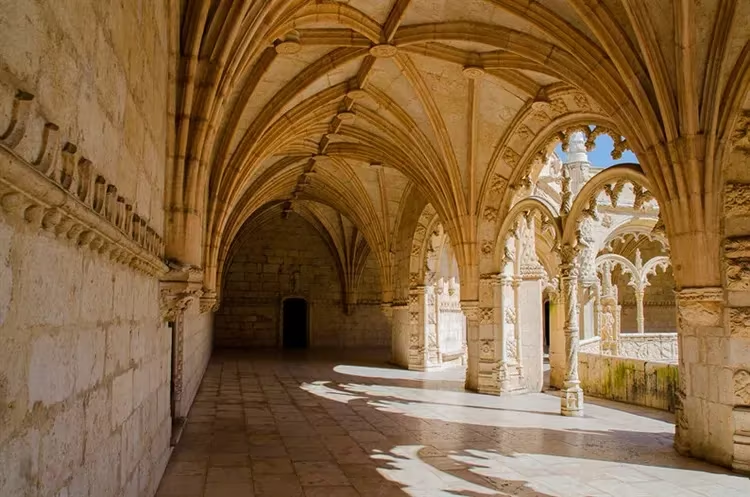
A notable monument of Portuguese architecture is the monastery of Jeronimos. The foundation of the monastery was dedicated to gratitude to the Virgin Mary for the successful completion of the expedition of Vasco da Gama, who paved the sea route to India. Rectangular in plan, the building impresses with a magnificently decorated elongated facade. The exterior combines decorative elements of flamboyant Gothic, Renaissance and Moorish style. The conical dome dominates the structure. Ornate stone ornaments, protruding ribs, stucco, sculptures, bas-reliefs, pinnacles and a wide openwork arcade gallery – all this evokes a feeling of delight from what he saw.
The luxurious interior decoration of the monastery deserves attention. Inspection of the halls, the refectory and the chapel, where Vasco da Gama found eternal rest, will cost each tourist 10 euros. The monastery receives visitors from 10:00 to 18:00.
Carmelite monastery
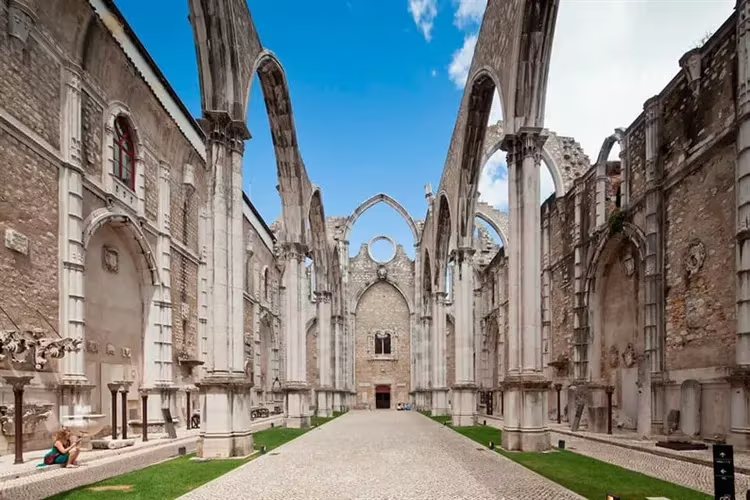
The mysterious and mystical appearance of the monastery of the monks of the Carmelite Order attracts attention. The dilapidated Gothic monastery is a kind of monument to an event that left a noticeable mark on the fate of Lisbon. In the 15th century, Nuno Alvares Pereira, a noble Portuguese knight of noble origin, being a pious man, sold all his property and founded a monastery of the Carmelite Order with the proceeds.
A natural disaster in 1775 caused colossal destruction of most of the monastery complex. Today, the ruins of the monastery serve as a reminder of that catastrophe. The high walls, columns, lancet arches and openwork stone carvings of the monastery's church survived. The Gothic vaults are impressive, through which you can see the blue sky. The monastery is open for visiting from 10:00 to 18:00.
Monastery of San Vicente de Fora
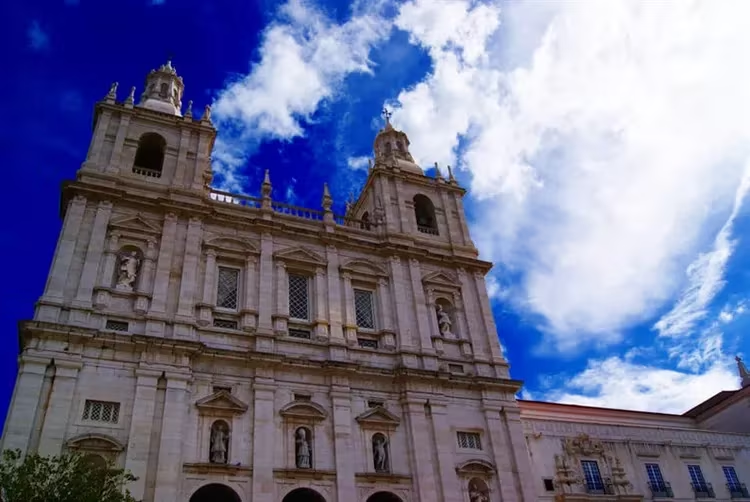
In the Alfama district, one of the most revered shrines of the city is located – the monastery of San Vicente de Fora. The monastery was founded in 1147 for the Augustinian monks. The religious building acquired its modern shape in the 17th century. The complex of buildings is a single composition consisting of a majestic temple and monastic buildings. The perfectly symmetrical light gray architectural ensemble embodies the best traditions of the Italian Renaissance. The facade of the temple is decorated with orderly rows of pilasters and marble statues.
The church is crowned with two corner belfries, a balustrade and numerous decorative small turrets. The walls of the inner courtyard of the monastery are finished with white and blue ceramic tiles, forming picturesque drawings. For a fee, tourists can enter the territory of the monastery. The shrine receives guests from Tuesday to Saturday. The attraction is open from 10:00 am.
Oceanarium

Throughout its centuries-old history, Portugal has been inextricably linked with the seas and oceans. Therefore, it is not surprising that the city has the second largest oceanarium in the world. This popular tourist place fascinates with the beauty of the underwater world with its numerous inhabitants. About 20,000 representatives of the underwater world live here. The main exposition of the institution is a huge aquarium with a capacity of 5 million liters of water. Around the main reservoir are four small pools that recreate natural conditions for various representatives of fauna and flora. These are rocky coasts, coral reefs, tropical underwater forests and arctic waters.
The oceanarium pleasantly surprises with the abundance of sea creatures. Here you can see numerous amphibians, mammals, invertebrates, fish and even birds. The aquarium is open every day from 10:00 to 20:00.
National Carriage Museum
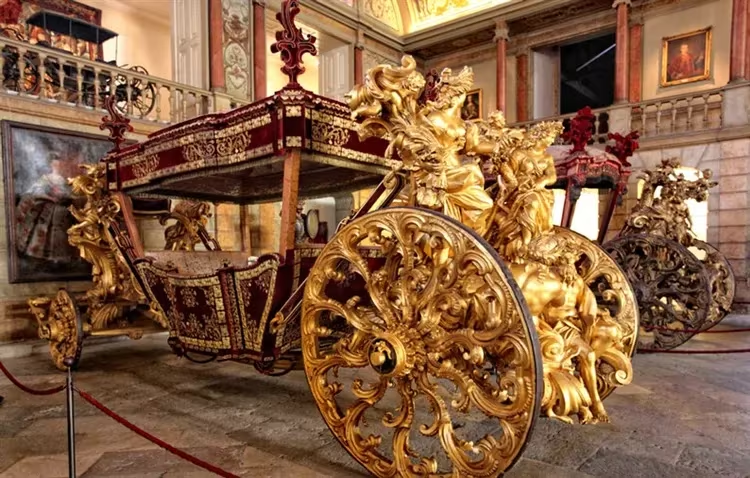
In the former equestrian arena of the Belem Palace there is a museum of carriages. Of interest is an extensive collection of unusually luxurious vehicles of kings, noble persons and ministers of the church. The museum exhibits carriages created at the turn of the 16th-19th centuries. Works of carriage art impress with their size and design. The magnificent woodcarving, gilded and velvet paintings of details, sculptures and leather upholstery of carriages attract the eye.
The hall is decorated with ceiling frescoes, wall tapestries and columns, which gives the interior a special historical entourage. The museum is open from 10:00 to 18:00 every day except Monday.
Viewpoint of San Pedro de Alcantara
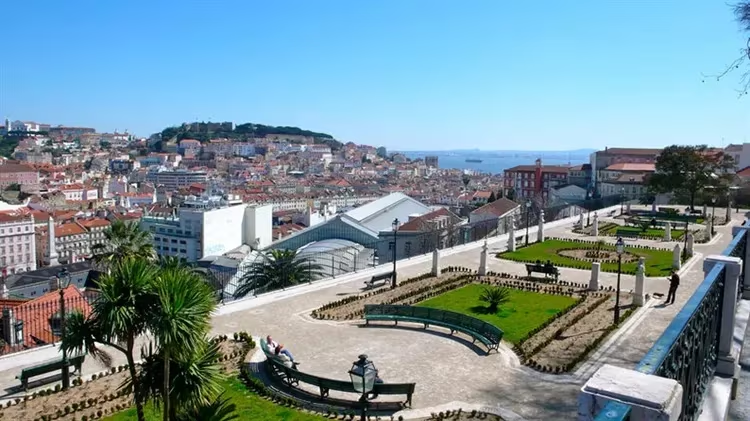
The panoramic viewpoint in the San Pedro de Alcantara park is a lively place. The territory consists of two levels full of trees, flower beds, fountains, benches, sculptures and cozy cafes. Here you can meet a lot of local youth and representatives of the creative intelligentsia. The observation deck offers a picturesque view of the abundance of red tiled roofs of the architectural ensemble. Entrance to the open shady terrace of the park is free.
Maritime Museum
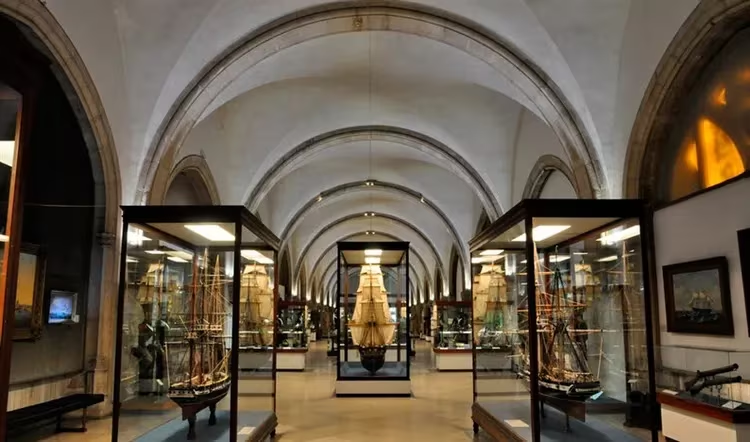
The great past of Portugal is covered with glorious and great geographical discoveries. Brave navigators set off from Lisbon to plow the oceans – Vasco da Gama, Bartolomeo Dias, Fernand Magelan and many others. Therefore, it will be interesting for tourists to visit the unique maritime museum. The museum is located in the building of the Jeronimos Monastery, where he prayed before leaving for the legendary Vasco da Gama sea expedition. More than 15 thousand exhibits dedicated to shipbuilding and the entire history of Portuguese navigation are exhibited in numerous spacious halls. These are ship models, authentic details of ancient ships, geographical maps, weapons, orders of admirals and other artifacts.
The museum is open to the public from Tuesday to Sunday inclusive. The institution is open from 10:00 to 18:00.
Museum of the Orient
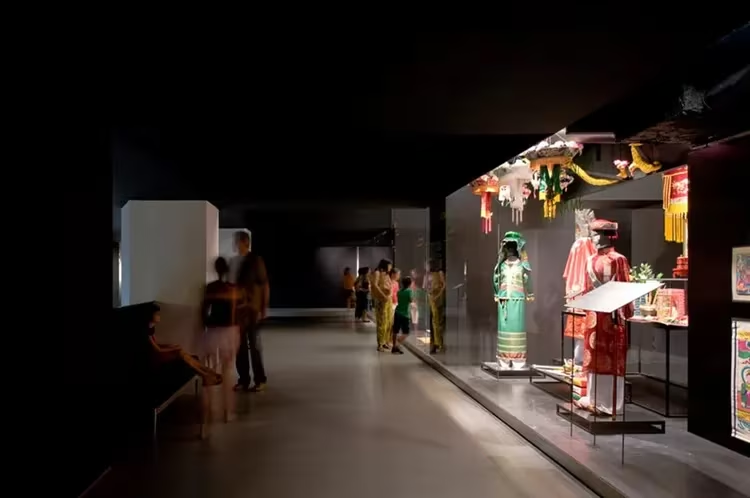
A pleasant experience awaits connoisseurs of oriental culture when visiting the museum, which contains a large collection of art objects from China, India, Japan, Southeast Asia and the Philippines. The expositions are devoted to the heritage of the era of Portuguese colonialism in the Asian region. Porcelain ware, textiles, ceramics, furniture, paintings, masks, jewelry and other antiques reflect the cultural richness of Eastern civilization. The Oriental Museum is open every day, except Monday, from 10:00 to 18:00. On Fridays, admission to the museum is free.
Electricity Museum
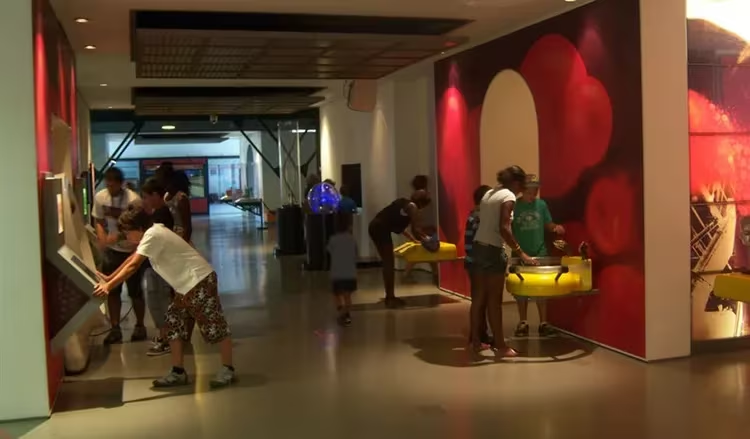
There are many places in the city where you can spend your time learning. One of these is the building of the former power plant, converted into an interactive museum. An industrial building with red brick walls supplied the city with energy in the first half of the 20th century. Visitors to this science center are given the opportunity to become participants in entertaining experiments on generating electricity. Educational exhibits are a variety of devices, units, machines and mechanisms that clearly demonstrate the principle of electricity. Entrance to the Electricity Museum is completely free, which pleases budget tourists. The complex operates from Tuesday to Sunday. The doors of the museum are open from 10:00.
Monument to the discoverers
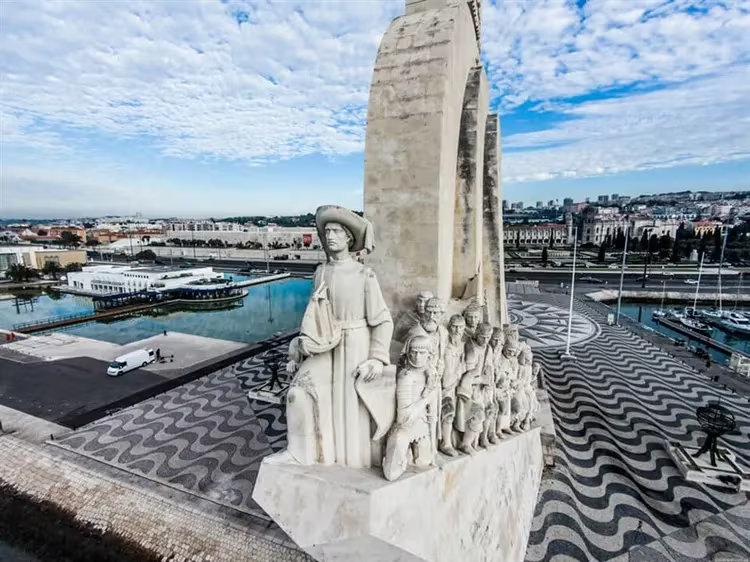
An impressive monument rises on the busy Belenskaya embankment, facing the mouth of the Tuzha River. The sculptural composition is dedicated to the era of great geographical discoveries. The monument was founded in 1960. It is a high stele, the silhouette of which resembles a caravel. On the deck of the ship there are figures of navigators, geographers, poets, scientists and maritime experts. The statues turn their gaze towards the ocean, anticipating an exciting journey. The building is over 50 meters high. Inside the monument is an exhibition hall and an elevator that takes tourists to the top of the monument. The observation deck offers picturesque views of the entire Belém area.
Galust Gulbenkian Museum
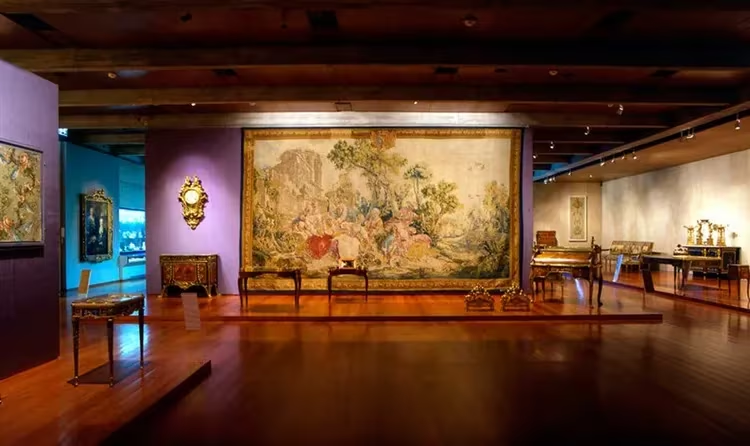
In a wonderful park with lawns, ponds and tall trees, there is a pearl among museums. This is a private collection of works of art by Calouste Gulbenkian. The cultural attraction impresses with the size of the collection of the most valuable exhibits. More than 1,000 unsurpassed masterpieces of art are on public display. These are paintings, interior items, dishes, jewelry, carpets, sculptures, books, antique furniture, antique artifacts and other items.
The museum fund owes its popularity to the oil tycoon and passionate collector of antiques Calouste Gulbenkian. The philanthropist was the most influential businessman of the early 20th century. Gulbenkian bequeathed priceless works of art collected from all over the world to Lisbon, the city where he spent the last years of his life. Tourists can visit the magnificent exhibition any day from 10:00.
Church of St. Roch
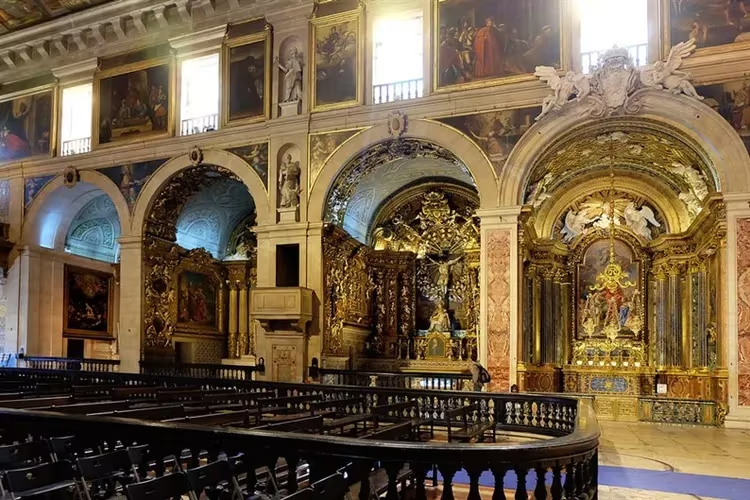
The first Jesuit church in Portugal, Saint Roch, was built on the site of the burial places of plague victims in the 17th century. The unpretentious modest building of the temple hides a luxuriously decorated interior. The facade of the chapel is decorated with pilasters and crowned with a triangular pediment with a round window. This is one of the few shrines in which every detail of the interior reflects the former wealth and power of Portugal.
Marble, gold, openwork wood carvings, tiles, mosaics, rare types of stones, as well as ivory objects create a fascinating atmosphere.
The one-nave hall of the temple attracts the attention of visitors with an arcade gallery, high columns, ceiling frescoes and sculptural compositions. Tiled and mosaic panels depict scenes of biblical motifs. You can visit the chapel from 10:00 every day except Monday. Free admission.
Church of Saint Engracia
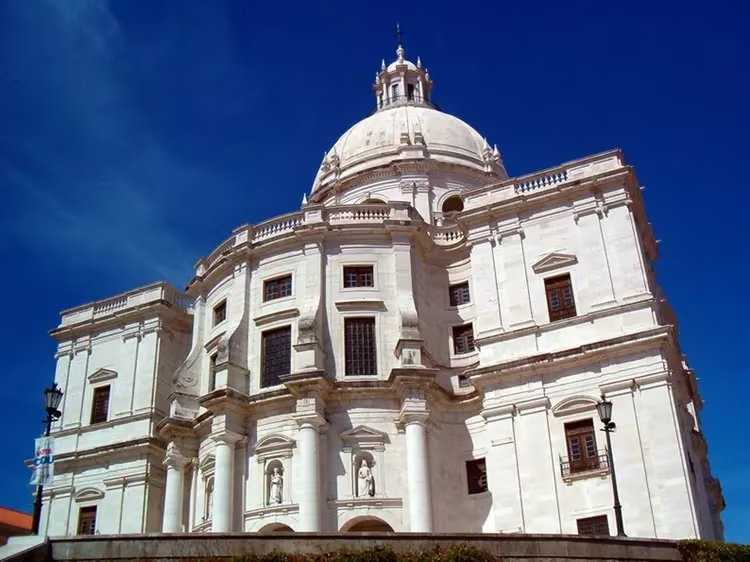
On a high hill in the Alfama district rises a magnificent snow-white building – the Church of Santa Engracia or the National Pantheon. The Catholic Church is a valuable architectural monument. Its construction began at the end of the 17th century. Within the walls of the church, sarcophagi of revered figures of culture, science, sports and politics of Portugal are installed. The baroque building of the cathedral has the shape of an equilateral cross in plan. The structure is crowned with an impressive dome, which rises up to 80 meters.
At the foot of the dome, there is an open terrace overlooking the magnificent city landscapes. The main entrance to the temple is an arched portal with four columns. The interiors of the church, lined and paved with multi-colored marble, evoke a sense of awe. The cost of visiting the pantheon is 5 euros. The temple is open every day except Monday from 10:00 to 17:00.