
What to see in Barcelona in 3 days – route, photo, description, map
Amazing parks, unique facades, sandy beaches and luxurious shopping streets. The capital of Catalonia is an exciting city with an ancient history and many popular attractions. Whether you are passionate about culture, architecture or nature, a stay in the Spanish metropolis will interest everyone. Even with only 72 hours left, you can get the most out of your trip by making a competent itinerary. Our article will help you find out what to see in Barcelona in 3 days without missing the most iconic places.
The best time to relax
If your goal is to visit as many interesting places as possible and not experience discomfort during a walk, choose either late spring or the first autumn months for a trip. So that the scorching rays of the sun do not cause additional inconvenience. You should not go on a short tour with large luggage. But comfortable clothes and shoes, a light backpack, a phrase book and a map of the city will become your faithful assistants.
Barcelona is a kind of monument to the greatest architect Antonio Gaudí to himself. Almost all the beauties that attract guests are the fruits of his creativity and talent. With 3 days left, you can see a lot. The proposed itinerary considers mostly walking. In order not to waste precious time in erratic movements around the city, the places to visit are chosen in terms of geographical proximity and convenience.
How to get from the airport to the center
El Prat International Air Port (El Prat) lies 15 km from Plaza Catalunya. There are 5 ways to get from the two terminals to the city center.
Round the clock taxi. The most convenient and at the same time the most expensive option. On the way, you will spend about 30 minutes, while spending from 45–55 €. There is a choice of car class.
The cheapest way to travel is by regular buses TBM routes No. 46 (day) and N17 (night). The ticket price is 2.20 €, the travel time is 40–50 minutes, depending on the congestion of the route. The trip will be more comfortable if you choose the Airbus buses. They will take you to the center of the metropolis in 25–35 minutes, making a minimum of stops along the way. The fare is 5.90 €.
If you want to get to the hotel as quickly as possible, avoiding possible traffic jams, then choose the RENFE network train. Paying 4.10 €, you will spend 20-26 minutes on the road (depending on the destination station). The railway platform is located in terminal T2, from terminal T1 you can get to it by a free shuttle. Attention! During the high season, the carriages are overcrowded.
Tourists have the opportunity to get from the airport to Barcelona by metro (line L9S). The train from terminals T1 and T2 departs every 7 minutes, the ticket price is 4.60 €. When choosing this mode of travel, be prepared for one transfer. It must be done at the Torrassa station (line L1).
Book a private transfer from the airport to your hotel in Barcelona for 3 258 RUB
First day
The first day in Barcelona is dedicated to getting to know its heart – the areas located near the seaport. Almost all the attractions included in the travel program are close to each other, so you will walk most of the route.
La Rambla Boulevard
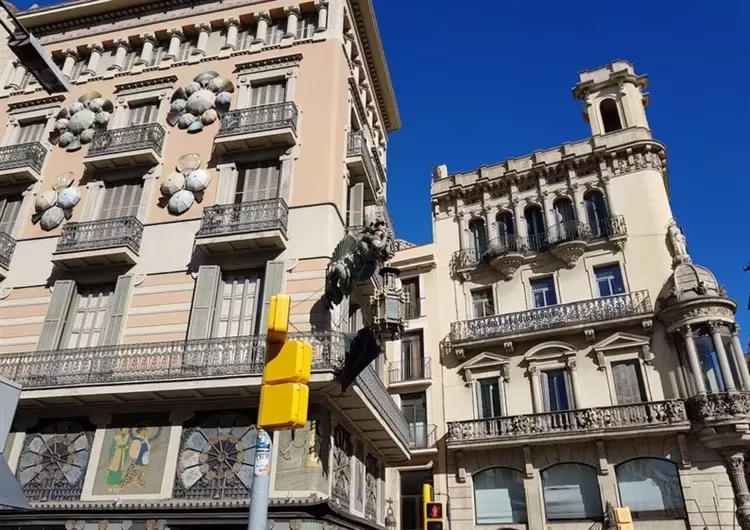
Barcelona cannot be imagined without La Rambla. The wide street, stretching for 1.3 km from Plaza Catalunya to the seaport, is the soul of the city. A journey along the magnificent promenade will be remembered for mosaics by the artist Joan Miro, fragrant rows of flowers, alluring aromas of the Boquería market, a sip of clean water from the Canaletes fountain, the magnificent facade of the opera house, as well as the modern outlines of the Rambla del Mar footbridge.
The best time to walk along La Rambla is in the afternoon. When the heat of the day subsides, street artists, musicians and artists gather here, transforming into frozen figures of fairy-tale creatures and famous characters: the Winged Dragon, Gorgon Medusa, Don Quixote and Salvador Dali. See the statues come to life and head to Mirador. This is how the people of Barcelona call the 60-meter monument to Christopher Columbus. At the top of the column, at the feet of the legendary navigator, there is an observation deck.
Boqueria Market
Boqueria Plate
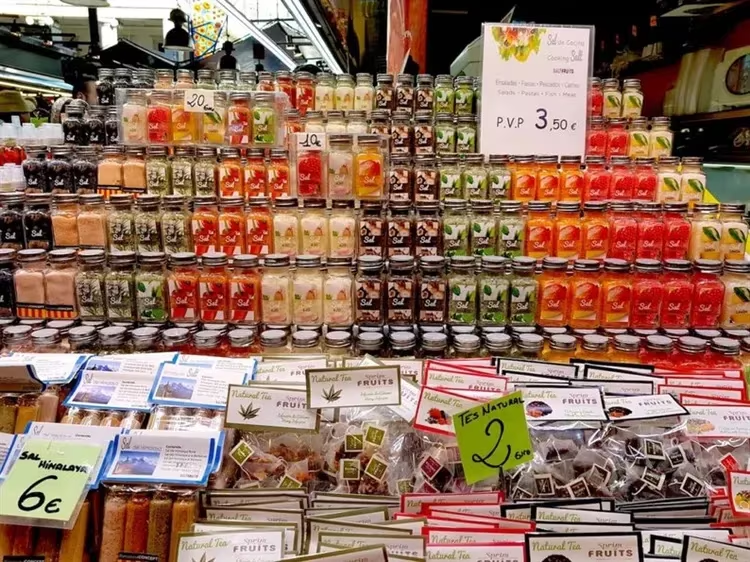
One of the most popular attractions of La Rambla is the Boquería Market, a gastronomic realm of smells and tastes. Residents of Barcelona come here for the freshest products, and tourists come here for culinary experiences and acquaintance with the national Spanish cuisine. Here you can buy vegetables, fruits, meat, fish, various seafood, mushrooms, sausages, sweets and drinks.
Do not hang out at the counters – friendly sellers willingly let you taste their goods, and sometimes they reduce the price a little. Flanking between the malls, do not forget to buy a bottle of cava. A glass of white sparkling wine will ensure you have a wonderful evening.
And a light dinner prepared from seafood laid out on ice trays will add a romantic mood. By the way, extraordinarily delicious French oysters flavored with lemon are also available on the market. Their price will pleasantly surprise you: for one piece of delicacy, local sellers ask for only 2.50 €.
Liceu Theater
La Rambla, 51 – 59
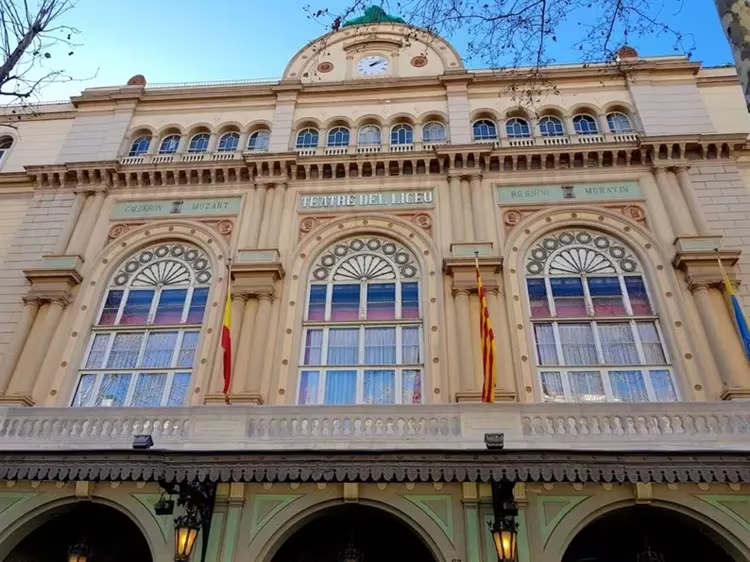
The grand opening of the Gran Teatre del Liceu (Liceu Theater) took place in 1847. Financing for the construction was provided by private patrons, so the Catalan Temple of Melpona differs from similar institutions built at the expense of the state treasury. So, in the auditorium there is no royal box.
Otherwise, the interior decoration, striking the imagination with sparkling crystal chandeliers, an abundance of mirrors, decorations made of marble, gilding and expensive fabrics, is in no way inferior to the famous opera houses of the world. Fyodor Chaliapin, Placido Domingo, Montserrat Caballe and José Carreras crowned with laurels once shone on the stage of the Liceu. In 1994, the building was destroyed by a massive fire.
It took the builders and restorers five years to restore the theater to its historical appearance and former glory. You can see the famous landmark from the inside as part of an excursion group. The cost of the study tour is 16 €.
Raval area
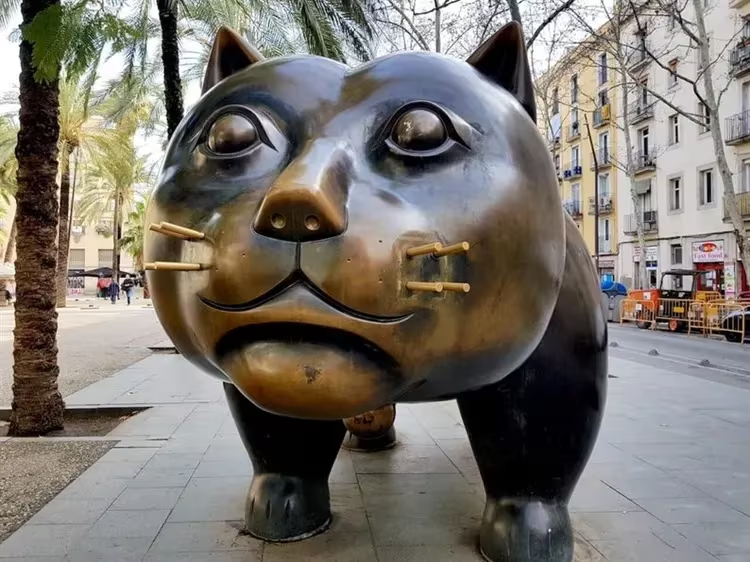
Attractive and at the same time sinister – this is how you can characterize the most controversial and mysterious quarter of the capital of Catalonia. On the one hand, it attracts travelers with the authenticity of old houses, the ancient beauty of medieval monasteries and modern bookstore windows. On the other hand, the streets of Raval were chosen by migrants from Pakistan and Morocco, turning the area into a haven for robbers and drug dealers.
Life here boils day and night. The Raval is famous for its bars. In one of them, named Marsella, Woody Allen filmed scenes for the film Vicky Cristina Barcelona. In addition to the cult director, Pablo Picasso and Salvador Dali liked to pass a glass or two of burning absinthe at the marble tables. Another must have for tourists is a bronze statue of a gigantic cat. Locals say that whoever rubs his “virtues” will definitely return to the Catalan capital again.
Holy Cross Hospital
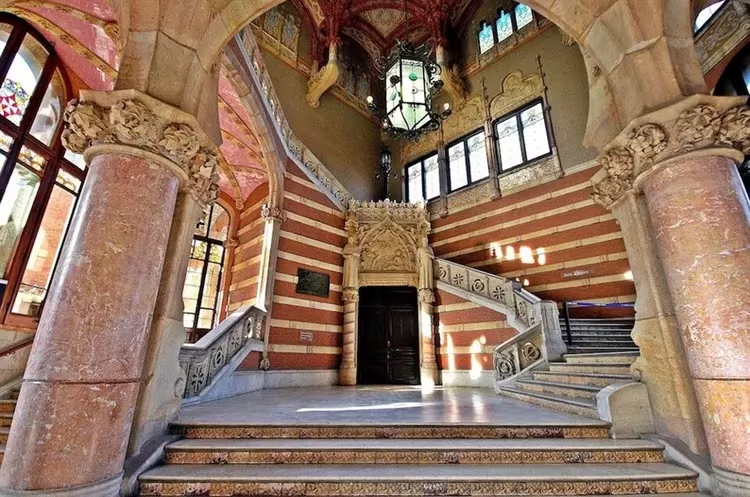
Carrer de Sant Quintí, 89
Not only a medical institution, but also a magnificent architectural monument awaits you a little far from the beaten tourist paths – in the El Guinardo district, located 7 km from the Raval district. The monumental Art Nouveau building, whose facade is crowned with a spire decorated with a clock, is richly decorated with bas-reliefs, multi-colored ceramic tiles and graceful statues.
The interiors are in no way inferior to the external beauty: the elements of the city hospital are in perfect harmony with the mosaics, original patterns and sculptures. The unique hospital is the brainchild of the architect Luis Domènech y Montaner, who began work on the construction of hospital facilities in 1902.
The idea of the architect to create buildings, the location of which would provide maximum access to sunlight, was supported by his son, who after 28 years completed the work begun by his father. Today, the medical complex is a whole park, including 12 pavilions connected by underground corridors.
Royal Square
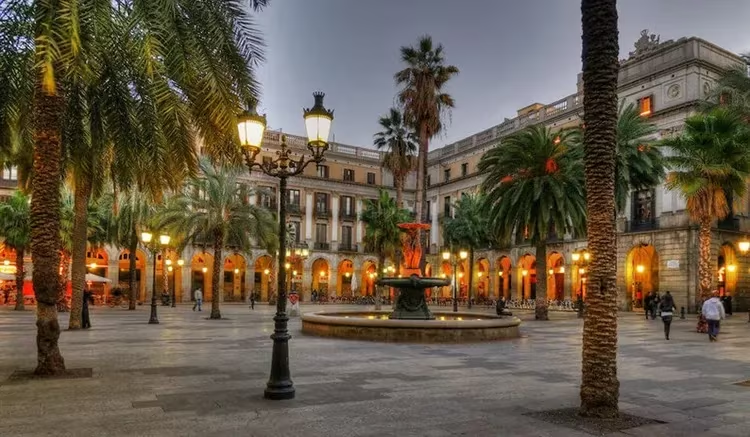
Royal Square
Next to La Rambla is a small square, whose appearance Barcelona owes to Francis Daniel Molina. In 1850, on the site of the destroyed Capuchin monastery, the architect began to build an ensemble of buildings, designed to praise the Spanish monarchy with elegance and luxury. The main figure was to be a statue of King Ferdinand VII, who was ruling at that time, sitting on a horse.
However, the architect's plan was not destined to come true – the center of the square was decorated with the fountain of the Three Graces. In 1879, two lanterns were installed next to it, attracting attention with the winged helmets of Mercury and snakes wrapping around the pillars. The development of exotic lanterns was Antoni Gaudí's first major project.
In addition to the works of the brilliant architect, the Royal Square is decorated with sprawling palm trees and framed by a four-story classical building. Restaurants and outdoor cafes are located along its perimeter. Here, on the stage of the jazz club Los Tarantos, performances of the best flamenco dancers take place.
Gothic Quarter
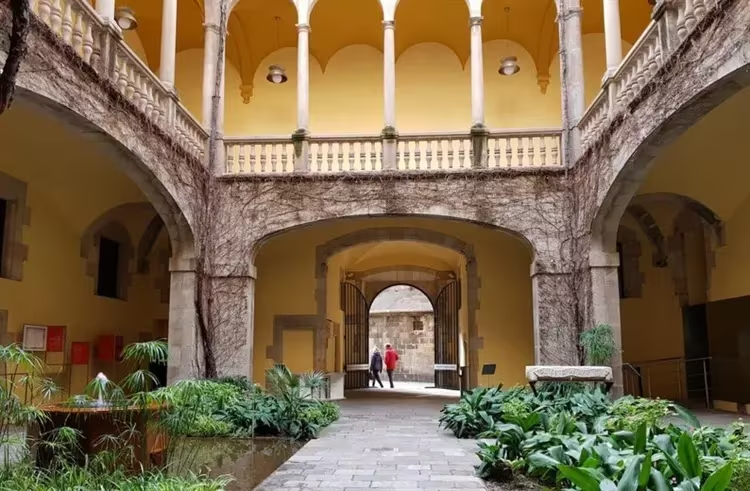
The most beautiful and oldest quarter of the city is the famous Barri Gotic, built on the ruins of the ancient Roman settlement of Barcino. The venerable walls remember legionnaires, German Visigoths, and Arab conquerors. It was here that the Catalan capital was born in 237. From the very first step, this amazing place strikes with the atmosphere of mysticism and the mysterious Middle Ages.
We advise you to start your walk through the Gothic Quarter with a visit to the Cathedral Square and a tour of the Church of St. Eulalia. On your way you will also see the House of the Archdeacon, the Episcopal and Royal Palaces, the Bridge of Sighs, ancient churches and modern museums. Passing lane after lane and enjoying the damp coolness that the eternal stones give, you will meet houses located almost close to each other, forged lanterns and iron lattices of balconies twined with lush ivy.
Cathedral of St. Eulalia
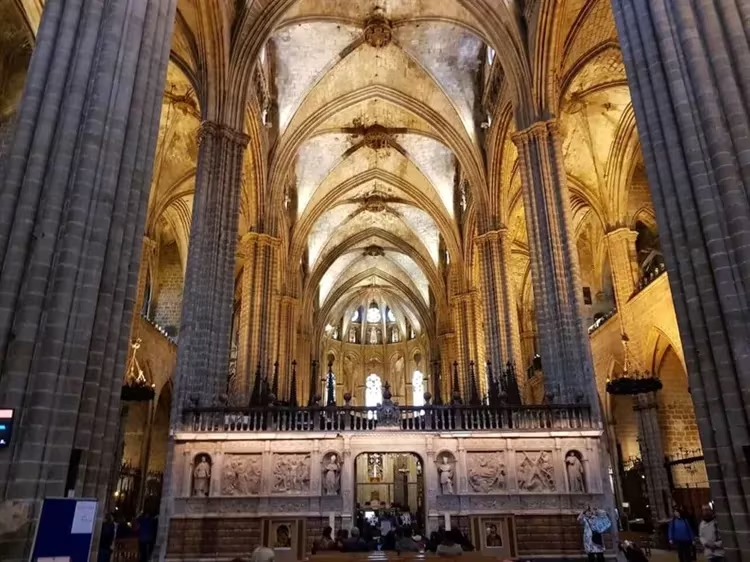
Pla de la Seu 3
The flavor of Catalonia and the Gothic style demonstrates the Cathedral, named after the 13-year-old martyr Eulalia, in the 4th century BC. e. who accepted death for faith in the Savior. The relics of the saint are the main treasure of the temple, which appeared in 1460. The facade of the monumental building is decorated with sculptures of Christ, the apostles, biblical characters and mythical gargoyles.
The interior decoration is solemn and strict. Attention is drawn to the organ and the medieval altar, under which the remains of the great martyr lie. No less interesting is the inner courtyard. Here you will find the chapel of St. Lucia and a picturesque pond. 13 white geese waddle around it, symbolizing the number of earthly years of Eulalia.
Every summer Sunday, on a small platform in front of the cathedral, a colorful performance of the performers of the sardana, a traditional Catalan dance, will take place. An exciting show is accompanied by cobla – a group of musicians playing wind and percussion instruments.
Royal Palace
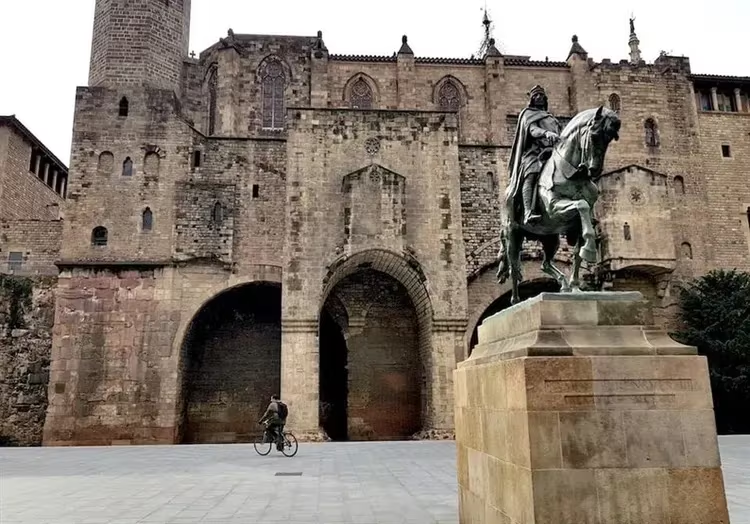
Carrer dels Comtes, 2
130 meters from the Cathedral of St. Eulalia is a complex of three buildings, united in the Grand Royal Palace. The first mention of it dates back to 1116. Initially, representatives of the Spanish monarchy lived behind stone walls. In the 16th century, the Holy Inquisition and the Royal Archives took the place of rulers. Today the palace functions as a historical museum.
The structure of the architectural ensemble includes:
You can get acquainted with the sights of the Royal Palace for free.
Santa Maria del Mar
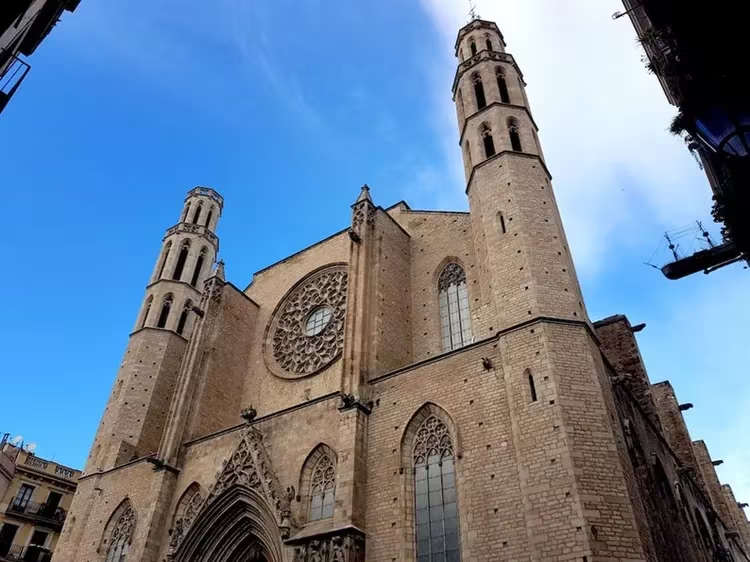
Plaza de Santa Maria, 1
Against the background of the narrow streets of the Born-Ribera district, the Basilica of St. Mary on the Sea looks bulky and massive. However, upon closer examination, the purity of forms and the elegant design of the facade are striking. The entrance to the Gothic church, built in the 4th century, is framed by sculptures of the apostles Paul and Peter. Entrance doors are decorated with relief drawings reproducing scenes of unloading ships.
Lift your eyes and you will see a magnificent rose window with lancet arches and stained glass windows. The interior of the temple is a realm of space and light, created by octagonal stone columns and semicircular ribs. Here you will not find artsy stucco and lush decorations.
The only decoration of the interior is the altar decorated with a sculptural image of the coronation of St. Mary. The excellent acoustics of the nave became the reason for holding classical music concerts in the church.
Ciutadella Park
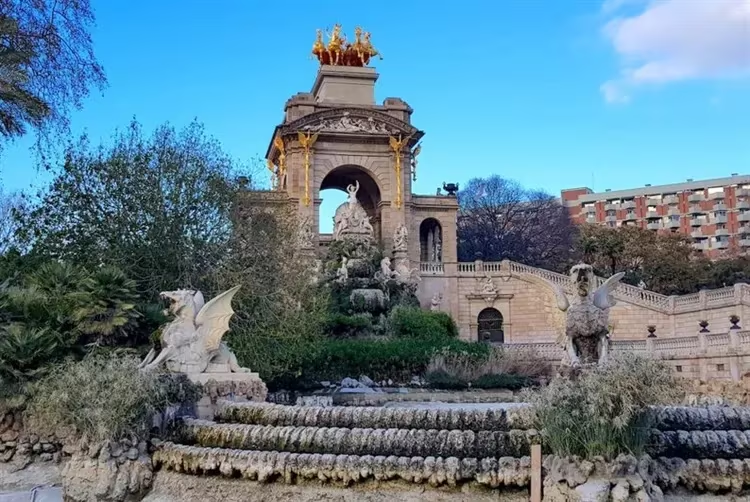
A kilometer from the embankment there is a corner of wildlife, shading the majestic beauty of cathedrals and palaces with the greenery of shady alleys. The park with an area of 30 hectares got its name from the fortress – the Citadel, built in the 18th century and demolished 150 years later. On its territory, the park, which bears the title of a state historical monument, has collected architectural and natural attractions.
In the center, in a building formerly belonging to the arsenal of the fort, today is the Parliament of Catalonia. Be sure to visit the northern part, where the grandiose work of the young Gaudi, the Cascade Fountain, gives coolness. No less beloved by visitors is the Castle of the Three Dragons, within the walls of which the collections of the Zoological Museum are exhibited. And young tourists will certainly be interested in the Mammoth Museum and one of the best European zoos, which has become home to 7,500 representatives of the fauna.
Second day
The second day in Barcelona will please fans of shopping, connoisseurs of unusual architecture and the unique handwriting inherent in the architecture of Antoni Gaudí. A wonderful end to the trip will be a visit to the most amazing place in Spain – the bright and memorable Park Güell.
Boulevard Paseo de Grasia
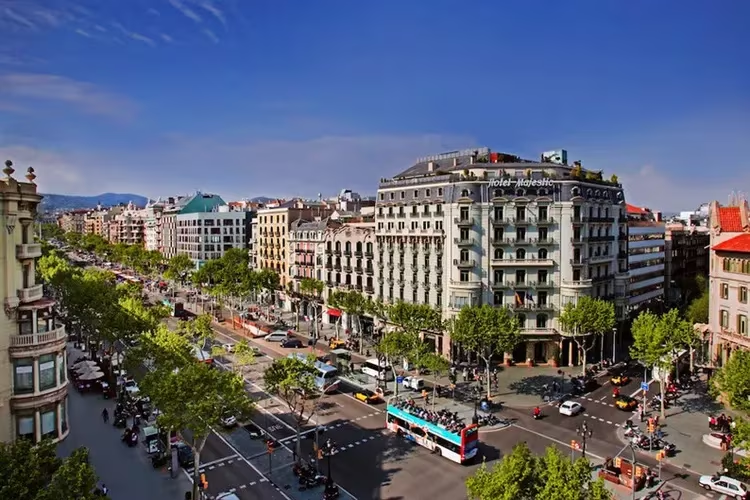
Passeig de Gràcia
The central and most contrasting street of the metropolis stretches for 5 kilometers from Plaza Catalunya to the Gracia district. A luxurious boulevard adorned the city at the end of the 19th century. Wealthy bourgeois families moved into new luxurious houses built in different architectural styles. Today, restaurants, cafes, boutiques of world famous designers and department stores of the middle segment coexist here.
In October, the shopaholics' favorite sale festival takes place on the boulevard. In addition to numerous shops, Paseo de Gracia attracts the attention of tourists with original buildings: the Marcet Palace, the houses of Pere Llibre, Ramon Mulleras, Lleo i Morera, Amalle, Batllo and Mila. The beauty of the buildings is not inferior to the pedestrian part. It is framed by lanterns and mosaic white benches. The pavement, designed by Gaudí, is lined with natural stone.
House of Lleo y Morera
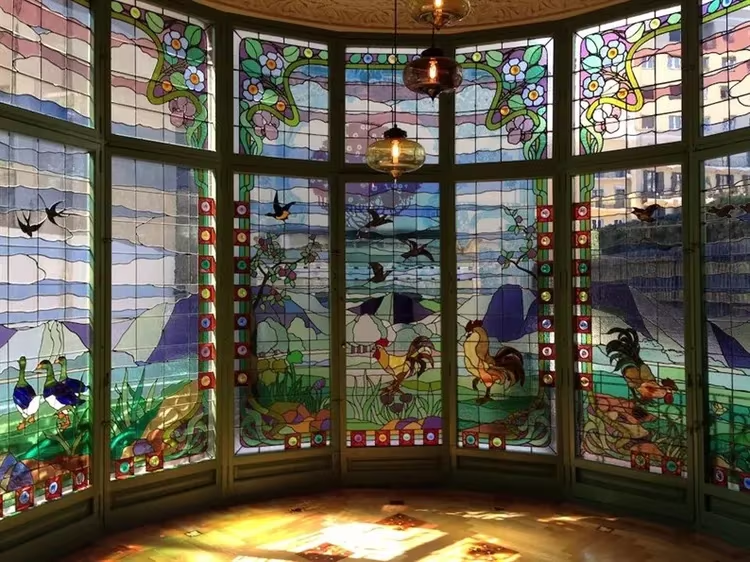
Passeig de Gràcia, 35
The building, erected in 1864, over the reconstruction of which in 1902-1906 the architect Domenech-and-Montaner worked, is located in the “Quarter of Disagreement”. This is how the Barcelona people christened the constellation of three strikingly contrasting buildings. The modernist architect worked closely with the mosaicist Lewis Bru, the decorator Josep Pey y Farriol, the sculptors Antoni Juyol y Bak and Eusebi Arnau to renovate the house belonging to the Morera family.
The curved facade is an architectural composition that includes mosaics, heraldic signs, intricate stucco ornaments, exquisite bas-reliefs, openwork balconies and round windows separated by pilasters. The architect tried to focus the attention of the audience on two most important elements: a glass rotunda crowned with a turret and pink marble columns. The original building is private property, so it can only be viewed from the outside.
House Amalie
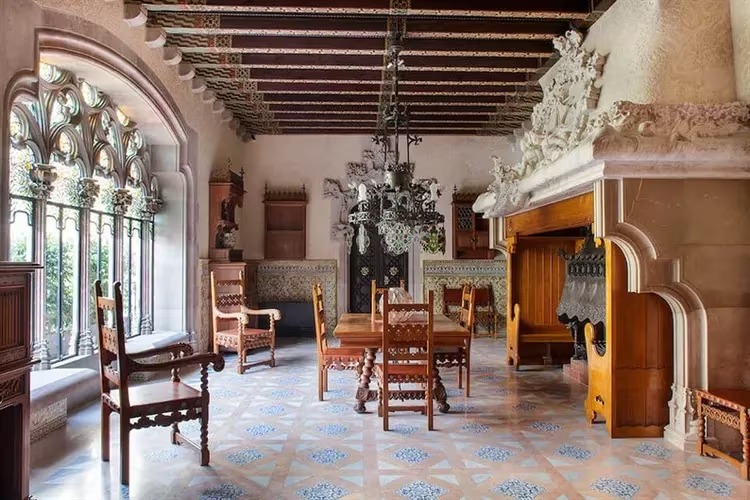
Passeig de Gracia, 41
Another famous building of the Dissent Quarter is a house built in 1875 and turned into a work of art in 1900. Wealthy confectioner Antonio Amalle was not satisfied with the appearance of the building, which he acquired in 1898. For the restoration and redevelopment of the new property, he invited the talented architect Josep Puig i Cadafalch.
Unlike its modernist neighbors, Maison Amalie is an example of Dutch and Spanish Gothic architecture lavishly complemented by Art Nouveau elements. A stepped pediment crowns the facade, the main detail of which is the owner's initials, enclosed in a pattern of almond tree branches.
Intricate balcony lanterns, bay window carvings and sculptures at the doors are reminiscent of the exterior decoration of Moorish palaces. You can get into the interior through 2 asymmetrical entrances.
Casa Batlló
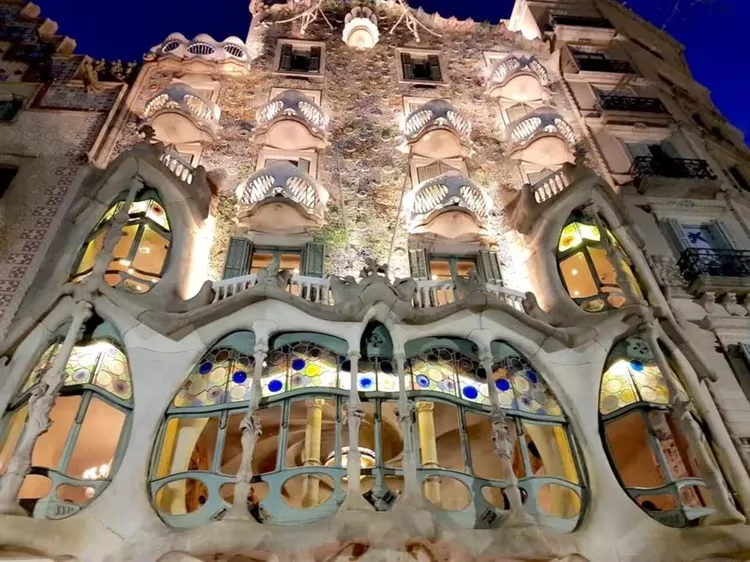
Passeig de Gràcia, 43
A fleeting glance is enough to recognize the work of the daring Antonio Gaudí in the guise of an exotic building. The general restoration of the building, erected in 1877, marked a new stage in the work of the architect: he moved away from the classical concepts of architecture, opting for his own unique style.
For 2 years (1904-1906), the inconspicuous building turned into a kaleidoscope of bright colors, unusual shapes and bold decorations. The back of a fairy-tale creature rises from the curved roof above the facade, the ceramic cladding of which smoothly changes color from white to blue. The decoration of the building is similar to dragon scales.
Columns, frames and tiny balconies resemble the skeletons and skulls of victims of an unprecedented monster. It is not for nothing that the second punishment given to the structure is the House of Bones. No less original and interiors. You can see them during a theatrical tour. The cost is 40 €.
House Mila
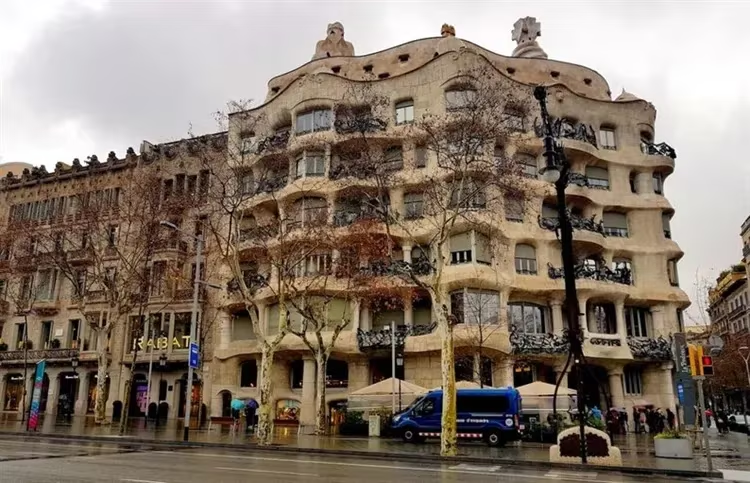
Provence, 261—265
The penultimate brainchild of Gaudí was a house built in 1910 by order of the wealthy manufacturer Pere Mila y Camps. The finished creation of the architect was recognized only decades later – initially the building was criticized by both the customer and narrow-minded specialists. Gaudí's building could not boast of either a standard look or classical lines.
Dunes, rocks, sea waves – this is the impression House Mila makes on the audience. Creating his masterpiece, the architect applied innovative solutions at that time: a well-thought-out ventilation system that gives coolness even in the midday heat, and the use of concrete and iron, which made it possible to abandon the supporting walls.
Today the building houses a museum. Having booked a tour, you will see the apartment decorated in the style of the 20s of the last century, the mezzanine and the attic, where the exhibition hall is located. The roof, which hides air ducts, pipes and ventilation towers, turned into strange decorations, deserves special attention. Some elements are lined with fragments of ceramic tiles and colored glass.
Fast track ticket to Sagrada Familia – €20
Park Güell entry ticket – €10.75
Ticket to Casa Batlló and video guide – €24.50
Hola BCN: ticket for general transport for 2,3,4 or 5 days – 15 €
Ticket to Port Aventura Park and transfer – 69 €
Ticket to Port Aventura and Ferrari Land parks – 55 €
Ticket to Tibidabo amusement park – 28.50 €
Skip-the-line ticket with audio guide to Casa Mila – 22 €
Hop-on hop-off tour of Barcelona for 1 or 2 days – 30 €
Sagrada Familia
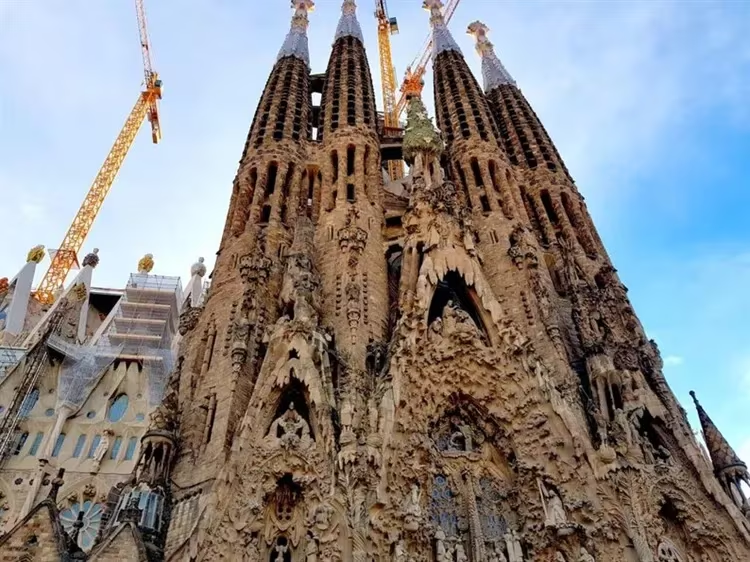
Carrer de Mallorca, 401
Sagrada Familia is a symbol of the Catalan capital, the greatest monument of neo-Gothic architecture and one of the most famous long-term construction projects in the world. The construction of the cathedral, resembling a quaint sand castle, started in 1882. However, a year later, the architect Francisco del Villar left the project. He was replaced by the incomparable Antonio Gaudí.
The master devoted the rest of his life to the creation of the basilica. After his death, construction management passed from one architect to another. The construction is still going on. According to the most optimistic forecasts, they plan to complete them by 2026. But even despite the incompleteness, the temple is amazing. It is based on the Latin cross. The facades of the building symbolize the birth, death and resurrection of the Son of God.
According to the author's plan, the cathedral should be crowned with 18 spiers, symbolizing the Mother of God, evangelists and apostles, and the highest of them (170 m) – the Savior. Unique and interior decoration. Intricate columns branch upwards, the ceiling resembles the crowns of amazing trees, and the stained-glass windows installed at different levels look like incredible flowers.
Park Guell
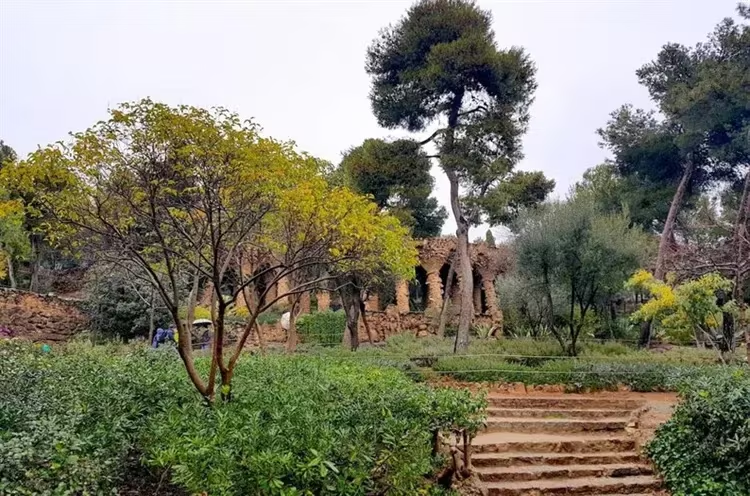
Carrer d'Olot, 13
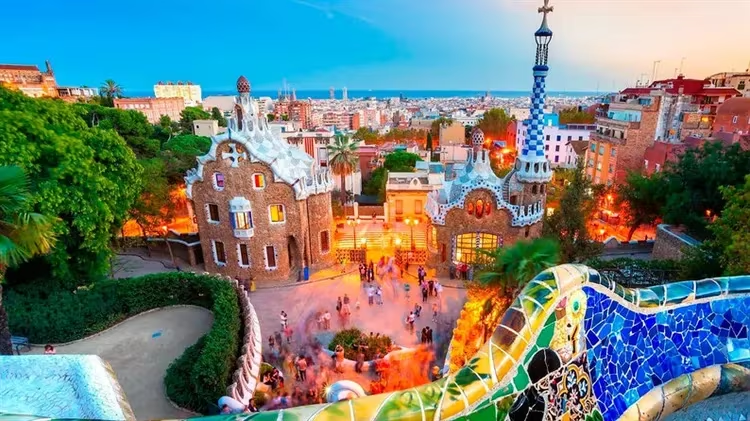
In the northern part of the metropolis there is a luxurious park, with its palm alleys, fountains, sculptures and bizarre architecture that can compete with the best theme gardens in the world. Created thanks to the funds of the entrepreneur Eusebi Güell and the efforts of the brilliant architect Antonio Gaudí, the green zone appeared in Barcelona in 1914.
The path of the park, originally conceived as a residence for the city's elite, was thorny. Wealthy citizens were in no hurry to buy land. In 1921, Guell's heirs sold the territory to the municipality of Barcelona, and after another 5 years, the entire area became available to the public.
Today, Park Güell is a place that has absorbed the colorful creations of Gaudí. Gingerbread houses, a mosaic salamander, the antique hall “100 Columns” and a curved bench lined with ceramic tiles, fragments of glass bottles and earthenware entice visitors into the world of fairy tales and fantastic creatures. Most of the territory is free to visit.
The third day
We recommend starting the final day in Barcelona on the country's largest square, Plaça d'Espanya. Continue southeast towards Montjuic and then northwest towards Tibidabo. Part of the journey is in hilly terrain, so be sure to wear comfortable shoes. To move between the objects of the route, you can use the city train (S1,2), metro (L1), Tibibus buses, No. 111, 118 and the funicular.
Plaza of Spain
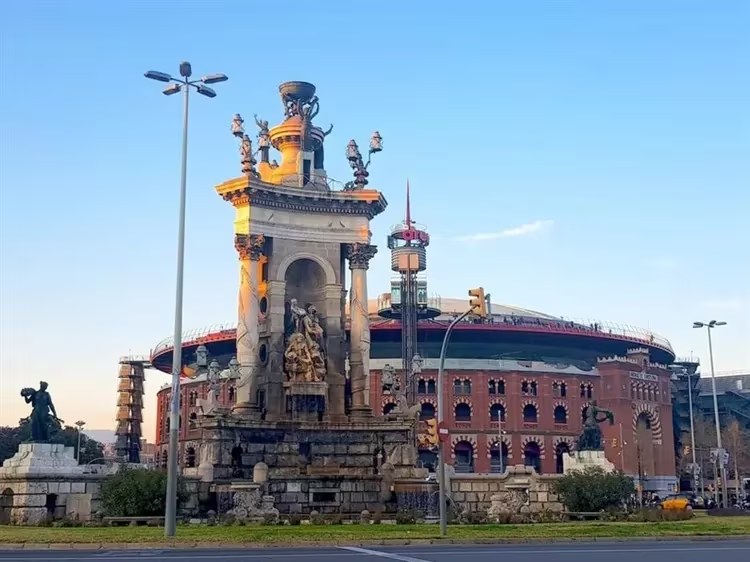
Plaza de España
The accumulation of monumental structures, the transport hub of the city and the symbolic gate leading to Mount Montjuic – all this is Plaza de España. In the Middle Ages, public executions were held here, and in 1715 a fortress was built. The square was formed only in 1905. It received its modern look 23 years later, when the city was preparing for the World Exhibition.
On 34,000 m² are architectural masterpieces of the past and present. In the very center, on a small green island, a fountain catches the eye, the sculptures of which symbolize faith, fertility, prosperity, courage and art.
Nearby are the red building of the Barcelona Arena and the pavilion of the Exhibition Center. It is impossible not to notice the two towering towers, reminiscent of the Campanile bell tower in Venice. But the most impressive object of the square is the National Palace.
National Palace of Catalonia
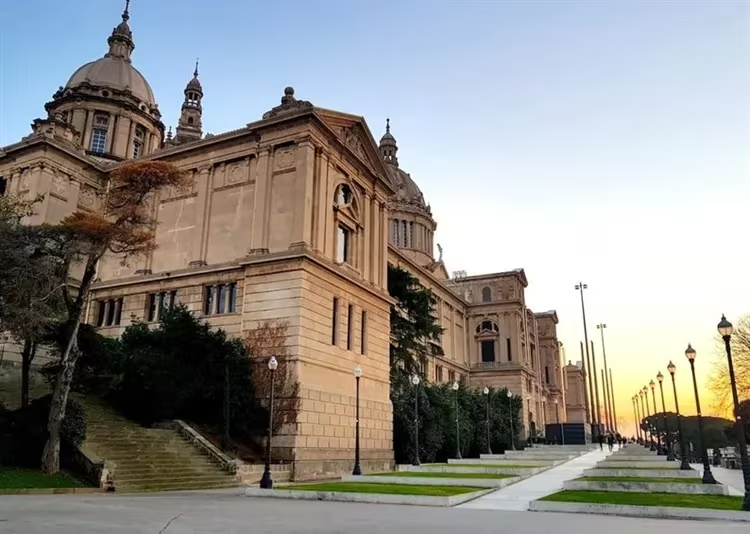
Montjuïc Park
The construction of an impressive building with numerous towers and domes was timed to coincide with the 2nd International Exhibition of 1929. The area of the architectural ensemble, built in the style of the Spanish Renaissance and including a magnificent park, is 30,000 m².
Grand staircases lead to the central building, separated by a cascade of small pools. At the base of the palace is a 3,620 jet magic fountain. With the onset of dusk, it is illuminated by 4,760 light sources.
The game of various shades is accompanied by classical and modern melodies. The main object of the palace complex located at the foot of the Montjuic hill is the Museum of Art, which exhibits engravings, photographs, numismatic collections, paintings and sculptures.
Mount Montjuic
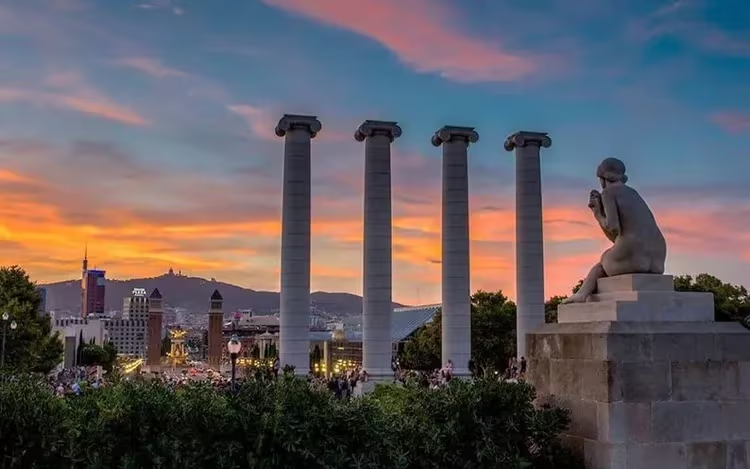
The picturesque mountain, rising 173 m above the metropolis, gained popularity in the first half of the last century, when Barcelona hosted the World Exhibition. Until 1928, the top of the hill, whose name is translated from Old Catalan as “Jewish Mountain”, was crowned only by an impregnable fortress built in 1640 by the Iberians.
In 1929, the Montjuic hill was turned into a huge public park. Modern objects, architectural and natural sights have found their place on the green slopes. Among the well-groomed gardens, fountains and sculptures, you will meet the Spanish Village Folklore Center, the Botanical Garden, the museum of the surrealist artist Joan Miro and the City of the Dead – the oldest cemetery in Barcelona.
Thanks to the 1992 Olympic Games, outdoor pools, a stadium, the Sports Palace, Europe Square and a futuristic concert hall appeared on the mountain.
spanish village
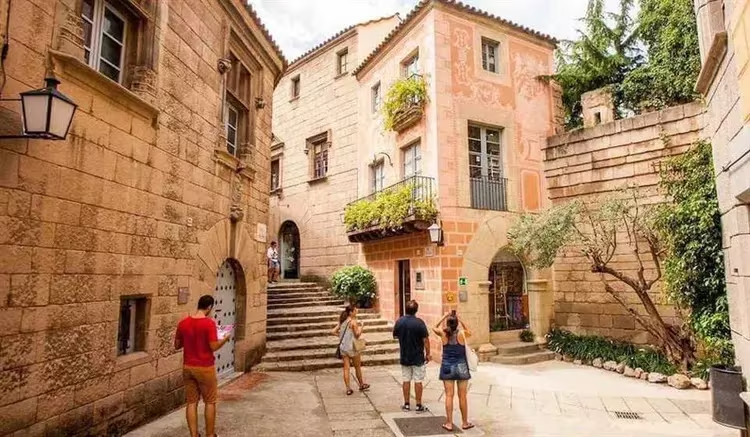
After visiting 1,600 villages and cities in Spain and inspired by the local color, in 1927 the architects Ramon Raventos, Francesc Folger and the artists Miguel Utrillo and Xavier Nogues created an unusual project. A mini-state has grown on an area of 4.2 hectares, which includes copies of 117 of the most famous objects of the country: palaces, houses, cathedrals, museums and streets. Here you will visit the Utebo Tower, the Ávila Gate, the Aragon Buildings and the Plaza Mayor.
In the “Spanish Village” you can not only take pictures against the backdrop of the most popular sights, but also feel like an artisan. Workshops open their doors in the morning. As a participant in exciting workshops, you will learn how to blow glass vases, weave lace, make clay pots and paint on ceramic tiles.
In the evenings, the incendiary music and neon lights of the open-air discotheque beckon and the sounds of fiery flamenco dance excite the blood.
Military fortress of Montjuic
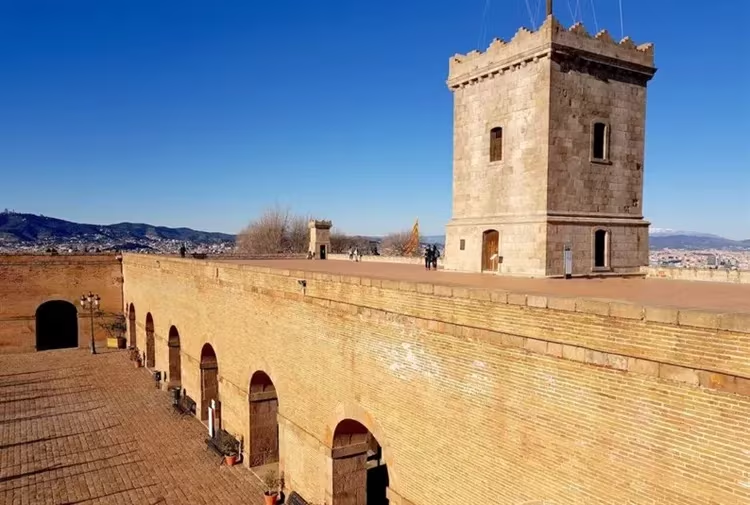
The defensive structure crowning Montjuic is a must-see for connoisseurs of history and lovers of magnificent panoramic views from the height of the protective walls. The history of the bastion takes us back to the middle of the 17th century – the time of the beginning of the uprisings of the inhabitants of Catalonia against the royal troops of the Habsburg dynasty. In its lifetime, the citadel has seen the bloody battles of 1641 and 1705, the soldiers of Napoleon's army, and political prisoners of the 20th century.
Since 1963, a military museum has been operating inside the fortress. Its exposition includes collections of weapons, ancient uniforms, documents, maps, banners, orders, a collection of tin soldiers and models of famous Spanish forts. Some of the exhibits are exhibited at the very barrier of the citadel. In addition to viewing rarities, tourists can visit prison cells, a water reservoir and a central tower.
Mount Tibidabo
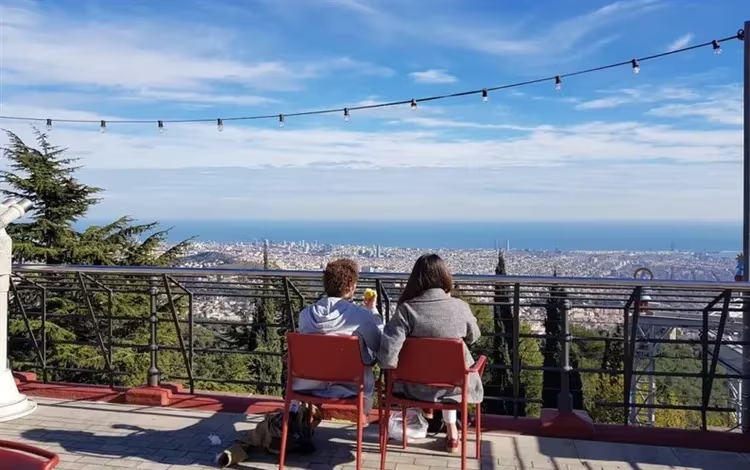
On clear days, from the 520-meter height of Tibidabo, a bewitching panorama of the capital of Catalonia extends at the foot of the mountain. According to the Gospel, it was here that Satan transferred Jesus. Trying to tempt the Son of God, the devil showed him the most beautiful territories, promising unlimited power over them. “I give to you (Tibi dabo),” with these words Lucifer tempted the Messiah who did not obey him.
Tibidabo is located 7 km from the center of Barcelona. You can climb the mountain with the help of the historic blue tram, which will take you to the final stop of the funicular. Every 20 minutes, a Tibibus bus leaves from Plaza Catalunya to the amusement park. Most tourists come to Tibidabo for the entertainment “Parque d'Atracccions”. In addition, here is the Cathedral of the Sacred Heart, crowning the highest point of the metropolis.
Temple of the Sacred Heart
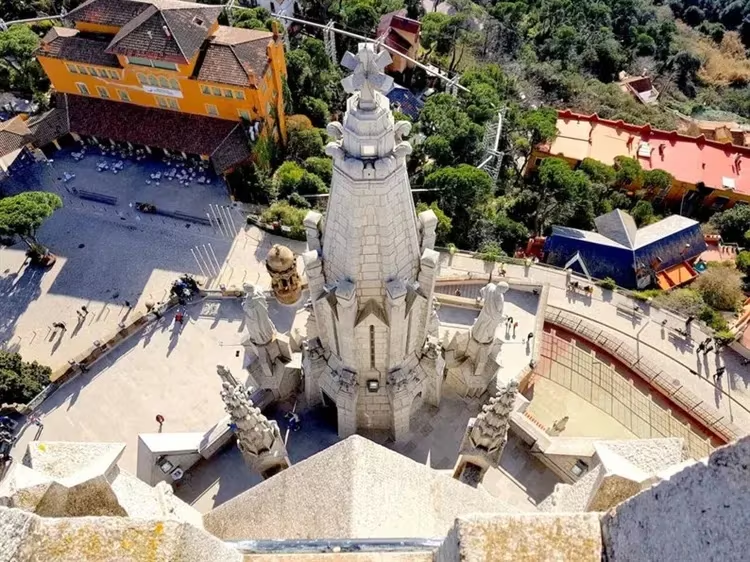
The Savior, opening his arms to the ancient city lying at his feet, is visible from all points of the coast of Barcelona. His 7-meter bronze figure crowns the Temple of the Sacred Heart, the construction of which took more than half a century. The history of the church began in 1886 with a small chapel erected on top of Tibidabo. After 75 years, a white-stone Catholic basilica grew next to it, decorated with Gothic turrets and statues of apostles and saints running in 2 tiers.
The interior of the temple is made in the Byzantine tradition. The 5 naves separated by columns are covered with mosaics, bright frescoes and decorative stucco. A wooden crucifix rises above the altar. There are no artificial sources of lighting in the rooms – natural light enters through the stained-glass windows, making the paintings on biblical themes depicted on them shimmer with multi-colored highlights.
Amusement Park Tibidabo
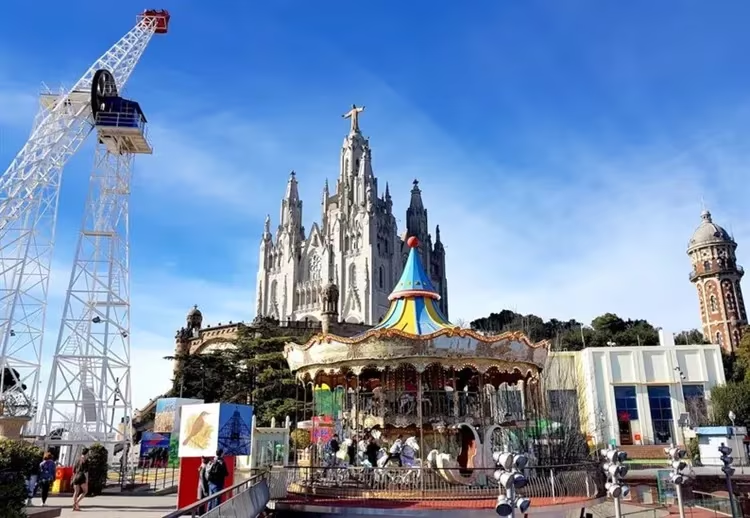
Leaving the cable car that takes travelers to the top of Tibidabo, you will find yourself in the fairy-tale world of childhood, built in 1901. Don't look for ultra-modern extreme attractions here – the park's carousels are by no means scary, and many of them have already celebrated their 100th anniversary. Local favorites are the 1928 hovering aircraft, the Giradobo ferris wheel, and the 360-degree Hurakan swing.
In addition to attractions, there are many interesting things in the amusement park. Children and adults will be amused by the curved mirrors of the Mirror Labyrinth, scared by the ghosts of the Misteriós castle and captivated by the Marionetarium puppet show, which reveals the secrets of puppet control. On weekends, theatrical performance of Correfos and Cercavila gathers visitors, organized by street circus artists and accompanied by colorful fireworks.
How and what to save
Saving money on travel doesn't always mean hitchhiking or walking and seeing only the facades of famous palaces and museums. There are other, more pleasant ways to make a trip on a budget, but at the same time comfortable, informative and exciting.
- The sights of Barcelona are scattered throughout the city, so you won't be able to get around them on foot. Public transport in the capital of Catalonia is organized impeccably, but the cost of one trip is 2.20 €. Expensive? Undoubtedly, but there is a successful solution to the problem called Hola BCN!.
The unlimited pass is valid for 2-5 days. An added bonus is a free ride to Mount Tibidabo and airport transfers. The price of the card for 3 days is 22 €. Redeem purchased Hola BCN! available at tourist information offices (including stations and airports).
- For those wishing to save money and time, tourism.com.de recommends purchasing a single tourist card. Buy the Barcelona City Pass and all you have to do is create an interesting itinerary. The subscription will take care of everything else. With it you will get:
The Barcelona City Card price (for 72 hours) is €112.90. You can get the purchased card at El Prat airport or at the office next to Plaza Catalunya.
- If you want to dedicate one of the three days spent in Barcelona to relaxing on the beach, then your choice is Barcelona Express Card. This 2-day card provides unlimited travel on all forms of public transport, including the RENFE train and TMB bus, up to 60% discounts on museums, attractions and entertainment shows, and up to 20% discounts at restaurants and shops.
The cost of the Barcelona Express Card is 20 €. The printed voucher must be presented at one of the exchange offices located in the airport terminals at Estació de Sants Pl. Paisos Catalans, Plaça de Catalunya Pl. Catalunya, 17 and Plaça de Sant Jaume Ciutat, 2.