
What to see in Montenegro by car – route, photo, description, map
Montenegro is a unique original country of the Balkan Peninsula, which amazes with the bewitching beauty of its landscapes. On its small territory, it contains an incredible number of masterpieces of nature and cultural and historical monuments. Vast bays of the azure Adriatic Sea, luxurious beaches, high mountains with rocky slopes, dense forests, bottomless canyons, lakes and rivers, as well as ancient cities and towns – all this property of the Balkan region opens up wide opportunities for an exciting journey. Independent tourists can make a ten-day itinerary. An unforgettable trip will answer the question of what to see in Montenegro by car.
Benefits of car rental
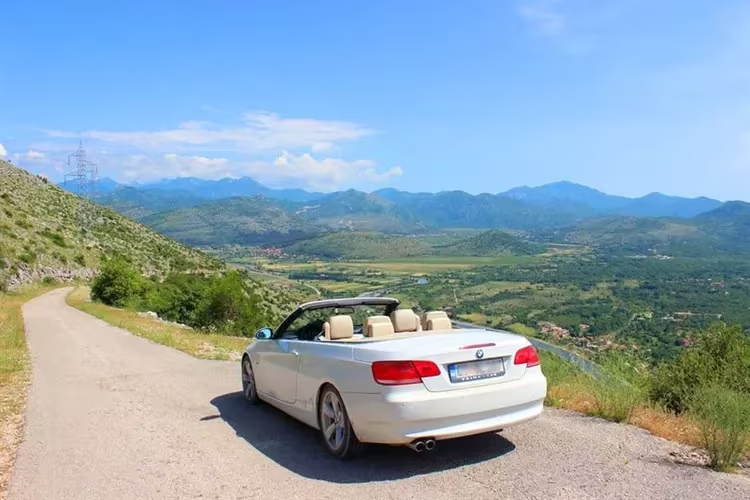
Autotravel provides vacationers with absolute freedom of action without time and distance restrictions. This option of getting acquainted with interesting and diverse sights is ideal for people who prefer not to depend on the schedules of tour groups. During independent car trips, tourists can stop where they especially like the scenery and spend as much time as necessary to satisfy their curiosity.
Both local and foreign offices offer car rental services. It is recommended to book a car in advance through popular online aggregators, which will significantly save your travel budget. The cost of car rental starts from 9 euros per day.
Kotor
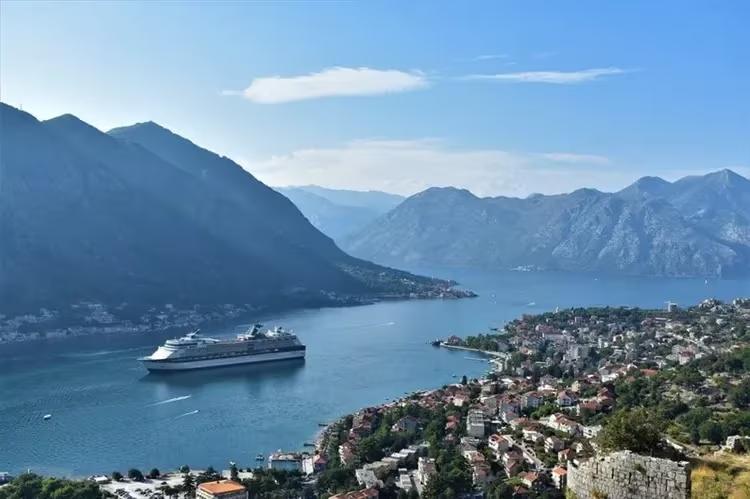
The original city of Kotor, the history of which dates back to the VI BC, deserves special attention of tourists. This picturesque seaside corner of the Bay of Kotor is ideal for visiting during an exciting day trip by car.
A cozy quiet corner is located between the emerald waters of the Adriatic Sea and the majestic mountain ranges. Of genuine interest is the old quarter of Kotor, surrounded by a massive and high fortress wall. Many historical places and architectural monuments have been preserved here.
Labyrinths of narrow cobbled streets and spacious squares with fountains, ancient cathedrals and stone buildings with orange tiles, souvenir and handicraft shops allow curious vacationers to feel the Middle Ages. Among the attractions are the Clock Tower, the Prince's Palace, the Church of St. Nicholas, the Catholic Basilica of St. Luke, the Cathedral of Tryphon and the fortress of St. John.
Perast
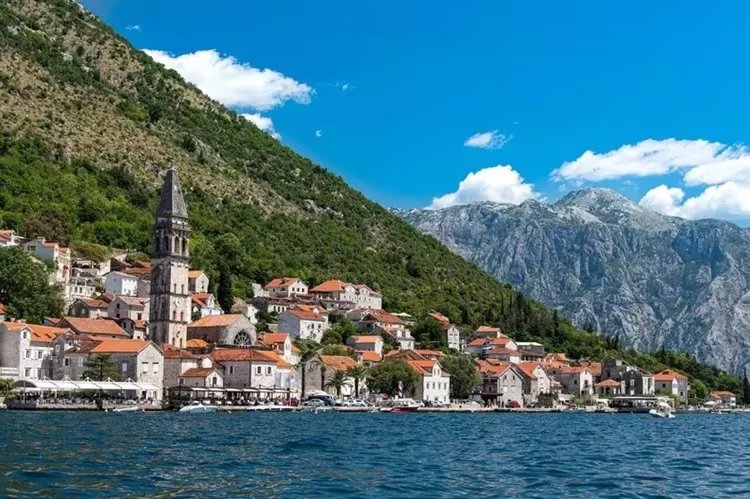
The small settlement of Perast is one of the most beautiful places in the Bay of Kotor, where it makes sense for tourists to drop in for a few hours to enjoy the atmosphere of antiquity. Fascinating mountain and sea landscapes are harmoniously combined with centuries-old buildings and structures. The architectural appearance of the city is made up of stone houses, palaces and cathedrals. Here, travelers will have the opportunity to walk along the winding narrow streets, where you can admire the original buildings, churches and towers.
Many neat historic mansions with originally designed facades show the Venetian architectural line. Walking along the embankment, tourists can see the Bujovic Palace. Its decorative porticoes, wrought-iron grilles, arched galleries, balustrades, bas-reliefs and sculptures will not leave anyone indifferent. The symbol of Perast is the Catholic one-nave church of St. Nicholas, which rises above the central square of the city. The bell tower of the basilica rises up to 55 meters.
oyster farm
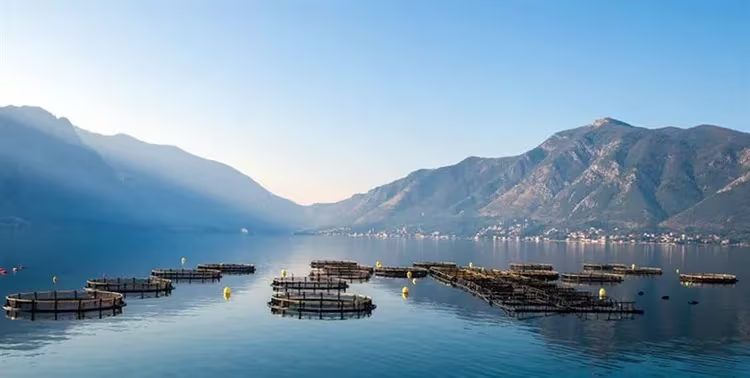
In the Bay of Kotor there are a dozen farms that grow oysters and mussels. The main catch of popular sea delicacies is carried out in the vicinity of the city of Perast. Tourists are offered to enjoy fresh seafood near the place of their production. They grow in special mesh baskets installed in floating containers with buoys.
The hospitable owner of one of the plantations will treat his visitors to grilled oysters with lemon and mussels. Exquisite seafood is served with a glass of fine white wine. Guests of the farm can take an active part in catching delicacies. Diving masks are at their disposal. After a great tasting, tourists are allowed to relax on sun loungers at the edge of the sea bay.
Bay of Kotor
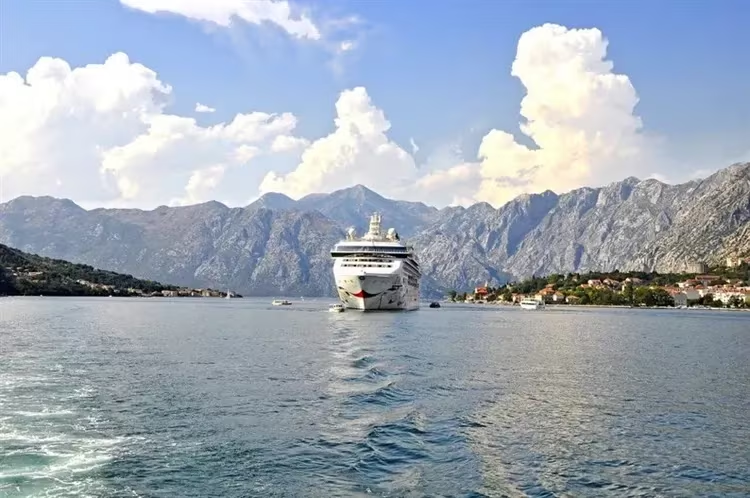
The Bay of Kotor is one of the visiting cards of the country. An interesting secluded corner is included in the list of popular places in the Balkan state, a visit to which will leave unforgettable impressions for independent travelers.
This amazing natural formation is an inflorescence of several bays connected by narrow straits. Majestic mountain ranges, emerald sea surface, sheer cliffs and curved shores create fascinating picturesque landscapes. The indented coasts of the Bay of Kotor are built up with original and atmospheric cities, famous for their architectural monuments, as well as historical and cultural heritage.
To get to know the largest bay of the Adriatic Sea, tourists can drive around it by car. The road runs along the perimeter of the bay. A trip to the seaside region promises to be an absolute pleasure, as travelers will enjoy amazing views of the coast and ancient cities.
This is the first day program.
Fortress Gorazda
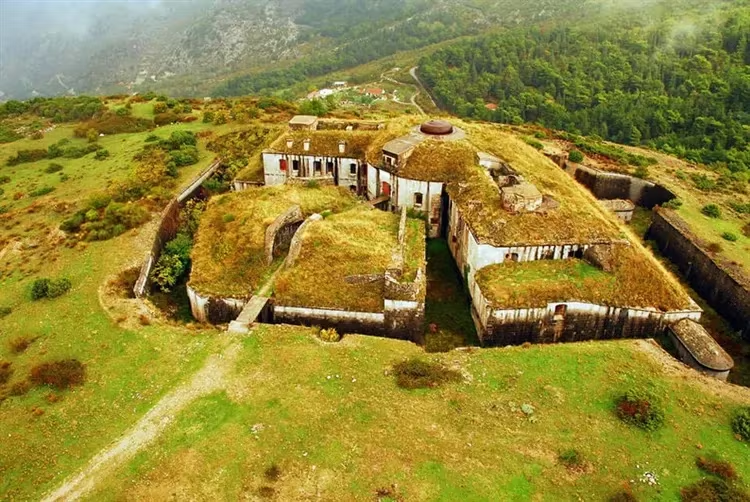
In the area of the Bay of Kotor, on the top of a hill, there is a unique fort Gorazda, built by Austrian engineers at the end of the 19th century. An outstanding defensive structure impresses with powerful and perfect elements of fortifications. The impregnable bastion is almost invisible from the outside. Most of the premises of the fort are dug inside the mountain. Ground buildings are disguised by nature itself and merge with the local landscape.
The fortress, which is a square in plan, is surrounded by a deep anti-personnel moat. The main armament of the citadel was four 120 mm cannons and heavy machine guns. Of interest is the inspection of rifle and battery positions, as well as internal passages, tunnels, rooms and bunkers of the fort. From the top of the citadel, there are breathtaking panoramic views of the bays and the surrounding mountains. You can get to the fortress from Kotor. You need to drive about 10 kilometers. The route goes up a narrow serpentine road.
Mount Lovcen
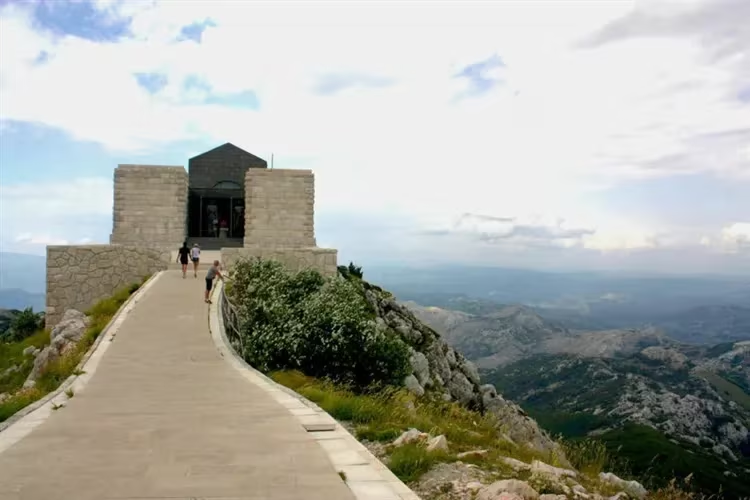
At an altitude of 1700 meters above sea level, the Lovcen mountain range rises, which closes the winding and extended coast of the Bay of Kotor. Rocky slopes have many depressions and cracks, which gives the mountain an original appearance. Independent travelers will have to climb by car along a narrow road with numerous sharp turns.
The difficult route is more than compensated by the bewitching landscapes. On the way there are magnificent coniferous forests, green meadows and spacious pastures. Huge rock formations hang over the road. Mount Lovcen is declared one of the symbols of the country. Its slopes and surrounding valleys are classified as a national nature reserve.
There are many valuable architectural monuments, churches and monasteries in the park. Most tourists rush to conquer the mountain to see the monumental mausoleum of the statesman and poet Peter Njegosh. The tomb crowns one of the peaks of Lovcen. A tunnel consisting of more than 400 steps leads to the memorial complex. Inside the mausoleum, you can see the granite sculpture of Njegosh, the marble sarcophagus and the gilded ceiling.
Don't choke
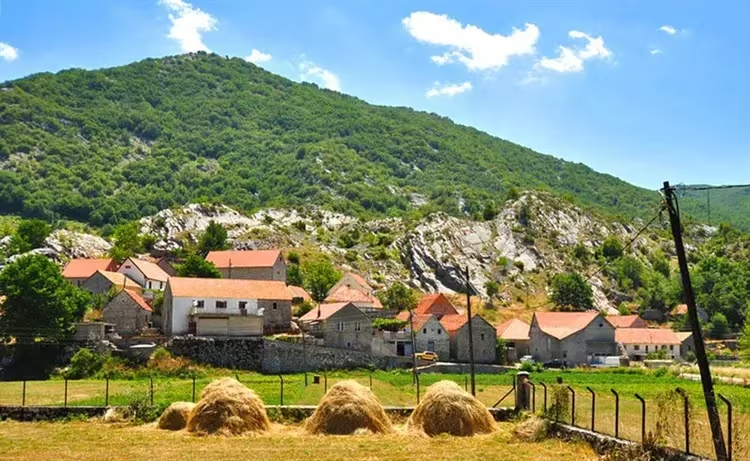
In a picturesque valley at the foot of Mount Lovcen is the village of Negushi. Having overcome the path along the high-mountainous winding road, and enjoying the amazing views of the Bay of Kotor, travelers meet with an original village. This atmospheric place is the birthplace of the Njegos dynasty, which ruled ancient Montenegro for over 200 years. The well-groomed village attracts attention with its stone architecture. The surviving houses reflect the cultural richness and ancient way of life of Montenegrins.
The locals are engaged in subsistence farming: they breed livestock, produce cheeses, grow grapes and dry meat. The famous Negush cheese and prosciutto wins the hearts and stomachs of even the most demanding gourmets. In Njegusi, guests can feel complete unity with nature. Coniferous forests, fragrant flowering shrubs, green meadows and mountain landscapes create a wonderful picture.
Cetinje
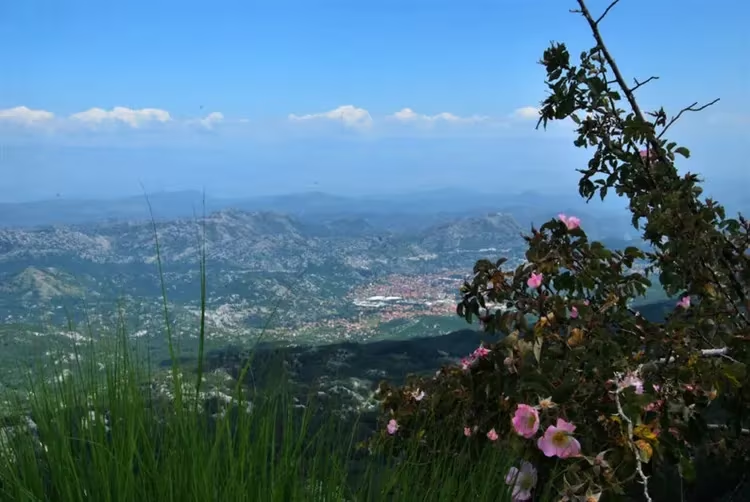
Surrounded by limestone mountains is the ancient capital of Montenegro – Cetinje. This small cozy town is ideal for a day trip. It continues to be the cultural cradle of the Balkan country. The spirit of architecture of the XVIII-XIX centuries reigns everywhere here. The old princely mansions with colorful facades and the palace residences of the former embassies give a peculiar historical entourage. The buildings housed museums, galleries, academies and various libraries.
Neat narrow streets abound with green areas with shady alleys, which favors a pleasant walk. The main asset of the city is a unique monastery complex built in the 15th century. In the stone buildings of the Orthodox monastery, the greatest Christian relics are kept – the imperishable hand of John the Baptist and a particle of the cross of the Lord.
Lipskaya cave
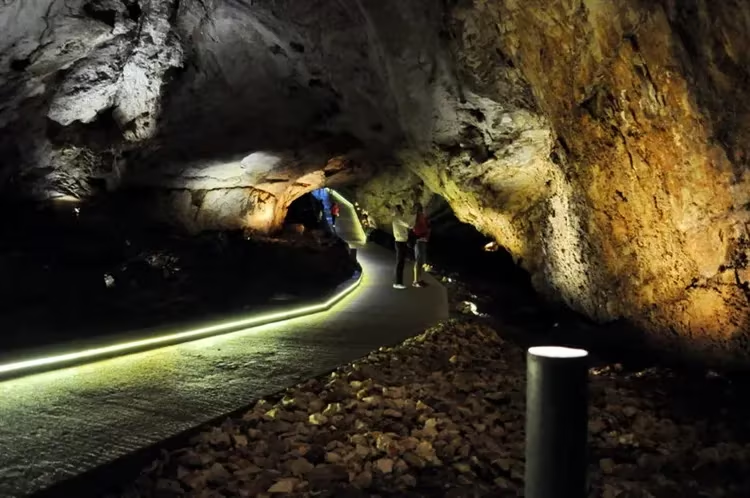
The kaleidoscope of impressions from the trip will be diversified by the amazing underground kingdom of the Lipskaya Cave. The natural attraction, located in the vicinity of the city of Cetinje, was discovered by archaeologists only in the 19th century. The length of the tunnels and spacious halls of the grotto reaches more than three kilometers. The Lipska cave, formed by the waters of the river mouth, impresses with its monumentality and beauty.
Its underground rooms are filled with karst deposits, huge boulders, as well as bizarre stalactites and stalagmites. Here, the year-round temperature does not exceed +12 degrees, so tourists should take care of warm clothes. The cave is equipped with spotlights, stone stairs and convenient walkways with handrails so that visitors can comfortably view and explore the underground grotto.
This ends the second day.
Herceg Novi
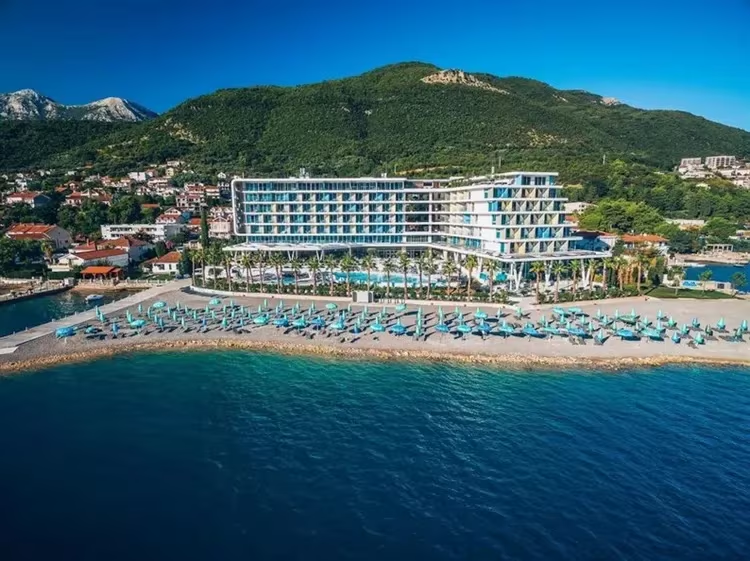
One of the pearls of the coast of the Bay of Kotor is the city of Herceg Novi. A picturesque cozy corner is located on a hill under the slopes of the Orjen mountain range. The resort welcomes its guests with ancient streets, abundantly planted with relict and fruit trees, palm trees, cypresses. The city consists of many stairs up and down. Stone structures with wooden balconies and orange tiled roofs blend harmoniously with modern villas.
Herce Novi has retained its rich historical appearance. Taking a walk, you can see several massive fortifications, the 17th century Clock Tower and the monastery complex of St. Savin. Of interest is the Orthodox Church of the Archangel Michael. Its facade is full of Byzantine and Gothic elements of architecture.
Zhanitsa beach
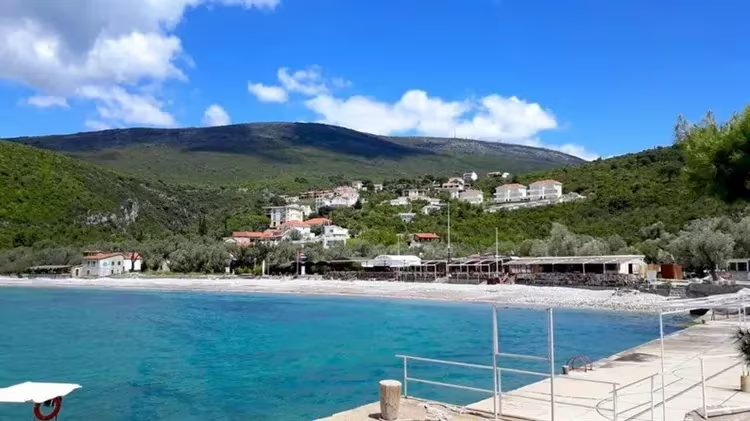
A short drive from Herceg Novi is the magnificent beach of Zhanitsa, covered with white pebbles. Here, vacationers can enjoy plenty of swimming in crystal clear sea water with an incredible turquoise hue. A secluded bay protects the coast from strong currents and cold winds. The coastline is surrounded by an olive grove that provides natural shade and refreshing coolness during the hot hours. The length of the beach area is about 300 meters.
Zanjica beach is equipped with sun loungers and umbrellas, changing rooms and showers, as well as parking for cars. Tourists are given the opportunity to sit on their own beach accessories. Cafes and restaurants are scattered along the shore. The ancient fortresses and tiled roofs of Herceg Novi are perfectly visible from the beach.
blue cave
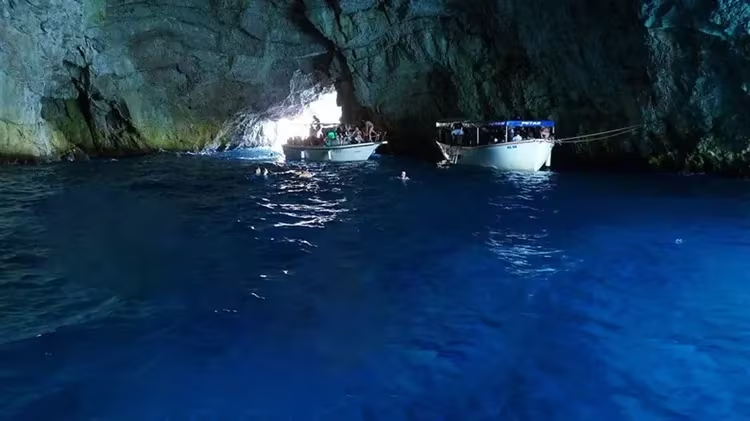
The list of amazing natural attractions of the Bay of Kotor includes the Blue Cave, a visit to which guarantees an indelible impression. You can get to this miraculous grotto of a sheer cliff only by sea. From the coast of the resort of Herceg Novi, pleasure boats regularly run to the cave.
An impregnable rock with steep slopes has a large cavity where boats with tourists swim. This bewitching natural creation was formed as a result of thousands of waves hitting porous stone walls. The height of the vaults of the grotto reaches 25 meters. Delight is caused by the captivating play of glare from crystal clear water. In the rays of the sun penetrating inside the cave, the sea bay acquires an ultramarine hue.
Fortress Mamula
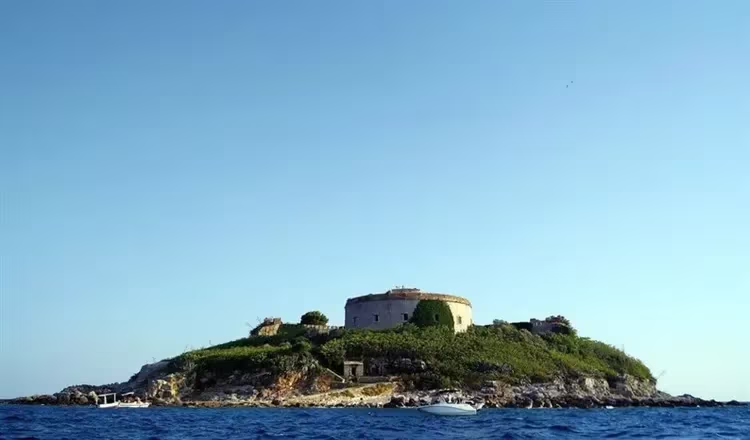
Going to contemplate the Blue Cave, a small uninhabited rocky island will appear on the way of travelers. An old Austrian fortress of the 19th century, named after General Lazar Mamul, was erected on a rounded piece of land. During both world wars, the fort was used as a prison. Today, the citadel attracts the attention of inquisitive tourists with its fortification defensive elements.
The monumental and solid building still has a high level of functionality and reliability. Here you can see powerful fortress walls, towers, loopholes, a courtyard and an extensive network of basements. The slopes of the island are cut by tunnels for submarines. The coast is overgrown with cacti, agave bushes and various subtropical plants, which indicates the abandonment of the territory.
It was day 3.
Tivat
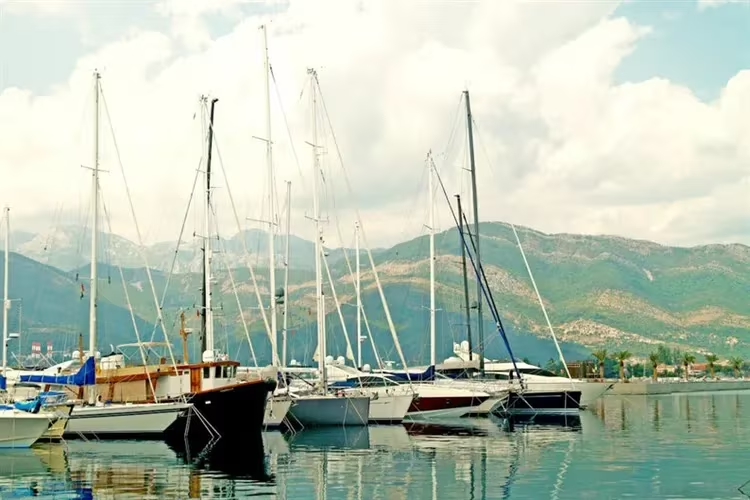
The modern and picturesque resort of Tivat is called the gates of the Bay of Kotor. The city with actively developing infrastructure has interesting places. Here guests can take a leisurely walk through the well-groomed beautiful quarters. Luxury hotels, shops and restaurants are lined up on a magnificent landscaped embankment, decorated with bright green palm groves.
Along the shore there are many benches with a view of the moored luxury yachts, majestic mountains and emerald sea bays. The decoration of Tivat is a 4-hectare botanical garden. It is a shady green oasis where exotic plant specimens brought from all over the world thrive side by side.
Various trees are planted along the alleys, among which firs, palms, pines, larches, cedars and magnolias stand out. The naval museum is popular. It contains interesting exhibits reflecting the maritime heritage of Austria-Hungary, Yugoslavia and Montenegro. Of particular interest is the 50-meter submarine, exhibited in the open.
Porto Montenegro
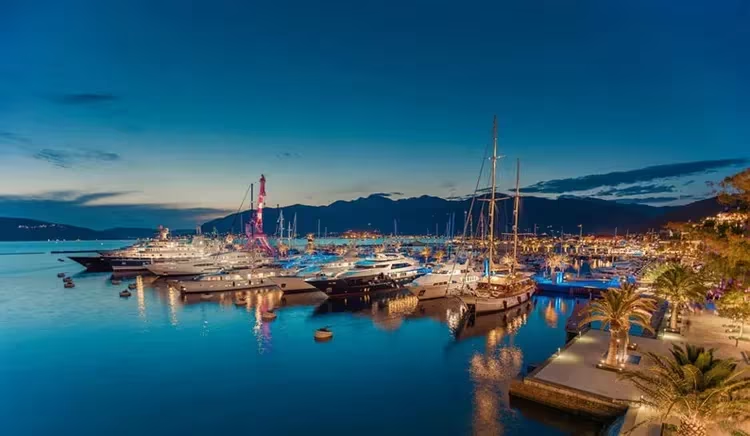
Getting acquainted with the sights of Tivat, tourists most likely will not pass by the elite area of Porto Montenegro. This fashionable place is a small prestigious town with its own unique infrastructure. A specially equipped harbor serves as a haven for yachts of various sizes and classes. A complex of luxurious buildings has been built here, designed for comfortable rest and accommodation for the owners of modern luxury ships.
The deep-sea marina is designed to moor hundreds of yachts ranging in length from 12 to 180 meters. On an area of more than 10,000 square meters, there are hotels, villas, yacht clubs, bars, banks, conference halls, sports fields, fitness centers and boutiques. Guests of the complex can freely walk along the streets of the prestigious quarter and admire the luxurious multi-deck courts.
Kalardovo beach
One of the best beaches of the Tivat Bay and the entire magnificent Boka Kotorska Bay is the coast of Kalardovo. This is a particularly comfortable and safe area for families. This is favored by soft velvet sand, shallow water and a gentle entrance to the sea. For cleanliness and a high level of service, the beach has been awarded the Blue Flag award for eleven times in a row. The remoteness of the beach area from crowded tourist areas contributes to the pristine environmental friendliness and calm atmosphere. You can easily get here by car without any difficulties.
The wide coastal strip, the length of which is 200 meters, is equipped with sun loungers and umbrellas, changing rooms and toilets, parking and catering establishments. Sports grounds are equipped for outdoor enthusiasts, as well as various water transport rentals. Young vacationers will appreciate the children‘s slides, swings and sandboxes. Kalardovo beach is located one kilometer from the air harbor of Tivat. From the shore it is interesting to observe the regular takeoffs and landings of aircraft.
Island of Flowers
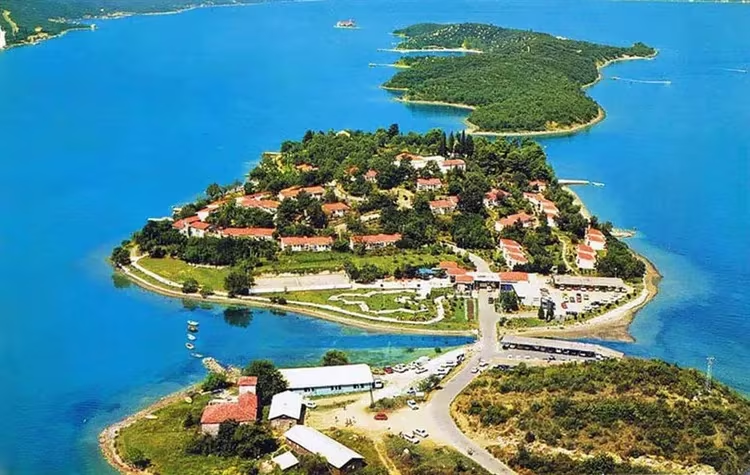
In the immediate vicinity of Kalardovo beach lies the beautiful Island of Flowers. It is small: 300 meters long and 200 meters wide. The picturesque piece of land is connected to the mainland by a narrow isthmus, which is covered with water only during high tide.
The island got its name because of the abundance of various flowering Mediterranean plants on it. Lush greenery and bright colors of colors of all shades of the rainbow delight the eyes of tourists. The island attracts attention with its ancient buildings and wonderful places for recreation. Here you can see the ruins of the Orthodox monastery of the Archangel Michael.
The monastery was built in the VI century and later destroyed by the Venetians. Of the former monastery complex, only the Trinity Church has been restored. A large area of the island is occupied by a magnificent beach, surrounded by lush sprawling vegetation. The coast is a series of sandy and pebbly areas. Under the canopy of trees, vacationers will find a secluded shady corner even in the most summer heat.
It was day 4.
Piva Lake
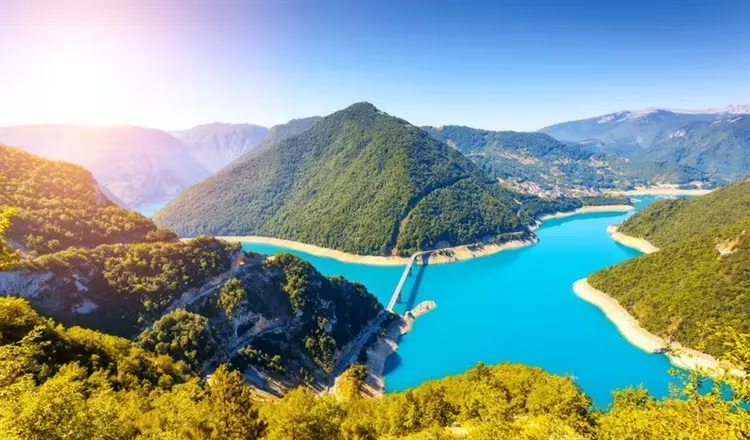
Independent travelers are advised to go on a trip to the artificial Piva Lake, located far from the coastal resort towns on the border with Bosnia and Herzegovina. The man-made reservoir, formed as a result of the construction of the dam, harmoniously fits into the surrounding natural landscape. The length of the reservoir is more than 40 kilometers.
The feeling of the pristine beauty of this attraction does not leave tourists throughout the trip. Mountain landscapes, green alpine meadows, coniferous and beech forests create a charming picture. Hills and rocks, overgrown with dense vegetation, rise above the smooth surface of the purest emerald lake. This fertile place will allow vacationers to gain positive emotions, mental and bodily strength, as well as escape from the dullness of everyday life.
Frog
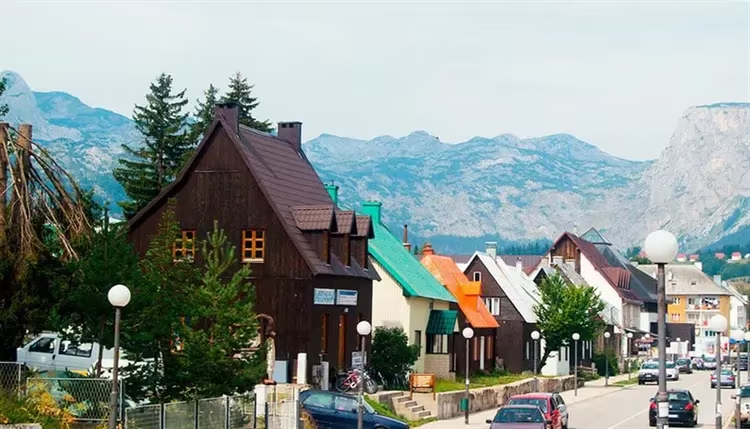
Hospitably meets travelers one of the highest cities in Europe – Zabljak. This is the pearl of northern Montenegro. The main interest for tourists are magnificent natural attractions. The resort is located at the foot of the majestic Durmitor Mountain at an altitude of about 1500 meters above sea level. A small town consists of several streets with cozy cottages.
Picturesque mountain slopes hang over dense coniferous forests and meadows with green herbs. Amazing lakes, rivers, caves and canyons give the region a special charm. Zabljak offers its guests all kinds of exciting activities for body and soul at any time of the year. Fans of active, extreme and contemplative recreation can raft along mountain rivers, climb rocks, swim in a crystal clear lake, paragliding, ride bicycles or take leisurely walks through the forest thickets.
Durmitor National Park
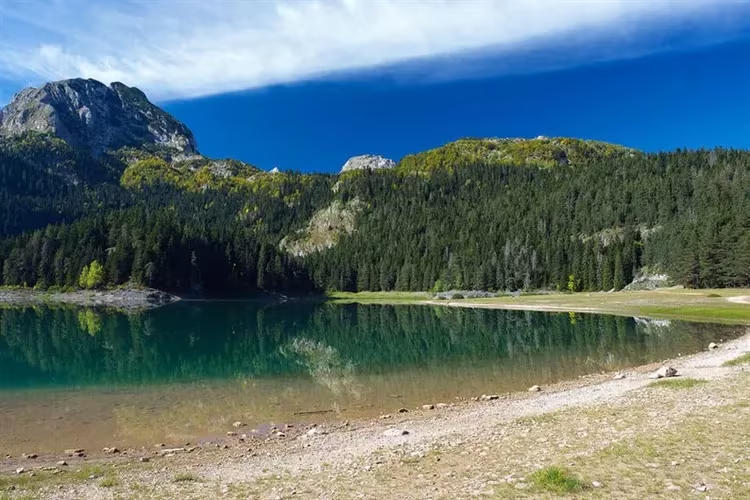
An indelible vivid impression is guaranteed by a unique nature reserve – the Durmitor National Park. This is one of those sights of the Balkan country, by which it would be an unforgivable mistake to pass. A long, difficult alpine road with a large number of winding narrow sections leads to the park. The region attracts tourists with its pristine and breathtaking landscapes. Mighty mountains with sharp peaks, glacial lakes, deep canyons, vast alpine meadows, centuries-old coniferous forests and impregnable rocks amaze the imagination with their immense beauty.
The Durmitor mountain range consists of many peaks, reaching upwards into the boundless blue sky for more than 2000 meters. The slopes of the plateau are covered with evergreen forest groves. The territory of the reserve is spread over 390 square kilometers. The deep-water Black Lake is the most popular. The emerald waters reflect high mountain ranges and sprawling relic spruce trees.
Bridge of Dzhurdzhevich and canyons of the Tara rivers
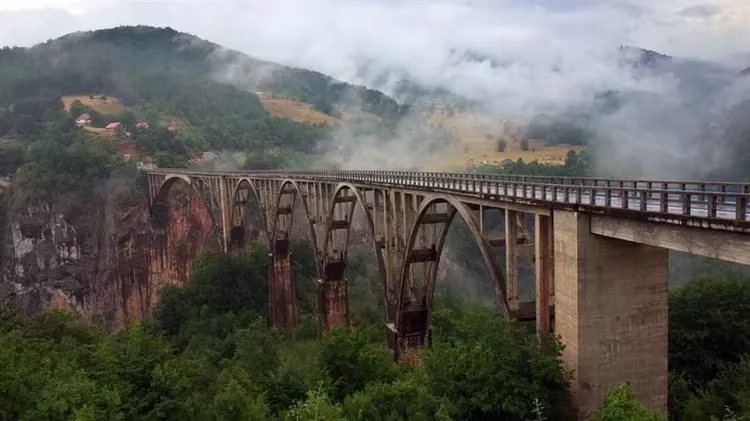
The main man-made attraction of the Durmitor reserve is the famous Dzhurdzhevich five-arched automobile and pedestrian bridge. It is named after a local farmer whose farm was located near the bridge. The monumental concrete structure was erected before the outbreak of World War II. The structure is over 300 meters long.
A magnificent creation of engineering thought hangs over the deep canyon of the Tara River at a height of 172 meters. Sheer cliffs and high mountains, overgrown with dense forest, will appear in all their glory. At the bottom of the green valley, the seething stream of the Tara River flows in a narrow strip. Tourists can enjoy the panorama of the grandiose canyon from a bird's eye view using the zipline attraction.
Moraca river canyon
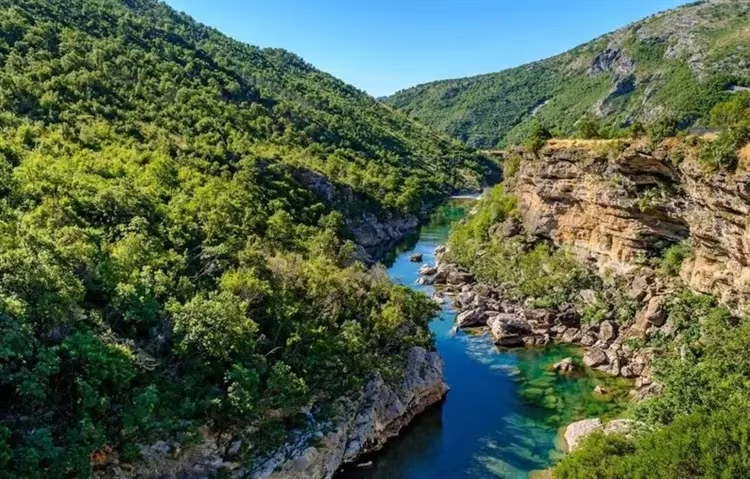
The country is famous for a large number of mountain rivers that organically fit into rocky landscapes. One of the picturesque natural corners of the country is the canyon of the Moraca River. A winding narrow road winds along a swift stream of emerald-colored water.
The road runs through numerous tunnels carved into the harsh impregnable rocks. The total length of the water artery is more than 100 kilometers. For millions of years, the Moraca River, which has a wild, unbridled character, diligently drilled powerful karst rock formations.
During the trip, tourists can stop at makeshift viewing platforms to enjoy the contemplation of the deep gorge, steep cliffs and majestic mountain ranges. The unique charm of the area is given by the pristine green forest. In the river valley there is an Orthodox monastery complex with several Byzantine-style churches, monastic cells and outbuildings.
Monastery Ostrog
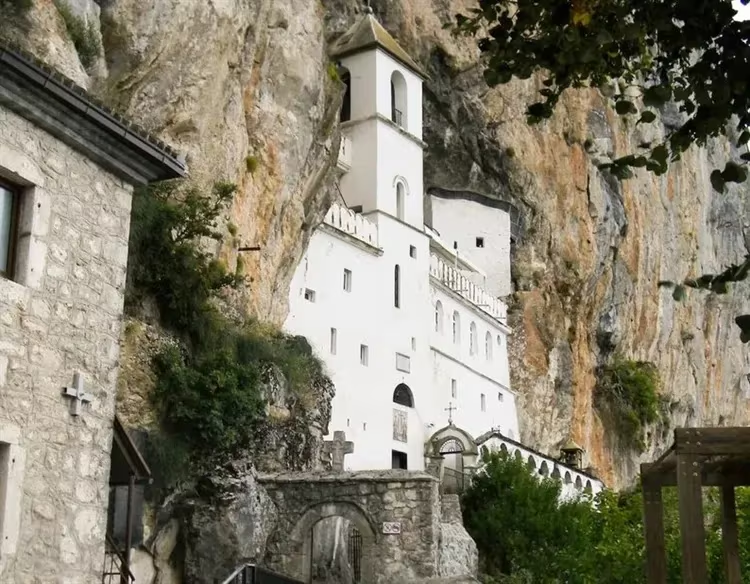
Due to its unique architectural appearance and location, it attracts numerous pilgrims and travelers. Independent tourists should not miss the opportunity to visit the third most important Orthodox shrine in the world. The road to the monastery is led by a winding serpentine up the edge of a deep abyss. The current male monastery is striking in its splendor.
It is literally carved into a niche of a sheer vertical rock at an altitude of 900 meters above sea level. The facade of the three-story building is made in snow-white colors and exquisitely decorated with mosaic frescoes, arches and galleries. The founder of the monastery is the Serbian saint Vasily Ostrozhsky. His imperishable relics are revered Christian relics that have miraculous powers. Pilgrims come here to ask for physical and mental healing.
It was day 5.
Ulcin
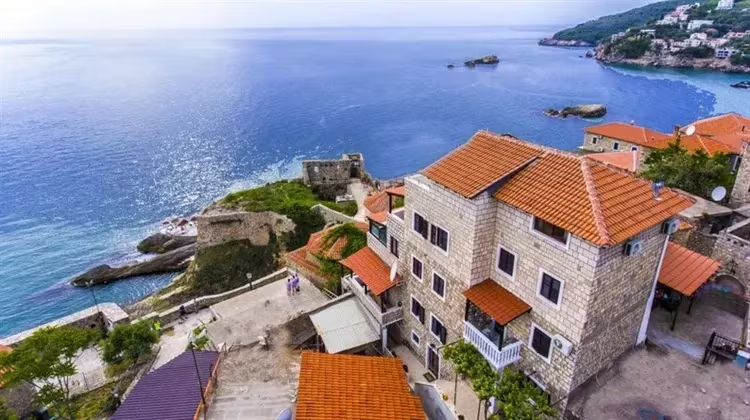
The southernmost sunny resort on the Adriatic coast of the country is the city of Ulcinj. Its ancient stone houses, neatly scattered on high hills, side by side with modern low-rise hotels. Throughout its centuries-old history, this original settlement was ruled by the Greeks, Romans, Venetians, Ottomans and Mediterranean pirates.
The architecture of the resort is a mixture of oriental and European styles. Well-groomed streets are planted with olive groves, flowering shrubs and centuries-old lush trees. In the city you can see six mosques, as well as a church and an Orthodox church. Connoisseurs of world culture will be interested in seeing the mighty citadel, behind the fortress walls of which there are narrow medieval quarters with ancient buildings.
Noteworthy are the Venetian palace, the former slave market, the archaeological museum and the Balchis tower. Ulcinj is famous for its magnificent sandy beaches, equipped with everything necessary for a comfortable stay. The length of the coastline is about 30 kilometers.
Ada-Boyana Island
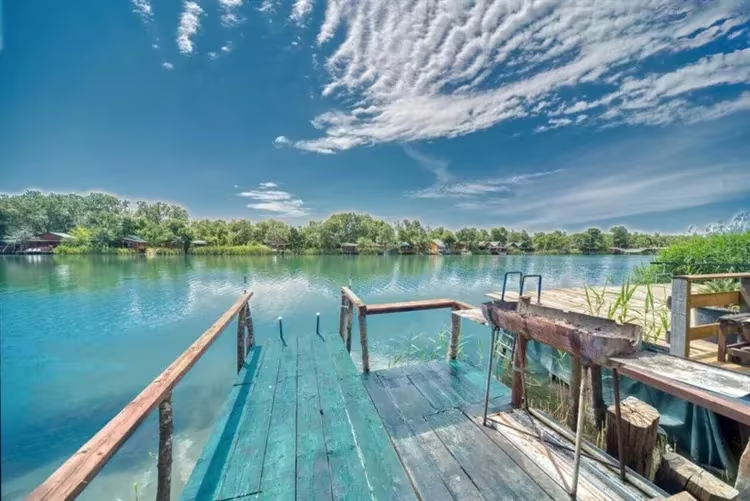
In the vicinity of Ulcinj, the stunning island of Ada Bojana stretches out between two branches of the river and the Adriatic Sea. A small area of triangular land is famous for its pristine nature, for which it is nicknamed the European Amazon. Many relict subtropical and Mediterranean plant species grow here.
The territory of the island is occupied by hotel complexes, bungalows and cozy restaurants. The local sunset gives tourists an unsurpassed palette of colors, when the sky, land and sea converge in one line. The main asset of Ada-Boyana is the local excellent wide beach. The amazing coastline is covered with coral and shell sand.
It contains active mineral substances that favor the treatment of diseases of the musculoskeletal system of the human body. The island has created conditions for windsurfing, sailing, diving and other water activities.
Bar
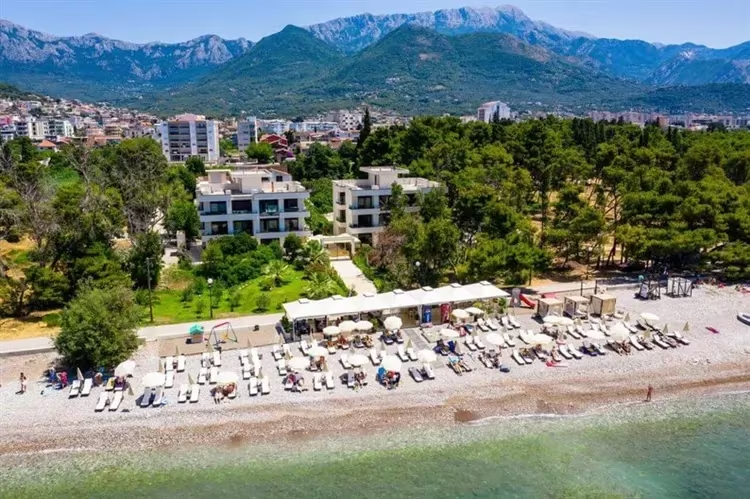
Popular destinations include the large port city of Bar, located on the Adriatic coast. This is a resort with a developed infrastructure, historical significant places and magnificent beaches. Surrounded on three sides by sheer cliffs, the Old Bar has been turned into an open-air museum.
Numerous churches, stone aqueducts, palace buildings, and residential buildings carefully preserve evidence of the Middle Ages. Architectural splendor appears surrounded by high mountain ranges. The city is immersed in the greenery of orchards and olive groves. The wide new quarters of the resort are built up with five-story residential buildings and shopping malls.
Among the attractions of Bar, it is worth highlighting the palace of King Nikola with a chapel and a botanical garden. Of interest are the ruins of temples erected in the period of the XIII-XV centuries. The main expressive Orthodox shrine is the Cathedral of St. John Vladimir. This majestic snow-white temple with gilded domes and high bell towers attracts a huge number of tourists and pilgrims.
It was day 6.
Skadar Lake
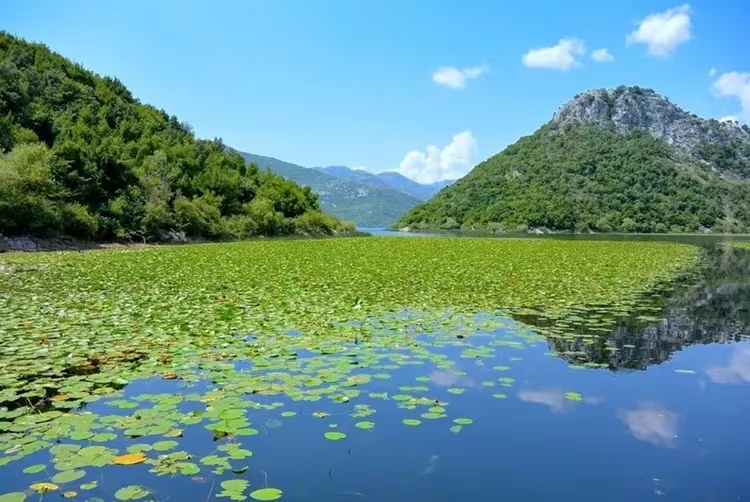
Lake Skadar is the largest freshwater body of the Balkan Peninsula, framed on all sides by majestic mountain ranges. Amazingly beautiful place perfect for a day trip. The lake has a worldwide popularity due to the diversity of flora and fauna. More than 200 species of birds and animals live here.
Exotic rare pelicans and cormorants, ducks and herons, as well as giant hippos will please vacationers with their appearance. The mirror-like water surface is covered with a carpet of yellow water lilies and white lilies. The coastline of the reservoir is indented by numerous bays, gulfs and swamps. On the shores of the lake there are ancient settlements with characteristic stone houses and mills.
Rijeka-Crnojevica
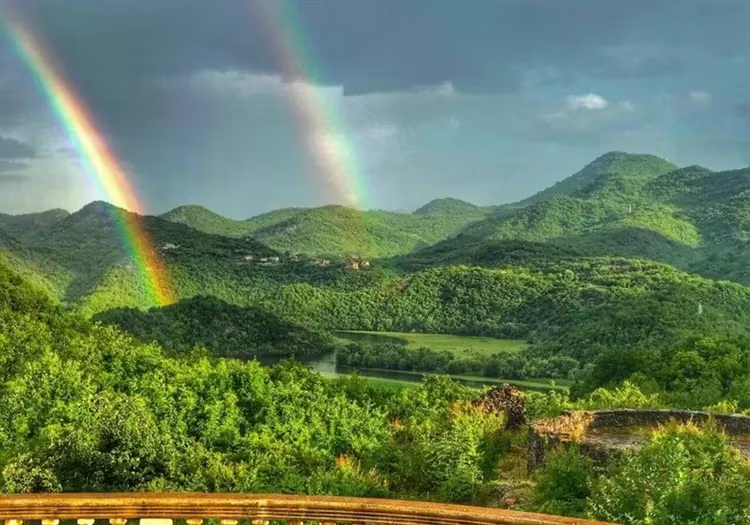
At the foot of the green rocky hills on the border of Lake Skadar is the tiny village of Rijeka Crnojevića. About one and a half hundred people live here permanently. A shallow river winds its way around banks lined with old stone houses with orange-tiled roofs.
Tourists come to Rijeka Crnojević to relax in the bosom of pristine nature in peace and quiet. Here it will be pleasant to take a walk along the restored embankment, where there are alleys with lush vegetation and benches, as well as cozy restaurants. The main symbol of the village is a stone bridge with two spans, built in 1853.
Podgorica
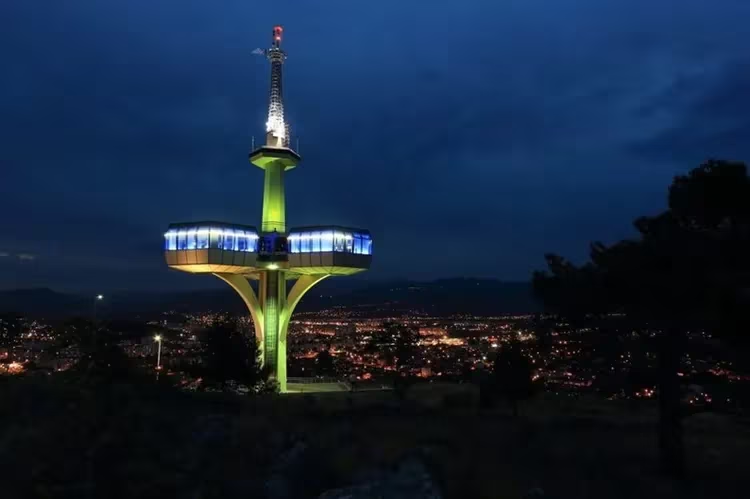
Podgorica is the largest settlement of the Balkan state. It is located 60 kilometers from the Adriatic coast. The capital occupies a flat area surrounded by a mountain valley. The urban landscape is complemented by the rivers Moraca and Ribnica. Podgorica meets auto travelers with a diverse cultural program.
Here you can get acquainted with interesting historical sights and memorial monuments, walk along picturesque shady parks, wide boulevards and spacious squares, as well as visit shopping malls, museums and galleries. Christian and Muslim shrines, sculptures by A.S. Pushkin and V.S. Vysotsky, palaces and bridges – all this will be found on their way by inquisitive guests of the city.
The Orthodox Cathedral of the Resurrection of Christ deserves attention. The majestic architecture, high bell tower and luxurious interior decoration of the temple make an indelible impression on visitors. Tourists should visit the Church of St. George to feel the spirit of antiquity. The cubic shrine belongs to the 11th century. The old city and the new districts of Podgorica are connected by the grandiose cable-stayed bridge of the Millennium.
It was day 7.
Saint Nicholas Island
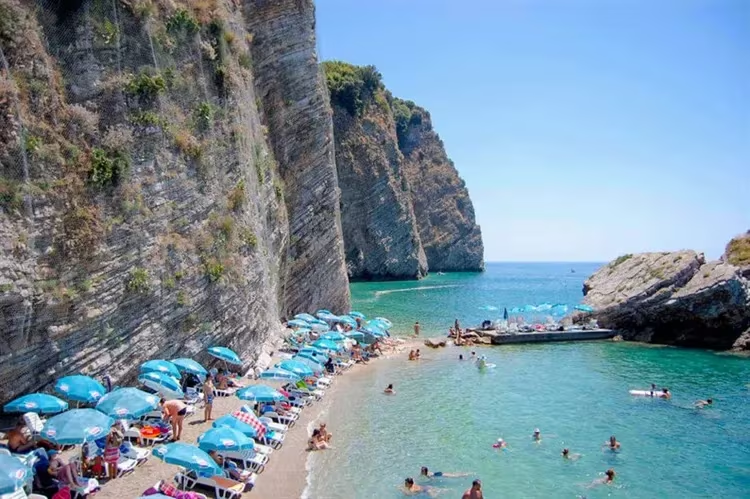
One kilometer off the coast of the popular tourist resort of Budva lies the beautiful island of St. Nicholas. It can only be reached by boat or boat. The island owes its name to the medieval church of St. Nicholas.
The rocky piece of land, overgrown with dense vegetation, has several secluded bays. Here you can spend a wonderful day, enjoying swimming in the crystal turquoise bays of the Adriatic Sea and contemplating the pristine landscapes. The indented coastal strips are relatively sparsely populated.
The beaches are equipped with the necessary infrastructure: there is a rental of sun loungers, changing rooms, showers and cafes. Huge stone boulders rising above the water amaze the audience with their bizarre shapes. The coniferous wooded area is home to deer, moufflons and hares, as well as various birds nesting.
It was day 8.
St. Stefan
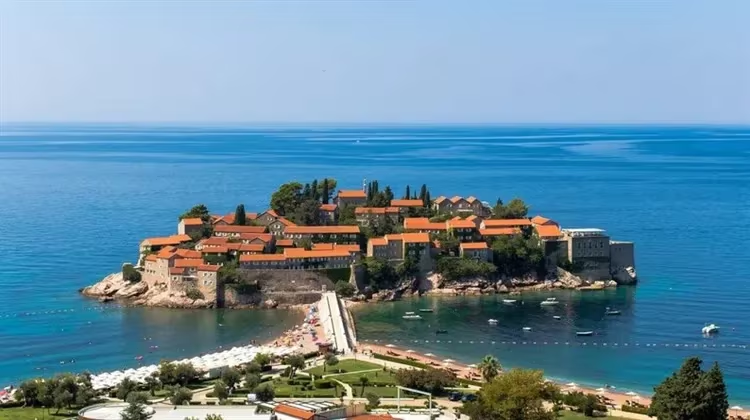
The wonderful island of Sveti Stefan is one of the most popular places on the Budva Riviera. It is connected to the coast by an artificial embankment, the length of which is 100 meters. Sveti Stefan is a unique fashionable resort where wealthy people and world famous personalities come to relax.
A small island is built up with houses with bright tiled roofs. Luxurious apartments of first-class comfortable hotel complexes are located within the walls of ancient buildings. The external architecture of the island has been preserved in its original form. As part of an excursion group, vacationers can appreciate the island-hotel from the inside.
A walk along the prestigious green narrow streets along low-rise buildings and churches leaves a pleasant impression. Opposite the island of Sveti Stefan, a small village of the same name is located at the foot of high mountains with magnificent sandy beaches, villas and hotels of different star ratings. Here, vacationers can retire in a shady green park, admiring the panorama of the island.
Monastery Praskvica
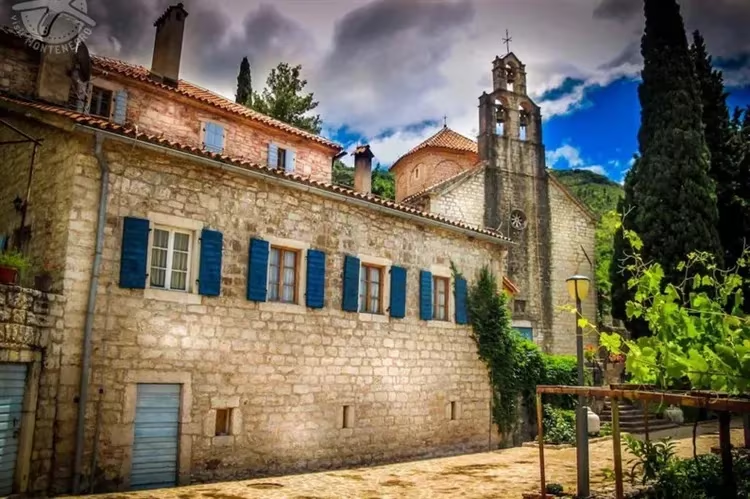
Not far from the island of Sveti Stefan is a typical example of Orthodox architecture for the Balkan Peninsula – Praskvitsa Monastery. Its name comes from the word “praskva”, which means peach. A spring flows near the shrine, the waters of which exude fruity aromas.
Behind the silvery ligature of the branches of olive trees, the peaks of cypresses and sprawling fig trees, the silhouettes of the stone buildings of the monastery appear. The riot of lush Mediterranean flora is combined with peaceful silence and the chime of bells. Here you can feel the infinity of time. The first written mention of the monastery dates back to 1307.
The monastery complex consists of churches, ancient cells and outbuildings. The cells contain an impressive museum collection of unique valuable items: manuscripts, books, church utensils, icons, weapons, letters and seals of royalty.
Monastery Rustovo
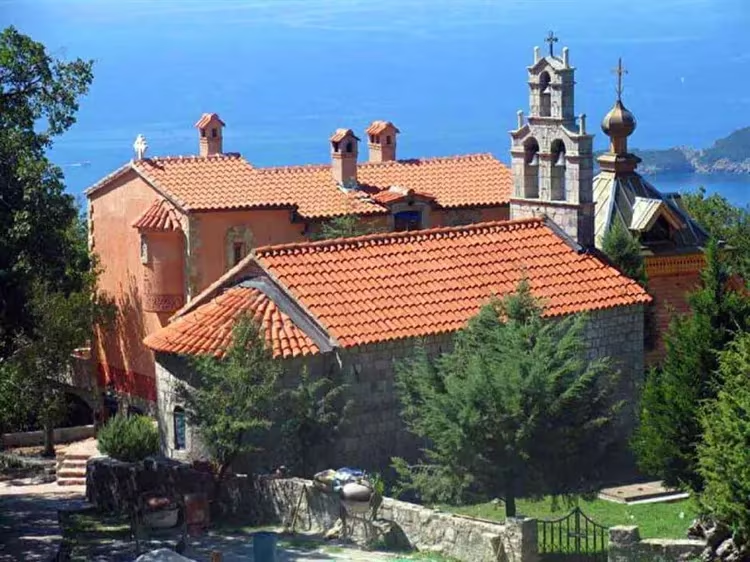
Among the Orthodox sacred sights, a significant spiritual place is occupied by the Rustovo Convent. It is located high in the mountains near the village of Sveti Stefan. The history of the founding of the monastery is connected with long-standing tragic events of the XIV century. Here, the punitive troops of the Hungarian king Louis brutally killed 1,400 representatives of the Pashtrovich tribe, who professed the Christian faith.
In memory of the fallen martyrs for Orthodoxy, a monastery complex was formed at the site. Visitors to the Rustovo monastery will see a complex of sacred stone and wooden structures erected in different periods of time. The architectural kaleidoscope represents three small churches: the Assumption of the Blessed Virgin Mary, the Church of the Holy Royal Martyrs and the Church of St. Benedict.
Well-groomed territory is buried in numerous green spaces. The hospitable sisters invite travelers and pilgrims to the refectory in order to taste the blessed food. In the monastery shop, tourists can buy balms, oils, teas and tinctures.
Mount Chelobrdo
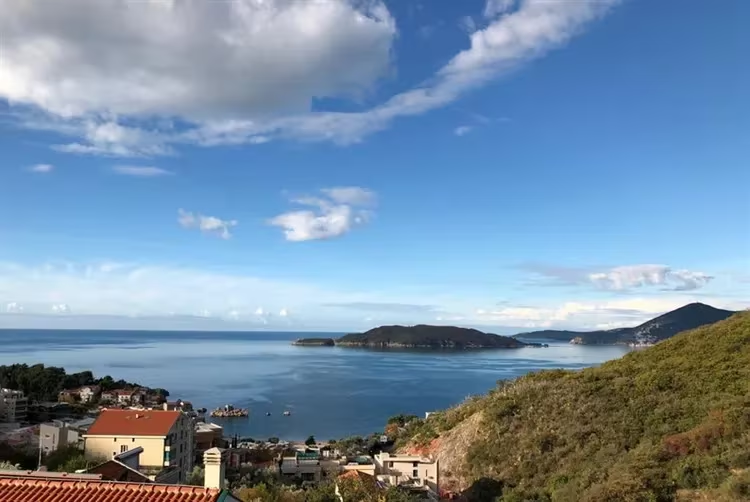
Amazing panoramic views of the Adriatic Sea, majestic mountains, the Budva Riviera and Sveti Stefan open from the observation deck of the mountain in the village of Chelobrdo. You can get to the top by car along the mountain road leading to the Praskvica monastery. The landmark is the monument to the victims of World War II and a spring with sweet water.
From the mountain, tourists can watch a fabulous sunset and an amazing moment when the sun hides behind the sea horizon. You can overcome the path to the top of the Chelobrdo hill on foot along the old stone road “Egor Stroganov”. According to legend, a one-armed Russian monk laid out a three-kilometer path on his own.
It was day 9.
Budva and surroundings
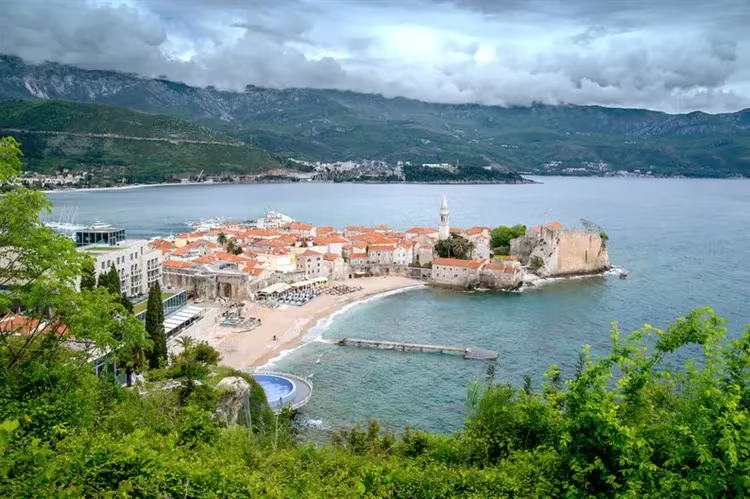
The resort gem is the seaside town of Budva. This picturesque place attracts vacationers with a developed hotel infrastructure, kilometers of luxurious beaches, various architectural monuments and an abundance of entertainment for every taste. The cultural program should include a full tour of the Old Town, surrounded by a mighty fortress wall.
Narrow cobbled winding streets among the stone Venetian buildings reveal the grandeur and beauty of the medieval city. It is impossible not to hear the beautiful chime of the bells of the Catholic Church of St. John the Baptist. Of interest is the Orthodox Church of the Holy Trinity, built in the Byzantine style of white and red stone. The modest exterior of the shrine is offset by luxurious interior decoration.
In Budva and the surrounding villages there is a wide selection of interesting places with natural and man-made attractions. Tourists can satisfy their curiosity by visiting fortresses, small-pebble beaches and monasteries. The measured swaying of the waves, the opening mountain landscapes and palm groves will help you enjoy a walking tour along the embankment.
This is day 10. Have a nice rest and bright impressions.