
What to see in Munich in 1 day on your own – route, photo, description, map
The capital of Bavaria – the city of Munich, spread out on the banks of the Isar River near the Alps, embodies a unique collection of architectural and cultural values inherited from its rich history. The old center impresses with the sophistication of the facades of public buildings, the majesty of churches, the beauty of squares, monuments and fountains. Almost a hundred museums open their artistic creations, historical artifacts and scientific achievements to visitors. Once in the capital of Bavaria on a business trip or passing through, it does not hurt you to know what to see in Munich in 1 day on your own. An overview of iconic sights will help you plan a tour of the city, where the old is harmoniously intertwined with the present.
Nymphenburg Palace
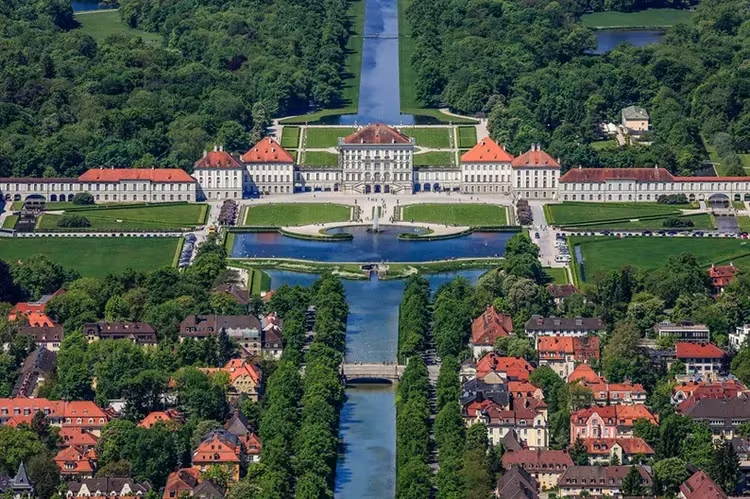
One of the main tourist sites of the city, to which thousands of visitors aspire to see an architectural structure of amazing beauty and the highest historical value. In fact, this is a huge palace and park complex, which includes a galaxy of magnificent buildings; picturesque alleys, lawns, various reservoirs and a botanical garden. Spreading its possessions over hundreds of hectares, the complex can be called the German Versailles in terms of wealth and luxury of design.
Interior
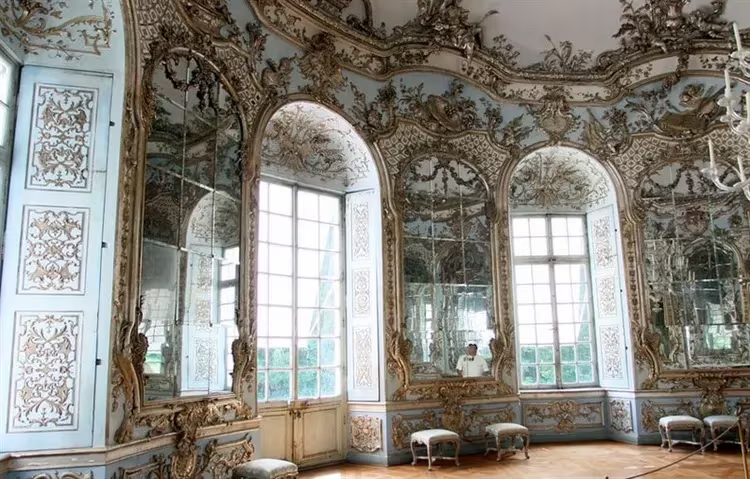
The design of the interior and exterior interiors of the main palace is a symbol of brilliance, luxury and magnificence. Everything here strikes with the scope of incredible wealth, from the entrance doors to the last exhibits of the inspection. The majestic architecture of the exterior decoration with beauty and splendor echoes the luxurious splendor of the interior decoration of the palace rooms and ceremonial halls.
Ceremonial Hall
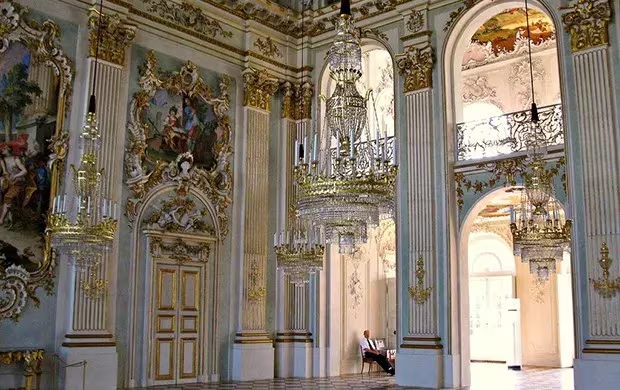
The main premises of the palace – served as a venue for official receptions, festive balls and other court entertainment. The decoration of the walls and ceilings of the hall in the Bavarian rococo style strikes the imagination with the elegance of stucco and the unusually lively beauty of the frescoes made by the best German painters of the 17th century.
Gallery of beauties
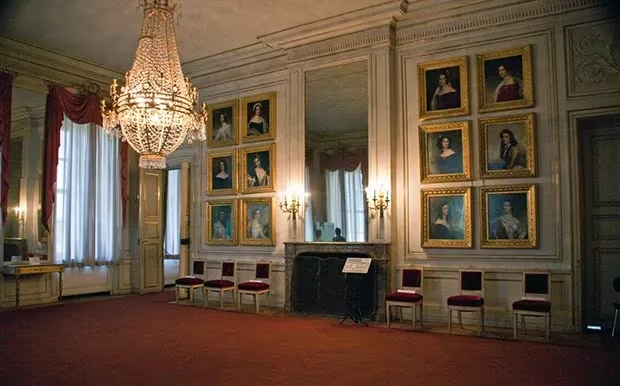
The gallery of beauties, created on the initiative of King Ludwig I, who had a reputation as a ladies' man, is a kind of collection of portraits of Bavarian beauties of different classes. The images of 36 ladies were captured by the famous court painter of the 19th century, Karl Stieler, who started work on the next image after the personal choice of the king. The owners of charming female images had different social status: representatives of royal blood coexist here with a dancer from a shoemaker's family – Lola Montes.
This passionate adventuress, whom Ludwig was fond of, can be compared in terms of cunning and clever blackmail with the famous Mata Hari. Lola was honored to become the prototype of the heroine of the famous Conandoyle story “A Scandal in Bohemia”.
Crew Museum
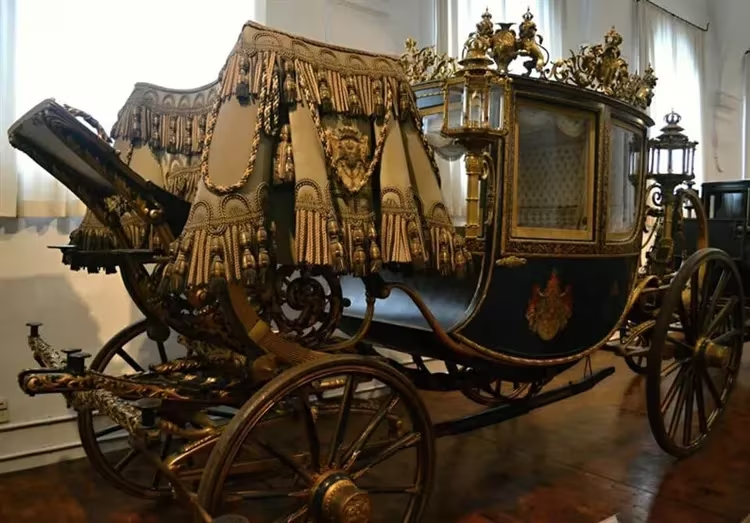
The Carriage Museum, located in the premises of the former palace stables, is a unique collection of luxurious traveling carriages, fiacres, chaises, and sleighs. Each of the specimens presented here is a true work of the carriage art of Bavaria: the extraordinary elegance of the lines combined with the rich luxury of the finish is genuine admiration. To see the whole complex, you need to devote more than one day to this.
German Museum
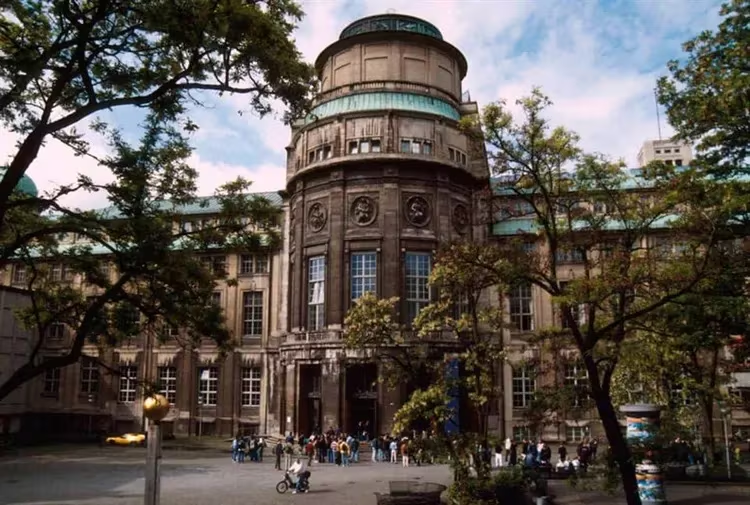
The building is located in the heart of the city on the museum island. It contains more than 100 thousand copies of scientific and technical achievements from the Stone Age to modern technology. Among the exhibits, many rarities and engineering inventions are presented in their natural form. In the halls of the museum, passenger and military transport, energy, medicine and household appliances can be traced in the development. It is interesting to see the first calculating machine, the dynamo, the submarine, Karl Benz's first car and the first motorized aircraft.
The museum has a Planetarium, which hosts sessions at 12.00 and 14.00 daily and at 16.00 on weekends, there are 2 observatories. Tourists who have climbed to the observation deck equipped on the top floor can see the historical part of the city in all its glory. The museum is open for visits daily from 9.00 to 16.00.
Marienplatz square
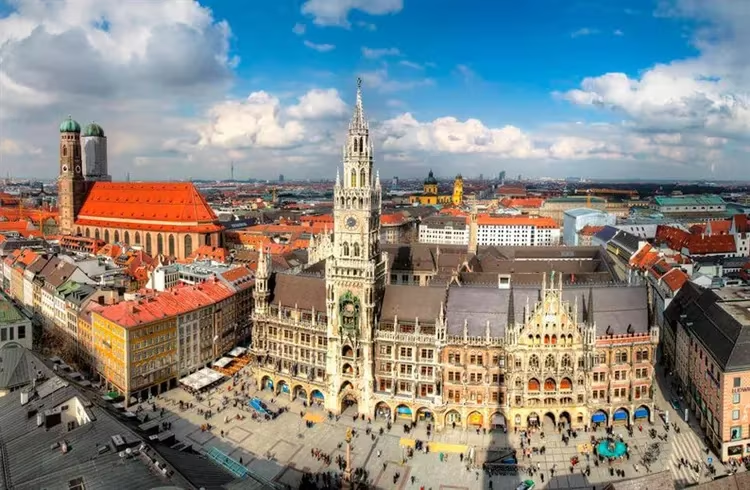
The name of the main square – Marienplatz comes from the column of the Virgin Mary, erected in 1638 in honor of St. Mary, the patroness of the city, who protected it from the siege of the Swedes during the 30-year war. A high marble column is completed by a gilded bronze statue of the Blessed Virgin Mary with little Jesus. In her right hand she holds a scepter – a symbol of power.
The pedestal is surrounded by four bronze sculptures: a lion, a lizard, a dragon and a snake, symbolizing the punishments sent to people for their sins – war, plague, famine and unbelief. The attention of tourists is attracted by the ancient Fischbrunnen fountain, towering in front of the main entrance to the New Town Hall. Restored after the Second World War, it consists of a pool in the center of which rises a column topped with a bronze fish, and three sculptures of butcher boys sitting around the column pour water from buckets.
There is a legend that by dropping a wallet into the water of the fountain, it will attract prosperity and good luck. In the Middle Ages, knightly tournaments and public executions were held on this square, then it became a large food market, and now it serves as a venue for celebrations and a cult tourist site. The square can be reached by metro U3, U6 to the Marienplatz stop.
Old Town Hall
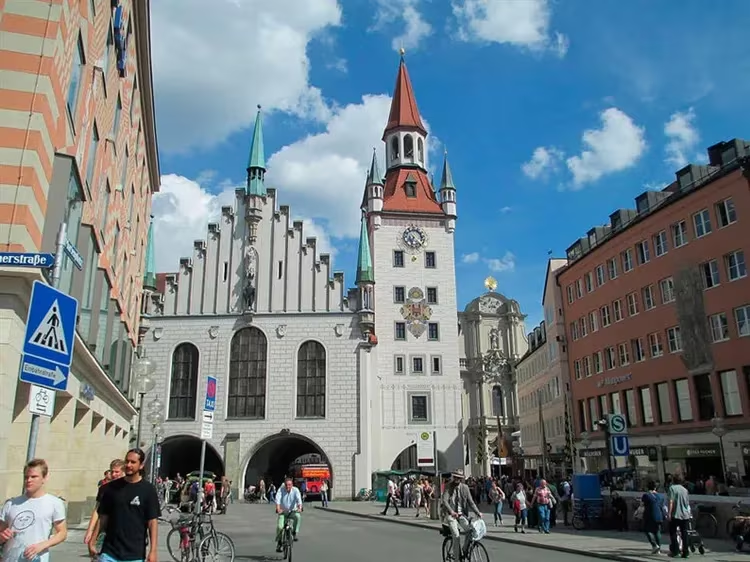
The historic building of the Old Town Hall, which has adorned Marienplatz since the 15th century with its late Gothic architecture, is called a masterpiece of architecture. It appears before your eyes in the form of a small fairy-tale castle with numerous turrets. Its snow-white façade bears the coat of arms of the Electors of Wittelsbach with the double-headed eagle of the German Empire.
The central façade is highlighted by the sculpture of Ludwig of Bavaria, a native of Bavaria who became the first Chancellor of Germany. The interior of the festive hall impresses with coats of arms on the walls, wall paintings and figures of dancers. A grandiose circular chandelier became a bright detail of the ceiling, trimmed with carved wooden panels. If the building of the town hall has repeatedly changed its appearance due to reconstructions over 600 years, then its tower, rising to 56 meters, has remained unchanged since the 15th century after restoration. The tower attracts the eye with a moon clock with signs of the zodiac around the perimeter, which is interesting to observe the phases of the moon.
The tower bell announces the time every half an hour, and every day at 11.00 its ring lasts 3 minutes. Inside the tower is the property of the toy museum with a historical collection of 200 years. The Old Town Hall was the seat of the Bavarian parliament, which in 1874 moved to the newly built New Town Hall. Today, its building hosts ceremonial events, official receptions and concerts. It is open to the public only on public holidays.
New City Hall
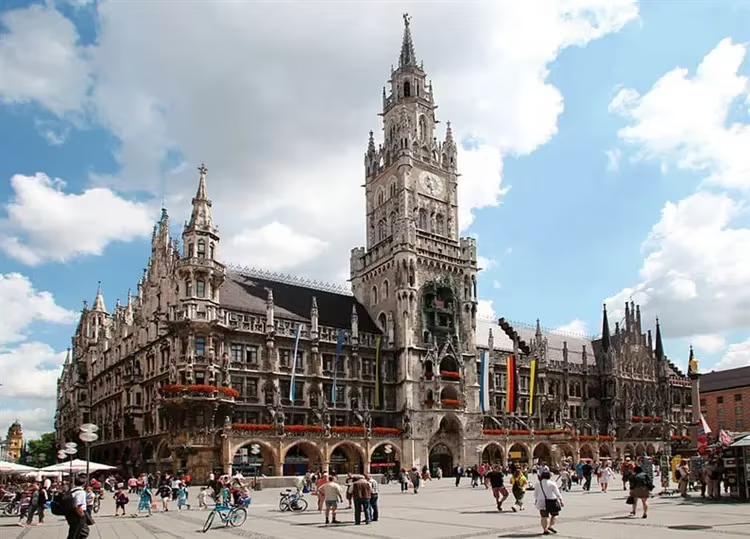
Unlike the late Gothic Old Town Hall, the Neo-Gothic New Town Hall adorns the opposite side of Marienplatz. Its main “highlight” was the monumental tower 85 meters high. It impresses with multi-stage domes and filigree decoration, similar to lace. A strong impression is made by the clock that adorned the central facade. With the chimes, the movement of 32 figures begins, showing scenes from the medieval life of the Munich people.
The beginning of each hour is announced by the sound of 43 bells. When night descends on the city, exactly at 22.00 hours remind the children that it is time to sleep, demonstrating how an angel, accompanied by a night guard, puts the child to bed. During the performance, the melodies of Brahms and Wagner are played by the tower bells. Usually tourists linger here for a long time to admire the exquisite decoration of the facade with numerous neo-Gothic scrolls.
Frauenkirche
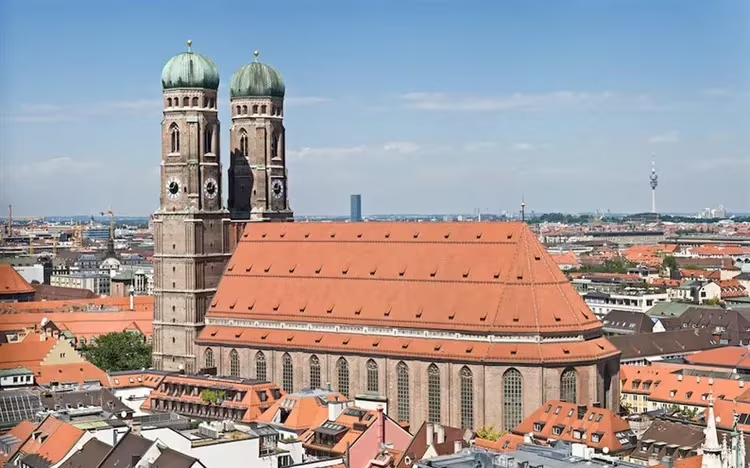
One of the calling cards is called the Cathedral of the Blessed Virgin Mary (Frauenkirche), located in the historical center near Marienplatz. This cathedral, shrouded in mystical legends, rose 100 meters above the city, becoming the highest building in Munich. The laying of the temple took place in 1468, but the construction was delayed for 50 years due to lack of finances. There are legends that the devil himself interfered with the construction of the church and put forward the condition for the architect that the temple was without windows.
To this day, the imprint of the “footprint of the devil” has remained on the church floor, and there is a legend that good luck awaits those who step into it. A feature of the architecture of the cathedral is called symmetrically standing 2 towers topped with small green onions with a cross. Clocks are installed on the towers, and one of them is equipped with an observation deck. You can admire the amazing panorama of ancient Munich from a hundred-meter height from May 1 to October 31.
The church, majestic on the outside, but modest in the decor of the facade, inside is striking in its splendor. You will see the marble cenotaph of Ludwig the Bavaria, many medieval sculptures standing in the niches of the opposite walls, the ceiling skillfully painted with biblical scenes and a stunning altar. The cathedral can be visited from 7.00 to 18.00 daily. To feel its divine atmosphere, come to mass at 9 o'clock in the morning.
Feldherrnhalle
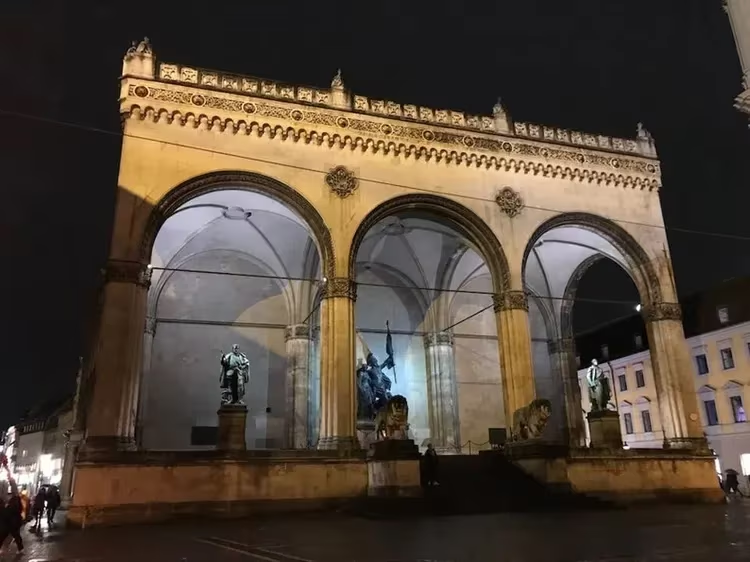
Feldherrnhalle, translated from German as the “Hall of the Generals of Bavaria” can be found on the south side of the Odeonsplatz in the Maxvorstadt lane. It was built in the 40s of the XIX century by order of King Louis I in honor of the Bavarian army. The model for the construction was the Loggia of Lanzi in Florence. The structure is presented in the form of an arcade hall, 20 meters high. The history of the army of Bavaria is reflected in the collection of monuments cast from cannons that have become war trophies.
A stone staircase leads to the Hall of Generals, guarded by stern stone lions. Sculptures of lions are symbolic. A lion with an open mouth, facing the royal palace, indicates that one can argue with the monarch, and a lion with its head turned towards the church, with its mouth closed, indicates that one cannot object to God. In the arches on both sides you are greeted by bronze sculptures of generals: Count Tille and Prince Wrede.
Climbing the stairs, you will come to the monument of the Bavarian army, which depicts a warrior in a Roman toga with a banner in his hands and a woman standing next to him. The most convenient way to get to the hall of the Bavarian commanders is by metro along the lines U4, U5, U3 to the Odeonsplatz station. You can visit the attraction on any day except Wednesday.
Olympic Park
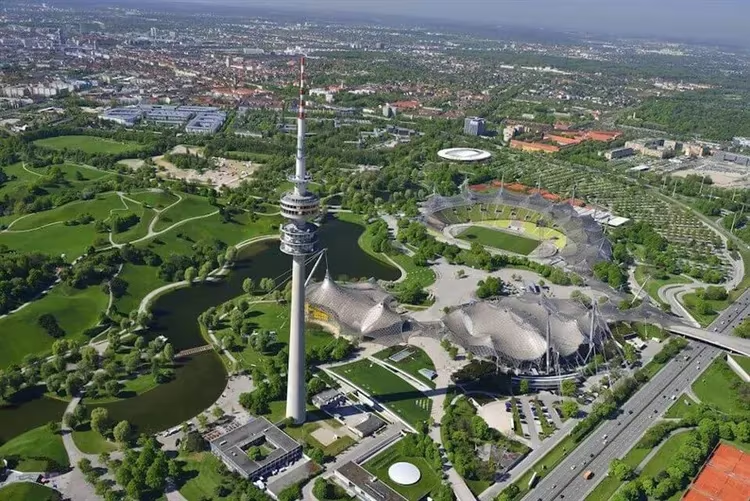
Another favorite place in Munich is the Olympic Park, equipped in memory of the victims of the 1972 Olympics. 11 of Israel‘s best athletes were then brutally murdered by representatives of the terrorist organization of Palestine. Created on a sad occasion, the park has become the most grandiose complex of miracle sports facilities and evokes only positive emotions in everyone.
Against the backdrop of an excellent water stadium rises the original roof in the form of a huge plexiglass tent of a sports stadium. The famous Bayern Munich football team used to train on it. A chic velodrome allows for training and competitions on excellent tracks. There is a wonderful year-round skating rink here, where you can show off your ability to skate to everyone.
The Olympic Tower amazes with its extraordinary height (290 meters) and amazing infrastructure, climbing to which you can see stunning views of the thousand-year-old Munich with its incredible beauties of the past and present. The graceful building towering over the city – a symbolic object of the 1972 Olympics – can be safely called a masterpiece of high-rise construction.
Karlsplatz and Charles Gate
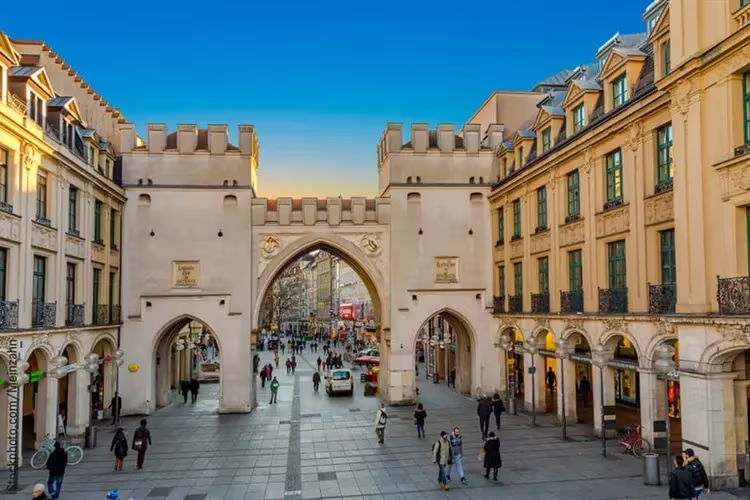
The square named after Elector Karl Theodor is one of the most authentic places in the Bavarian land, where the great history of its development from the Middle Ages to the present day was embodied. Among the locals, there is a second, unofficial name for the square – “Stachus” in honor of the old beer house located on it – a favorite cereal corner of many Munich residents. Surrounded by majestic buildings, the square is always filled with people. Many come here to admire the magnificent fountain located in the center, to relax near the crystal jets that bring coolness. Karlsplatz is the heart of the tram interchange, from which you can go by tram to any part of the city.
A truly unique architectural monument of fortification construction (13-14th century) is the Charles Gate (renamed in honor of Charles in 1791). Having repeatedly suffered destruction, the reconstruction of the Charles Gate remains a symbol of the power and grandeur of one of the most expensive and highly developed cities in Germany. The majesty of the ancient gates, the solemn beauty of the entire grandiose building, successful designer decorations are undoubted signs of an architectural masterpiece.
Marienhof
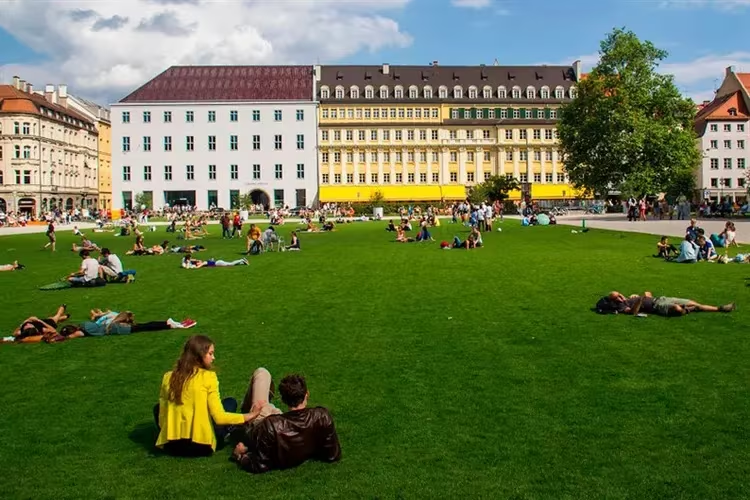
A kind of green oasis with velvety grass, surrounded by close rows of trees – the amazing Marienhof Square. A place of serene rest for citizens and tourists, a cozy island of silence amid urban noise. In warm weather, you can lie on a grassy carpet, sunbathe, read and just relax after a hard day's work. Archaeological excavations carried out on one of the sections of the square revealed traces of early settlements (before the city was founded).
Marienhof Square has become the object of historical research. Named in memory of Munich's first synagogue, Marienhof, the square captures the history of Jews hiding from the brutal pogroms taking place in Europe in the early Middle Ages. They erected a synagogue here, in which they hid from punishing death. This is probably why the green space of Sq. Marienhof was left unbuilt as a symbol of rebirth and eternity.
Viktualienmarkt market
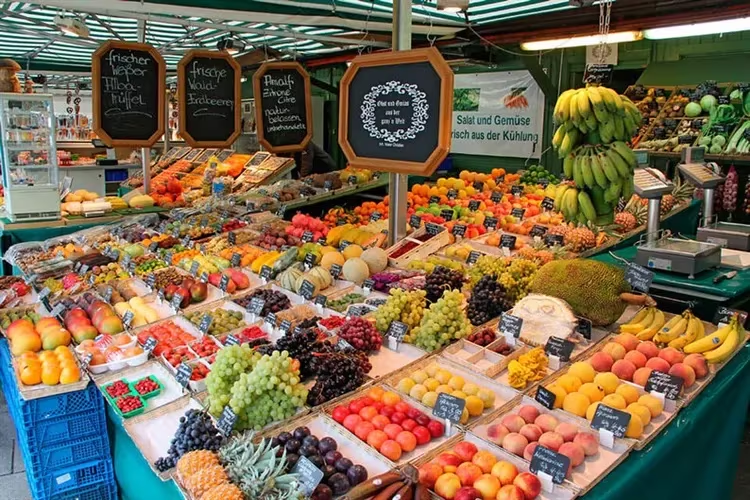
All over the world, Bavaria is known for its gastronomic delights and breweries, the famous Oktoberfest holiday, so it is no coincidence that Munich is a symbol of the diverse abundance of everything edible – the Viktualienmarkt market. The bright palette of stalls bursting with delicious delicacies, vegetables and fruits amazes the most sophisticated customers with its assortment. Here you can satisfy any consumer demand, taste the popular Bavarian sausages, which is called “hot, hot”, drink fresh beer from a barrel, buy exotic fruits.
All products sold here are of high quality and freshness – they are mainly supplied by Bavarian farmers who compete with each other in the best quality of their products. On the shelves you will not see tubers and root crops with clods of earth – everything is thoroughly washed, vegetables in wicker baskets look like a colorful still life of an artistic canvas in a kind of “gastronomic museum”.
Alte Pinakothek
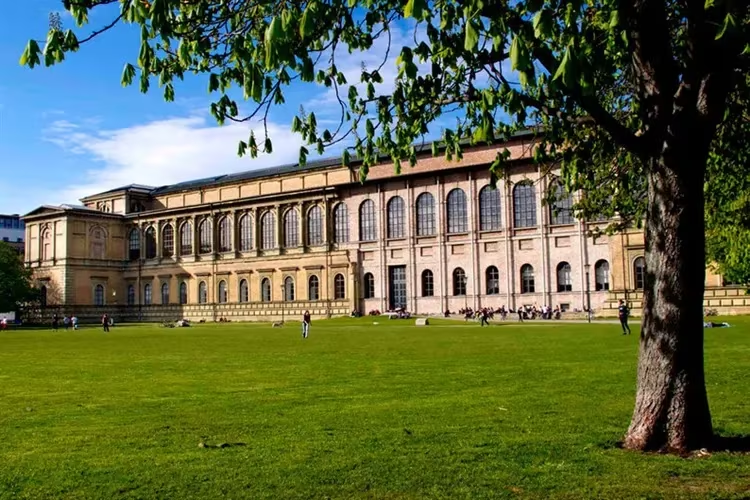
The Alte Pinakothek, located in the Maxvorstadt district, is considered one of the largest art galleries in the world. The name of the Pinakothek, meaning in ancient Greek – “a collection of paintings” was given by Ludwig I, by whose will it was created. The case of the creator of the gallery was picked up by the subsequent rulers of Bavaria. Today, in the many thousands of collections of the art museum, 19 halls and 47 rooms are allocated for the permanent exhibition, in which 700 paintings are exhibited.
If you are going to get acquainted with the artistic masterpieces of the Pinakothek, then on the ground floor of the building on the right side there are German and Flemish painters and sculptors who worked from the 14th to the 18th centuries. The most famous of the German masters – Dürer, Brueghel and Cranach admire, and Flemish painting attracts with priceless creations of Van Dyck and Jordaens. Here you get a chance to see the most famous painting by Rubens, The Last Judgment, measuring 6 meters by 4.6 meters, and all of his 72 paintings, shown in 4 halls.
In the right wing of the 2nd floor you can enjoy the immortal masterpieces of the geniuses of the Italian Renaissance: Leonardo da Vinci, Perugino, Raphael, Titian and Botticelli, Italian and French paintings by baroque and rococo painters. And this is not a complete list of famous artists whose work you can get acquainted with in the Alte Pinakothek. The gallery is open to visitors all days of the week except Mondays. You can get there by metro: on the U2 line to the Königsplatz station, on the U3,4,5 or U6 lines to the Odeonsplatz station.
New Pinakothek
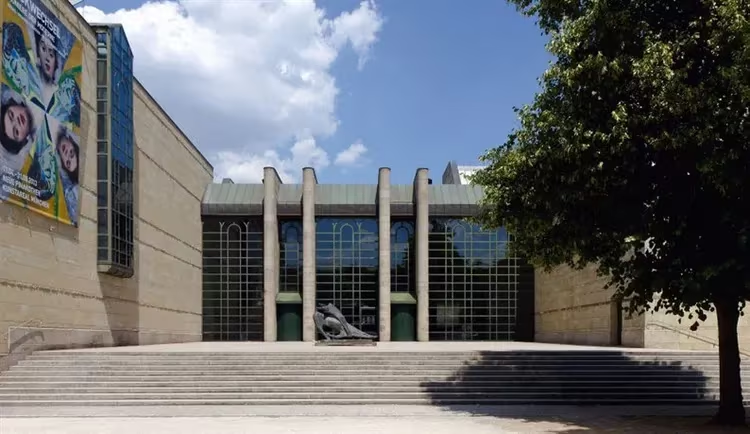
The Neue Pinakothek is the Munich Museum of Fine Arts, which opened in 1853 opposite the Alte Pinakothek. It contains a collection of paintings, drawings, architecture and design from the end of the 18th to the beginning of the 20th century. The museum halls exhibit 400 masterpieces of European fine art from the period “From Goya to Picasso”. In total, the collection includes up to 3000 paintings and 300 sculptures.
The main asset of the Pinakothek is considered to be 5 paintings by Francisco de Goya, made in the classical style. Here it is possible to get acquainted with the best creations of German and French masters who worked in the classical and romantic genres. An impressive part of the exposition belongs to German and French Impressionists, Cubists and Expressionists, among which you will see the world-famous paintings by Degas, Monet, Gauguin, Van Gogh, Renoir, Cezanne and Manet.
Lovers of modernism and symbolism will also not be disappointed by the collection of paintings, among which are the famous Shtuk and Malevich. Of the exhibited sculptures, the sculptures of Rodin, Maillol and Picasso are considered especially valuable. The building is currently closed for renovation until 2025. The best works from the museum fund are exhibited on the 1st floor of the left wing of the Alte Pinakothek. You can watch them: Monday, Thursday – Sunday from 10.00 to 18.00, on Wednesday until 20.00.
Pinakothek der Moderne
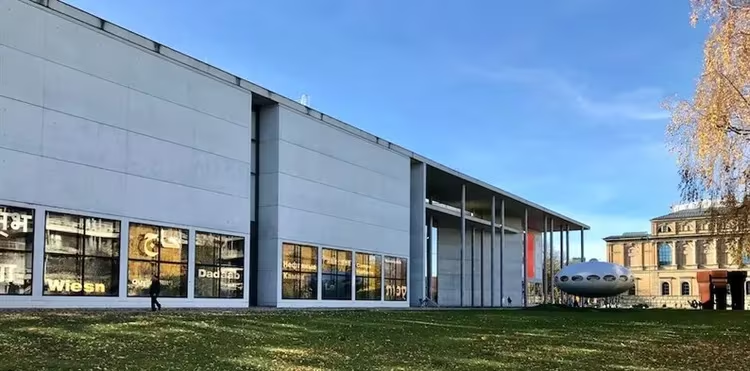
The Pinakothek der Moderne is a museum of contemporary art of the 20th and 21st centuries. It has 20 thousand exhibits of fine, decorative, applied and constructive art, as well as modern digital technologies. Masterpieces of modern art have found their place in a purpose-built modernist-style building made of glass and concrete with a huge two-story rotunda in the center, from which 2 wings extend.
The rotunda crowned with a dome reaches 30 meters in diameter, rising to 25 meters. Pinakothek covers an area of 20,000 square meters, being the largest gallery in Europe, representing contemporary art. Rather, the Pinakothek of Modernity is 4 independent museums located under one roof. The basement contains more than 100,000 design exhibits collected over 100 years, among which the development of furniture is of particular interest. The rotunda displays a collection of jewelry. On the 1st floor there are exhibits of the museums of Graphics and Architecture.
The 2nd floor exhibits an extensive collection of contemporary art, where post-impressionism and avant-garde art of the first third of the 20th century are widely represented. Here you will see works by Matisse, Picasso, Dali and other outstanding masters of the brush. The Pinakothek der Moderne can be visited: on Tuesday, Wednesday, Friday, Saturday and Sunday from 10.00 to 18.00, on Thursdays from 10.00 to 20.00. The most convenient way to get to the Museum of Modernity is by trams No. 27, 28 to the Pinakotheken stop. Then cross Theresienstraße and walk 100 meters along Barer Straße along the tram tracks.
English garden
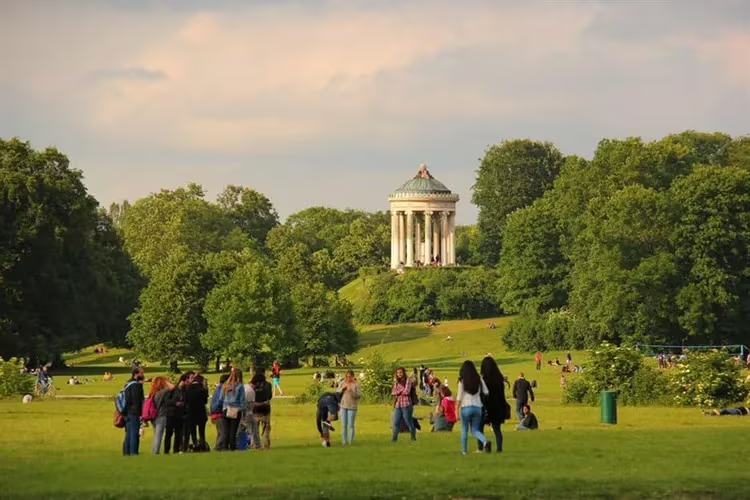
A wonderfully picturesque park in the center of the Bavarian capital – the English Garden is very popular with Munich residents. They walk in the shady alleys, ride horses, play board games and even surf in the local waters. There are excellent conditions for an active and relaxing holiday. In a very nice Japanese garden in a charming tea house you can enjoy a tea ceremony, in a cozy beer garden you can treat yourself to the famous Bavarian beer. There is also a small nudist meadow in the park – do not be surprised if you see naked people here in the summer. The English Garden is a man-made landscape miracle, a green oasis among the concrete and stone of a big city.
Even one day of stay in this city will give an unforgettable experience, generously enriching the spiritual and moral world of any tourist who has visited the sights.