
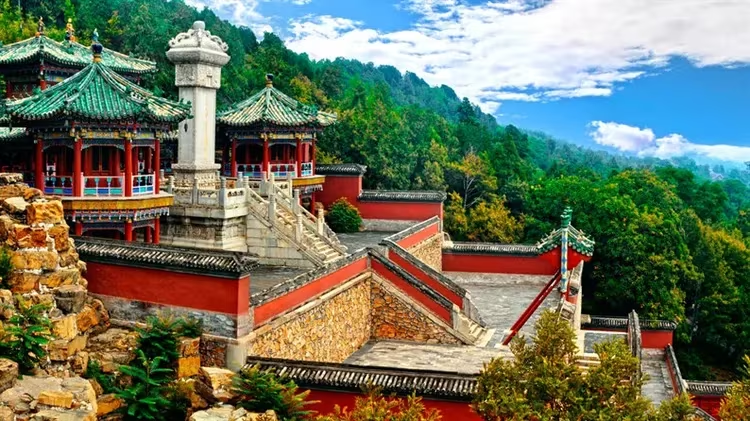
20 best parks in Beijing – photo with names and descriptions
If museums are a cold testament to China's historical events, then Beijing‘s parks can show the real life of the Chinese, full of pleasant surprises for a tourist who first encounters five thousand years of history in this country, and the best of them are described below.
Peace Park
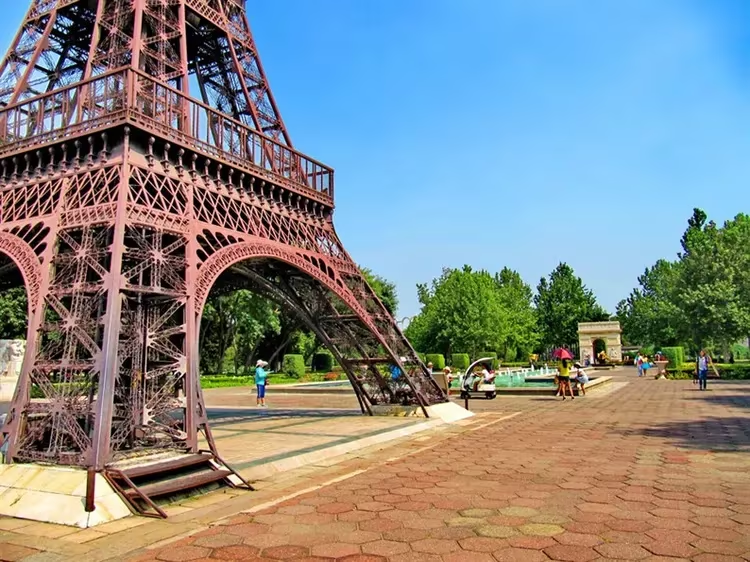
In 1993, the Beijing government allocated an impressive amount to establish a cultural center that brings together dozens of famous architectural and natural attractions from 50 countries in the open air. For their placement, an area was required, occupying more than 46 hectares of land. It will take a lot of time to study all the miniatures in detail, it may even take a whole day, so tourists who have planned other entertainment on this day are offered electric cars for $15.
Every day from 8:00 to 17:00 hundreds of tourists come here and it is almost impossible to take good pictures without the presence of unauthorized persons, but on weekdays there are more chances. A ticket costs $15, and it fully justifies its cost, because if some sights look “toy”, then Niagara Falls, the Capitol, the Eiffel Tower are quite impressive in size and worked out to the smallest detail.
Beihai Park
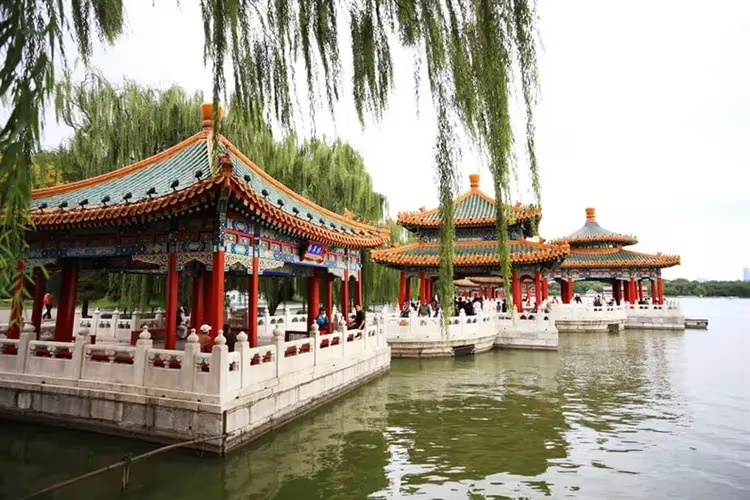
A peaceful lake, exquisite gardens and an abundance of Buddhist temples and pavilions occupy 68.2 hectares – the territory of the imperial lands is so large that the numerous flow of tourists is lost in their vicinity, and the noise of voices is concealed by the sounds of the surrounding nature. Surprisingly, there is always a haze over the lake, and on the islands themselves, connected by long ornate bridges, there is some kind of mysterious atmosphere, fascinating with its calmness, that visitors involuntarily fall silent and succumb to this general serene mood.
From the top of the Jade Island, a panorama of the city opens up, and you can get to it on foot, or you can take an authentic oriental-style ferry for a fee. It is here that most of the religious buildings that are still revered and of great importance to the Chinese are concentrated – the statues of Buddha and bodhisattvas are surrounded by candles, offerings and money. Entrance costs from 1 to 3$, depending on the number of places you want to visit, and Beihai accepts all year round from 6:00 am to 20:00 pm.
Happy Valley Amusement Park
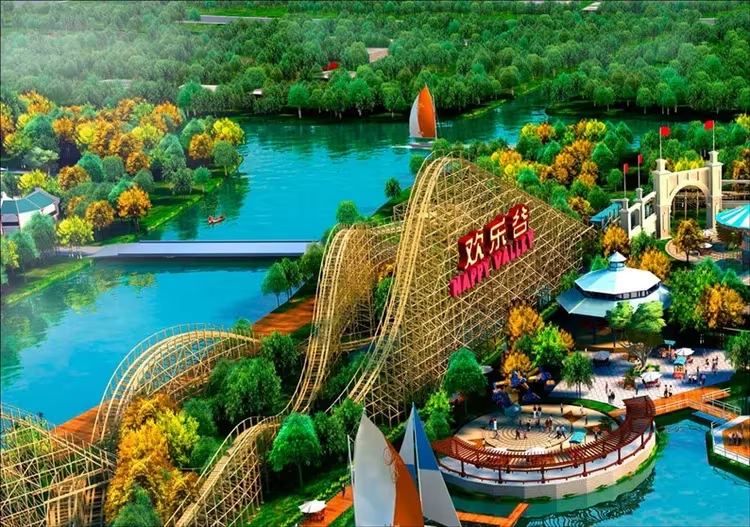
If anything can compare with the famous Disneyland, it is Beijing's Happy Valley, which owns about 130 rides. If you are not a fan of thrills, then it is better to save twice and buy a “night” ticket at a price of $18, when the most extreme attractions are closed, the rest of the time the ticket price is $33 for adults, $22 for children from 1, 2 to 1.5 meters, and free of charge for pensioners over 69 and children up to 1.2 meters.
A nice bonus in the foreign world of entertainment will be a map – a guide in Russian. “Extreme Rusher” and “Crystal Wing” are the most sought-after high-speed slides that rush at a speed of 135 km / h between the walls and caves of the Ant Castle, creating the feeling that you are about to miss the opening and fly out of your chair. “Happy Valley” is divided into several thematic zones, decorated under the era of Ancient Greece or the Mayan civilization, where exciting performances are held with “robbers” of tombs, volcanic eruption and a host of other performances that cannot be seen in a day, even considering that the entertainment center works with 9:00 to 22:00.
Jingshan Park
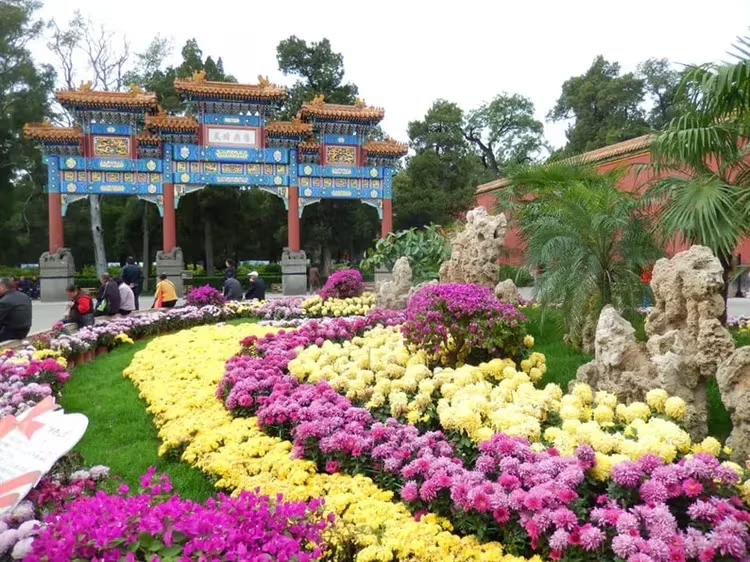
About 1000 years ago, Mount Jingshan was formed here, which means “View from the mountain.” Indeed, this place is notable for its landscapes that open from its five peaks from a height of 50 meters above ground level. From here you can see the Forbidden City, and Beihai, as well as the Xishan and Xiangshan mountains. The path to the peaks lies through thorny cypress alleys and flower beds, and on each of them there are pavilions with statues of Buddhist deities cast from copper, and among the thickets of “weeping” Chinese sophora there is one known for the story of the suicide of the last emperor of the Ming Dynasty – Chongzhen.
In 1644, during a peasant uprising, the emperor failed to escape, so he hanged himself from one of the trees, and before that he killed his servant, wife and children. In the Hall of Visitation of Virtue, the coffins of the rulers of the Qing Dynasty were displayed before burial, their portraits were kept in the Hall of Imperial Longevity, and the last point of interest on this tour is the Memorial Arch, on which a plaque with the saying of the ruler of the Qing Dynasty – Qianlong is hung.
If you get here on the day of the exhibitions, the ticket price will rise to $ 0.7, the rest of the time the price is $ 0.3. Opening hours – from 6:00 to 21:00.
Park Zhitan
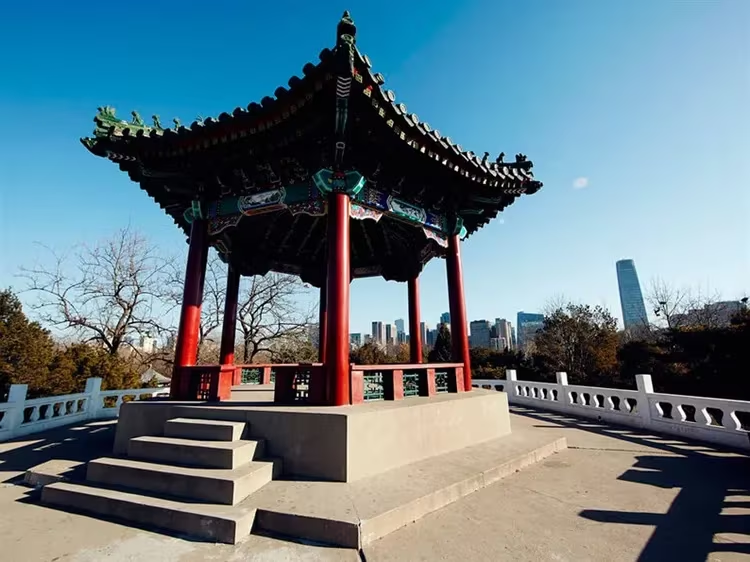
The tradition of worshiping the Sun and the Moon exists today, but it was not started by our contemporaries, but even during the Ming and Qing dynasties, who performed the sacrificial ceremony here – they were performed by the emperors personally. The main building of this park complex is the Altar of the Sun, surrounded by a ceremonial red gate with green tiles. In the middle of the altar stands an altar in the form of a square, personifying the earth, and a throne, to which stairs with nine steps lead.
During the construction of the altar, everything was accompanied by the symbolism of the sun, and all physical measurements were equal to odd (“solar”) numbers. In addition, every day from 6:00 to 21:00 among man-made rocks, lotus ponds and pavilions, it is pleasant to relax, especially since admission is free, and entertainment is offered for children, including a climbing wall.
Chinese ethnic culture park
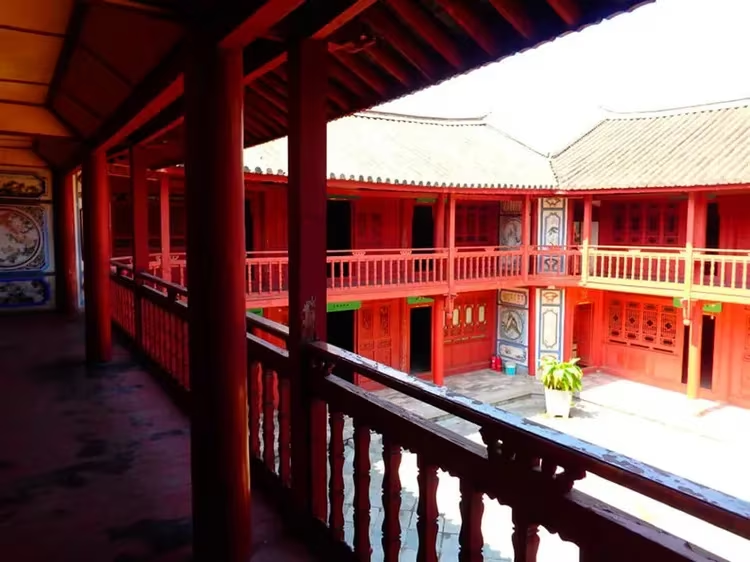
So far, China has managed to preserve all 56 nationalities, exercise rights, honor culture, language and their traditions, despite the fact that they make up only 8% of the total population. Therefore, in 1992, the Chinese government considered it necessary to raise the issue of creating a theme park, and by 2001, work on its improvement was completed. Everywhere there are traditional dwellings of different peoples of China, about 45 ethnic villages, and information about the peculiarities of culture on stands near them.
The whole complex impresses both with natural beauties in the form of rocks, waterfalls, lakes with ducks and red-yellow carps that you can feed, flowers and trees, as well as historical sculptures, architectural buildings and performances of folklore groups in folk costumes. Ticket price – $ 13, this also includes a visit to the Museum of household items and performances. Opening hours – daily from 8:30 to 18:00.
Olympic Park and National Olympic Sports Center
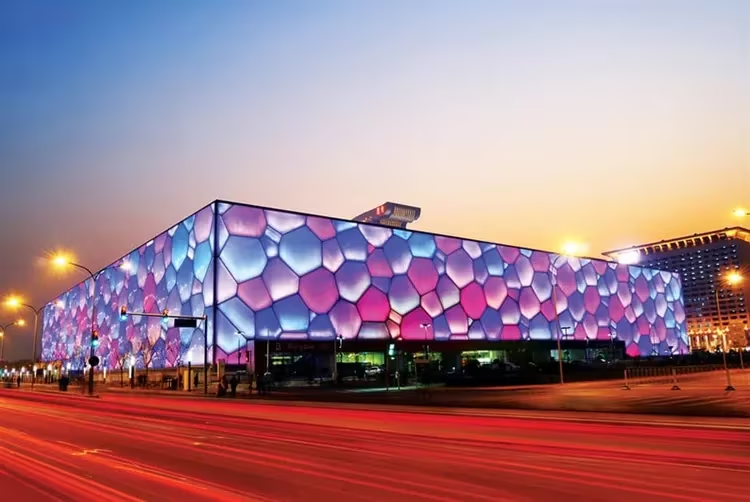
All travelers strive to get first of all to the square, where there are buildings that are significant for the Chinese – this is the “Bird's Nest”, where the opening and closing ceremonies of the Olympic Games were held, the “Torch House”, the Linglong observation tower and the national swimming complex “Water Cube”. All buildings are illuminated with all the colors of the rainbow, so it's better to come here in the evening, when modern dynamic music plays, young people roller-skate, fly kites, toys are sold for children and carousels open, and sellers with small stalls of Chinese snacks come together.
And during the day it is better to visit an underground shopping complex or a forest park, which is located on the other side of the square. The alley, which is framed by curious sculptural compositions made in the classical Chinese style, leads to the lake, mountains and wild cherries. Entrance is free, only for an electric car, if you need it, you will have to pay separately.
wildlife park
On an area of 36 hectares, there are more than 200 species of animals (10,000 individuals) that live in their natural habitat. The panda and rare species of monkeys are very popular, but even with especially large influxes of tourists, you will not see pandemonium near the enclosures with our smaller “brothers”. The period of activity in animals begins in the morning, so it is preferable to make half-hour trips on a safari bus at this time.
Tigers, lions and other predators will be in close proximity to you, but they will not be able to harm you, even children are allowed on this type of excursion. Circus shows with elephants, birds and monkeys are also worth a visit. They perform ingenious tricks and even allow you to take pictures with them. This place is located near the city center, a ticket costs $ 12 for adults and free for children up to 120 cm. Opening hours: from 8:30 to 17:30, daily.
Old Summer Palace
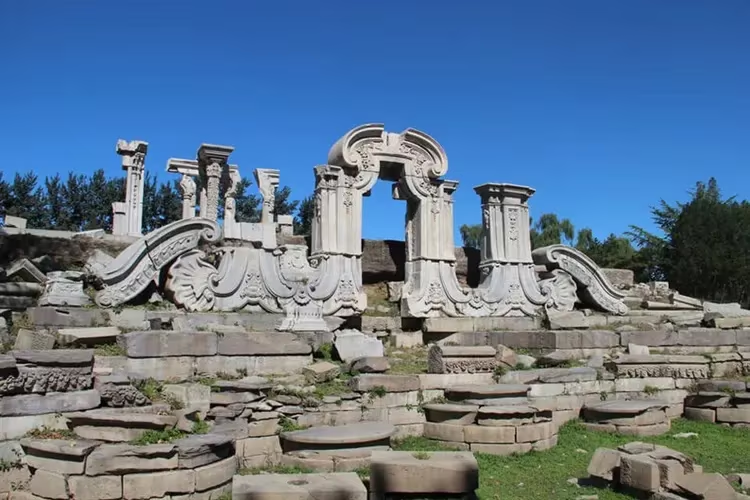
The construction of the palace began as early as 1707 during the reign of the Qing Dynasty, to which only those close to the emperor were allowed. Foreign craftsmen, invited by Cangllong, also worked on the exterior of the building, as a result of which the palace was built of stone, and not wood, which was typical for architectural buildings in China at that time.
The emperor's summer residence turned out to be so beautiful that it was even called the “Versailles of the East”. But soon the Second Opium War broke out between the Chinese and the Anglo-French coalition, and the English delegation of 20 people sent to negotiate in China was tortured and killed. Enraged, Lord Elgin, commander-in-chief of the coalition forces, sent more than 3,000 troops to burn down the Summer Palace.
Today, the Beijing authorities allocate funds for the care of the imperial gardens and the palace, but it was decided to leave the ruins untouched in order to preserve the rich and eventful history of China. Admission is $5, including the local museum. Opening hours: from 7:00 to 18:00, daily.
Yiheyuan Park
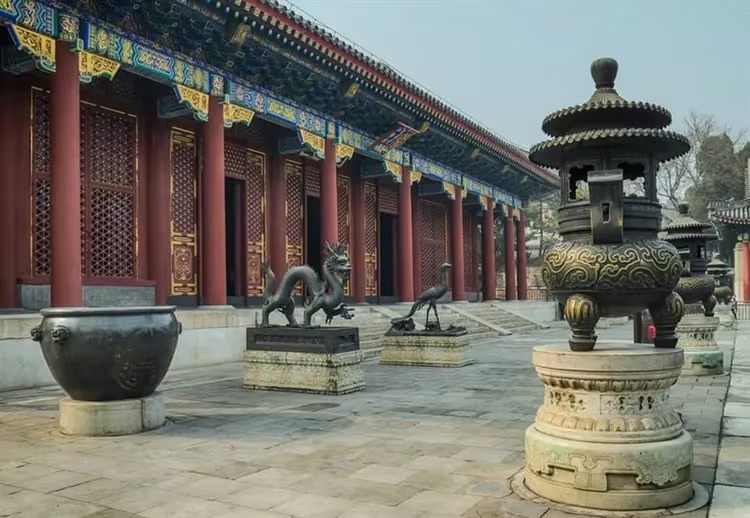
It is difficult to imagine the landscape gardening art of the Celestial Empire without reservoirs, and, of course, Yiheyuan is no exception. Here, lakes occupy three-quarters of the park's total area of 29 hectares, the largest of which is Kunming (2.2 sq. m.). The country residence was built by order of Canlong since 1750, and after a series of hostilities, it was restored and improved already in 1888. The main attraction of Yiheyuan is the Hill of Longevity and the temple located on it, where Empress Cixi once solemnly celebrated her birthday, the 41-meter Buddha Aroma Tower.
The territory is divided into 3 zones – gardens, imperial chambers and meeting rooms. Among them were a library, galleries, living quarters for servants, a theater and temples. Each of these buildings is available for inspection and is rich in personal belongings of the imperial family (furniture, porcelain, manuscripts, household items). Yiheyuan works from 7:00 to 19:00, but the gardens and halls of the palace have a different schedule, and you need to pay for them separately, while the price of a general ticket is $ 5.
Beijing International Sculpture Park
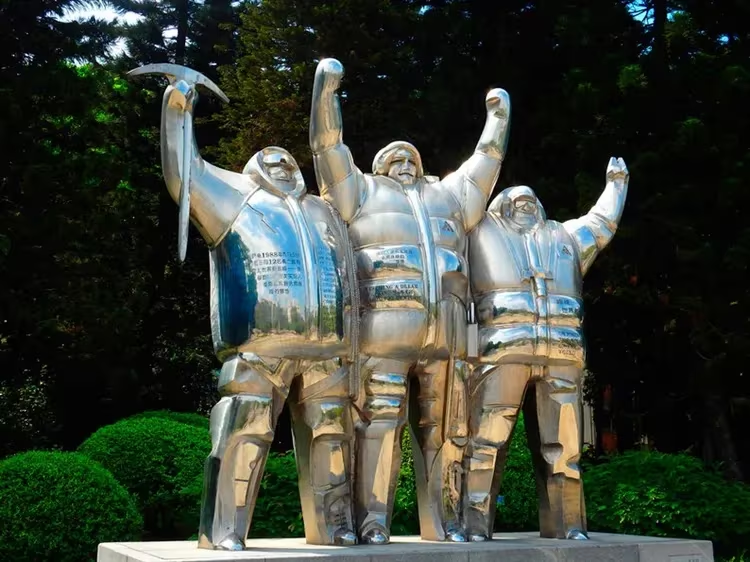
China does not spare land for the cultural enlightenment of its people, and another huge area of 162 hectares was given over to two hundred sculptures from 40 countries of the world. Half of them represent the western zone, depicting scenes from the life of ordinary peasants, while the other, the eastern one, serves as an exhibition site for contemporary masters, who, in turn, depicted urban life.
In addition to man-made works of art, natural resources are also present here – about 5,000 magnolias delight the eye, especially in spring, when their flowering is in full swing. One day to go around every corner of such a large area is not enough, so bicycles are rented. A symbolic fee of $ 1.5 is taken for admission, and the opening hours are from 6:30 to 21:00, daily.
Longtan Park
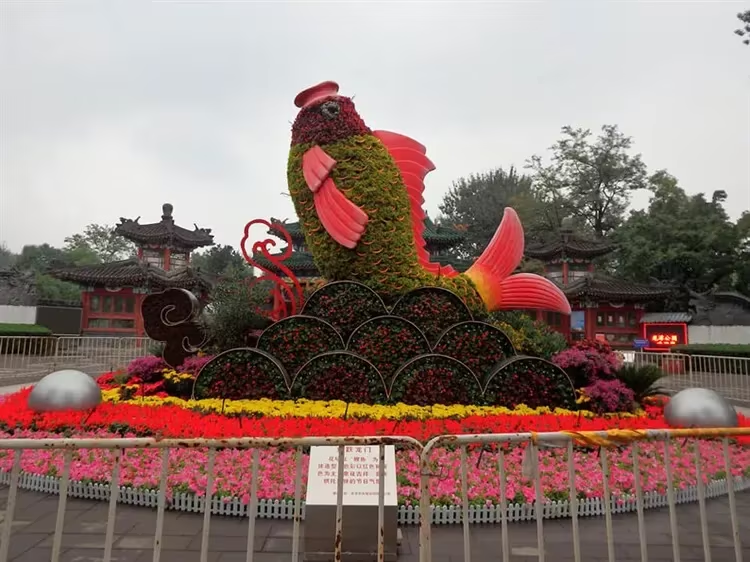
Ponds with golden carps already familiar to us, green spaces, flower beds, stone statues, long arcuate bridges with bas-reliefs, red pagodas with curved roofs and gazebos with three-arched gates are mandatory attributes of Chinese gardens. Longtan is located in the city center and is surrounded on all sides by skyscrapers. From 6:00 to 21:00, it accepts residents and tourists of Beijing for only $0.3, and therefore you are unlikely to be able to walk alone, but there are other advantages – to get to know the culture and mentality of the Chinese people closer.
In the morning, pensioners gather by the ponds, some play different instruments, others sing (you can even hear the Moscow Evenings, beloved by the Chinese), and even dance, and in the evening whole groups of older women bring a tape recorder and, to the sounds of modern performers, perform simple memorized rhythmic movements simultaneously to the beat of the music. A great place for a leisurely walk, boating and just beautiful photos.
Chaoyang Park
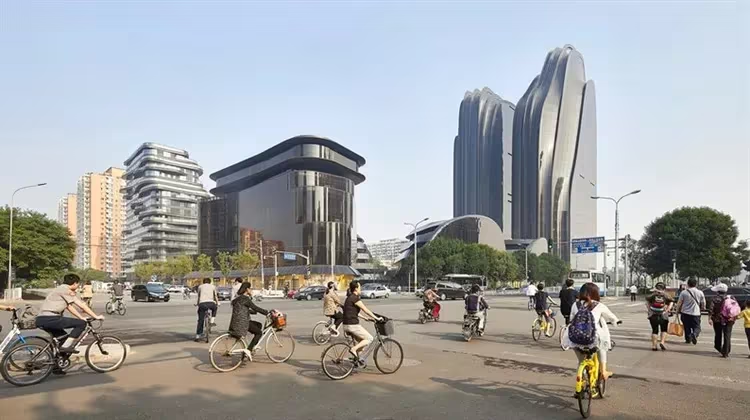
Chaoyang was opened in the city center relatively recently – in 1984, more youth-oriented. It is divided into several zones, each of which has its own theme. The most popular is the Beach Garden, where urban music festivals, sea carnivals by the sea and rock performances are held, and during the Olympic Games beach volleyball competitions were held here. In the vast landscaped areas, people have picnics, set up tents, play football, basketball and tennis.
There is an amusement park for children, but it is quite expensive – $ 15 per person (for 3-5 carousels), as well as boat and bicycle rental. A pleasant and unexpected discovery for Ukrainians is the monument to the poet Taras Shevchenko, and for Georgians – to the poet Nizami Ganjavi. Chaoyang welcomes guests every day from 6:00 to 22:00, and charges $0.7 per person.
Xiangshan Park
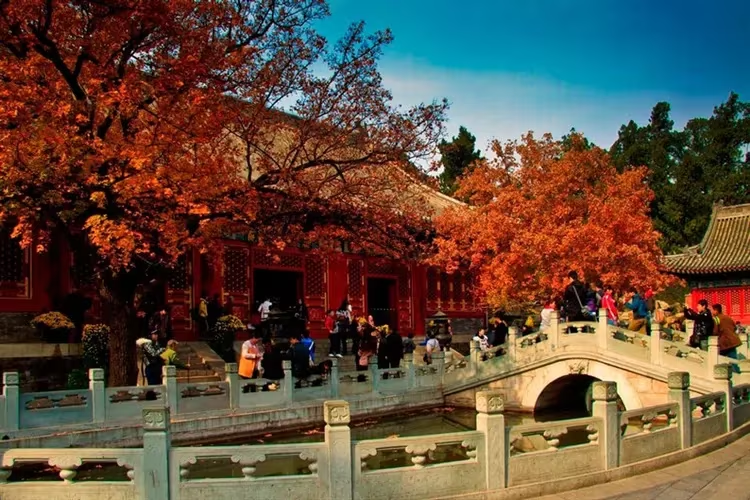
At the foot of the “Fragrant Mountains” (as Xiangshan is translated) is the “Garden of Pleasure and Tranquility”, as it was called under the emperor of the Qing Dynasty – Canlong. At the entrance there is a sculpture in the form of a red leaf, which is the symbol of Xiangshan, which in autumn is simply full of a riot of colors from gold to crimson. In mid-October, people from all over the capital come here for a photo session, and merchants sell souvenirs depicting mountains, namely Incense Peak (the highest point of Xiangshan), autumn leaf fall and the beautiful Yangjing Lake.
There are also historical monuments – the residence of Mao Zedong and the headquarters of the Communist Party of China. Among the extreme entertainment, tourists note the exciting cable car and climbing to the top of Xiangshan worth $ 7, the entrance fee is paid separately – $ 0.3. Opening hours: from 6:00 to 20:00.
Yuanboyuan Gardens Exhibition Park
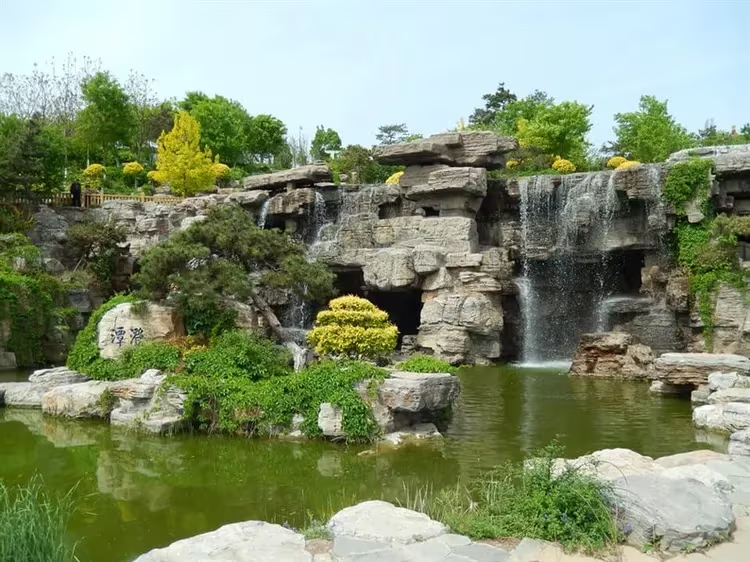
In 2013, at the site of a landfill, Chinese masters of landscape art presented a vivid example of how the environment can be improved by transforming industrial waste into a landscape. Yuanboyuan has occupied 512 hectares, where modern gardens overlap with traditional ones, including examples from abroad. In addition to plants and trees, there are also architectural monuments: a copy of the French palace is located near the European Garden, characteristic buildings are also located near the Arab, Iranian and Indian gardens.
The gardens of Chinese cities are given special attention, the futuristic design of Tianjin, Zhuzhou railway, poetic Changde, modern Shenyang, romantic Jiangsu are memorable. Even in a few days it is impossible to get around all the gardens, so it is better to set aside a few days to study them. The ticket price is $ 3, and the opening hours are from 7:00 to 18:00.
Daguanyuan Park
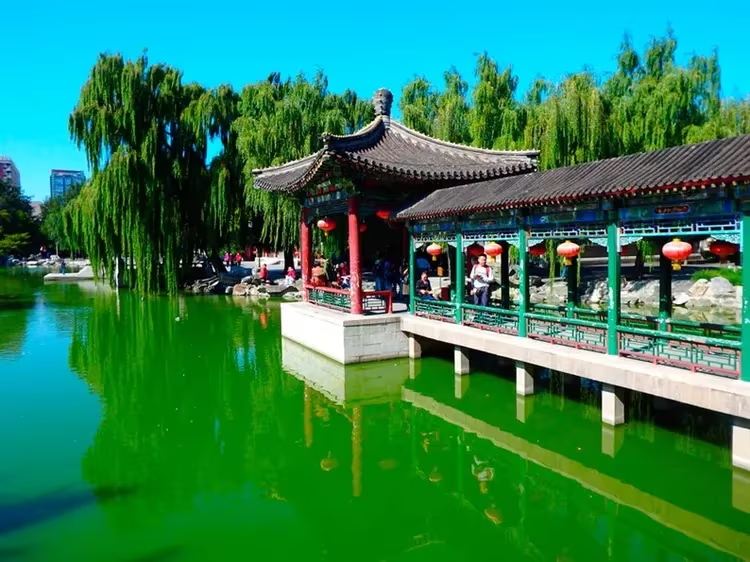
For the filming of the popular Chinese television series “Dream in the Red Bath” in 1984, to the delight of many fans of this novel, a park was built with palaces, pagodas and agricultural land, as was the case during the Ming and Qing dynasties. The creation of the project was taken seriously: writers, historians and researchers were invited to accurately reproduce the natural landscapes and living quarters of that era.
Through a narrow passage in the man-made rock at the entrance, winding paths lead to ponds and round arches with romantic names, and then to pavilions where scenes and interiors with the characters of the Jia family (and there are about 600 people in the series, 50 of which play the main characters) are recreated. roles).
The rooms of the imperial concubine Jia Yuanchun are most in demand among fans of the historical series. On the territory of Daguanyuan there are several museums of art and culture, but payment for them is taken separately. The general ticket price is $3 for students and $6 for adults. Opening hours: from 7:30 to 16:30, every day.
Lianhuachi Park
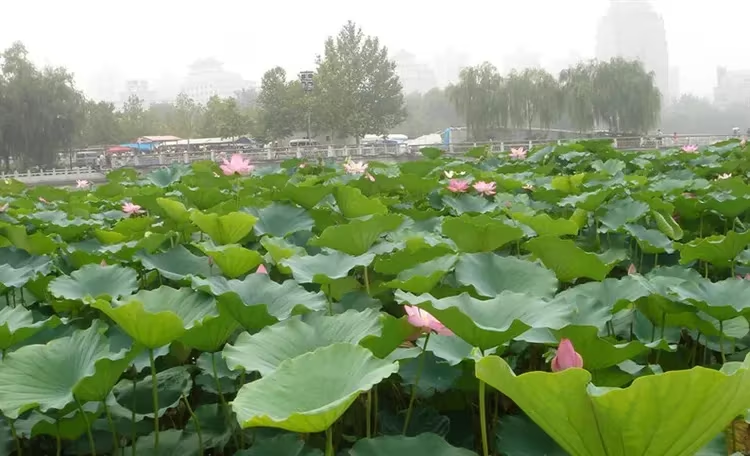
For a lush lotus bloom, you should go to Lianhuachi, which is located near the Beijing Railway Station. This place is so old that the locals joke – “First there was Lianhuachi, and then Beijing.” In the 80s, part of the ancient ruins was restored (previously it served as a country residence for members of the imperial nobility), but in general, it was left untouched and only cleanliness and care are maintained, which is spent on proceeds from the sale of tickets for the entrance – 1.5 $.
For more than 3,000 years, it has been gathering around itself connoisseurs of natural beauty, because in addition to 80,000 water lines, magnolia, acacia and cedar, as well as Chinese pine trees and flower beds with exotic plants please the eye with their fragrance and flowering in summer. All this natural splendor, fountains, a theater, children's carousels fit on 45 hectares of land and are available for walking every day from 6:00 to 21:00.
Shichahai Park
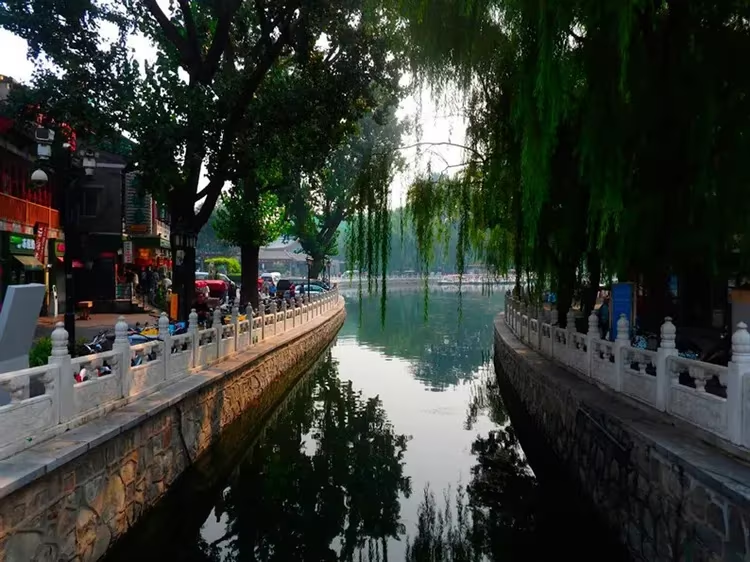
The history of Shichahai began in the 13th century, when it was used to supply water to Beijing, and then it was completely abandoned. But in 1992, it was cleared and given the status of a historical and cultural region due to the numerous Buddhist and Taoist temples located on its territory. In addition, there is the “Northern Residence” of the Chinese government, which was previously occupied by the princes of Chun and Gong, the House-Museum of Academician and Writer Guo Moruo, as well as hutongs – colorful medieval Chinese houses that form entire villages dating back to the era Yuan dynasty.
Shichahai also includes the pedestrian narrow Yandai Street, where you can buy souvenirs, tea, qipao in shops, and try national dishes in small street cafes, but the prices for dishes are quite high due to the high flow of tourists. Free admission.
Taozhanting Park
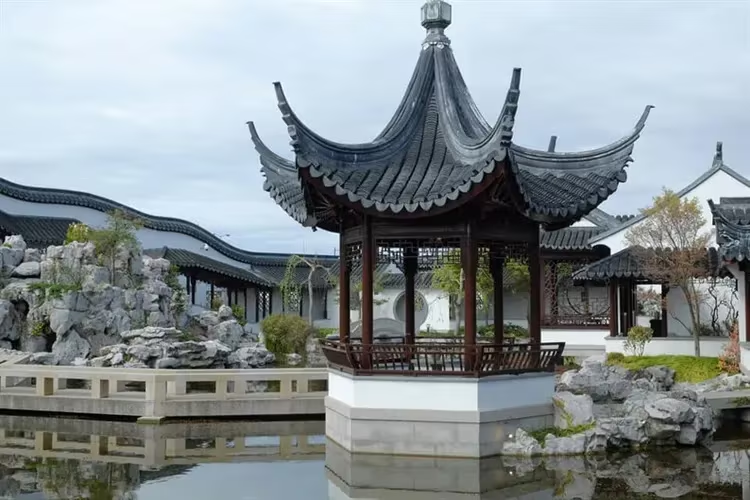
There are notes about the Chinese settlements in this territory dating back to the 3rd century BC. e., but they gave the gardens of Taozhanting a well-groomed appearance during the rule of the Liao dynasty (and this is already the 10th century BC). Soon monasteries with Buddhist columns and pagodas appeared here, and picturesque landscapes began to inspire Chinese poets to write poetry. Taozhanting is located far from the bustle of the city, smog and industrial centers, so clean air, lakes and its vast expanses (the area occupies 24 hectares) gather a lot of vacationers on weekends.
In April, people come here to the festival of flowers and kites, in the hot months of summer – for a boat ride on a cool lake, in other seasons you can see historical sights, including the graves of figures significant for the history of China – Sai Chinshua, Shi Pingmei, Gao Zhunyu. The ticket price for an adult is $ 0.3, for a child – $ 0.2. Opening hours: from 6:00 to 21:00, every day.
Zoo
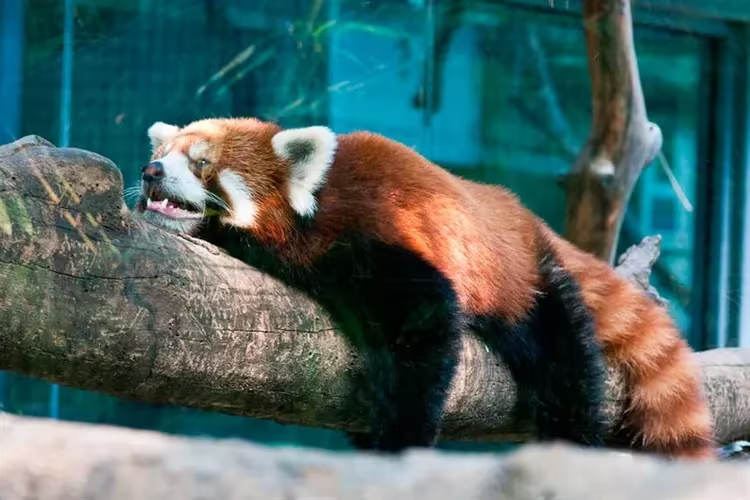
The largest and oldest zoo in all of China, which has 500 species of animals, including giant pandas and other inhabitants of the Red Book (Chinese salamander 1.8 meters long, red-legged ibis, Amur tigers, golden snub-nosed monkey). Some areas are paid separately, for example, the aquarium costs $24. At the entrance you will be given a card in two languages, including English; there you can see the schedule of performances with the participation of elephants, bears and monkeys, which you can feed later, as well as water shows with sea lions and dolphins (after you can swim with them and take a photo).
Among the trainers and artists participating in circus shows, there are also our compatriots. The ticket price is $3, but there are great deals, including dragon boat rides and all kinds of animal pavilions, which you have to pay extra for with a regular ticket. Opening hours: from 7:30 to 17:00, every day.